So You're Ready to Buy Scuba Gear. Now What?
An honest, diver-to-diver guide to choosing gear you'll love for years to come.
Every new diver eventually has the same moment. You walk into a dive shop, start researching online, or scroll through scuba social media and suddenly feel like everybody else understands a completely different language. People are debating regulators, air integration, backplates, hose routing, split fins, and dive computers that somehow cost more than your first car. Meanwhile, you are just trying to figure out what you actually need to dive comfortably and safely.
One thing I really want newer divers to understand is that nobody starts out knowing all of this. Every experienced diver was once the person quietly nodding along while internally wondering what half the conversation even meant. Gear knowledge develops gradually through experience, travel, training, conversations, mistakes, and simply spending more time underwater. Diving should feel exciting, not intimidating.
The good news is that scuba gear becomes much less overwhelming once you stop viewing it as one giant purchase. Nobody expects you to buy everything immediately, and you should not feel pressured to. Most divers slowly build their setup over time as they gain experience and figure out what type of diving they actually enjoy most.
Ladies, here are some of my favorite gear recommendations and little comfort upgrades that have made a huge difference in my diving.
Do Not Feel Rushed to Buy Everything
This is probably the biggest thing I want newer divers to hear. You do not need to own everything immediately. Social media can make it feel like every diver has a perfect custom setup five minutes after certification, but reality is very different.

Most divers rent gear for a while, try different styles, and slowly learn what actually works best for them. That is a good thing. Your preferences will change as you gain experience, and the setup you think looks amazing as a brand-new diver may be completely different from what you eventually prefer years later.
Different types of diving naturally shape gear preferences differently. Travel divers often prioritize lightweight gear while shore divers may prioritize durability and comfort. Photographers often become more streamlined over time, while cold-water divers may prioritize warmth and redundancy.
Your preferences will also evolve after:
travel
shore diving
drift diving
photography
colder water diving
Buying slowly and intentionally usually leads to much better decisions long term. Rental gear is also completely normal, especially early on. Trying different setups can actually help you make smarter long-term purchasing decisions because you begin learning what genuinely feels comfortable underwater versus what simply looked cool online.
Start With Comfort First
For most new divers, the first personal gear purchases are usually:
mask
snorkel
fins
I think this is exactly where your focus should be in the beginning because these are the pieces of gear that most directly affect comfort underwater. A comfortable setup makes learning easier. A frustrating setup can make even beautiful dives stressful and distracting.
New divers often think the “important” gear is the expensive gear, but comfort matters first. One thing I have learned over the years is that divers who feel physically comfortable underwater usually progress faster. They relax more, breathe better, consume less gas, and simply enjoy diving more overall.
Snorkels are also one of those pieces of equipment newer divers sometimes get mixed messages about because not every experienced diver actively carries one during every dive. Many training agencies still require them during courses, and some dive operations or locations may strongly encourage or require them as well.

Finding the Right Mask Matters
Personally, I think a comfortable mask is one of the best investments a new diver can make. A bad mask can ruin an otherwise incredible dive. Constant leaking, pressure points, forehead discomfort, or persistent fogging become distracting very quickly, especially while you are still building confidence underwater.
One thing I always tell divers is not to buy a mask because it looks cool or because somebody else recommends it. Mask fit is incredibly personal. A mask that seals perfectly on your buddy’s face may leak nonstop on yours.
Higher price also does not automatically mean better fit. Some of my favorite masks over the years have not even been the most expensive ones on the shelf. Comfort and fit matter infinitely more than hype.
Single Lens vs Dual Lens Masks
One thing newer divers notice quickly is that masks generally fall into two main categories:
single lens
dual lens
Personally, I tend to prefer single lens masks because I like the open feeling and wider field of view underwater. They feel spacious and natural to me, especially during longer dives. Visibility and comfort are two things I value heavily in a mask.
Dual lens masks sit slightly differently on the face and are often lower volume, meaning they require less air to equalize. That is one reason freedivers often prefer them. So if you think you may eventually want to get into freediving and do not want multiple masks, a lower-volume dual lens mask can be a smart option.
Neither style is universally “better.” Fit matters far more than the lens style itself. A comfortable mask that seals properly on your face will always outperform a trendy mask that constantly leaks underwater.
New Masks Usually Need Prep
One thing many newer divers do not realize is that a brand-new mask is not necessarily ready to dive straight off the shelf. Many masks still have residue left from manufacturing on the inside lens, which can cause persistent fogging underwater. A lot of divers think they bought a “bad mask” when the issue is actually just improper prep.
Properly preparing a new mask makes a massive difference. Taking a little time to prep it correctly before diving can save you a lot of frustration later on. Check out my full blog on prepping a new dive mask because it genuinely helps.
Fins and Booties
New divers often choose fins mostly based on appearance, but fins dramatically affect comfort, propulsion, energy use, and overall enjoyment underwater. Some fins are extremely stiff and powerful while others are softer and more forgiving for relaxed recreational diving.
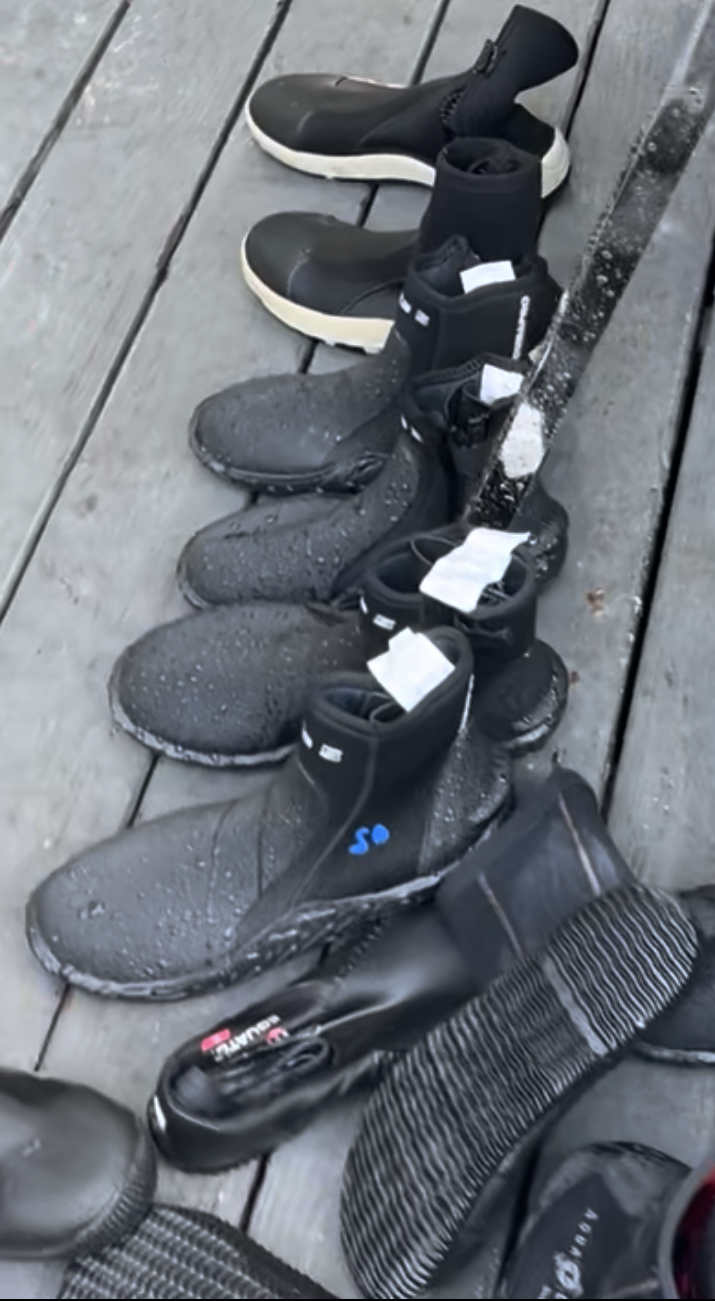
Personally, I almost always recommend getting open-heel fins with booties instead of full-foot fins. Booties make diving significantly more comfortable overall, especially if you ever plan to do shore diving. Shore diving without them can get uncomfortable very quickly.
Walking across:
lava rock
gravel
shells
slippery ramps
uneven entries
becomes dramatically easier and safer with proper dive booties on. Different booties also work well for different conditions depending on warmth and terrain.
Another thing newer divers often overlook is how much fins affect energy conservation underwater. The wrong fins can make you work dramatically harder than necessary, especially in current or during longer dives. Good fins should feel supportive and efficient rather than exhausting.
Split Fins vs Paddle Fins
One thing newer divers ask about constantly is split fins versus traditional paddle fins. Personally, I do not typically recommend split fins for most divers, though some divers genuinely love them.
Split fins are designed to reduce resistance and leg fatigue, and many divers with knee or ankle issues appreciate the lighter kicking effort. The tradeoff though is usually power and control, particularly in stronger current or when learning more advanced finning techniques.
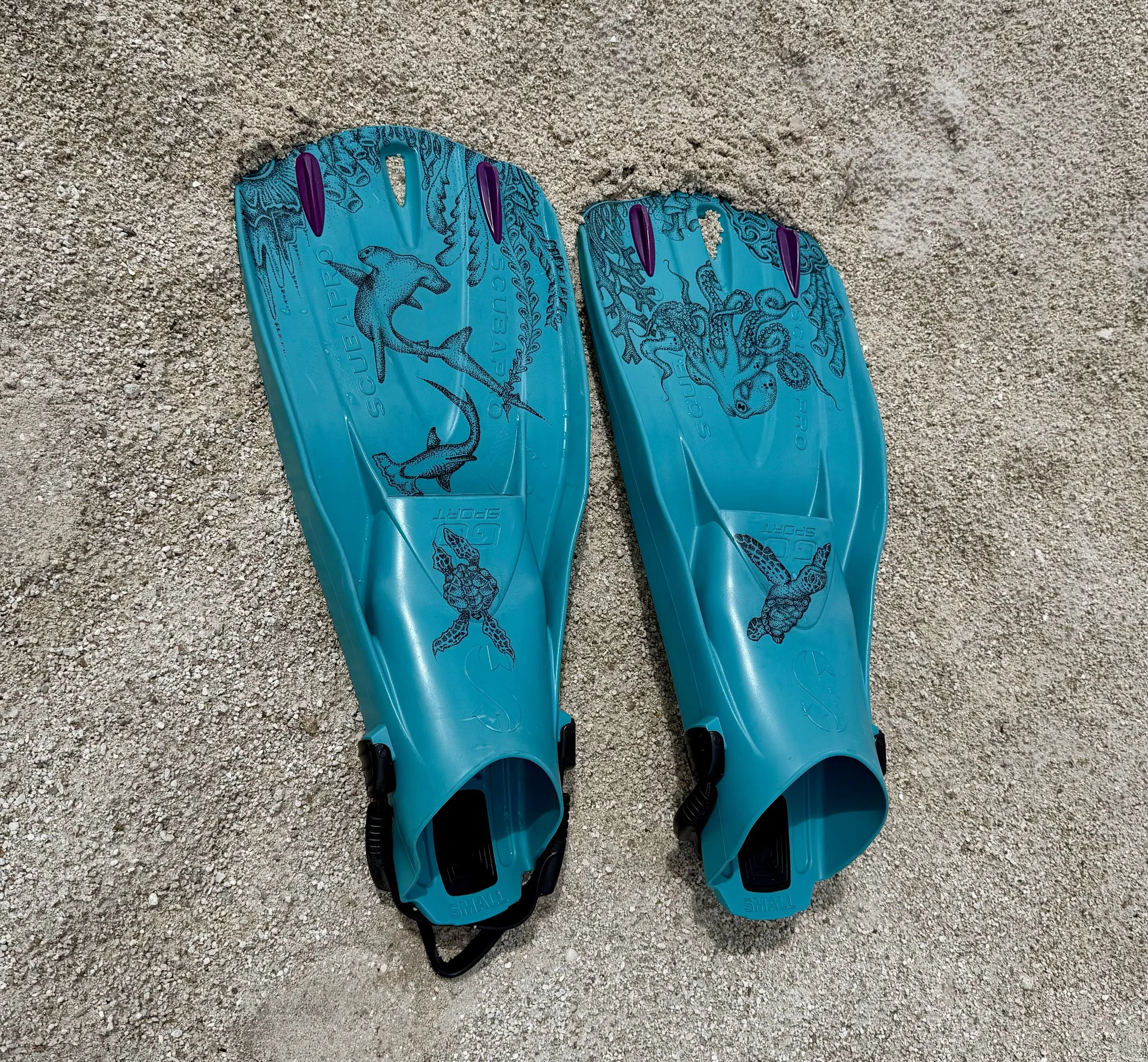
Traditional paddle fins generally provide:
stronger propulsion
better precision
improved control in current
easier frog kicking
better maneuverability overall
As divers progress, especially into photography or more advanced finning techniques, many naturally move toward more traditional fin designs because of the additional control they provide underwater. That does not mean split fins are wrong. Diving equipment is incredibly personal, and some divers absolutely love them.
If you want a much deeper breakdown on fin styles, shore diving, and choosing booties, check out my full blog on fins and booties.
Exposure Protection Matters More Than People Think
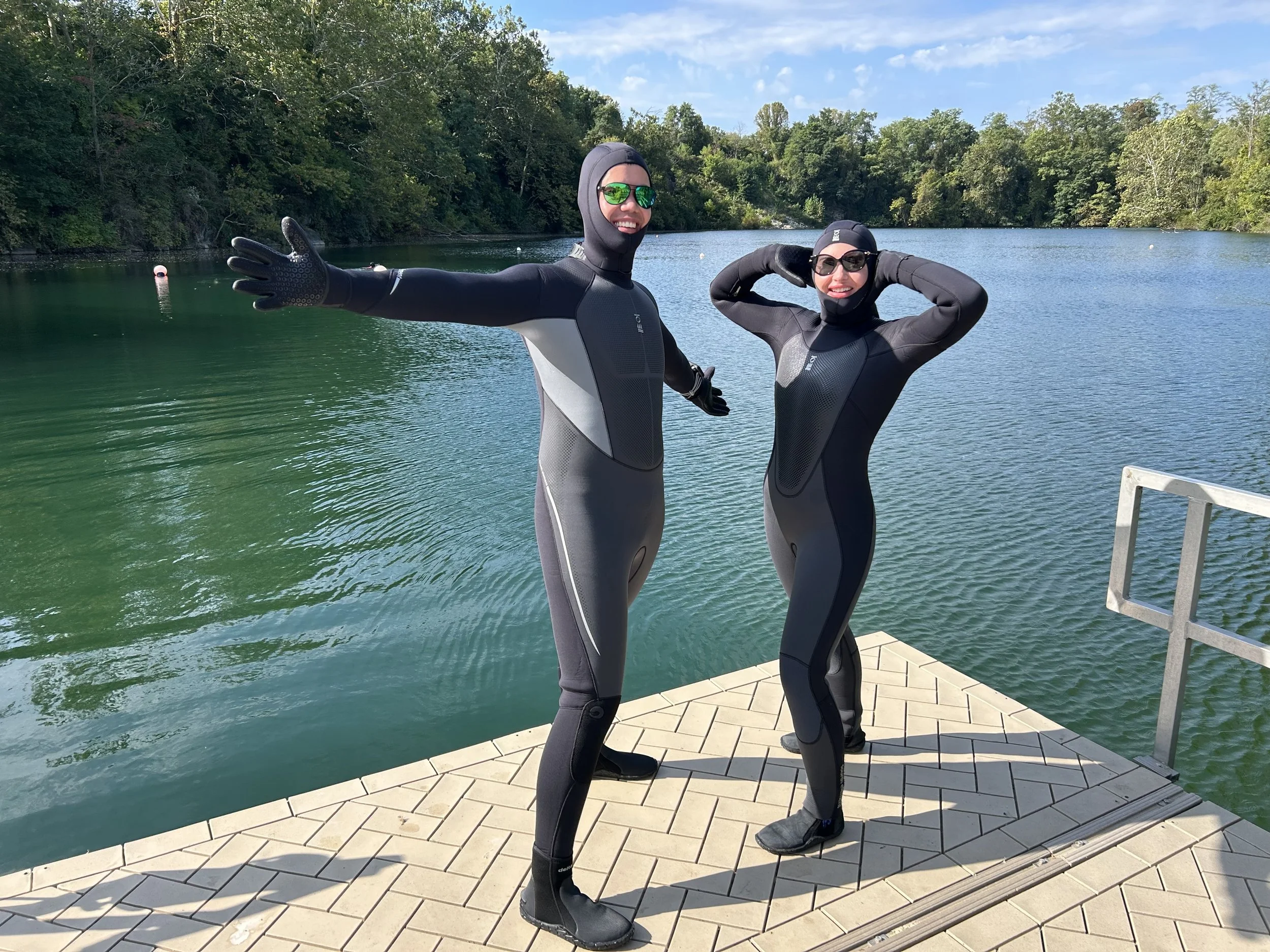
A properly fitting wetsuit dramatically changes your comfort level underwater. Cold divers tend to breathe harder, fatigue faster, and enjoy dives less overall. Water temperature tolerance is also extremely personal. Some divers are perfectly comfortable in conditions that leave other divers freezing.
Even warm tropical diving can feel colder than people expect after:
repetitive dives
thermoclines
wind exposure
long dive days
night dives
One thing newer divers often underestimate is how much thermal comfort affects stress levels underwater. Being slightly cold for an extended period of time becomes mentally exhausting surprisingly quickly. A properly fitting wetsuit should feel supportive and snug without restricting breathing or movement.
Hoods are also wildly underrated. A properly fitting hood can make an enormous difference in warmth and comfort, especially during repetitive dives. Gloves can also make a huge difference depending on the environment and local regulations.
Dive Computers Are Worth It
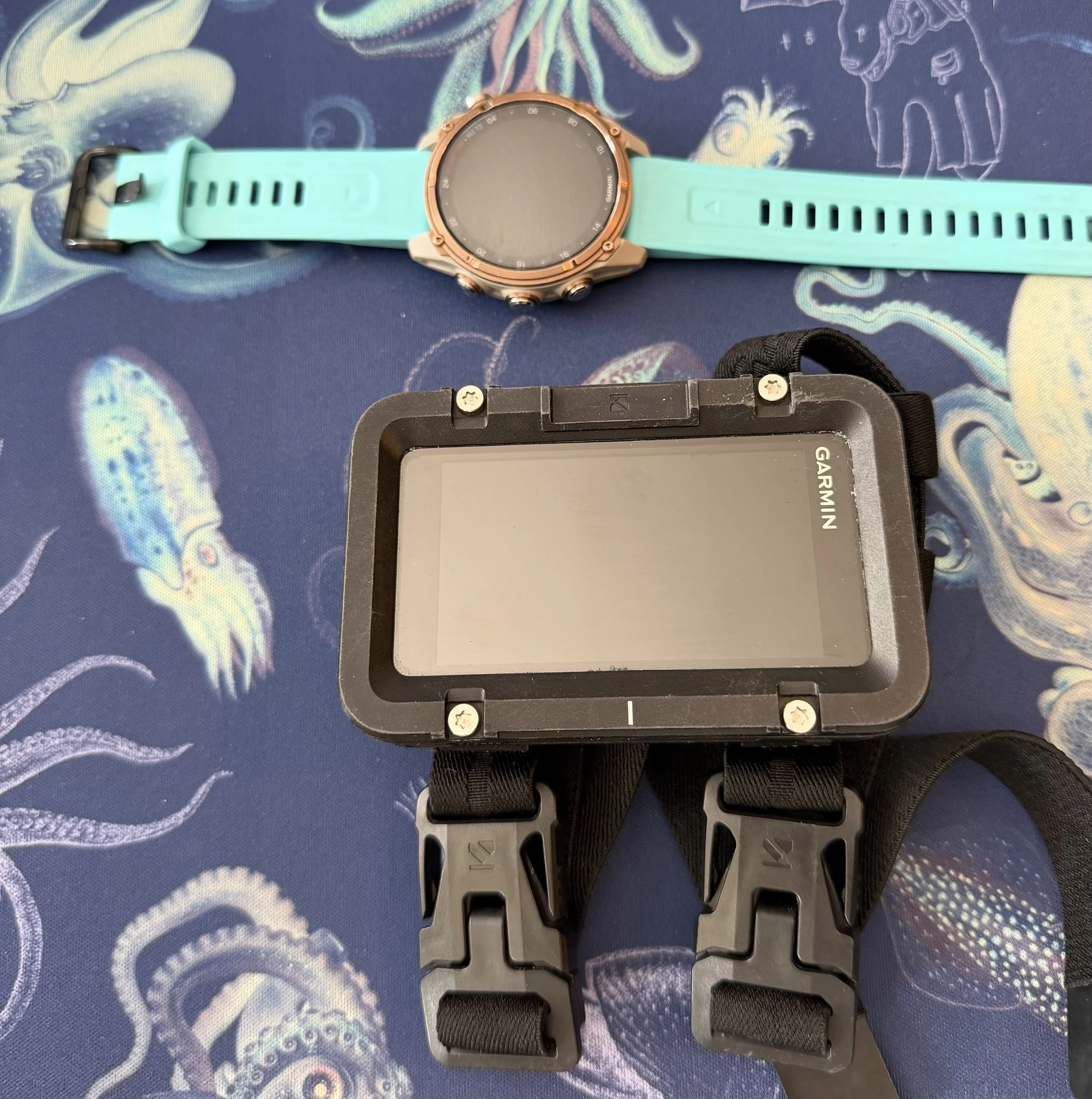
If there is one piece of gear I think divers should prioritize relatively early, it is usually a dive computer. Having your own computer creates consistency because you learn one interface instead of constantly switching between rental computers with different layouts and menus.
One thing I strongly recommend though is thinking ahead a little when buying a computer. If possible, I think it is smart to buy one that at least has the option for air integration, even if you do not plan to use it immediately. Air integration means your dive computer can connect wirelessly to a transmitter on your regulator and display your tank pressure right on the screen. Instead of looking at both a computer and a pressure gauge, all of your key dive information is in one place. A lot of divers eventually decide they want air integration later and realize their computer cannot support it, which usually means replacing the entire computer instead of simply adding a transmitter. While it is certainly not a necessity, it is a feature many divers appreciate as they gain experience and spend more time underwater.
Spending a little more upfront for future flexibility can save money long term. Personally, I absolutely love Garmin dive watches and computers. They are definitely more of an investment, but I have personally had a fantastic experience with them both underwater and in everyday life.
The watches transition seamlessly between daily life and diving. Features like:
fitness tracking
GPS
hiking
workouts
sleep tracking
notifications
all work extremely well above water, while the dive functionality underwater is also excellent. I also really like the Garmin app ecosystem because logging dives and reviewing dive data feels clean, intuitive, and user-friendly.
Regulators Sound More Intimidating Than They Are
Regulators tend to make newer divers nervous because this is the equipment allowing you to breathe underwater. At its core though, a regulator simply reduces the high pressure air from your tank into breathable air delivered on demand as you inhale.
The good news is that most modern regulators from reputable manufacturers are extremely reliable. New divers often spend hours comparing tiny performance differences between models when those differences are unlikely to be noticeable on the types of dives they are doing.
Instead, I encourage divers to focus on a few key factors:
• Reliability
• Comfort
• Ease of breathing
• Local servicing availability
• Suitability for the type of diving you plan to do
One of the most important considerations is thinking about where your diving may take you in the future. Many divers start with warm tropical vacations and eventually find themselves exploring cold water environments, deeper wrecks, quarries, kelp forests, or destinations with more challenging conditions. Unless you know you only want to dive in warm tropical water, it may be worth investing in a regulator rated for a broader range of diving conditions. Buying a versatile system from the beginning can save you from needing to upgrade later.
Another factor that is often overlooked is service support. I strongly recommend purchasing equipment that your local dive shop can inspect, service, and repair. Even an excellent regulator can become frustrating if routine maintenance requires shipping it across the country or waiting months for parts and service.
Annual servicing also matters because regulators are life support equipment. Saltwater, sand, mineral buildup, and normal wear eventually affect internal components over time. Following the manufacturer’s recommended service schedule helps ensure your regulator continues to perform as intended.
When shopping, you may hear terms like “balanced,” “environmentally sealed,” or “high performance.” These features can be beneficial, particularly for certain types of diving, but they do not automatically make one regulator the right choice for every diver. The best regulator is the one that matches your diving goals, breathes comfortably, and can be easily maintained.
I also personally dive with a custom mouthpiece because it significantly reduces jaw fatigue during long dive days. Small comfort upgrades can make a surprisingly big difference, especially during repetitive dives or dive travel.
At the end of the day, the best regulator is not necessarily the most expensive one. It is the regulator that fits your needs, can be serviced locally, and gives you confidence every time you take a breath underwater. Choosing equipment that can grow with your diving opens the door to more adventures, more destinations, and more opportunities to explore the underwater world.
my regulator always goes in my carry-on!
The Air2 Debate
One personal preference I have is avoiding integrated inflator/octopus systems such as the Air2. While they do reduce hose clutter and eliminate the need for a traditional alternate air source, they also require a diver to manage buoyancy control and alternate air sharing from the same device during an emergency.
Many divers use these systems successfully, but I generally prefer a traditional setup with a dedicated alternate second stage. In my experience, it is simpler to teach, easier for dive buddies to recognize and use, and allows buoyancy control and air sharing to remain separate tasks. For newer divers especially, simplicity can be a significant advantage during stressful situations.
Buoyancy Compensators
One thing the scuba internet loves debating is jacket-style buoyancy compensators versus backplate and wing systems. Most newer divers do not need to stress about this nearly as much as the internet makes it seem.
A buoyancy compensator device, or BCD, is essentially what allows you to control buoyancy underwater while also securely holding your scuba cylinder in place. Comfort, fit, trim, and how the system distributes weight all play a huge role in how relaxed and stable you feel underwater.
One thing I always encourage divers to remember is that no BCD automatically makes someone a “better diver.” Strong buoyancy skills matter infinitely more than whatever style of system you happen to be wearing.
Jacket Style BCDs
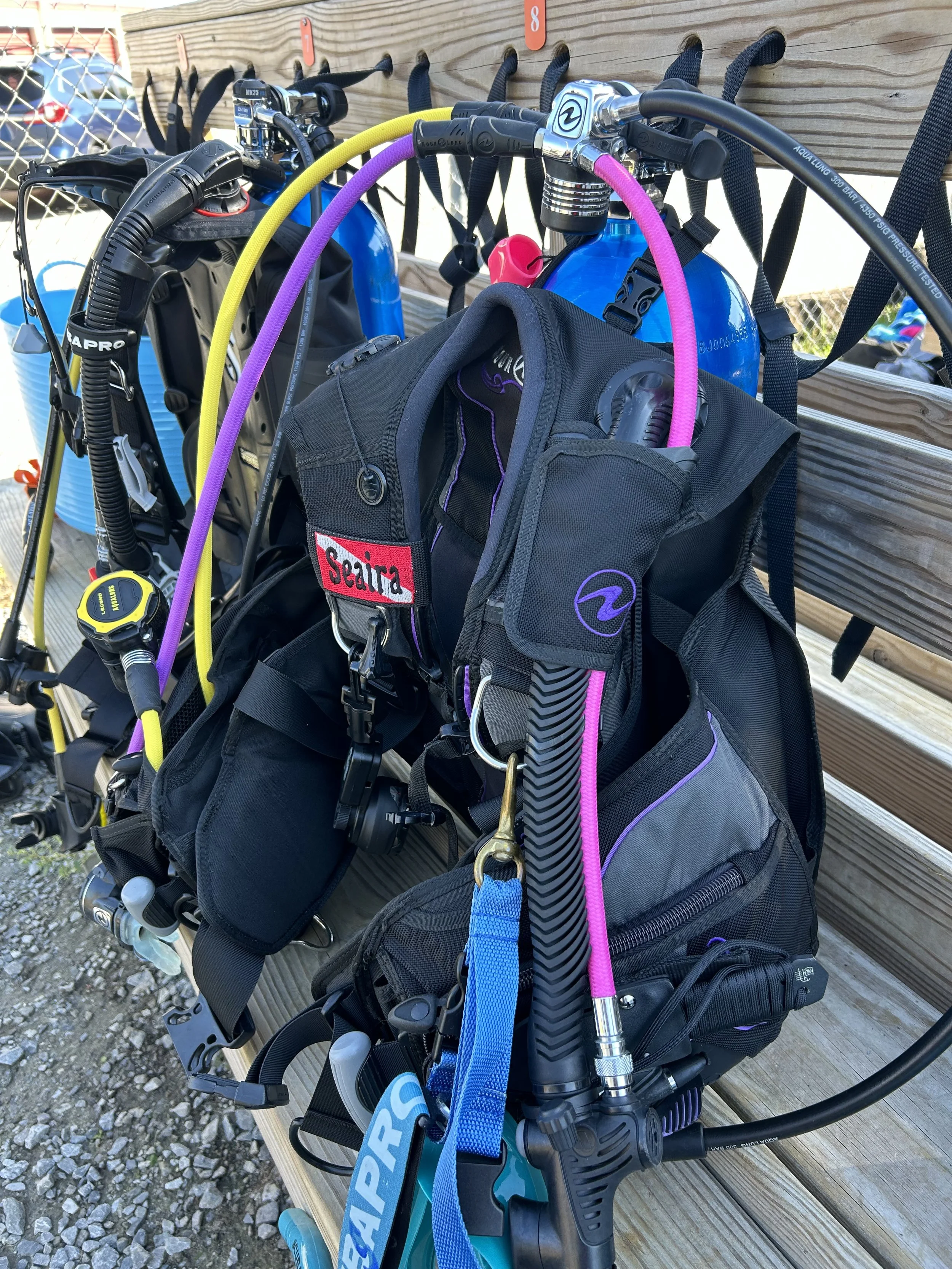
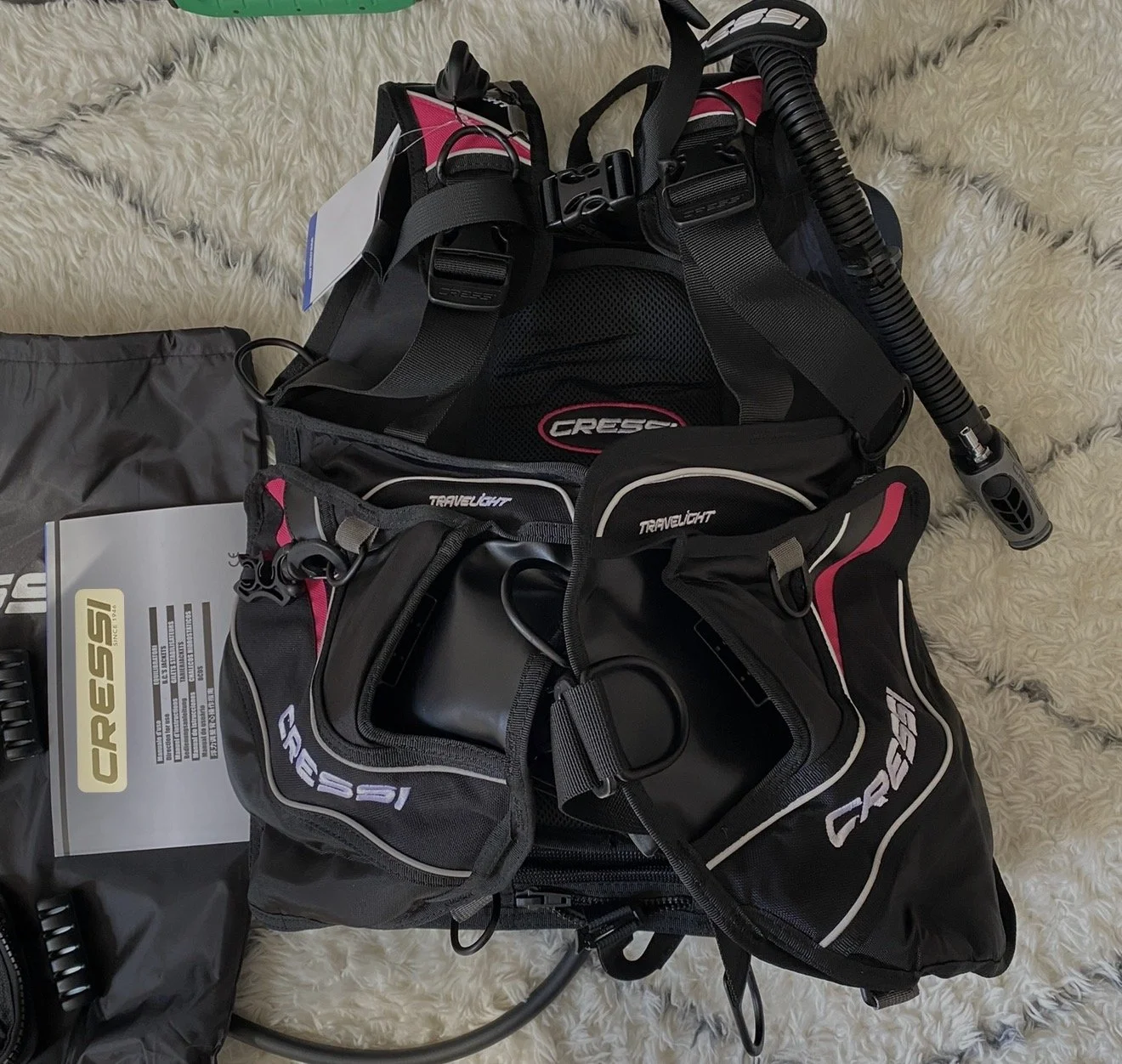
Jacket-style BCDs are what most divers initially learn in during Open Water training. These wrap more around the sides and torso and tend to feel very stable and supportive on the surface. Many recreational divers love them because they are comfortable, familiar, and often include a lot of storage.
Jacket-style BCDs are especially popular for:
recreational diving
vacation diving
newer divers
warm water diving
divers who prefer integrated storage
Many also include:
large cargo pockets
integrated weight systems
trim pockets
multiple attachment points
One thing newer divers often appreciate is the storage space. Having pockets for slates, surface marker buoys, backup masks, lights, or accessories can make organization underwater much easier.
Integrated weight pockets are also very common on jacket-style systems. Instead of wearing a traditional weight belt, weights slide directly into removable pouches attached to the BCD itself. A lot of divers find integrated weights significantly more comfortable because the weight distributes more evenly across the body instead of sitting heavily on the hips.
Backplate and Wing Systems
Backplate and wing systems are more modular and streamlined and are extremely popular among:
underwater photographers
technical divers
cave divers
wreck divers
experienced recreational divers
Instead of inflating around the sides like a jacket BCD, the buoyancy cell, or “wing,” sits primarily behind the diver. A lot of divers love this because it creates a very streamlined profile underwater and often naturally encourages better horizontal trim.
Backplate systems are also highly customizable. Divers can swap components, harnesses, plates, and wings depending on the type of diving they are doing. One thing many divers also like is that backplates tend to feel very stable underwater because the cylinder sits securely against a rigid plate.
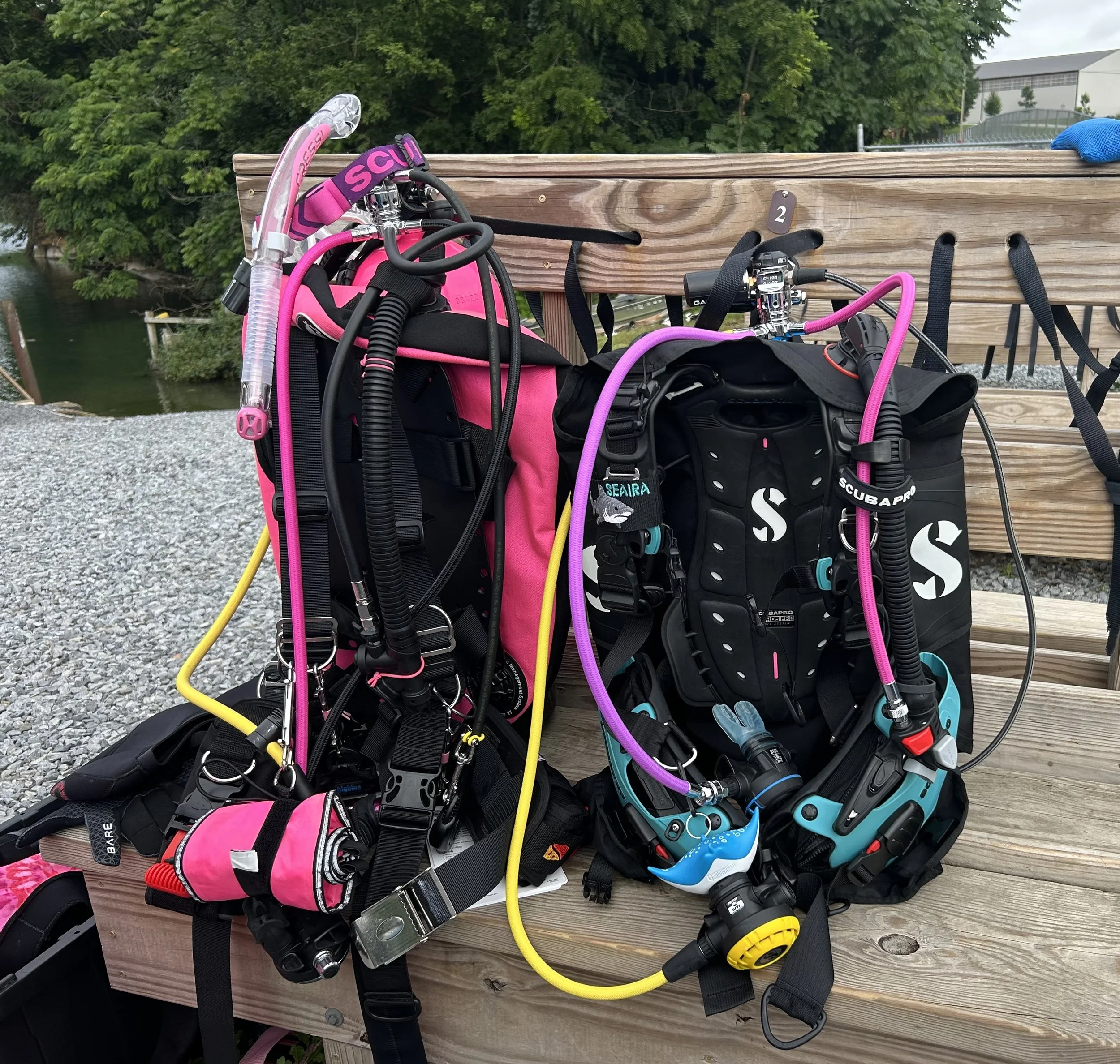
A backplate-and-wing (BP/W) system on the left (pink) compared to a back-inflate BCD, the Scubapro Hydros Pro, on the right.
Aluminum vs Steel Backplates
If you decide to go with a backplate-and-wing (BP/W) system, such as the Scubapro S-Tek Pro System, one of the choices you will eventually encounter is whether to use an aluminum or steel backplate.
Unlike many traditional jacket-style or back-inflate BCDs, BP/W systems are designed to be modular, allowing divers to customize components to better match their diving style, exposure protection, and diving environment. The backplate serves as the foundation of the system, with the harness and wing attached to it.
Steel backplates add negative weight to the setup, which can reduce the amount of lead a diver needs to wear elsewhere. Many divers appreciate this because the weight is distributed comfortably across the back rather than concentrated on a weight belt or integrated weight pockets.
Aluminum backplates are significantly lighter and are especially popular with traveling divers. Airline baggage weight becomes a real consideration very quickly in diving. Travel changes how people think about gear faster than almost anything else.
Heavy equipment sounds manageable until you are sprinting through airports hauling cameras, regulators, fins, wetsuits, batteries, chargers, and everything else that somehow ends up in a dive bag while already pushing airline weight limits.
There is no universally "better" choice. Divers who primarily dive locally often prefer steel because it reduces the amount of lead they need to carry. Divers who travel frequently often choose aluminum to save weight in their luggage.
Like many gear decisions in diving, the right answer depends on where and how you dive most often. If most of your diving is local, steel may be worth considering. If you spend a lot of time traveling for dive trips, an aluminum backplate can make life a little easier at the airport.
Travel BCDs
Travel-specific BCDs have also become really popular over the years. These are designed to:
reduce luggage weight
pack smaller
dry faster
travel more easily
Many travel BCDs are fantastic for tropical diving and vacation travel. The tradeoff sometimes comes in:
reduced padding
less lift capacity
fewer pockets
less storage
slightly lighter-duty construction
compared to bulkier recreational systems.
One thing I always encourage divers to think about is what type of diving they realistically do most often instead of buying gear for hypothetical future diving they may never actually do.
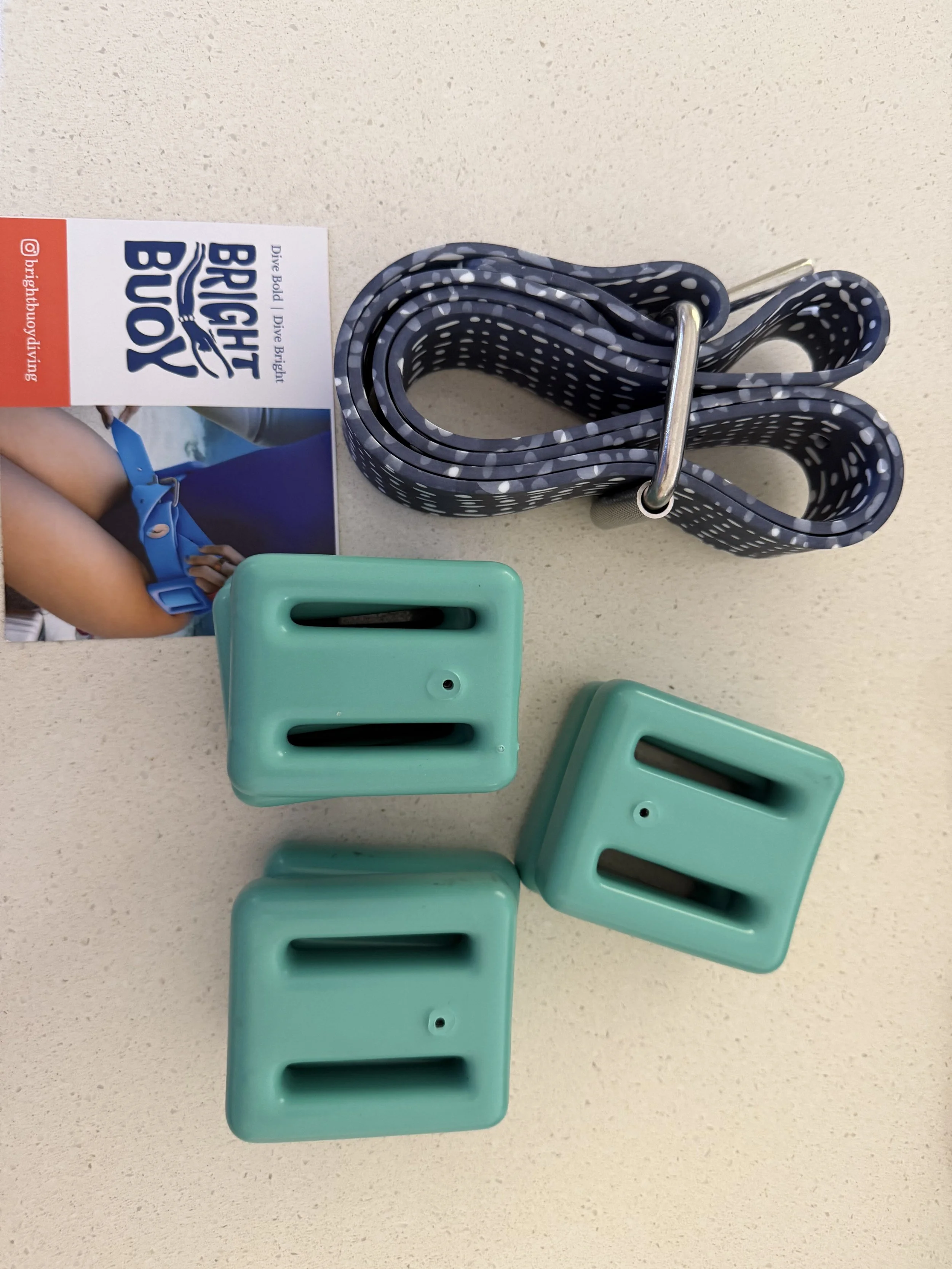
Weight Belts Are Still a Thing
Even though integrated weight systems are extremely common now, traditional weight belts still absolutely exist. Some divers still prefer them because of:
simplicity
easy ditchability
travel convenience
modularity
fewer moving parts
Freedivers also commonly use weight belts because their weighting needs and body positioning differ from scuba divers.
One thing newer divers should know though is that integrated weight systems still need to be practiced regularly. Divers should always know exactly:
how to ditch their weights
where releases are located
how their specific system works
That familiarity matters during emergencies.
Pockets Matter More Than People Think
Storage becomes surprisingly important as divers gain experience. At first you may only carry:
a pressure gauge
a computer
maybe a slate
Then eventually you start carrying:
delayed surface marker buoys
reels
lights
backup masks
pointers
wet notes
cameras
accessories
Pocket layout and accessibility start mattering much more at that point.
One thing I personally recommend is avoiding clipping excessive amounts of gear all over yourself. Streamlining matters underwater. Gear dangling everywhere increases drag, task loading, and entanglement risk.
Simple and organized usually works best.
Trim Pockets
Trim pockets are one of those small things newer divers often overlook initially, but they can make a huge difference underwater. Trim pockets are usually small weight pockets positioned higher on the tank band or rear portion of the BCD.
Instead of placing all your weight low around your waist, trim pockets help distribute weight more evenly throughout your setup. This can dramatically improve:
trim
body position
buoyancy control
comfort underwater
Properly placed trim weight often helps divers stay more horizontal underwater instead of constantly fighting a feet-down position. Tiny adjustments in weight distribution can make a surprisingly large difference in overall comfort and stability.
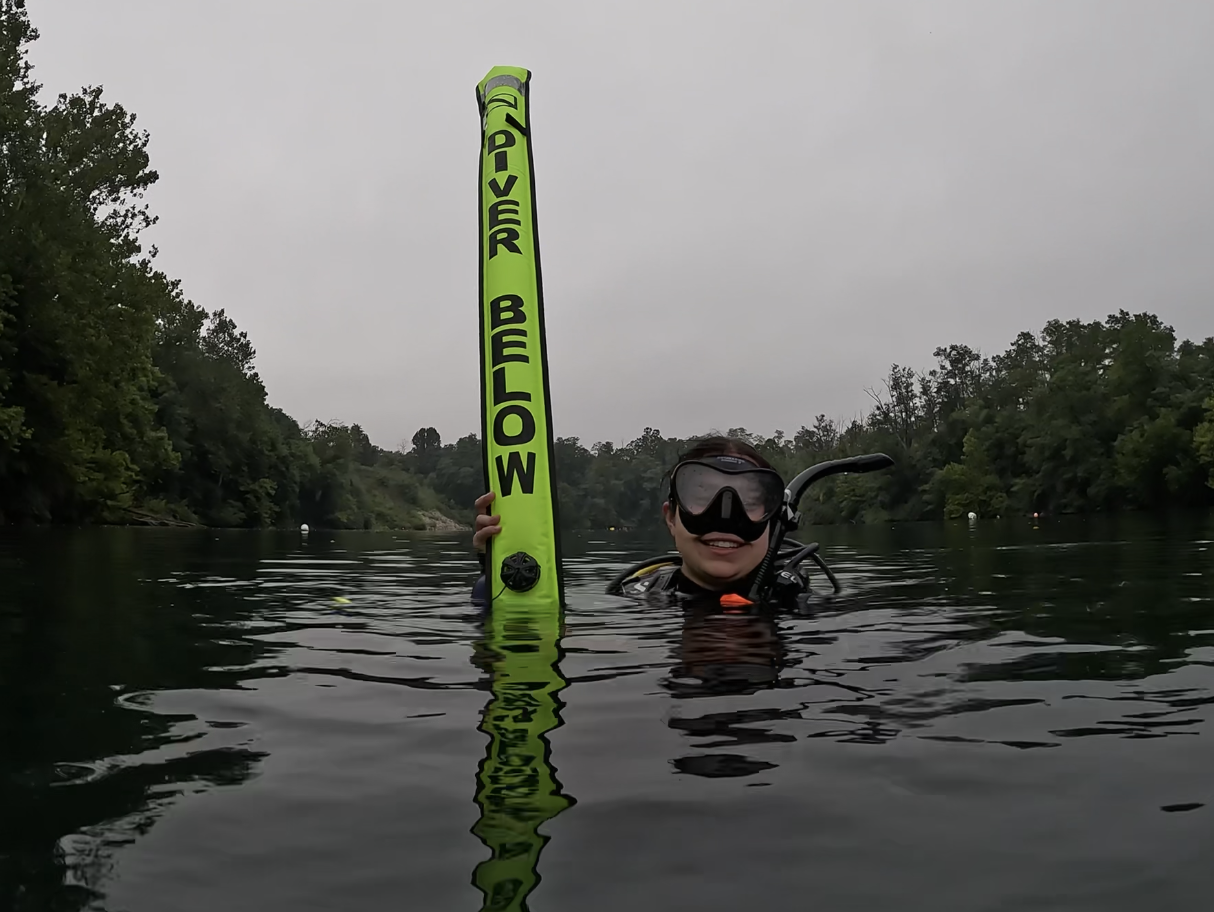
Surface Marker Buoys and Safety Gear
One piece of equipment I strongly encourage divers to eventually own is a delayed surface marker buoy, or DSMB. These become especially important during:
drift diving
boat diving
low visibility conditions
current-heavy environments
A DSMB helps surface support know where divers are and adds an important layer of visibility and safety.
Other small accessories also become surprisingly valuable over time:
whistles
cutting tools
backup lights
compasses
save-a-dive kits
None of these feel exciting initially, but they can make a huge difference when something unexpected happens.
Save-a-Dive Kits Are Underrated
One of the most useful things a diver can eventually build is a small save-a-dive kit. Things like:
O-rings
zip ties
fin straps
batteries
mouthpieces
clips
bolt snaps
can genuinely save dive trips.
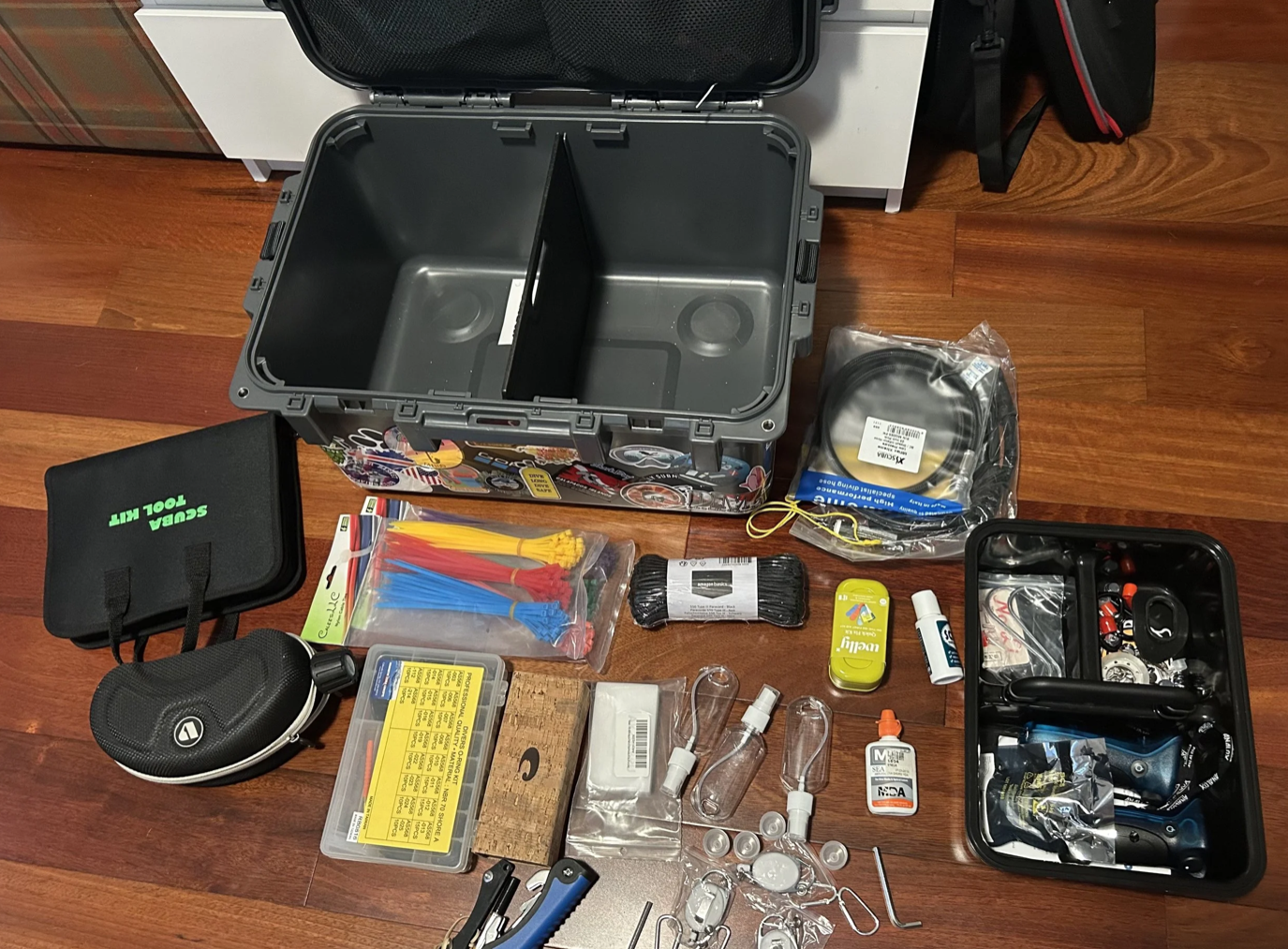
Tiny equipment problems become much less stressful when you already have simple replacement parts available instead of scrambling minutes before a dive briefing.
Cameras Can Wait
One thing newer divers often feel pressure to do immediately is buy a camera. Underwater photography is incredible, but I strongly encourage divers to focus on buoyancy and comfort first before adding cameras into the mix.
Cameras add:
task loading
distraction
bulk
complexity
and it becomes much harder to focus on diving fundamentals while simultaneously trying to photograph every turtle, shark, nudibranch, or manta ray you encounter.
Strong buoyancy skills make underwater photography dramatically more enjoyable later on anyway.

How Are You Going to Travel With All of This?
One thing newer divers do not think about immediately is how quickly scuba gear starts taking over your luggage situation.
At first it feels manageable. Then suddenly you have:
fins
wetsuits
regulators
booties
lights
chargers
batteries
save-a-dive kits
cameras
reels
surface marker buoys
random clips and accessories
and somehow your luggage is now pushing airline weight limits before clothes even enter the equation.
Travel considerations become a huge part of gear decisions over time. Heavy gear sounds fine until you are sprinting through airports, hauling equipment down docks, dealing with ferry transfers, or carrying gear across uneven shore entries in tropical heat.
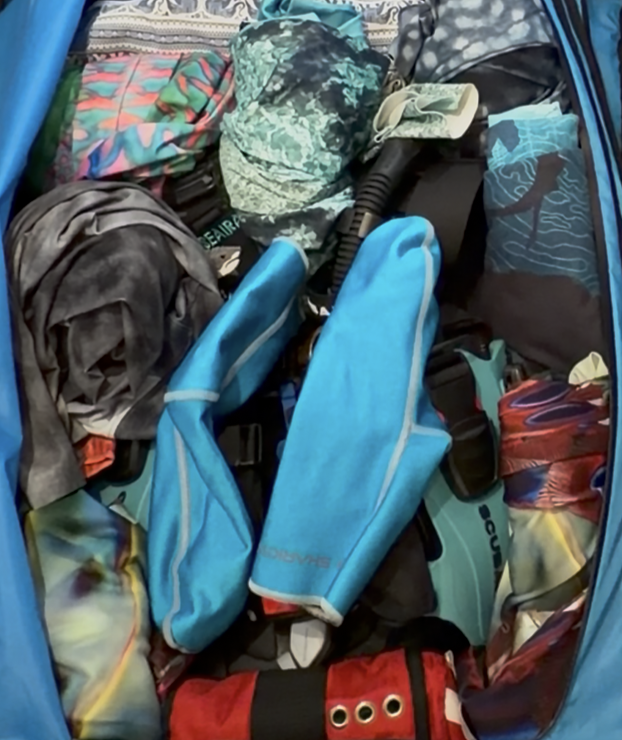
One thing I always encourage divers to think about is whether they want luggage that obviously screams “expensive scuba gear inside.” Some dive bags are amazing organizationally but are also incredibly obvious. Depending on where you are traveling, I personally think there is value in keeping things a little more discreet sometimes.
A good mesh bag is also one of the most underrated pieces of dive gear you can own.
Mesh bags are fantastic for:
carrying gear to and from boats
shore diving organization
rinsing equipment
drying gear
keeping small accessories contained
separating wet and dry gear
Mine basically lives permanently in my dive setup at this point.
One thing I have also learned over the years is that organization matters far more than people initially realize. Dive travel becomes dramatically less stressful when everything has a place and you are not digging through luggage trying to find a missing fin strap or charger the night before diving.
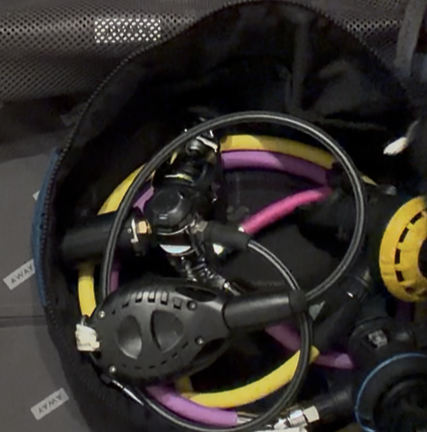
I also personally always carry certain items in my carry-on:
regulator
dive computer
camera equipment
batteries
Losing critical dive gear in checked luggage can become stressful very quickly, especially on international trips or liveaboards.
TSA also almost always pulls my bag aside because underwater camera housings, chargers, regulators, and batteries apparently look deeply suspicious on airport scanners. At this point I basically expect it.
Check out my full blog on traveling with scuba gear if you want a much deeper breakdown on:
luggage choices
carry-on strategy
protecting camera gear
airline weight management
travel organization
packing tips for dive trips
Gear Maintenance Matters Too
Taking care of your gear properly dramatically affects how long it lasts and how reliably it performs. Good maintenance is not just about protecting your investment either. Well-maintained equipment helps divers feel safer, more confident, and more familiar with how their setup actually functions underwater.
Simple habits make a huge difference:
rinse thoroughly after diving
allow gear to dry fully
avoid storing wet equipment long term
keep regulators protected during transport
avoid leaving gear baking in hot cars unnecessarily
One thing I also strongly recommend before buying major equipment is checking which brands your local dive shops can actually service. Some gear looks amazing online, but maintenance becomes frustrating very quickly if no nearby technician is trained or authorized to work on it.
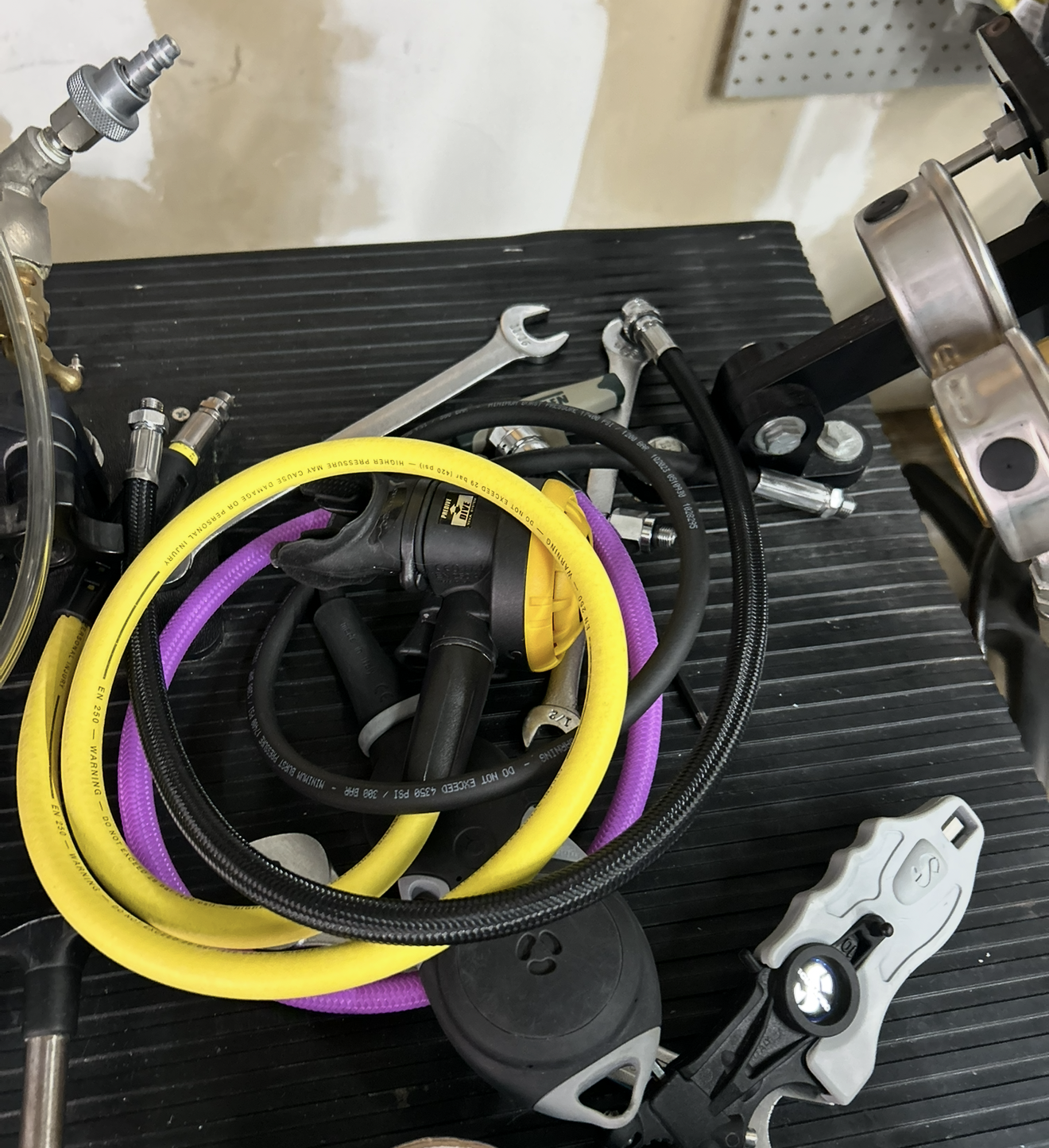
Regulators especially are life-support equipment, so access to qualified servicing matters. A slightly less flashy setup that can easily be serviced locally is often a much smarter long-term choice than expensive gear you constantly have to ship across the country for maintenance.
Good maintenance habits also help divers become more familiar with their own equipment over time. You start noticing how things should feel, sound, and function, which makes it easier to identify potential issues before they become bigger problems.
Check out my full blog on scuba gear servicing and maintenance if you want a deeper breakdown.
Comfort Matters More Than Looking Cool
The internet sometimes makes scuba gear feel weirdly competitive. Fancy setups get attention online. Expensive gear gets attention. Giant camera rigs get attention.
None of that automatically makes somebody a good diver.
A diver who feels comfortable, relaxed, warm, and confident underwater will almost always dive better than somebody carrying expensive gear they barely understand. Comfort and familiarity matter far more than looking impressive on the boat.

Your Gear Setup Will Change Over Time
One thing I wish more newer divers understood is that almost nobody dives the exact same setup forever.
As divers gain experience, priorities naturally change. Travel divers often move toward lightweight gear. Photographers usually become more streamlined. Shore divers prioritize durability and comfort. Cold water divers develop completely different preferences than tropical vacation divers.
That evolution is completely normal.
There is no rush to build the “perfect” setup immediately because most divers redefine what “perfect” means multiple times throughout their diving journey.
Diving Should Still Feel Fun
Comfort and function should absolutely come first when choosing gear, but that does not mean divers cannot have fun with their setup too.
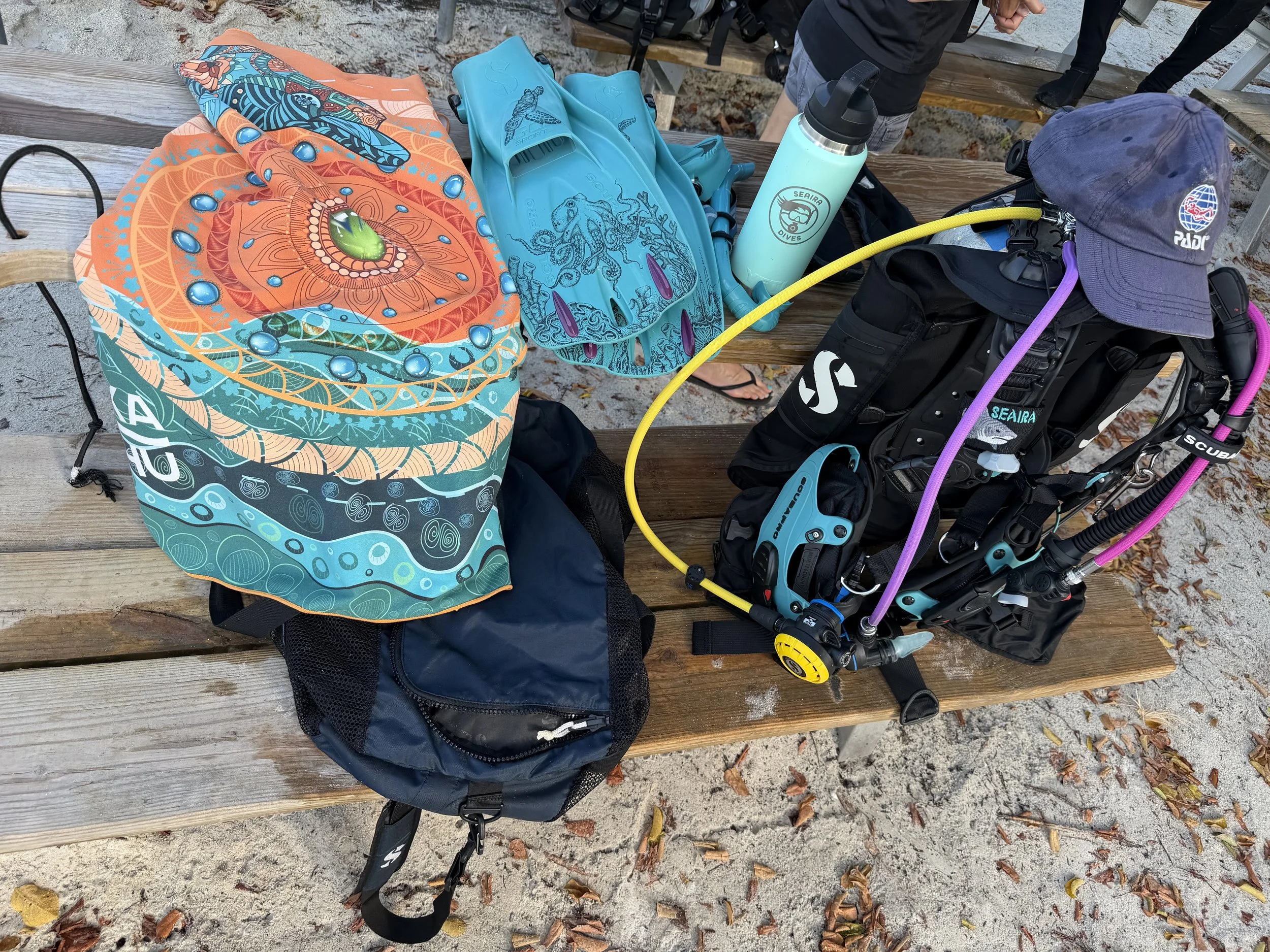
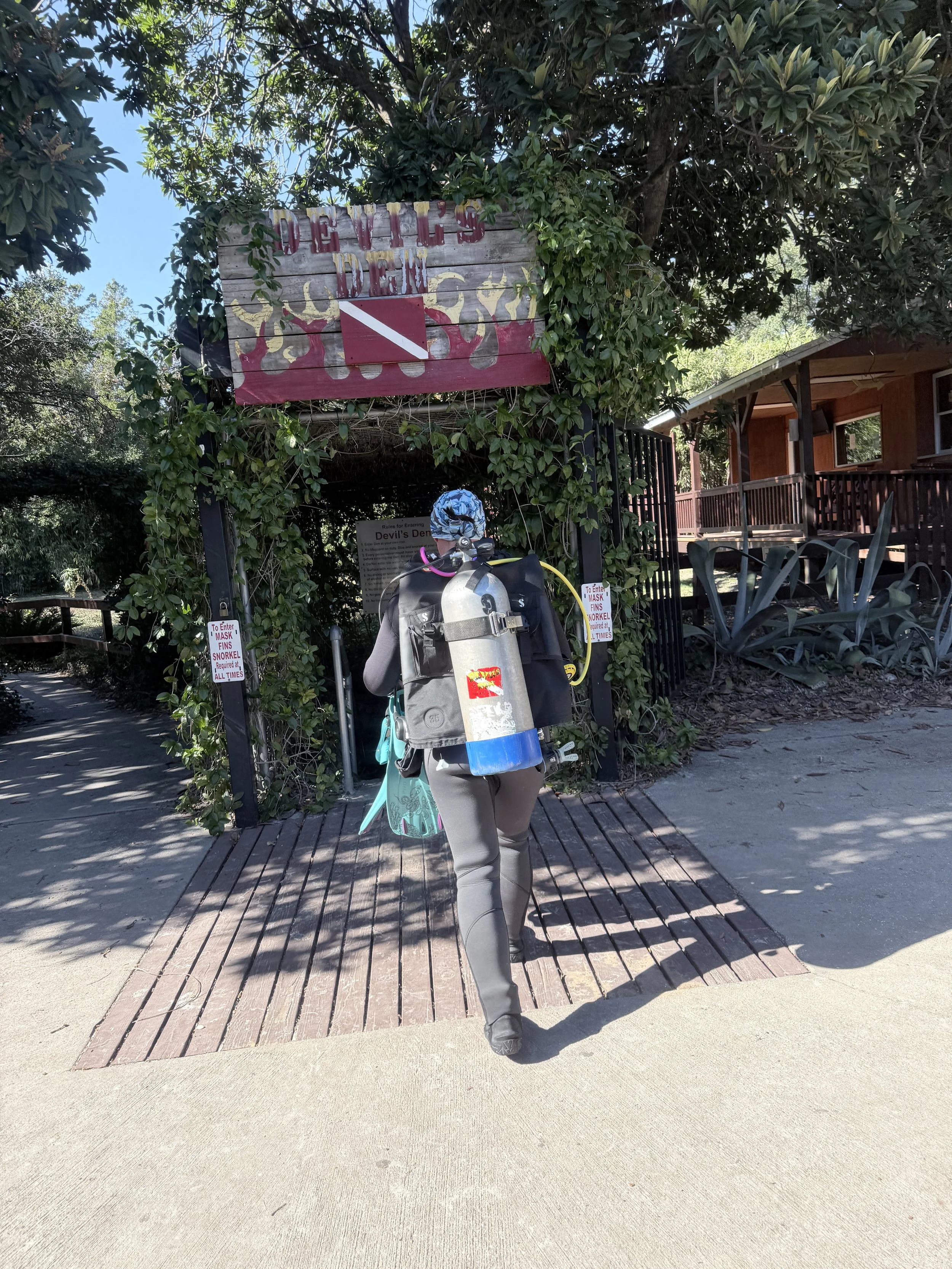
We all know I love teal, and at this point a huge portion of my gear reflects that. My setup has slowly evolved into a combination of functionality and teal chaos over the years, and I love it.
Walking onto a boat and immediately spotting your own gear among twenty other divers becomes surprisingly convenient too.
Diving is supposed to feel exciting.
Your gear should support that experience, not intimidate you out of it.
Final Thoughts
Nobody starts diving already understanding every piece of gear immediately. Learning equipment takes time, experience, conversations, mistakes, travel, and simply spending more time underwater.
Start with comfort first. Focus on finding a great mask. Rent gear while learning your preferences. Ask questions. Try different setups. Give yourself time to figure out what actually works best for your diving.
Most importantly, remember that gear is only there to support the experience underwater.
The ocean is still the best part.
Dive safe, explore passionately, and remember…