
How to Build a Save a Dive Kit
Nothing humbles a diver faster than having a dive cancelled over something tiny.
A missing O-ring. A snapped fin strap. A dead battery. A mouthpiece tearing five minutes before giant stride. Most dive-ending gear problems are not catastrophic failures — they are small, annoying issues that become major problems simply because nobody has the right spare part available.
That is exactly why every diver should eventually build a save-a-dive kit.
Before we jump in, I linked my personal Amazon save-a-dive kit recommendations here if you want a starting point for building your own setup:
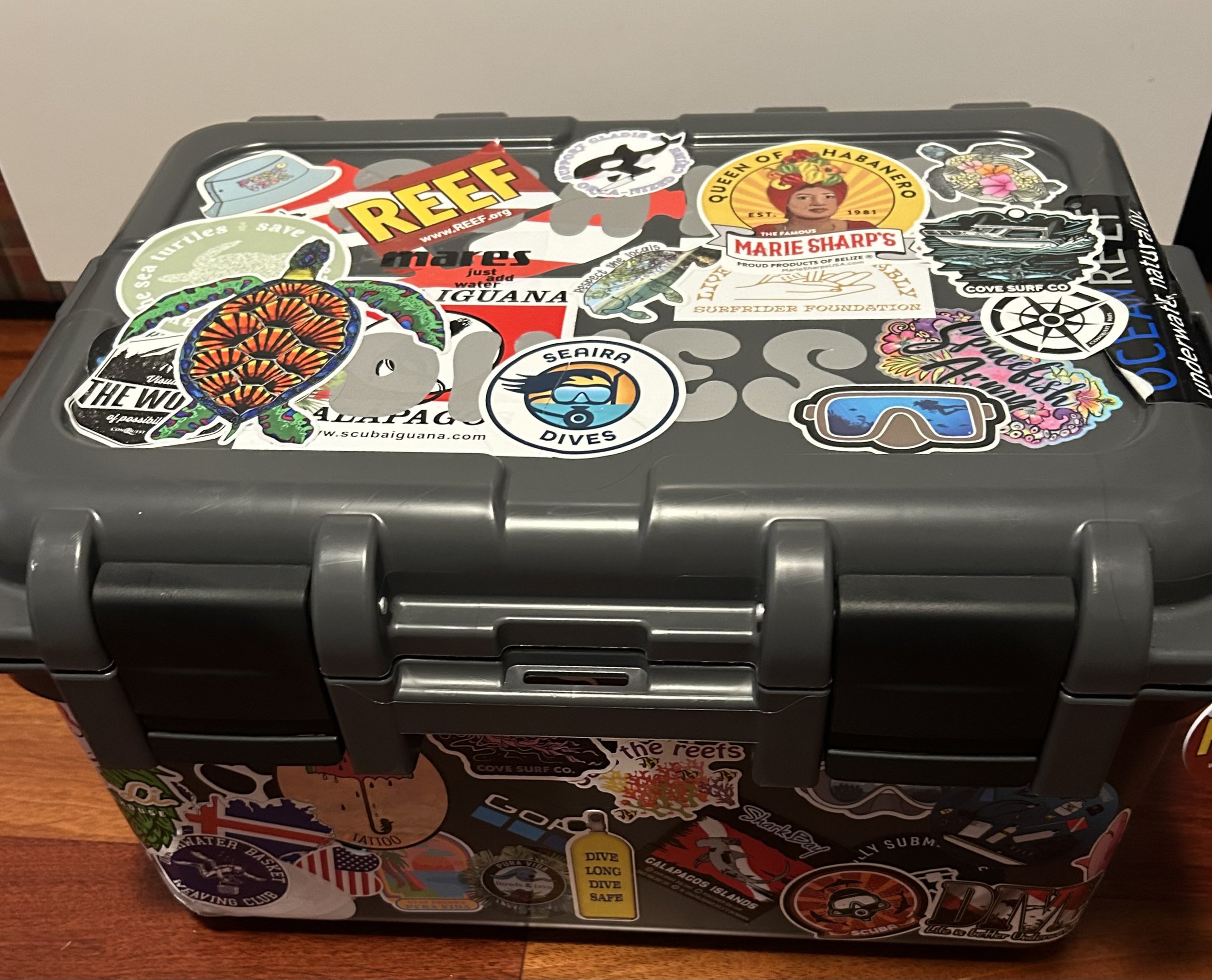
What Exactly Is a Save-a-Dive Kit?
Every diver eventually encounters an equipment problem at the most inconvenient moment. A missing O-ring, a broken fin strap, or a loose fitting might seem insignificant on land, but those small issues can quickly become the difference between enjoying a dive and watching everyone else head underwater.
That's where a save-a-dive kit earns its place in your gear bag.
Essentially, a save-a-dive kit is a collection of spare parts, basic tools, and backup essentials designed to address minor equipment problems before they derail your dive plans. Some divers purchase ready-made kits, while others build their own, gradually adding items based on the equipment they use and the lessons learned along the way.
The contents don't need to be elaborate or expensive. A few thoughtfully selected items can make an enormous difference, particularly when traveling to remote destinations where finding a replacement part isn't as simple as visiting the nearest dive shop.
Beyond the practical benefits, carrying a save-a-dive kit provides peace of mind. Instead of scrambling around the boat looking for a spare O-ring or hoping someone has the right tool, you have a better chance of resolving the problem quickly and getting back to what you came to do.
A save-a-dive kit won't prevent every equipment issue, but a little preparation can keep a minor inconvenience from becoming a missed dive.
Build Your Kit Slowly
A good save-a-dive kit doesn't need to be built overnight. New divers especially shouldn't feel pressured to purchase every spare part and tool imaginable before their next dive trip.
Most kits grow naturally with experience.
Maybe yours starts with a few spare O-rings. After a broken fin strap nearly costs you a dive, an extra strap finds its way into the bag. Eventually, a spare mouthpiece, zip ties, batteries, clips, and a handful of useful tools join the collection. Before long, you've assembled a surprisingly capable little repair kit without really intending to.
The most useful additions often come from experience. Every diver eventually encounters an equipment problem that leaves them thinking, Well, I'm never letting that happen again.
Rather than filling your bag with items you may never need, focus on the equipment you actually dive with, the parts most likely to need replacing, and the destinations you plan to visit. A weekend of local shore diving calls for different preparation than a week aboard a liveaboard hundreds of miles from the nearest dive shop.
The best save-a-dive kit isn't necessarily the biggest. It's the one built around your equipment, your experience, and the little lessons you've picked up along the way.
My Core Save-a-Dive Kit Essentials
There are a few things I personally almost always carry no matter where I am diving.
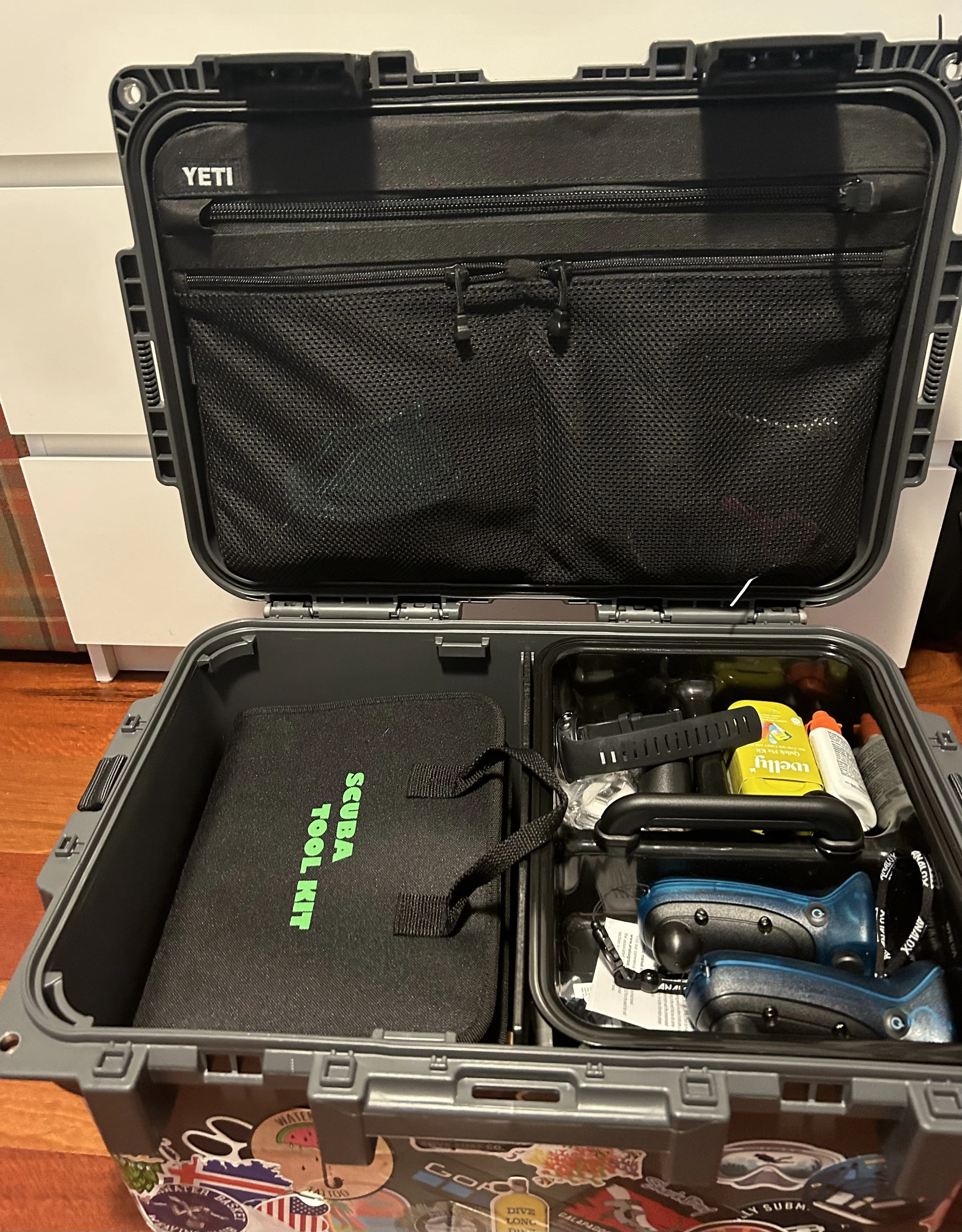
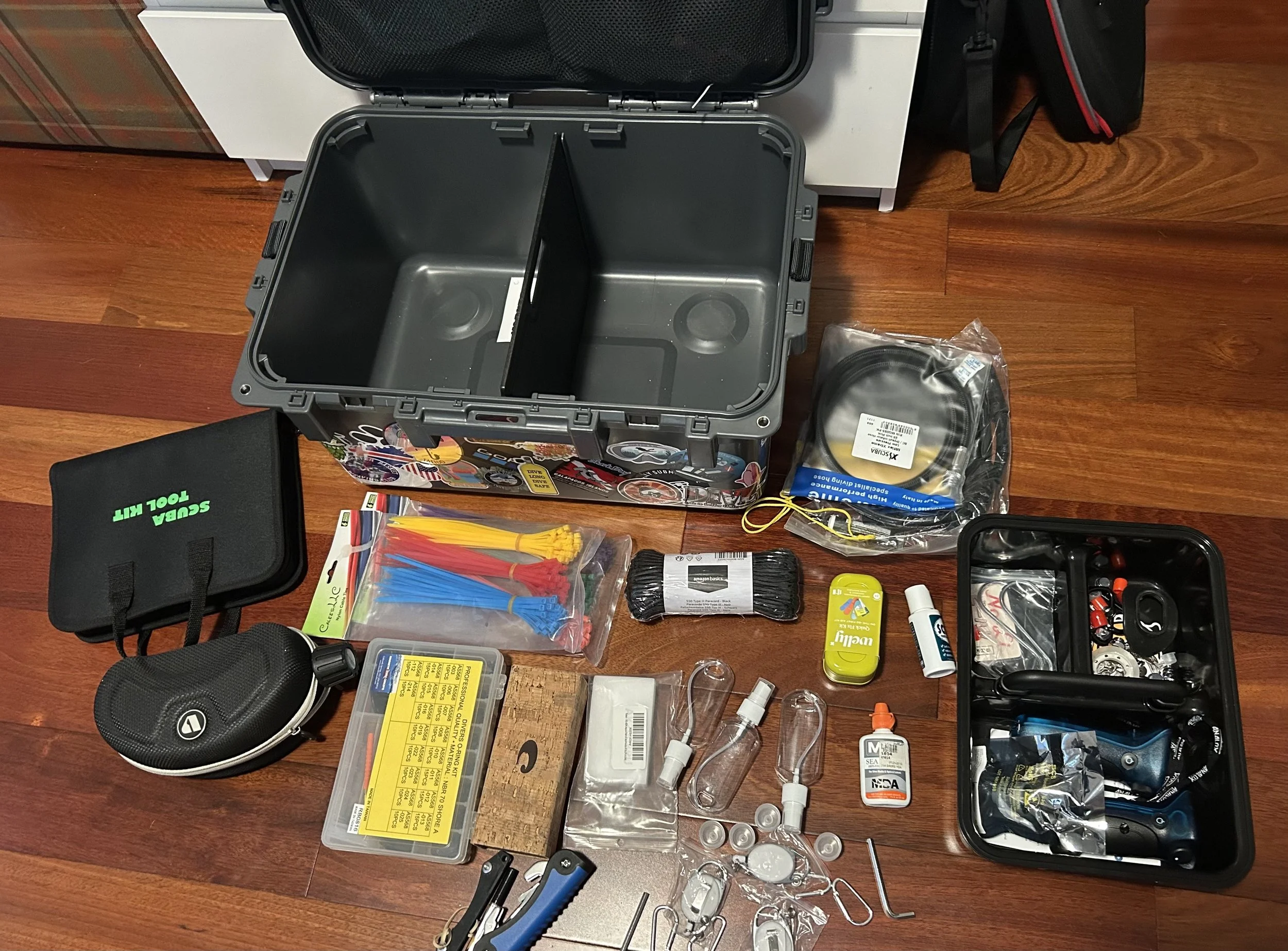
My core save-a-dive kit usually includes:
O-rings (varying sizes)
fin straps
mask straps
zip ties
mouthpieces
bolt snaps
double enders
batteries
save-a-dive multi-tool
defog
electrical tape
duct tape
extra clips
small flashlight
charging cables
spare memory cards
extra mask keeper
spare low-pressure hose
delayed surface marker buoy hardware
Over time you start learning which pieces of gear fail most often and what small items can completely save a dive day.
Multi-Tools Are Worth Their Weight in Gold
Few things earn their place in a save-a-dive kit quite like a reliable multi-tool. From tightening a loose bolt on a camera tray to adjusting a piece of equipment before a dive, having the right tool within reach can save an enormous amount of frustration.
Small adjustments have a remarkable tendency to become necessary at the least convenient moments, particularly when you're already suited up or preparing to board the boat. A compact multi-tool can handle many of these minor fixes without requiring an entire toolbox.
When choosing a multi-tool, look for a combination of useful features:
Screwdrivers: For camera housings, accessories, and equipment adjustments.
Allen keys: Particularly useful for camera trays, handles, and mounting hardware.
Small wrenches: For compatible nuts, bolts, and fittings.
O-ring picks: For carefully removing O-rings without damaging their grooves or sealing surfaces.
Cutting tools: Useful for trimming zip ties, line, and other small materials.
Stainless steel or corrosion-resistant materials are worth considering, especially in saltwater environments. Even corrosion-resistant tools benefit from a freshwater rinse and thorough drying after exposure to saltwater.
Bigger isn't necessarily better. A compact, sturdy tool with the features you actually use will generally be more valuable than a bulky collection of attachments that rarely leave your bag.
One important distinction: A multi-tool is ideal for minor adjustments and accessory repairs, but regulator servicing and other safety-critical equipment repairs should be left to appropriately trained technicians.
A good multi-tool may not be the most exciting piece of dive equipment you own, but there's a good chance it will become one of the most frequently borrowed.
Spare Parts Matter More Than Fancy Gear
Some of the most valuable items in a dive bag are also the smallest and least expensive. After years of diving, teaching, and traveling, I've learned that a spare part costing just a few dollars can sometimes be the difference between making a dive and missing out entirely.
A broken fin strap can leave you unable to dive before you've even entered the water. A missing or damaged O-ring can prevent a regulator from sealing properly, while a torn mouthpiece can make an otherwise incredible dive unnecessarily uncomfortable.
These are relatively minor equipment problems, but without the right replacement parts, they can quickly become major inconveniences.
I recommend keeping a small supply of the following essentials:
Tank O-rings: In the appropriate sizes for the valves and connections you use.
Spare fin straps: Especially important if your fins use proprietary straps or buckles that may be difficult to replace.
Mask straps: A simple backup that can save a dive when a strap or buckle fails.
Regulator mouthpieces: Along with suitable replacement zip ties to secure them properly.
Zip ties: Useful for securing compatible accessories and making minor noncritical repairs.
Snorkel keepers: Small, inexpensive, and remarkably easy to lose.
Clips and attachment hardware: Spare boltsnaps, split rings, and other hardware for securing accessories.
One addition I strongly recommend from personal experience is a spare low-pressure hose. I've needed one before, and finding the correct replacement while traveling isn't always easy. Hoses can develop leaks or fail unexpectedly, and having a compatible spare available can make a significant difference, particularly aboard a liveaboard or in a remote destination.
Any replacement hose should be compatible with your equipment and installed and checked by a qualified professional. A spare part is only useful when it can be fitted safely.
The key is to think about the equipment you rely on most and which small components could prevent you from diving if they failed. Specialized accessories, proprietary fittings, and less common replacement parts deserve particular consideration when traveling somewhere without easy access to a well-stocked dive shop.
Expensive equipment might make your dives more enjoyable, but sometimes a five-dollar spare part is what makes the dive possible in the first place.
Zip Ties and Duct Tape Somehow Fix Everything
Spend enough time diving, and you'll eventually develop an unreasonable appreciation for zip ties and duct tape. Neither is particularly exciting, but both have an impressive ability to solve problems when you least expect them.
A loose accessory? Zip tie.
A broken attachment point? Zip tie.
Something rattling around your gear bag that definitely wasn't rattling yesterday? There's a good chance a zip tie will help.
Lightweight, inexpensive, and endlessly useful, zip ties are among the easiest additions to any save-a-dive kit. They're great for securing accessories, organizing loose cables, and making minor temporary fixes. I recommend carrying a variety of sizes, along with a small cutting tool for trimming the ends.
Duct tape deserves an equally enthusiastic endorsement. From patching a small wetsuit tear until a proper repair can be made to labeling equipment, securing loose items, or holding together luggage that's seen one too many airport baggage handlers, a little duct tape can go a surprisingly long way.
There's no need to pack an entire roll, either. Wrapping a few feet around an old gift card or another flat piece of plastic keeps it compact and ready when needed.
Of course, neither zip ties nor duct tape should be used to improvise repairs on life-support equipment or other safety-critical components. Their value lies in simple, temporary solutions that keep minor inconveniences from becoming bigger problems.
Zip ties and duct tape might not be glamorous, but they've earned permanent spots in my dive bag.
Defog Is Non-Negotiable
Nothing ruins a dive faster than a mask constantly fogging underwater.
I always carry defog in my save-a-dive kit because somebody on the boat inevitably forgets theirs anyway. You can absolutely make your own defog solution using diluted baby shampoo, but I personally love the Stream2Sea defog.
Works great and travels well.
I linked it here if you want to check it out and grab 10% off with code Seaira_Dives:
Batteries, Chargers, and Memory Cards
Modern diving involves way more electronics than many newer divers initially realize.
Dive computers, cameras, strobes, lights, focus lights, action cameras, GPS watches, and charging systems all somehow need power simultaneously. Forgetting one charging cable can suddenly become a massive problem during a dive trip.
I always recommend carrying:
extra batteries
charging cables
wall adapters
spare memory cards
backup camera batteries
Especially if you are traveling internationally.
Dive Lights Are Useful Even During Day Dives
A lot of newer divers think dive lights are only for night diving, but honestly they are useful all the time.
Colors disappear underwater surprisingly quickly, and even daytime reef dives become dramatically more vibrant with a good light. Lights are also incredibly useful for looking into crevices, wrecks, swim-throughs, and under ledges.
I always recommend carrying:
a primary dive light
backup batteries
charging cables
because somebody always forgets theirs eventually.
First Aid Matters Too
Your save-a-dive kit should not just focus on equipment.
Small first aid items are incredibly useful during dive trips, especially on boats or remote travel days. Minor cuts, blisters, scrapes, headaches, and motion sickness happen constantly during dive travel.
I usually recommend carrying:
adhesive bandages
antiseptic wipes
seasickness medication
pain relievers
blister protection
tweezers
Small things make a huge difference when you are far from a pharmacy.
Keep It Organized
One thing I learned very quickly is that a messy save-a-dive kit becomes almost useless.
If you are digging through a chaotic pile of clips, batteries, and O-rings while everyone else is gearing up, stress levels rise fast. Organization matters far more than people initially realize.
I strongly recommend using:
waterproof pouches
zippered organizers
labeled containers
small dry boxes
ziplock bags
to separate items logically.
Mine has slowly evolved into organized chaos over the years, but at least I usually know where things are.
And With That..
Most dive-ending problems are surprisingly small.
A five-dollar spare part can sometimes save a thousand-dollar dive trip. Having a save-a-dive kit does not make you paranoid — it makes you prepared.
Building one also helps divers become more familiar with their own equipment over time. You start learning how things connect, what commonly fails, and what small problems can be solved quickly before they become larger frustrations.
Pack smart. Stay organized. Help your buddies when their gear decides to self-destruct five minutes before splash time.
And trust me, eventually somebody on the boat is going to need your zip ties.
Dive safe, explore passionately, and remember…