How to Choose the Right Fins and Booties for Diving
When you’re building your dive kit, fins and booties might seem like the easy part, but trust me, a poor choice here can turn a fun dive into a frustrating one. The right combination will make your dives more comfortable, more efficient, and a whole lot more enjoyable.
I’ve seen plenty of divers (myself included, years ago!) start out with gear that wasn’t quite right for them, only to realize later how much of a difference a better fit and style can make. So here’s what you need to know before you buy.
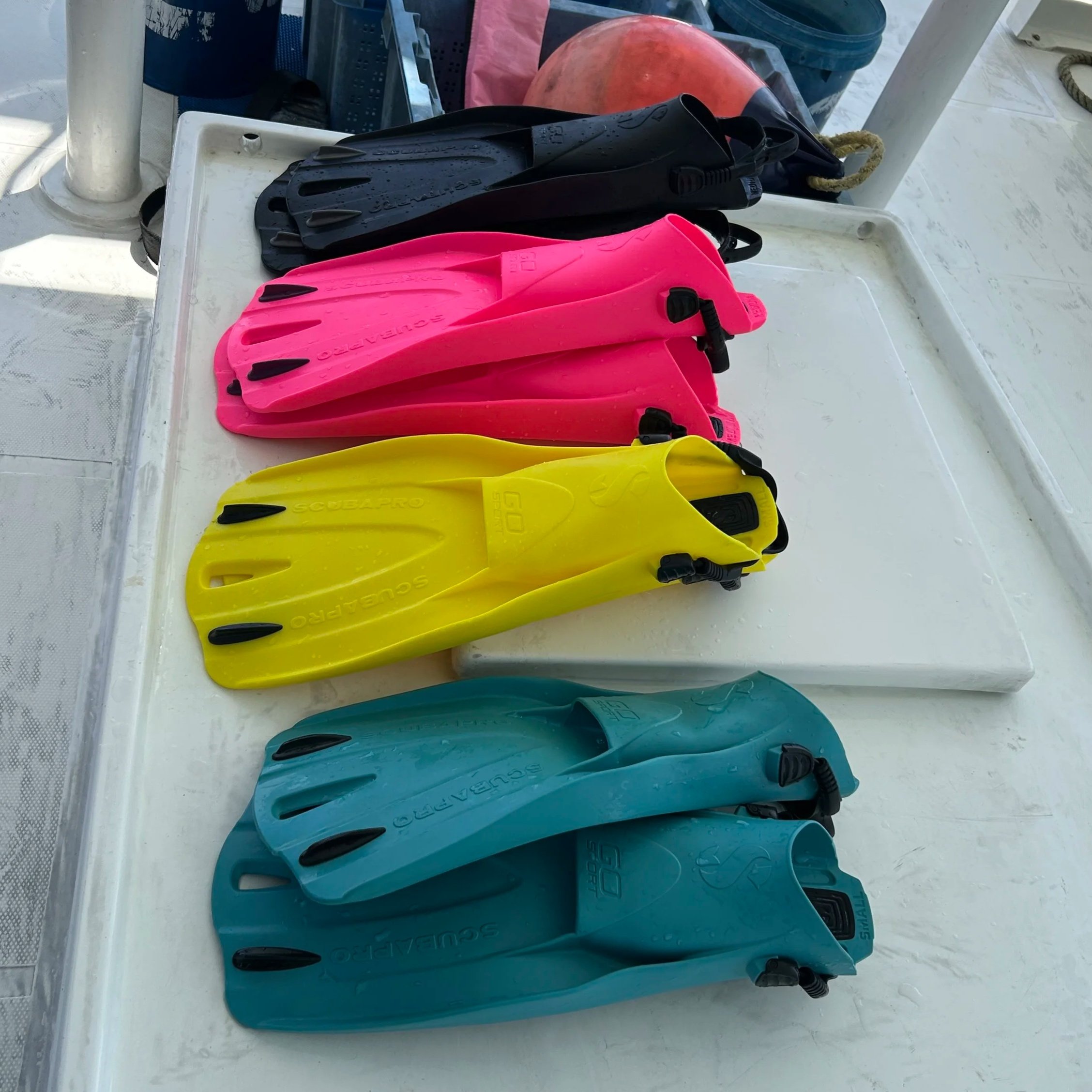
SCUBAPRO Go Sport
Looking for Gear You Can Trust? Check Out My Seaira Dives Amazon Store
If you’re building out your dive kit or upgrading a few essentials, I’ve put together a curated Amazon storefront with gear I personally use, love, and recommend to my students. From booties and fins to save-a-dive tools and travel accessories, everything in the store has been hand-picked with comfort, safety, and real-world diving in mind.
👉 Explore my Seaira Dives Amazon Store:
1. Start with the Booties
Your booties do more than keep your feet warm — they determine the fin size you’ll need and directly affect your comfort during shore entries and long dive days.
Thickness
3mm is perfect for warm-water diving.
5mm–7mm is ideal for cooler water or year-round temperate conditions.
Sole Type
Thin, flexible soles are lightweight and great for travel.
Thicker, rugged soles provide better protection if you’ll be walking on rocky entries, boat decks, or hot docks.
High-Top vs Low-Top
Most divers prefer high-top booties that rise above the ankle. These provide better protection from fin strap rubbing and give you a bit more ankle support, especially on longer dive days.
Low-top booties can be lighter and more comfortable for warm-water travel, but they don’t offer as much protection from fin straps or rough entries.
If you’re planning to do shore diving or multiple dives per day, high-tops are usually the safer choice.
Fit
Your booties should feel snug but never cramped. If they’re too loose, your foot will slide around inside the boot and inside the fin — the fastest path to blisters.
💡 Pro tip: I personally love booties with a good, solid sole. Nothing is worse than stepping on sharp rocks during a shore entry.
Some of my favorites are:
Fourth Element boots for their durability and comfort
Mares boots, especially for warm-water flexibility
Scubapro Delta boots, a great all-rounder with excellent support
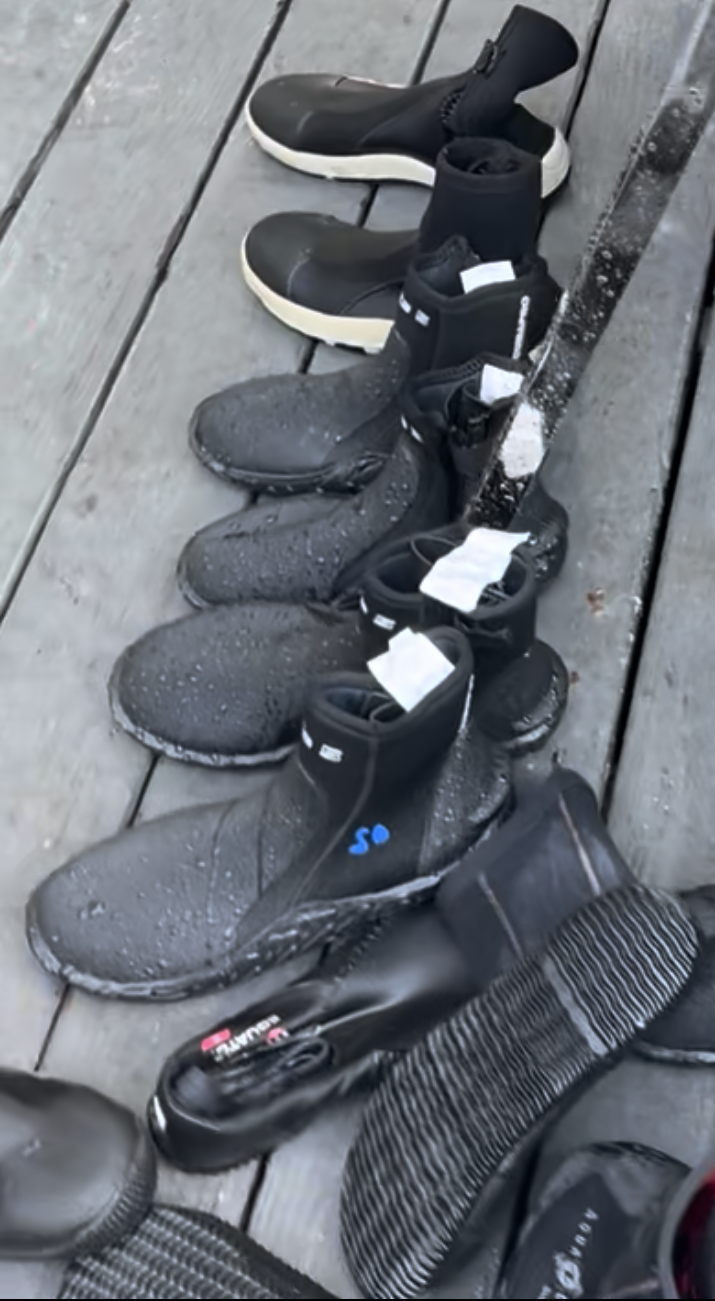
Some of the rental booties
2. Choosing the Right Fins
Fins aren’t one-size-fits-all, and the wrong pair can mean sore legs or inefficient kicking.
Foot Pocket Style
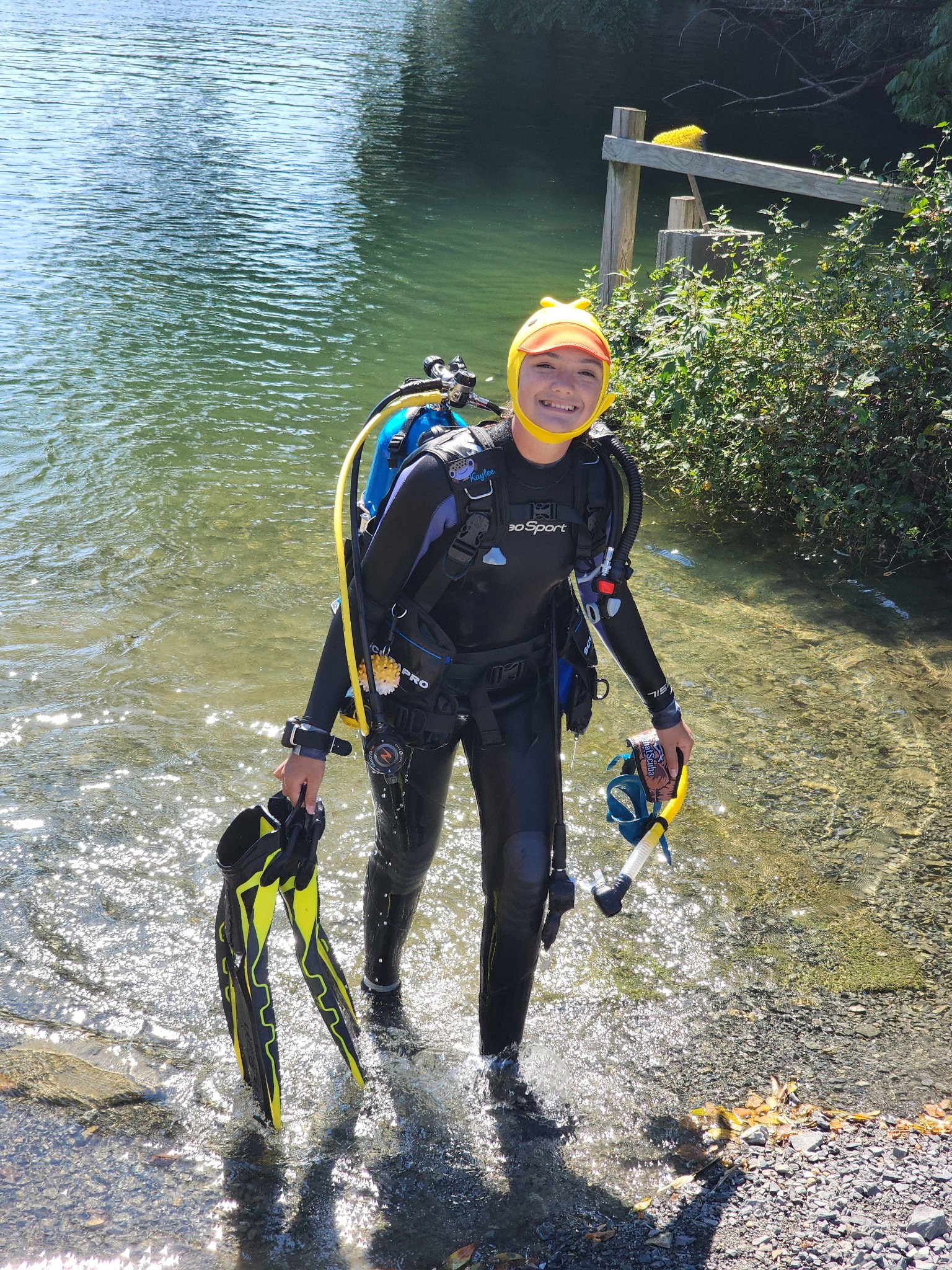
Full-foot fins: Worn barefoot or with thin socks, typically for warm-water diving. Lightweight, great for travel, but not ideal if you’ll be doing shore entries over rough terrain.
Open-heel fins: Worn with booties, adjustable with straps or bungees. These are more versatile and can handle a variety of water temps and entry types.
Blade Type
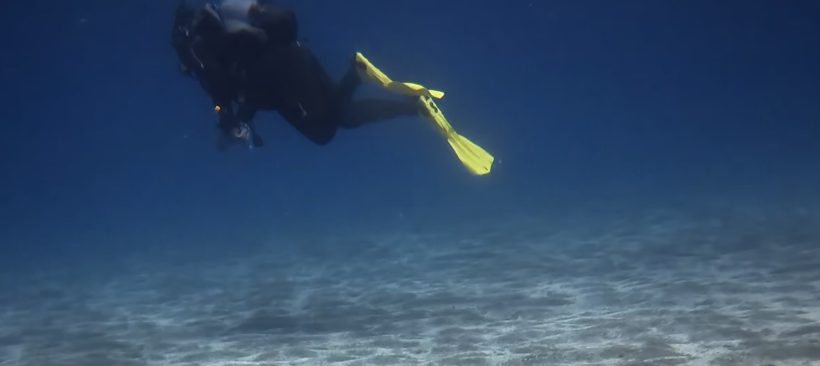
Paddle fins: Solid blades that give strong propulsion and control. Great for precise movements like frog kicks and backing up.
Split fins: Blade is split down the middle to reduce resistance, making them easier on the legs. Perfect for flutter kicking in low-current environments.
Hybrid designs: Some fins blend elements of both for a balance of power and efficiency.
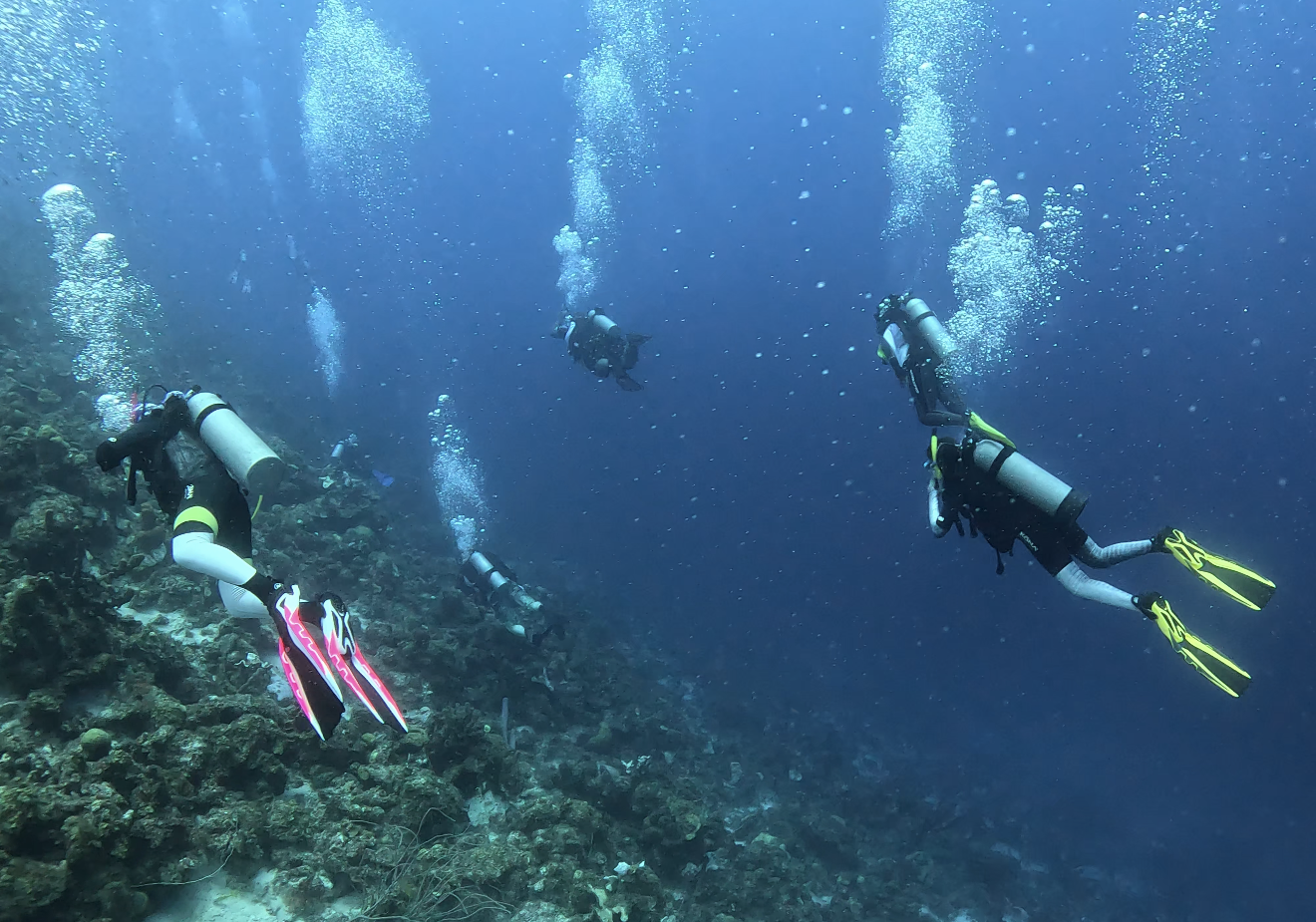
3. Kicking Styles & the Split Fin Debate
Your kicking style plays a huge role in which fins will work best for you.
Flutter Kick
The most common kick style, similar to a freestyle swimming motion. It works with almost any fin design. Split fins can help reduce resistance and leg fatigue during long dives, while traditional paddle fins provide stronger propulsion for some divers.Frog Kick
A sweeping motion where you push water outward and then glide. This kick is commonly used in technical diving or when diving over sand or silt because it minimizes disturbing the bottom. Paddle fins tend to perform best here because the solid blade provides better control and power during the push phase.Modified Frog Kick & Helicopter Turns
These techniques allow precise movement and positioning underwater, which is especially useful in wrecks, caves, or when doing underwater photography. They require fins that respond well to subtle movements, which is why most divers prefer slightly stiffer paddle fins.Back Kick
A technique used to move backward without turning around. This maneuver requires strong water control and typically works best with paddle fins. Split fins tend to struggle with back kicks because the split blade doesn’t hold water as effectively.
💡 About the Split Fin Debate: Ask ten divers about split fins and you’ll probably get ten different answers. Some love them for reducing leg fatigue and making flutter kicks effortless. Others dislike them because they lack power in currents and aren’t ideal for advanced propulsion techniques. My take? If you mostly flutter kick in calm, warm-water environments, split fins can be great. If you dive in currents, do a lot of frog kicking, or need more precision, go for paddle fins.
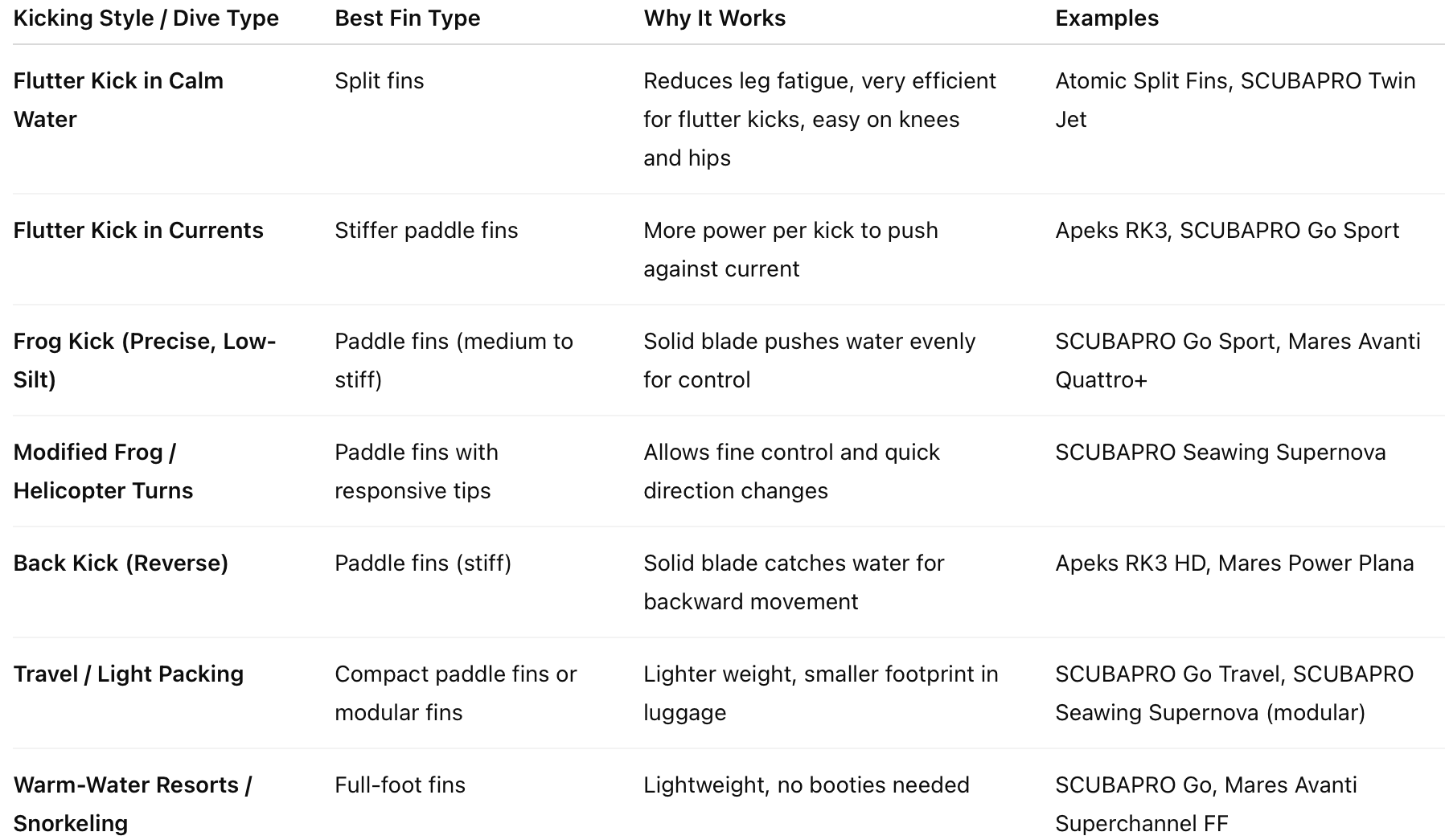
4. Fin Selection Guide – Find Your Perfect Match
Quick Pro Tips:
Test before you invest — the “best” fin depends on your kicking style and leg strength.
If you love frog kicks or tech diving → stick with paddle fins.
If you’re a flutter kicker in warm water → you might love split fins.
Always pair your fins with the right booties for comfort, fit, and entry protection.
For travel: Modular fins (like the Seawing Supernova) and compact options (like the Go Travel) are game changers.
SCUBAPRO Go Sport
5. Don’t Forget the Straps
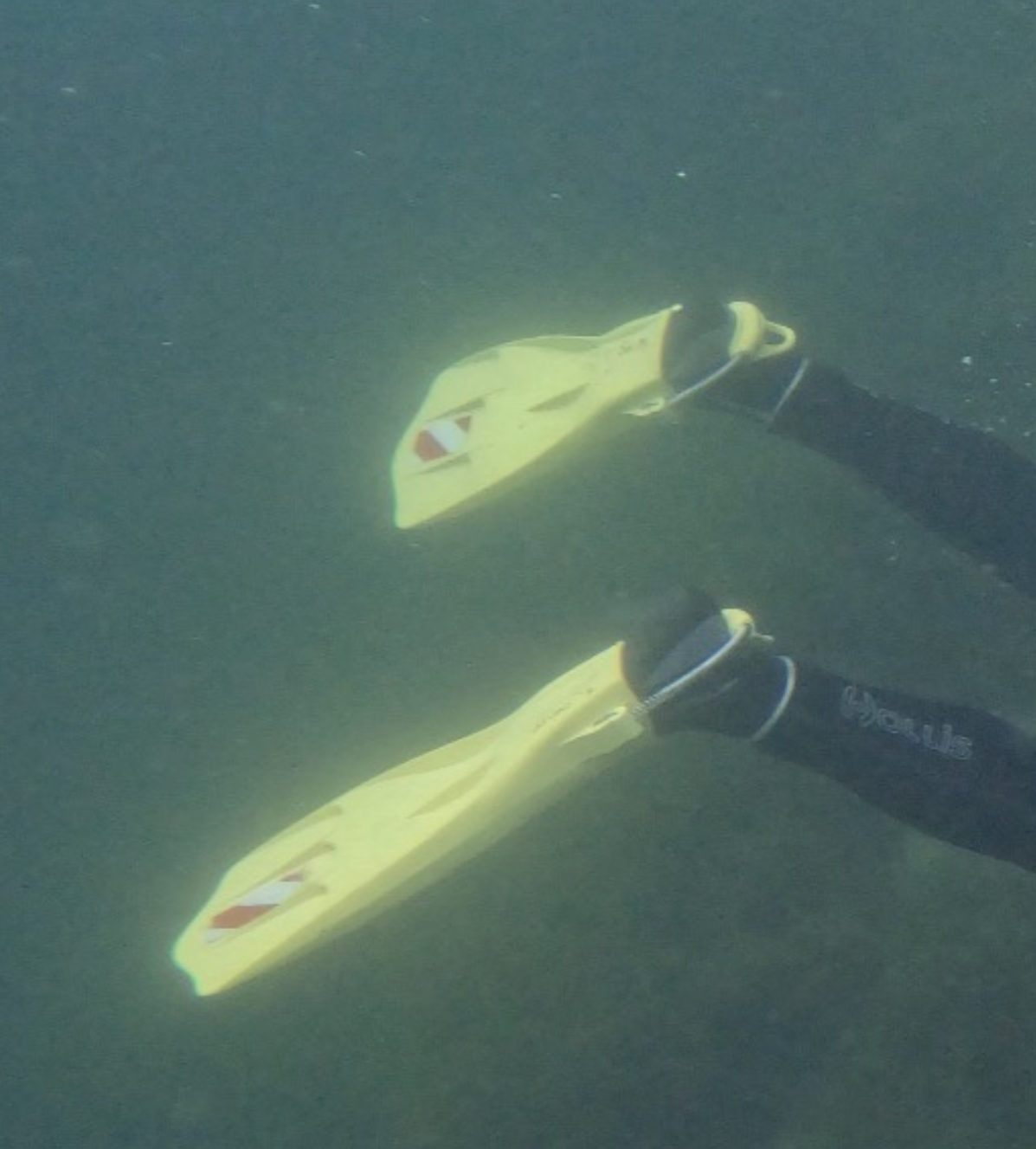
If you choose open-heel fins, consider swapping the standard straps for spring or bungee straps. They’re easier to get on and off (especially with gloves) and won’t snap like traditional rubber straps can.
💡 Pro tip: I always prefer bungee-style straps, they are reliable, low-maintenance, and make gearing up so much faster.
Great bungees!
6. Travel-Friendly Options
If you’re a diver who hops on planes as often as boats, weight and packability matter just as much as performance. Here are a few great options:
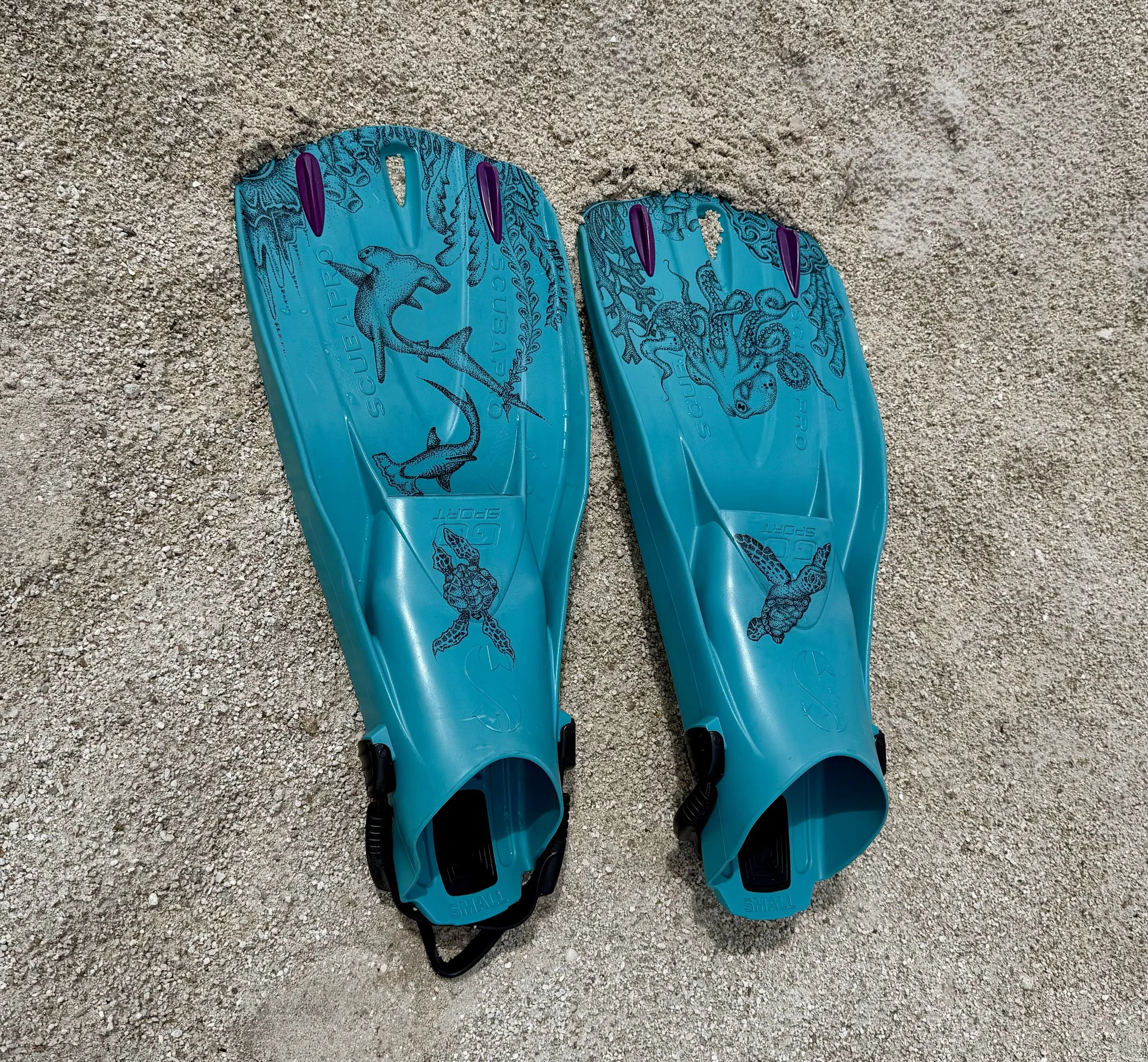
SCUBAPRO Go Sport: Lightweight, durable, and versatile enough for both local diving and travel.
SCUBAPRO Go Travel: A smaller, lighter version of the Go Sport designed specifically for warm-water trips and tight luggage space.
SCUBAPRO Seawing Supernova: Part of SCUBAPRO’s modular system, these fins break down into two parts(foot pocket and blade) so they fit into a carry-on and allow blade swaps depending on your dive needs.
Full-foot travel fins: Ideal for tropical trips where you won’t need thick booties, even lighter and more compact.
Lightweight booties: 3mm booties with thin soles save space and weight in your bag, but remember they won’t protect as well if you’re doing rocky shore entries.
💡 Packing tip: Store fins along the inside of your suitcase or dive bag to keep them flat, and tuck booties inside the fin foot pockets to save space.
7. Try Before You Buy
If you can, rent or borrow different styles before committing. Every diver’s legs, kicking style, and comfort preferences are different — and what works for one person may not for another.
8. Keep Maintenance in Mind
Like all dive gear, fins and booties need care:
Rinse with fresh water after every dive.
Keep them out of direct sunlight when drying.
Store them flat or hanging to prevent warping.
SCUBAPRO Seawing Nova
Ciara’s Top Picks
Everyday Fins – SCUBAPRO Go Sport
My go-to fins for both local diving and most travel. They’re lightweight but powerful, super comfortable, and work well in a wide range of conditions.Lightweight Travel Fins – SCUBAPRO Go Travel
A smaller, lighter version of the Go Sport designed specifically for packing light. Perfect for warm-water trips where space and weight in your luggage really matter.Modular System Travel Fins – SCUBAPRO Seawing Supernova
SCUBAPRO’s newest travel-friendly design. These fins break down into two parts, the foot pocket and the blade, so they fit neatly into carry-on luggage while still delivering excellent performance. The modular system also lets you swap out blades depending on your dive needs.Booties – Delta Dive Boots
These come in a range of thicknesses so you can choose what matches your environment. They have a sturdy sole (my non-negotiable for shore entries) and are comfortable for long dive days.Booties – Fourth Element Rock Hopper
One of my absolute favorites for rugged entries. The Rock Hopper has a tough, grippy sole and a super secure fit, making it perfect for rocky shorelines, uneven terrain, and any dive where footing matters.Booties – Fourth Element Amphibian Boots
Another top pick, these are ultra-comfortable, supportive, and built like a high-performance hiking shoe for divers. The Amphibian boots shine when you know you’ll be doing a lot of walking to and from the dive site, especially on rough surfaces.
Final Thoughts
Your fins and booties are your underwater “engine” the better they fit, match your diving style, and suit your kicking techniques, the more enjoyable (and efficient) your dives will be. Start with booties, choose fins that suit your legs and dive environment, and whenever possible, test before you invest.
If you’re not sure where to start, swing by the shop or chat with your instructor (hi, that’s me!), I’m happy to help you find the perfect combo so you can dive in comfort from day one, whether it’s a weekend at the local quarry or a bucket-list trip halfway around the world.
Dive safe, explore passionately, and remember…