
Morocco Part II, The Sahara
Part 2 of a 4-Part Series - Crossing the High Atlas Into the Sahara
Leaving Marrakech early on February 16 felt like the start of something completely different — something bigger, quieter, and more layered than the vibrant medina we had just left behind. This 3-day journey wasn’t just a transfer between cities; it was a living, moving immersion into Morocco’s cultural and geographic backbone.
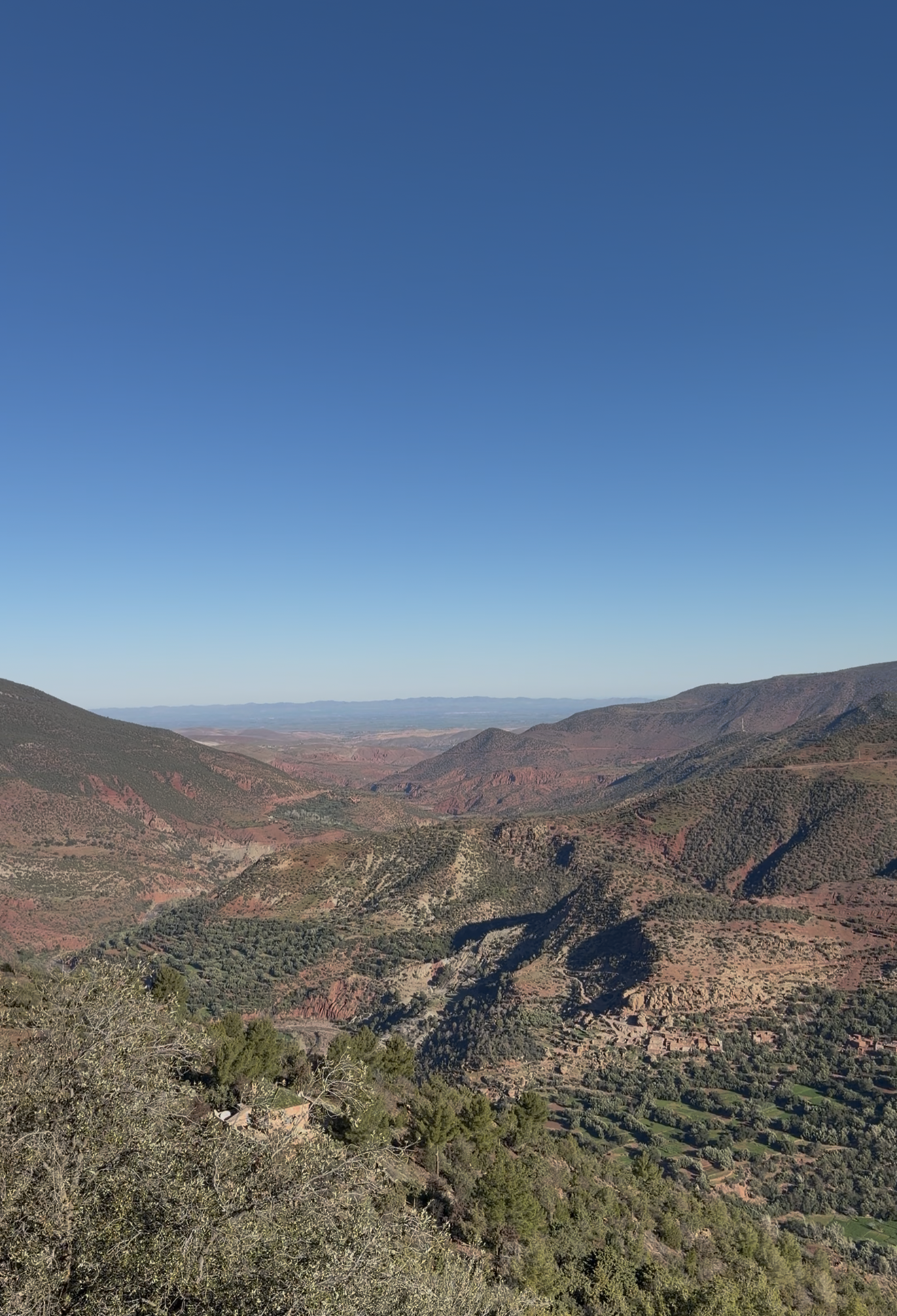
Table of Contents
Crossing the High Atlas Into the Sahara
Weather & What We Wore Along the Route
A Note on Ethical Tourism & My Commitment to Animals
Amazigh Culture and Legacy in Morocco
Day One — Marrakech → High Atlas → Aït Benhaddou → Dades
Day Two — Dades Gorge → Todra Gorge → Merzouga → Sahara Sunset
Deluxe Desert Camp — Music, Food, Firelight
Day Three — Sunrise Camel Walk → Azrou Forest → Fes
Arrival in Fes — Riad Fes, Booked With AMEX Platinum Points
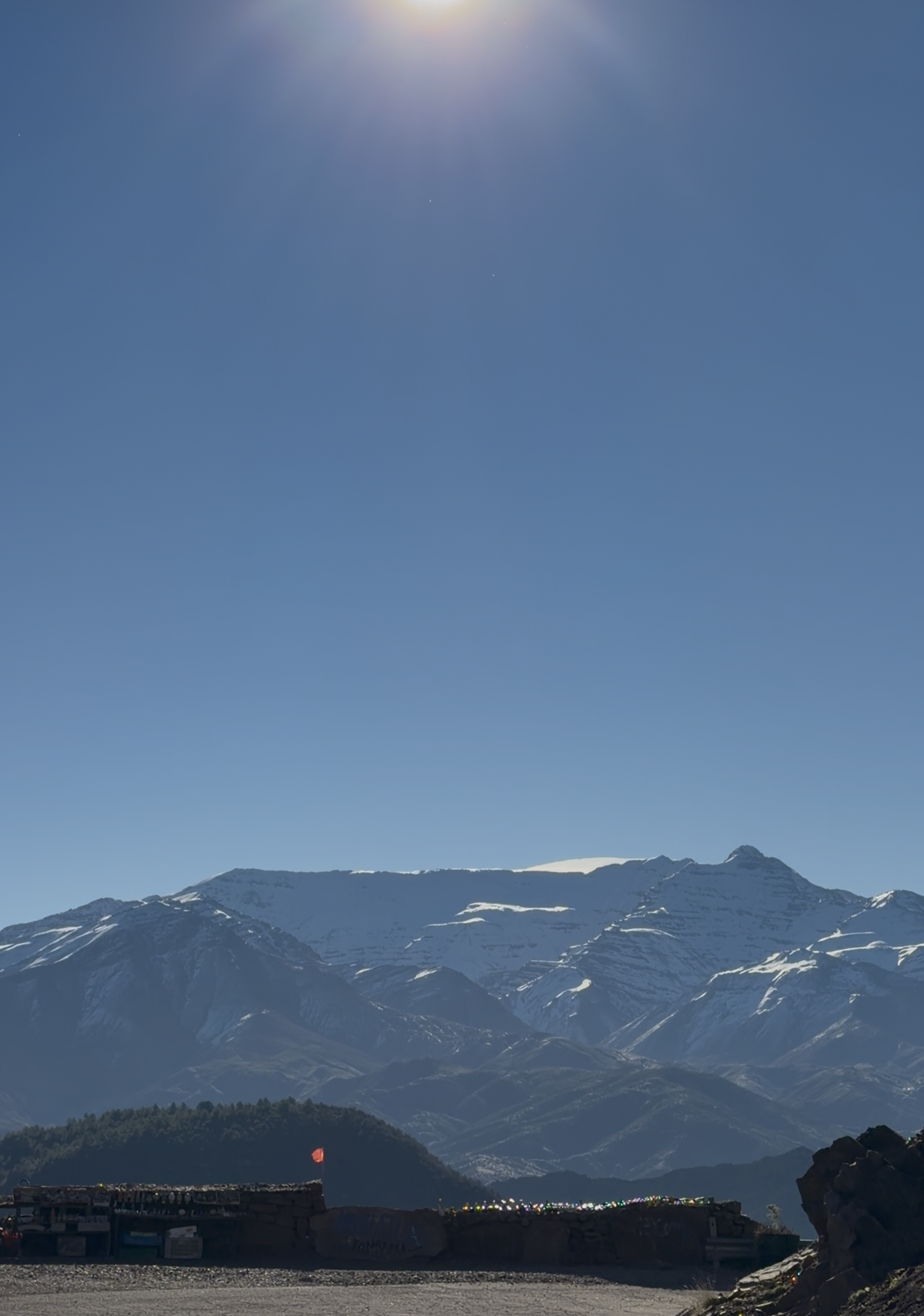
A view of the Atlas Mountains
Crossing the High Atlas Into the Sahara
We booked the 3-Day Marrakech to Fes Desert Tour via Merzouga, choosing the deluxe private ensuite tent, and the experience delivered far more than a simple point-to-point ride.
It included breakfasts, dinners, a camel trek, sandboarding, air-conditioned transportation, and entry to the major stops. Not included: lunches or the local guide at Aït Benhaddou.
What we quickly learned, however, is that Morocco is stunning — but Morocco is large.
You cover real distances on this route: hours of driving each day, winding through mountain passes, valleys, and desert plains. It is a long journey. You will spend full stretches in the vehicle. The drives can be four to six hours a day, sometimes longer depending on stops, road conditions, and traffic through villages.
And still…
every single mile is worth it.
Because every hour in the vehicle brings a new landscape. A new village. A new climate. A new culture. A new face of Morocco you’d miss entirely if you flew directly from Marrakech to Fes.
Weather & What We Wore Along the Route
February is ideal for this route, but it shifts dramatically throughout the day. In Marrakech you're warm; in the High Atlas you're chilly; in the desert you're warm again; and at night you're bundled up.
Because of that, we wore comfortable travel clothes:
Linen pants or long trousers
Loose long-sleeve tops
A scarf for sun and wind
Supportive walking shoes
Evenings in the Dades Valley and Sahara required:
Fleece or sweater
Jacket for wind
Warm sleepwear ( I packed a thermal top, bottom, and thick socks)
Layers were essential, especially at night and early morning.
A Note on Ethical Tourism & My Commitment to Animals
As anyone who knows me already knows — I am deeply, unapologetically, fiercely protective of animals.
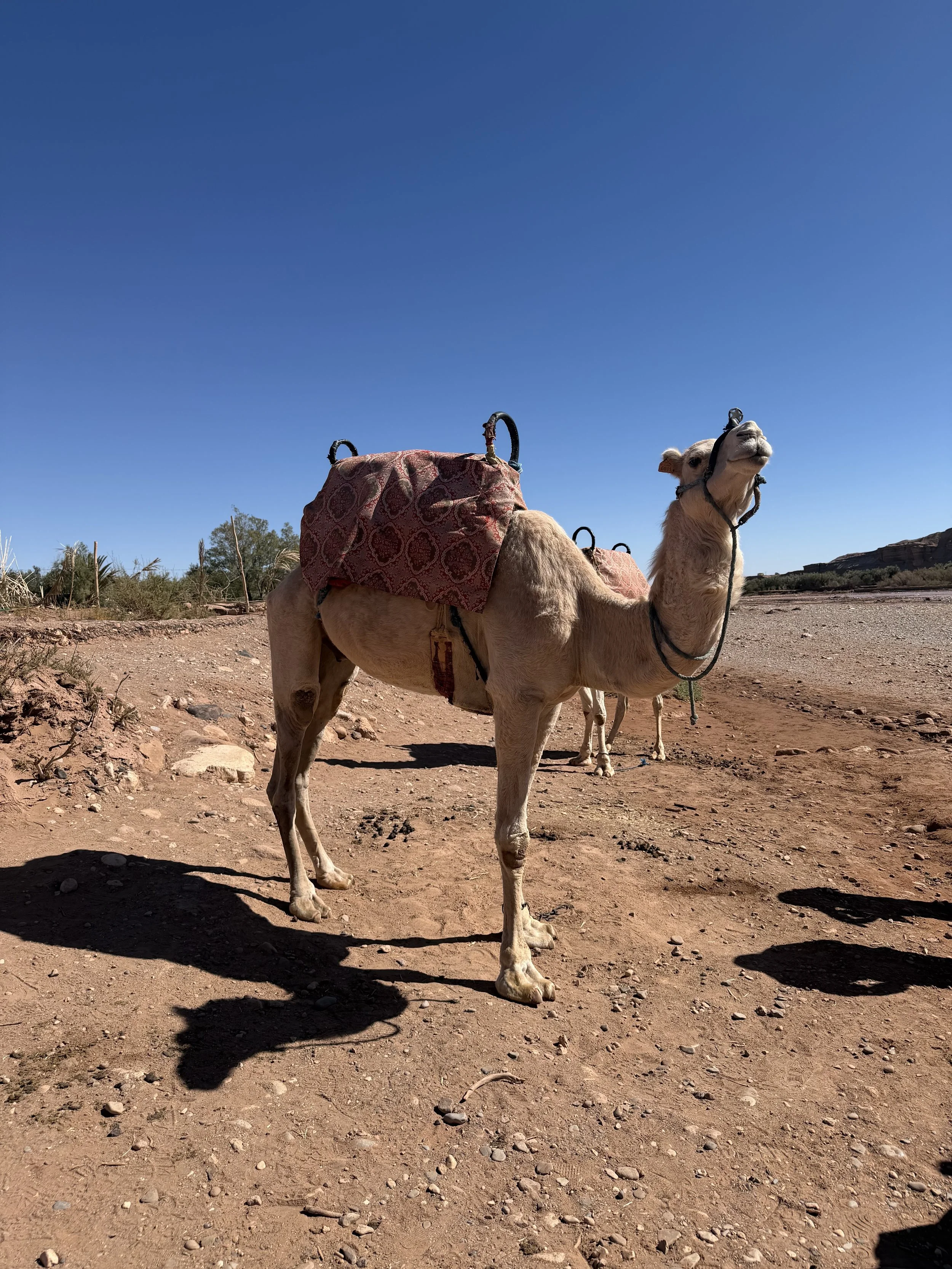
I do not support the exploitation of horses, donkeys, mules, camels, or any working animals for tourism when they are mistreated, overworked, or harmed in any way. Before I agreed to this tour, I researched extensively and reached out directly to the operator with specific, pointed questions about their treatment of camels.
They responded with patience and transparency, explaining how the animals are rotated, rested, hydrated, closely monitored, and never beaten. Still, when we arrived, I watched very closely — and I’ll be honest, I wasn’t fully comfortable. The animals were tied much closer together than I expected, limiting their movement, and despite the explanations, the setup didn’t sit right with me.
The night before, I had a clear conversation with our guide about alternatives. My understanding was that while others rode camels into camp, I would take an ATV out instead. However, when we arrived at the desert, it was chaos, multiple groups arriving at once, guides organizing animals, people sorting bags and in that confusion, the plan shifted without much clarity. Despite our conversation the night before, I was directed to walk.
Walking across soft sand in the desert heat is no small thing. It’s physically demanding, uneven, and intense and it wasn’t exactly what I had expected. That said, it was still powerful to step onto the dunes and take in the scale of the Sahara. The vastness. The silence. The way the light moves across the sand.
The next morning, I opted to take the jeep out for sunrise instead, which allowed me to experience the dunes without compromising my values. Standing on top of a sand dune as the sun rose over the Sahara was unforgettable.
If you’re traveling and feel similarly, my advice is this: communicate clearly — and then reconfirm in the moment. Desert arrivals can feel hectic, and details can get lost in the shuffle. Ethical tourism requires advocacy, follow-through, and sometimes speaking up more than once. Trust your instincts.
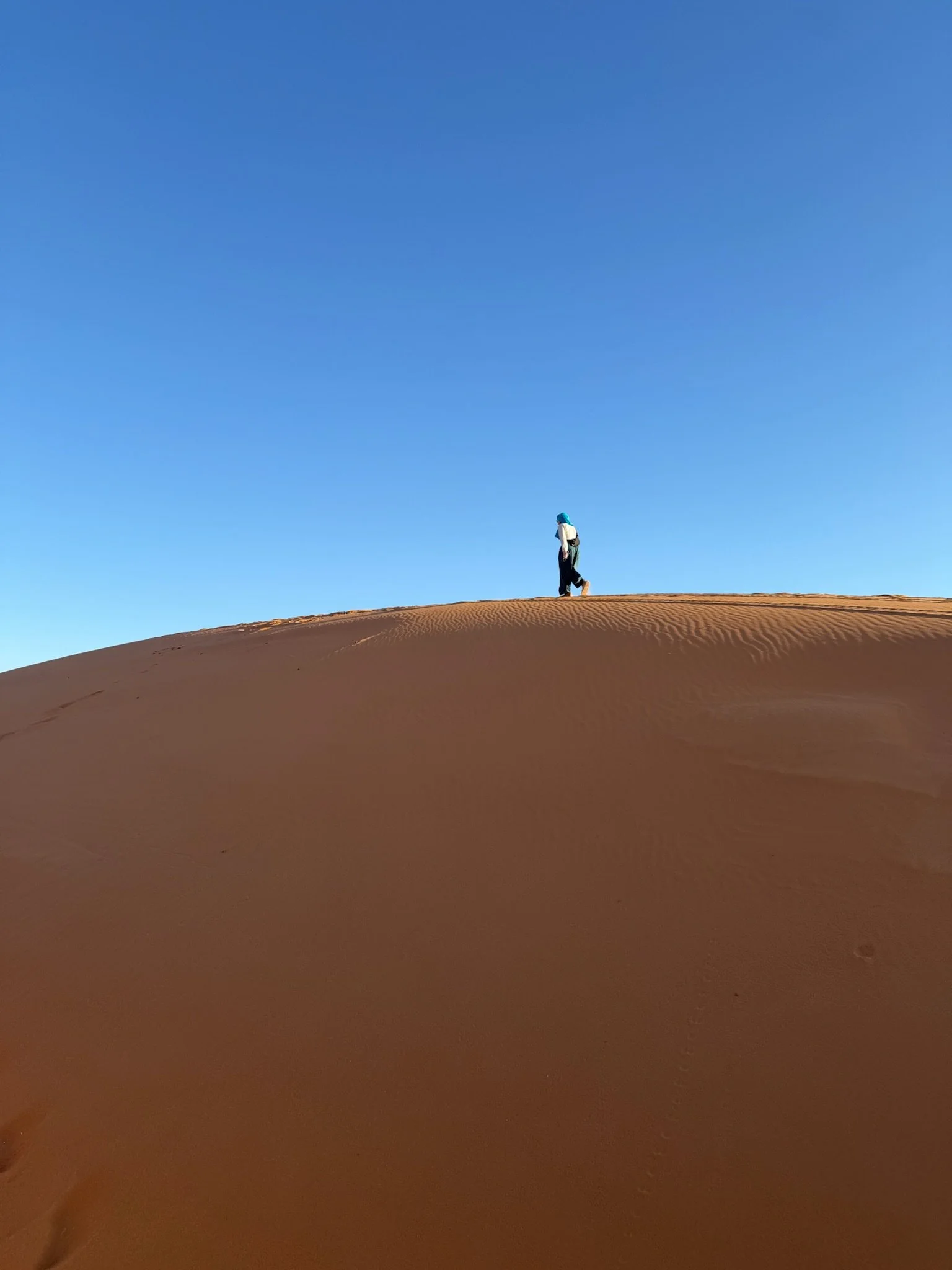
Ciara walking in the Sahara
Amazigh Culture and Legacy in Morocco
The Amazigh, plural Imazighen, are the Indigenous peoples of North Africa, with a presence in the region that predates the Arab-Islamic expansions of the 7th century by millennia. Their homelands extend across present-day Morocco, Algeria, Tunisia, Libya, parts of Egypt, and into the Sahara and Sahel regions including Mali and Niger. The word “Amazigh” is commonly understood to mean “free person” or “noble person,” and many communities prefer it over “Berber,” a term derived from the Greek word “barbaros,” which historically carried outsider connotations. Amazigh languages, collectively referred to as Tamazight, belong to the Afroasiatic language family. In Morocco, Tamazight was officially recognized as an official state language alongside Arabic in the 2011 constitution, and the Tifinagh script is now used in public signage and education as part of broader cultural preservation efforts.
Amazigh identity is not monolithic. It includes diverse regional communities shaped by geography, language variation, and history. In Morocco, these include communities in the Rif Mountains in the north, the Middle Atlas, the High Atlas, and the Souss region, each with distinct dialects and traditions. In the Sahara, Tuareg communities, who are also Amazigh, developed highly sophisticated systems of trans-Saharan trade and are historically known for caravan navigation, poetry, and distinctive indigo dress.
Throughout history, Amazigh leaders played central roles in North African and Mediterranean political life. The Almoravid and Almohad dynasties, founded by Amazigh reform movements in the 11th and 12th centuries, established Marrakech as a major imperial capital and extended influence into Al-Andalus in present-day Spain. Architectural traditions such as fortified ksars, kasbahs, geometric ornamentation, and rammed-earth construction reflect both Amazigh heritage and broader Islamic artistic traditions.
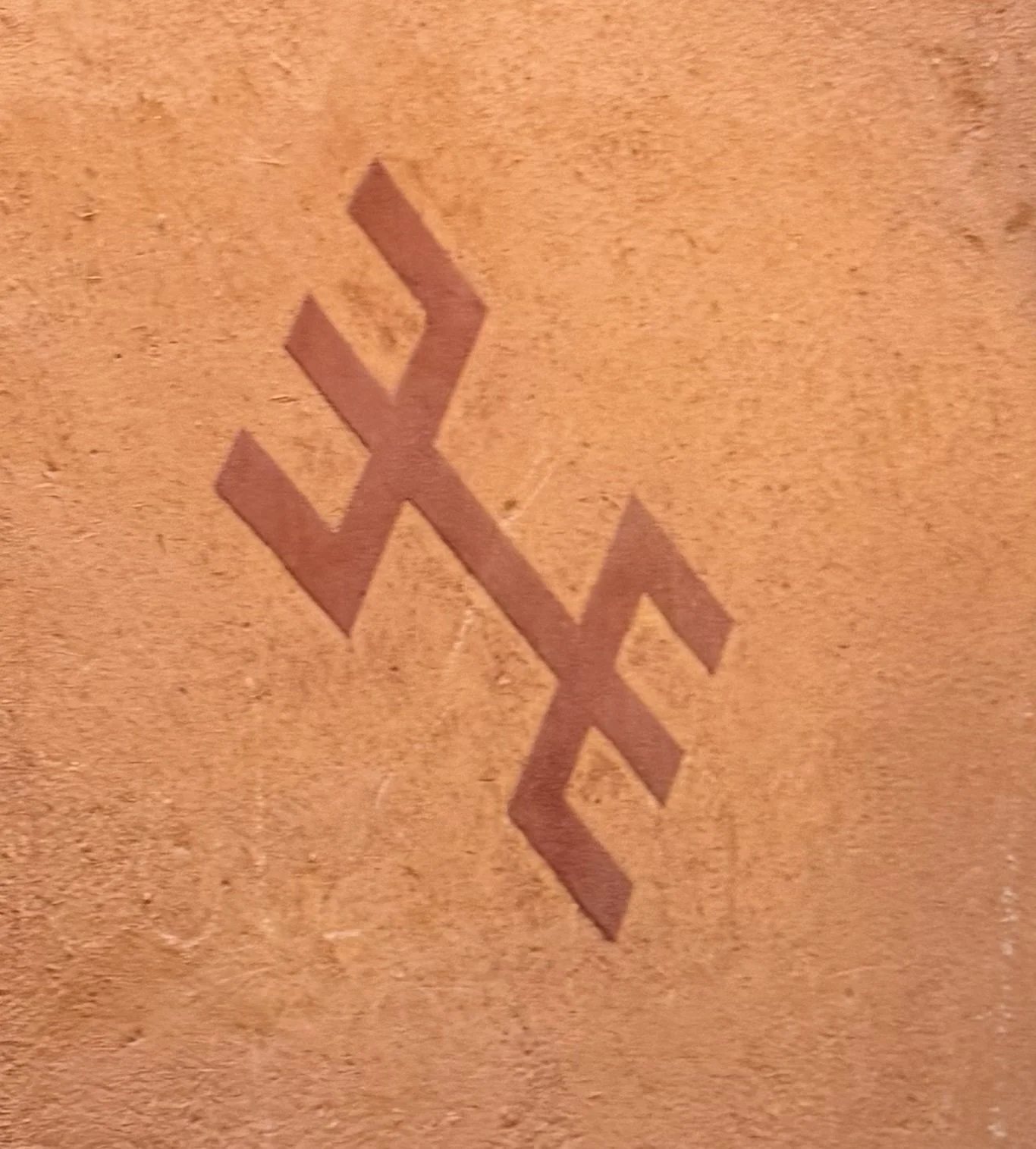
Cultural expression remains deeply important within Amazigh communities. Textile weaving, especially in Atlas regions, incorporates symbolic geometric motifs that often convey social or protective meanings. Silver jewelry traditions are particularly associated with southern Moroccan Amazigh communities. Music, oral poetry, and seasonal festivals continue to play an essential role in preserving communal identity.
Today, Amazigh cultural recognition has expanded through language revitalization efforts, media, education, and constitutional reform. At the same time, Amazigh communities are diverse in how they define and express their identities. Recognizing this complexity is key to understanding Amazigh history not as a static past, but as a living and evolving part of North Africa’s cultural landscape.
Day One — Marrakech → High Atlas → Aït Benhaddou → Dades
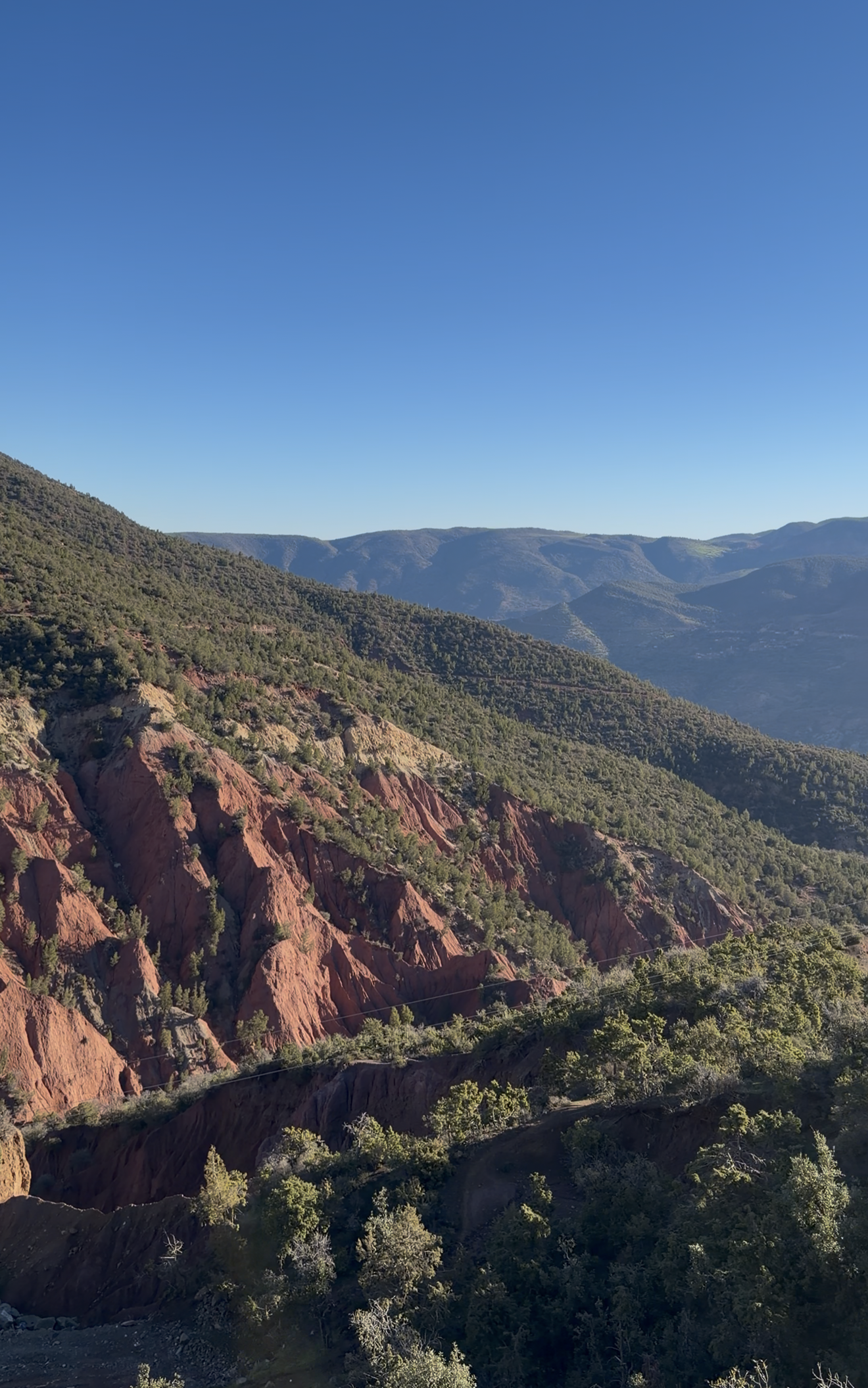
Our journey began climbing into the High Atlas Mountains. These mountains feel ancient and wise, carved by wind, weather, and time. Amazigh villages blend into the earth, their homes the same color as the cliffs, built in harmony with the landscape rather than against it.
We crossed the Tizi n'Tichka Pass at over 7,400 feet, winding along breathtaking roads with sweeping views of valleys and distant snow-capped peaks. These are long stretches in the car, but the scenery never stops giving. Every curve reveals another jaw-dropping contrast, red clay, green terraces, white peaks, endless blue sky.
Along the way, we stopped to watch women producing argan oil by hand. The argan tree grows naturally almost exclusively in Morocco, making the oil both culturally and geographically unique to the country. We observed the meticulous process, cracking the hard nuts, grinding them, and pressing the oil using techniques passed down through generations. It was fascinating to see how labor-intensive it is, and of course I had to bring some home. When something is that deeply rooted in place, it feels special to support it directly.
As we continued on, we drove through the Rose Valley, where small roadside shops displayed bottles of rose water, oils, and locally crafted beauty products. We stopped at one shop and I completely fell in love with the rose products, the scent was fresh and delicate, not overpowering, and everything felt thoughtfully made. Naturally, I left with a few treasures. These moments, tucked between destinations, reminded me that the road itself is often just as rich as the landmarks, layered with culture, craft, and quiet beauty.
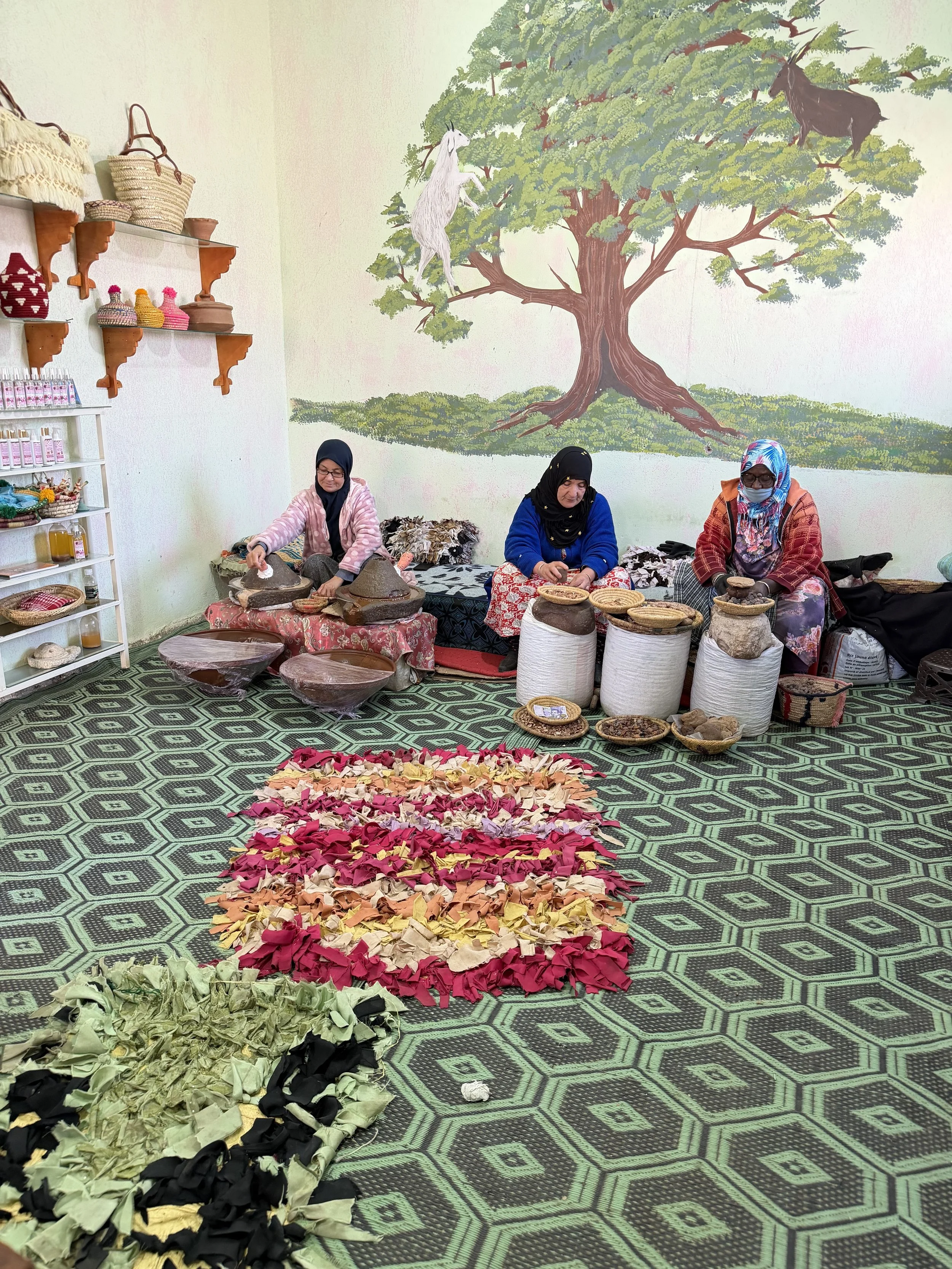
Ladies making Argan oil
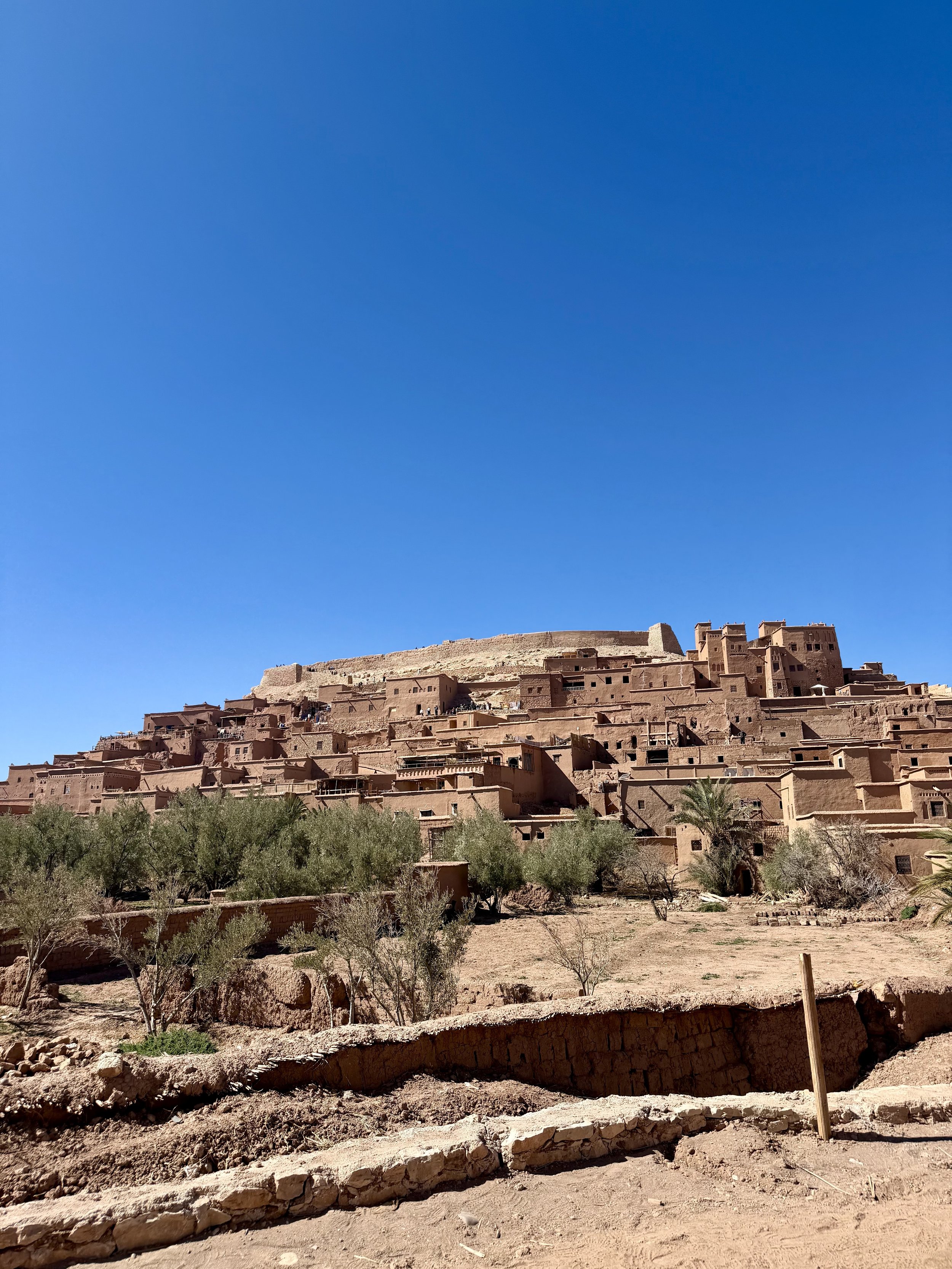
Aït Benhaddou
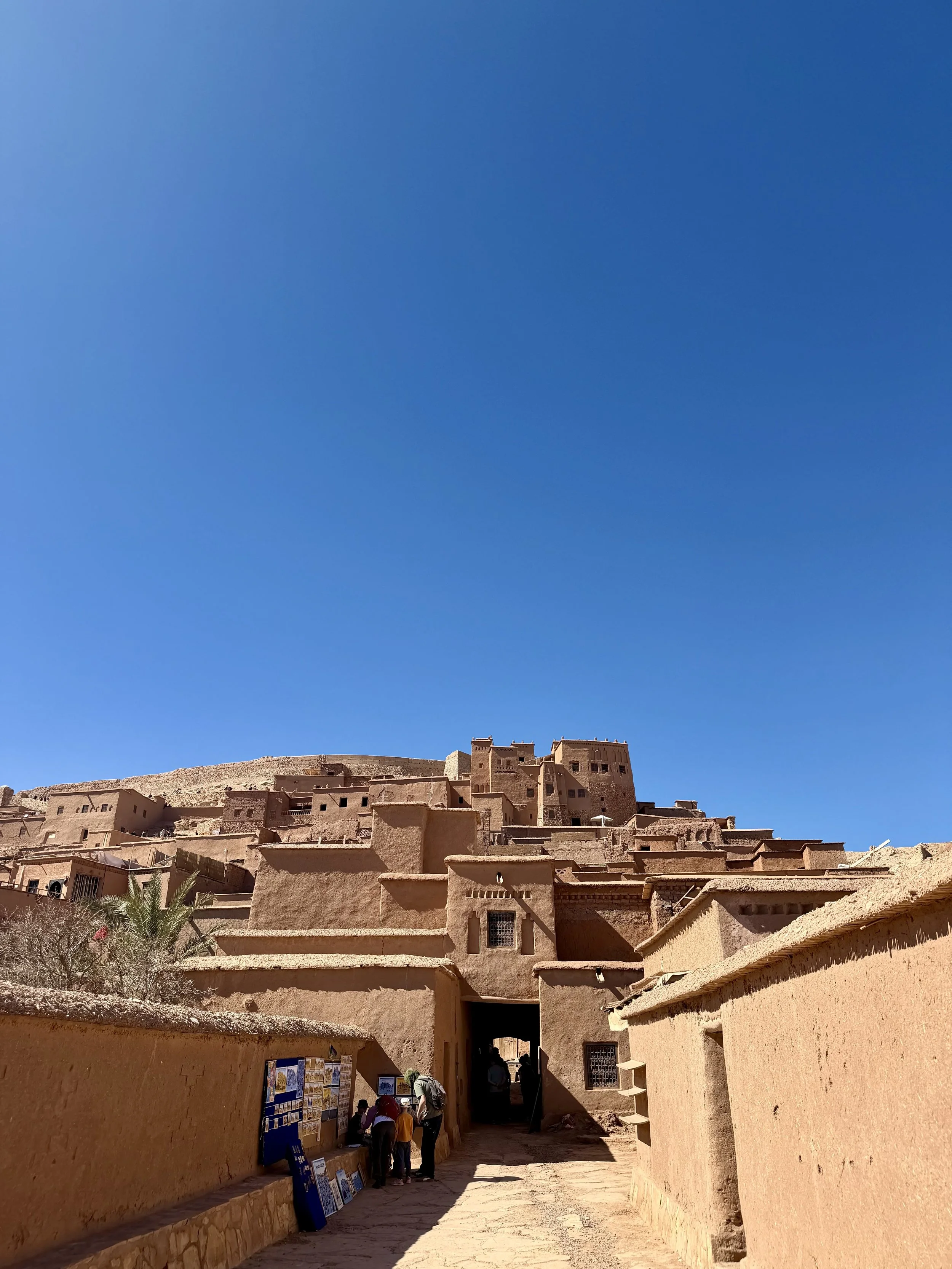
Aït Benhaddou is one of Morocco’s most extraordinary architectural treasures — an ancient ksar (fortified village) built from rammed earth, straw, and clay, dramatically rising from the desert landscape along the former caravan route between the Sahara and Marrakech. Designated a UNESCO World Heritage Site in 1987, it dates back to at least the 17th century, though the site’s strategic position along trans-Saharan trade routes made it important for centuries before that. Caravans carrying gold, salt, ivory, and spices would stop here, and its high defensive walls and corner towers protected both goods and families.
Yes, it’s been featured in films like Gladiator and series like Game of Thrones, but its real magic lies in its lived history. Walking through its narrow clay alleyways with a local Amazigh guide brought the ksar to life — communal ovens where families baked bread, rooftop granaries for storing harvests, defensive watchtowers, and homes built tightly together for protection from both heat and invasion. From the top of the hill, the view stretches across the Ounila Valley, and you can see why this location was once so powerful and strategic.
One practical tip if you’re heading toward the desert: bring your own lightweight scarf from home.
We were encouraged to buy scarves locally before entering the desert, and while I’m always happy to support local vendors, this one felt like a tourist trap. We paid $13 for what honestly turned out to be a poorly made scarf that was already fraying at the ends, and they didn’t even properly wrap it before we headed out. It just wasn’t worth it.
You absolutely want something to protect your face and neck from the intense sun and blowing sand. That part is real. But bring a lightweight, breathable scarf you already trust. It will be better quality, more comfortable, and one less thing to negotiate in the heat.
After Aït Benhaddou, the road carried us through the fragrant Valley of the Roses, where fields bloom in spring and small distilleries produce rose water and beauty products — many run by women’s cooperatives supporting local families. We saw shops lined with handmade rose water and traditional products before continuing on to the dramatic rock formations of the Dades Valley. There, surrounded by towering red cliffs and winding mountain roads, we settled into our upgraded private ensuite room for the night — a peaceful pause after a day layered with history, trade routes, and desert architecture.
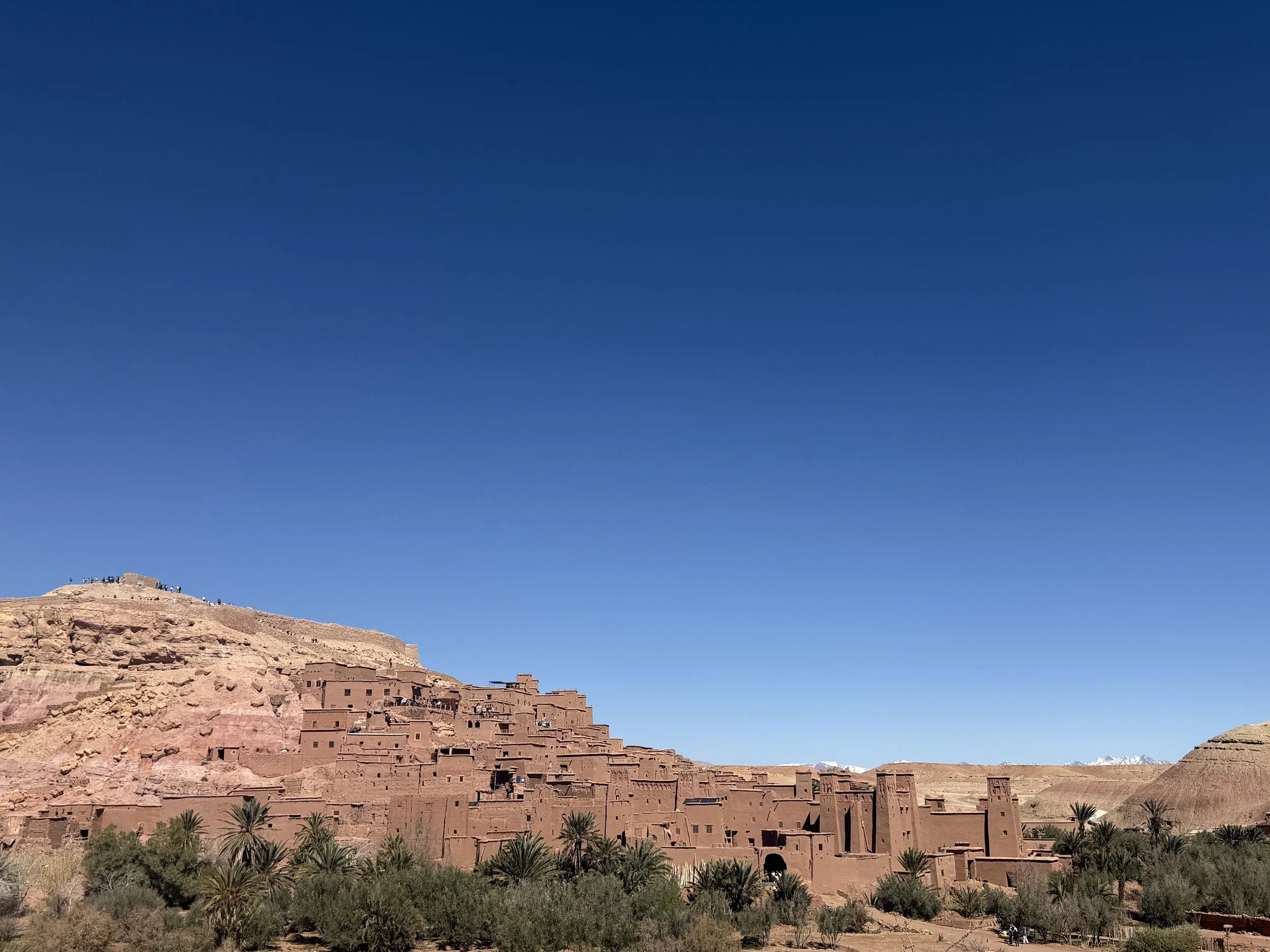
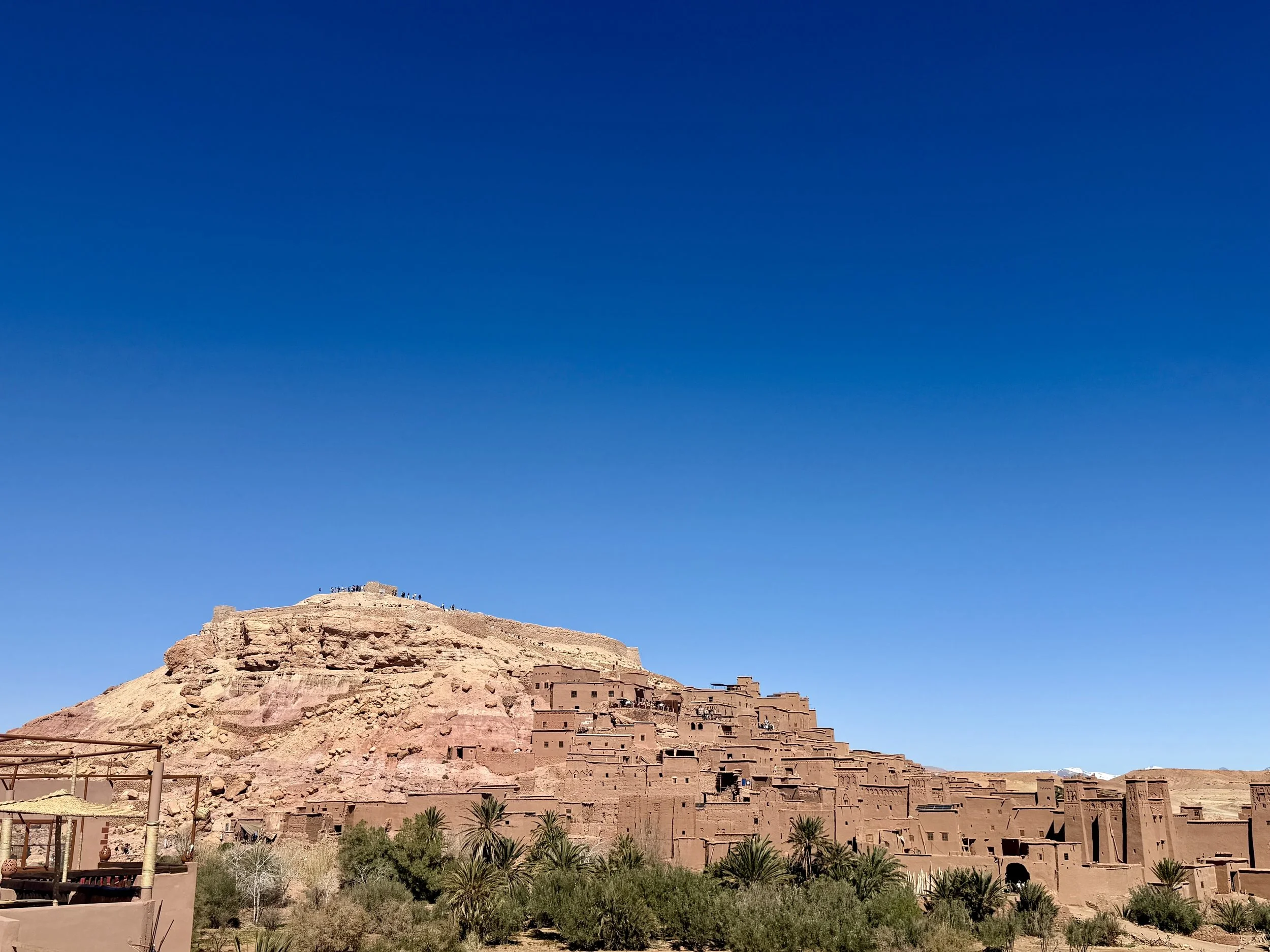
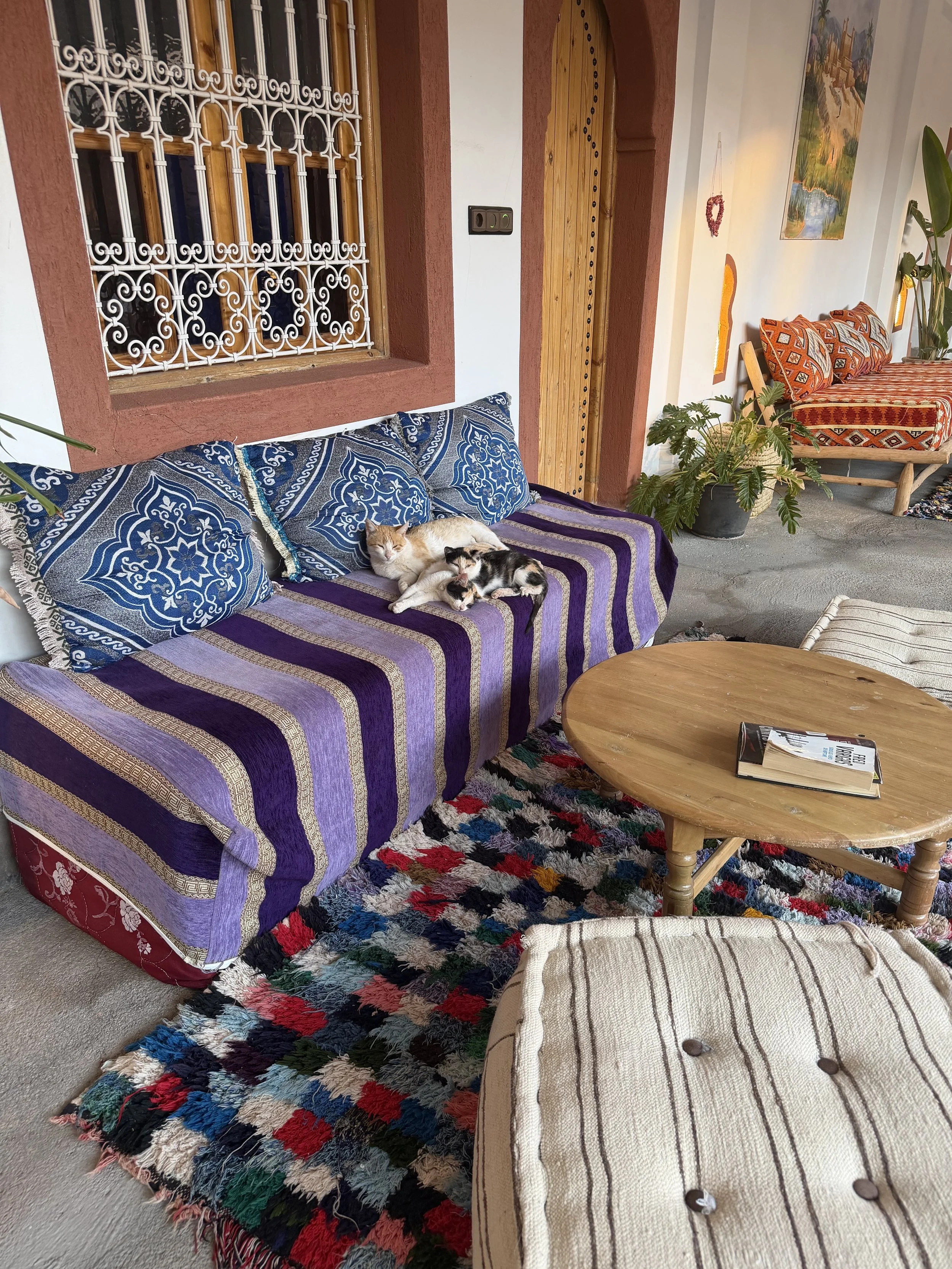
Hotel Rose Garden Dades
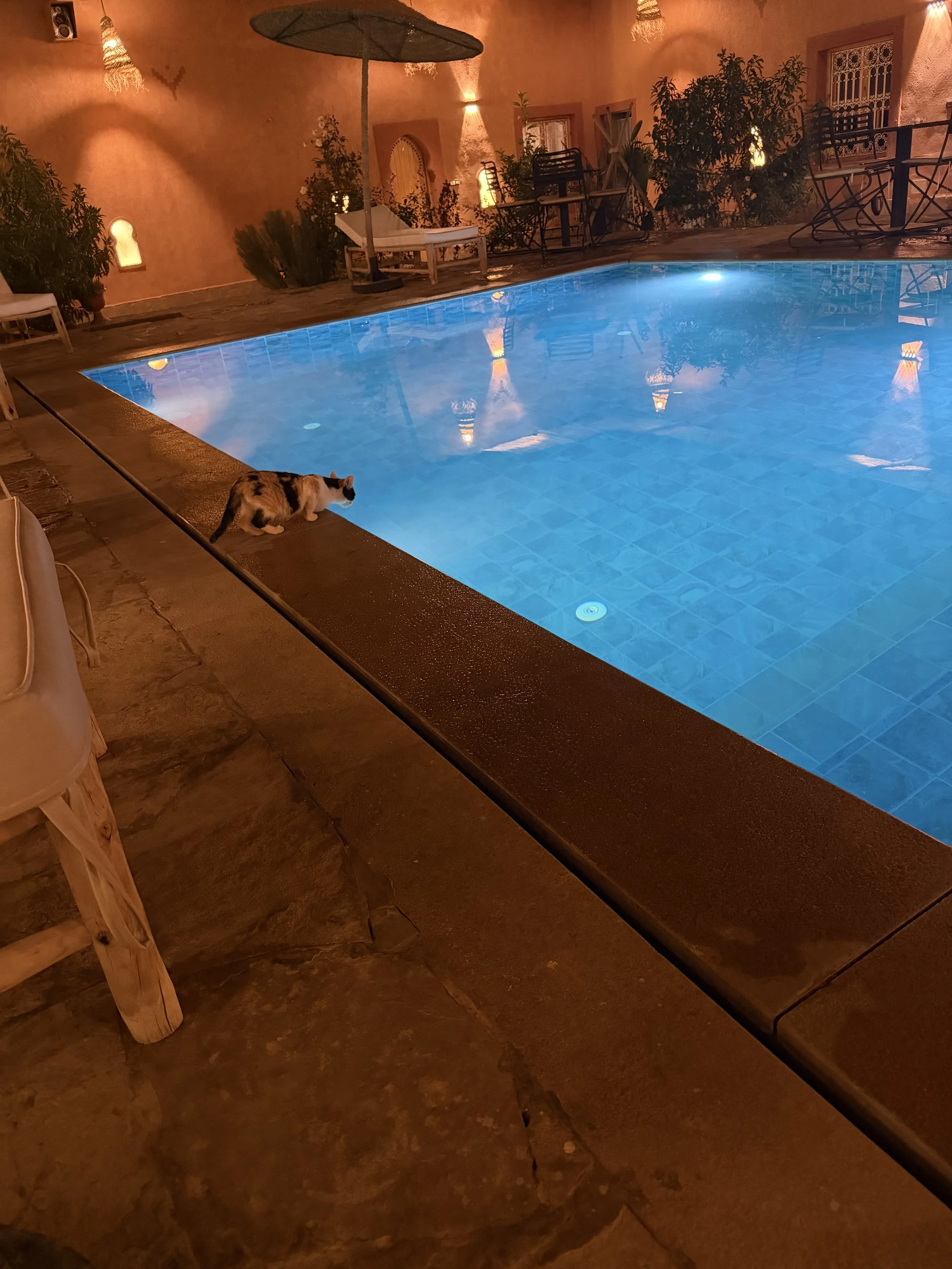
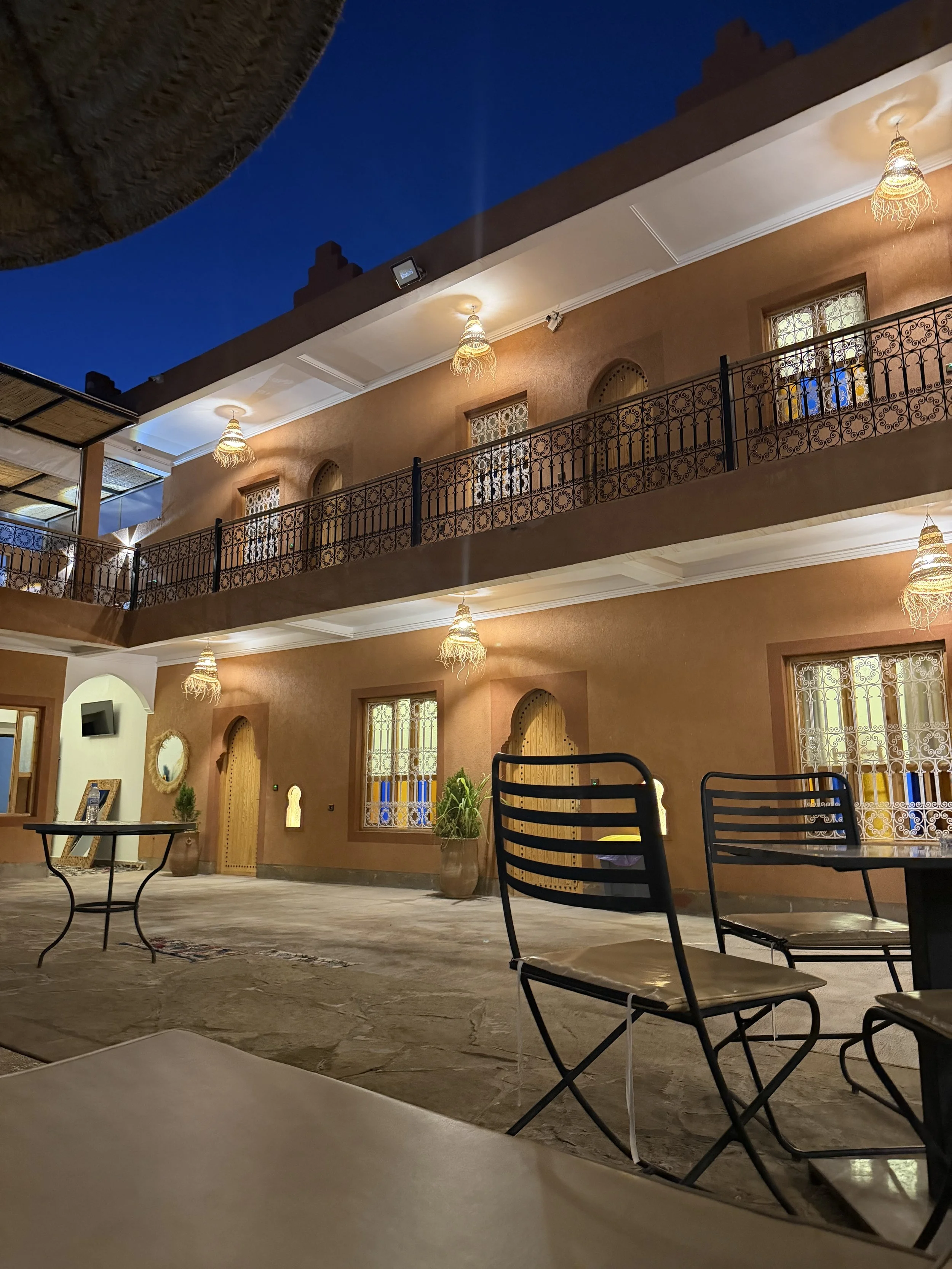
We spent one night at Hotel Rose Garden Dades while driving through the Dades Valley, and it was such a lovely surprise. Surrounded by the dramatic rock formations and sweeping desert-mountain landscape, the hotel felt peaceful and welcoming after a full day on the road. The dinner was genuinely excellent — flavorful tagines, fresh salads, warm bread, and that comforting, home-cooked feel you hope for in a smaller countryside stay. What made the evening even more memorable was the music. After dinner, local music filled the space, guests started clapping along, and the whole atmosphere shifted into something joyful and communal. It wasn’t just a place to sleep — it was an experience that made the journey through the valley even more special.
Day Two — Dades Gorge → Todra Gorge → Merzouga → Sahara Sunset
We arrived first in Tinghir, a town set along one of Morocco’s most striking palm oases, where desert terrain meets river-fed agriculture. With our guide Mustafa — warm, knowledgeable, and clearly proud of his home region — we walked through narrow pathways between small family plots nourished by traditional irrigation channels drawing from the Todra River. For centuries, Amazigh communities have relied on this water system to cultivate dates, alfalfa, and seasonal crops in an otherwise arid environment. The oasis has long served as a vital agricultural hub along historic trade routes linking the Sahara to northern Morocco.
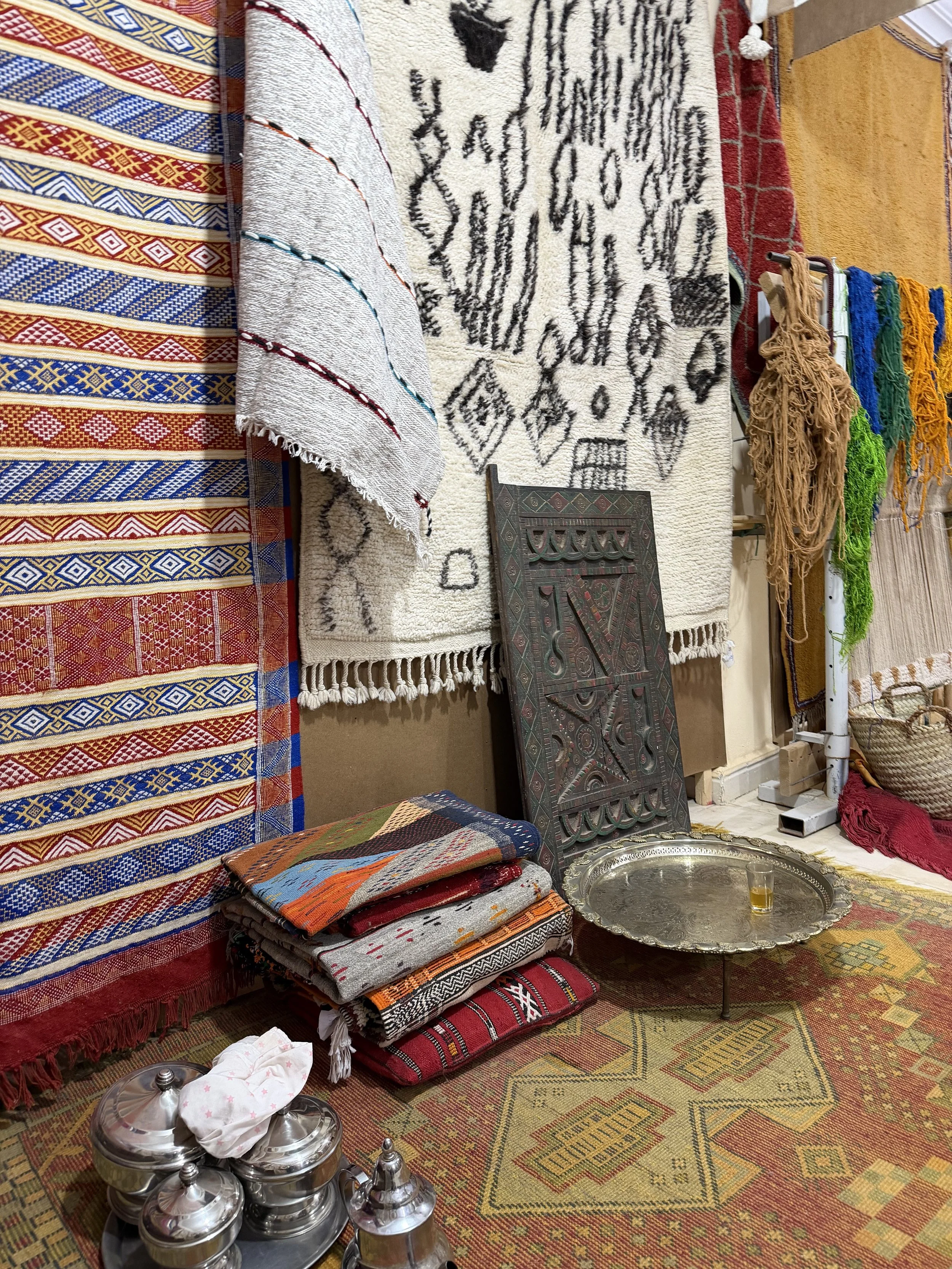
We tasted fresh Medjool dates during the visit — soft, rich, almost caramel-like — and I learned that Morocco remains one of the world’s major producers of Medjool dates. They were nothing like the packaged versions back home. We also purchased a rug directly from the women who weave them. Many Amazigh rug designs incorporate geometric motifs that can symbolize protection, identity, or stages of life, though meanings often vary by region and tradition.
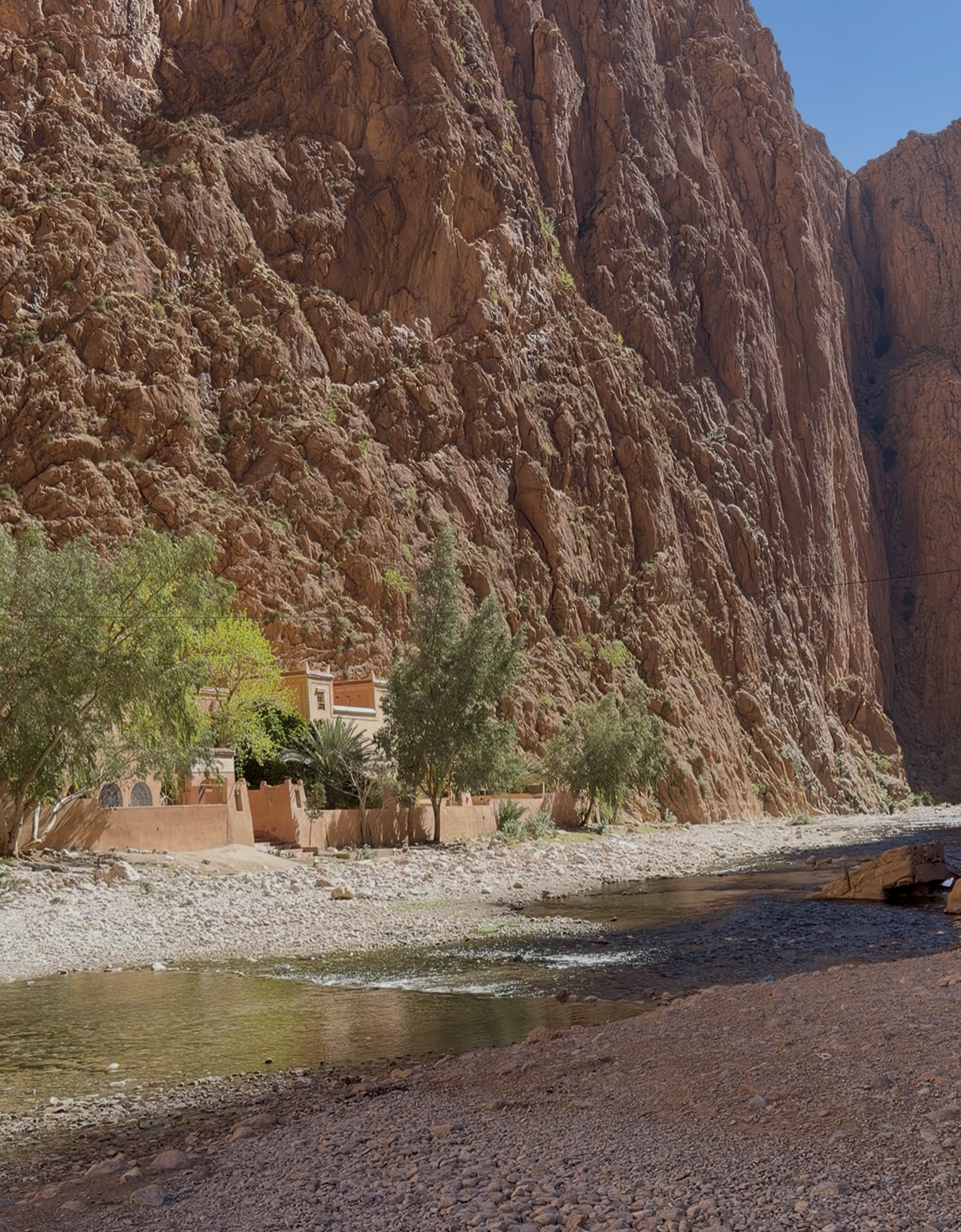
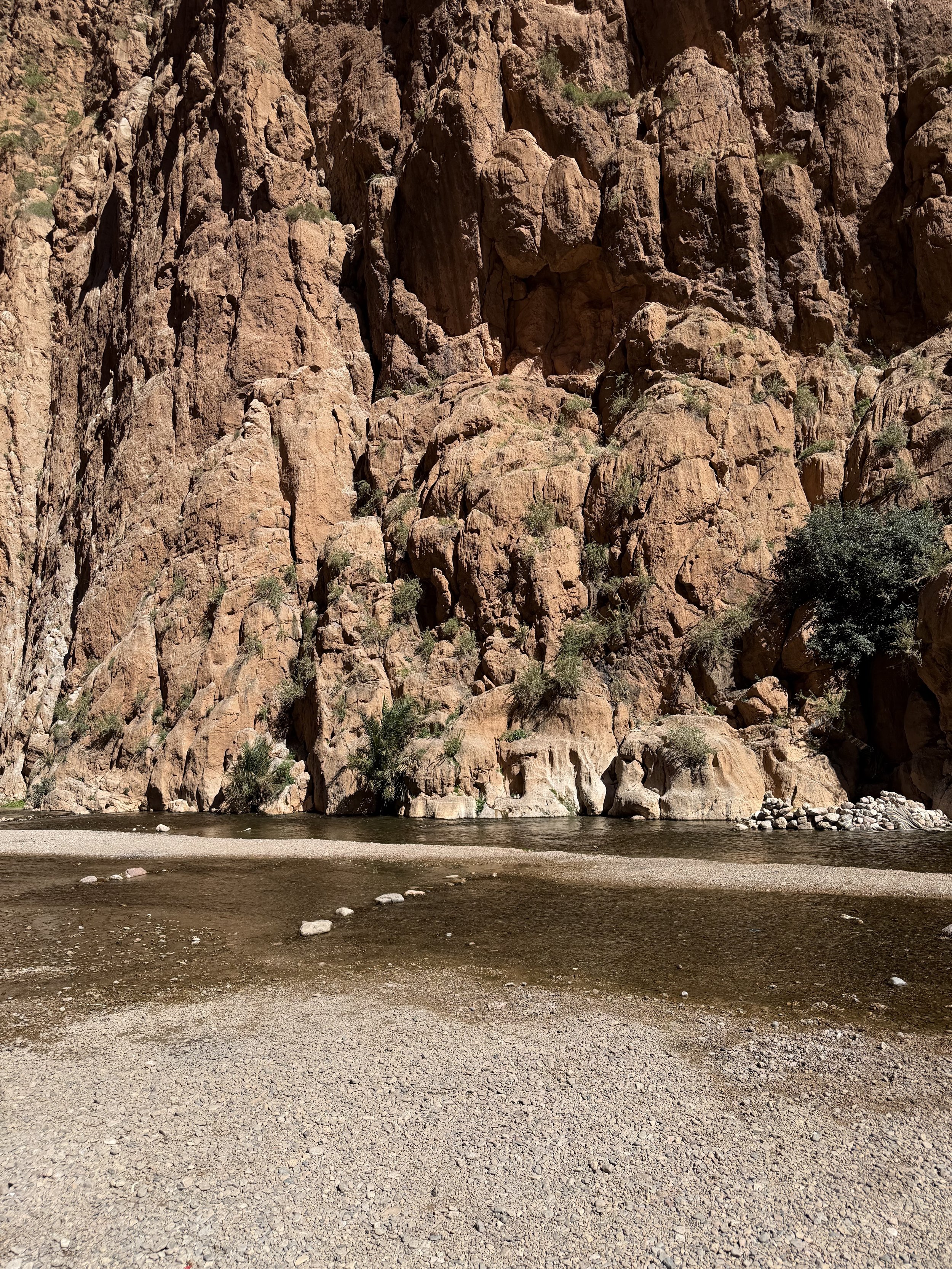
From Tinghir, we continued into Todra Gorge, where limestone canyon walls rise nearly 300 meters (about 1,000 feet) above the river below. Historically, the gorge functioned as both a natural corridor and a strategic passage for local communities. Today, it is internationally recognized as one of Morocco’s premier rock climbing destinations, with hundreds of established routes drawing climbers from around the world. Standing at the base of those sheer cliffs, the scale is difficult to grasp.
The air felt cooler inside the gorge, the sound of water echoing between the stone walls, and the contrast between lush valley floor and towering canyon made it one of the most dramatic landscapes of the journey.
Sunset Camel (or Walking) Trek and ATVs
Everyone else mounted their camels, and while the group began riding into the dunes, I chose to hang back and do my own thing. The camels were tied closely together, and a few seemed agitated by how near they were to one another, which only reinforced my decision to keep some distance.
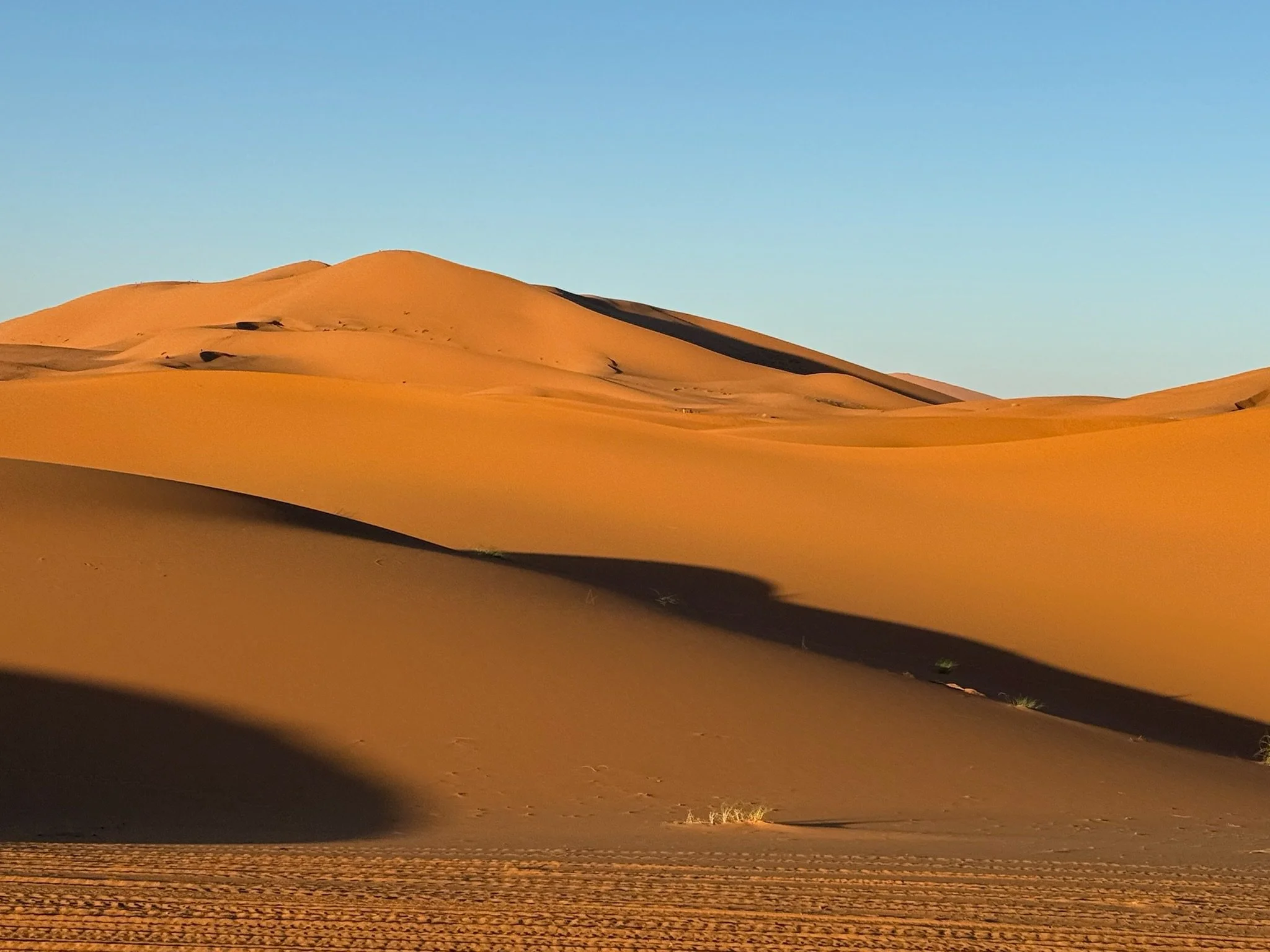
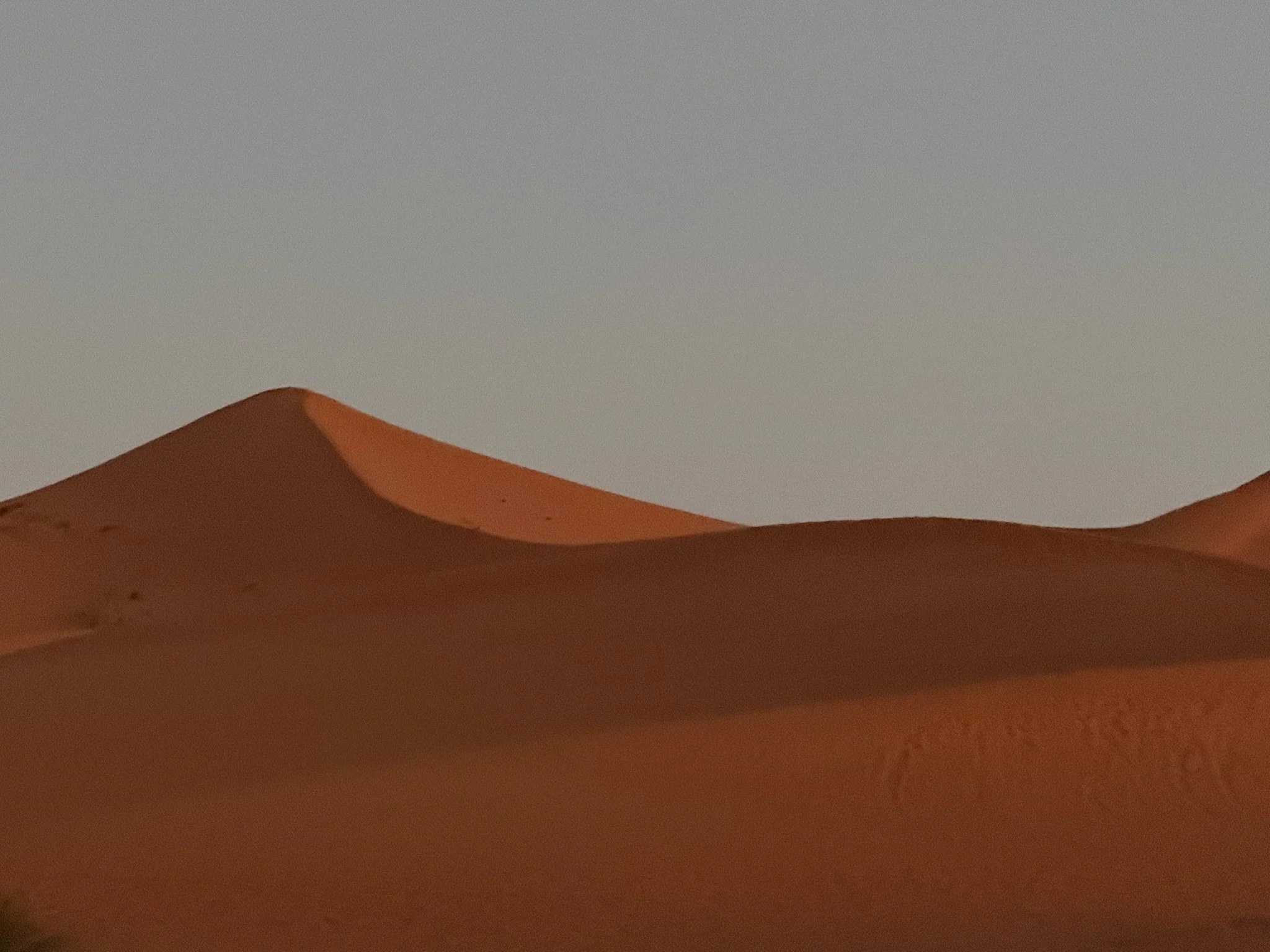
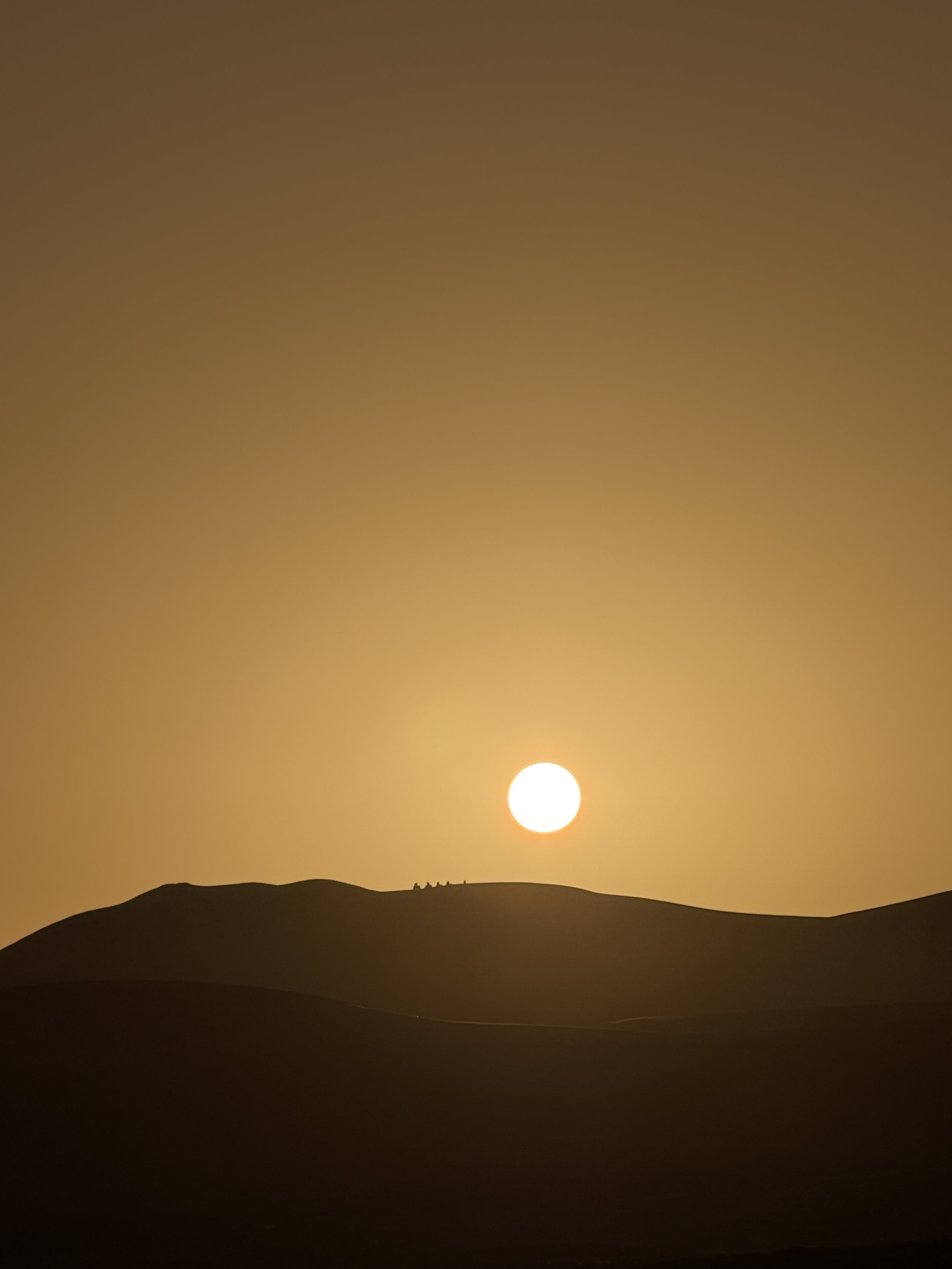
Instead, I hiked up a nearby dune on my own. Walking in soft sand is no joke — every step sinks, and the heat rises up around you — but once I reached the top, it was completely worth it. From up there, I had an unobstructed view of the Sahara stretching endlessly in every direction. The sky shifted into orange and lavender as the sun lowered, and the wind traced delicate patterns across the sand. It was quiet, expansive, and powerful — a different kind of experience, but one that felt aligned with me.
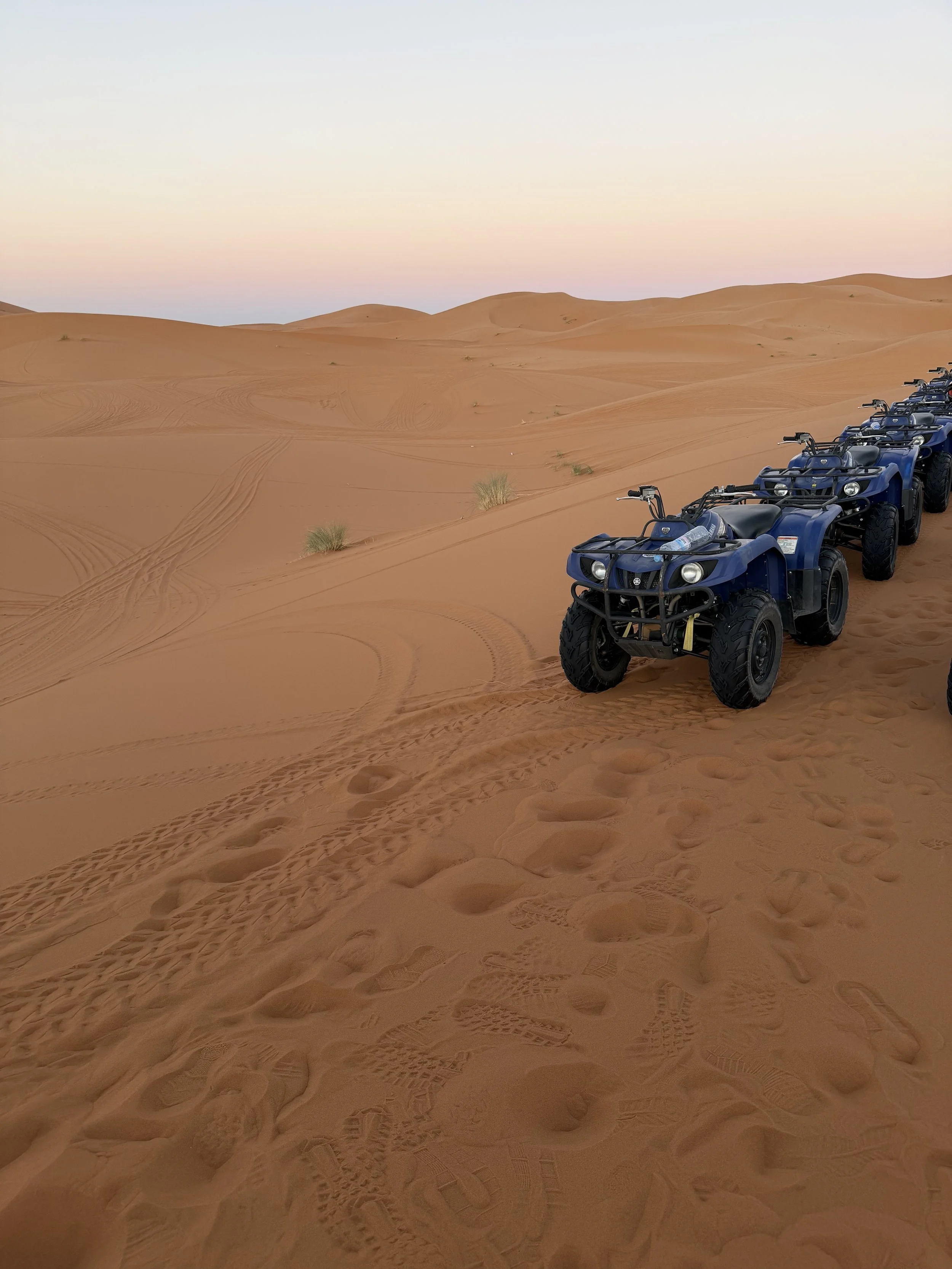
After the walk and camel ride portion wrapped up, it was time for the ATVs and honestly, this was the highlight for me. I believe it was about $50 USD, and it was absolutely worth it. We geared up, got a quick rundown, and then took off across the dunes. We were moving pretty fast, enough to feel the adrenaline, carving through open stretches of sand with the wind in our faces and nothing but desert in every direction. We spent about an hour riding, climbing dunes, dipping into valleys, and chasing the horizon. It felt freeing, wild, and completely different from the slower pace of the camel trek. If you’re going to the Sahara and want something active and exhilarating, I highly recommend adding the ATV experience.
Deluxe Desert Camp — Music, Food, Firelight
Our deluxe camp was far more luxurious than a “tent” suggests:
Real bed
Private bathroom
Electricity
Heavy blankets
Lantern-lit walkways
Carpeted floors
After dinner — tagine, soup, warm bread, vegetables, fruit — the campfire became the gathering place. The Amazigh musicians played drums, sang, laughed, and invited us to join. The night sky was clearer than any sky I’ve ever seen — galaxies, constellations, shooting stars.
These moments alone are worth every hour spent in the car.
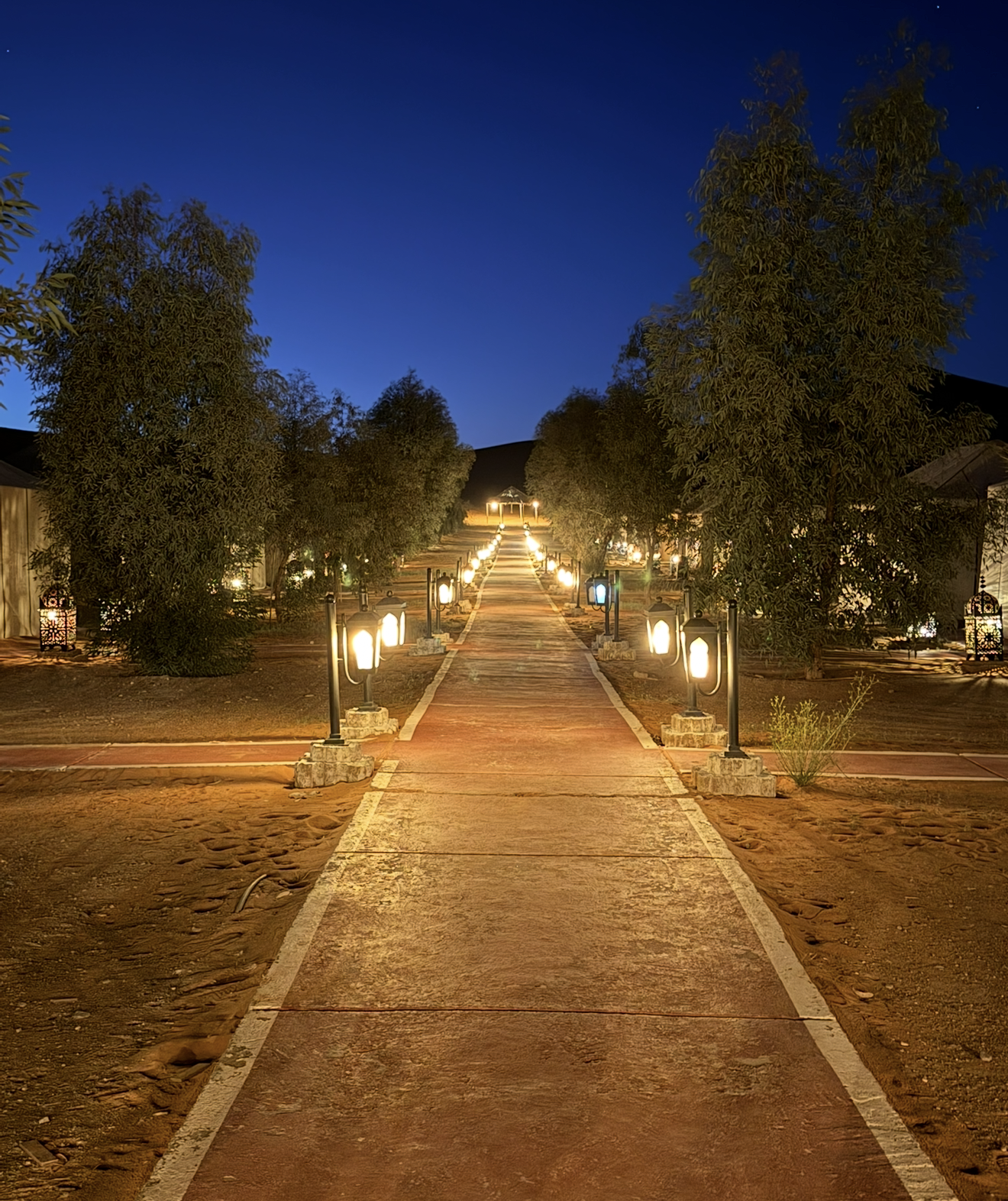
A view of the Sahara Camp
Day Three — Sunrise Camel Walk → Azrou Forest → Fes
I opted to take the jeep out of the desert instead of doing the sunrise camel walk back toward Merzouga. Before departing, we drove out to the dunes in the early morning light, and I climbed up a sand dune to watch the sun rise over the Sahara one last time. The sky shifted from deep indigo to soft pink and then to glowing gold, the light slowly spilling across the rippled sand. It felt quiet, expansive, and grounding — a peaceful farewell to the desert before continuing our journey.
On the drive north toward Fes, the landscape transformed dramatically. The endless dunes gave way to rocky plains, then gradually to greener terrain. The temperature dropped. Trees began to appear. Rivers cut through valleys. Villages and farmlands dotted the hillsides. After days of sand and sun, the shift felt almost surreal — a reminder of how diverse Morocco’s landscapes truly are.
Azrou Cedar Forest
The forest, home to the Barbary macaques, felt like stepping into a completely different world. The air was cool and crisp, scented with cedar, a sharp and welcome contrast to the desert sand we had just left behind. The monkeys moved through the branches like acrobats, playful, intelligent, and clearly accustomed to people. But it’s important to know that Barbary macaques are classified as endangered, with declining populations due to habitat loss and the illegal pet trade.
While seeing them in the wild was incredible, it was also disheartening to watch how many people were taking advantage of the situation by encouraging tourists to pay to feed the monkeys or use food to lure them closer for photos. Feeding wildlife disrupts their natural behaviors and reinforces unhealthy dependence on humans. They are wild animals, not attractions. It was a reminder that even in beautiful moments, responsible tourism matters deeply.
Another long drive followed, but once again Morocco’s ever-changing scenery made it worth the journey.
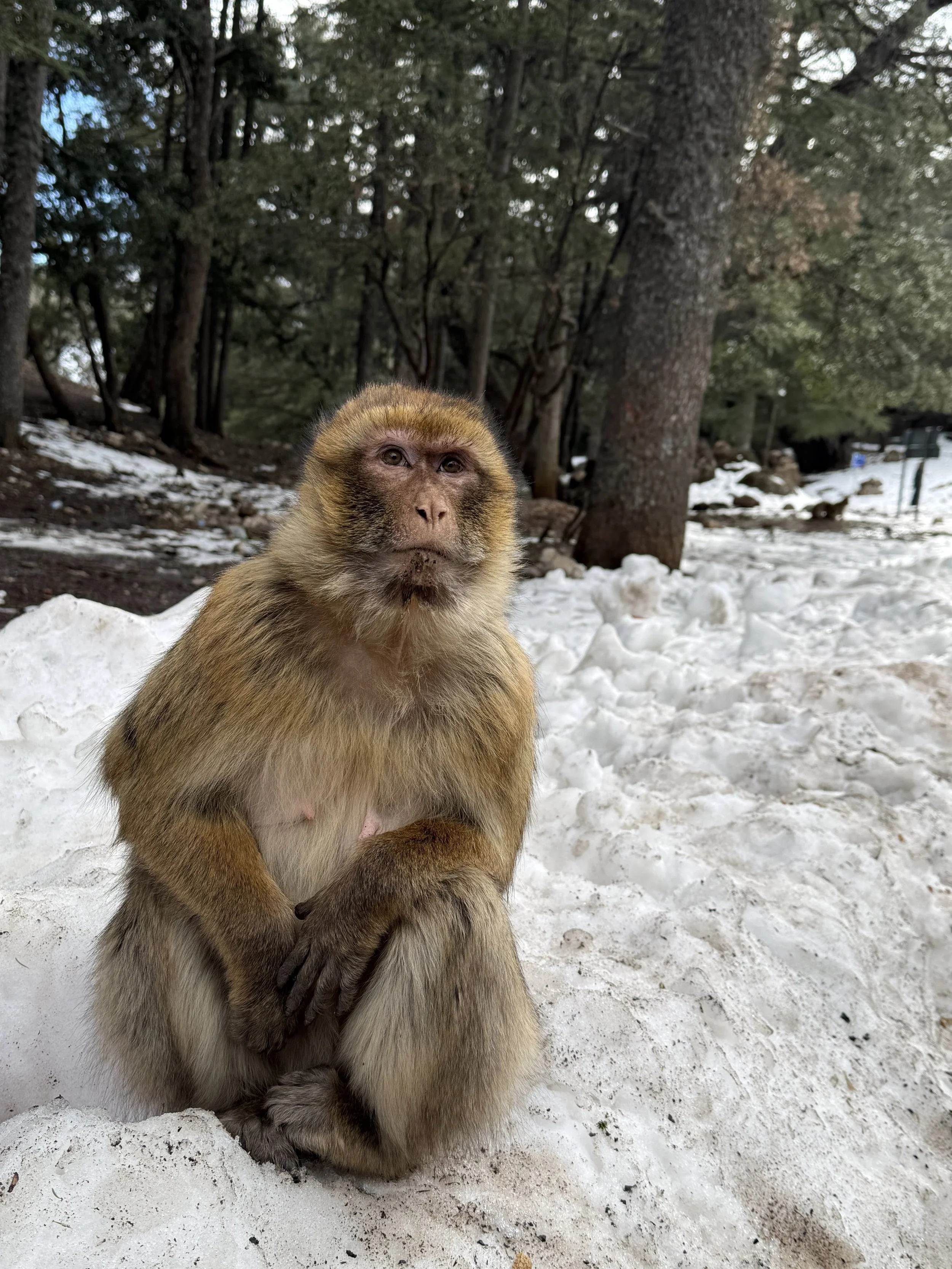
Barbary Macaques
Arrival in Fes — Riad Fes, Booked With AMEX Platinum Points
Our driver dropped us off at the magnificent Riad Fes, which we booked entirely with AMEX Platinum points.
Riad Fes feels like a palace — ornate plasterwork, hand-laid mosaics, carved cedar ceilings, candlelit hallways, and courtyards filled with light. It’s elegant, serene, and incredibly luxurious — the perfect way to transition out of the desert and into the historic depth of Fes.
This set the stage perfectly for Part Three.
Dive safe, explore passionately, and remember…