
Morocco Part I, Marrakech
Part 1 of a 4-Part Series - Touchdown in Morocco: Arrival + Two Magical Nights in Marrakech
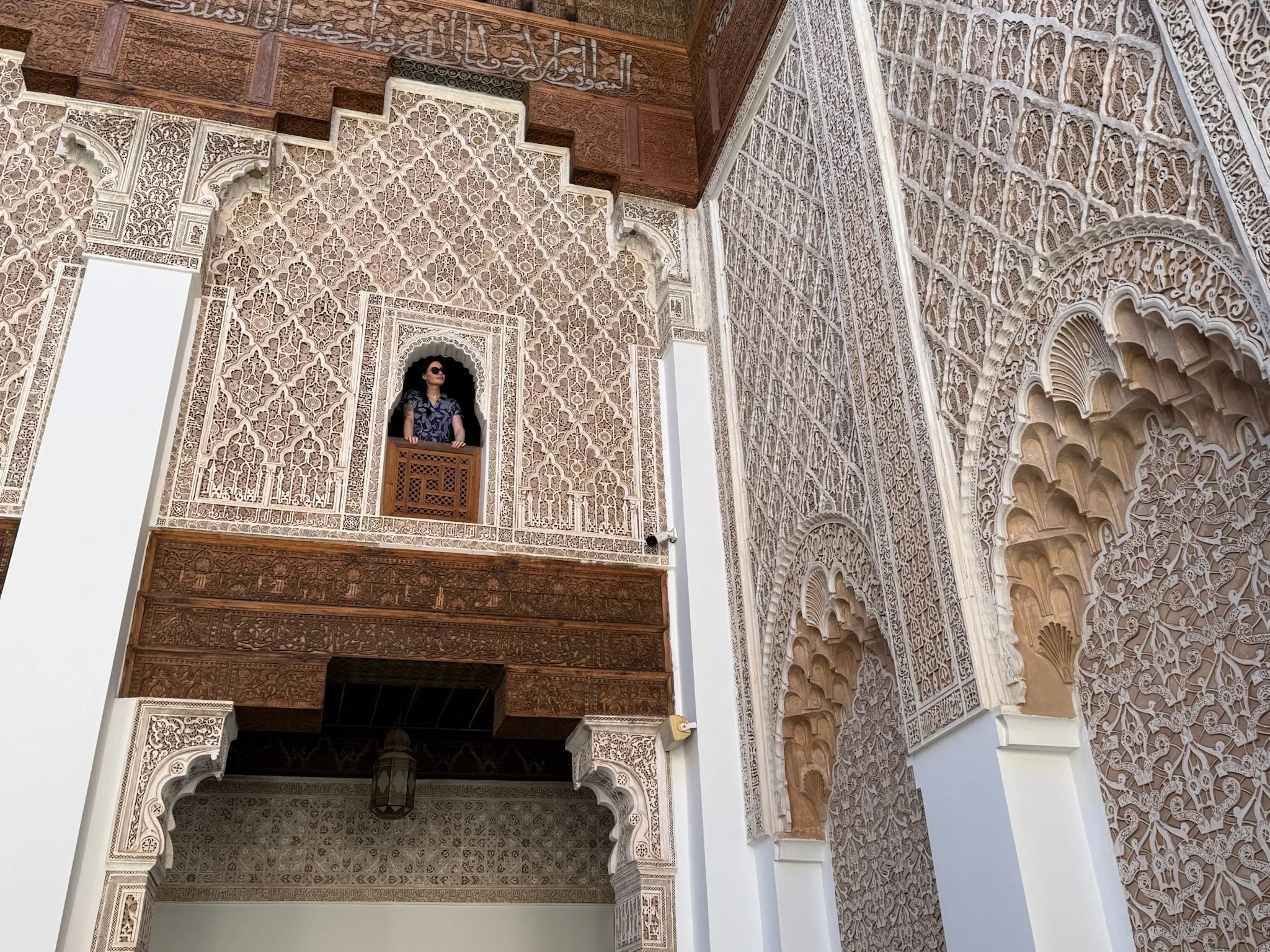
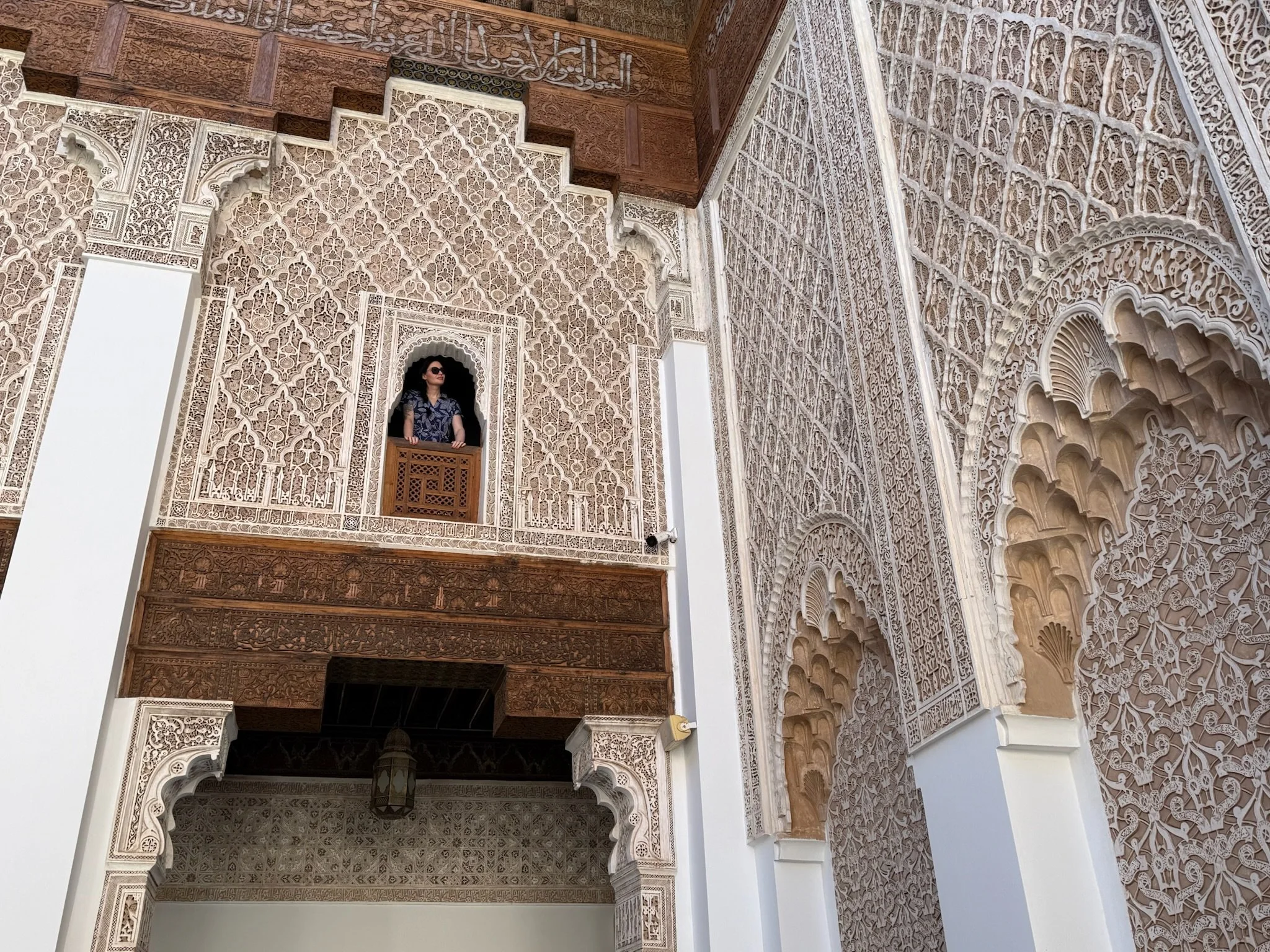
Ben Youssef Madrasa, Marrakech
This journey through Morocco unfolds in four parts, each chapter revealing a new layer of a country that is impossibly vivid, welcoming, layered, and full of personality. Altogether, we spent 11 nights moving through Marrakech, the Sahara Desert, Fes, Chefchaouen, and Rabat — each destination offering something entirely different from the last.
Morocco is a land of contrasts, but not in a jarring way, more like a storybook that keeps adding new chapters. The warm hospitality of its people, the rich sensory experiences, the ancient and modern woven together, and the ease of getting around all make it a destination that immediately feels alive.
And the perfect introduction to all of this was Marrakech.
A city that is vibrant, bustling, colorful, and filled with warmth. A place where the days hum with energy, the evenings glow with lantern light, and the people greet you with genuine smiles and “salam alaikum.”
I’m sharing my custom Marrakech map filled with my top recommendations for Riads, shopping, food, and must-see sites — everything you need for the perfect first visit.
Table of Contents
Morocco’s Cultural Landscape
Practical Travel Notes
Weather
Call to Prayer
Clothing & modesty
Currency
Water & alcohol
Electrical outlets
Carry-On Essentials
What I Packed for February
Luggage & Packing Strategy
Booking With Points
Why Stay in a Riad
Les Sources Berbères Riad & Spa
Cooking Class With Chef Hassan
A Full Day in the Medina
Dinner at Safran by Koya
Departure for the Sahara
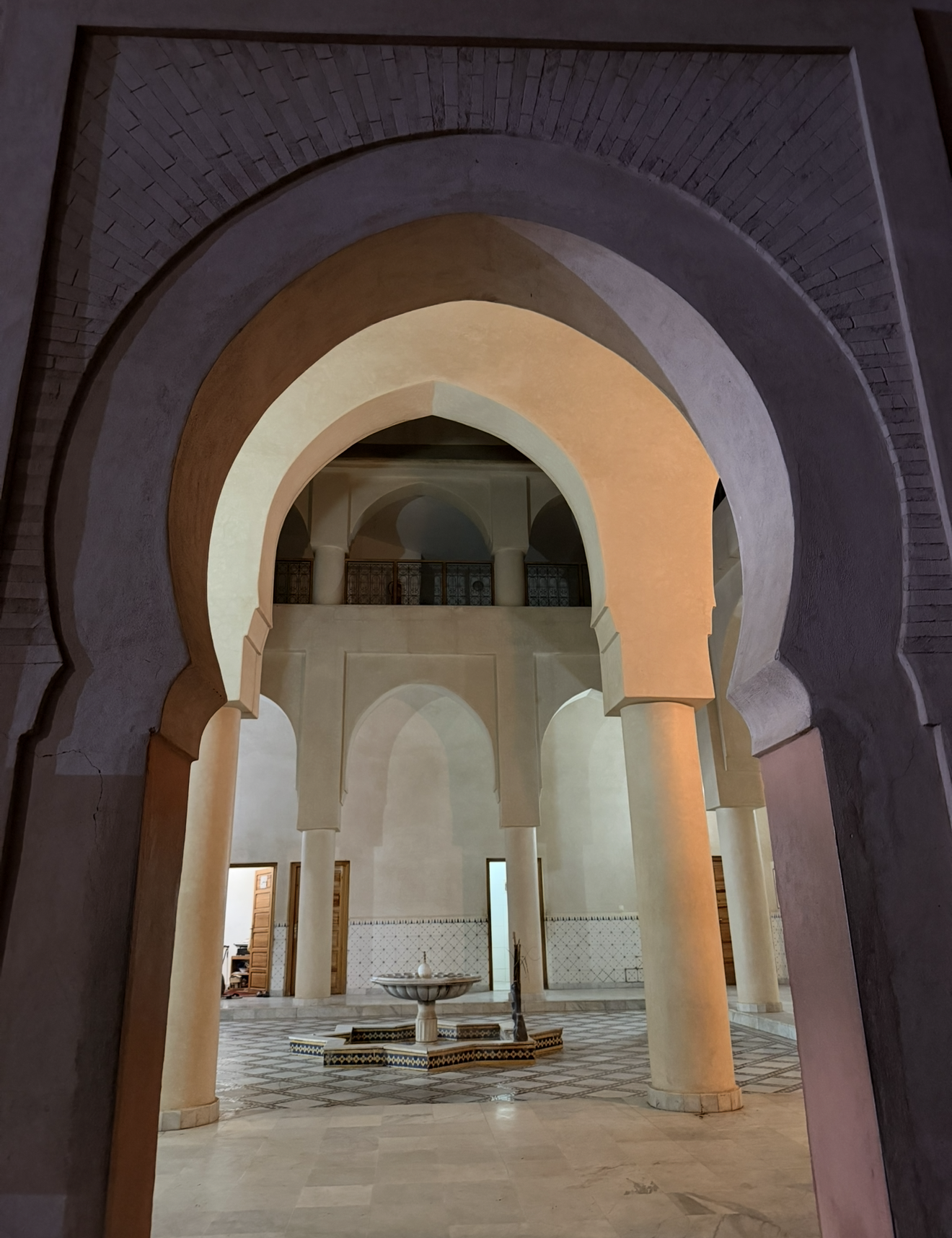
Marrakech
A Cultural and Historical Landscape That Makes Morocco Unique
Morocco’s identity isn’t singular — it’s beautifully blended. Centuries of Amazigh (Berber) heritage mix with Arab influences, Islamic traditions, Andalusian history, and French and Spanish cultural touchpoints. This combination shapes everything from architecture and language to food and craftsmanship.
You’ll hear Moroccan Arabic, called Darija, spoken in cities; Amazigh languages in rural areas; French almost everywhere; and Spanish especially in the north. English is increasingly common, especially among younger Moroccans.
Before arriving, I learned a handful of helpful phrases:
“Salam alaikum” — hello, peace be upon you
“Shukran” — thank you
“Smah liya” — excuse me
“Bsh-hal?” — how much?
“La shukran” — no thank you
Even if your pronunciation isn’t perfect, the effort is always appreciated.
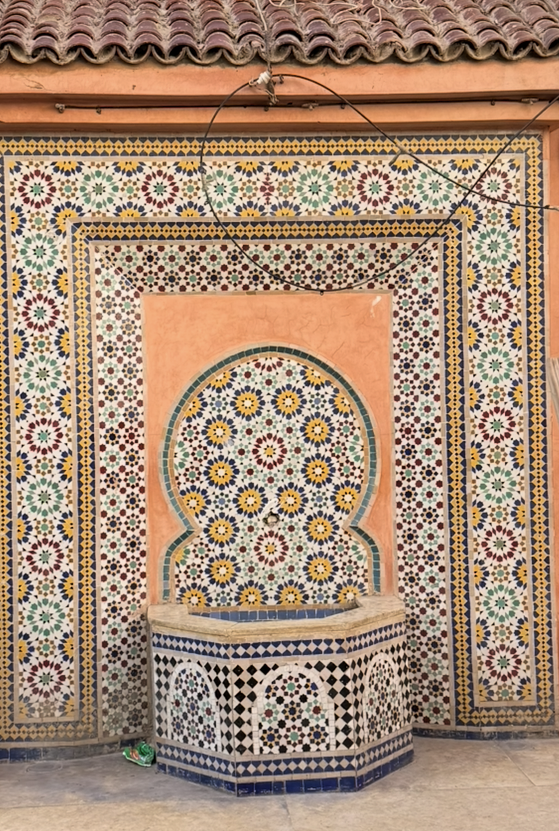
Marrakech
Practical Travel Notes
Weather in February
February is a beautiful month to visit Marrakech. Mornings are cool and crisp, afternoons warm up into the mid-60s to low-70s °F (17–22°C), and evenings drop back into the low 50s °F (10–12°C). It’s perfect exploring weather — sunny, dry, and comfortable for long walking days in the medina and souks.
Call to Prayer
If you’re visiting a Muslim-majority country for the first time and you wake up before sunrise to a powerful voice echoing through the streets — don’t panic. You’re hearing the adhan, the Islamic call to prayer. The early morning call is for Fajr prayer and happens just before dawn each day. It’s completely normal, deeply rooted in tradition, and part of the daily rhythm of life. We actually met a few Americans and Brits who were startled because they didn’t realize what it was — so consider this your friendly heads up.
Clothing & Modesty
Morocco is welcoming to travelers, and there’s no need to dress overly conservatively, but it’s respectful to keep things modest:
Linen pants or long skirts
Light long-sleeve tops
Comfortable walking shoes
Layers for cool evenings
A scarf for sun, wind, or visiting religious areas
There’s no requirement for women to cover their hair unless entering a religious site where head coverings may be appropriate. The goal is simply to blend in a little and stay comfortable.
Currency — Moroccan Dirham (MAD)
Morocco’s currency is the Moroccan Dirham (MAD), which is a closed currency — meaning you can only buy or exchange it inside Morocco.
Key points:
ATMs are widely available in Marrakech
Cash is preferred in the medina and souks
Credit cards are accepted in hotels, nicer restaurants, and some boutiques
You can withdraw dirhams directly from airport ATMs for the best rate
Approximate conversions (rounded, for ease when shopping):
100 MAD ≈ $10 USD
10 MAD ≈ $1 USD
1 MAD ≈ $0.10 USD
This simple ratio makes mental math easy in the markets.
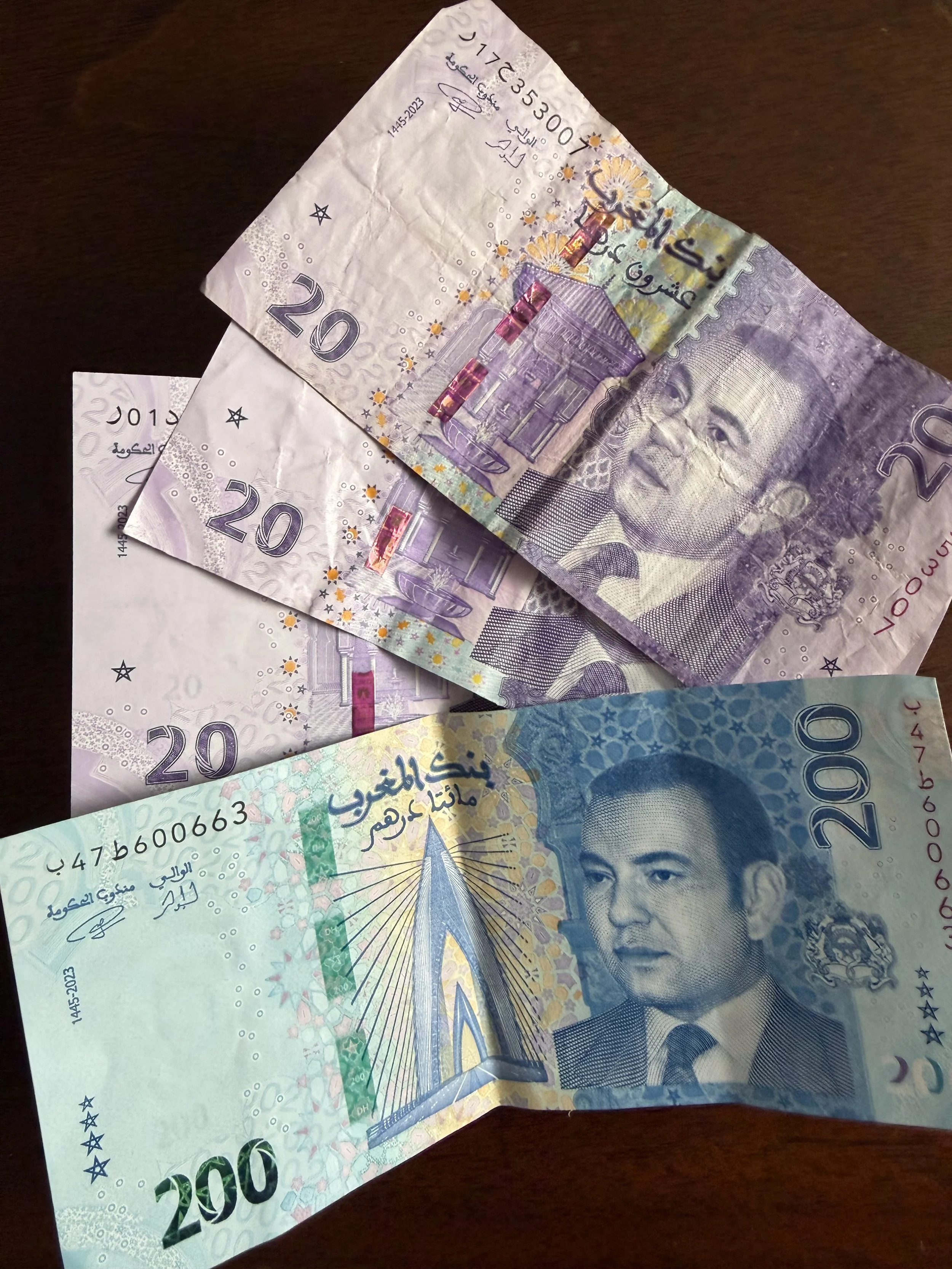
Moroccan Dirham (MAD)
Why Cash Is King in the Souks
While some shops near Jemaa el-Fnaa now accept credit cards, the majority of purchases in the souks — especially bargaining-based items like rugs, lanterns, spices, scarves, and leather goods — are done in cash.
Benefits of using cash:
Better bargaining leverage
No card fees or machine “surcharge” surprises
Faster transactions
Avoids connectivity issues (machines often go down)
It’s wise to keep small bills and coins (10–50 MAD denominations) for:
Street food
Taxis
Tips
Market purchases
Café snacks
Larger purchases like carpets or lanterns can be negotiated and paid in MAD, but many vendors will also quote in USD or EUR if you prefer.
Haggling
Haggling is woven into the fabric of daily life in Morocco — especially in the souks — and it’s completely expected. The first price is rarely the final price. Vendors often begin higher, leaving room for negotiation, and you’re meant to counter respectfully. It’s not confrontational; it’s conversational. Smile, stay kind, and treat it as part of the cultural exchange rather than a competition. The goal isn’t to “win,” but to land on a number that feels fair to both of you.
The same mindset applies to taxis. Many drivers don’t use meters, particularly with visitors, so always agree on the fare before you get in. Asking “How much to ___?” upfront keeps everything clear and avoids awkward surprises later.
Water Safety
While tap water is safe for locals, travelers can experience stomach upset due to mineral content differences. The safest approach is:
Drink bottled water
Use bottled water to brush your teeth
Avoid ice unless you know it’s filtered
Check that water bottles are sealed before opening
Most Riads include free bottled water, and small shops sell 1.5L bottles for 5–10 MAD.
Alcohol Availability
Alcohol exists in Morocco but is discreet. You won’t find it in the medina’s street stalls or traditional cafés, but it is available at:
Licensed restaurants
Hotel lounges
Boutique bars
Certain rooftop restaurants in Gueliz and Hivernage
Local norms lean toward drinking quietly and respectfully, not publicly or excessively.
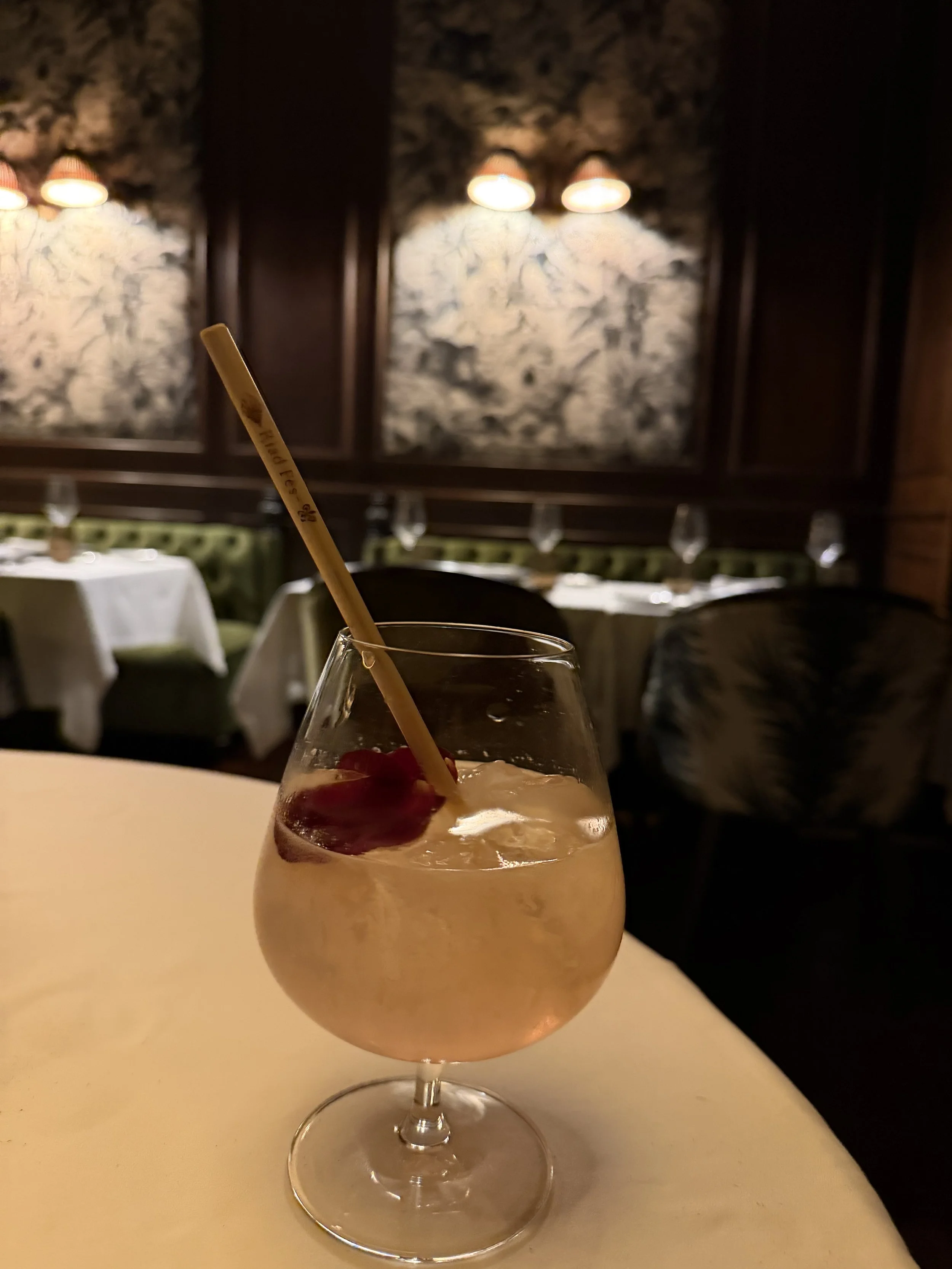
The BEST Rose Water Cocktail (Riad Fes)
Electrical Outlets & Charging
Morocco uses Type C and Type E outlets, the same as mainland Europe.
You’ll need:
A universal travel adapter
Optional: a multi-port USB hub if you travel with cameras, phones, tablets, etc.
Voltage is 220V, so double-check electronics with U.S. plugs, especially hair dryers or straighteners — most people rely on hotel appliances to avoid voltage issues.
What I Packed in My Personal Carry-On
Long-haul flights to Morocco mean settling in for hours of dry cabin air, cramped legs, and unpredictable sleep — so my carry-on is always my survival kit. This trip I absolutely dialed it in.
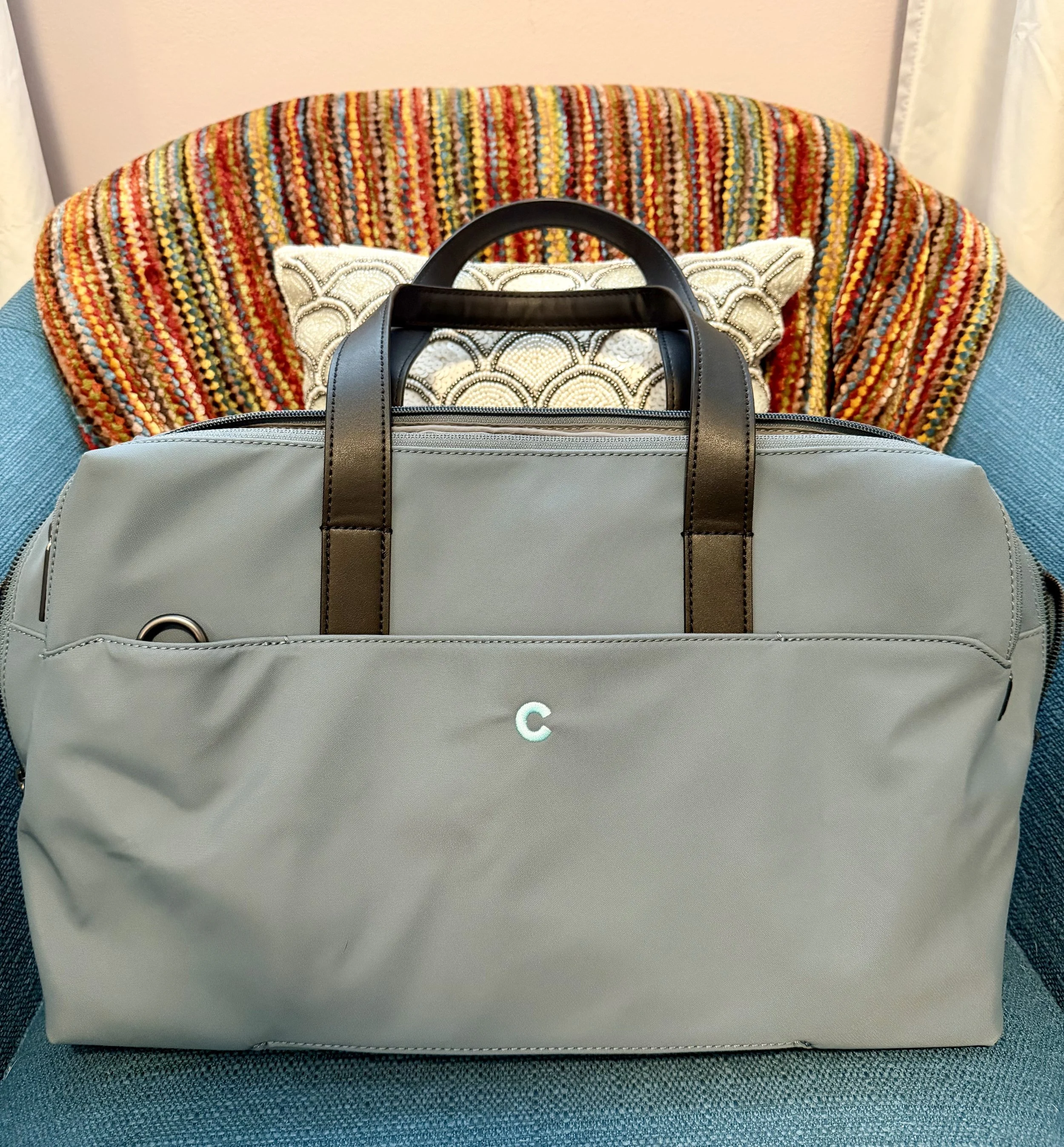
I packed everything in my Away Everywhere Tote, with all my in-flight hygiene essentials organized neatly inside the Away Small Toiletry Bag.
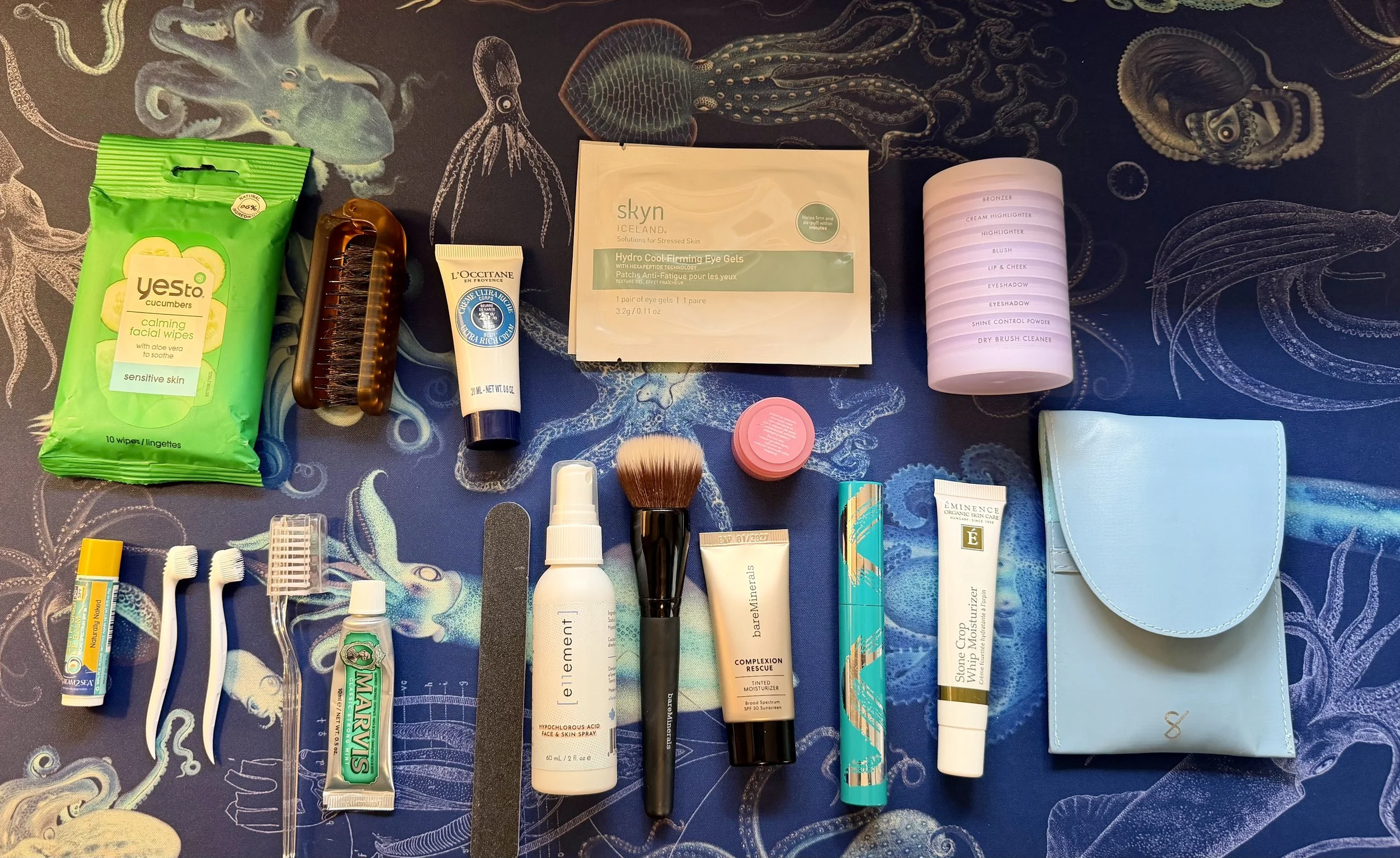
In my personal bag, I packed everything I needed to stay hydrated, refreshed, and comfortable:
Yes To Cucumber face wipes for a quick cleanse mid-flight (I have sensitive skin, these are the ones that work best for me)!
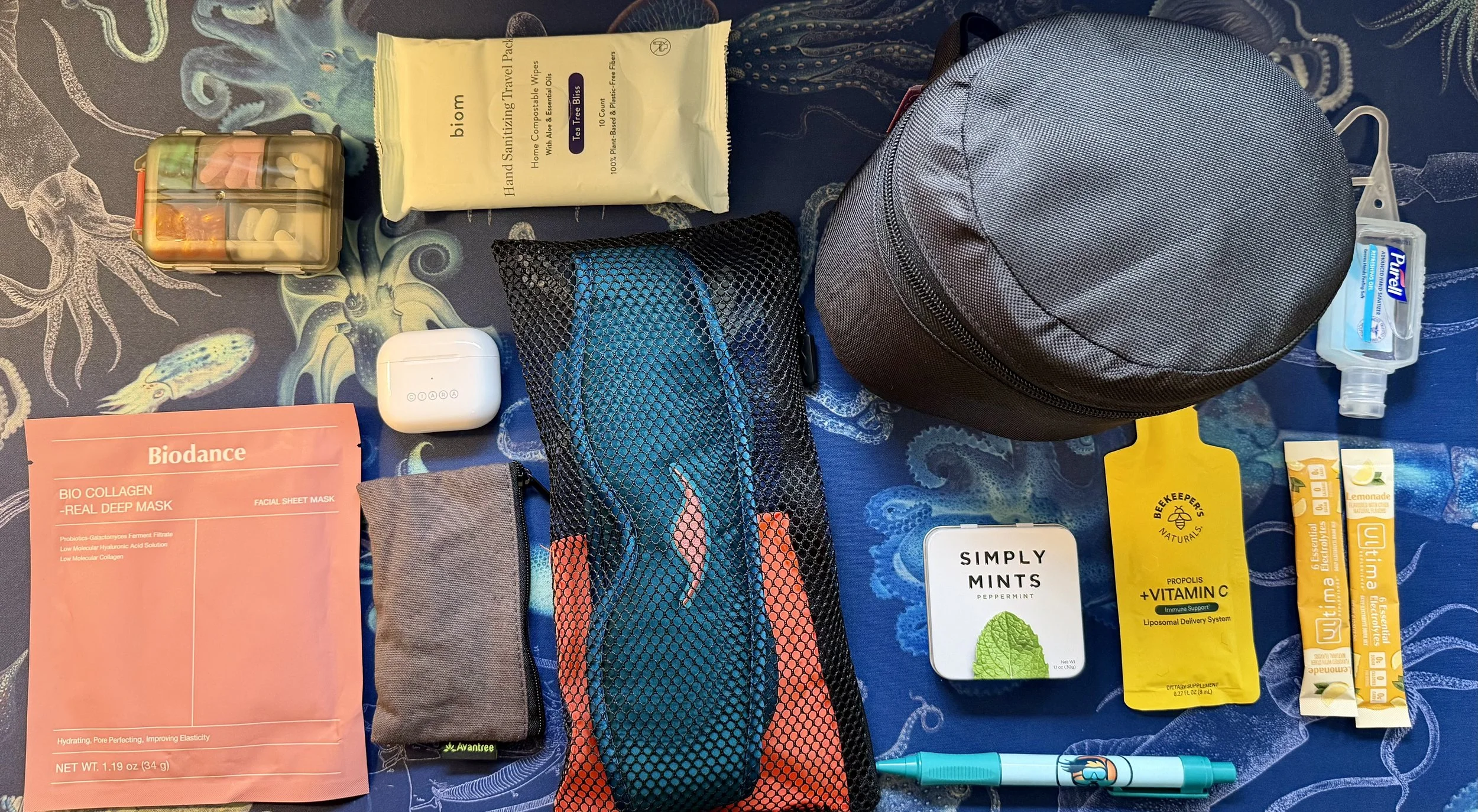
Hand sanitizer and sanitizing wipes because…airports
Hypochlorous acid face mist to keep my skin from breaking out
Moisturizer + lip balm for that cabin-air dehydration
My in-flight must-haves: a tinted moisturizer with SPF (UV rays are stronger at altitude!), my trusty travel brush, my favorite eyebrow pencil, and the mascara I absolutely swear by — all cruelty-free, which makes me love them even more.
Subtl Beauty Travel Makeup Stacks — my absolute favorite for travel. They’re tiny, stackable, cruelty-free, and give you everything you need without taking over your toiletry bag.
Beekeeper’s Naturals Liposomal Propolis with Vitamin C — my go-to immune support in my carry-on. Easy to pack, shelf-stable, and perfect for long travel days or flights when you need a quick wellness boost.
My Manta eye mask is perfect for true blackout sleep, but if you’re a side sleeper, I recommend this silk eye mask instead — it’s designed to stay comfortable without pressing against your face.
Earbuds are a must — perfect for movies, meditation, or drowning out engine noise. My Apple AirPods are lifesavers for blocking out screaming children and those determined to chat even when the cabin lights are dimmed. I also bring a Bluetooth airplane adapter so I can connect wirelessly and watch the seat-back TV without fuss.
Hand lotion to fight dry skin
I swear by the Zestt Organic Travel Scarf in Dreamsoft Organic Cotton — it’s unbelievably soft and doubles as a lightweight blanket or wrap in chilly lounges and on long flights.
Pill organizer with melatonin, probiotics, Tums, Advil, etc.
Flushable wipes, just trust me
And the true MVP: a Biodance sheet mask — you genuinely wake up looking hydrated instead of zombie-fied. I cannot recommend this sheet mask enough.
I also packed electrolyte powder, which helps combat jet lag and the dehydration that sneaks up on long flights. One bottle of water + electrolytes mid-flight makes a huge difference.
These small essentials kept me comfortable, refreshed, and human during the journey — and they all fit neatly into my carry-on organizer.
You can shop my exact travel must-haves in my Amazon storefront here:
What I Packed for Morocco in February
Packing for Morocco in February is all about layers, versatility, and comfort. The days are mild and often sunny, but mornings and evenings can be cool — and the desert night temperatures drop fast. I focused on pieces I could mix, match, and layer without feeling bulky or overdressed.
AirTags are a must. Put one in every checked and carry-on bag and hide it — inside zipper pockets, mesh compartments, or lining pouches. Check the battery before you fly.
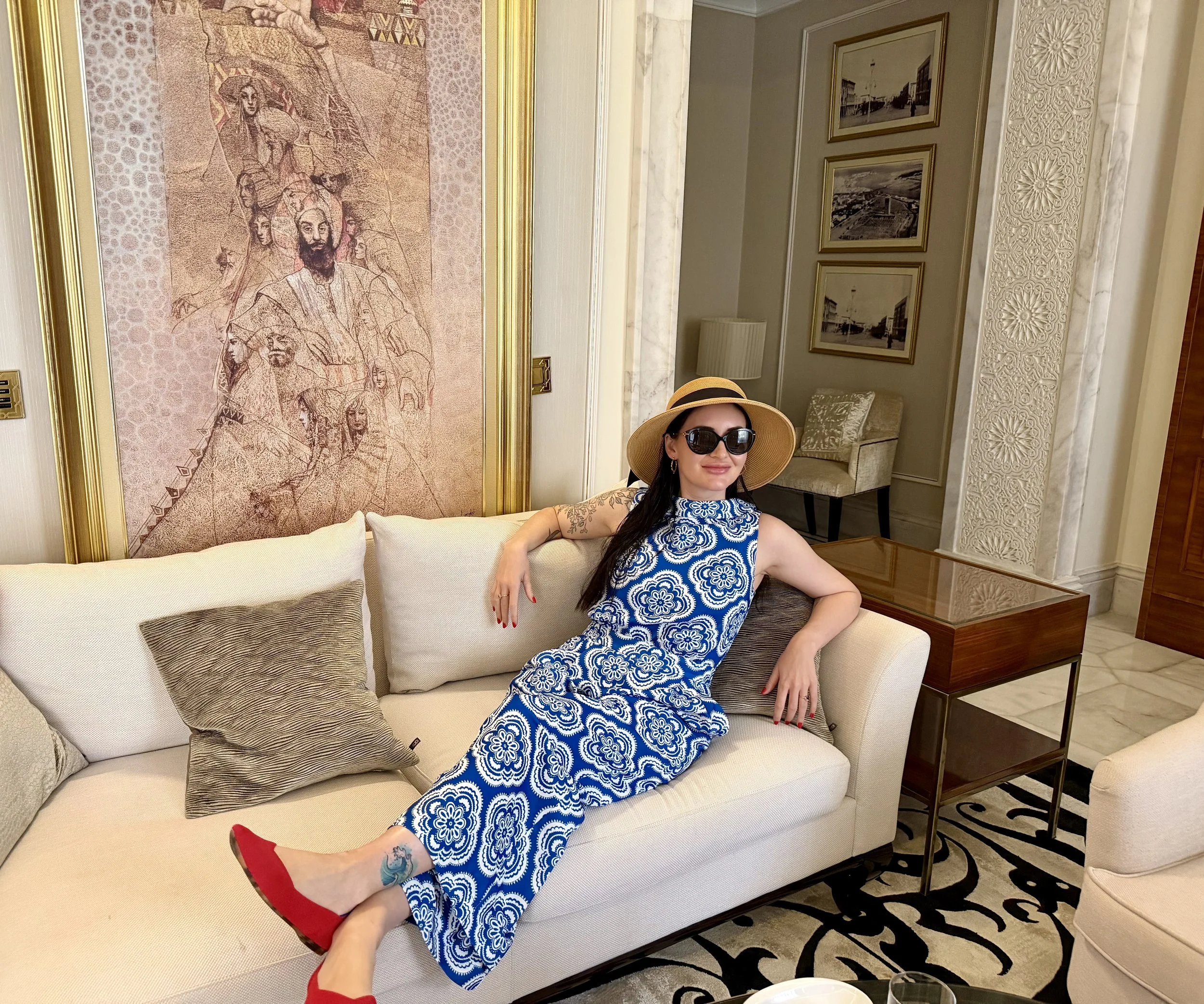
Lounging in our suite at the Ritz
The Basics
I packed lightweight linen pants (the Quince ones are perfect, and I also have a Tommy Bahama pair I brought to the Maldives that worked beautifully), flowy linen tops (I purchased a few during the Tommy Bahama end of season sale), and a couple of maxi dresses and jumpsuits for exploring the Medina or heading out to dinner. A lightweight linen jacket and rain jacket covered temperature swings.
Kimonos and cardigans quickly became my secret weapon. They’re lightweight, easy to roll into your day bag, and add warmth without feeling heavy. Plus, they look effortlessly chic in photos and offer a little extra modesty when walking through the Medina or visiting religious sites.
I found the most adorable Boden jumpsuit and paired it with a cozy cardigan — it quickly turned into one of my absolute favorite looks of the whole trip. And because I clearly can’t resist a good jumpsuit, I also added the Costa jumpsuit from Baltic Born to my suitcase. Both were total winners.
I brought a swimsuit (my two favorite brands are Vetchy and Londre) for hammam and spa days. Many spas in Morocco require or encourage swimwear, and slipping into a heated pool or steam room after long walking days felt like the perfect reset.
In Morocco, layers are your best friend, keeping you comfortable from sunrise to desert nights.
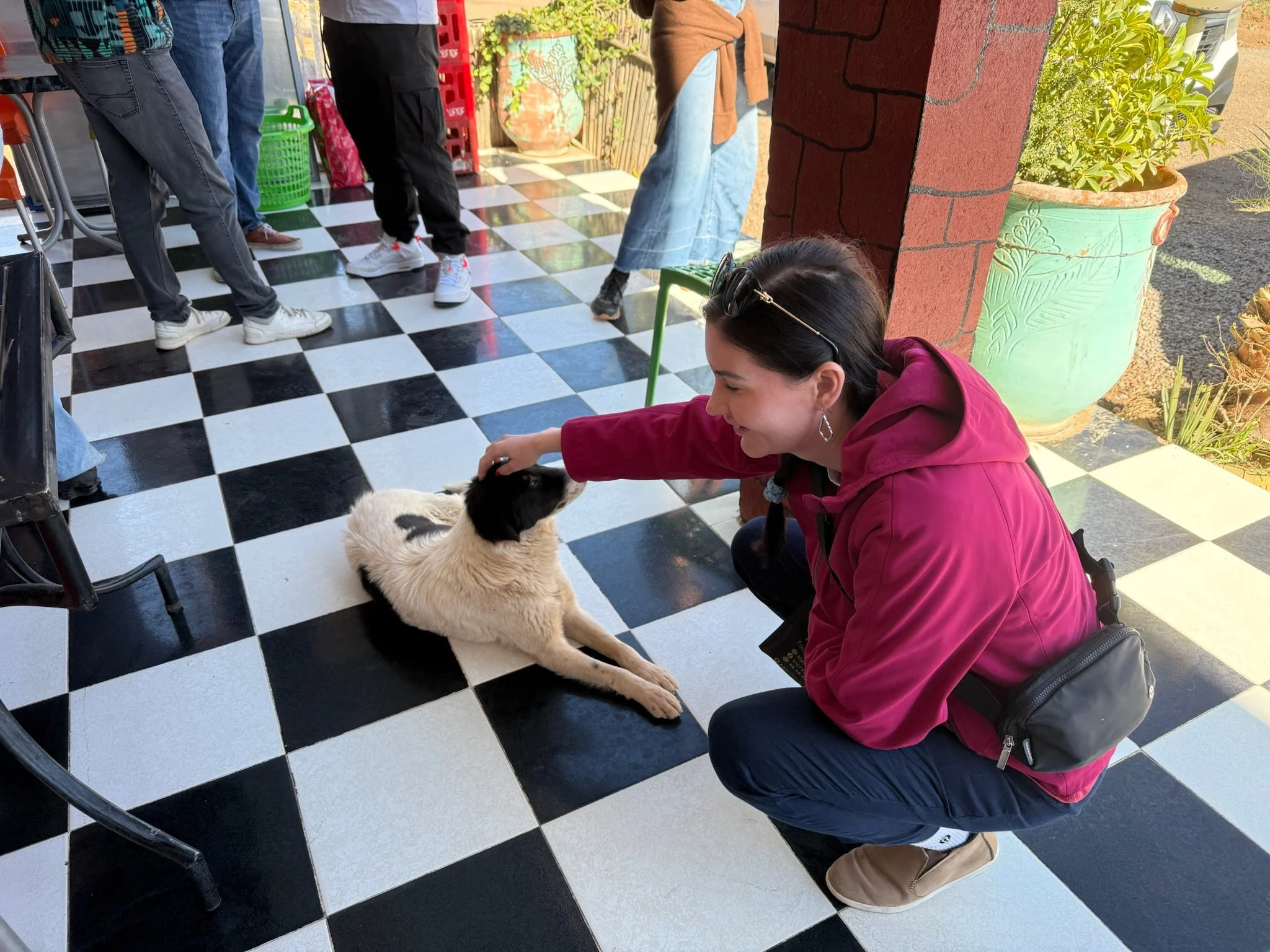
Dresses, Hats, and Bags
I packed a handful of flowy, comfortable dresses for this trip — pieces that felt effortless in the warm afternoons yet modest enough for wandering the medinas. One of my favorites was a blue patterned dress I bought during a Seaira Dives trip to Curaçao; it’s light, breathable, and feels instantly vacation-ready. I also added two beautiful Free People pieces to the rotation: a soft, floaty maxi and an easy, breathable midi. I found this adorable Tala Tiered Jersey Maxi Dress from Boden, and it quickly became one of my favorite dresses — easy, comfortable, and perfect for travel.
In Chefchaouen, I opted for the poppy-red Free People midi because the contrast against those iconic blue walls was pure magic. I genuinely felt like I was walking through a dream. I paired it with my favorite foldable straw hat from Verabella, and the whole outfit came together in the most effortless, picture-perfect way.
For essentials, I carried my Lululemon crossbody — just big enough for my wallet, hand sanitizer, lip balm, tissues, and SPF — without weighing me down while exploring.
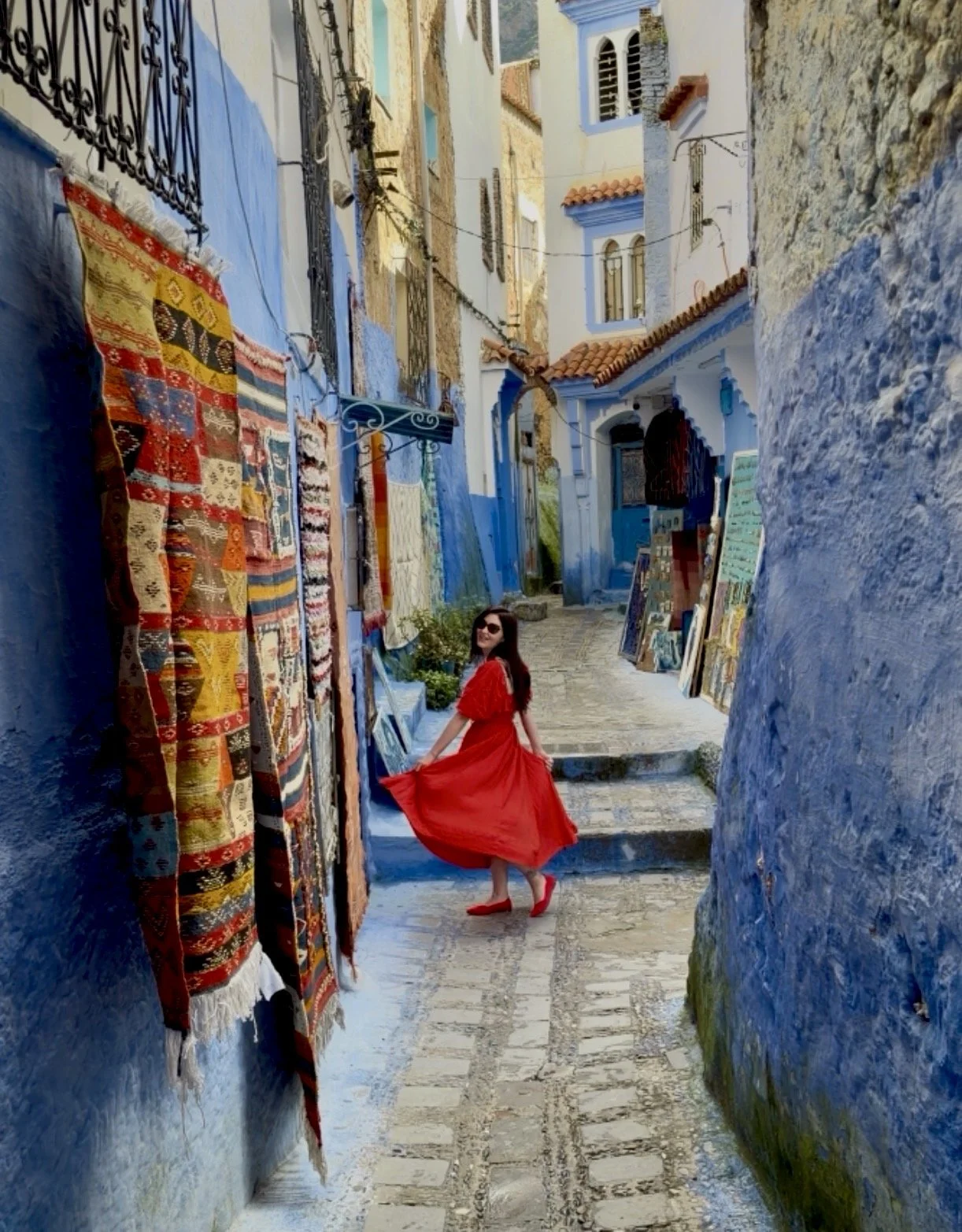
Scarf Essentials
A lightweight scarf (I love this one) is one of the smartest things you can pack for Morocco. A good scarf adds just enough warmth for cool mornings and evenings, and it doubles as protection from sun, wind, or dust during long drives or desert days. Just as importantly, it allows you to dress modestly when needed — especially when visiting mosque courtyards or religious sites where women are expected to cover their hair as a sign of respect. It packs down small, works with any outfit, and solves a dozen problems at once while keeping you comfortable and culturally aware.
Shoes
I brought two pairs of shoes — closed-toe flats for long Medina walks and a pair of comfortable wedges for dinners. I also wore my Olukai leather booties on the plane, which ended up being perfect for the Sahara trip and travel days. I didn’t pack sandals because I knew I wanted to buy custom-made ones in Marrakech!
The Sahara
For the desert, I made sure to bring thermal top and bottom, thermalsocks, and a lightweight scarf for sun protection during the day and warmth at night. I am so glad I had my scarf and Rumpl blanket for the evening! Two pairs of sunglasses were essential — the Moroccan sun is bright, especially in open desert landscapes.
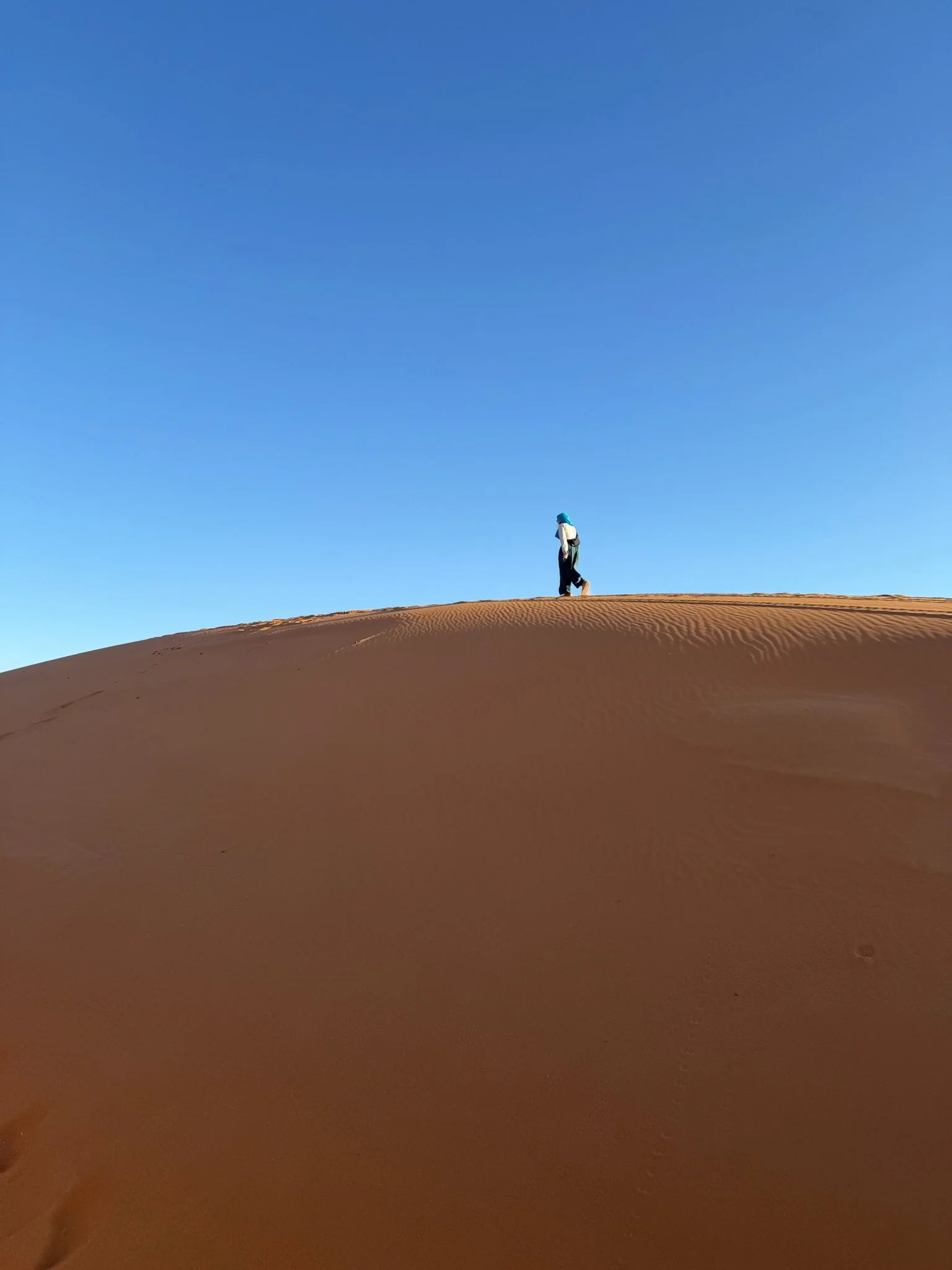
Ciara walking in the desert instead of riding a camel (more on that in Part II)
Stylish and Culturally Appropriate
In the end, my packing strategy hit that ideal balance: stylish, comfortable, culturally appropriate, warm when needed, and light enough to leave room for treasures collected along the way. Morocco inspires creativity, color, and personal expression — and packing with space (and layers!) in mind made the whole experience seamless.
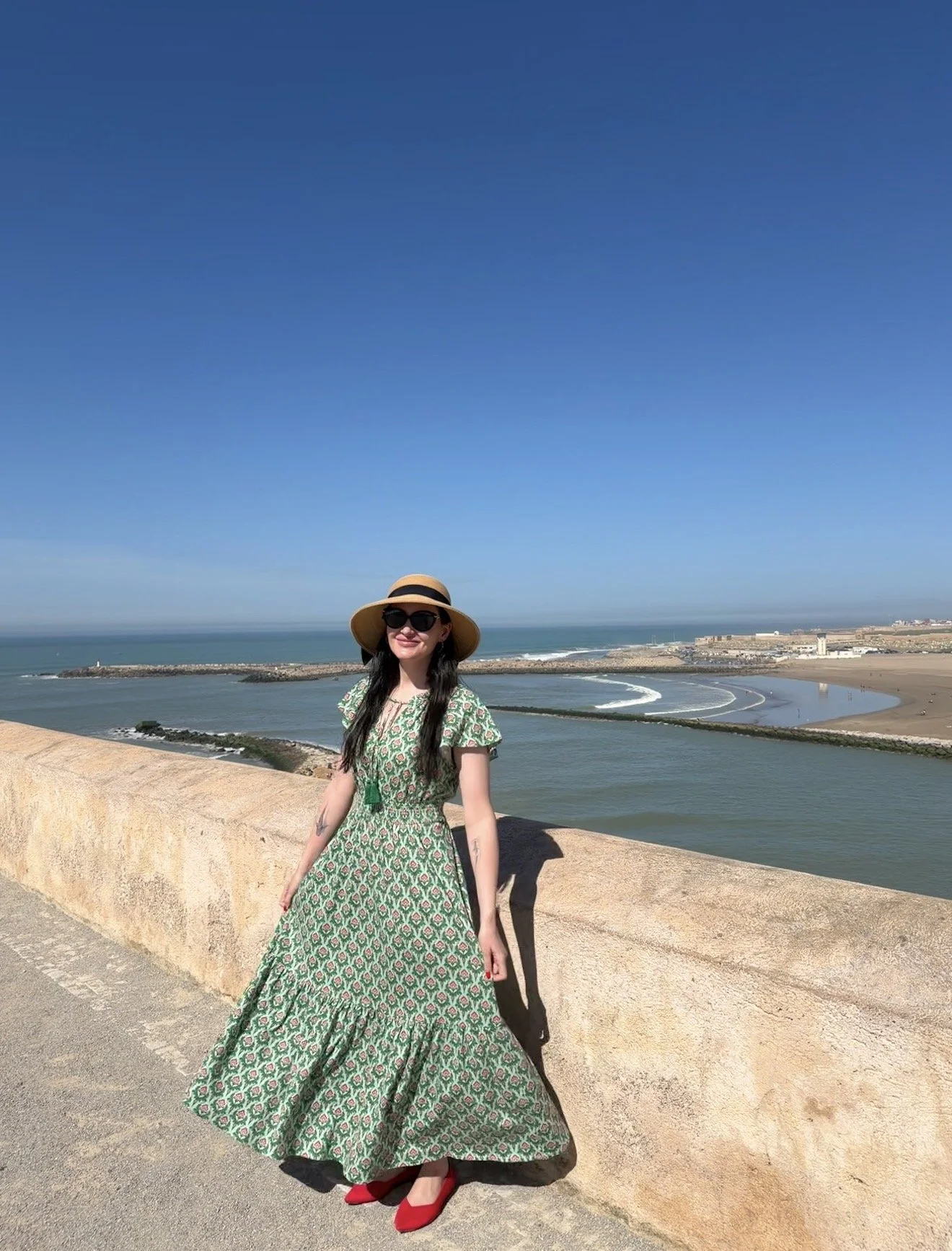
Luggage & Packing Strategy
I have to talk about the luggage, because anyone who knows me knows I’m obsessed with good travel gear. For this trip, I brought my Away The Large suitcase (side note: I have had this suitcase for nearly a decade and love it) completely empty — yes, empty — with a Patagonia duffle bag packed flat inside, my Away Carry-on (knowing we would have to walk with our luggage through the Medinas to reach our Riads, we wanted to keep our bags to a minimum — but still leave enough space for all the shopping we knew we’d be doing throughout the trip), and a Folide Foldable Travel bag so I’d have plenty of room for all the treasures Morocco is famous for: home décor, cookware, spices, rugs, clothing… basically anything handmade and beautiful.
For actual packing, my husband and I shared our other away suitcase for all of our clothes, shoes, and toiletries, which kept everything compact and so easy to manage. My in-flight essentials lived in the Away Small Toiletry Bag (plus a reusable bag just in case) — it’s compact, organized, and perfect for travel-sized cosmetics and hygiene items. The rest of my toiletries went into my checked bag in the Away Clear Cosmetic Case, which I absolutely love for its visibility and easy access when unpacking.
I brought my Away The Everywhere Tote, I purposely repacked it in Marrakech for the desert, keeping all my easy-access essentials—clothing, toiletries, snacks, chargers—right at my fingertips so I didn’t have to dig through the main luggage. The layout is perfect for travel days: smart pockets, great organization, and incredibly comfortable straps. It’s become my absolute go-to.
And because I’m serious about packing efficiently, I have my system down: shoes always go into plastic bags and get placed toward the wheels of the suitcase so the bag stays balanced and nothing shifts in transit. I roll my clothes instead of folding them — it saves space, reduces wrinkles, and makes everything easier to see. Smaller items like socks, scarves, and chargers get tucked into any open space between packing cubes so no inch of space goes to waste. I also pack so that what I might need immodesty upon arrival is up front and easy to access.
And I never travel internationally without my Eagle Creek RFID-blocking passport holder and wallet — it keeps everything organized and secure, and I use it on every single trip. Between these pieces and a little intentional planning, packing, traveling, and unpacking through Morocco was completely effortless.
Booking the Trip with Points — United + AMEX Travel
One of the best parts of planning this adventure was doing it strategically with points.
We flew out the evening of February 13th from IAD and landed at 1120 on February 14th in RAK (Marrakech), with our long-haul flights booked entirely using United MileagePlus points (approximately 180,000 United Points). Using points saved us so much money and gave us flexibility when choosing routes and times.
Our accommodation in Marrakech and Fes were also booked using American Express Membership Rewards points through AMEX Travel. The Amex Platinum Card made this incredibly easy, and the bonus perks don’t hurt either: points multipliers, travel insurance, lounge access, and flexible booking terms.
If you want to maximize travel points the way we did on this trip, here’s my referral link for the AMEX Platinum:
Between United points and AMEX points, we saved a huge amount and were able to put more of the budget toward experiences instead of logistics.
United Premium Plus
We flew United Premium Plus on our long-haul to Morocco, and overall it was a comfortable, solid middle ground between economy and business — with a few interesting quirks.
Let’s start with the seats: genuinely some of the most comfortable premium economy seats I’ve flown. The extra width, deeper recline, leg rest, and footrest made a noticeable difference on an overnight flight. I also really appreciated that the tray table comes out of the armrest instead of the seat in front of you — it feels sturdier, more spacious, and you’re not at the mercy of the person ahead reclining mid-meal. The cabin also included quality headphones (not the flimsy kind), which elevated the entertainment experience.
The pillow and blanket were branded Saks Fifth Avenue, and they were actually quite comfortable — soft, substantial, and far better than your standard thin airline blanket. It made settling in for a long-haul flight much easier.
Service-wise, the outbound flight to Morocco was great. The crew was attentive and polished, and the overall experience felt elevated. On the return, though, the service didn’t quite match that energy. It wasn’t bad — just noticeably less warm and less consistent.
One surprising detail: no champagne or sparkling wine in Premium Plus. Just red or white. For an international “premium” cabin, that felt like an odd omission.
The Brooks Brothers amenity kit was also a bit of a mixed bag. The pouch itself was sleek and well-designed, but the products inside weren’t Brooks Brothers branded — it almost felt like the zipper carried more of the luxury label than the contents. That said, it included all the essentials you’d want for a long-haul flight.
Overall, Premium Plus felt worth it for the comfort alone. If you’re not booking Polaris but want meaningful extra space and better rest on a long-haul, it’s a strong option — just know that service can vary flight to flight.
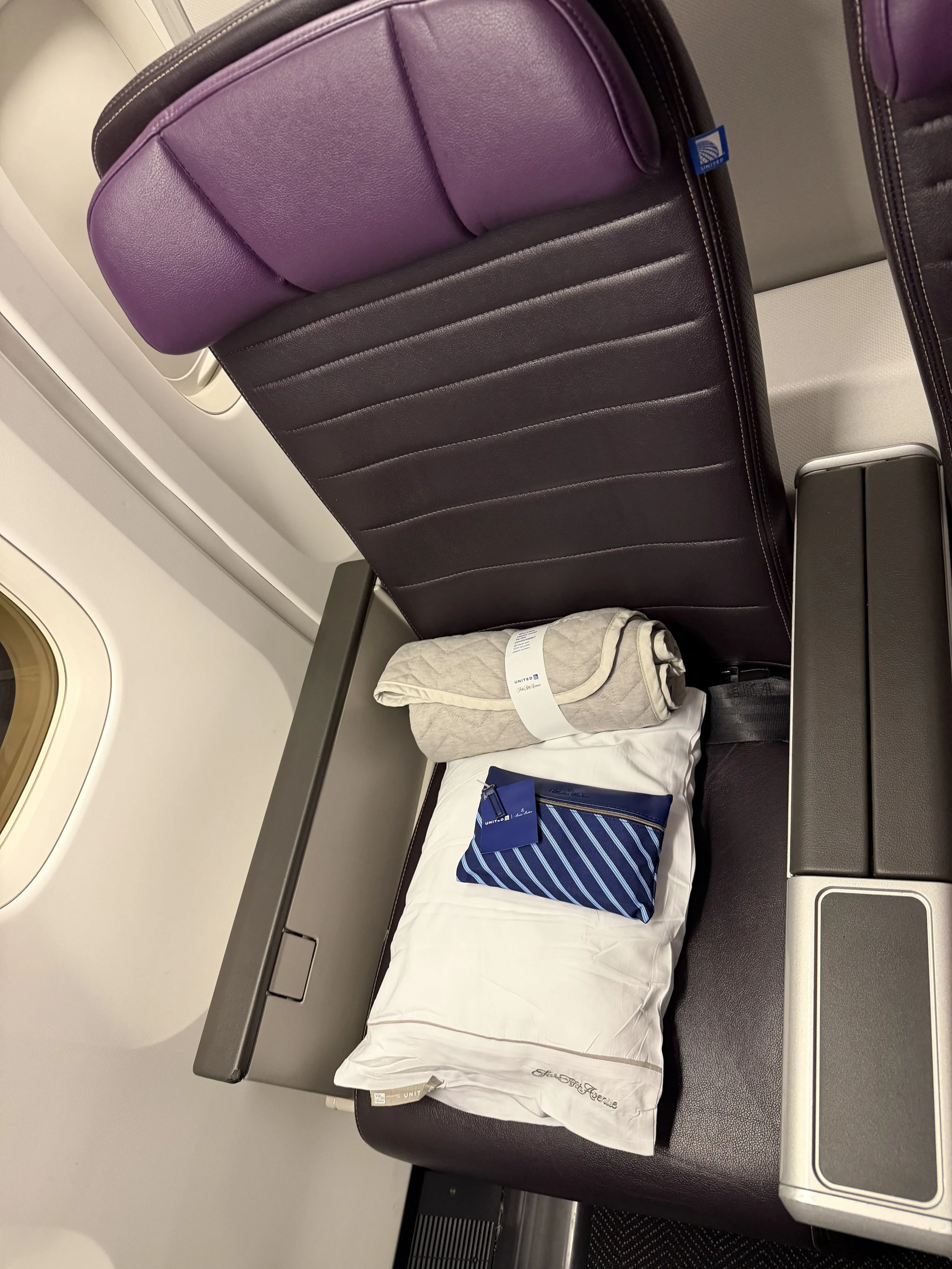
Upgraded to United Premium Plus
Why a Riad Is the Best Way to Experience Morocco
Choosing a Riad over a modern hotel is truly the best way to experience Morocco. A Riad is a traditional Moroccan home built around a central interior courtyard — often with a garden or fountain — thoughtfully designed to provide privacy, shade, and relief from the heat. Many of these historic homes have been beautifully restored into intimate guesthouses, showcasing intricate zellige tilework, carved wood, and classic Moroccan craftsmanship.
Instead of staying in modern hotel districts like Gueliz or Hivernage, we chose to stay inside the Medina, where life unfolds at street level. Despite the energy just beyond the walls, Riads are remarkably calm and cool. Thick walls soften the noise, and the architecture naturally creates a quiet retreat from the bustle outside.
Staying in a Riad feels like stepping into a hidden sanctuary. The air is cooler, the light filters gently into the courtyard, and the soundtrack is often just the soft trickle of a fountain or birds overhead. It’s deeply personal — less like a hotel and more like being welcomed into someone’s home.
Being based in the medina was essential to experiencing Marrakech authentically. We were immersed in daily life, surrounded by souks, artisans, food stalls, mosques, and historic sites — all within walking distance. It made the city feel not just visitable, but livable.
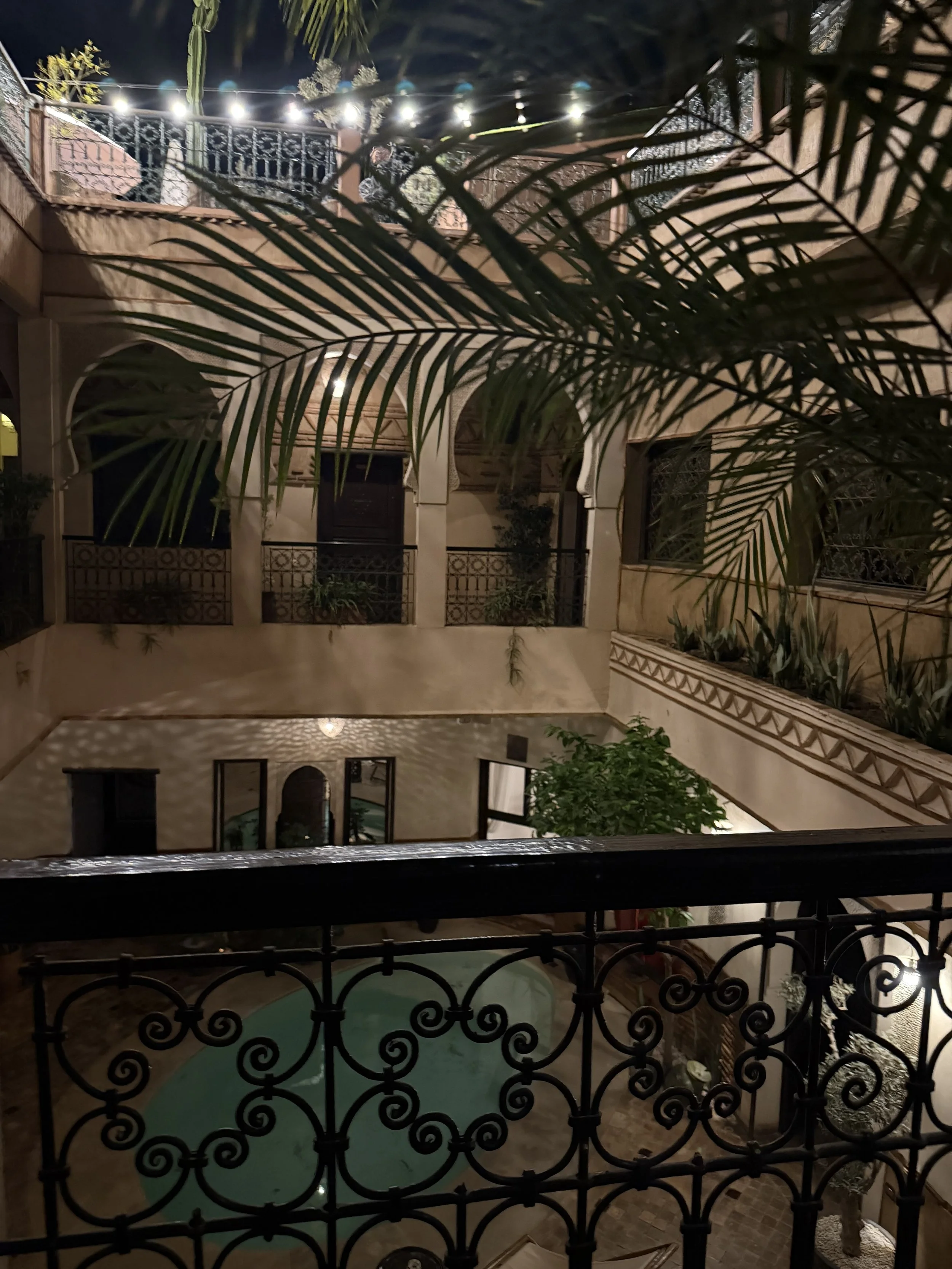
Les Sources Berber Riad and Spa Courtyard
Les Sources Berbères Riad & Spa — Our Home in Marrakech
From the outside, Les Sources Berbères appears as a simple wooden door along a narrow lane — but once you cross the threshold, the space opens beautifully into a bright courtyard with turquoise tiles, a small pool, carved arches, lanterns, and a soothing fountain.
It was everything a Riad should be: peaceful, warm, charming, and full of character.
Even before we arrived, the service truly stood out. The Riad reached out via WhatsApp with a warm welcome message, confirmed our arrival time, arranged a private airport shuttle, and sent the spa menu in case we wanted to pre-book treatments. They even offered to organize a traditional Moroccan tea ceremony on arrival — thoughtful gestures that made the experience feel personal, seamless, and so genuinely welcoming.
I booked Les Sources Berbères using my Amex Platinum points, which brought the total cost to only 47,183 points — an incredible value for the quality, service, and location. Being able to use points made the stay feel even more effortless and stress-free.
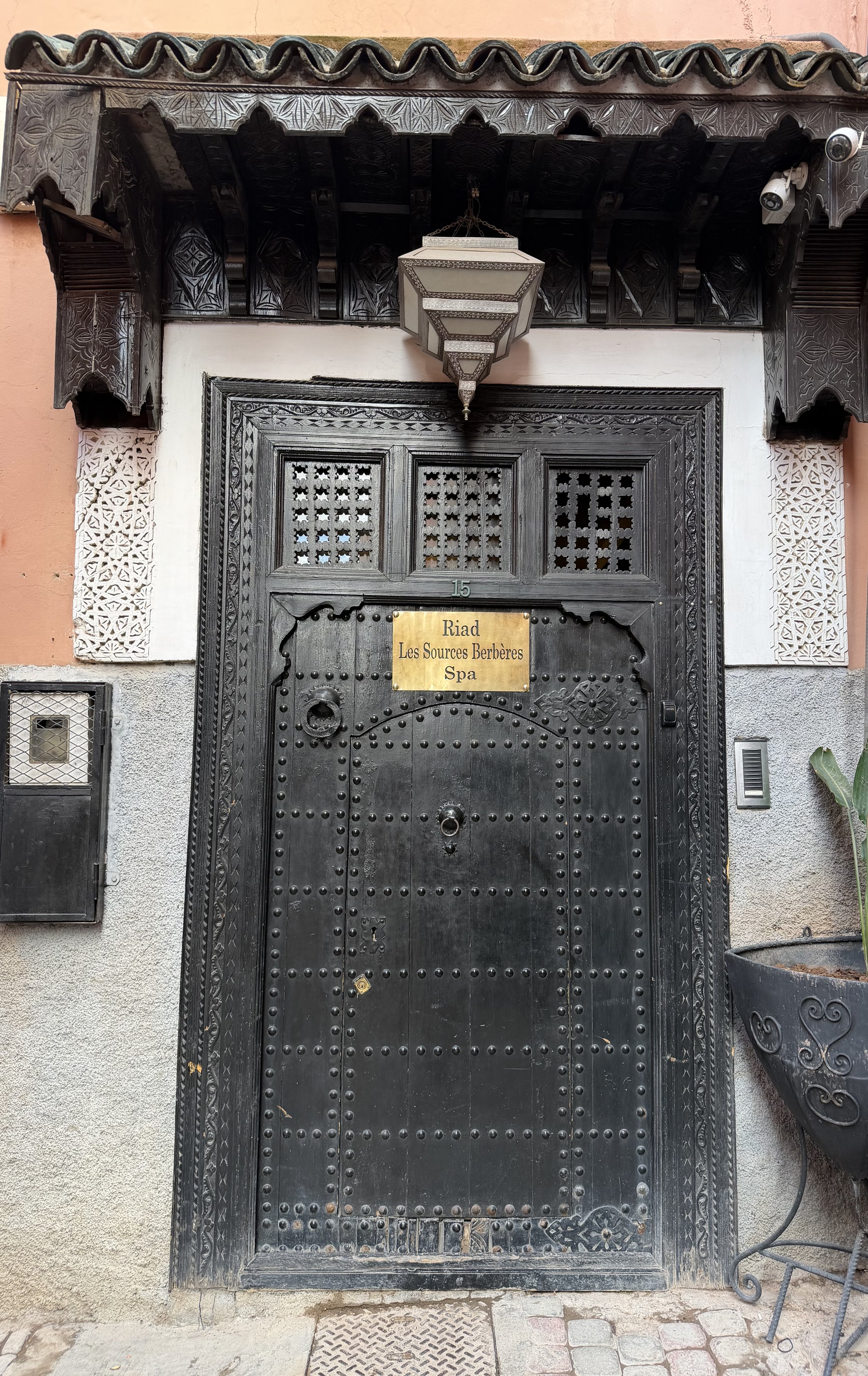
Les Sources Berber Riad and Spa front door
Our Room
Our room, the Volubilis, was an exclusive double room with a king bed, private ensuite bathroom, and a direct view of the courtyard pool. It blended old-world Moroccan design with modern comfort: soft lighting, traditional plaster walls, artisanal tiles, carved wood details, and strong temperature control for cool February nights.
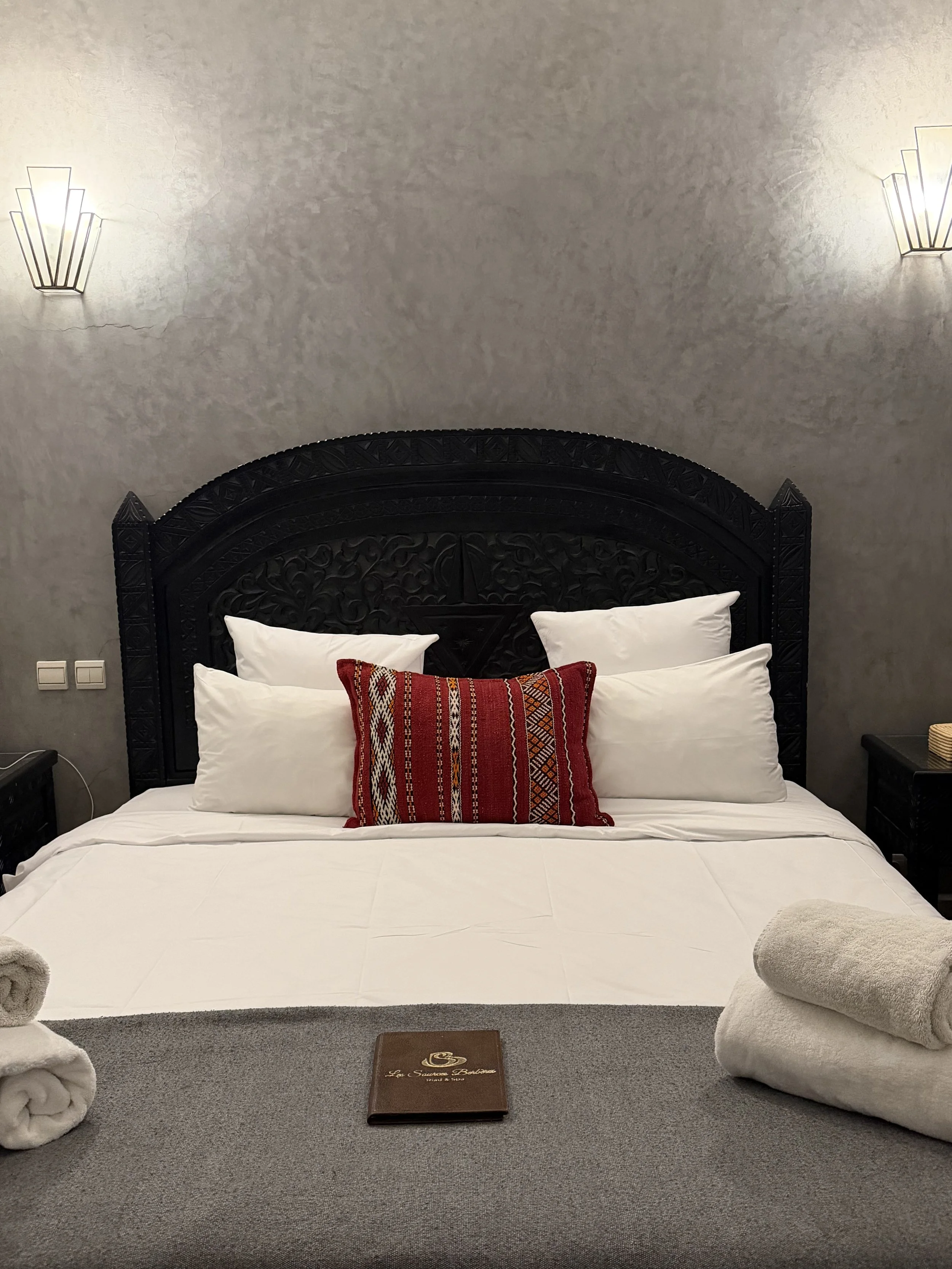
Our room at Les Sources Berber Riad and Spa
Tea Ceremony
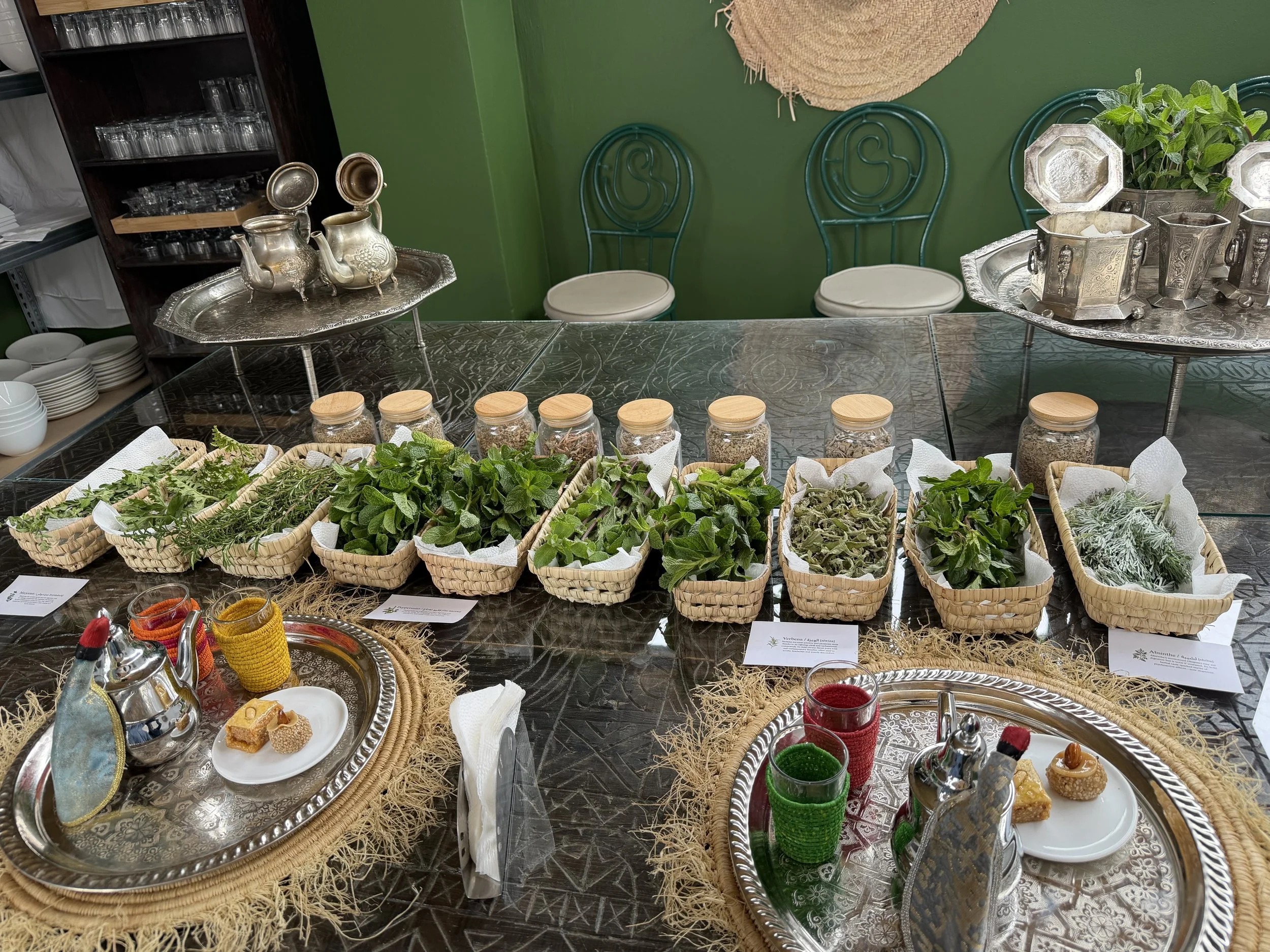
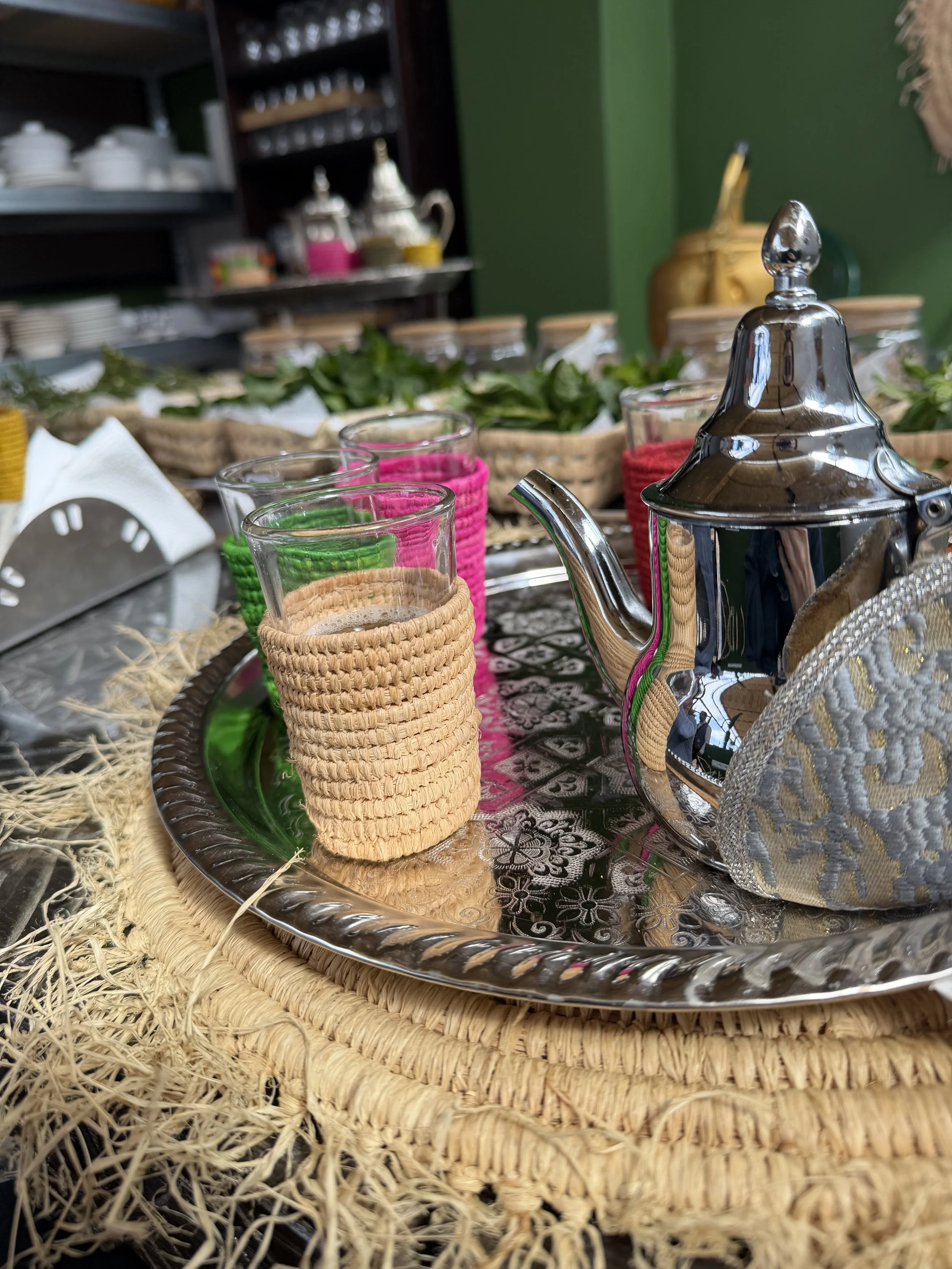
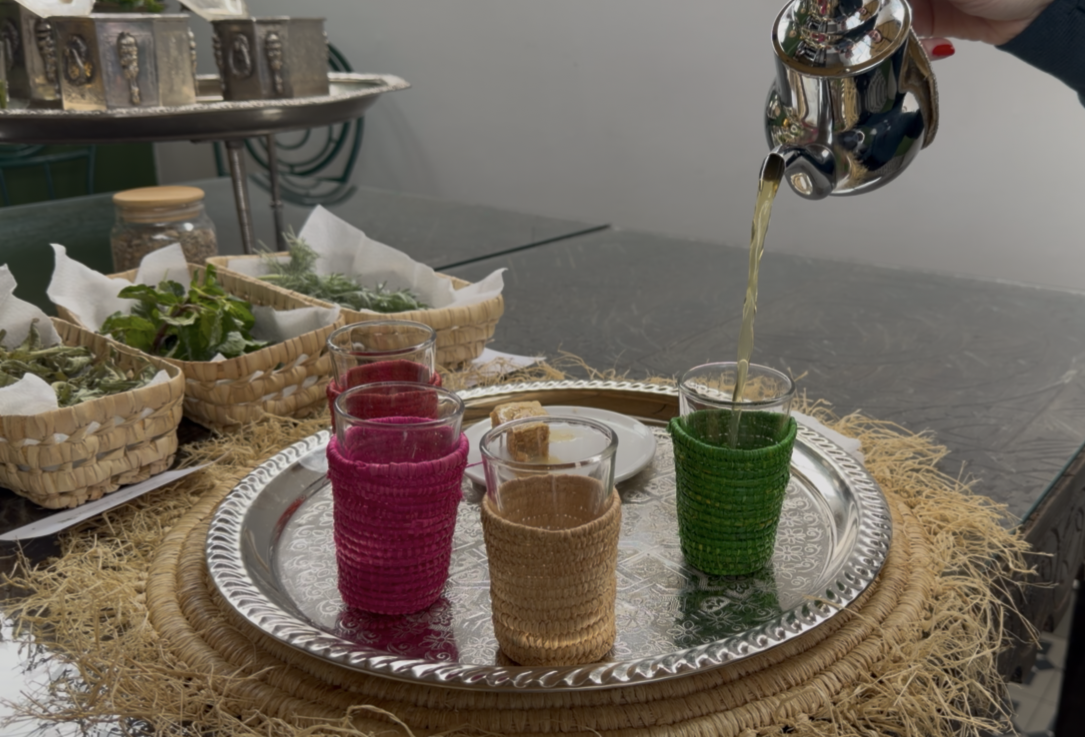
And the tea ceremony ended up being the perfect start to our entire trip. For 45 minutes, we were immersed in the warm, fragrant atmosphere of the Riad, surrounded by the fresh scent of mint and Moroccan herbs. A guide walked us step-by-step through preparing traditional Moroccan tea, explaining the significance of each ingredient and infusion. We observed, touched, and smelled the herbs, learning how every movement contributes to the ritual. The ceremony ended with a tasting paired with delicate Moroccan pastries, creating a moment that felt indulgent, grounding, and deeply rooted in hospitality. It set the tone for the rest of our Morocco journey — slow, intentional, sensory, and full of heart.
Breakfast
Breakfast — included in our stay — was served in the courtyard or on the rooftop terrace. It felt homemade and heartfelt every morning: warm breads, msemmen, baghrir, honey, yogurt, fruit, eggs, fresh juice, and mint tea poured the traditional way.
The Hammam
The Riad also offers a private hammam glowing with warm stone and nourishing steam. We didn’t book it during our Marrakech stay, but it’s absolutely on our list for Fes and Rabat, where hammams are a cultural and architectural highlight.
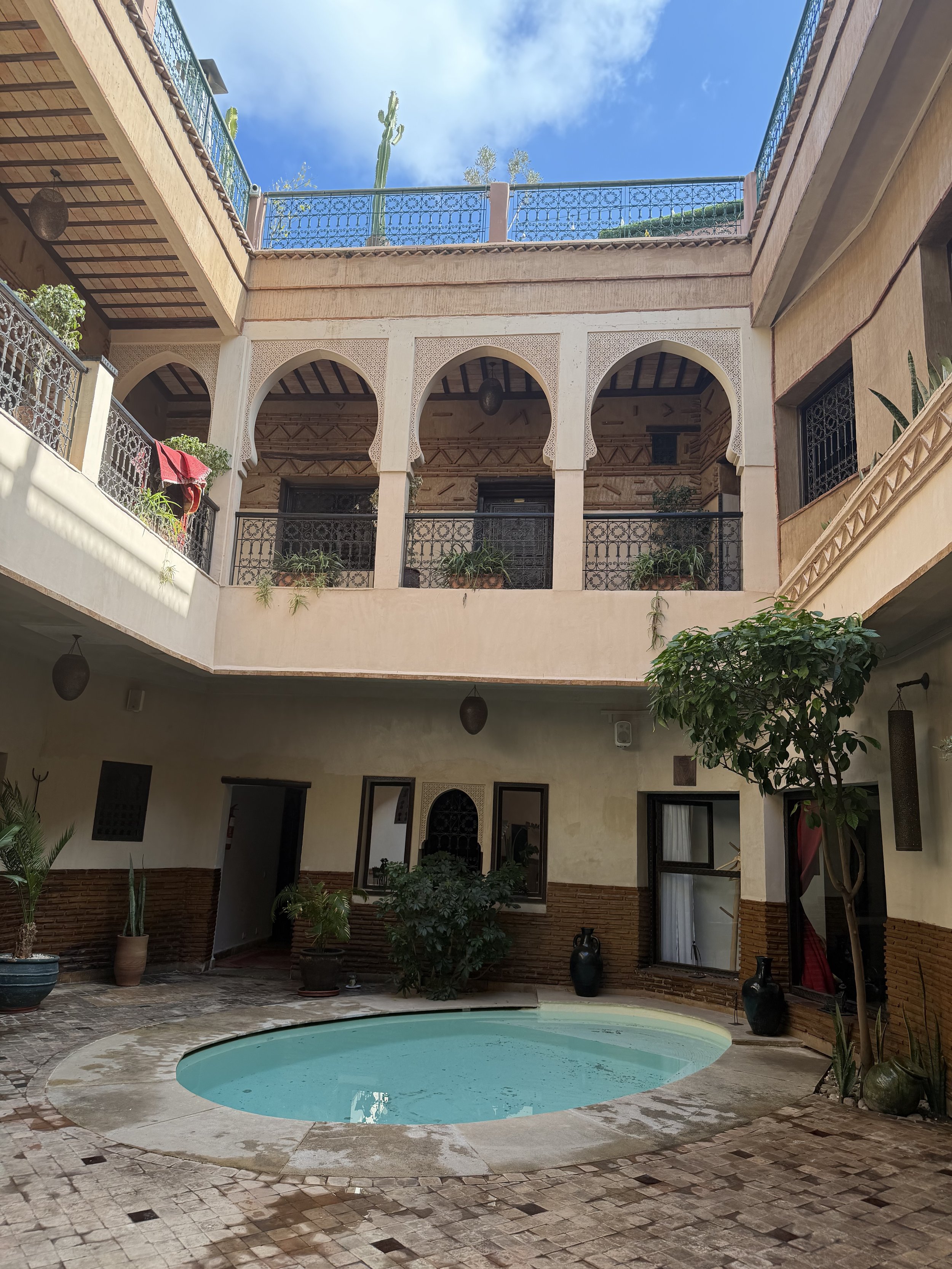
Impeccable Service and an Unbeatable Medina Location
The staff were another standout — friendly, welcoming, and genuinely attentive. Between the proactive WhatsApp communication, the seamless shuttle organization, the spa recommendations, and their constant but unobtrusive presence, they struck that perfect balance of being available when needed and hands-off when we wanted quiet. It made the stay feel both cared for and beautifully relaxed.
And the location was perfect. We could walk everywhere:
Jemaa el-Fnaa in under ten minutes
Souk Semmarine in seven
Bahia Palace in fifteen
Koutoubia Mosque in ten
The medina felt alive, sensory-rich, and full of warmth, but never unsafe or overwhelming. Staying in its heart made everything feel effortless.
Our First Afternoon — Cooking with Chef Hassan
There’s no better souvenir to bring home from Marrakech than the knowledge of how to cook Moroccan cuisine properly — with patience, spice, and a whole lot of love. We booked a 1600 dinner cooking class with Chef Hassan, a hands-on, intimate experience that blended culture, food, and storytelling in the most authentic way.
The afternoon began with a market tour, where Chef Hassan guided us through the ingredients that define Moroccan cooking: fresh vegetables, fragrant herbs, preserved lemons, saffron, cinnamon, cumin, paprika, and those impossibly sweet local dates. He explained how each ingredient plays into the country’s culinary history — Berber, Arab, Andalusian, and Mediterranean influences all simmering together in a single pot.
Back at the workshop, we were welcomed with the traditional mint tea ritual — a moment to slow down, sip, and settle in. The kitchen and dining area were air-conditioned (a gift after wandering Marrakech’s sun-soaked medina), and the small group size kept the experience intimate and hands-on. With class numbers capped at ten, everyone had space to chop, stir, plate, and ask as many questions as they wanted.
Then the cooking began.
Under Chef Hassan’s direction, we learned to prepare several of Morocco’s signature dishes:
Starters
Zaalouk, a smoky aubergine (eggplant) and tomato salad
Fresh bread baked for the group
Mains
Chicken with preserved lemon and olives (a recipe I also learned from a dear family friend who is from Morocco, still to this day his recipe is my all time favorite)
Beef with prunes, slow-cooked until it practically melts
Vegetable tagine with warm spices and olives
Kefta tagine, seasoned meatballs simmered in tomato sauce
Couscous, steamed the traditional way for the perfect fluffy texture
Everything was customizable, and Chef Hassan made it clear that he could adapt the menu for vegan, vegetarian, or gluten-free with advance notice (great for vegetarians like me).
The best part came at the end: sitting together at a long communal table to enjoy the dishes we spent the afternoon preparing. As the sun set over Marrakech, we ate, laughed, traded stories with other travelers, and gained a deeper appreciation of how Moroccan food is as much about community as it is about flavor.
It was an unforgettable way to spend an evening — starting early at 1600 but ending with a full heart, full stomach, and the confidence to recreate Moroccan magic back home.
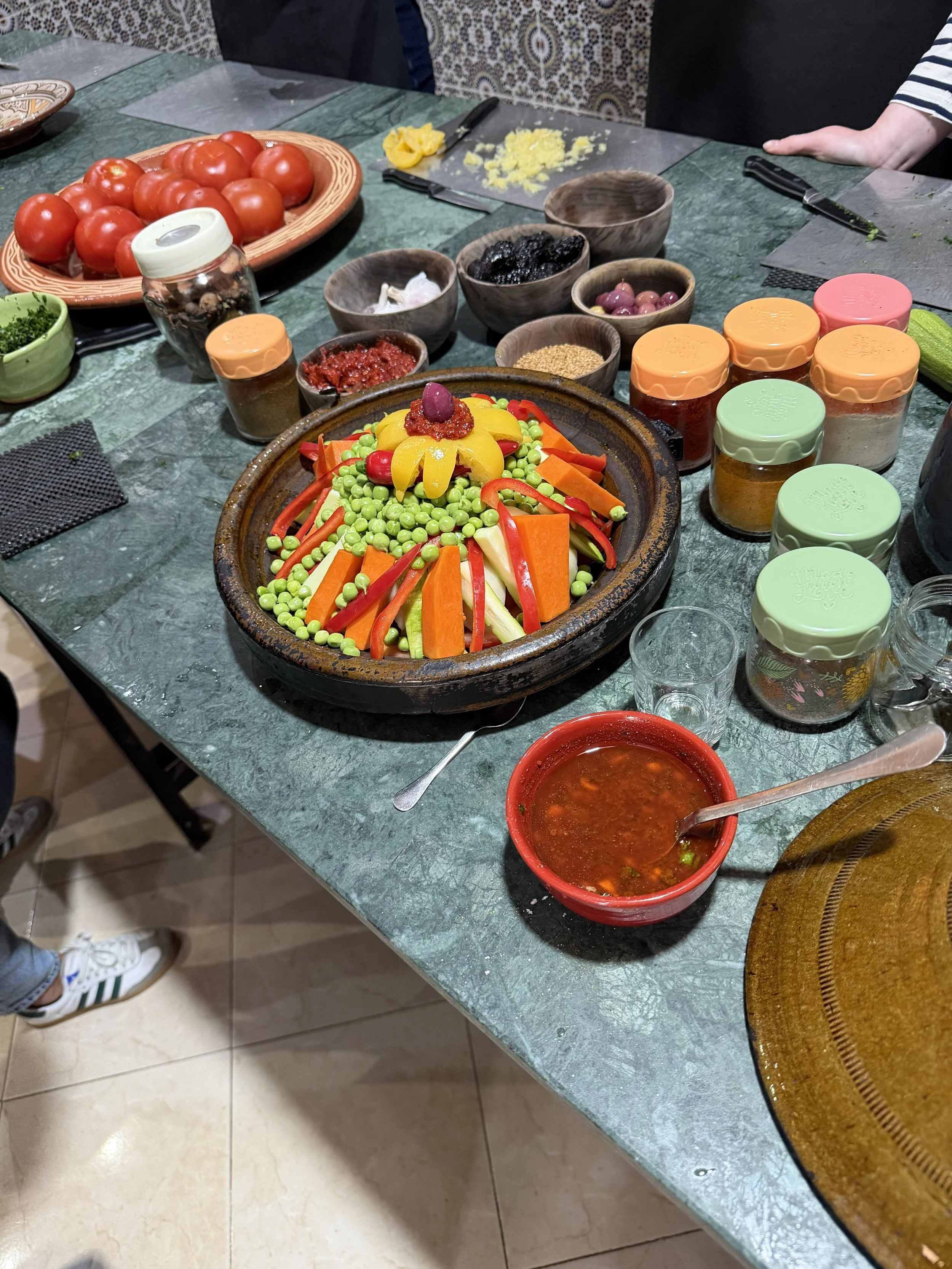
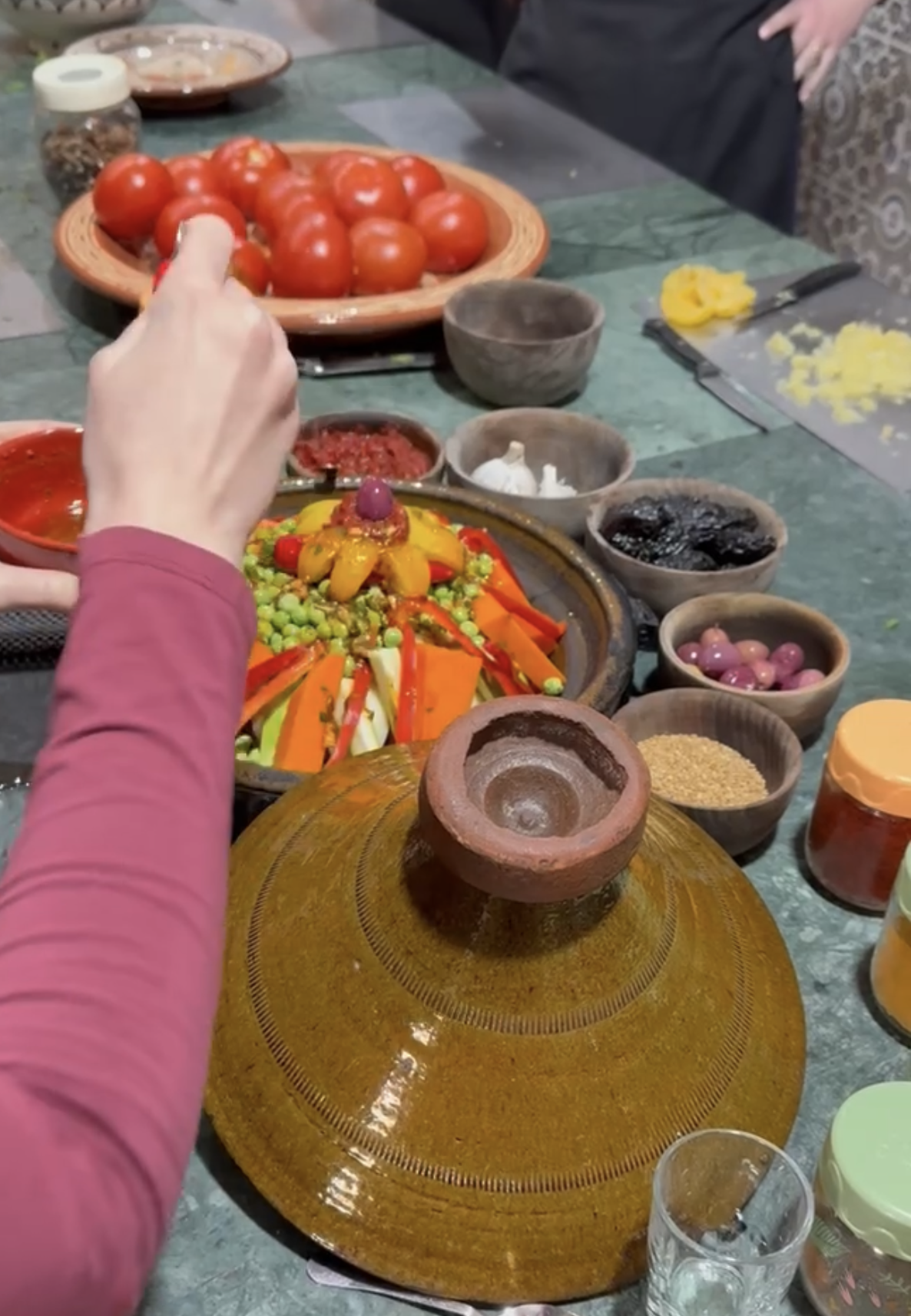
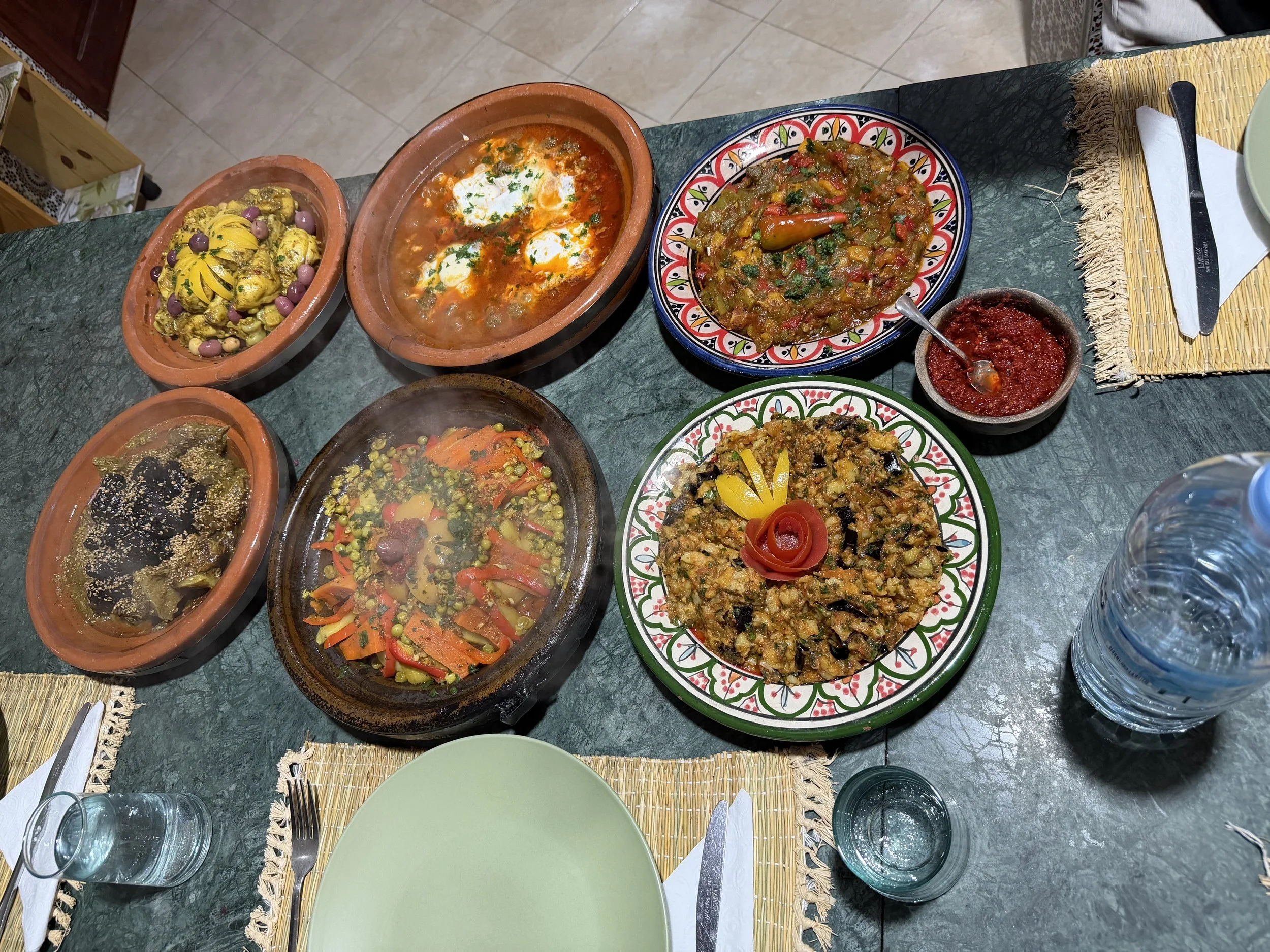
A Full Day in the Medina
The next morning, we set out early to explore the medina on foot, stepping into the heartbeat of Marrakech just as the city began to stir. The medina is a UNESCO World Heritage Site and truly feels alive — a maze of color, texture, sound, and tradition. Artisans set up their stalls for the day, rolling out carpets, arranging spices into bright pyramids, polishing lanterns, and firing up tiny braziers to make fresh bread.
From our Riad, we reached Jemaa el-Fnaa in about a 10–12 minute walk, and the square was already buzzing. Fresh orange juice vendors lined the edges, musicians were gathering, herbalists arranged dried flowers and oils, and the scent of sizzling flatbread drifted through the air. If Marrakech has a pulse, it’s here — beating loudly and constantly.
Just a few minutes away — about a 5–7 minute walk — stands the Koutoubia Mosque, the largest mosque in Marrakech. Its 12th-century minaret rises 77 meters above the city, visible from almost anywhere in the medina. The gardens surrounding it offer a peaceful contrast to the lively square, with shaded paths, fountains, and benches where locals sit and talk.
We wandered back into the medina and up to a rooftop café overlooking the square, which is only a 3–5 minute climb from Jemaa el-Fnaa. From above, the medina looks like a living organism — a twisting network of alleys where scooters weave past donkeys, where vendors call out greetings like “welcome, my friend!” and where everyone seems to know everyone.
Every corner revealed something new:
Handmade rugs drying in the sun
Cats lounging in shaded archways
Children racing through narrow lanes
Lanterns catching the morning light
The smell of cumin, saffron, mint tea, and grilled kebabs
Marrakech is lively, welcoming, and incredibly beautiful — a place where every step immerses you deeper into its history and culture.
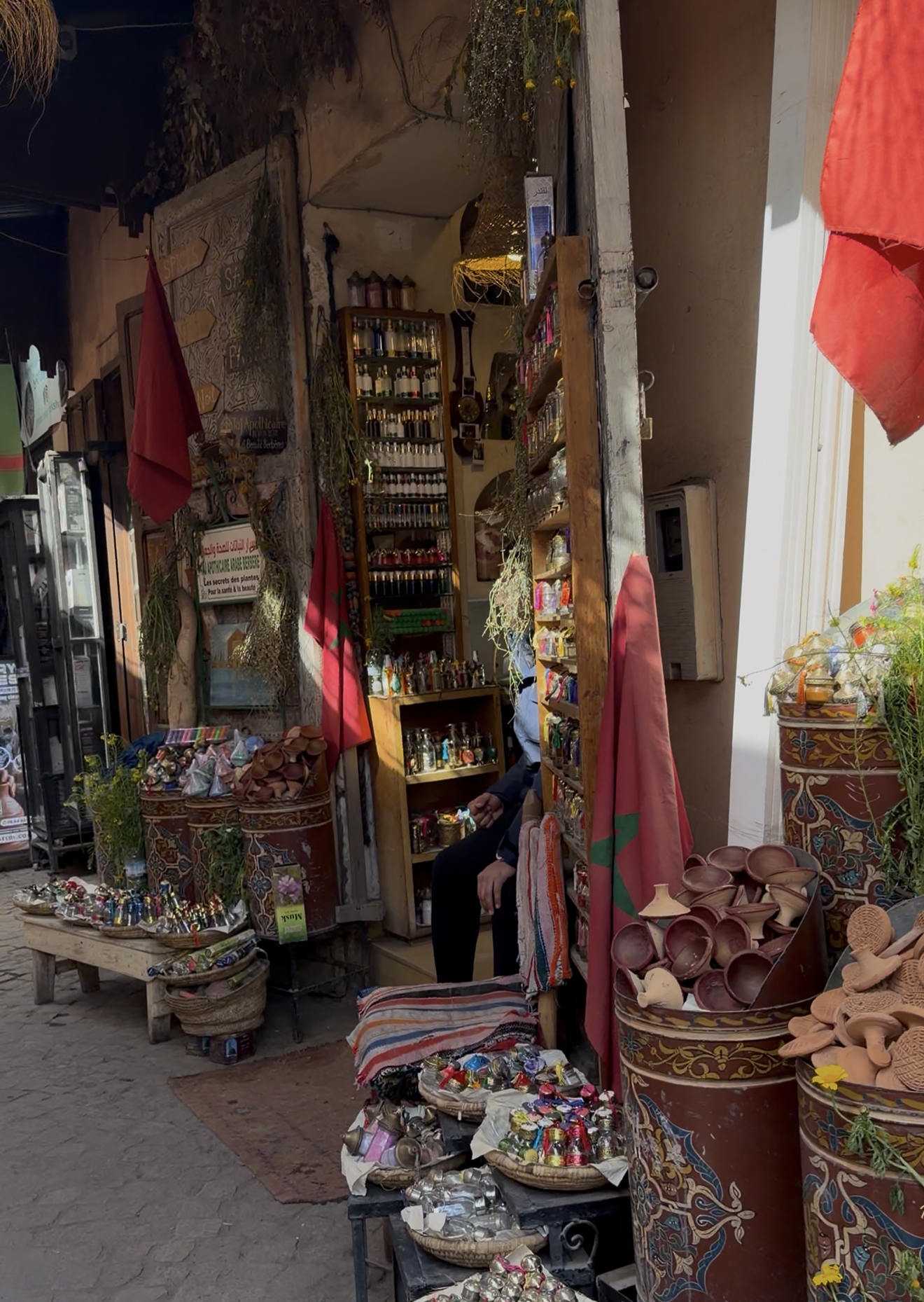
The Souks of Marrakech
Exploring the Souks — What to Buy & Where (With Walking Distances)
The souks begin just north of Jemaa el-Fnaa, and most are surprisingly close together. Once you enter, one market blends into the next, each with its own character and specialties.
Souk Semmarine — Textiles & Carpets
2–3 minute walk from Jemaa el-Fnaa
This is the grand entrance to the souks, filled with:
Scarves
Kaftans
Leather poufs
Carpets (Beni Ourain, Kilim, Azilal)
It’s the busiest and most visually dramatic of the souks — a covered lane exploding with color.
Souk el Attarine — Spices, Perfumes, Teas
5–7 minute walk from Jemaa el-Fnaa
Located near the Ben Youssef area, this souk is known for:
Saffron, ras el hanout, cumin, paprika
Mint tea blends
Dried flowers
Orange blossom and rose water
Natural perfumes & oils
It smells heavenly and is one of the most photogenic spots in the medina.
Souk Haddadine — Metalwork & Lanterns
7–10 minute walk from Jemaa el-Fnaa
You’ll hear it before you see it. Here, artisans hammer:
Brass lanterns
Tea trays and Tea Sets
Decorative mirrors
Candle holders
Metal door knockers
This is the best place in Marrakech for lantern shopping.
Souk Sebbaghine (Dyers’ Souk) — Dyed Wool
8–10 minute walk from Jemaa el-Fnaa
Brilliantly colored wool hangs overhead like an art installation.
Here you can buy:
Dyed wool
Handwoven hats
Yarn for custom blankets
Mornings are best for photos.
Souk des Bijoutiers — Jewelry
5–6 minute walk from Jemaa el-Fnaa
This area glitters with:
Silver Berber jewelry
Filigree earrings
Statement necklaces
Brass bracelets
Amulets
Always ask if silver is stamped “925.”
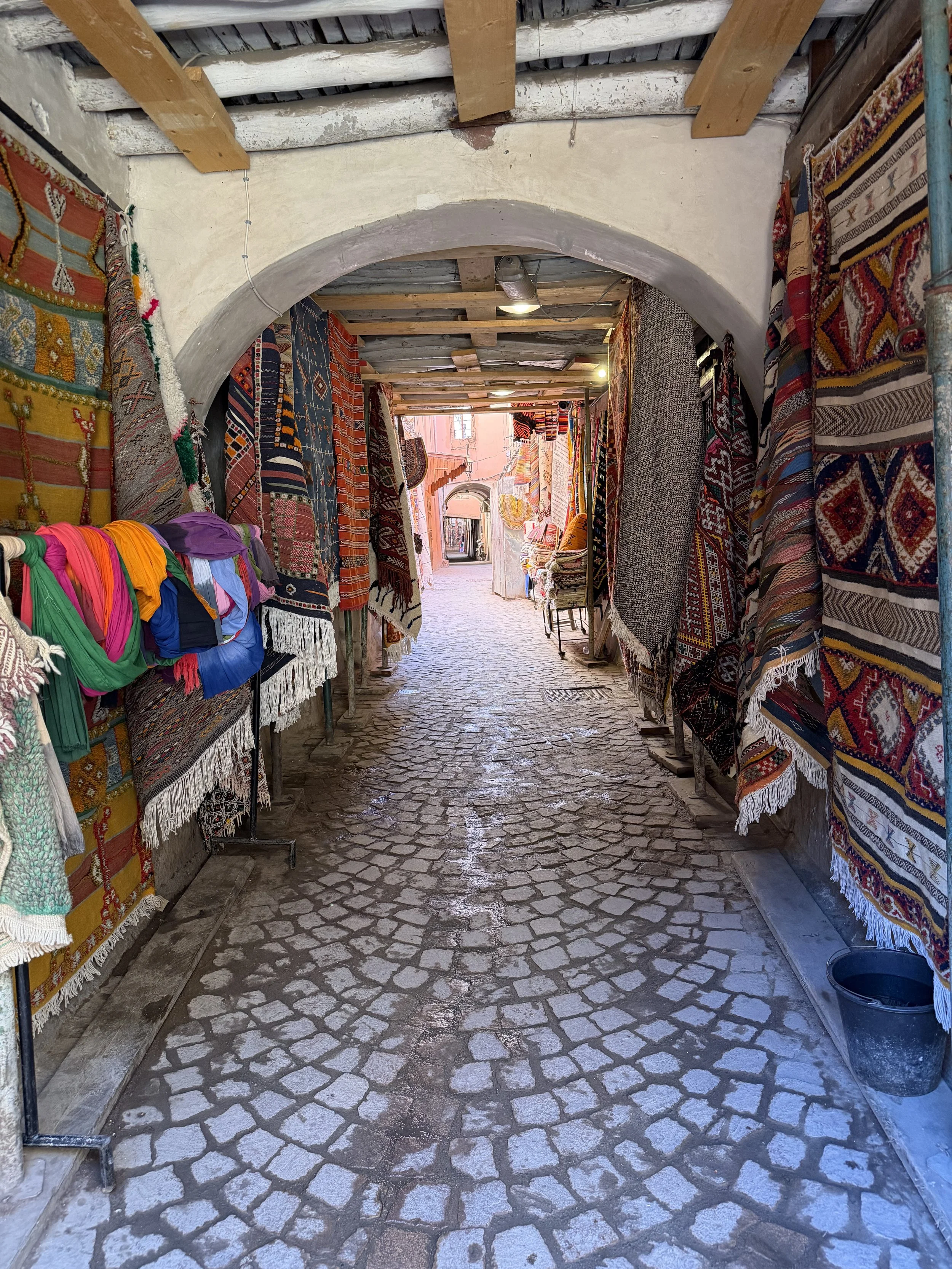
Best Items to Shop for in Marrakech (Quick List)
Lanterns & lamps
Tea Sets
Rugs
Spices (especially saffron)
Kaftans & textiles
Ceramics
Argan oil
Woven baskets
Wood carvings
Mirrors & trays
Marrakech is especially good for home décor. If you plan to buy larger items, many vendors offer affordable international shipping.
Ben Youssef Madrasa
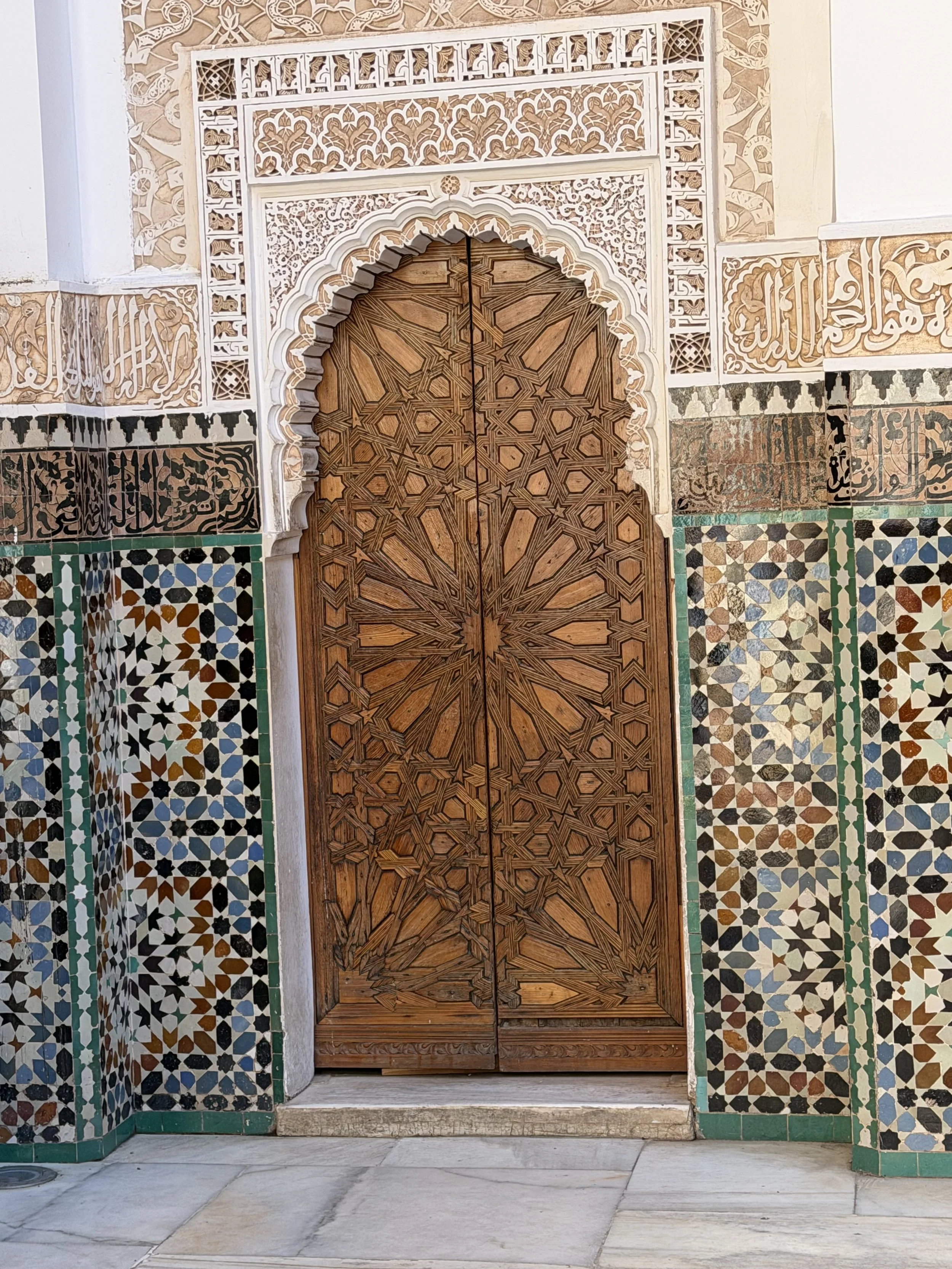
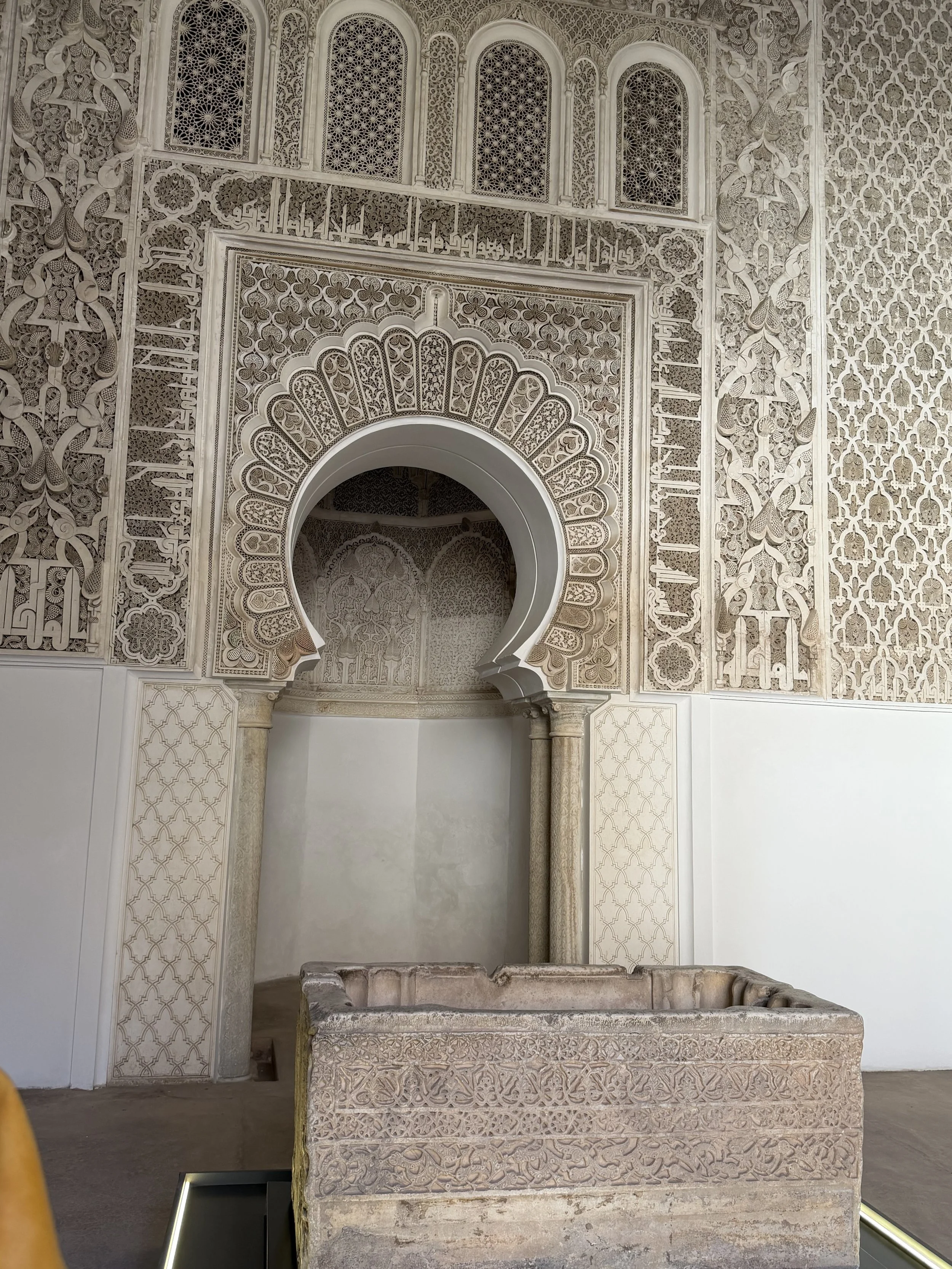
Ben Youssef Madrasa is one of the most important historical sites in Marrakech and one of the largest madrasas ever built in North Africa. It was originally founded during the Marinid dynasty in the 14th century and later magnificently rebuilt in 1564–65 by the Saadian Sultan Abdallah al-Ghalib. At its peak, it housed up to 800 students, who lived in the small dormitory rooms surrounding the courtyard while studying Quranic scripture, theology, law, and grammar. The architecture is a masterpiece of Islamic design — intricate zellige tilework, carved cedarwood ceilings imported from the Atlas Mountains, and elaborate stucco featuring Quranic inscriptions and geometric patterns symbolizing divine unity. The central reflecting pool anchors the space in symmetry, reinforcing the Islamic emphasis on balance and order. Admission is typically 50 MAD (about $5 USD), and it’s remarkable that such an architectural and scholarly treasure remains so accessible. Standing in the upper dormitories overlooking the courtyard gives you a real sense of the discipline and devotion that once defined daily life here.
Le Jardin Secret
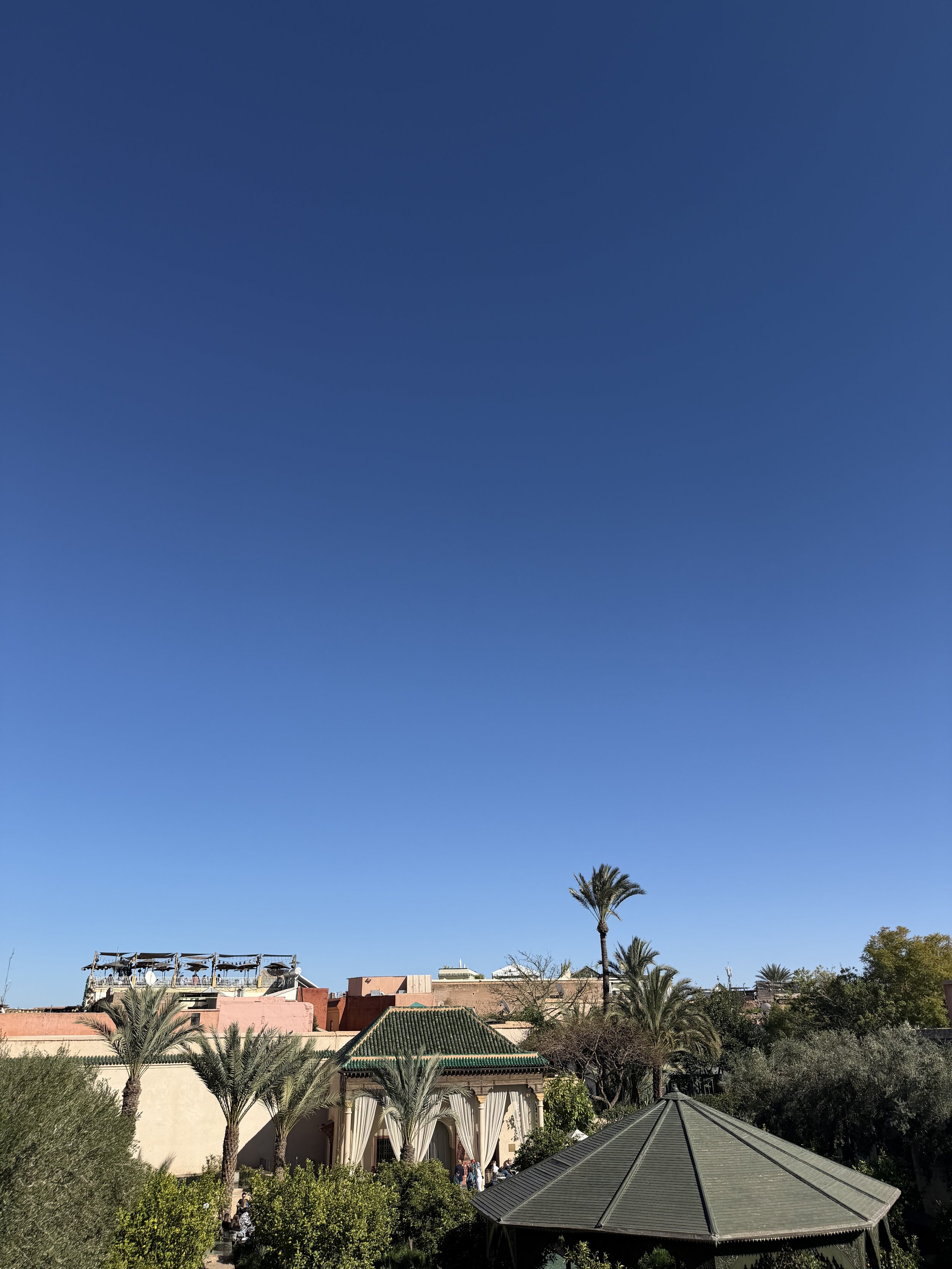
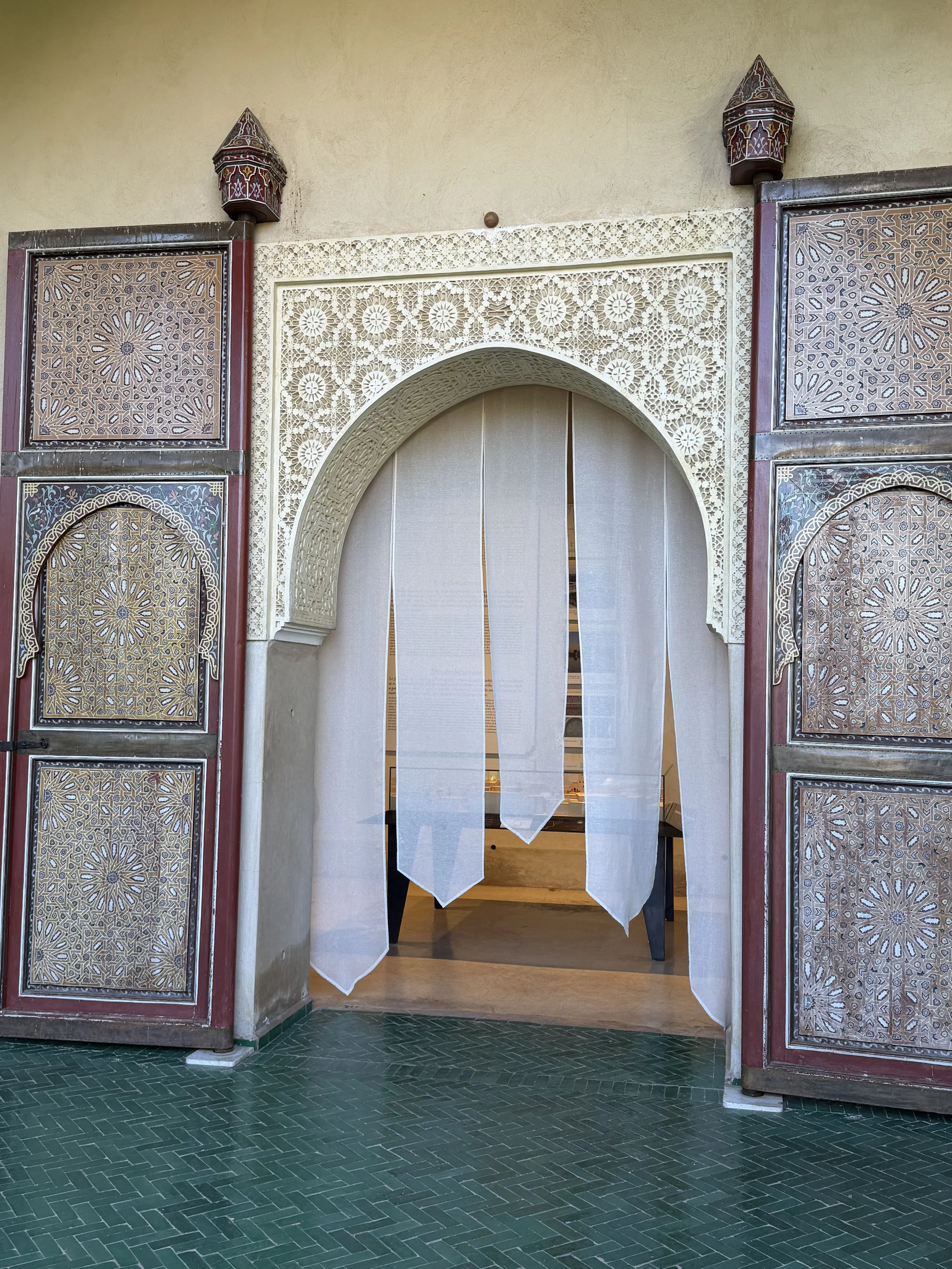
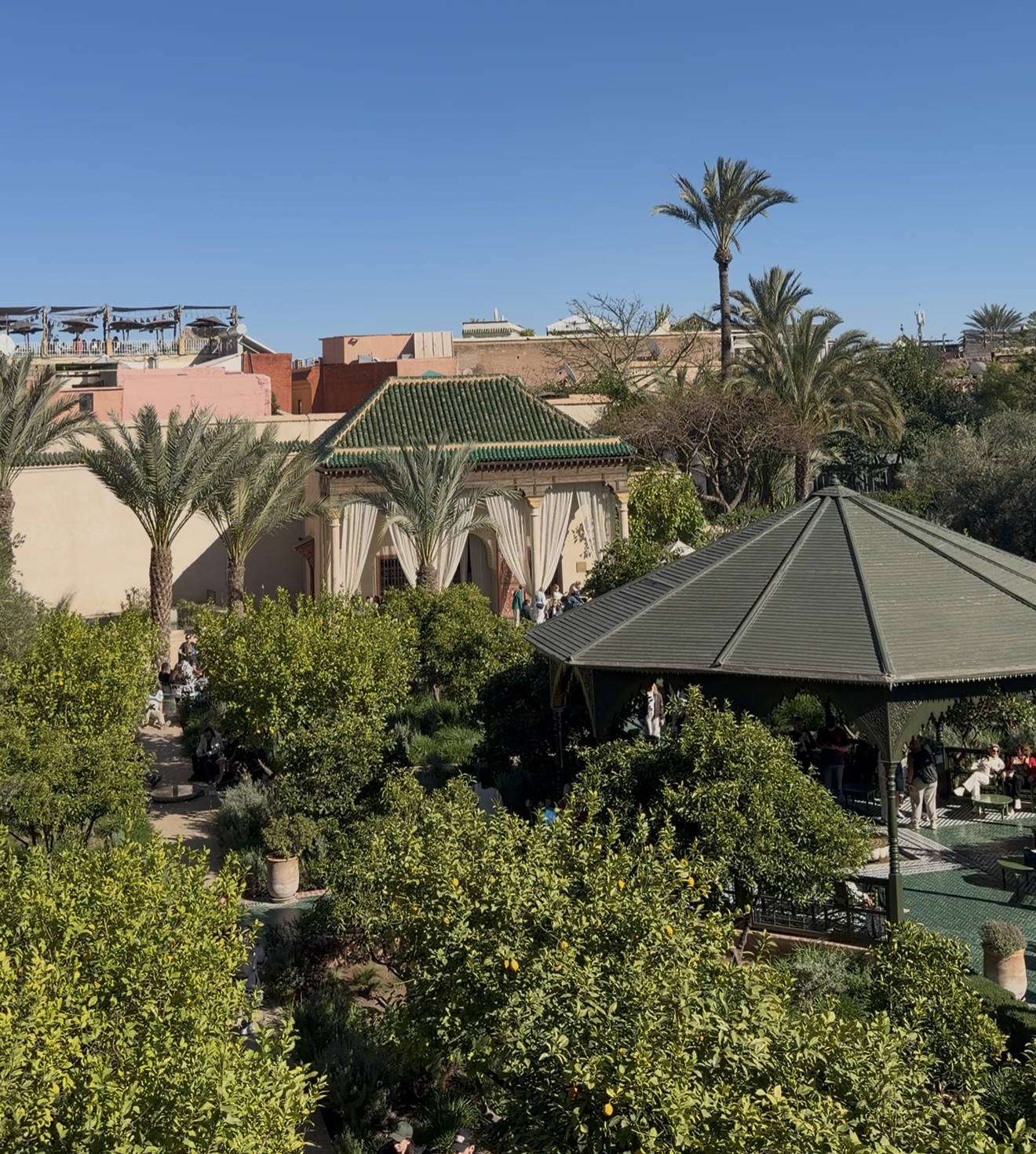
Le Jardin Secret is a beautifully restored 19th-century palace complex located in the heart of the Medina, originally belonging to powerful Caïd leaders who governed Marrakech. The site itself dates back over 400 years, but the current structures reflect later Alaouite-era renovations. What makes it especially meaningful is its adherence to the traditional Islamic garden (charbagh) design, where water is the central organizing force — symbolizing life, paradise, and spiritual purification. The garden is divided into two main sections: an exotic garden with plants from around the world and a traditional Islamic garden focused on symmetry and native species. Water is channeled through underground khettara systems (ancient irrigation engineering) that once sustained the medina. Admission is generally 100 MAD (~$10 USD) for adults, with an additional small fee if you choose to climb the tower for panoramic views. After the sensory overload of the souks, this space feels intentionally designed for stillness, reflection, and architectural harmony.
Sabir Kech Cuir
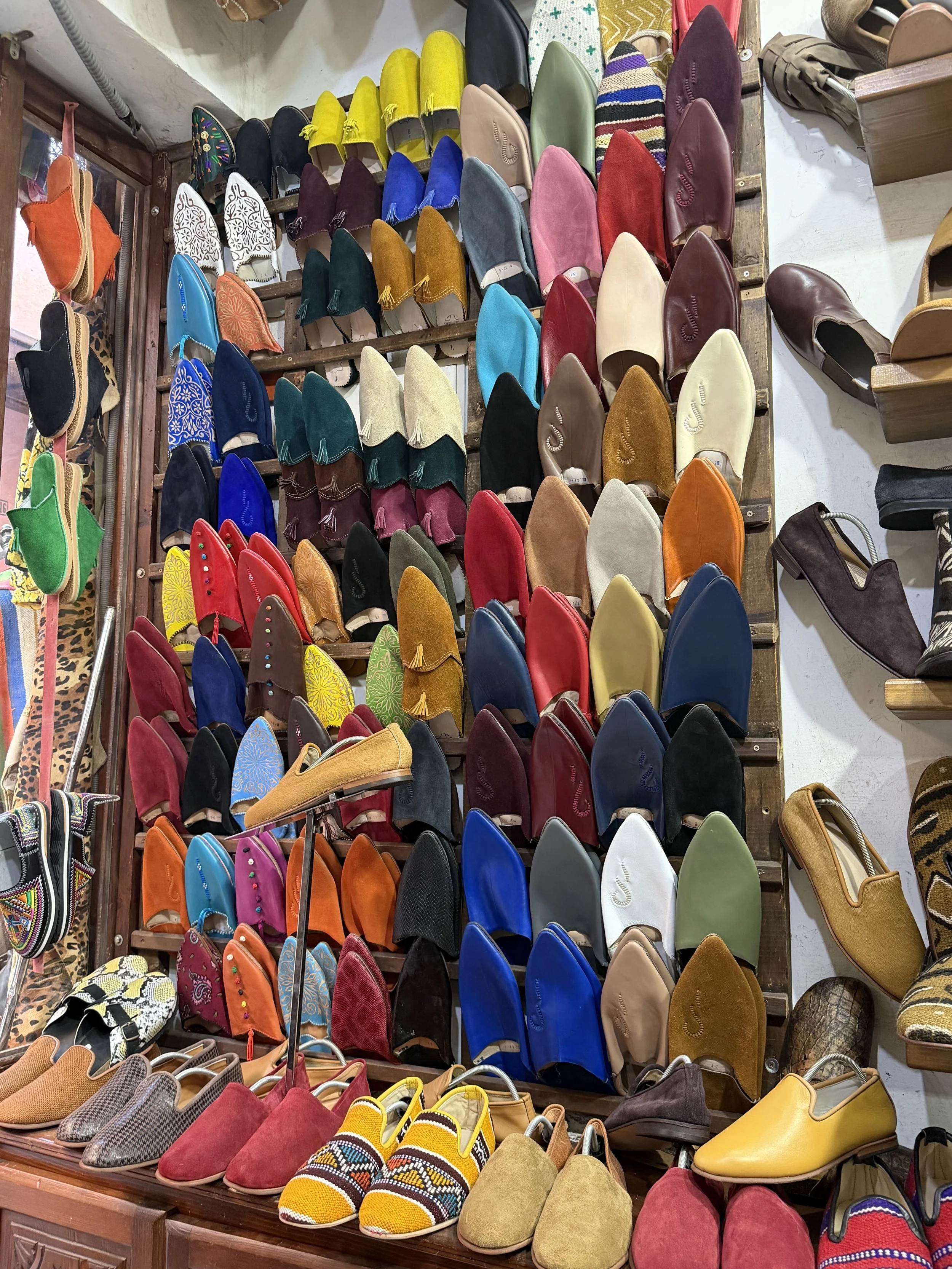
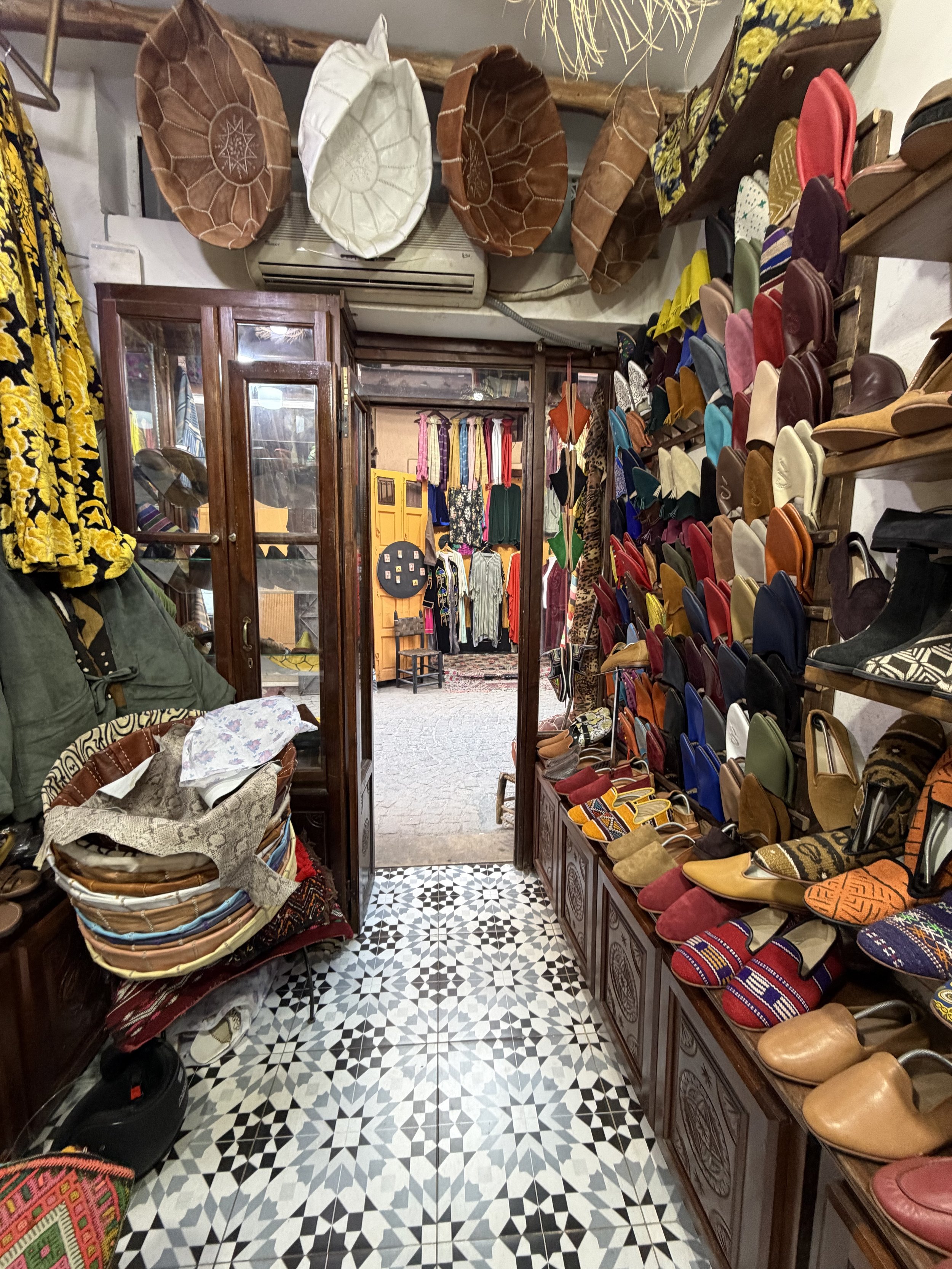
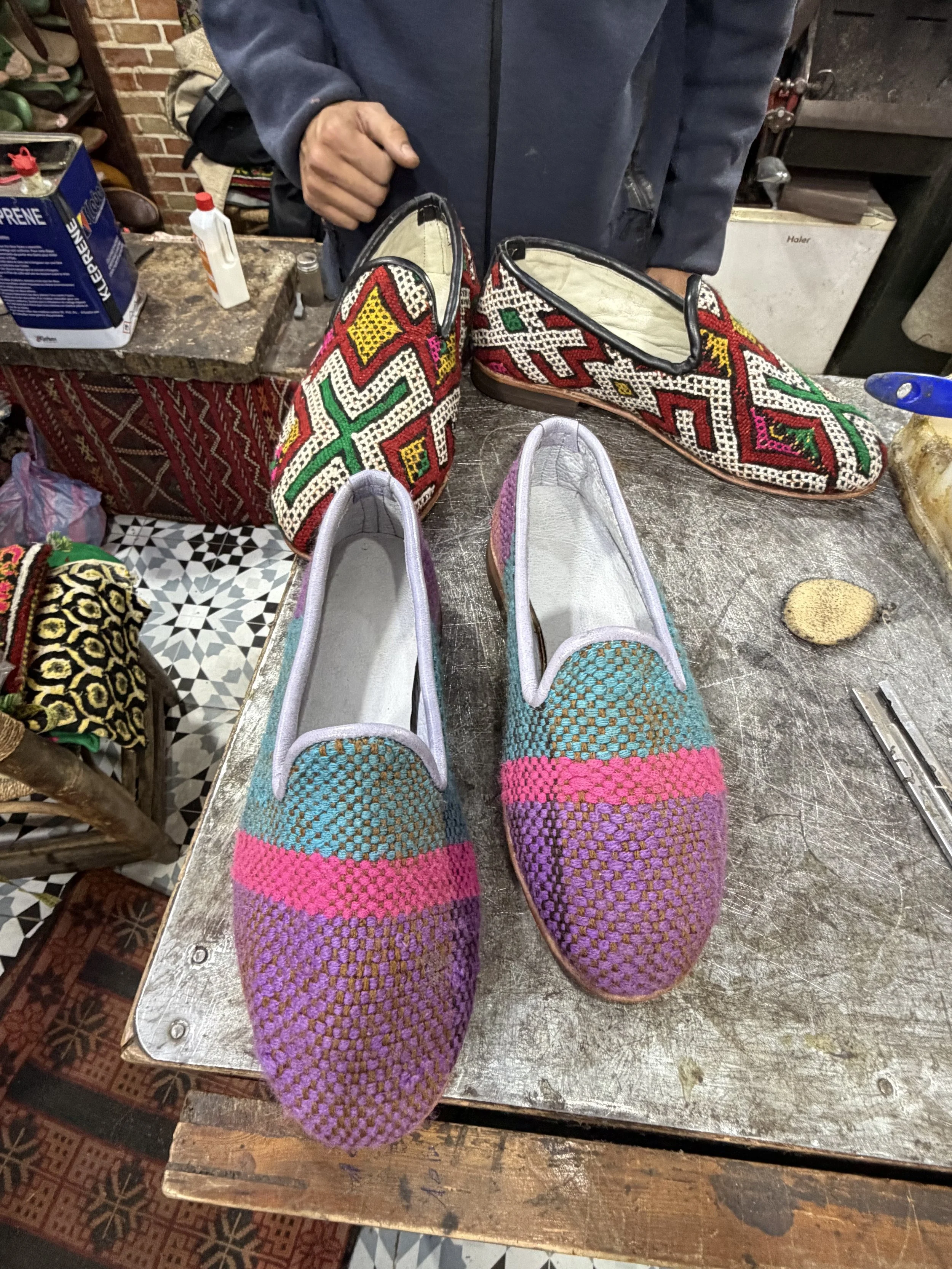
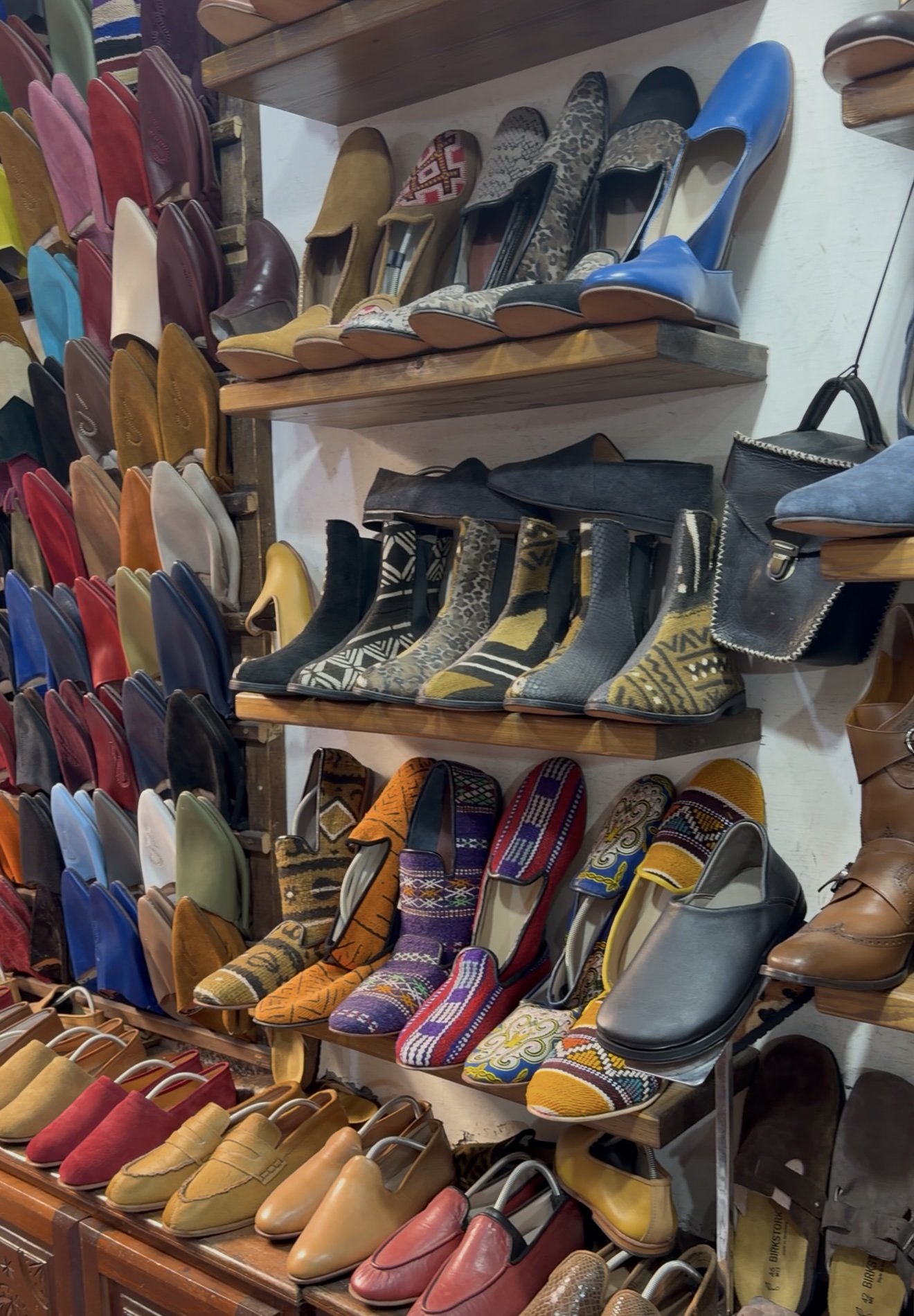
One of the highlights of my Marrakech wanderings was discovering Sabir Kech Cuir, a cool little father-and-son shoemaking shop hidden in the medina. Their service is warm and personal — they take the time to talk through styles, colors, and comfort while shaping leather by hand. Whether you want classic Berber-inspired moccasins or a more modern design, they make you feel welcome and genuinely invested in creating something you’ll love. Even if you’re not in Marrakech, you can order from their Etsy shop, bringing a piece of that medina craftsmanship and hospitality home with you. Their shoes aren’t just stylish; they’re a wearable memory of a genuine local experience.
Jemaa el-Fnaa
Jemaa el-Fnaa is the heartbeat of Marrakech — chaotic, electric, and completely unforgettable. By day, the square hums with juice vendors, musicians, henna artists, and performers. As the sun sets, it transforms into a dramatic open-air theater: smoke rising from food stalls, grills sizzling, the call to prayer echoing over the rooftops, and crowds gathering in every direction. Recognized by UNESCO for its cultural significance and oral storytelling traditions, it has been a central gathering place for centuries.
That said, while I generally felt fairly safe wandering through the square, it is intense and very crowded — and I was grabbed aggressively twice while walking through. It’s important to stay alert, move with confidence, and be prepared to firmly say no and keep walking. The energy is vibrant, but it’s not subtle. My favorite way to experience it was from above — sitting at a rooftop café at dusk with mint tea in hand, watching the square shift from golden light to full night spectacle below, where you can take in the magic without being in the middle of the chaos.
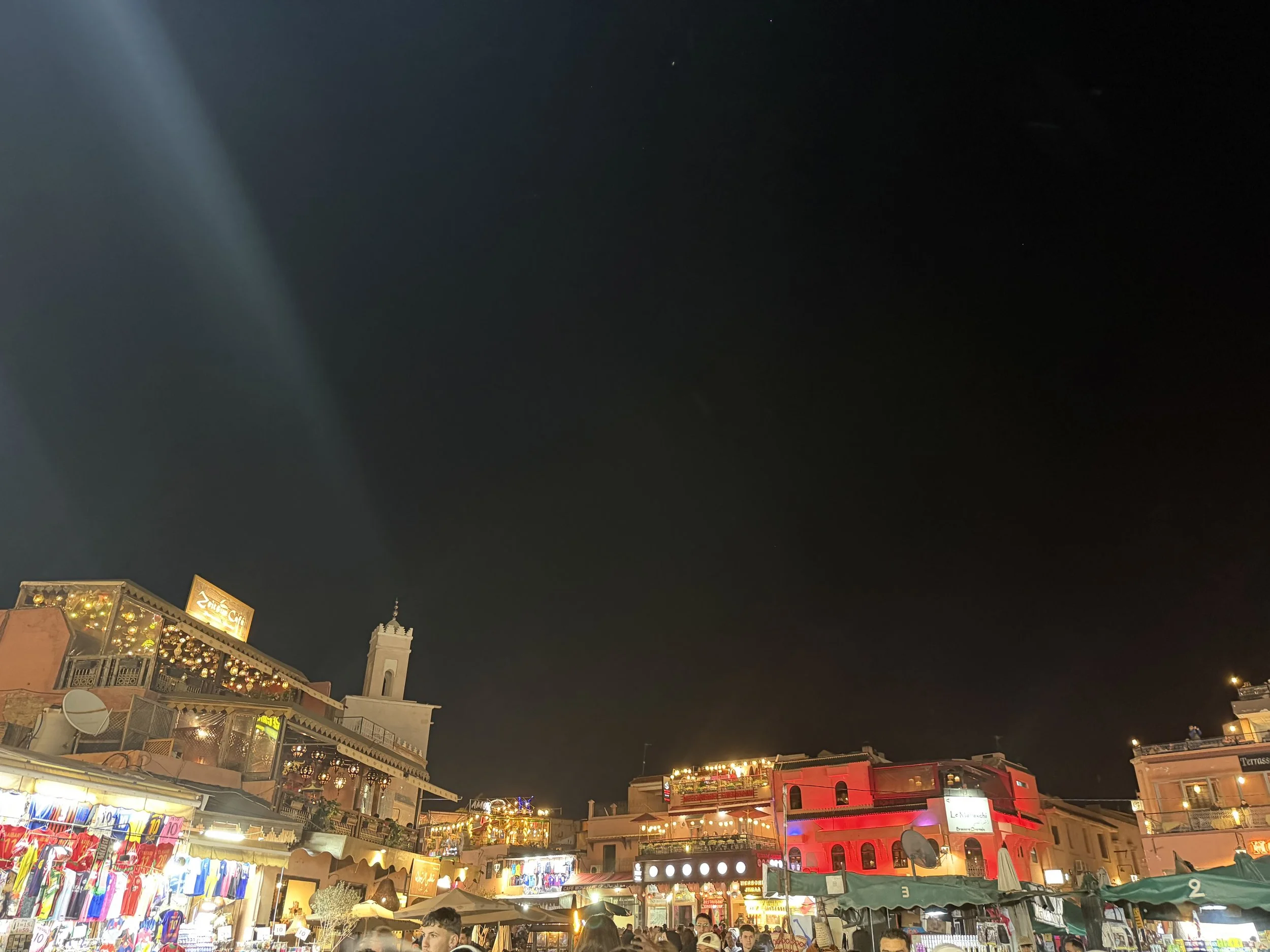
The square at night
The Food
Le Jardin Restaurant
After wandering through the medina, we stopped for lunch at Le Jardin — and it felt like stepping into a calm, green oasis. Tucked behind unassuming doors, the restaurant opens into a lush courtyard layered with palms, tiled floors, and that signature Marrakech black-and-white checkerboard detail. The menu blends traditional Moroccan flavors with light Mediterranean touches — fresh salads, tagines, grilled vegetables, and refreshing mint tea that somehow tastes better when you’re sitting under citrus trees. It’s the kind of place where you slow down without trying to, lingering over lunch while the noise of the souks fades into a distant hum.
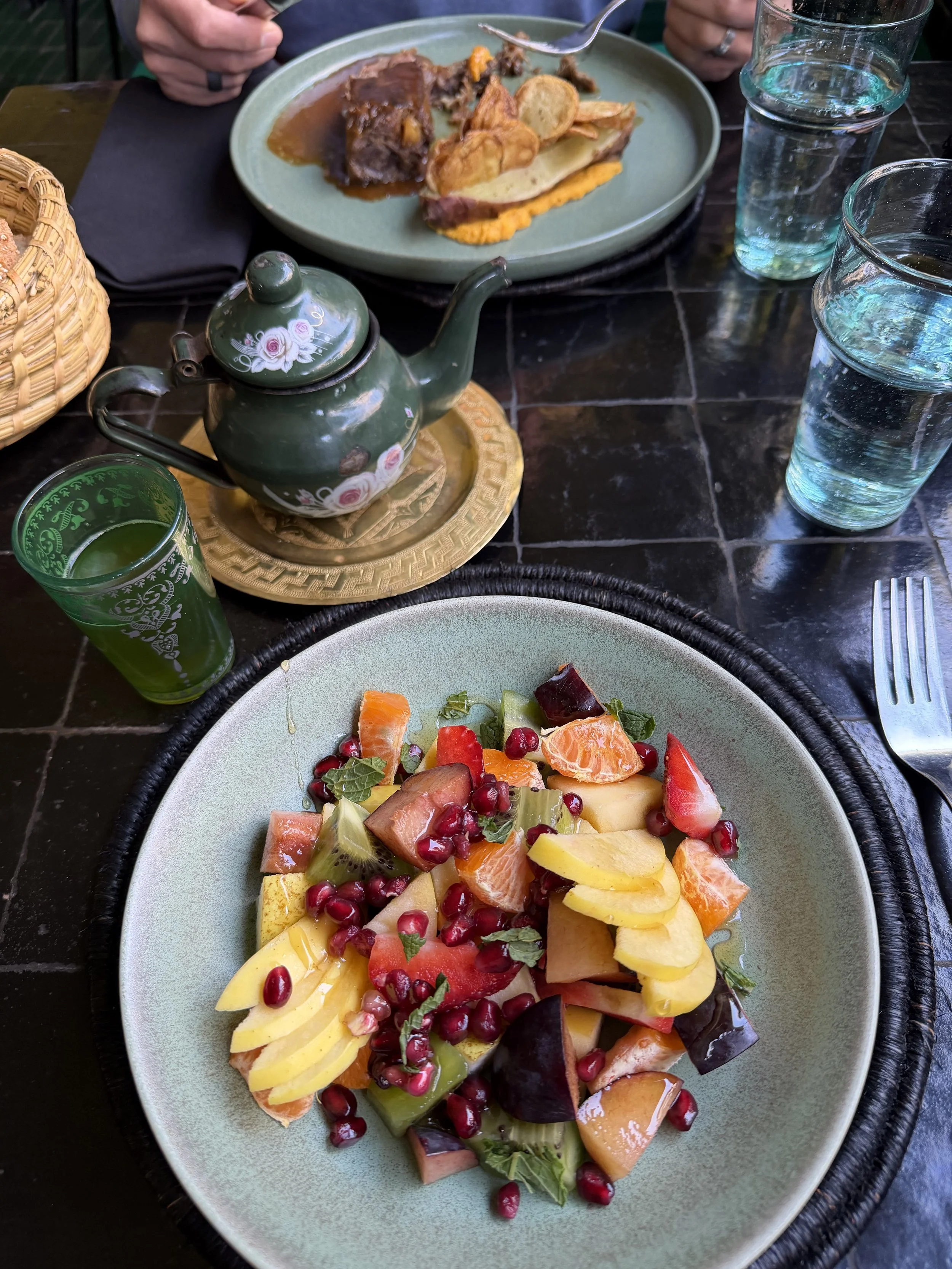
lunch at Le Jardin
Dinner at Riad Si Said
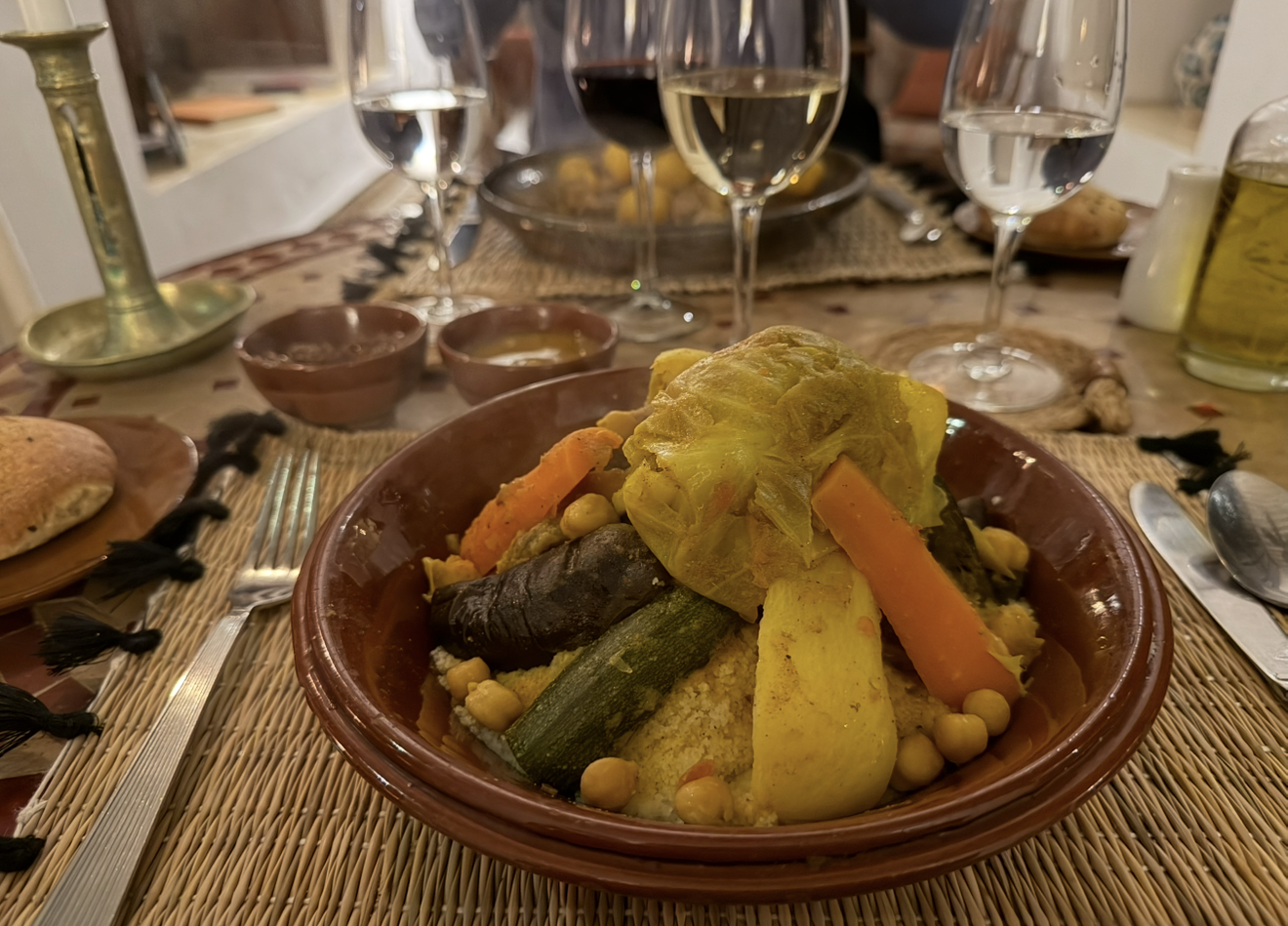
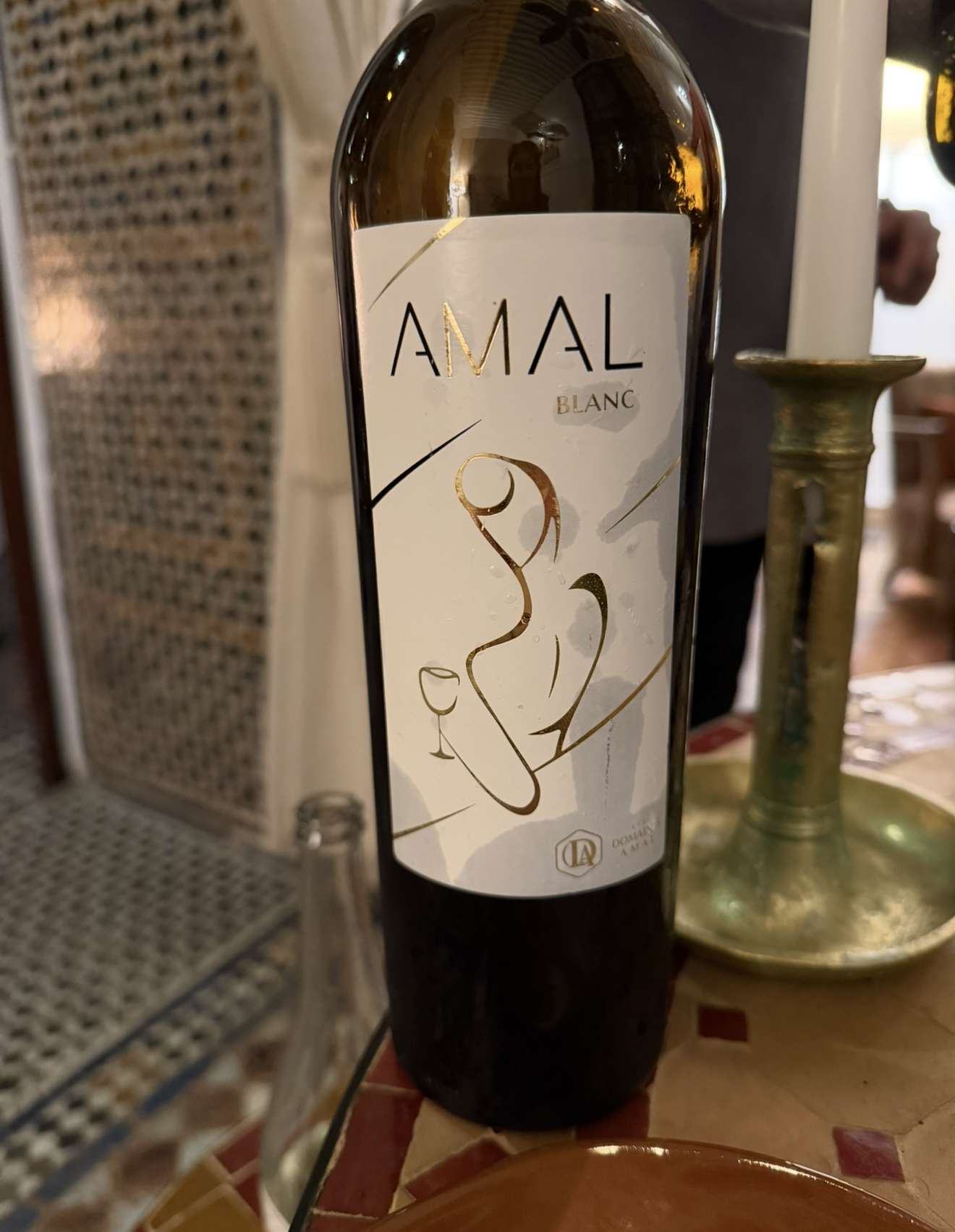
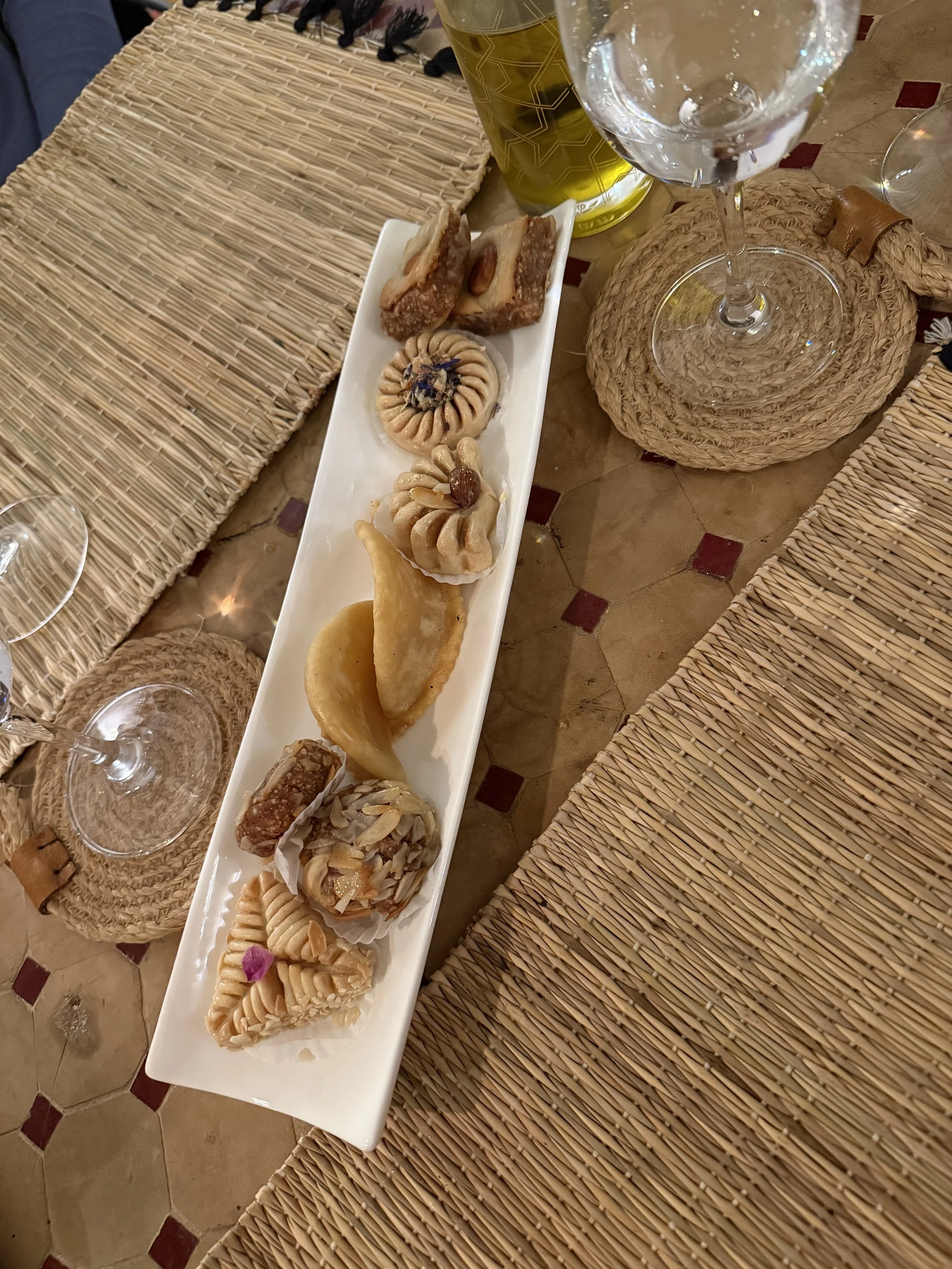
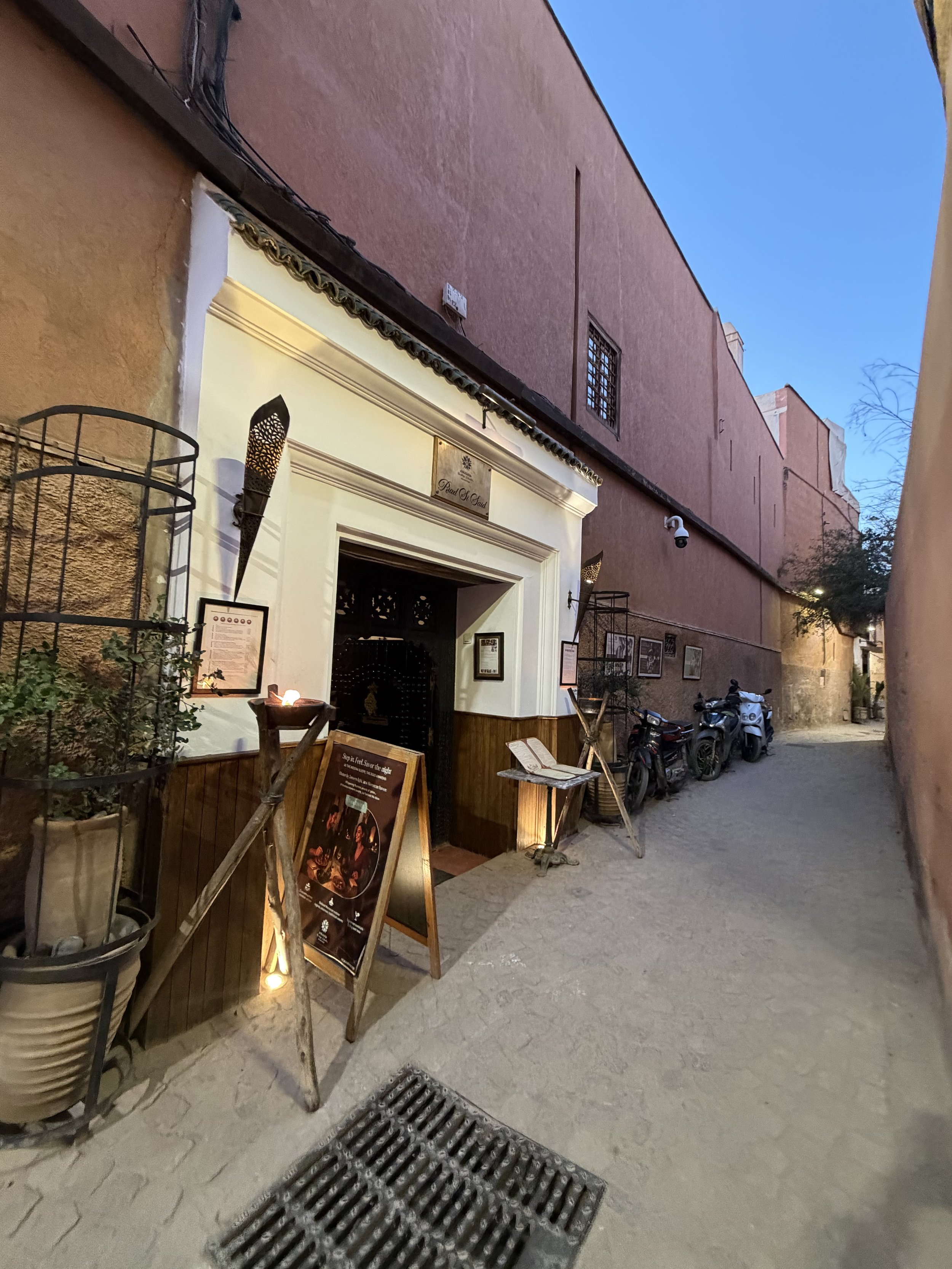
Dinner at Riad Si Said was absolutely incredible — one of those meals that feels like an experience, not just a reservation. Set inside a historic riad with carved wood, lantern light, and intimate courtyard seating, the atmosphere alone is worth going for. The service was attentive without being intrusive, and every course felt intentional — beautifully spiced tagines, fresh bread, delicate pastries, and wine served under glowing lanterns. It felt romantic, layered, and deeply Moroccan without being performative. The kind of dinner where you look around halfway through and realize you’ll remember it long after the trip ends.
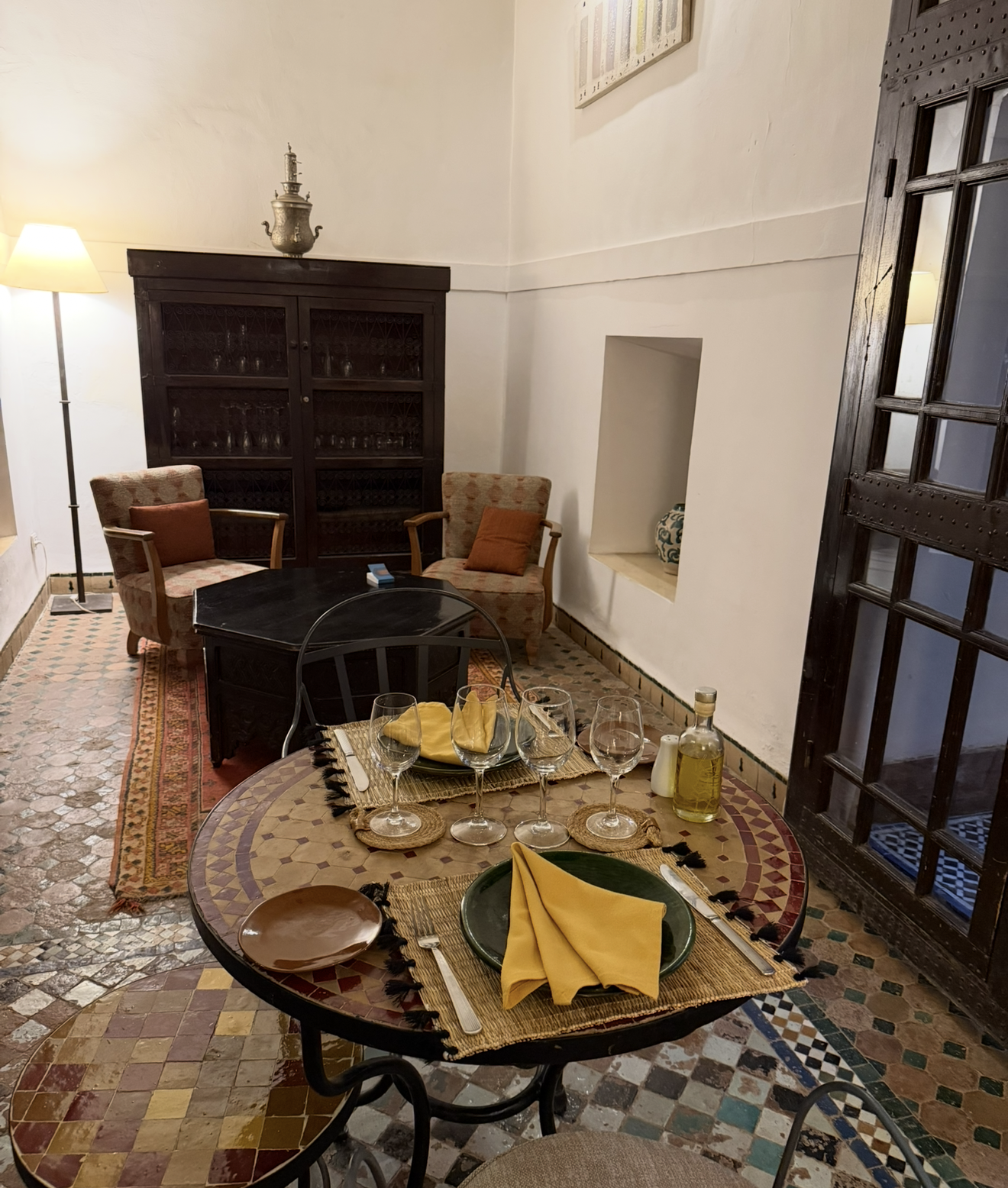
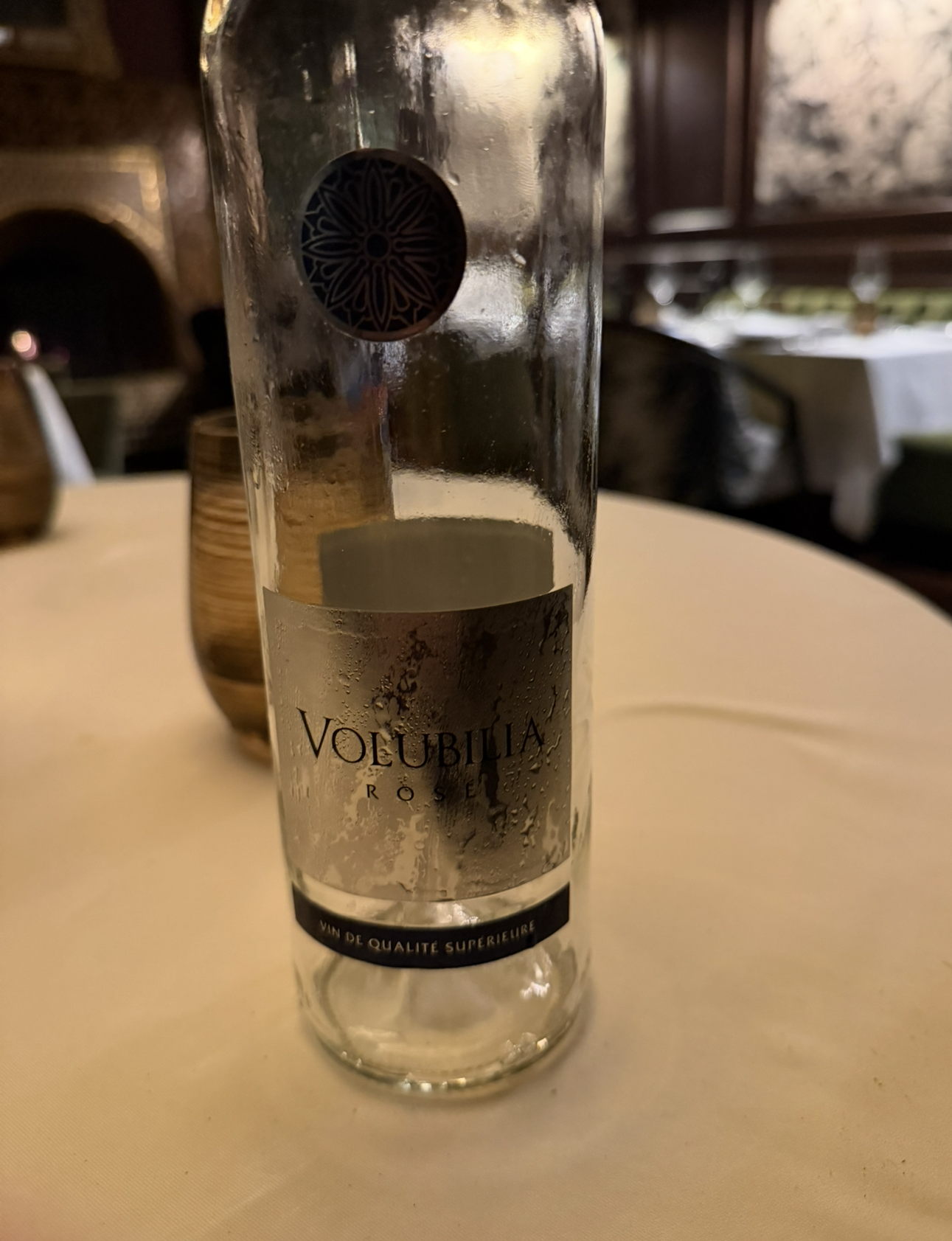
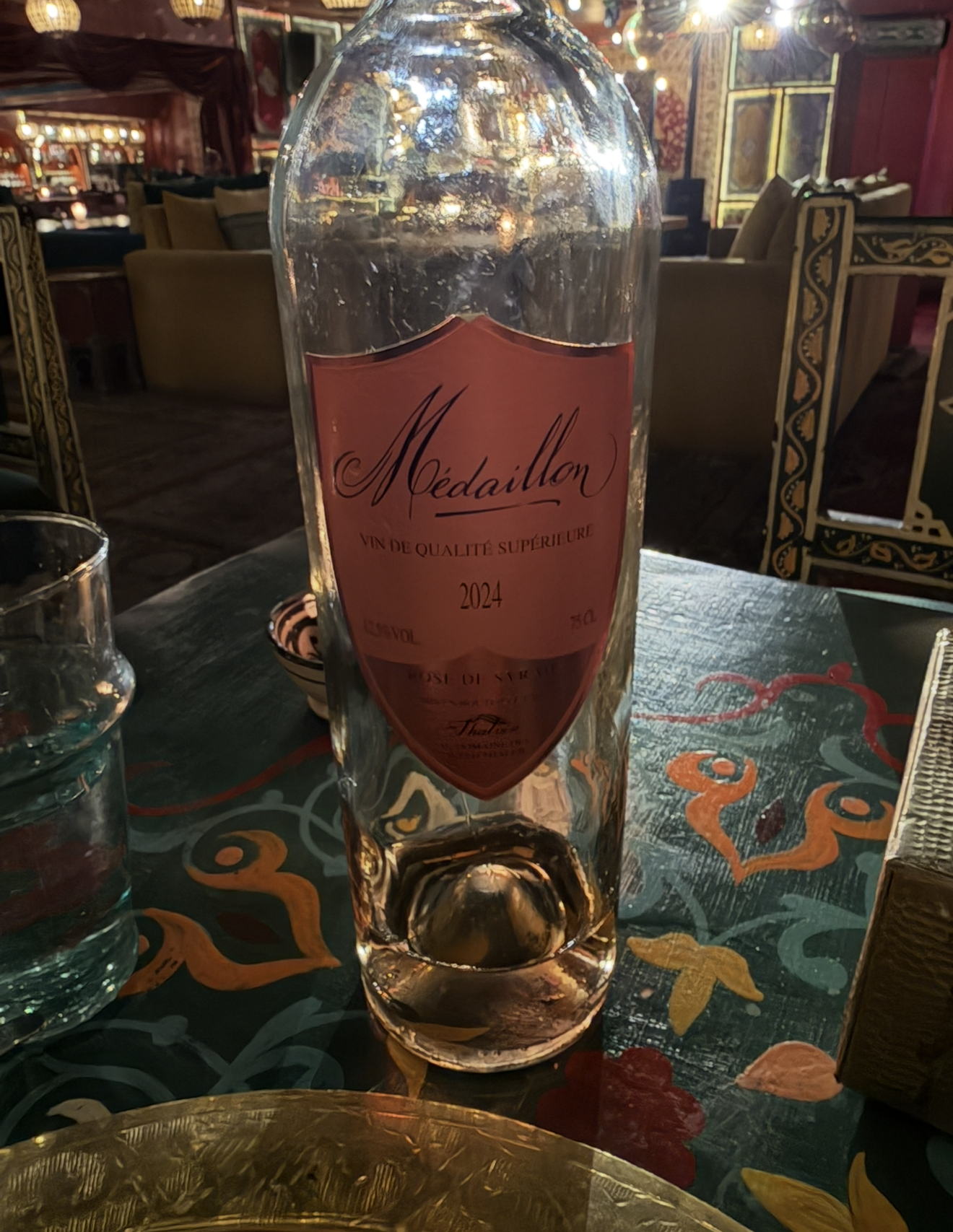
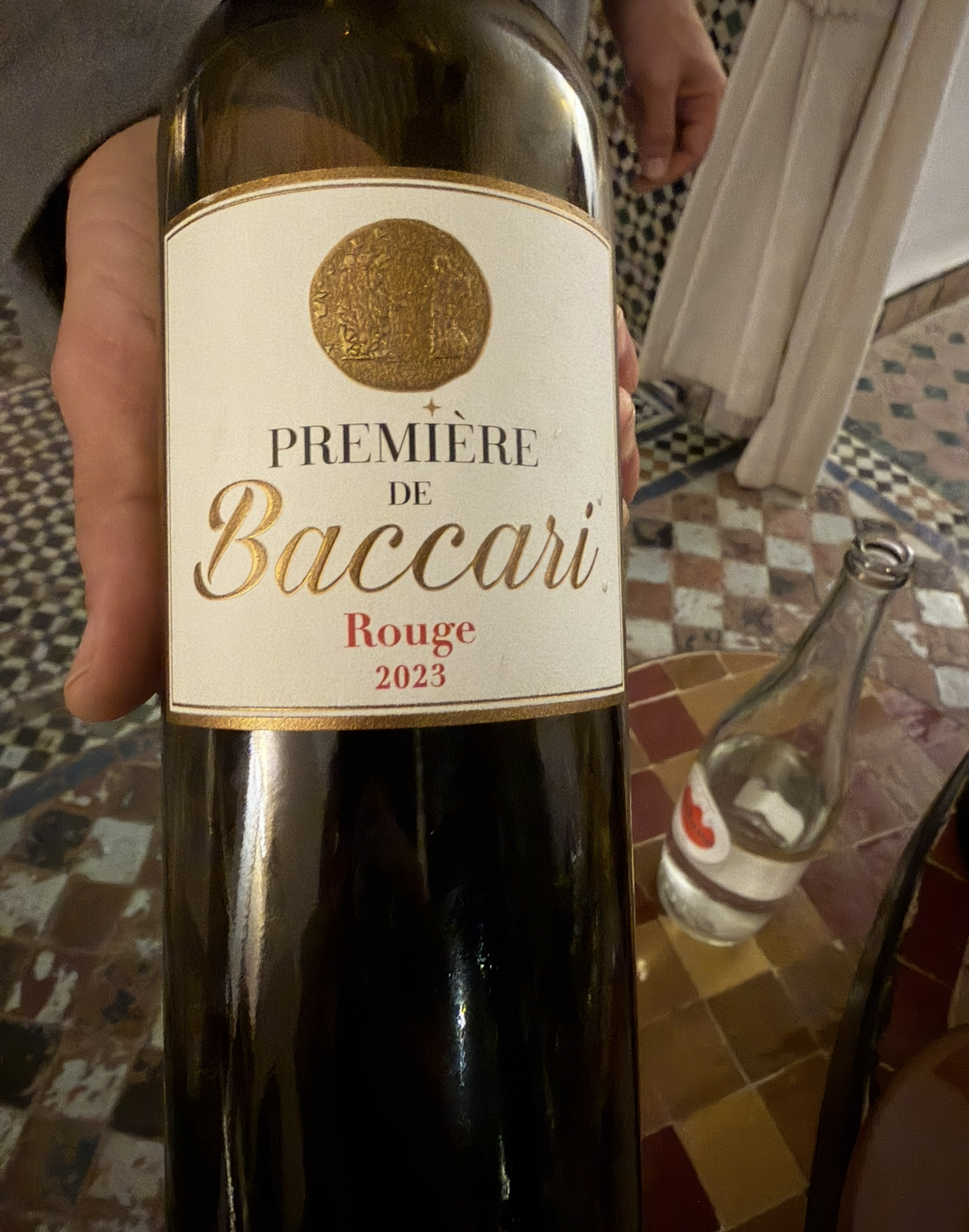
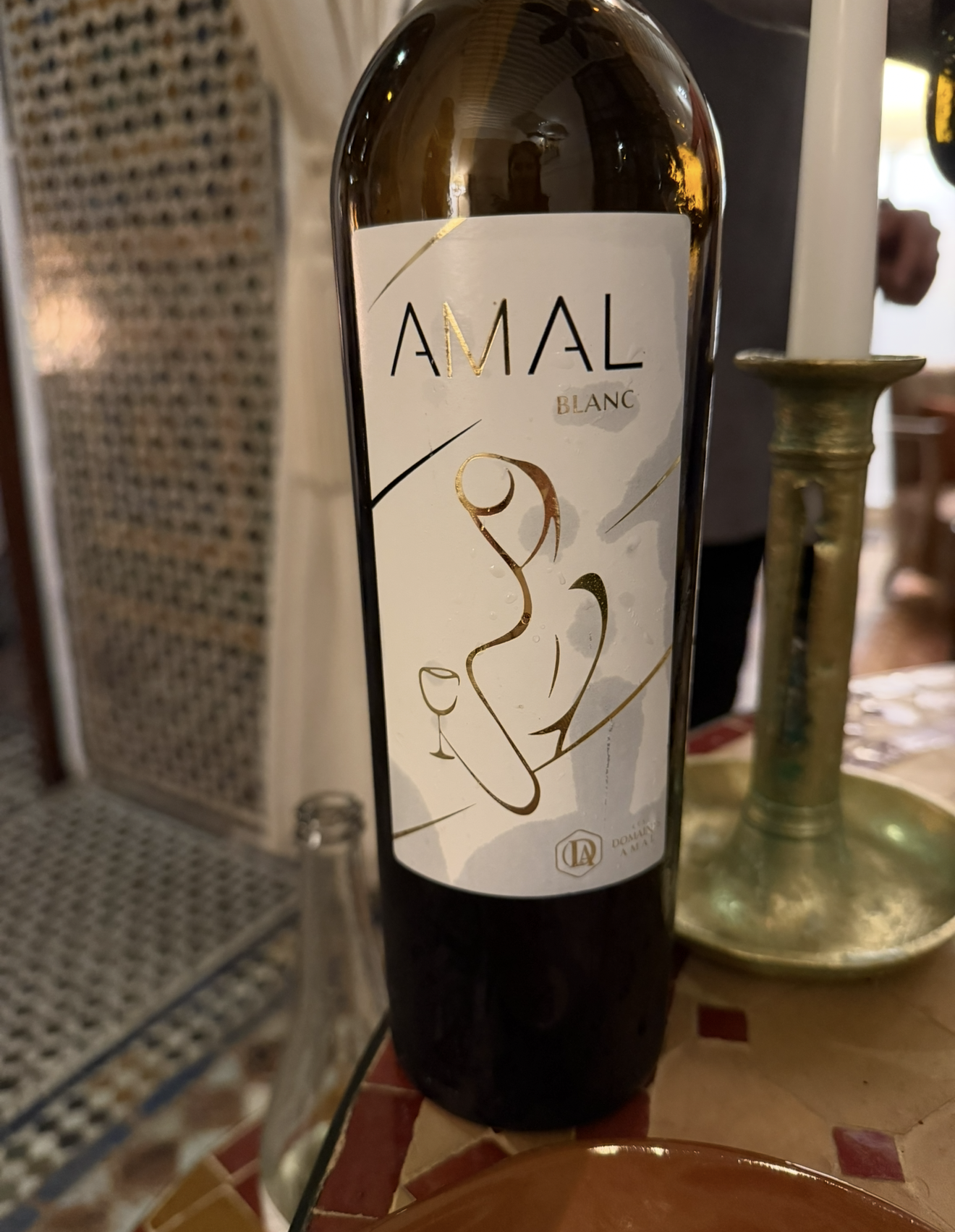
Moroccan Wine
I love wine, so on this trip I happily leaned into drinking only Moroccan wine — and it did not disappoint. Morocco’s winemaking roots stretch back to Roman times, and today vineyards thrive near the Atlas Mountains and along the Atlantic coast. But the standout for me? A rosé from Fes that I genuinely can’t stop thinking about. It was light, dry, and beautifully crisp — refreshing in the Marrakech heat but still structured enough to hold its own alongside rich tagines and fresh salads. Sitting in a candlelit riad courtyard, sipping a Moroccan rosé produced just a few hours away, made the whole experience feel even more immersive. It wasn’t just good “for Morocco” — it was just plain good. Moroccan wine deserves way more attention than it gets.
February 16 — Onward to the Sahara
On the morning of February 16, we were picked up a bit outside our Riad and began the next phase of the trip — a multi-day desert journey that coincides with the beginning of Ramadan.
That journey begins in Part Two, where we cross the High Atlas Mountains, visit ancient ksars like Aït Benhaddou, wind through Dades Gorge, and enter the Sahara at Merzouga.
Dive safe, explore passionately, and remember…