
Morocco Part III, Fes and Chefchaouen
Part 3 of a 4-Part Morocco Travel Series - From Historical Fes to Dreamy Chefchaouen: History, Hammams, and Blue-Washed Wonders
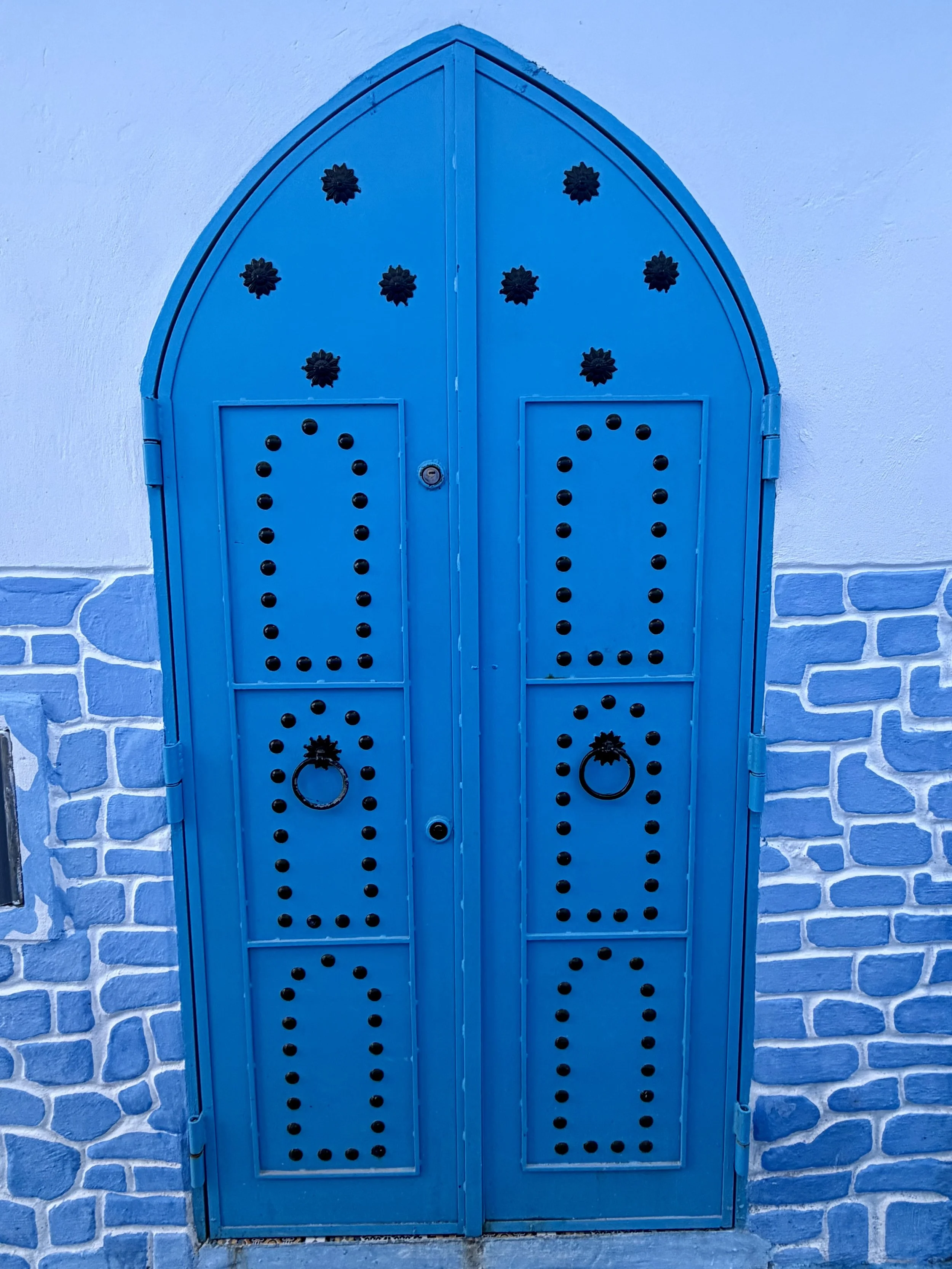
Chefchaouen
Arriving in Fes on the afternoon of February 18 felt like stepping into Morocco’s spiritual and intellectual heart. After days of traveling through mountains, valleys, and desert landscapes, the city revealed itself as something older and more layered — ancient, atmospheric, and deeply intentional. Fes isn’t a city you rush through; it’s one that rewards slowing down and paying attention.
Where Marrakech is vibrant and high-energy, Fes moves at a steadier, more traditional pace. It feels dignified and rooted, with a strong sense of history woven into daily life. Some people call it Morocco’s royal jewel; others call it its soul — and after spending time there, both descriptions make sense.
Staying at Riad Fès, booked entirely with AMEX Platinum points (about 176,381 points for a Superior Room for three nights), made our first evening feel special without being over-the-top. Quiet, elegant, and tucked inside the medina, it was the perfect base for exploring the city.
I’m sharing my custom Fes Google Map with favorite Riads, leather ateliers, market routes, food stops, and historic sites — especially helpful in a medina that’s as intricate and maze-like as this one.
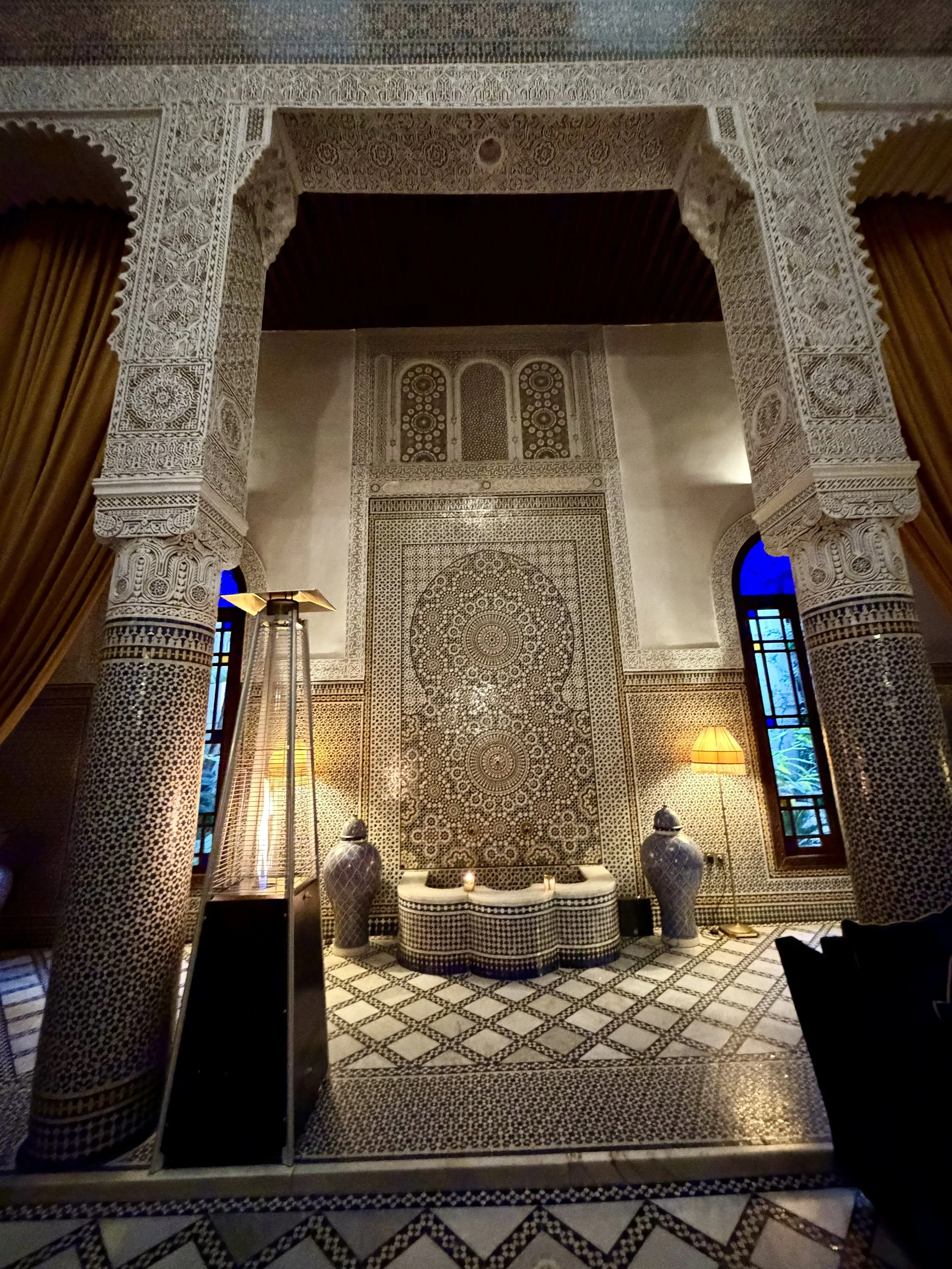
The hammam waiting room at Riad Fes
For Chefchaouen, I’ve put together a custom map highlighting the best photo spots, relaxed shopping streets, cozy cafés, viewpoints, and all the dreamy blue corners worth exploring.
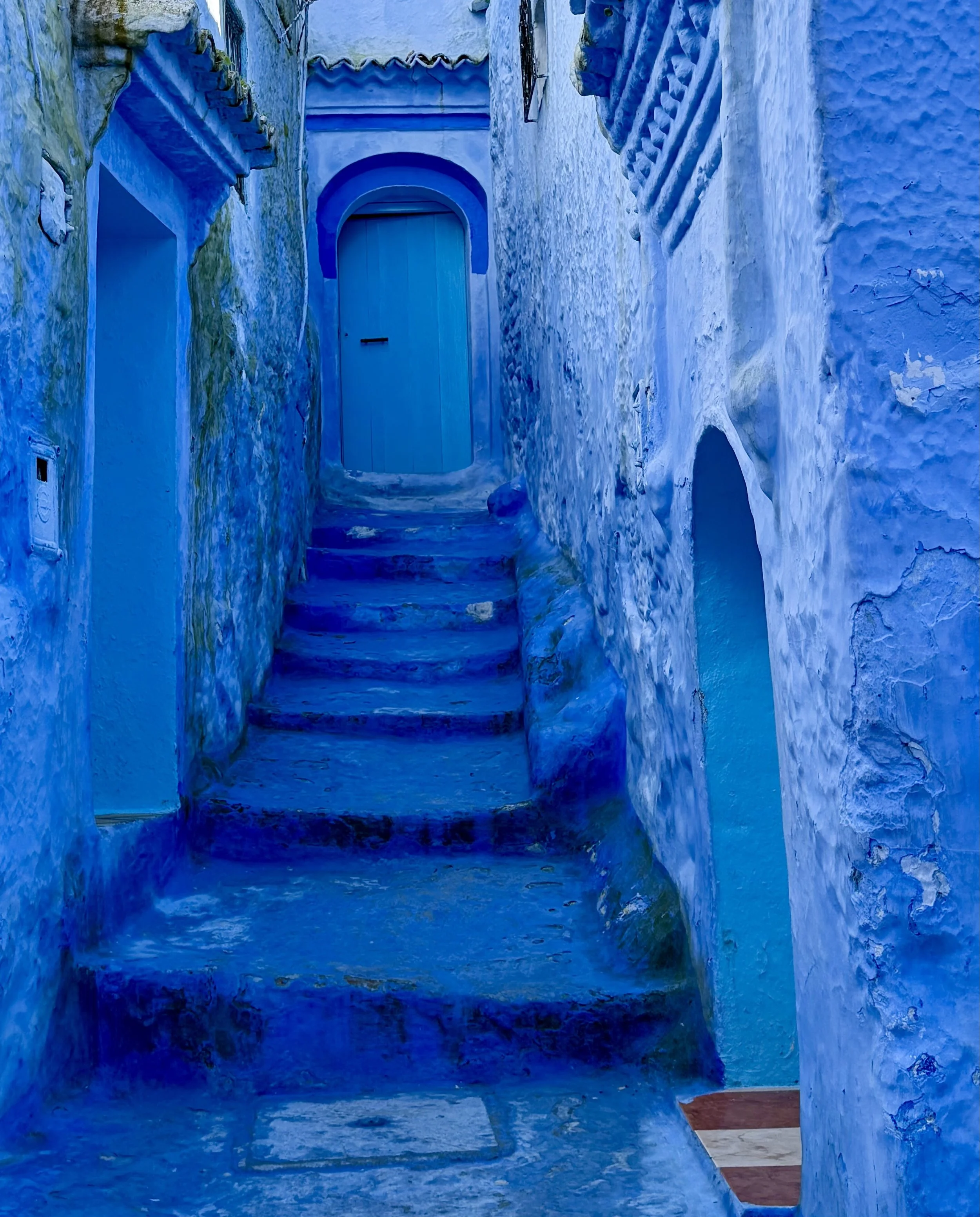
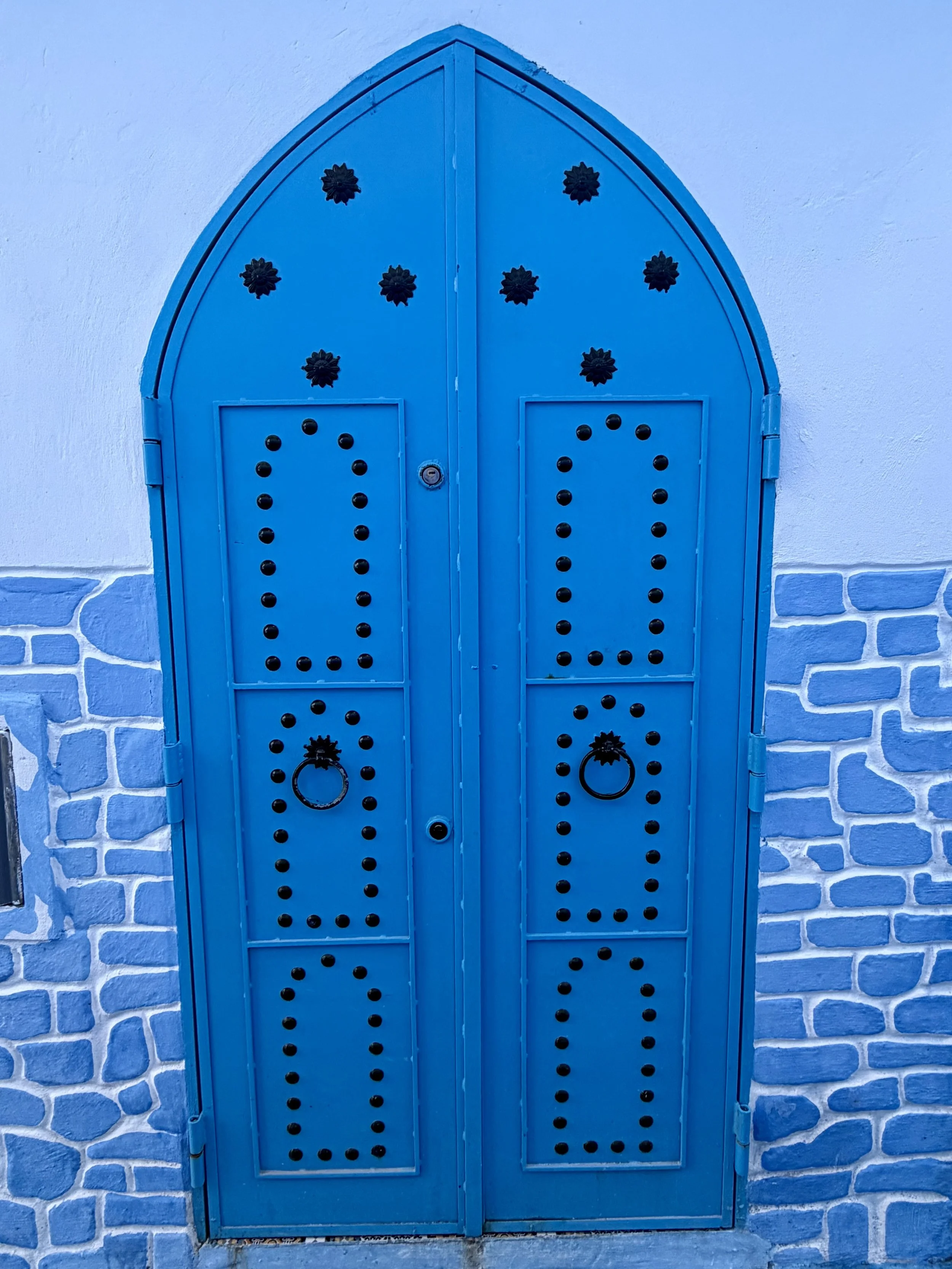
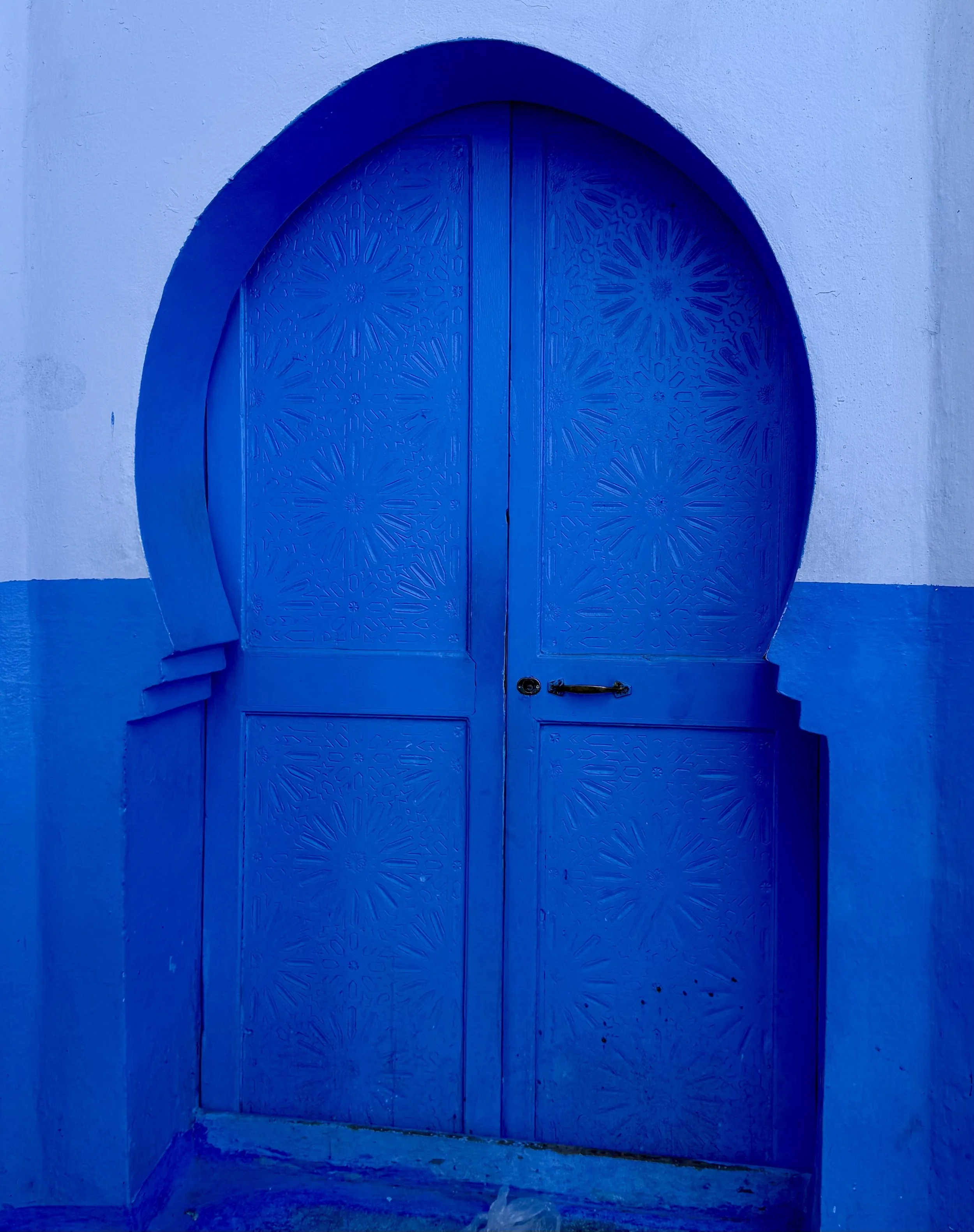
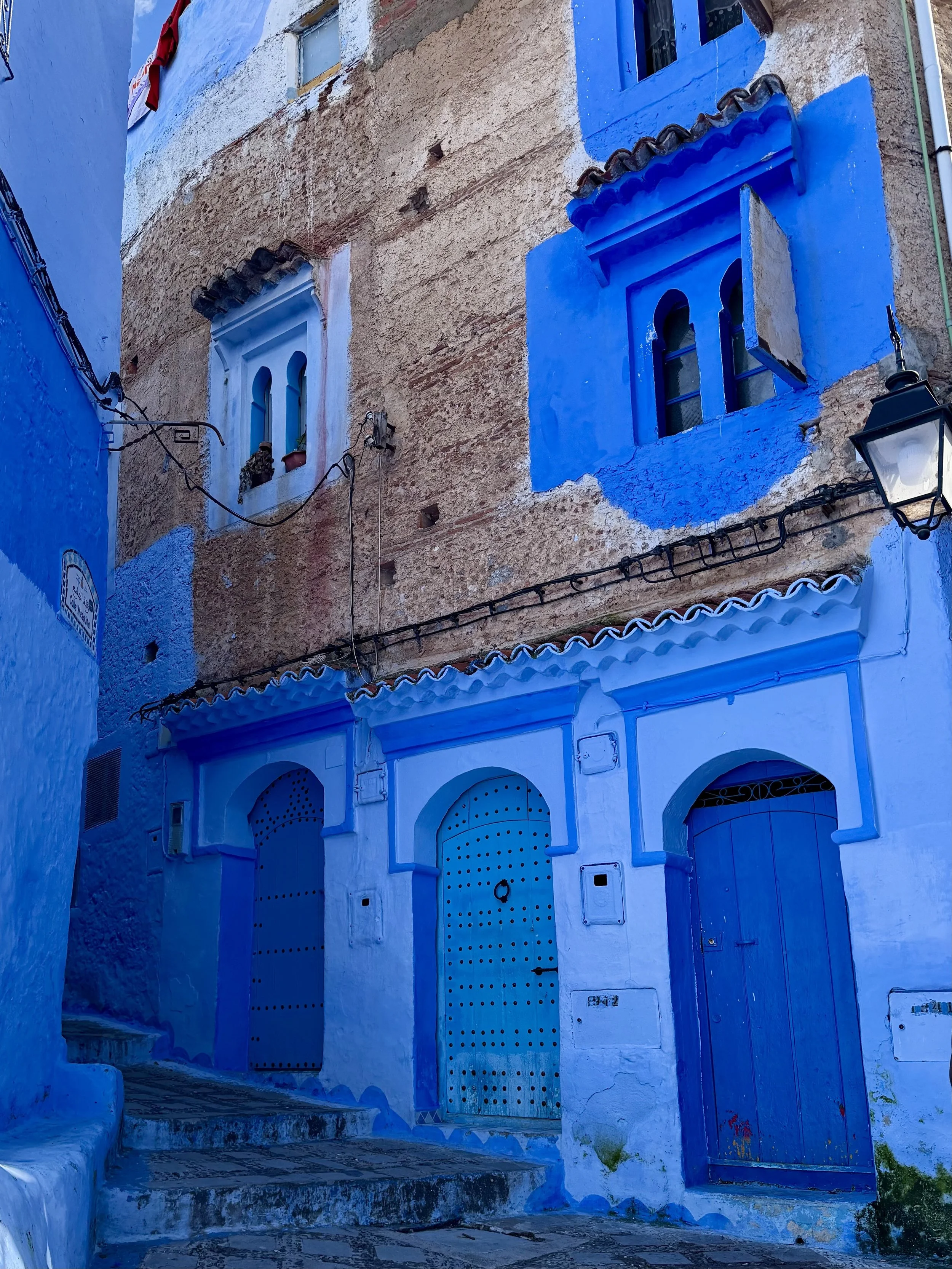
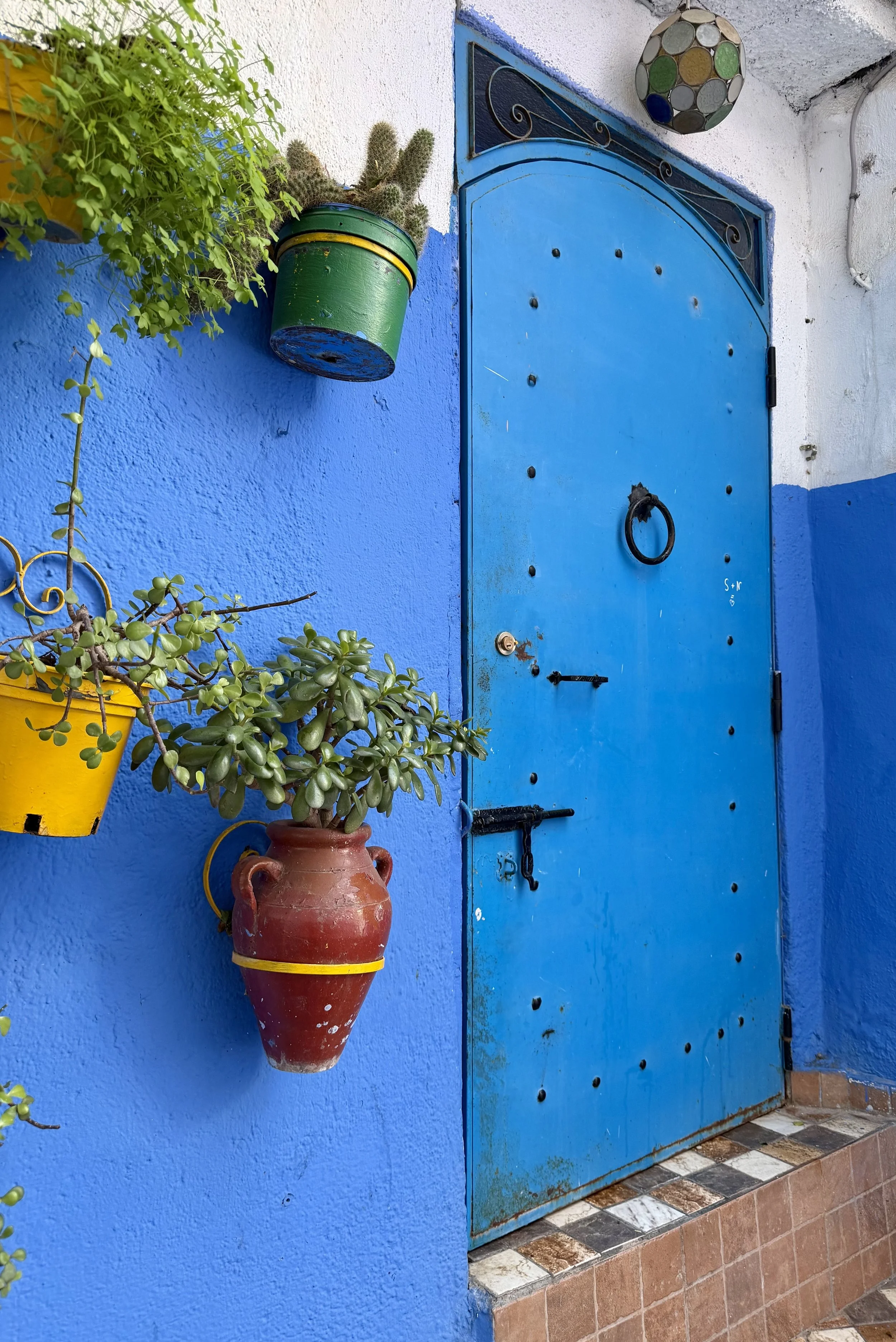
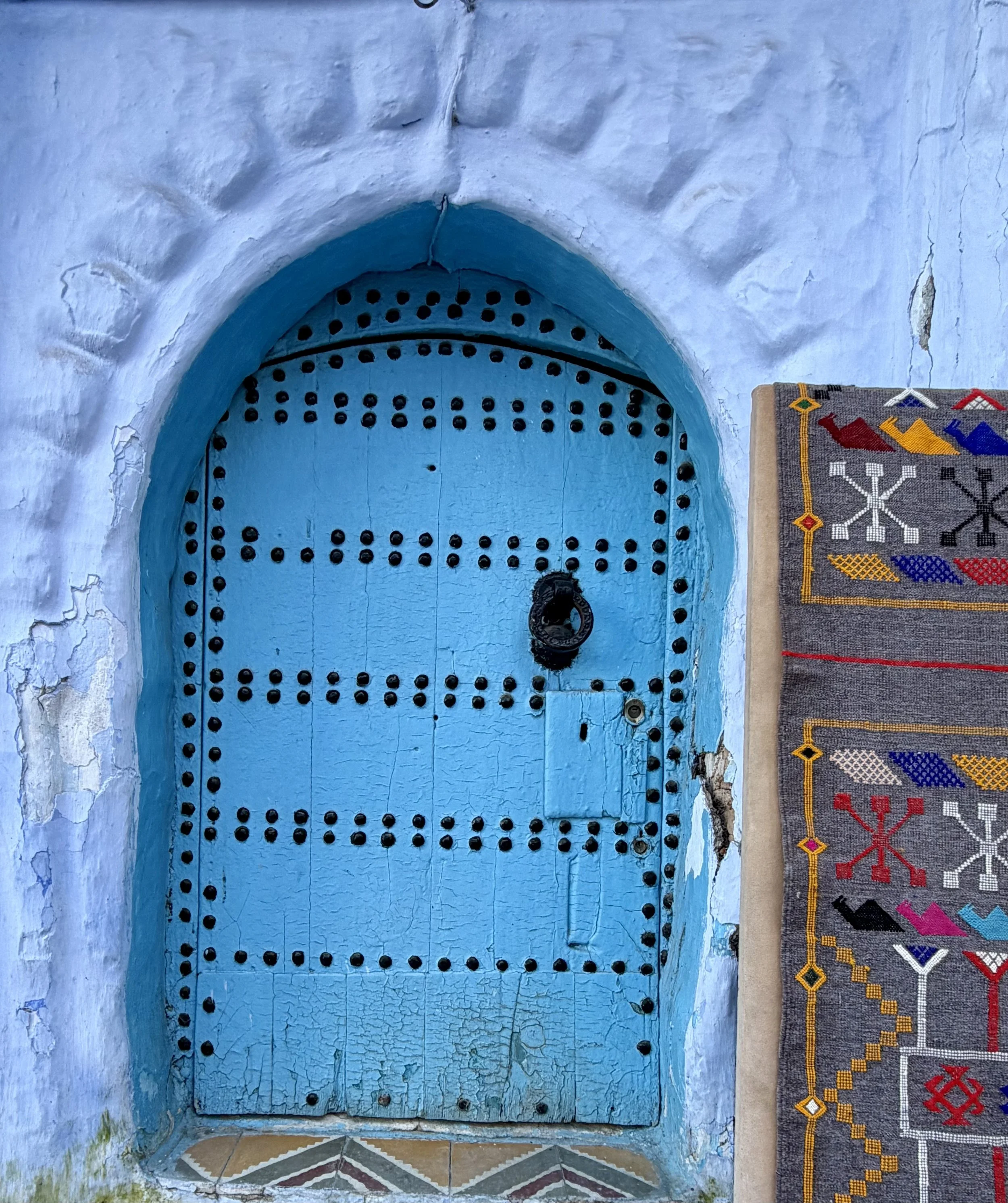
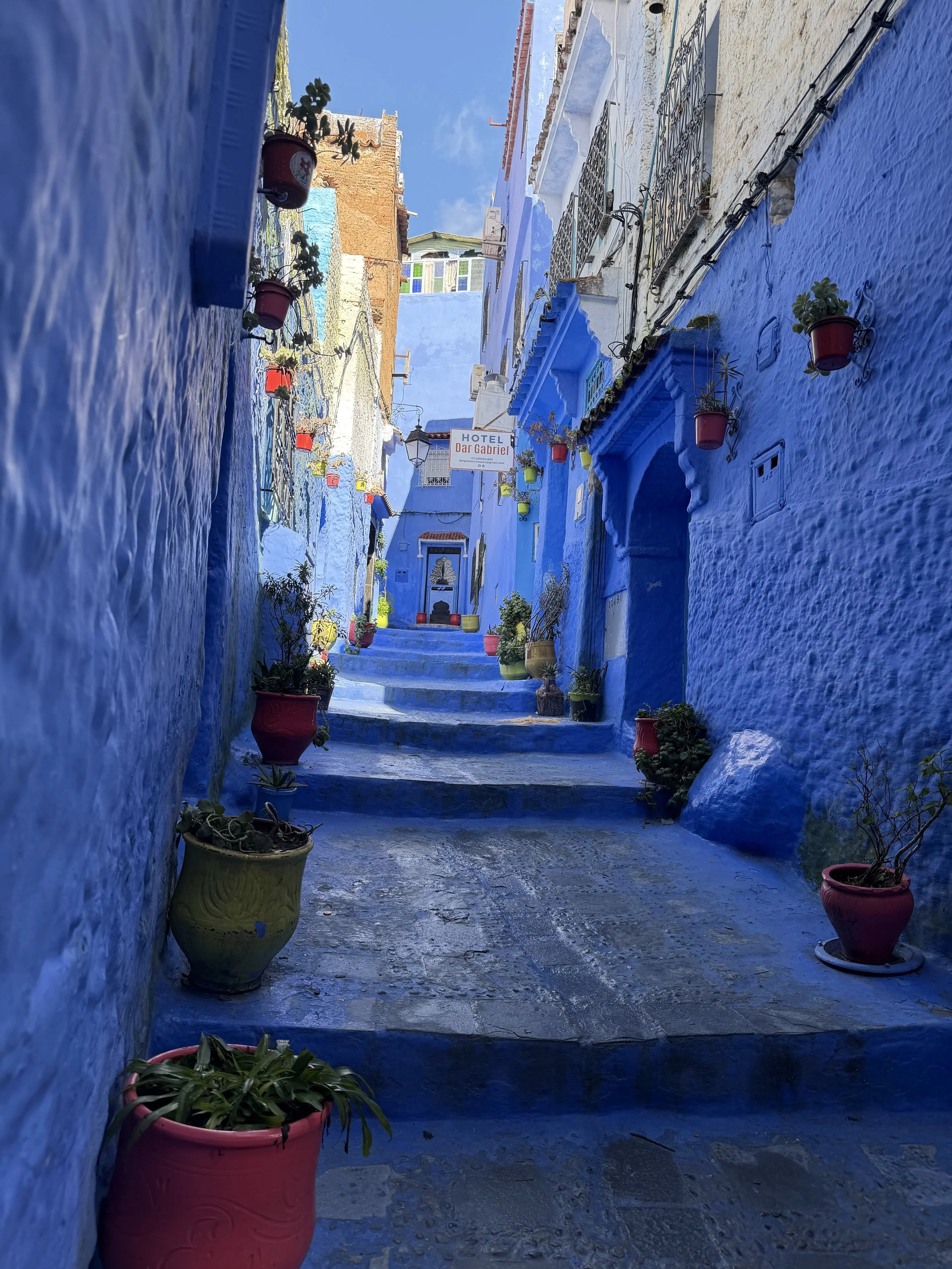
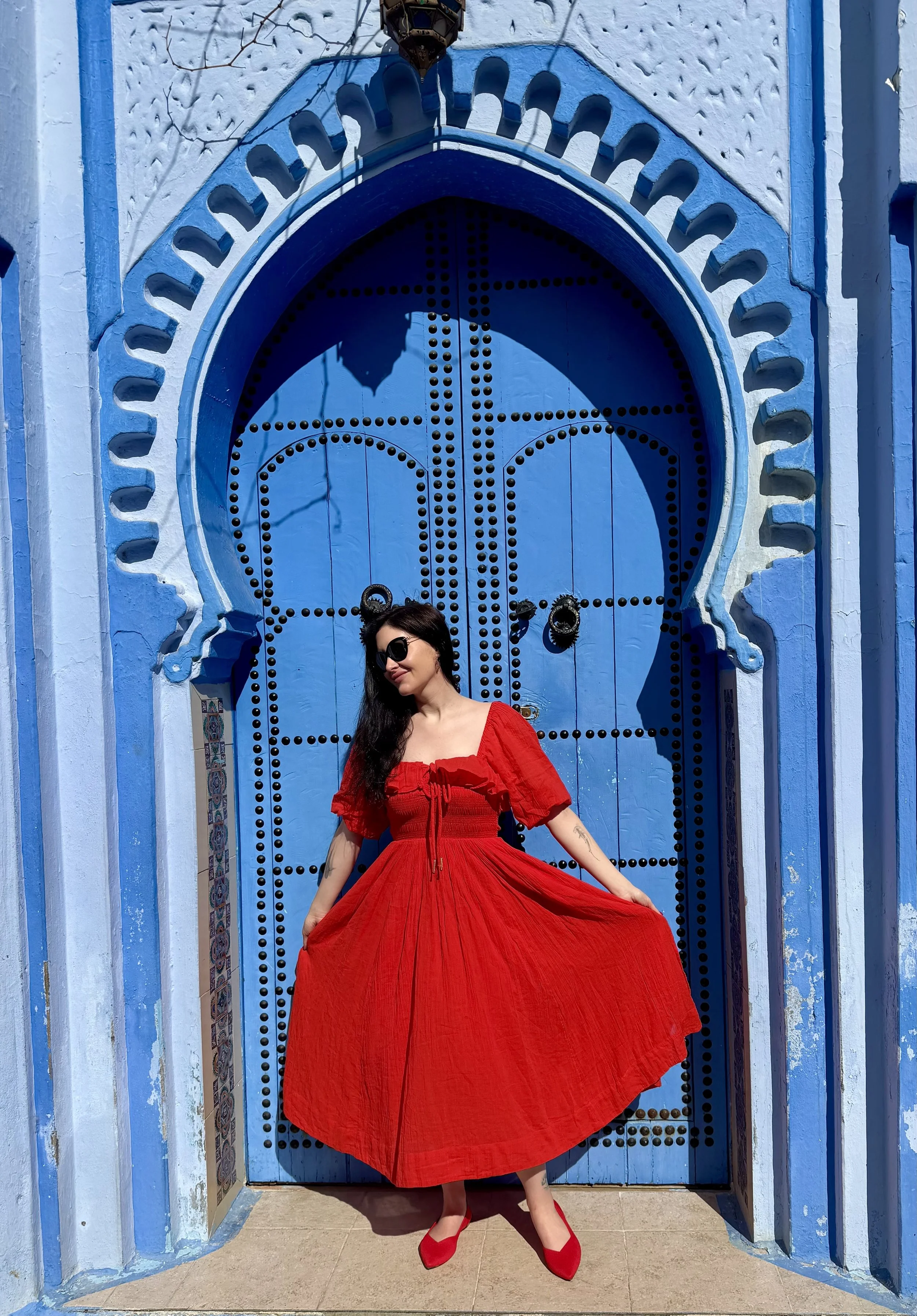
Beautiful blue of Chefchaouen
Table of Contents
Riad Fes — Our Superior Room in a Living Work of Art
Dinner at Gayza — A Culinary Ceremony
Rooftop Wine Tasting at Sunset — Morocco’s Secret Vineyards
The Journey to Chefchaouen (Long, But Worth Every Second)
Chefchaouen — A Blue Dream in the Rif Mountains
A Day Immersed in the Souks of Fes
Evening Hammam at Riad Fes — A Sacred Ritual
Ramadan Begins
Boarding the Train to Rabat
Riad Fes — Our Suite in a Living Work of Art
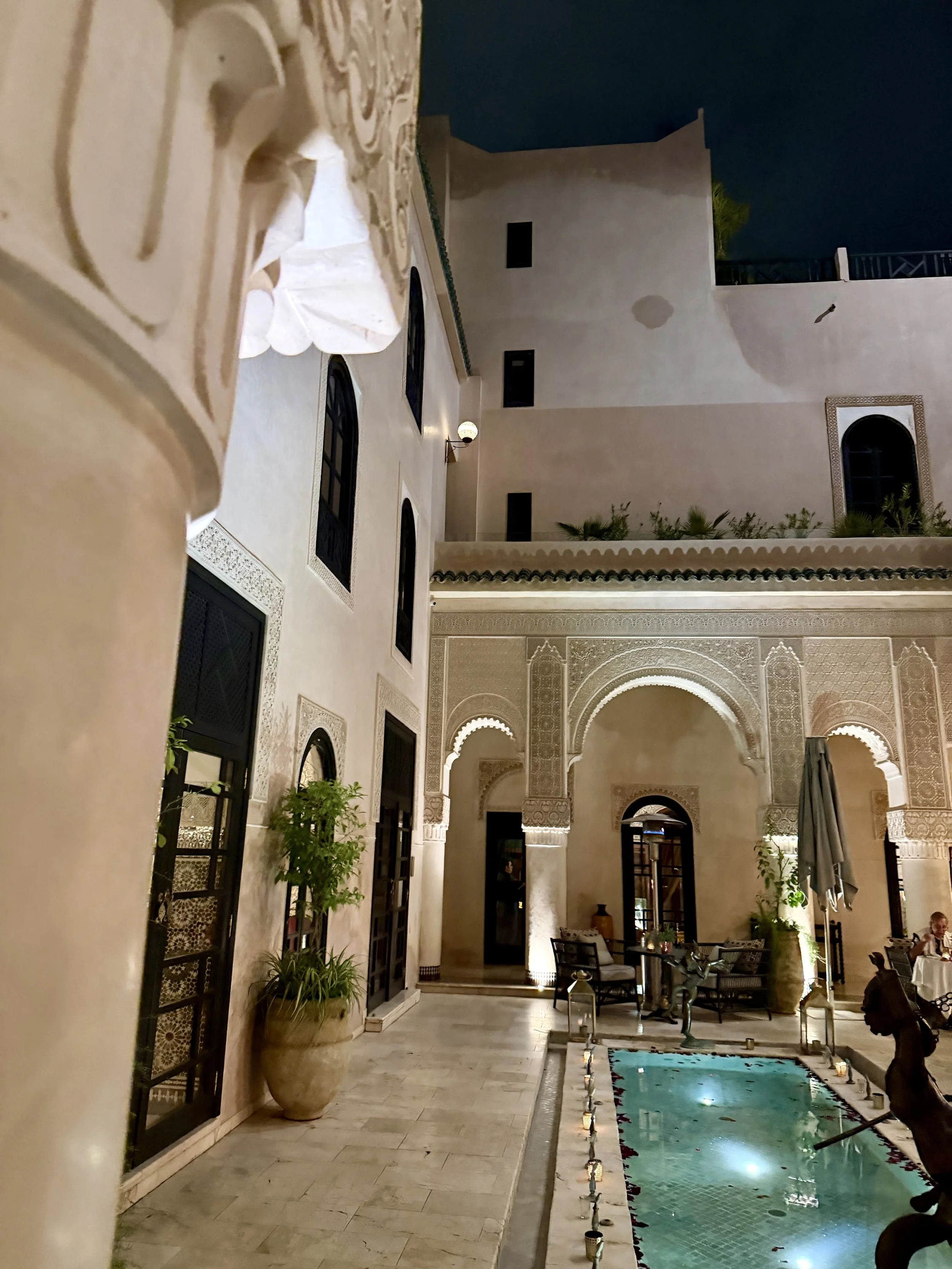
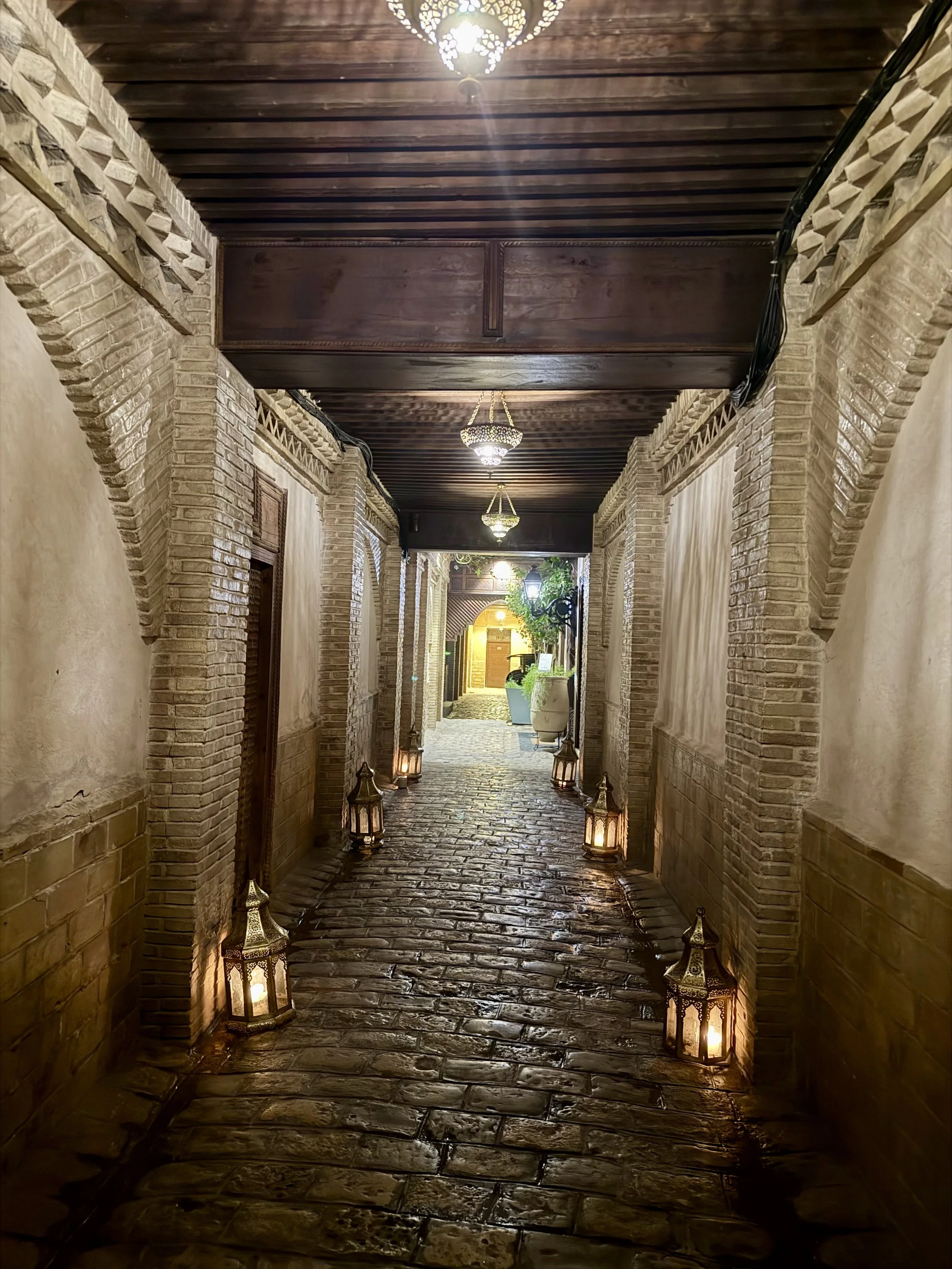
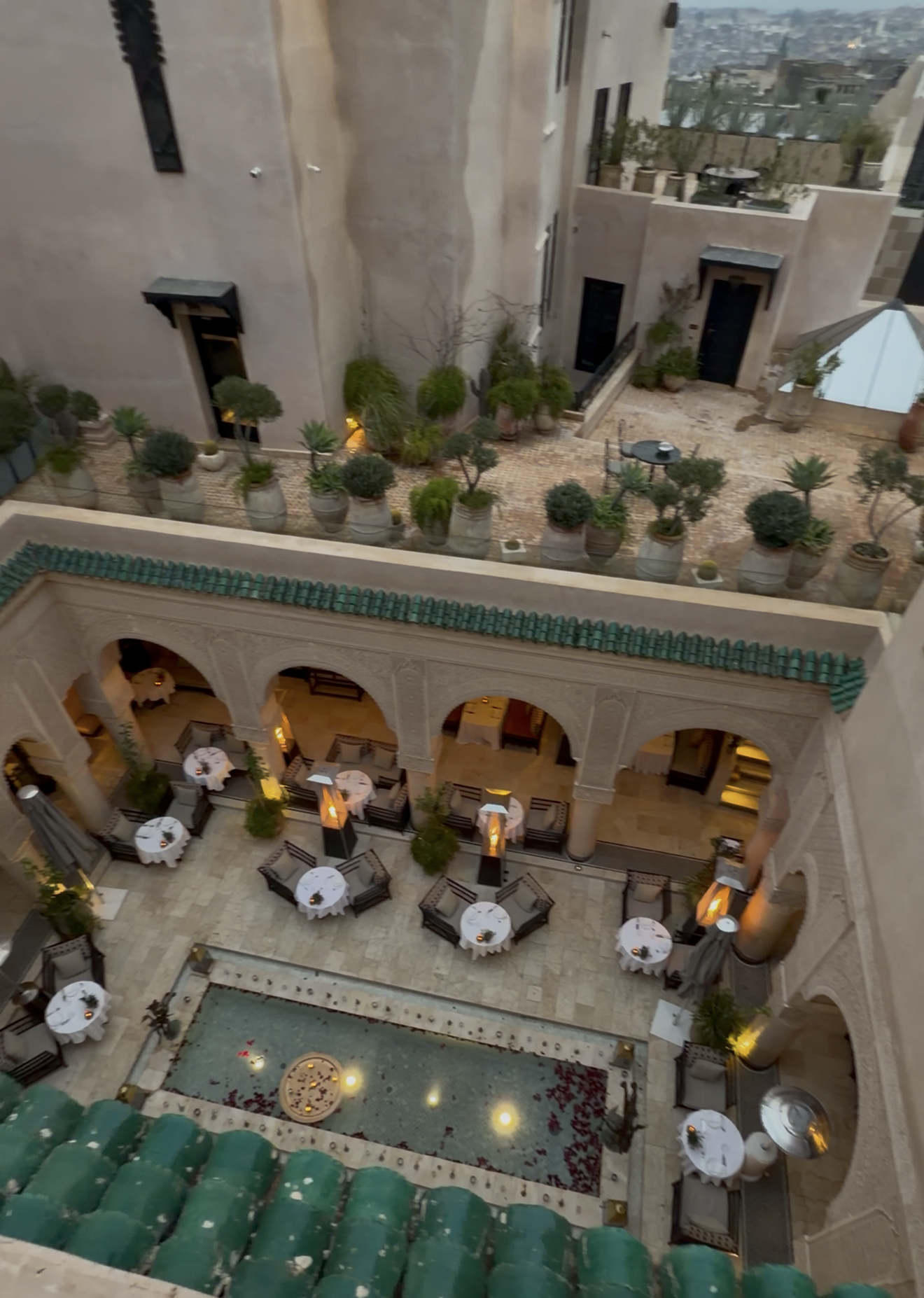
The entrance to Riad Fes is unassuming, but the moment the door swings open, you’re transported into a world of carved cedar ceilings, shimmering mosaic tiles, marble floors, and courtyards glowing in lantern light. It is easily one of the most spectacular riads in the country — a layered blend of Andalusian, Moroccan, and Moorish architecture that feels both regal and intimate at the same time.
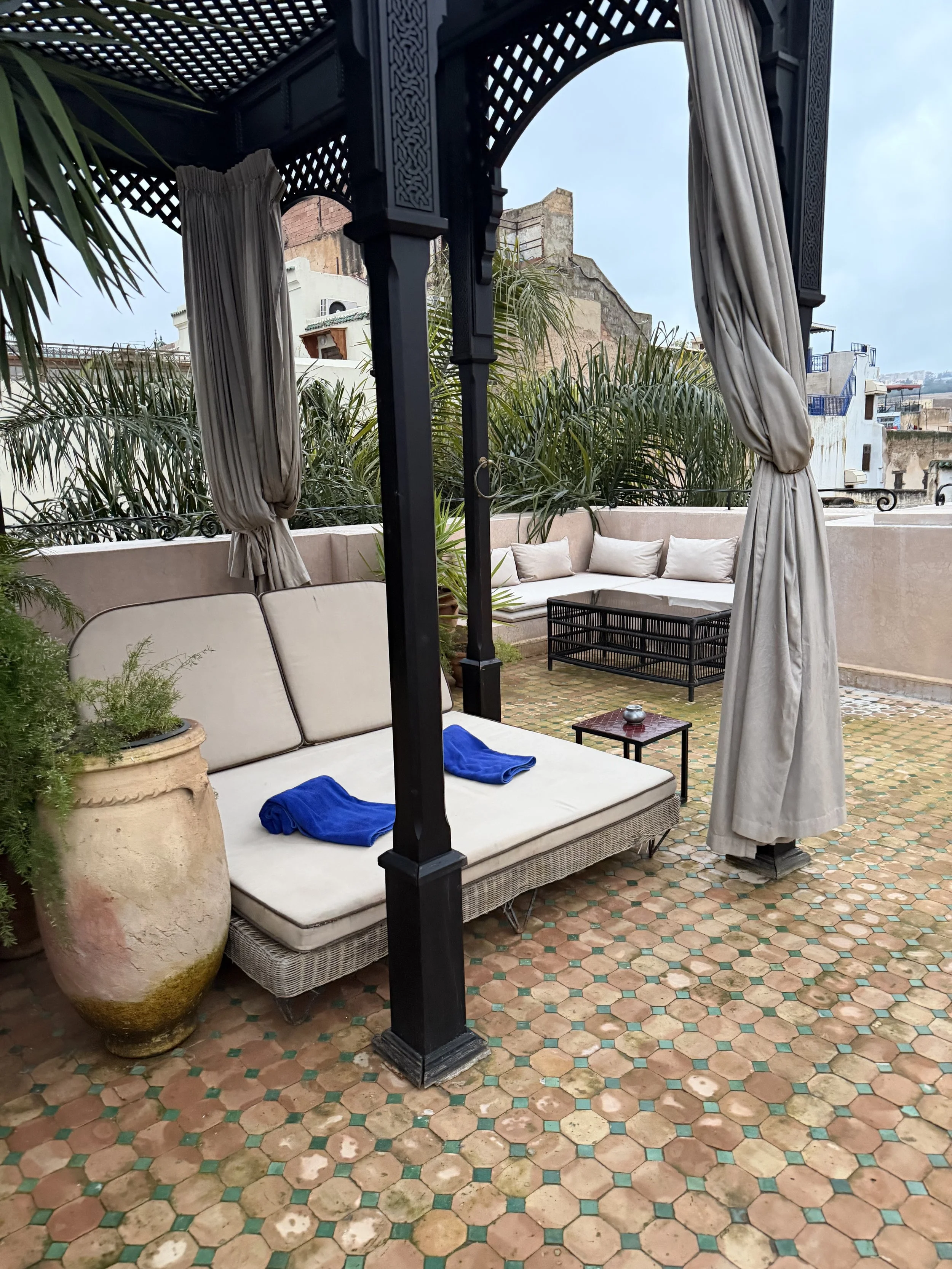
We were originally booked into a Superior Room, which would have been stunning on its own — timeless luxury, high ceilings, crisp linens, marble bathrooms, intricate cedar woodwork, and that deep, quiet stillness that makes you instantly exhale. But then we received an absolutely insane upgrade to the Calife Suite — the penthouse — and it completely elevated the experience. The suite felt expansive and private, with refined details everywhere you looked, and the real showstopper was our private terrace overlooking the city. Standing above the medina rooftops at sunset, hearing the distant call to prayer echo across Fes, felt surreal. After the long desert journey, it was exactly the kind of indulgent comfort and space we didn’t even realize we needed.
We cleaned up and made our way down to Gayza Restaurant, one of the riad’s signature dining rooms — and hands down, it was one of the most incredible meals of the entire trip.
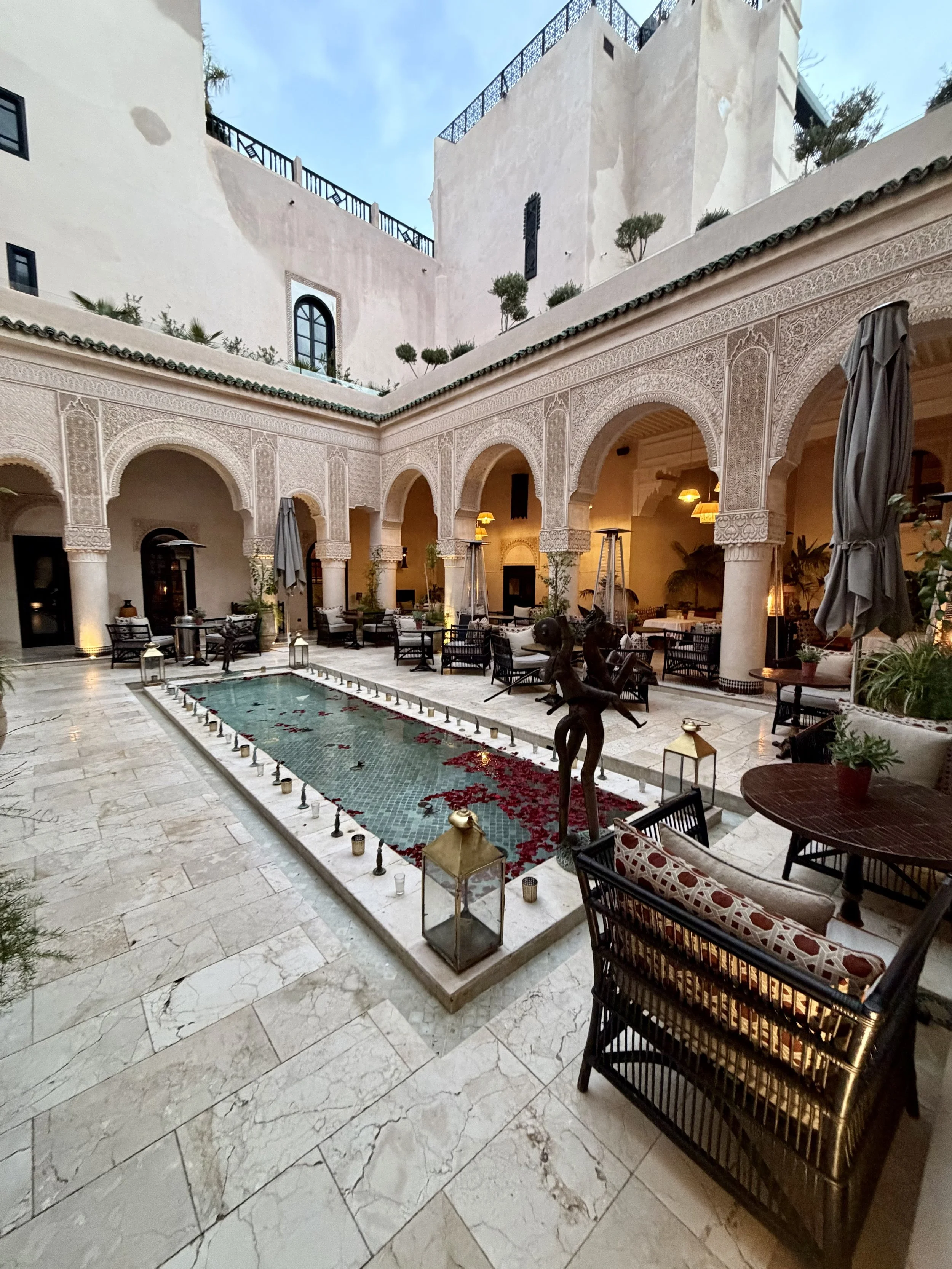
Dinner at Gayza — A Culinary Ceremony
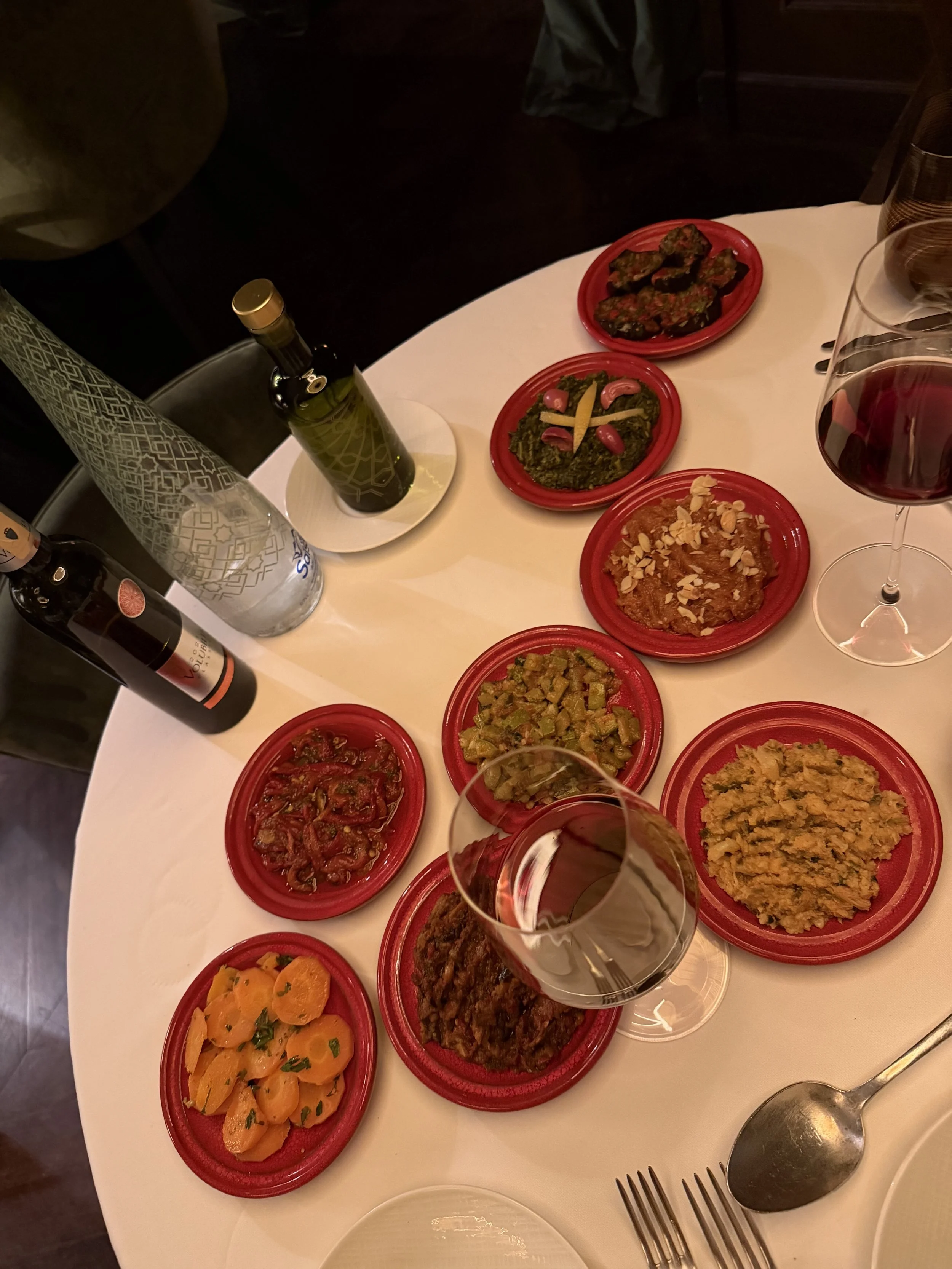
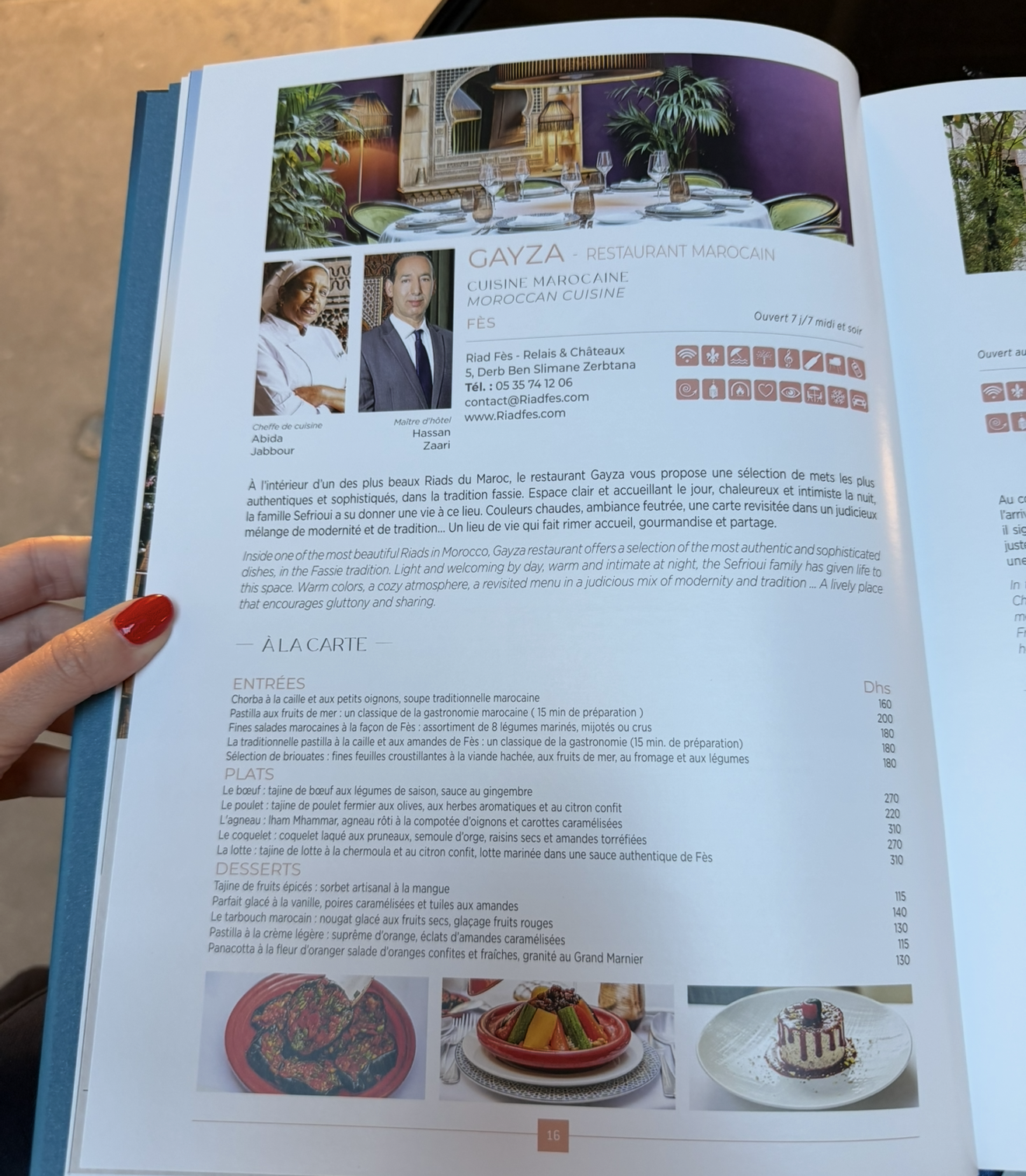
Gayza is Moroccan gastronomy at its most refined. The space itself is stunning: candlelight reflecting against deep greens and golds, mosaic columns, soft music floating through the air. The chefs reinterpret classic Moroccan dishes with care and artistry — delicate pastilla with warm cinnamon, fragrant lamb tagine with apricots, citrus-dressed salads, saffron-kissed harira, freshly baked breads served with olive oil and amlou.
Every plate felt intentional. Every flavor unfurled slowly, layered and rich. And the service was impeccable — the kind of attentive, elegant hospitality Morocco does so well.
After dinner, we made our way to the rooftop terrace — and that might be my favorite memory of Fes.
Rooftop Wine Tasting at Sunset — Morocco’s Secret Vineyards
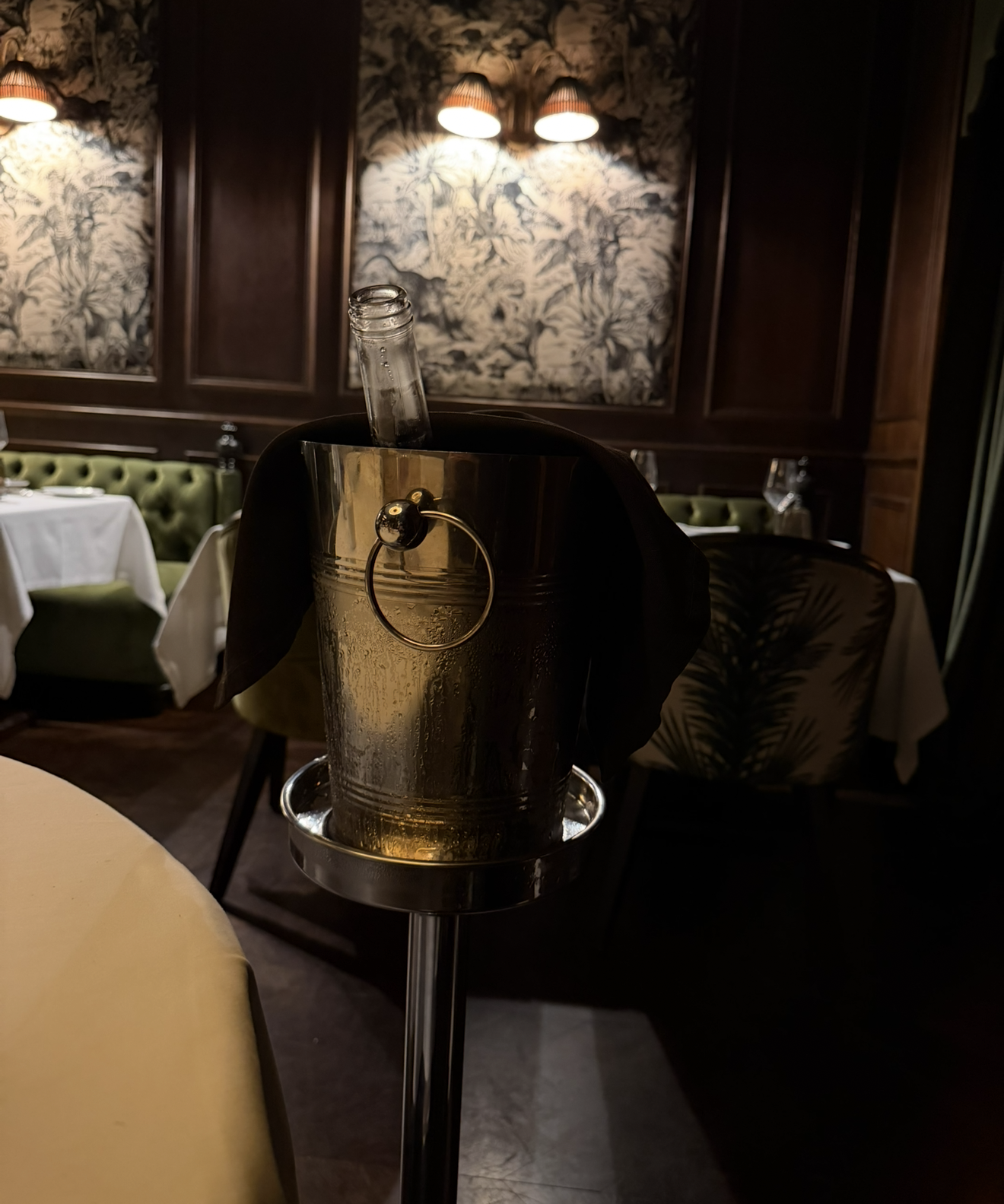
Moroccan wine is one of the country’s best-kept surprises. Regions like Meknes and the foothills near Essaouira produce incredible reds and rosés thanks to fertile soil and coastal breezes. Tasting wine on the rooftop of Riad Fes, with the entire medina glowing under the setting sun, felt like living inside a painting.
The call to prayer echoed over the rooftops as lights flickered on across the city. The air cooled, the sky turned rose-gold, and everything felt suspended in time for those few minutes. It was a welcome, a blessing, and a moment of stillness after days of movement.
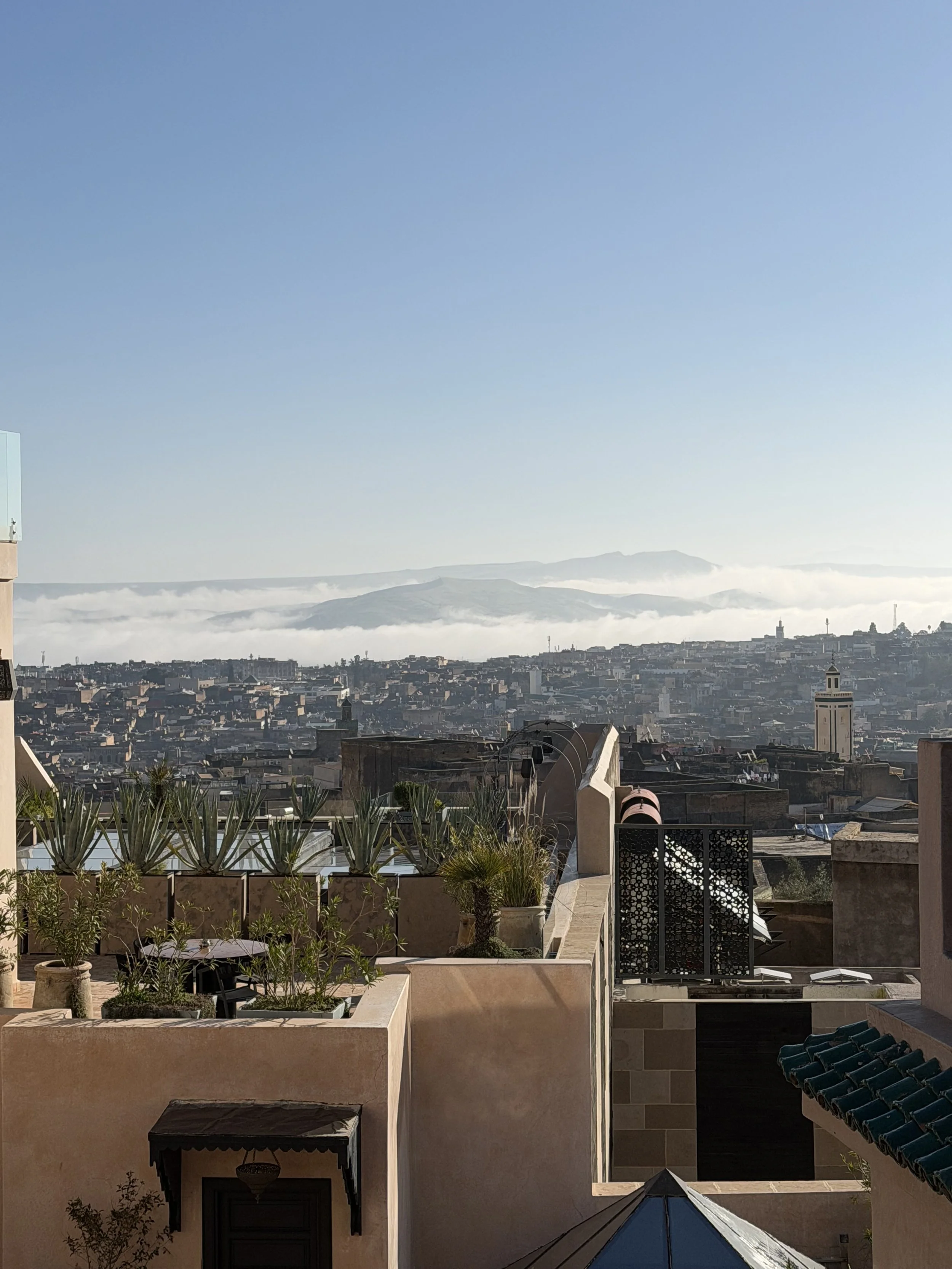
A view of Fes from the Calife Suite private terrace
Evening Hammam at Riad Fes — A Sacred Ritual
After a full day wandering the medina’s maze of tiles, textiles, and spice-scented alleyways, I treated myself to an evening hammam at Riad Fès — and it ended up being one of the most unforgettable wellness experiences of the entire trip.
I booked the Rituel Sublime de Polynésie for 1450 MAD (about $157 USD), a beautifully layered 90-minute journey that included:
Traditional Hammam – 20 minutes
A warm, fragrant steam that slowly melts away tension.Sublime Scrub with Monoï Noni – 20 minutes
A deeply exfoliating body scrub using a Polynesian infusion of monoï and noni for silky-smooth skin.Sublime Massage from Polynesia – 50 minutes
A flowing, rhythmic massage inspired by traditional Polynesian techniques that feels both grounding and luxurious.
Before the treatment even began, the therapist explained each step with a quiet confidence — the kind that makes you feel like you’re in expert hands.
A Moroccan hammam is more than a spa service. It’s a cultural ritual rooted in generations of tradition. Historically, hammams were communal bathhouses where neighbors gathered weekly to cleanse, exfoliate, and reconnect. Today, luxury Riads like Riad Fès carry that heritage forward in a private, serene setting.
Inside the hammam room, I was enveloped in warm steam scented with eucalyptus. There was the traditional savon noir (black olive soap), followed by an invigorating kessa glove exfoliation that left my skin glowing. Ghassoul clay from the Atlas Mountains was applied like a mineral-rich mask for the body, drawing out impurities while softening the skin. The treatment ended with a generous application of argan oil, sealing in moisture and leaving my skin impossibly soft.
When I walked out, I felt renewed — light, calm, and restored after days of dust, sun, and nonstop movement.
It wasn’t just a wellness appointment.
It was ceremony.
A moment of cultural immersion and deep care, wrapped in warmth, steam, scent, and tradition.
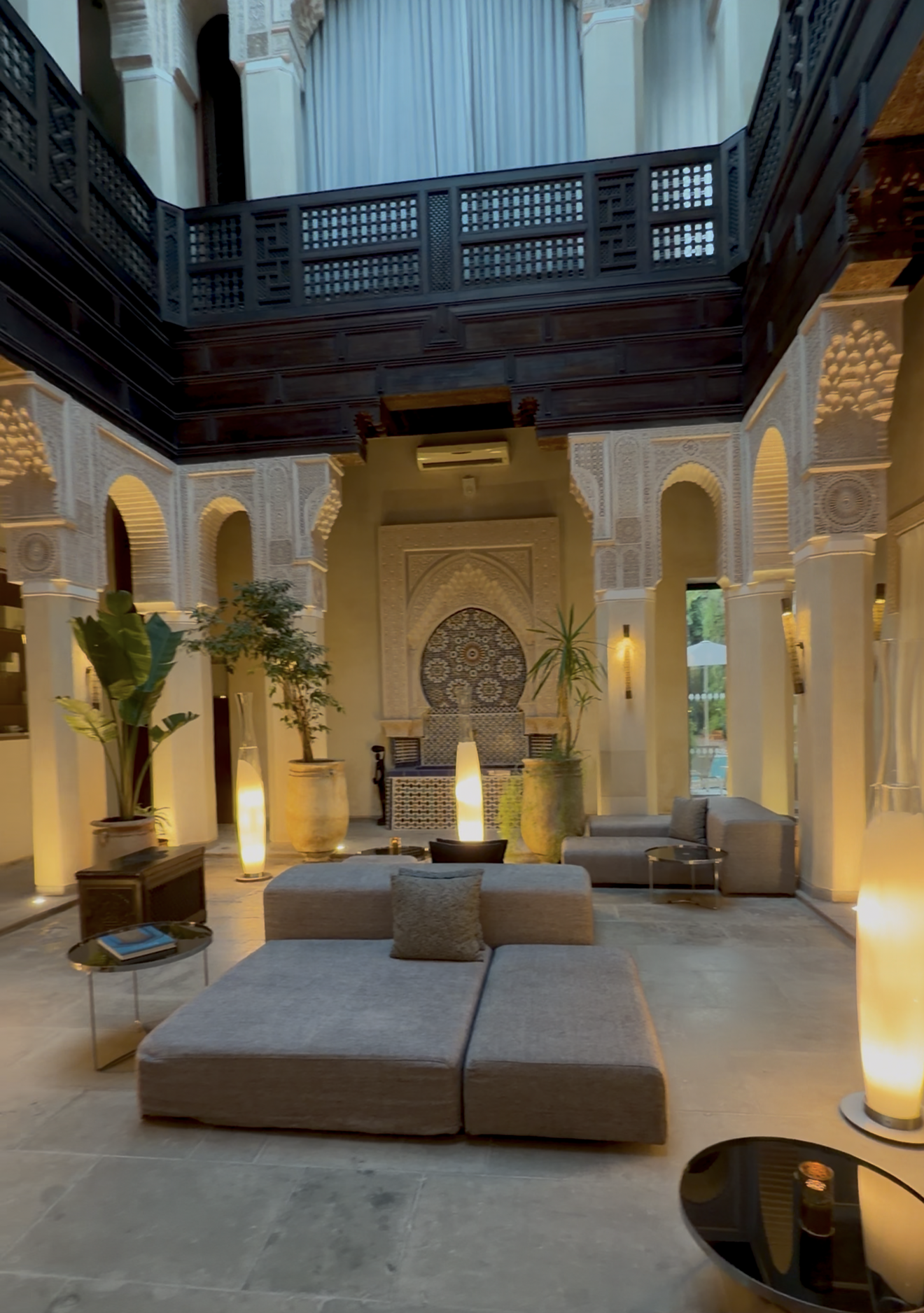
Hammam Spa Riad Fes
Custom Craftsmanship at Its Finest
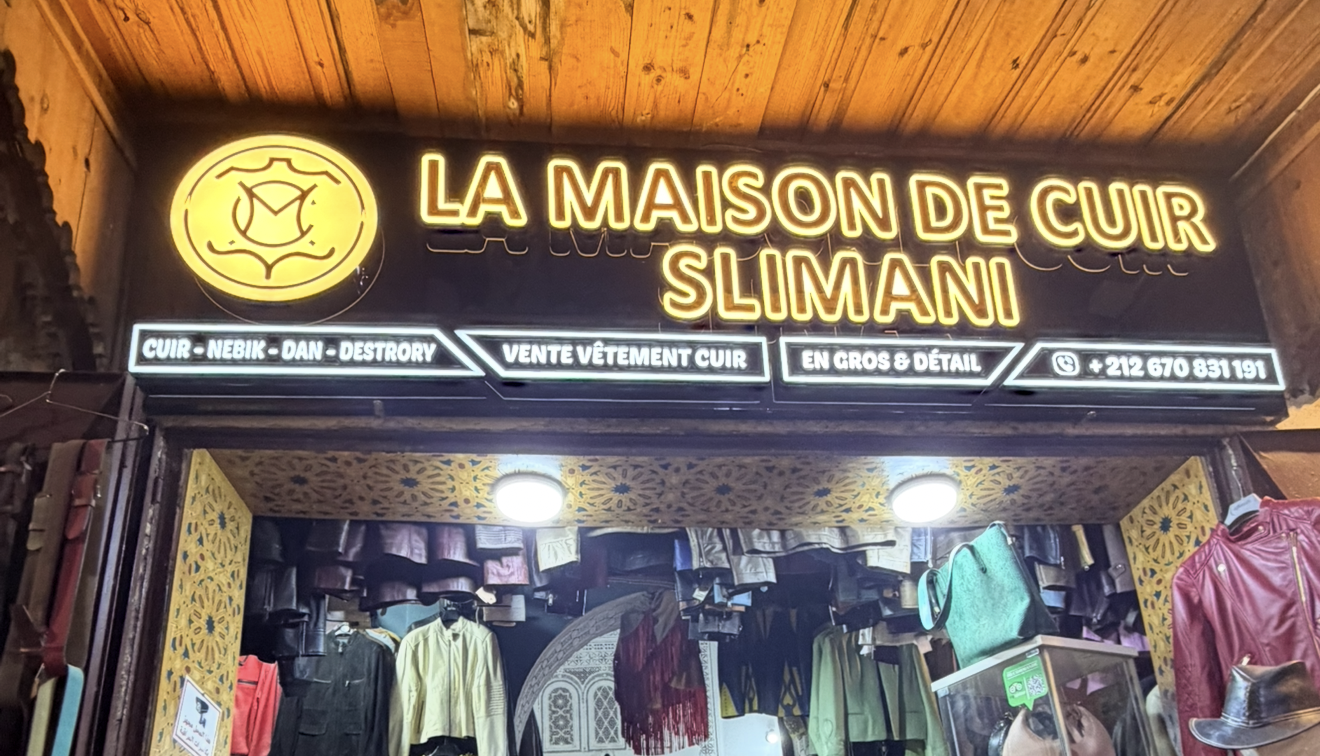
Our experience at La Maison du Cuir Slimani was easily one of the highlights of Fes. The store is easy to find and the selection is magnificent, with rows of beautifully crafted leather jackets in a wide range of styles, cuts, and colors. From the moment we walked in, Mohammed made the entire process seamless. He was clear, patient, and genuinely invested in making sure every detail was exactly right.
What stood out most was that I never once felt pressured or rushed. Mohammed and his team offered candid, honest feedback about fit, shape, and color, helping us choose what truly complemented our body type rather than simply agreeing with whatever we pulled off the rack. That level of guidance made the experience feel collaborative instead of transactional. Being measured for a custom leather jacket felt intentional and personal, rooted in true craftsmanship. The final product was stunning, buttery soft leather tailored perfectly and made with obvious pride. I truly cannot rave about Mohammed and his team enough. If you are considering a custom leather piece in Fes, this is absolutely the place to do it.
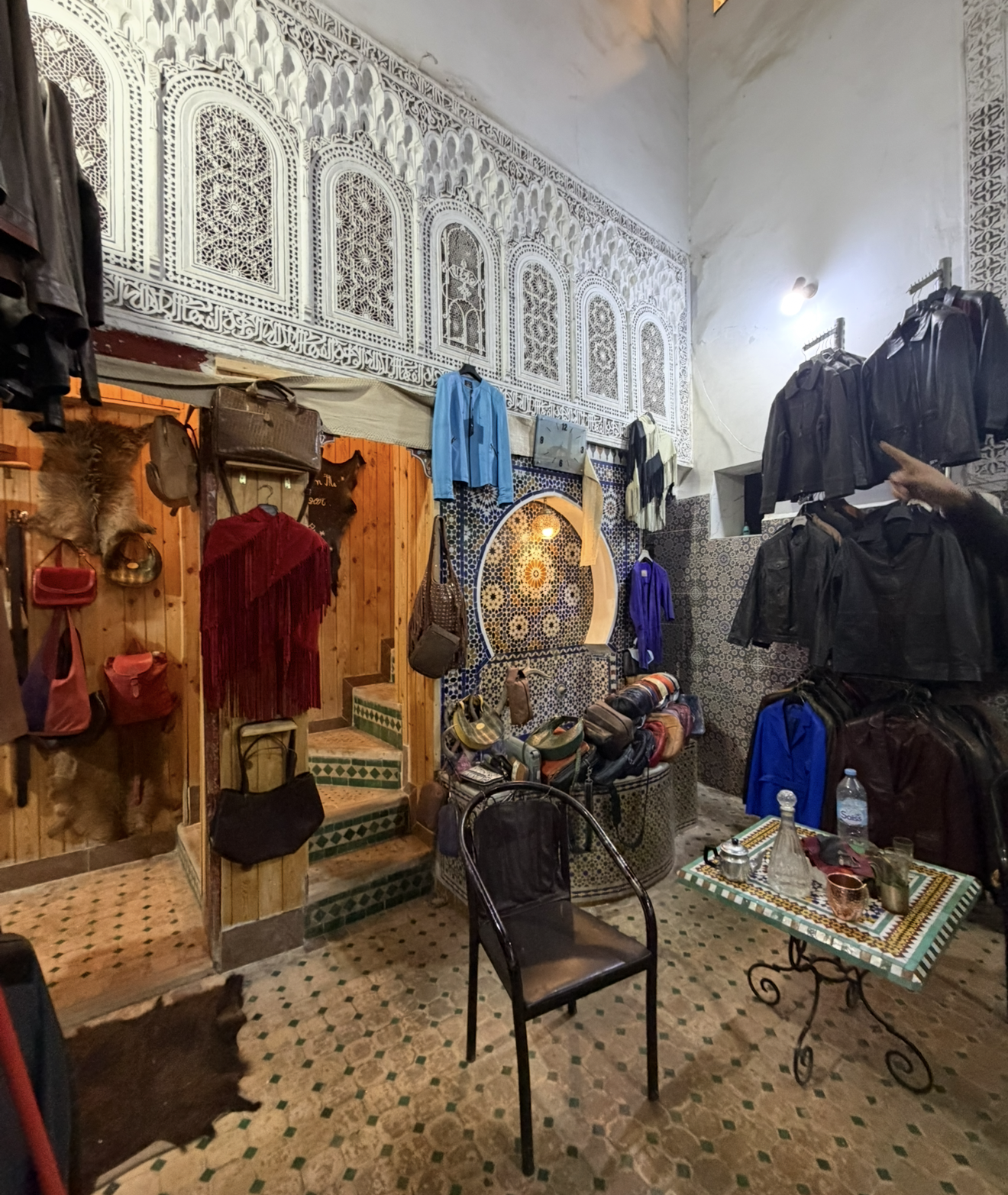
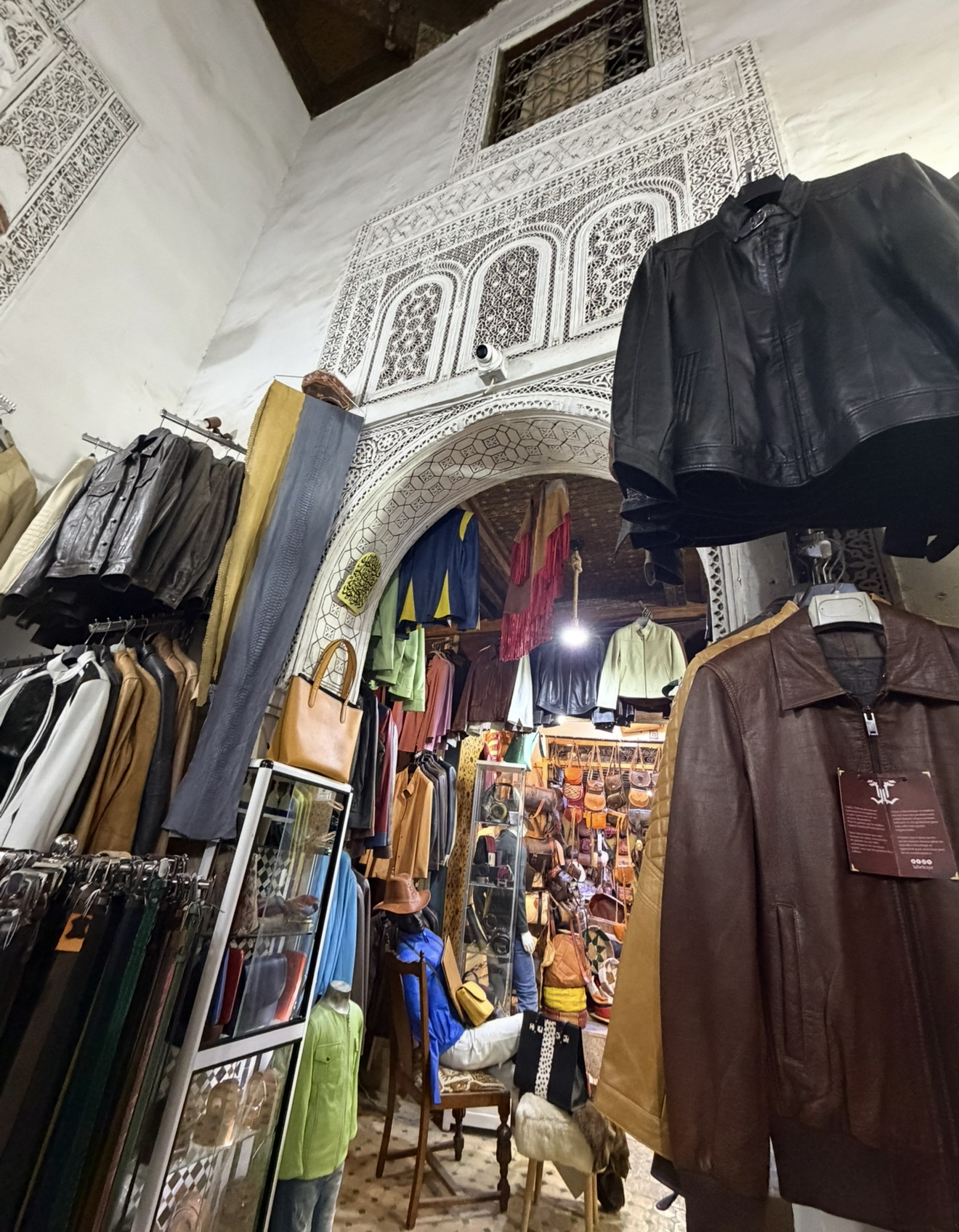
The Journey to Chefchaouen
The next morning, our driver arrived early for our private day trip to Chefchaouen. We knew the drive would be long — roughly three and a half hours each way — but the landscapes made every mile worthwhile.
As we headed north, olive groves unfurled across the hills, small villages dotted the roadside, shepherds guided their flocks, and the Rif Mountains slowly rose into view. Morocco changes personality every time you look out the window. That alone makes road travel here feel magical.
And then — suddenly — you see it.
Chefchaouen, nestled in the mountains, glowing blue against the green hills.
Even with only four hours in the city, it was absolutely worth the journey.
Chefchaouen — A Blue Dream in the Rif Mountains
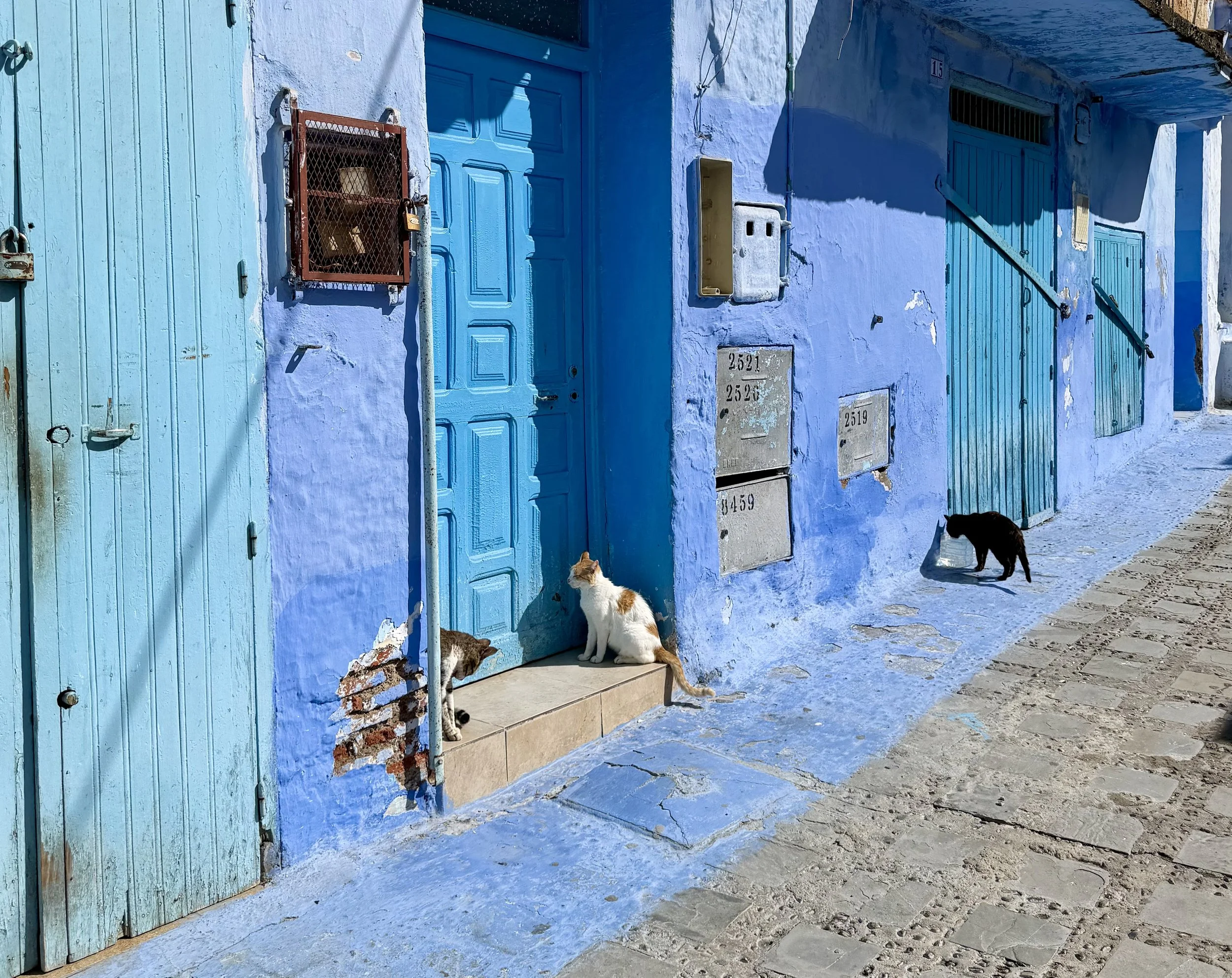
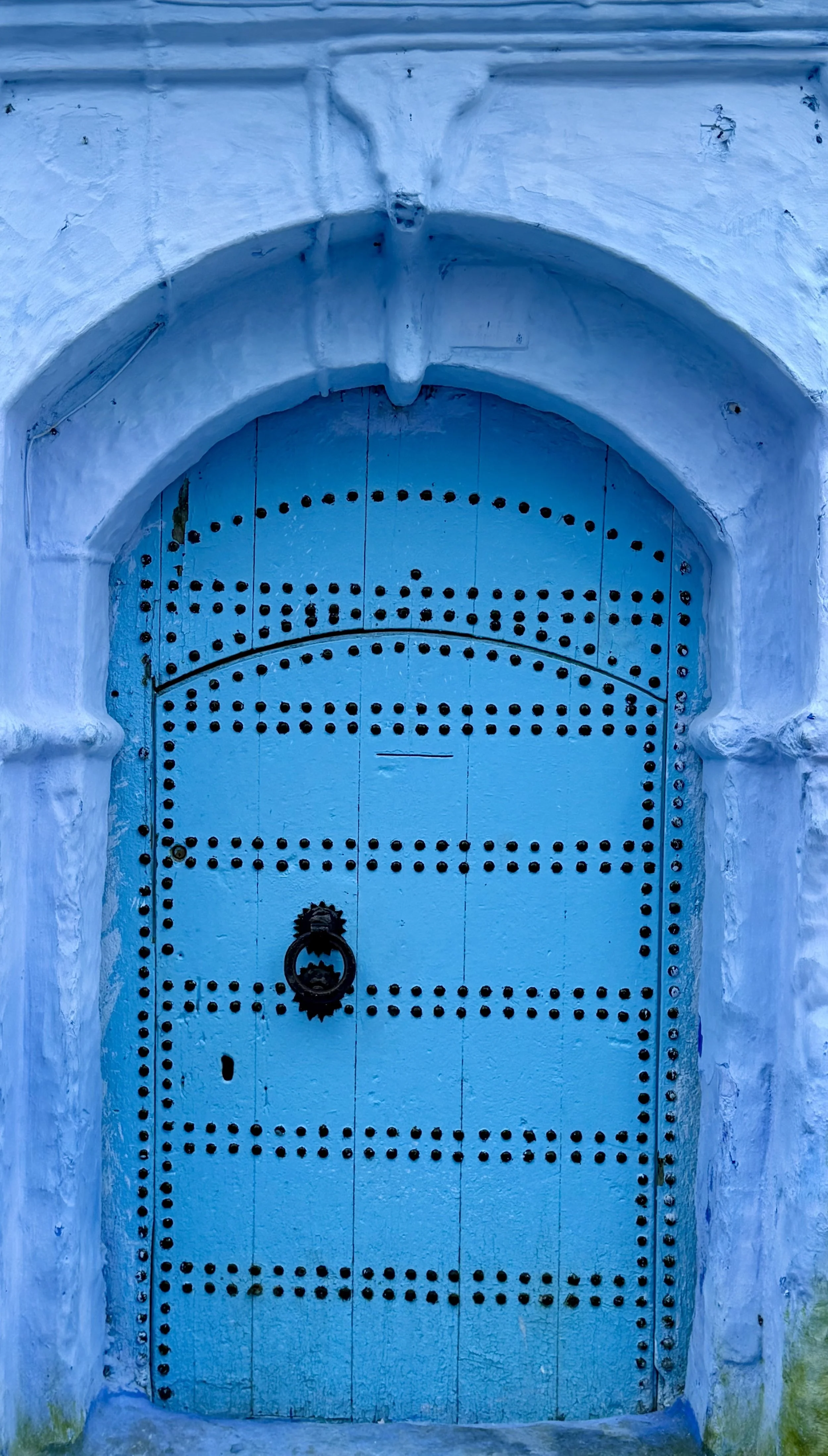
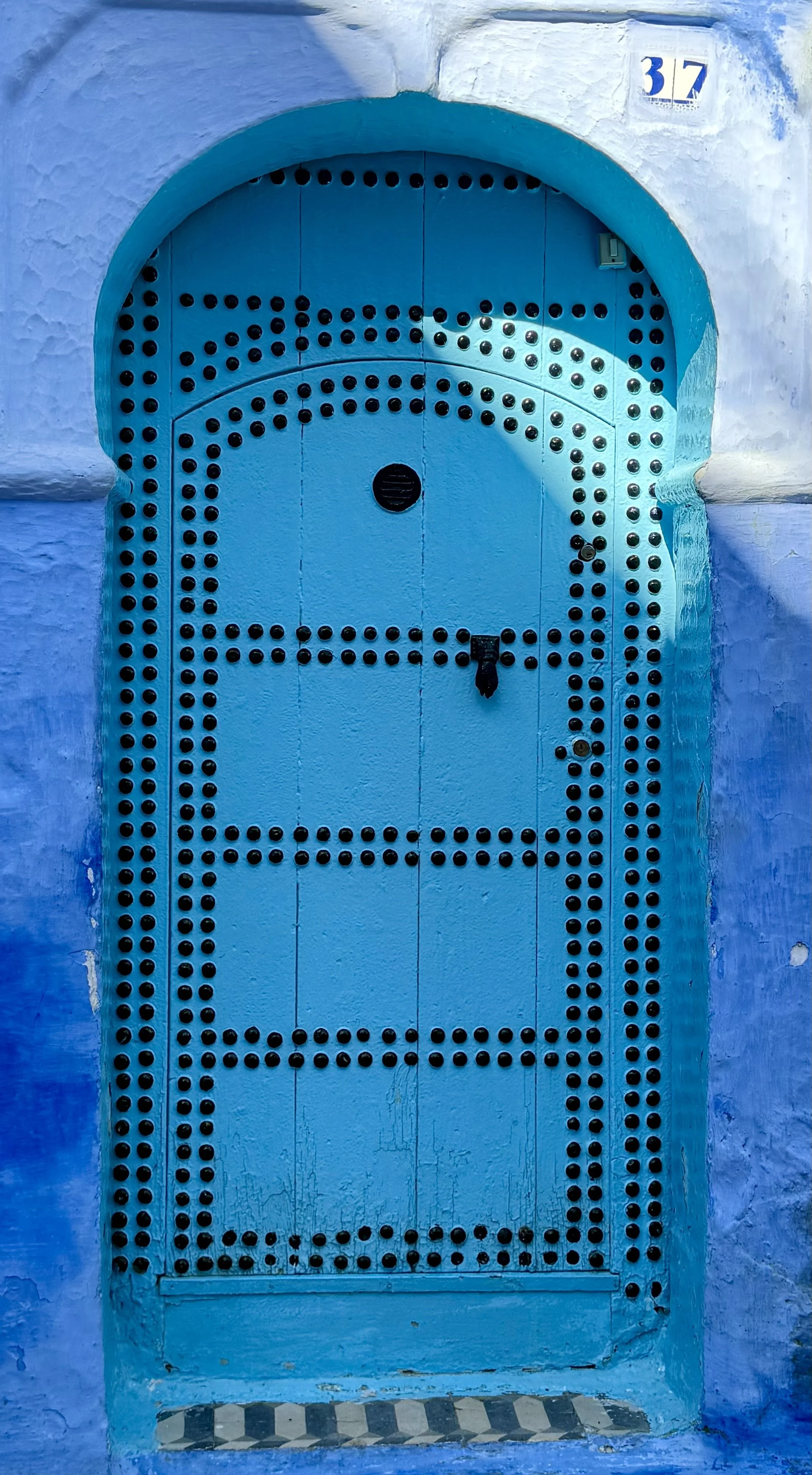
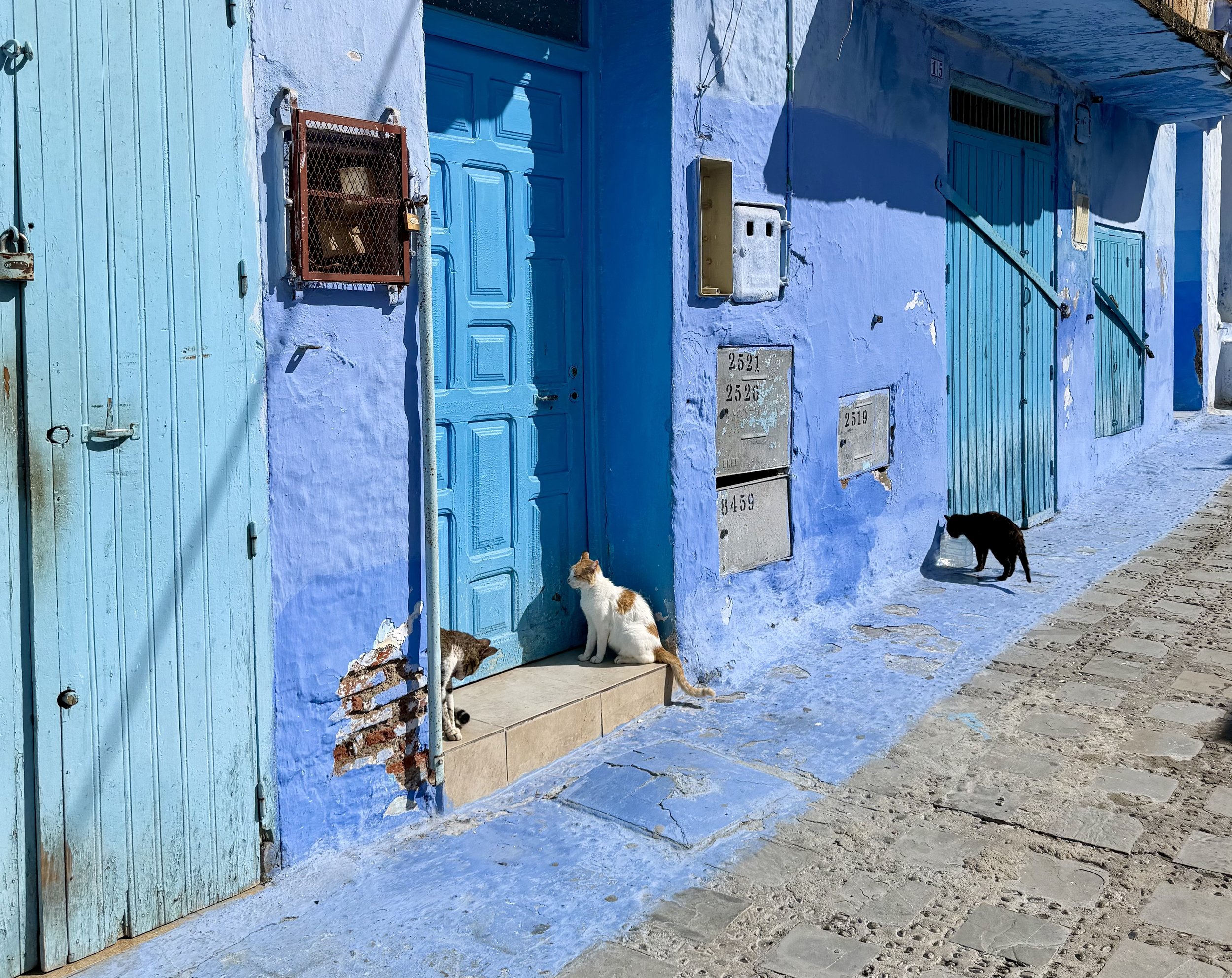
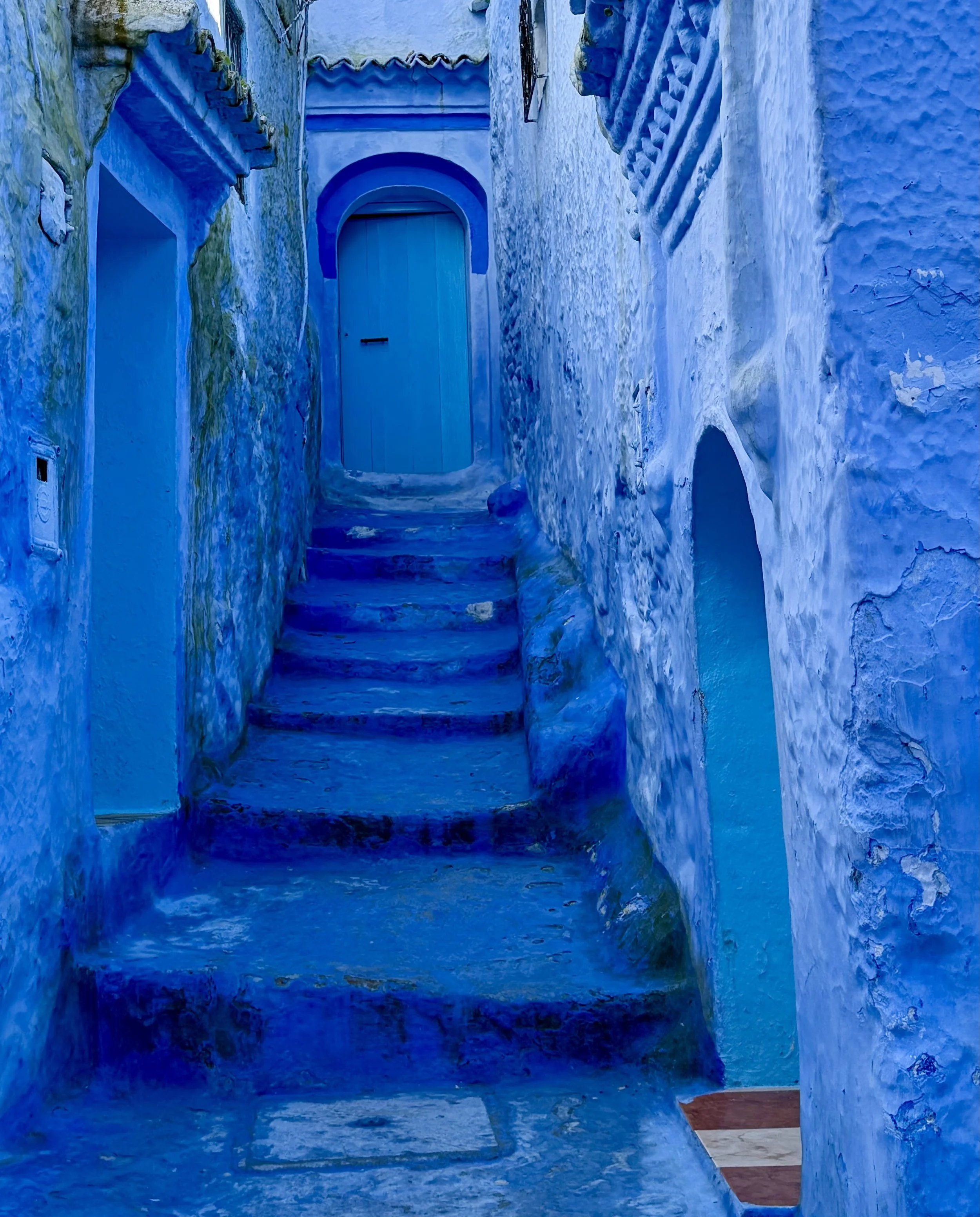
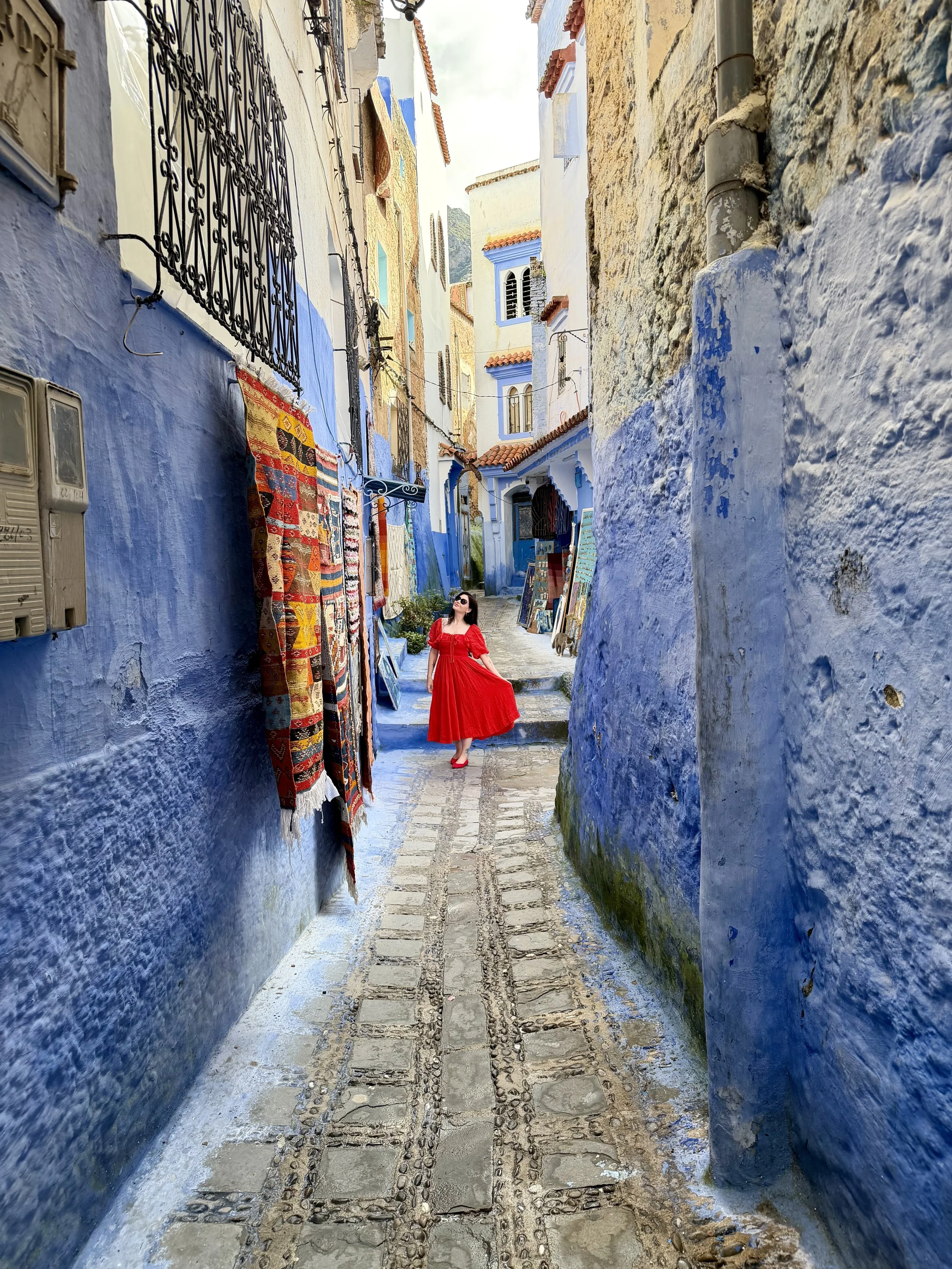
Chefchaouen is one of those destinations that feels unreal even as you’re standing inside it. The entire medina is painted in shades of blue — indigo, sky blue, turquoise, cobalt — an endless cascade of color wrapping every alley, staircase, and courtyard.
There are many theories behind the blue paint: that it symbolizes heaven and spiritual peace, that it repels mosquitoes, that Jewish refugees introduced it in the 1930s after fleeing the Spanish Reconquista. Locals say it doesn’t matter which version is true — what matters is that the blue brings calm.
And it really does.
In Chefchaouen, the pace slows. Cats lounge on sunlit steps. Women repaint their doorframes every spring. Merchants offer woven blankets and hand-embroidered garments without pressure or hassle. The souks here are gentle, warm, and friendly — unlike the intensity of larger cities.
We wandered the winding paths, stopping constantly to take photos, admire textiles, sip mint tea, and breathe in the fresh mountain air. Even in four hours, the city left a lasting imprint.
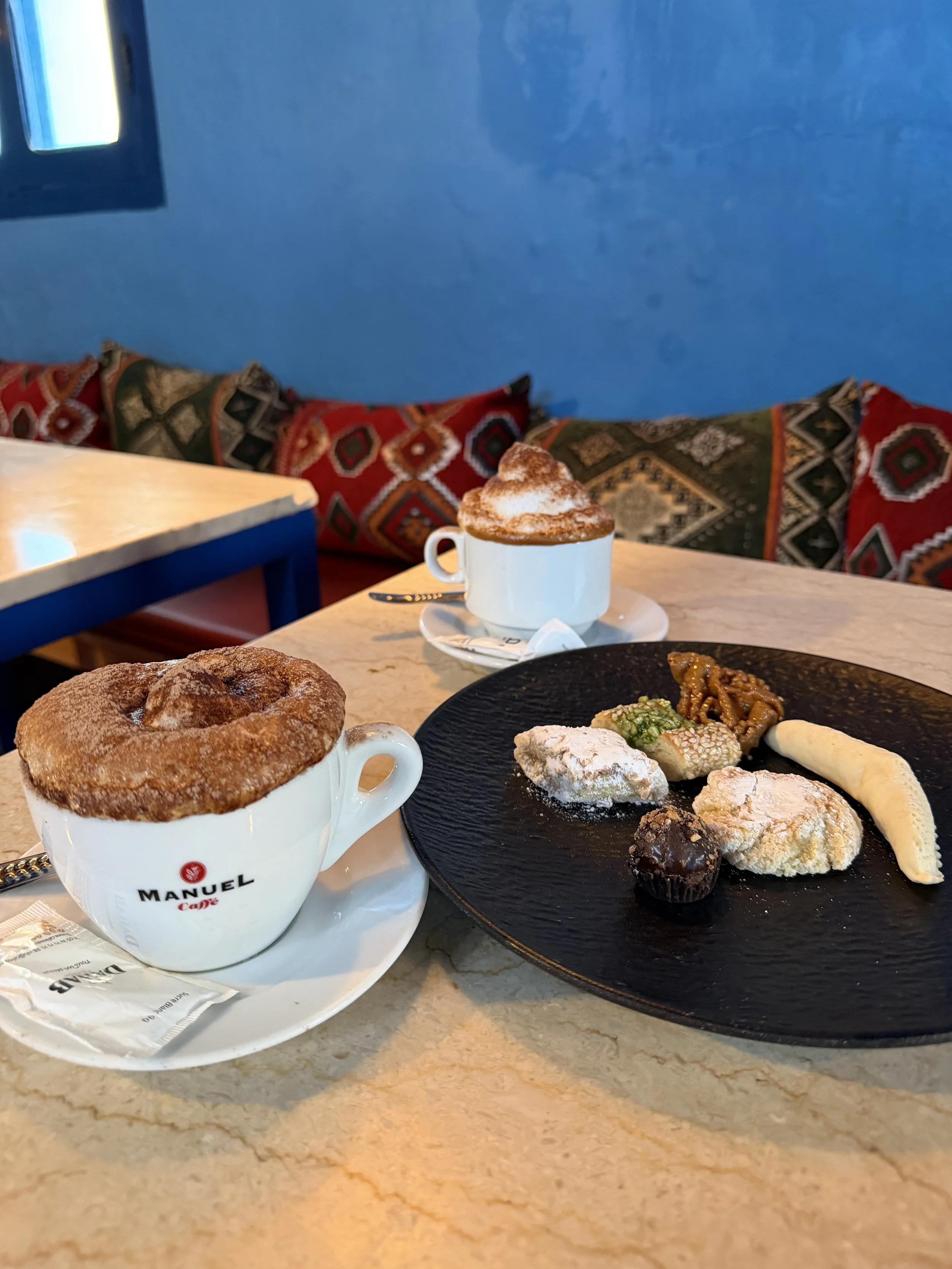
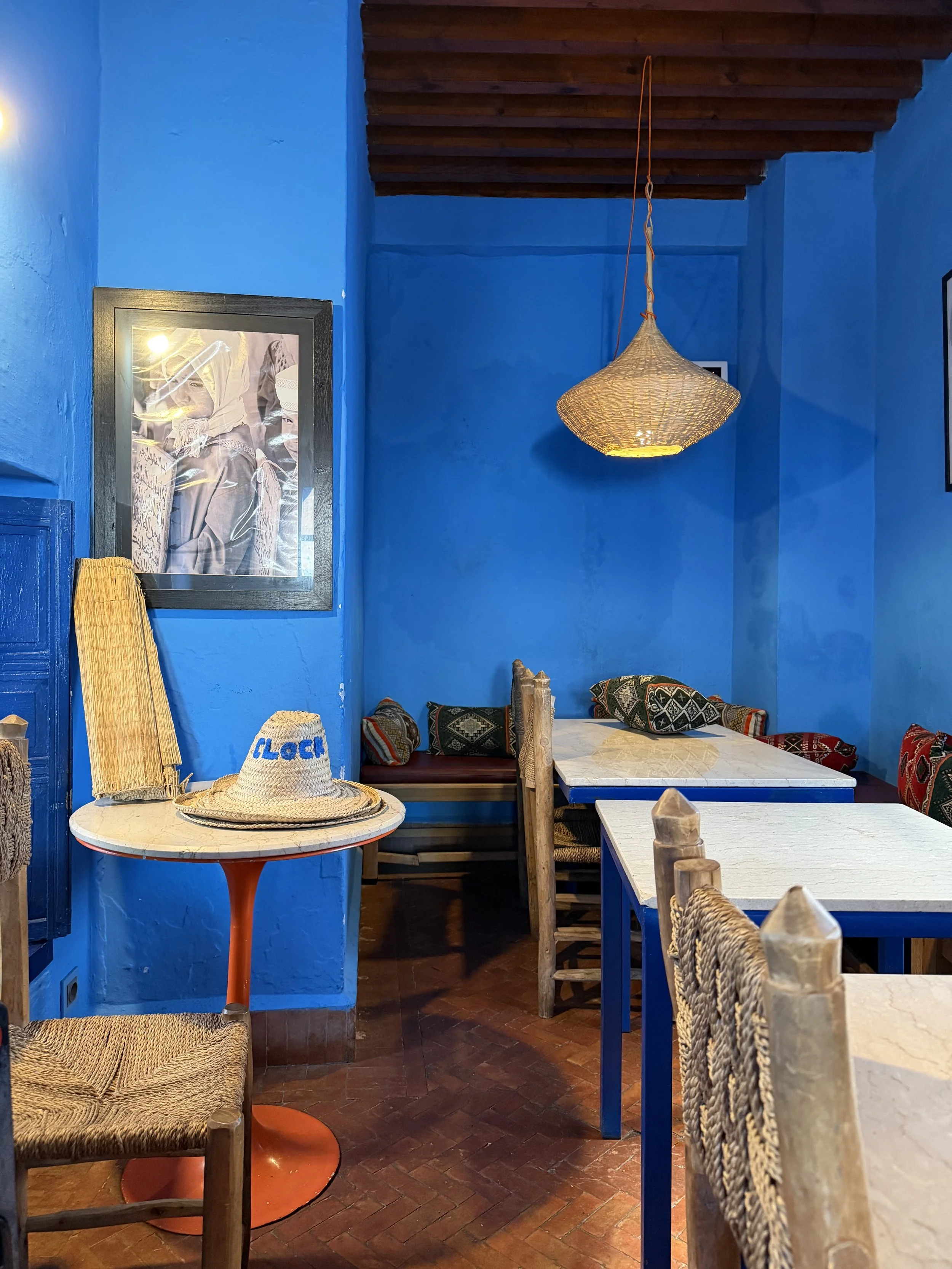
Cafe Clock
Cafe Clock in Chefchaouen was one of those spots we loved so much we went twice in one day. The first visit was for a slow morning cappuccino paired with Moroccan pastries — flaky, lightly sweet, and perfect with strong coffee while sitting above the blue-washed streets. It was the ideal pause between wandering the medina’s winding alleyways. We ended up coming back for lunch because the vibe was just that good. I ordered the vegetarian sampler, which was colorful, flavorful, and packed with traditional Moroccan salads and dips, while my husband had the chicken sandwich — hearty, well-seasoned, and exactly what you want after climbing Chefchaouen’s hills. The atmosphere is relaxed and creative, with rooftop views that let you soak in the blue city from above. It felt comfortable, welcoming, and like a little home base in the middle of all that color.
A Day Immersed in the Souks of Fes
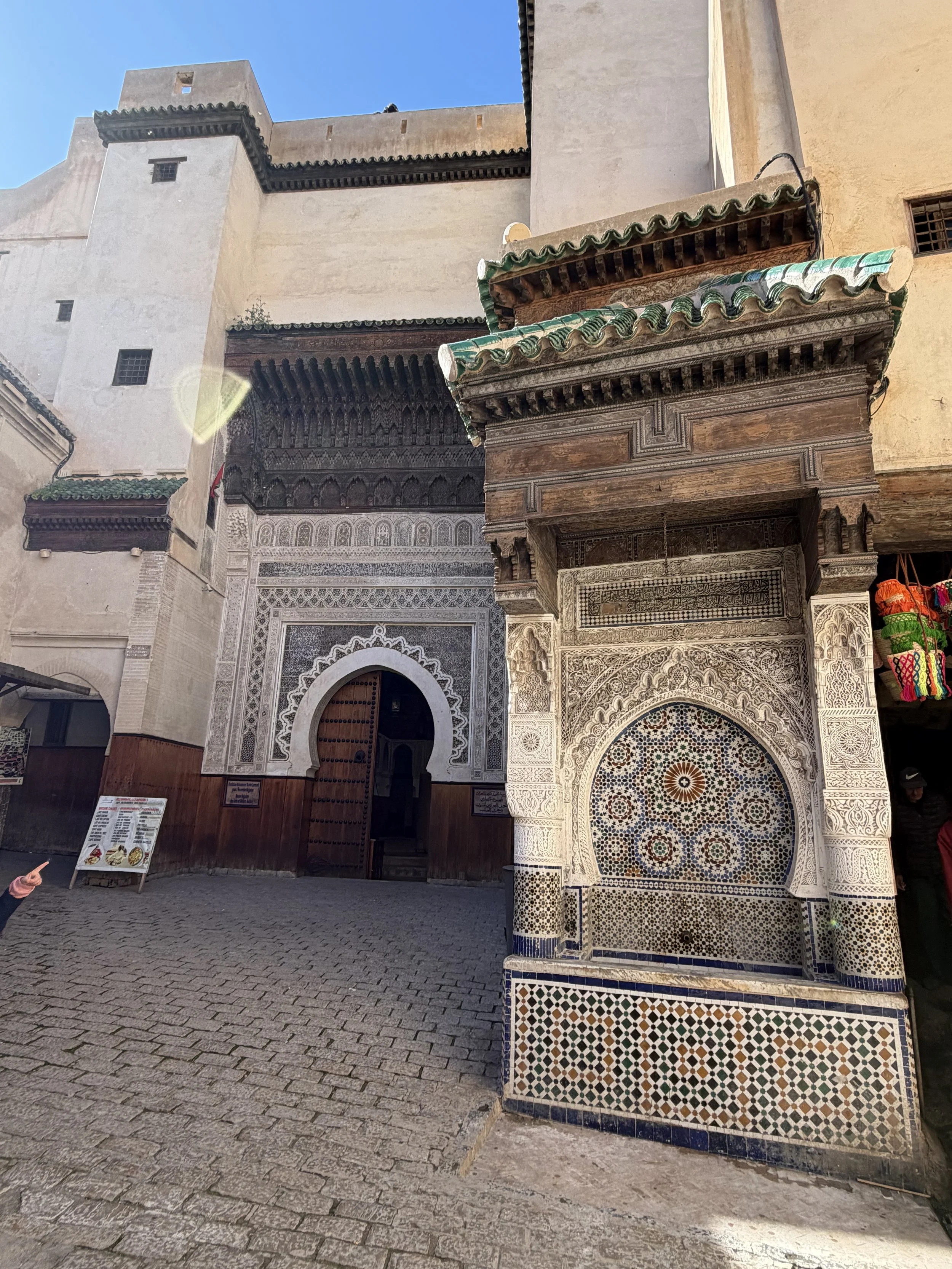
Back in Fes, we devoted the entire day to exploring the medina — one of the largest car-free urban areas in the world. More than 9,000 alleys twist and turn through neighborhoods that have existed since the 8th century, and every corner reveals a different layer of this ancient, complicated, endlessly fascinating city.
It is impossible not to get lost.
But getting lost is the entire point.
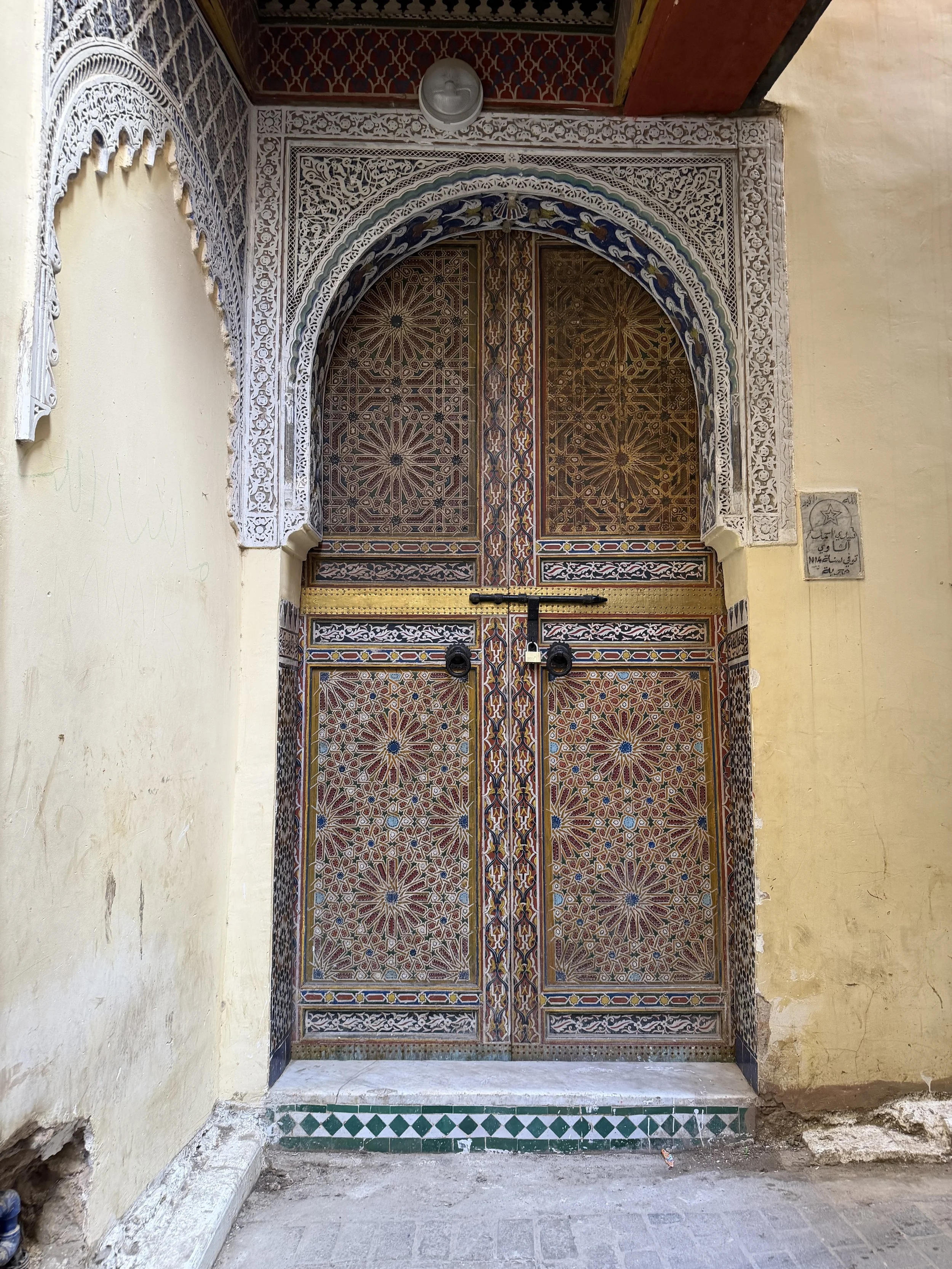
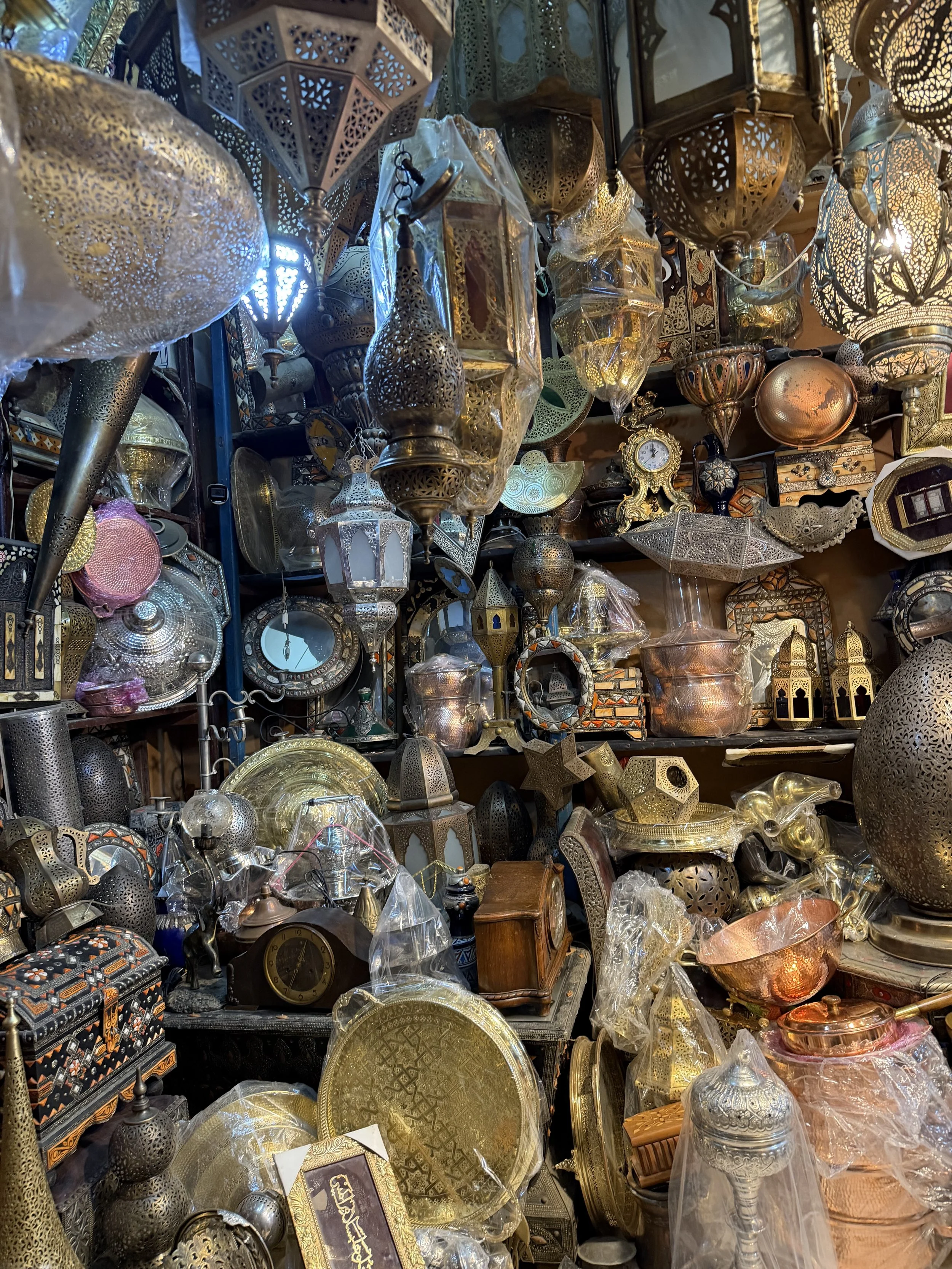
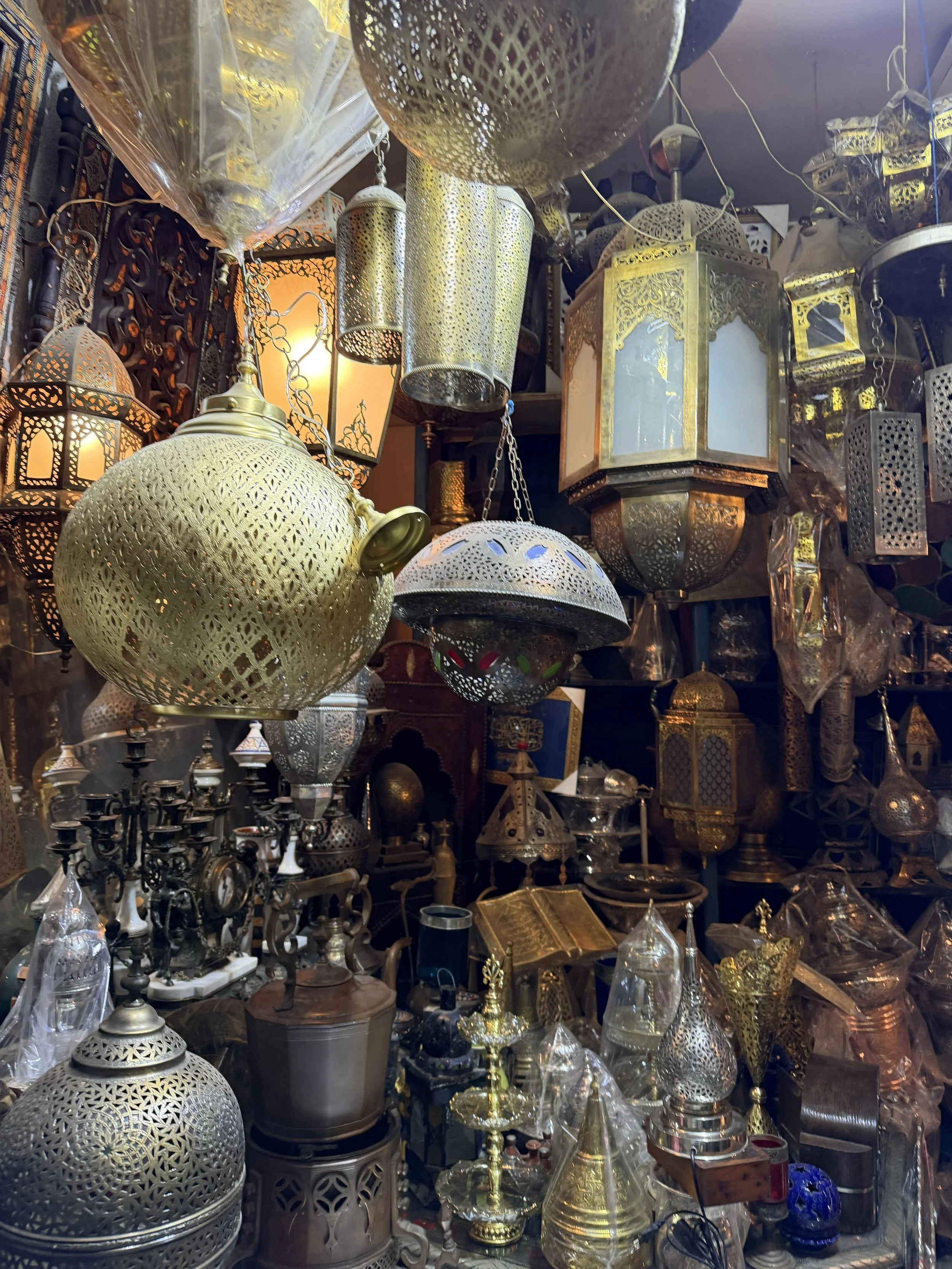
Fes is a living museum, but not in a curated or artificial way. This is real life — artisans hammering brass by hand, potters shaping cobalt-blue ceramic bowls, weavers creating silk scarves on ancient wooden looms, woodworkers carving intricate cedar panels, spice merchants scooping saffron and cumin from glowing pyramids of color. Fes has been a center of artistry for more than a millennium, and craftsmanship here is not a performance for tourists — it is a heritage passed down through generations.
The tannery district is the most famous of all and has operated the same way for more than a thousand years. Stone vats, natural dyes, hides drying in the sun — it’s raw, intense, and mesmerizing. Yes, the smell is strong, but this is the birthplace of some of the highest-quality leatherwork in the world. Fes is known for its custom leather jackets, bags, babouches, and belts, and this was the perfect place to start the search for a piece we’d keep forever.
But leather is only one part of Fes’ artistic identity.
The city is also famous for:
Fassi blue ceramics, hand-painted with cobalt patterns
Zellige tilework, where artisans cut tiny geometric tiles by hand
Brass and metalwork, hammered into trays, lanterns, and tea sets
Calligraphy and bookbinding, tied to Fes’ scholarly history
Fine textiles, including silk, brocade, and traditional jellabas
Cedar wood carving, used in Riad architecture and decorative screens
Every craft has its own souk, its own rhythm, its own soundtrack of hammers, chisels, brushes, looms, and the soft hum of generations at work.
And then there’s the food, because Fes is widely considered the culinary capital of Morocco. The city is especially known for pastilla, the iconic sweet and savory pie layered with spiced poultry, almonds, cinnamon, and saffron, wrapped in delicate pastry and finished with a dusting of powdered sugar. It perfectly captures the complexity of Moroccan cuisine. We snacked our way through the medina on harira, sfenj doughnuts, fresh juices, and warm msemen cooked right on the street. The scents of orange blossom, grilled meat, cinnamon, saffron, and honey drifted through the alleys like a trail you willingly follow, pulling you deeper into the rhythm of the city.
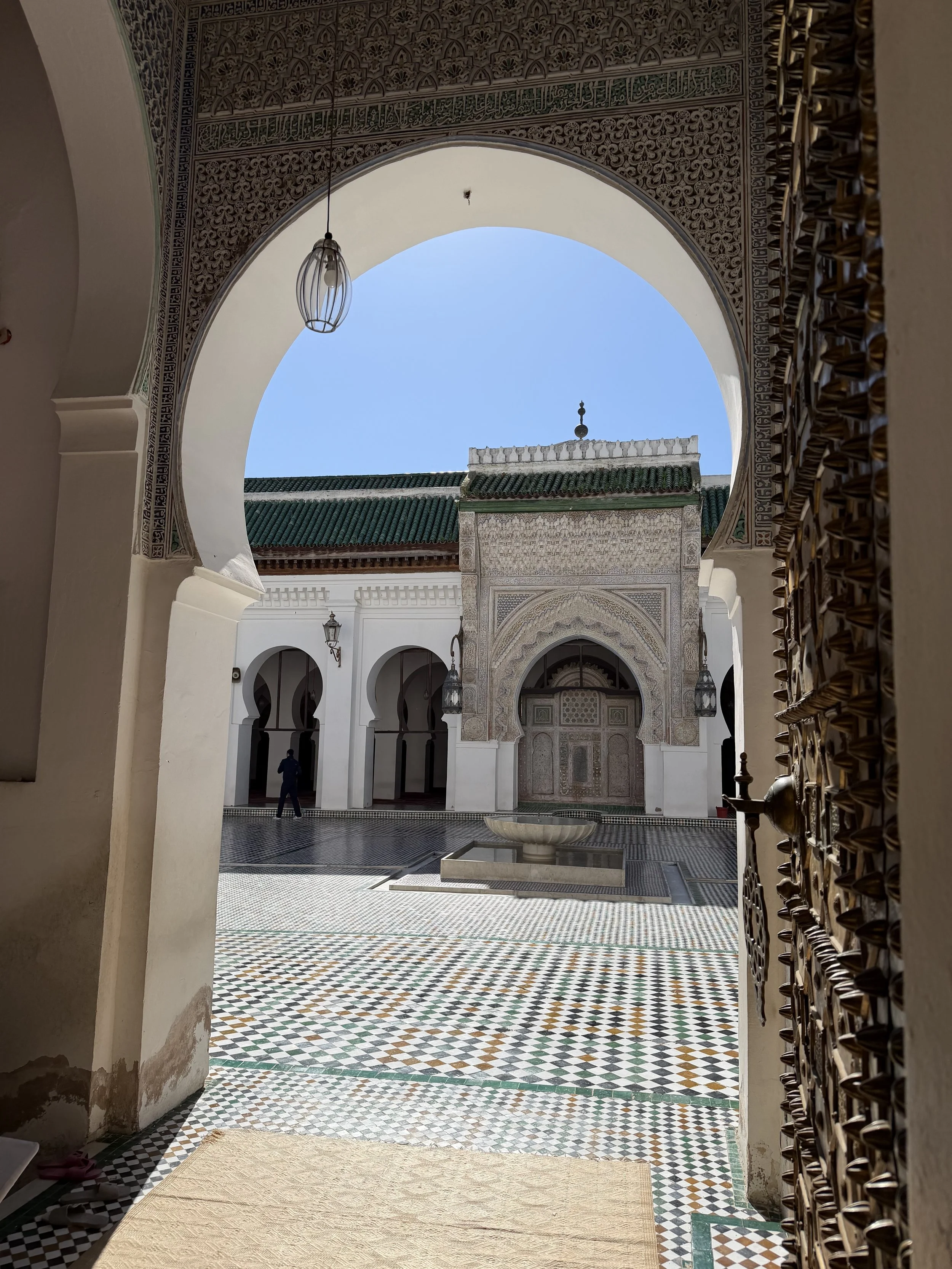
Between the chaos of stalls and the calm pockets of courtyards and mosques, the city’s spiritual and educational legacy is everywhere. Fes is home to Al-Qarawiyyin, the oldest continuously operating university in the world, as well as iconic madrasas like Bou Inania and Al-Attarine — masterpieces of carved cedar, marble, and green-tiled courtyards.
We shopped, wandered, photographed, learned, bargained, and — more than once — simply stopped in place to absorb the sensory overload of one of the world’s oldest, most storied medinas. Fes is not a place you observe from the outside. It pulls you in, wraps you in color and sound, and insists that you experience it fully.
It’s chaotic, beautiful, historic, overwhelming, and unforgettable — everything you dream a city like Fes will be.
Ramadan Begins — Observing a Sacred Shift
Ramadan began during this part of the trip, and seeing it unfold across rural Morocco was incredibly moving.
We observed:
Guides and drivers fasting from dawn to sunset
Roadside cafés closing midday
Families preparing food for the evening
The quiet hush before sunset
The joyful energy of iftar
Tea, dates, and harira soup marking the day’s end
Respect is key during Ramadan:
Avoid eating or drinking visibly in public
Be patient with service
Ask questions — locals are often eager to share
Ramadan brought a peaceful, reflective layer to the journey that I didn’t expect but deeply appreciated.
One of the most beautiful parts of traveling during Ramadan was how warmly simple gestures were received. Saying “Ramadan Mubarak” or “Ramadan Kareem” was met with genuine smiles and enthusiastic responses. It was such a small effort on my part, but it opened doors to conversations and connection. Many locals were excited to explain their customs and traditions, especially around Iftar. They proudly described the sweet cookies prepared for the evening meal, the comforting soups like harira that break the fast, and the way families gather each night in celebration. It reminded me that cultural respect is not complicated. A little curiosity and kindness go a long way.
Boarding the Train to Rabat
The next morning, after one final breakfast in the courtyard, we made our way to the station and boarded the train to Rabat. The ride was smooth, scenic, and calm — a welcome transition from the deep history of Fes toward the coastal elegance of Morocco’s capital.
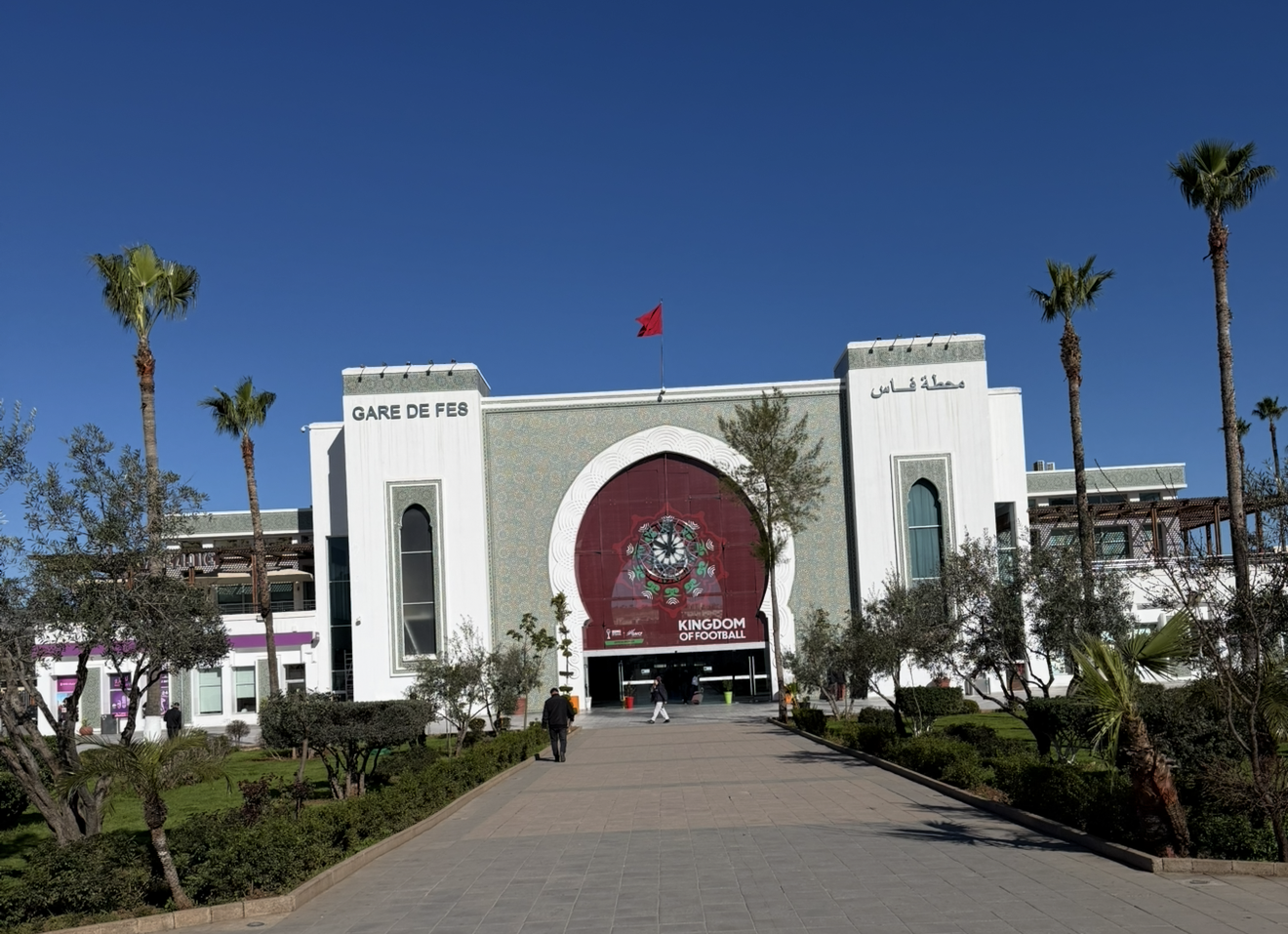
The Fes Train Station
Rabat would turn out to be completely unexpected — modern, clean, ocean-scented, and beyond beautiful.
That story unfolds in Part Four, the final chapter of our Moroccan journey.
Dive safe, explore passionately, and remember…