Manta Ray Night Dive in Kona: One of the Most Incredible Dives on Earth
A Dive You'll Never Forget
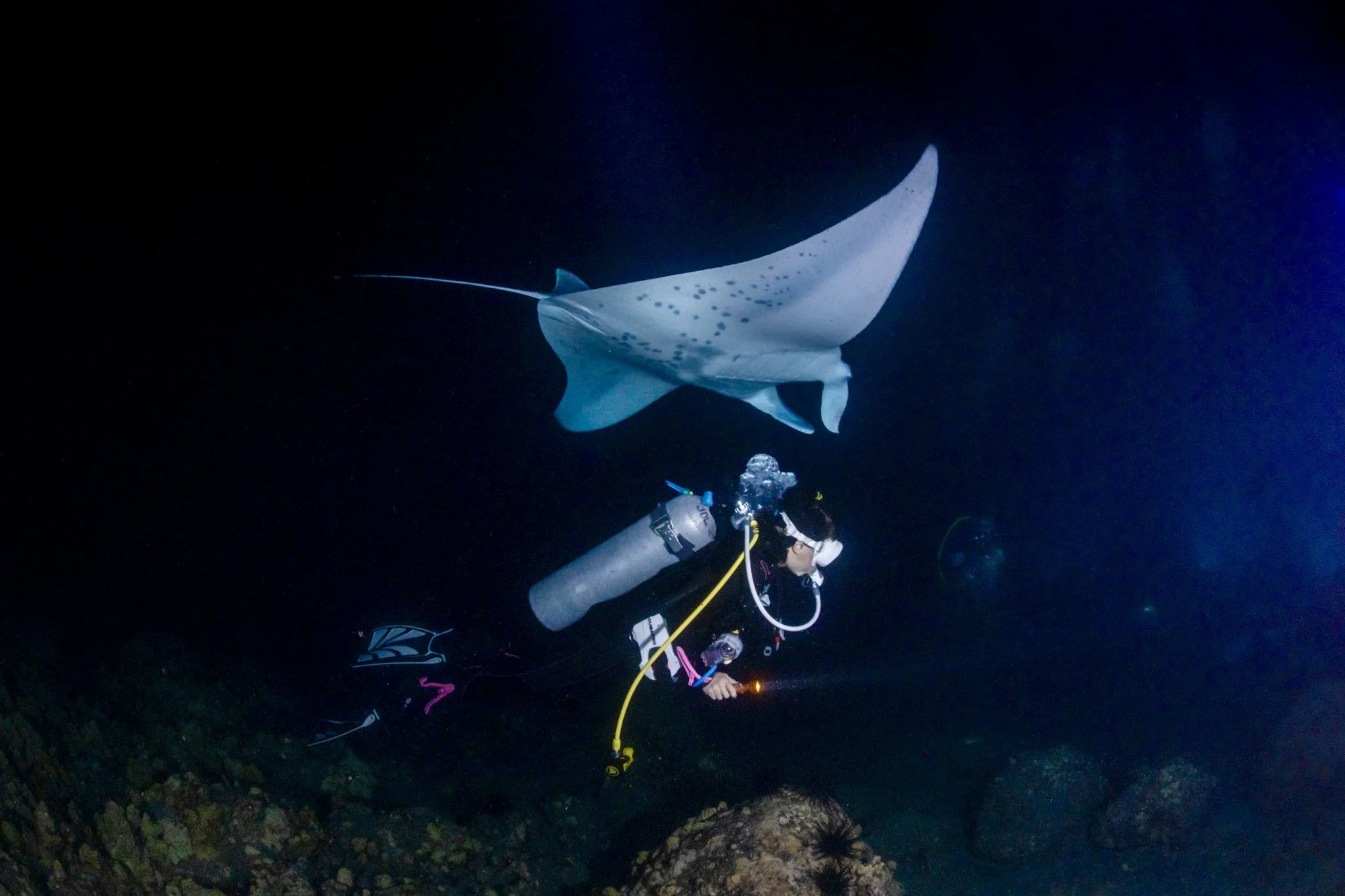
Some dives stay with you because of the reef. Others because of the wreck, the visibility, or the sheer number of fish. The manta ray night dive in Kona is different. This is one of those rare experiences that feels almost unreal from the moment the first giant silhouette emerges from the darkness.
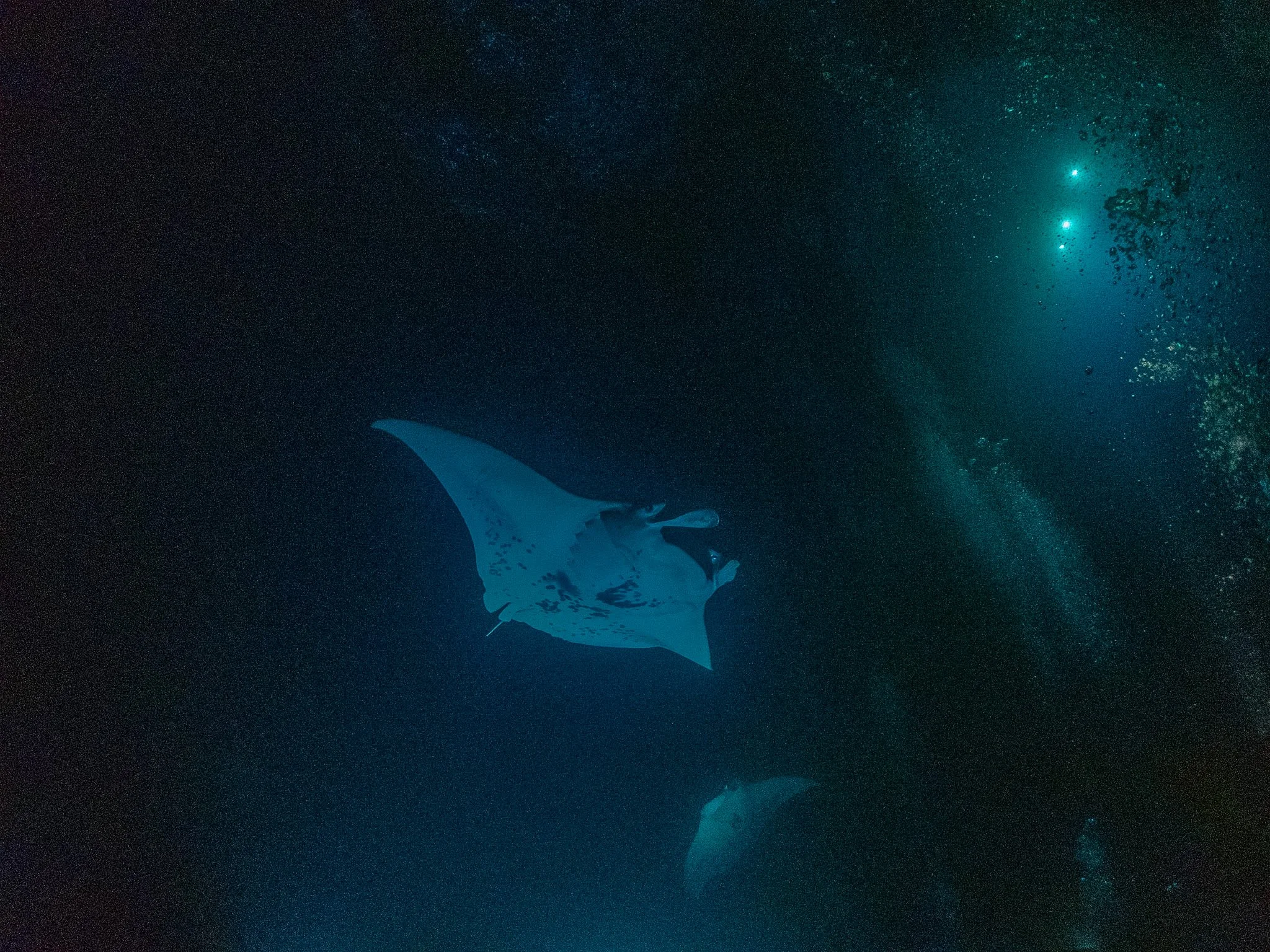
The first time I watched a manta ray glide overhead, I completely forgot I was underwater. One moment I was staring into a column of light filled with tiny plankton. The next, a giant manta appeared, effortlessly soaring through the beam before rolling gracefully onto its back to scoop up another mouthful of food. Within minutes another manta joined, then another, each moving with an elegance that seems impossible for an animal with a wingspan stretching well over 10 feet.
After diving all over the world, this remains one of my absolute favorite underwater experiences.
The best part is that every dive feels different. Some nights a single manta steals the show. Other evenings you'll find yourself surrounded by several individuals performing barrel rolls just inches overhead. No matter how many times I do this dive, I still catch myself smiling into my regulator.
Why Kona Is Famous for Manta Rays
Wildlife encounters are rarely predictable. That's part of what makes them so exciting. Whale sharks, dolphins, and even humpback whales often require a little patience and a healthy dose of luck.
Kona's manta ray night dive is one of the exceptions.
The west coast of Hawaiʻi Island is home to a resident population of reef manta rays (Mobula alfredi) that return to the same feeding areas night after night. Rather than searching the ocean for these gentle giants, divers simply settle onto the sandy bottom or reef and wait for the mantas to arrive.
The secret is surprisingly simple.
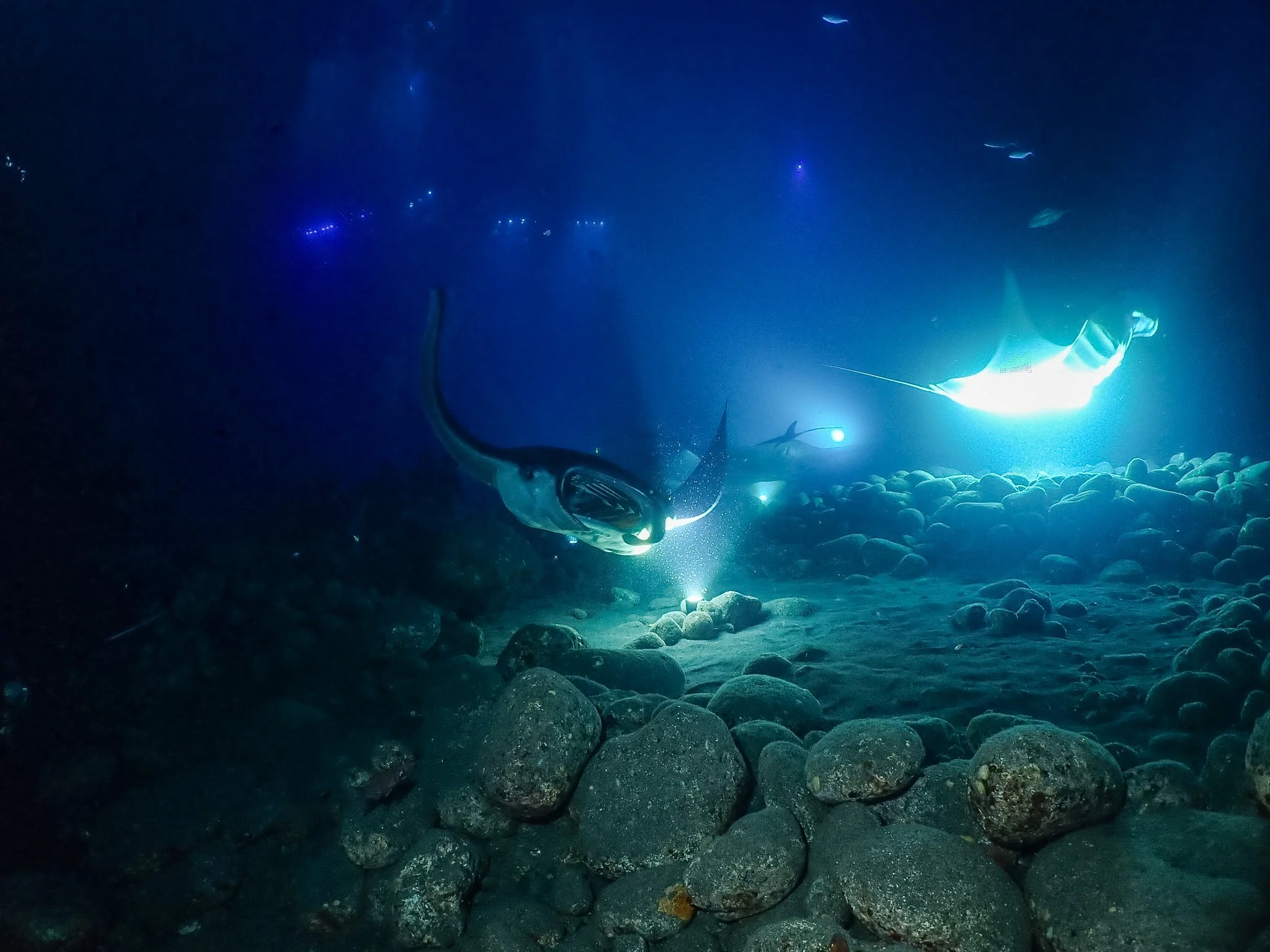
Powerful underwater lights attract enormous concentrations of plankton, tiny drifting organisms that make up the manta rays' favorite meal. As the plankton gathers in the beams of light, the mantas begin gliding through the illuminated water, performing graceful loops and barrel rolls as they filter thousands of gallons of seawater through their mouths.
One of my favorite things about this dive is that the mantas aren't there because of the divers. They're there because of dinner. We simply get a front-row seat to one of nature's most spectacular feeding behaviors.
How the Manta Ray Night Dive Began
One of my favorite parts of the Kona manta story is that nobody set out to create one of the world's most famous dives. This experience happened almost entirely by accident.
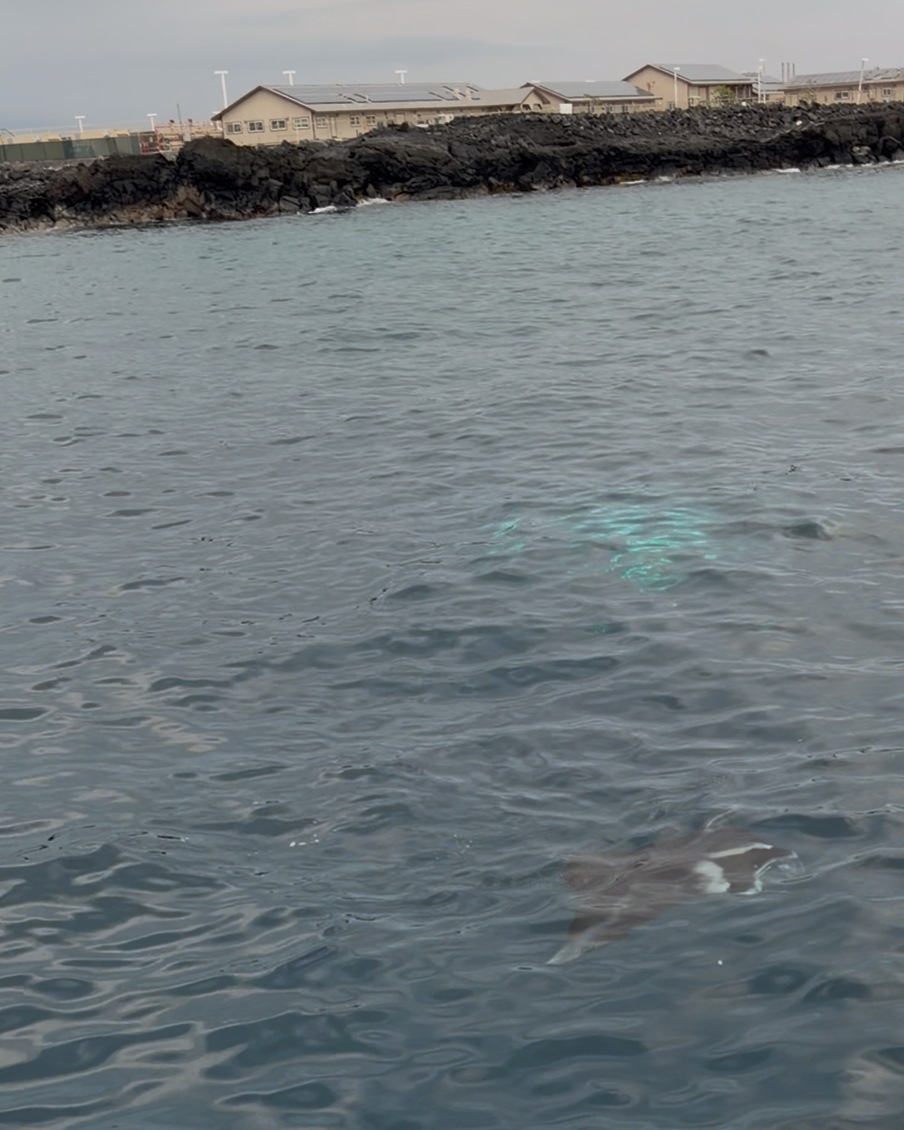
Back in the late 1970s, a hotel along the Kona Coast installed bright floodlights that illuminated the ocean each evening for guests. The lights attracted swarms of plankton, and before long, local manta rays figured out there was an easy meal waiting for them after sunset.
Guests began gathering along the shoreline to watch the incredible spectacle unfold. As word spread, divers realized they could experience the same behavior underwater, and what started as a happy accident eventually evolved into the manta ray night dive that has become famous around the world.
Today, there are a handful of well-established manta dive sites along the Kona Coast, each offering the chance to witness this remarkable feeding behavior. While the locations may differ slightly, the experience remains the same: sitting quietly beneath a glowing column of light while giant manta rays dance effortlessly overhead.
Few wildlife encounters anywhere in the world have developed so naturally or become so iconic.
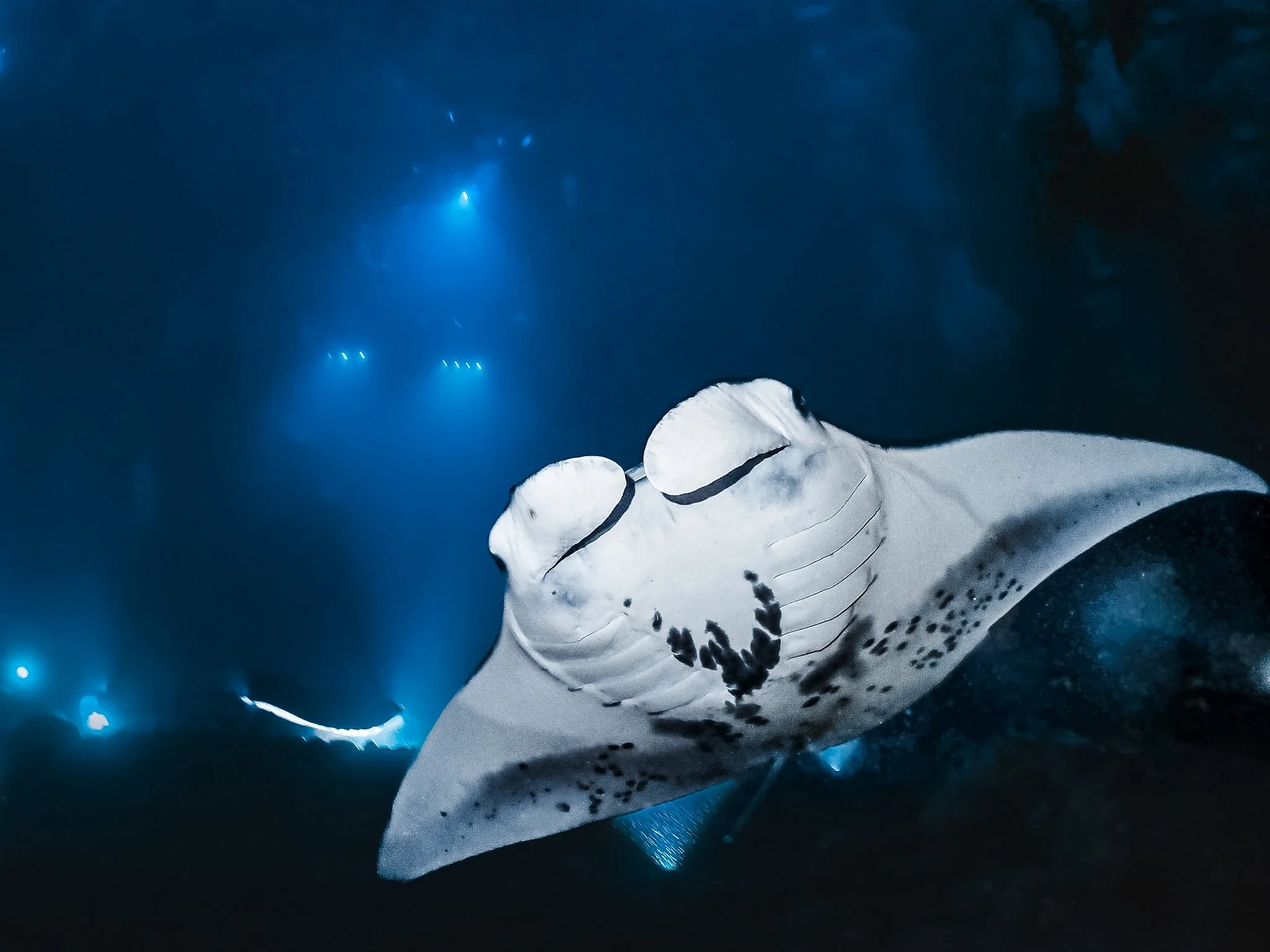
Meet the Stars of the Show
One of the things that makes diving with manta rays in Kona so unique is that many of the animals have names, personalities, and decades of documented history.
The manta rays you'll encounter here are reef manta rays (Mobula alfredi), the smaller of the world's two manta species. Don't let the word "smaller" fool you. Reef mantas can still reach wingspans exceeding 12 feet and are among the most graceful animals you'll ever encounter underwater.
Just like people, every manta ray is unique.
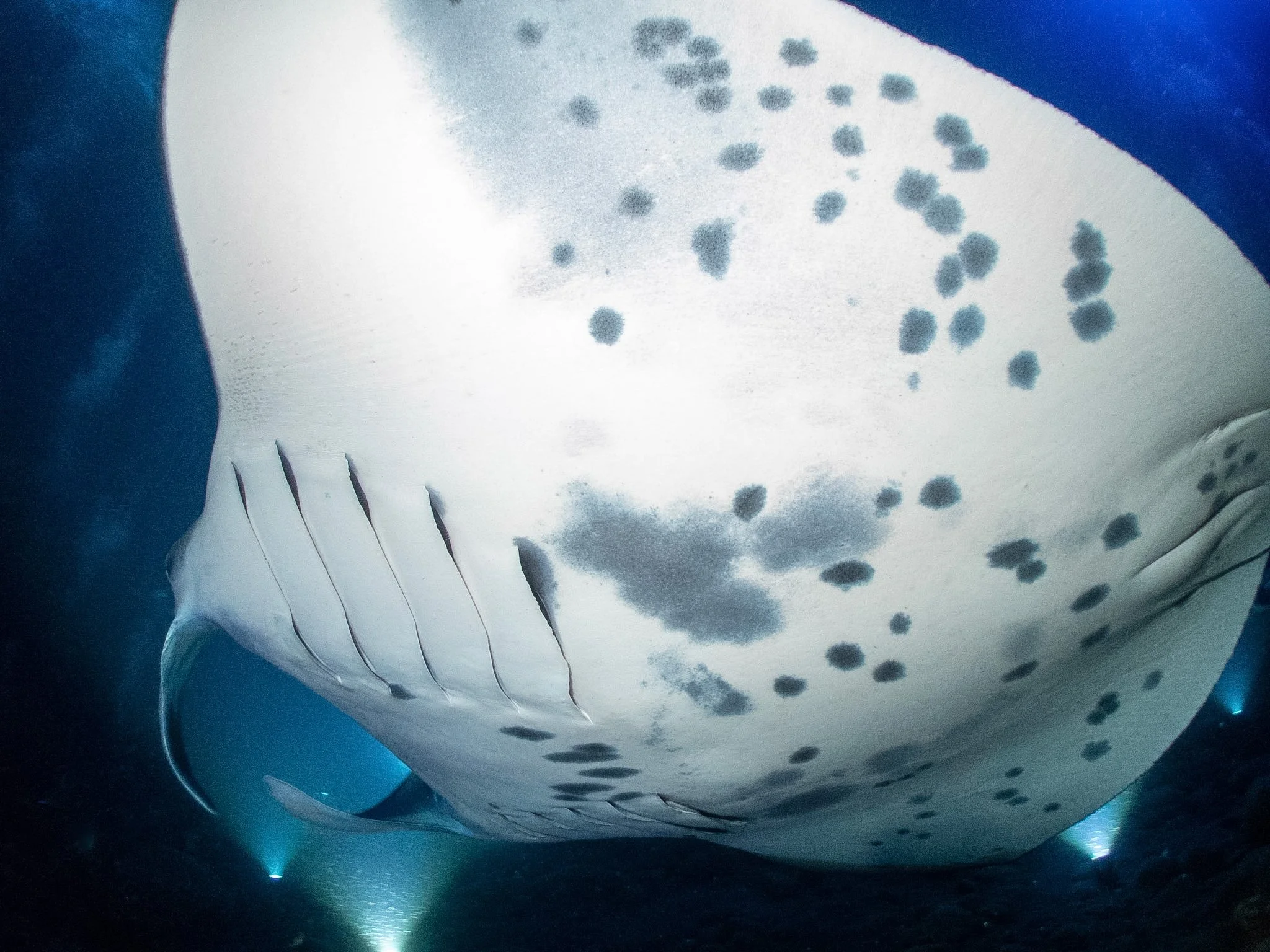
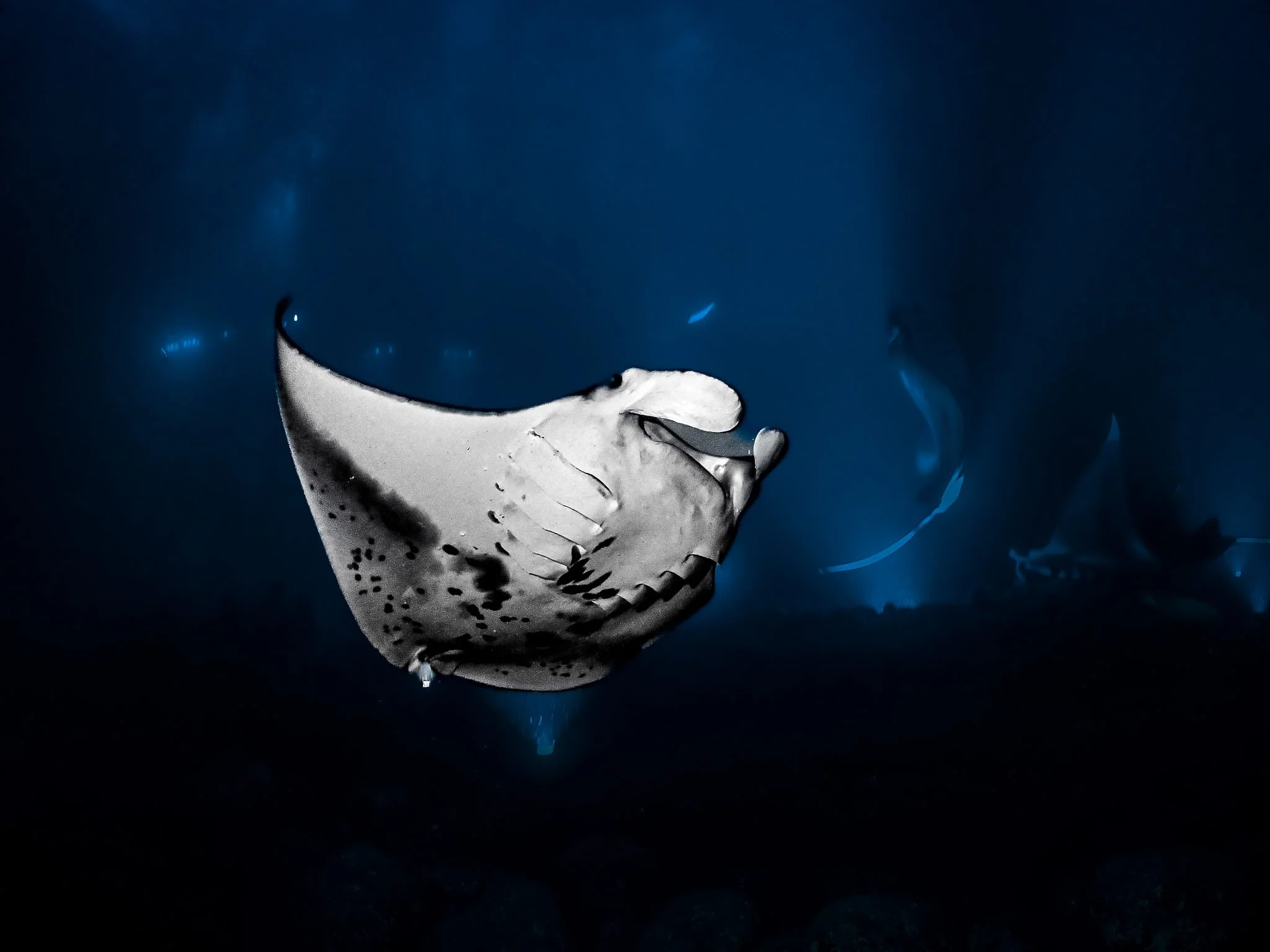
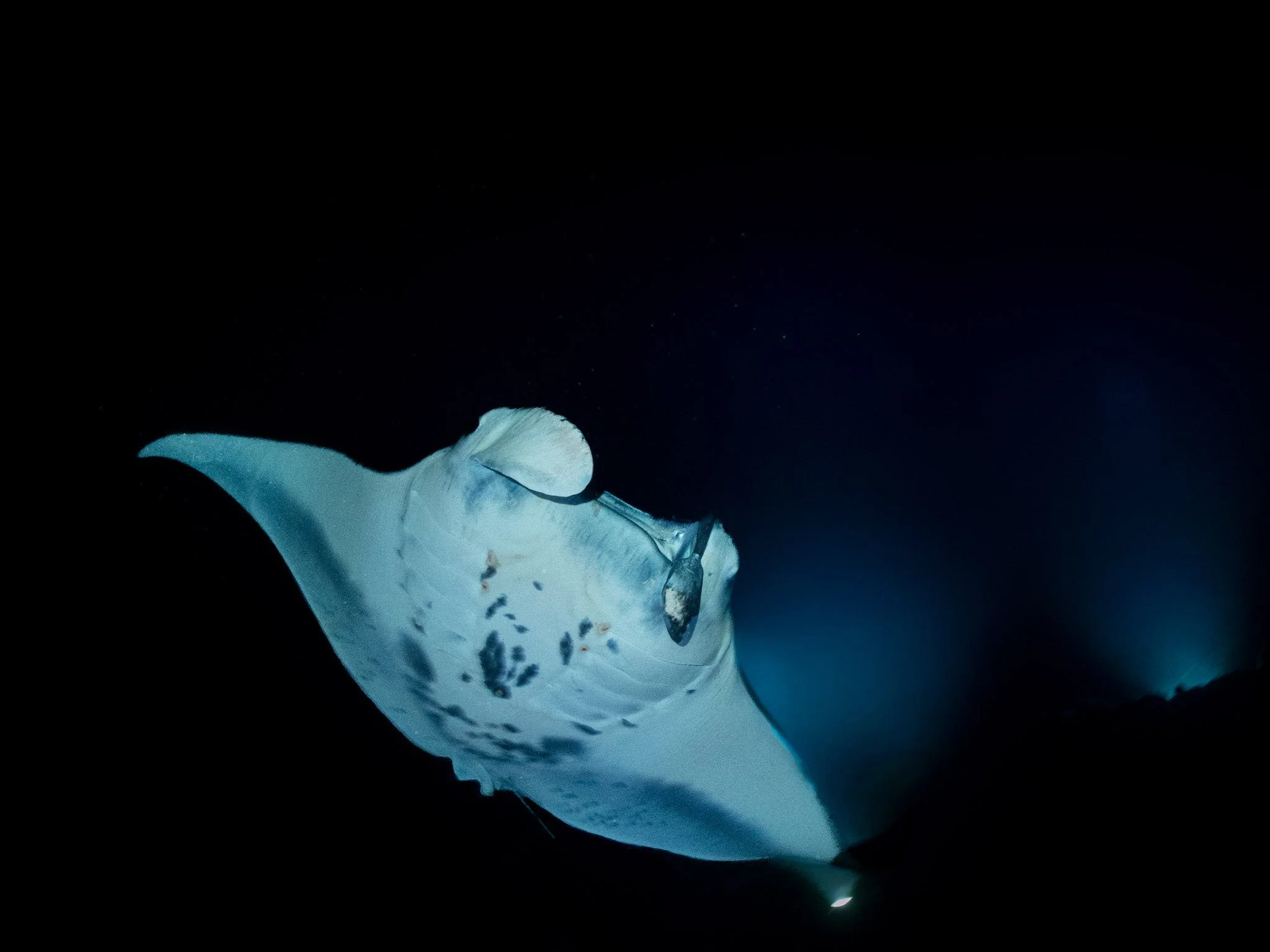
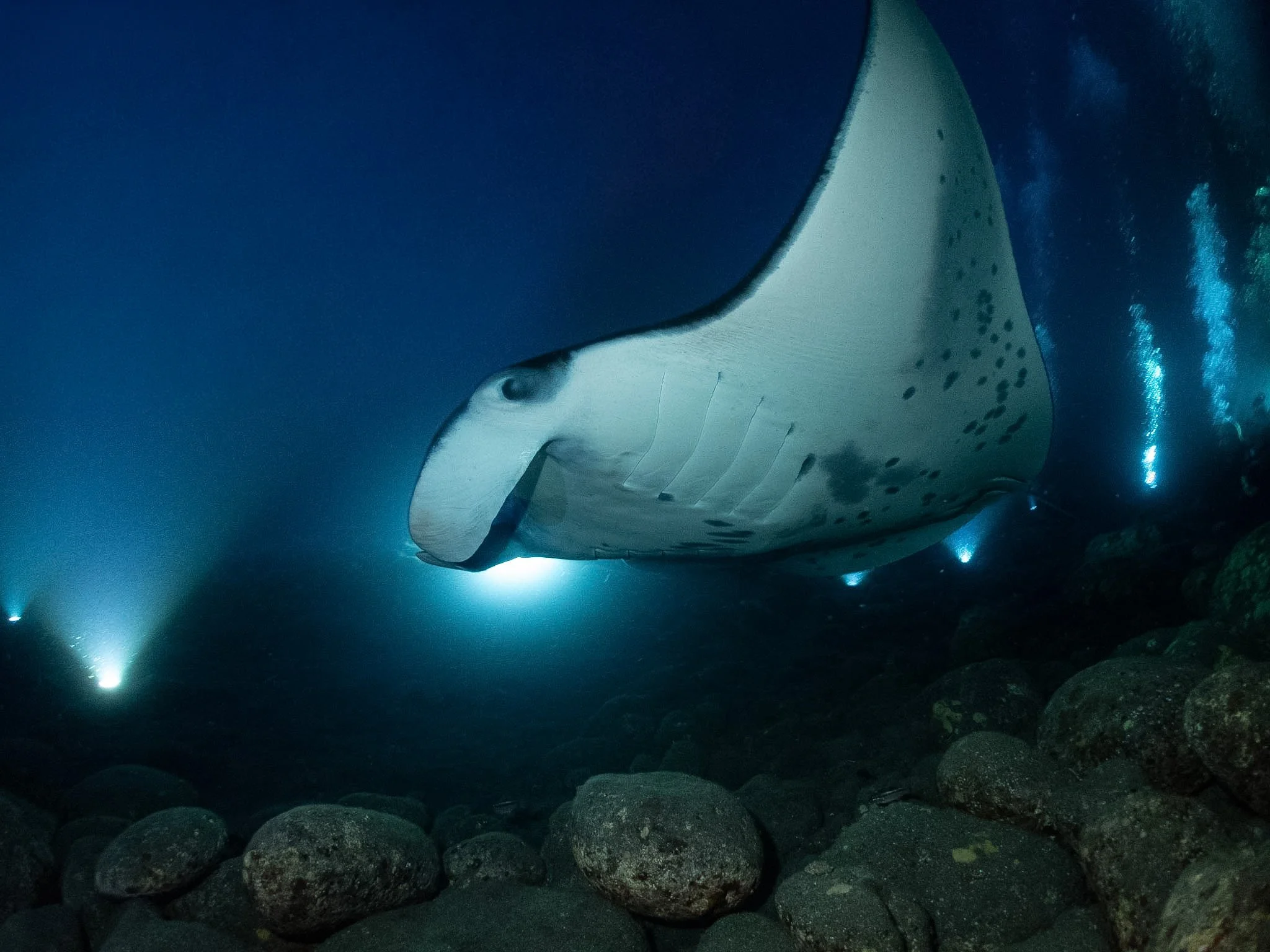
Researchers identify individual mantas by photographing the distinctive pattern of black spots on the underside of each animal. These markings never change and are as unique as a human fingerprint. Every photograph taken of a manta's belly can be matched to an individual animal, allowing researchers to monitor where it travels, how often it visits different feeding sites, injuries it may have sustained, pregnancies, and even long-term social behavior.
That incredible database began in the early 1990s when Keller and Wendy Laros started photographing the manta rays they encountered off the Kona Coast. What began as a passion project has grown into one of the longest-running and most comprehensive manta ray photo-identification databases in the world. Today, the work continues through the Manta Pacific Research Foundation, with researchers, dive professionals, and citizen scientists all contributing photographs that help expand our understanding of these remarkable animals.
One of the first mantas to become well known was Lefty, named for her distinctive bent left cephalic fin. She was the very first manta added to Kona's identification catalog after researchers realized she was returning to the same feeding sites year after year. Her story changed the way scientists viewed manta rays, demonstrating that they weren't simply wandering the open ocean. They were individuals with predictable behaviors, favorite feeding locations, and surprisingly long lives.
Another local celebrity is Big Bertha, one of the largest reef manta rays regularly seen along the Kona Coast. Seeing her emerge from the darkness is unforgettable. Her enormous wingspan and calm, graceful movements have made her a favorite among dive guides, photographers, and returning visitors. Every encounter with Big Bertha feels like meeting a celebrity you've heard stories about for years.
Knowing that the manta looping gracefully overhead may have been visiting these waters for decades adds an entirely new dimension to the experience. You're not just watching a manta ray. You're meeting an individual animal with its own history, one that researchers have been studying and local dive professionals have come to know over many years.
More Than Just a Bucket List Dive
Every diver has a bucket list. Maybe yours includes the Galápagos, Raja Ampat, Antarctica, or swimming alongside whale sharks. Those destinations absolutely deserve their place, but Kona's manta ray night dive belongs on that list, too.
The combination of reliable encounters, fascinating science, and the sheer grace of these animals creates something that's difficult to put into words. There's a reason divers from around the world travel to Hawaiʻi specifically for this experience, and there's a reason so many people finish the dive asking when they can do it again.
Watching a manta ray barrel roll through a beam of light isn't just another dive. It's one of those rare moments that reminds you exactly why you fell in love with the underwater world in the first place.
What the Dive Is Actually Like
One of the biggest surprises for first-time manta divers is how relaxing the dive actually is.
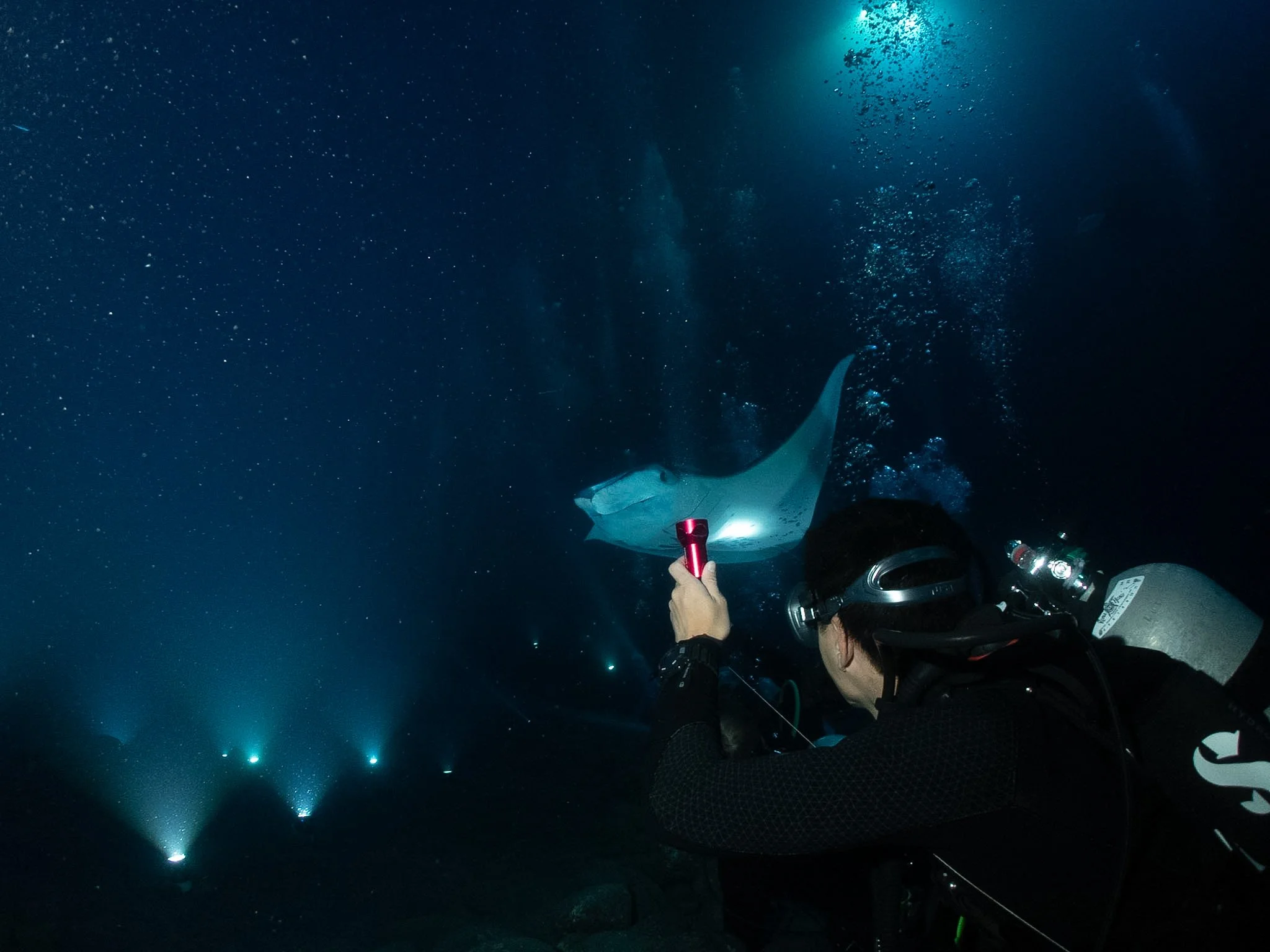
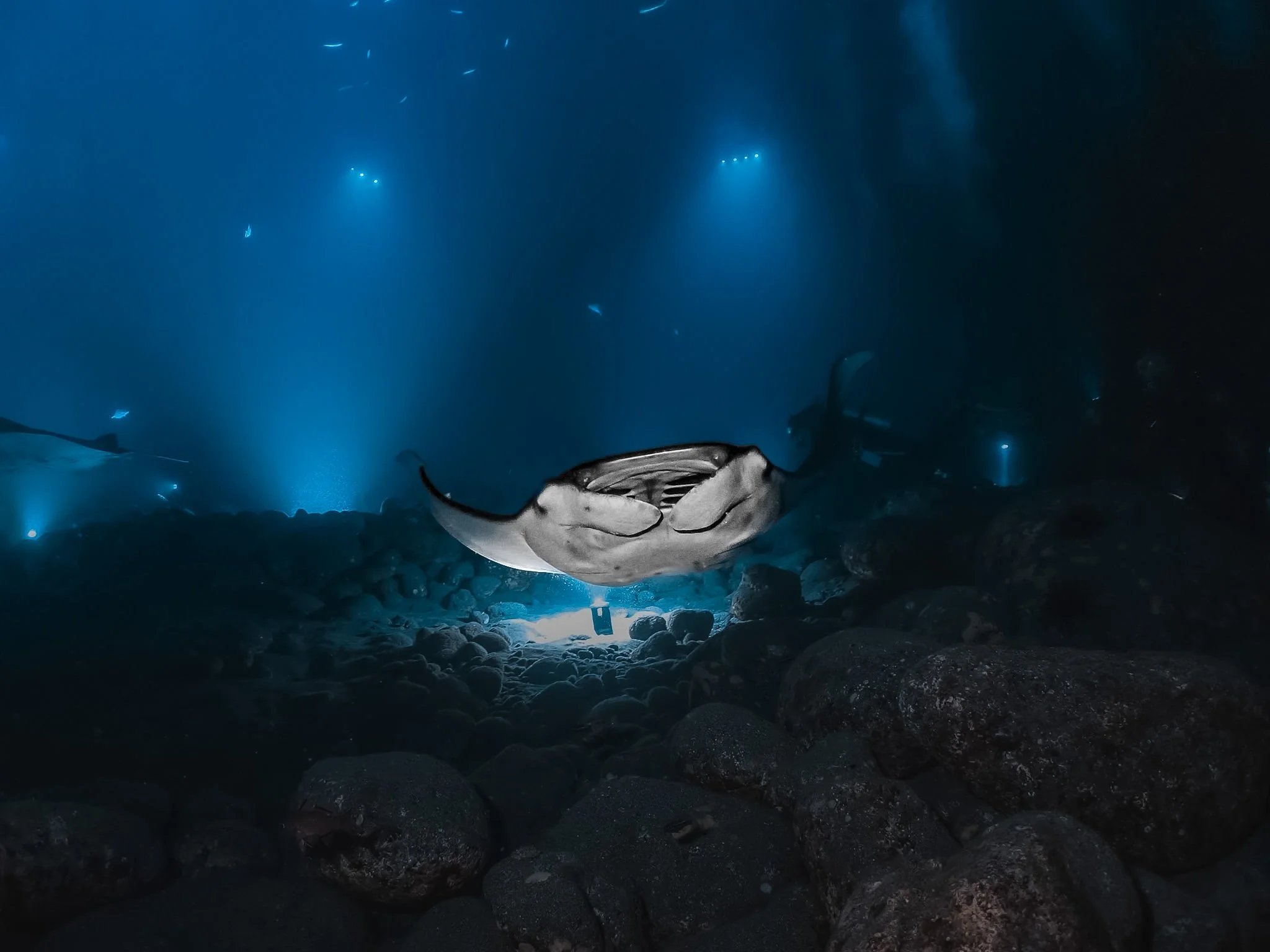
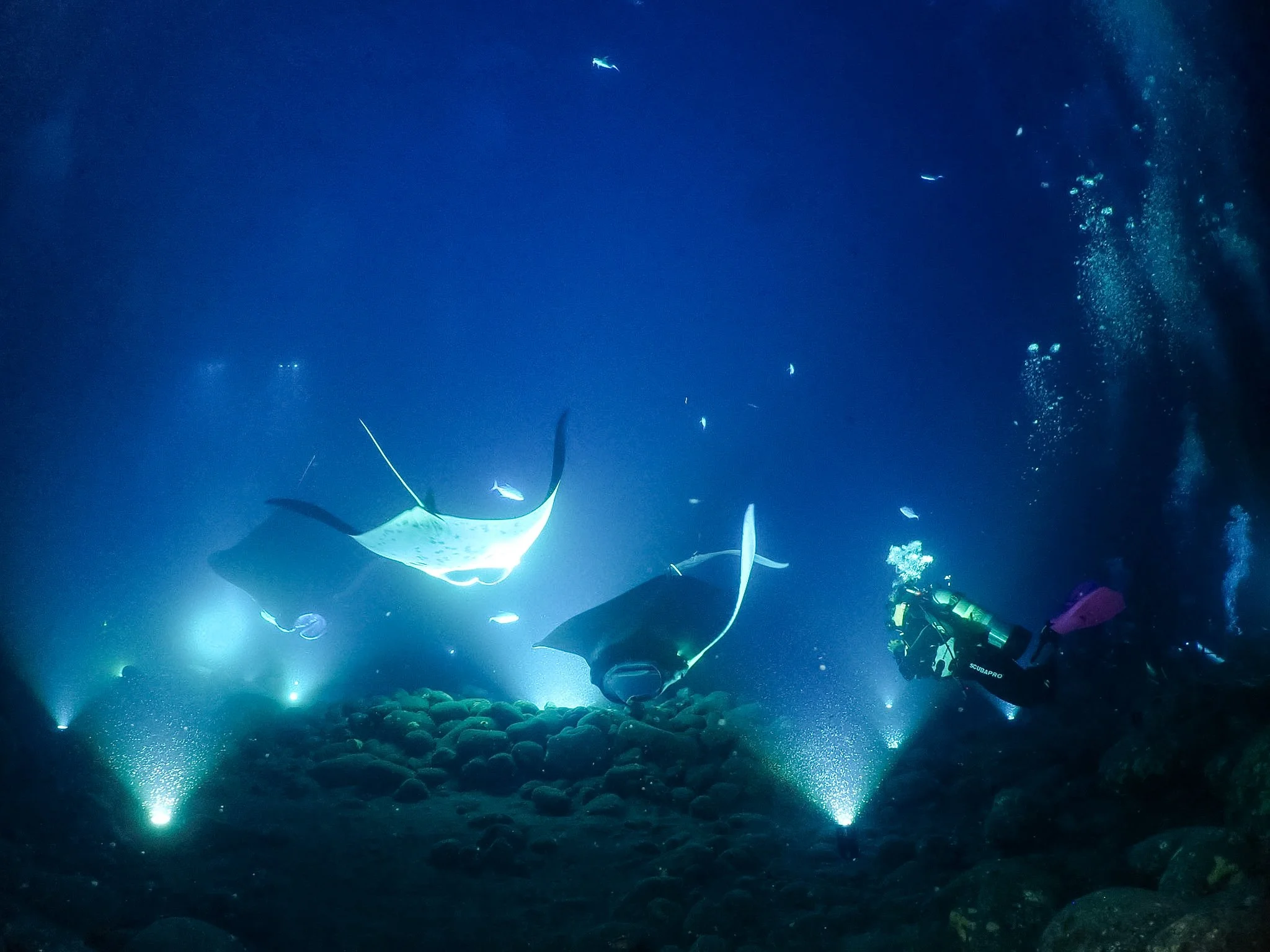
Many people picture themselves swimming through the darkness searching for manta rays, but the experience is much different. After a short descent, divers gather together in a designated viewing area on the sandy bottom or reef. Everyone shines their dive lights upward into the water column, creating what many affectionately call an underwater "campfire."
Most manta dives take place at one of Kona's two famous sites: Manta Village, just south of Kailua-Kona near Keauhou Bay, or Manta Heaven, also known as Garden Eel Cove, north of Kona. Both sites offer incredible encounters, and which one you'll visit typically depends on ocean conditions and where the mantas have been feeding most consistently.
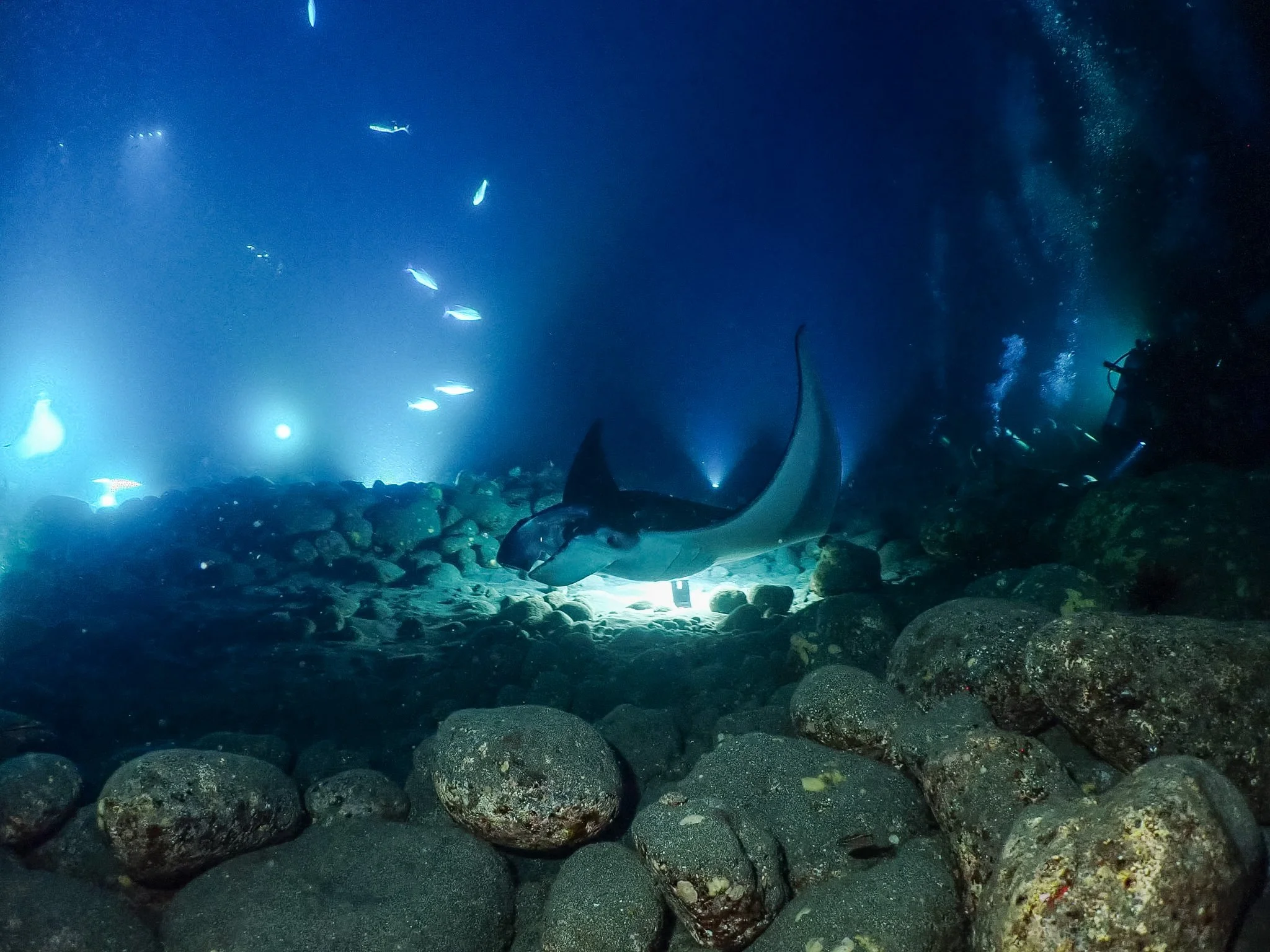
At Manta Heaven, divers settle into a designated sandy viewing area often referred to as "the campfire." This cleared section of the bottom allows groups to comfortably gather while keeping the surrounding reef protected. Once everyone is in position with their lights pointed toward the surface, the stage is set.
Then you wait.
Sometimes the first manta arrives within just a few minutes. Other nights, the anticipation builds a little longer. Suddenly, a dark silhouette appears out of the black water. As it glides into the light, that silhouette transforms into an enormous manta ray soaring effortlessly overhead.
Before long, another joins, then another. Some make slow, sweeping circles above the group, while others perform repeated barrel rolls only a few feet over the divers' heads. Because everyone remains relatively still, the manta rays are free to feed naturally, often coming so close that you can clearly see the unique spot patterns on their undersides.
Rather than chasing wildlife, the wildlife comes to you.
As if the manta rays weren't enough, Manta Heaven has another local celebrity. Many divers are greeted by Frank, a friendly green moray eel that has become something of a legend at the site. Frank often pokes his head out to see what's happening around the "campfire," occasionally making an appearance while everyone waits for the mantas to arrive. He's become a favorite among local dive guides and returning divers, adding a little extra personality to an already unforgettable dive.
One of the things I love most about this experience is how peaceful it feels. There's no rush to get the perfect photograph or swim after the next exciting thing. You simply settle in, look up, and let nature put on the show. The only sounds are your own breathing and the steady stream of bubbles rising toward the surface as giant manta rays dance effortlessly through the light above.
Every dive is different. Some nights you might spend nearly an hour watching a handful of mantas perform graceful barrel rolls overhead. Other evenings, the action ebbs and flows as different individuals arrive throughout the dive. That's part of what keeps me coming back. Even after multiple manta dives in Kona, I never know exactly what the night has in store.
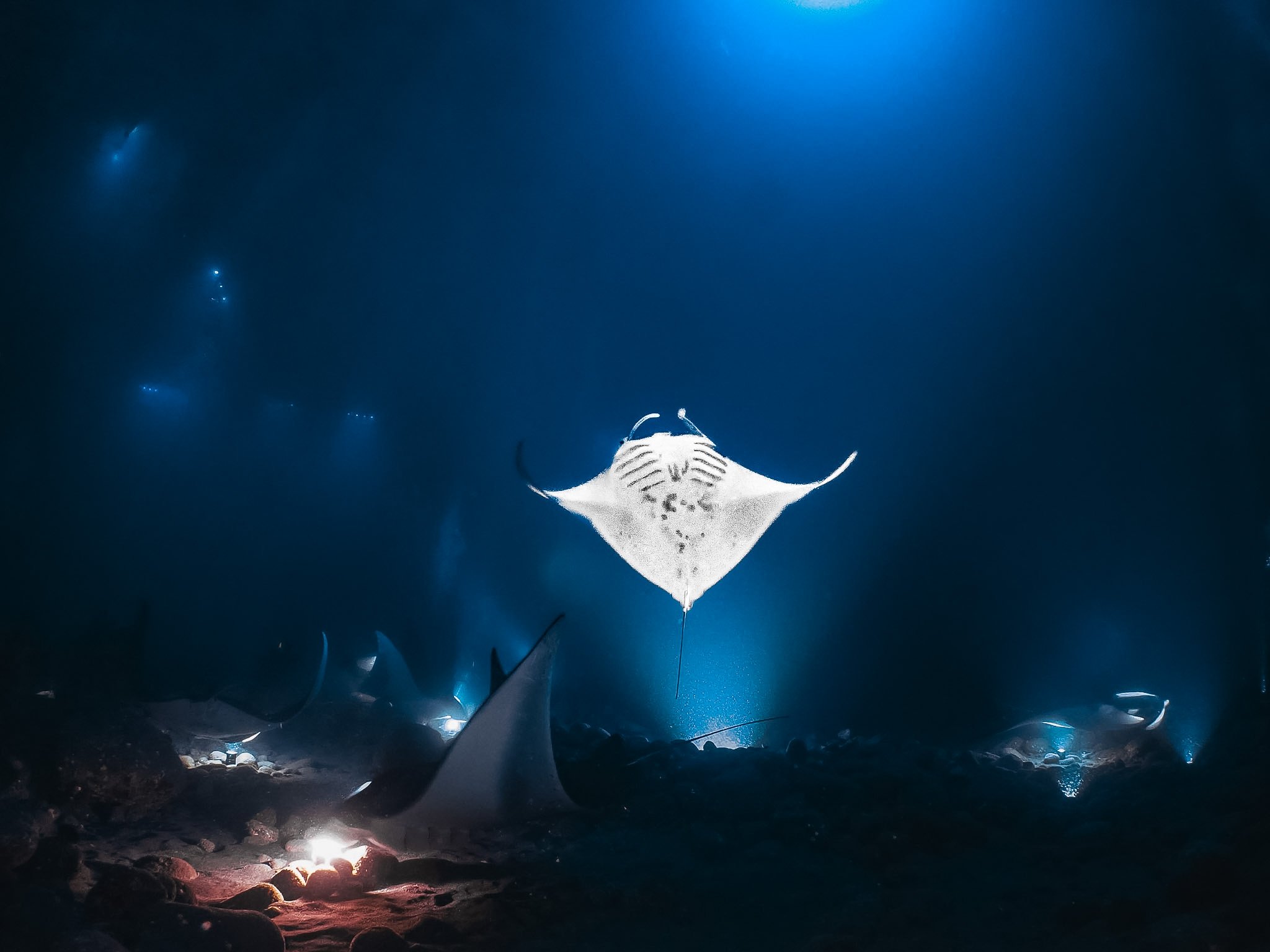
The Underwater Ballet
If you've ever watched videos of Kona's manta rays, you've probably noticed them performing graceful backward somersaults through the water.
These movements aren't for show. They're one of the most efficient feeding strategies in the animal kingdom.
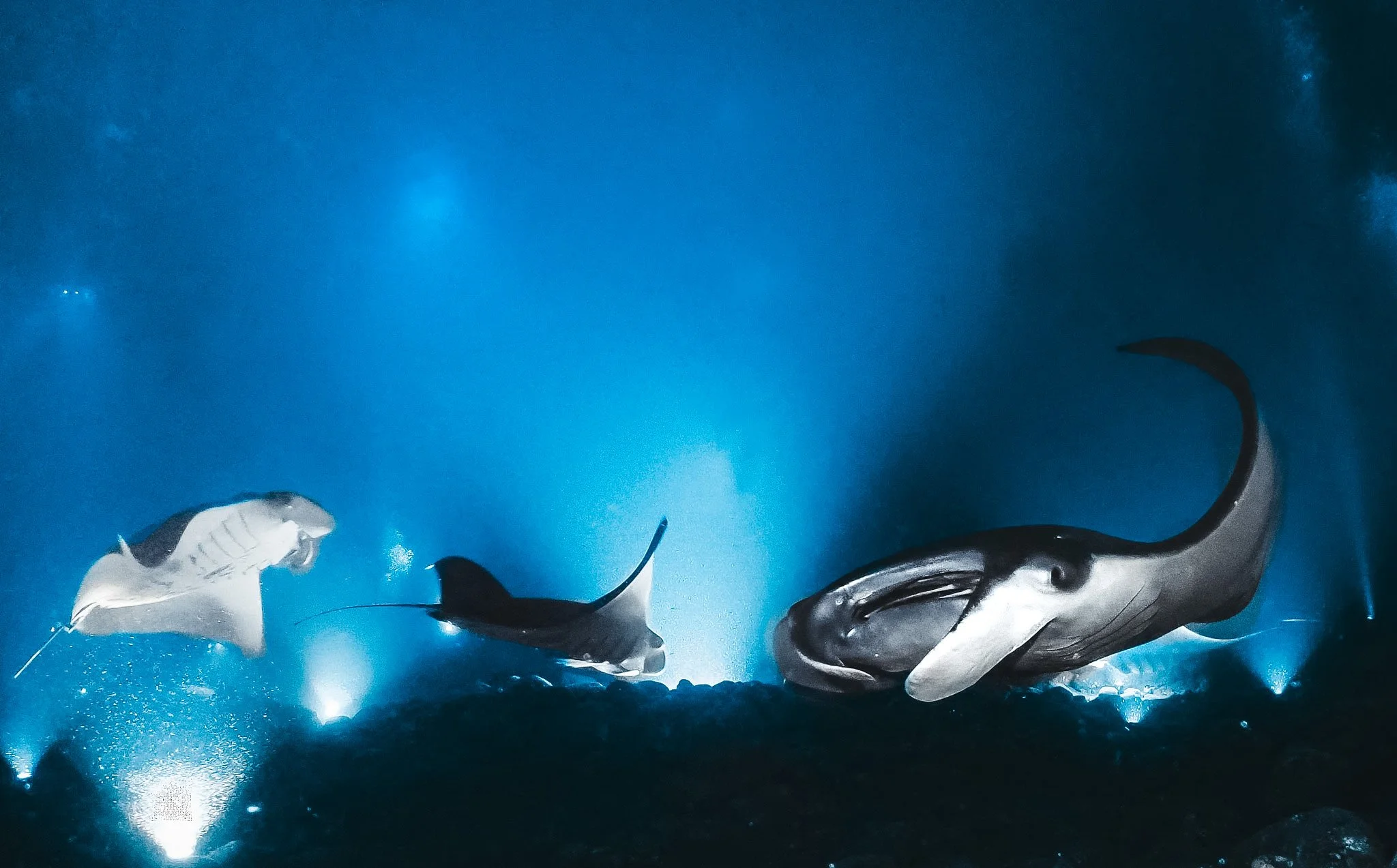
As the dive lights attract dense clouds of plankton, the manta rays swim through these concentrated patches with their mouths open. When they find an especially rich area, they'll perform repeated barrel rolls, allowing them to stay within the food source instead of swimming past it.
Watching one manta barrel roll is mesmerizing.
Watching several do it together is unforgettable.
Their movements are so smooth and perfectly timed that it almost looks choreographed. The first time you see multiple mantas looping through the lights, it's hard not to compare them to dancers floating weightlessly through the night.
Built for Filter Feeding
Everything about a manta ray has evolved to make it an incredibly efficient filter feeder.
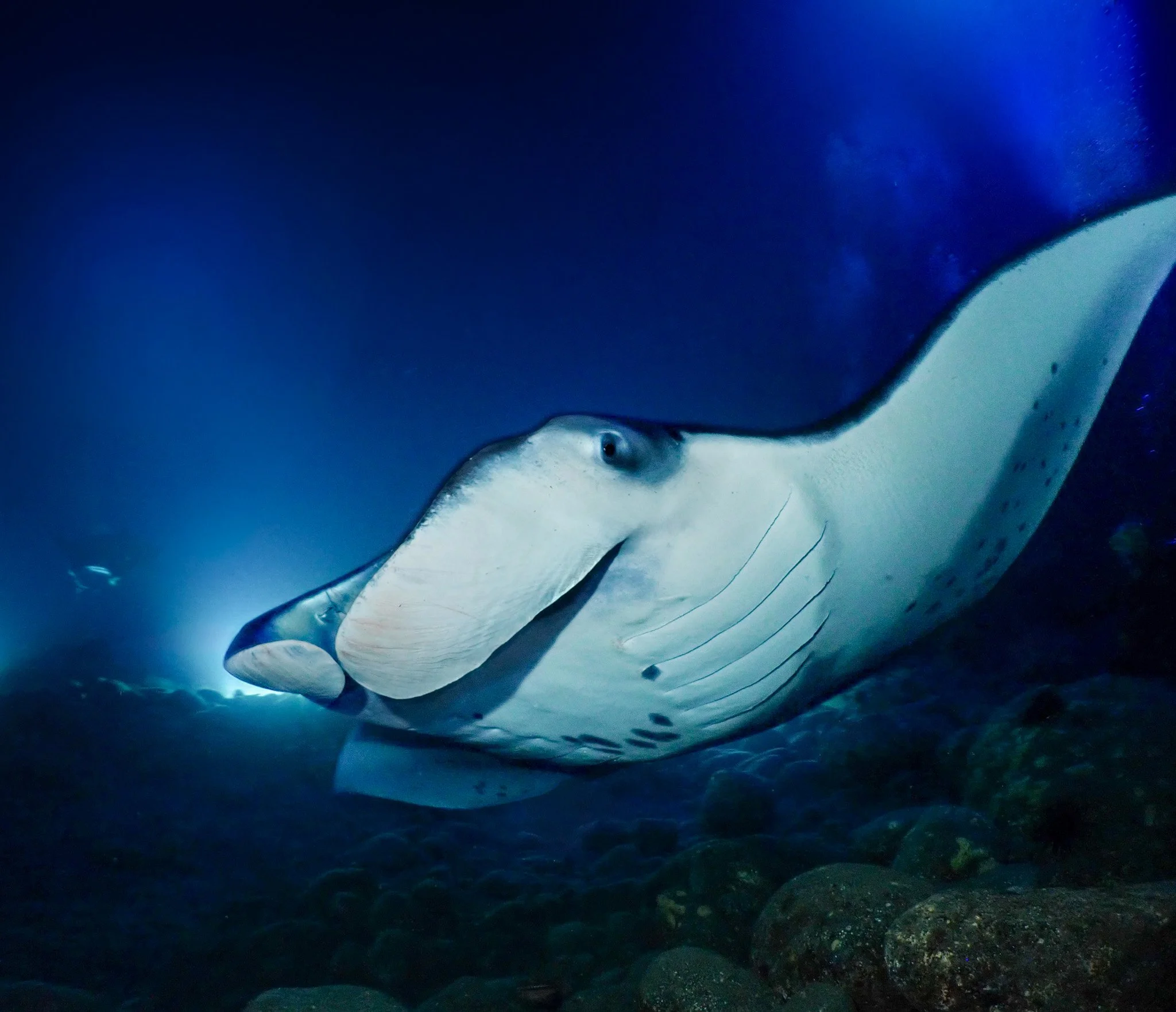
Those horn-like appendages on either side of its mouth are called cephalic fins. When the manta isn't feeding, they're rolled tightly against its head. As soon as dinner arrives, they unfurl like funnels, directing plankton-rich water into the manta's enormous mouth.
Inside, specialized gill plates separate tiny plankton from the seawater. Clean water exits through the gills while the plankton is swallowed, allowing the manta to continuously feed as it swims.
It's an elegant system that has been refined over millions of years.
Despite their incredible size, manta rays survive almost entirely on microscopic organisms drifting through the ocean. Watching one of the largest fish on the reef thrive on one of the smallest food sources is a remarkable reminder of how interconnected marine ecosystems truly are.
Reef Mantas vs. Oceanic Mantas
Many divers are surprised to learn that there isn't just one species of manta ray.
The animals you'll encounter during Kona's famous night dive are reef manta rays (Mobula alfredi). These mantas tend to stay associated with islands, reefs, and coastal environments, returning to familiar feeding and cleaning stations throughout their lives.
Their larger cousin is the oceanic manta ray (Mobula birostris). As the name suggests, oceanic mantas spend much more of their lives in the open ocean, living a more pelagic lifestyle and undertaking long-distance migrations. They're also the largest ray species in the world, with wingspans approaching 20 feet.
Although the two species share many similarities, Kona's resident reef mantas are the individuals that have made this dive world-famous and allowed researchers to build one of the most comprehensive manta identification databases anywhere on Earth.
One of the Smartest Fish in the Ocean
The more scientists study manta rays, the more fascinating they become.
Manta rays have the largest brain of any fish, particularly in regions associated with learning, memory, sensory processing, and problem-solving. While we're still learning exactly how intelligent they are, research suggests they're capable of recognizing locations, remembering productive feeding sites, and displaying complex social behaviors.
That intelligence helps explain why Kona's resident mantas return to the same feeding areas year after year. They know exactly where to find an easy meal, and many individuals have been documented visiting these sites for decades.
As divers, we often focus on the size of a manta ray first. Spend a little more time watching one, though, and something else becomes apparent.
There's a curiosity in the way they move.
A confidence.
An awareness.
When a manta glides overhead and briefly makes eye contact before rolling gracefully back into the light, it's hard not to feel connected to one of the ocean's most extraordinary animals. Those quiet moments are part of what makes this dive so unforgettable, and why so many divers surface already planning their next visit.
Are Manta Rays Dangerous?
One of the questions I hear most often is whether it's safe to dive with an animal this large.
The answer is an easy yes.
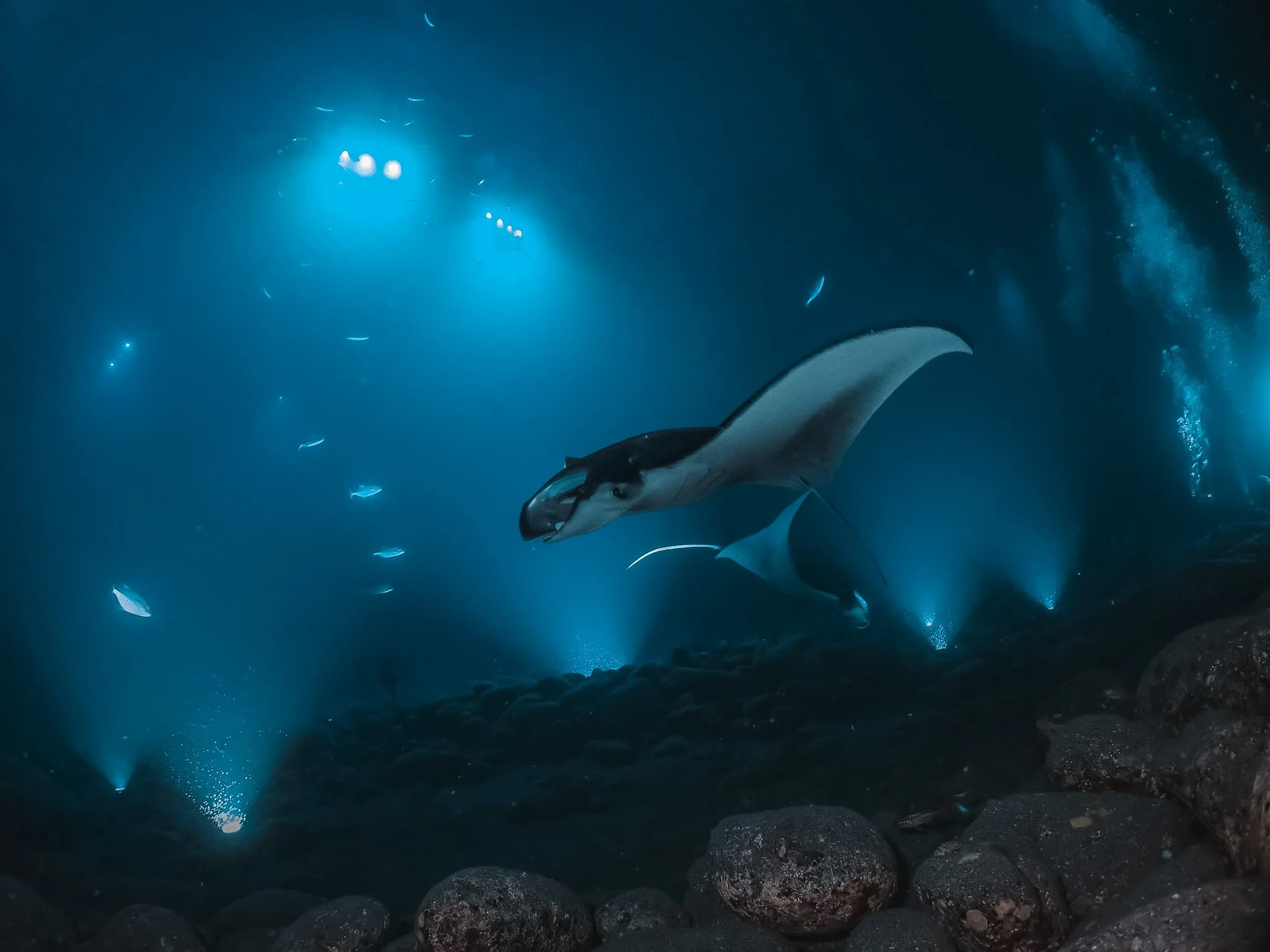
Despite their impressive size, reef manta rays are incredibly gentle. They don't have venom, stingers, barbs, or teeth designed to bite people. Their entire diet consists of microscopic plankton drifting through the water, and they're completely uninterested in humans as prey.
The first time a manta glides just inches over your head can be a little intimidating. After all, these are enormous animals. Then, almost immediately, that feeling turns into awe. Every movement is slow, deliberate, and incredibly graceful. Before long, you'll realize they're paying far more attention to the plankton than they are to the divers below.
Respecting the Mantas
One of the reasons Kona's manta ray night dive has remained one of the world's greatest wildlife encounters is because the local dive community has made protecting the animals a priority.
During the dive, you'll be asked to remain in the designated viewing area while the manta rays feed above you. Rather than swimming after them, allow the mantas to come to you. This gives them plenty of room to feed naturally without feeling pressured or disturbed.
One guideline that surprises many divers is that snorkels are typically removed before descending. Since manta rays often pass within inches of divers' heads, a snorkel sticking up above your mask can accidentally bump or poke a manta as it swims overhead. Removing it is a simple way to reduce the risk of accidental contact.
Perhaps the most important rule of all is never touch a manta ray.
Like many fish, manta rays are covered by a thin protective mucus coating, sometimes called a slime coat. This natural barrier helps protect them from bacteria, parasites, and disease. Touching a manta can damage or remove some of that protective coating, making the animal more vulnerable to infection. The concern isn't about hurting their skin—it's about preserving one of their most important natural defenses.
Good buoyancy is just as important. Staying low, keeping your fins off the bottom, and avoiding unnecessary movement helps protect the reef while allowing everyone to enjoy the spectacle without stirring up sand or disrupting the feeding behavior.
The best manta encounters happen when we become quiet observers. Sit back, look up, and let the show come to you.
Conservation Through Research
One of the things I appreciate most about diving with manta rays in Kona is that the experience goes far beyond tourism.
The manta population here is one of the best-studied anywhere in the world, thanks to decades of dedicated research. Organizations like the Manta Pacific Research Foundation have spent years documenting individual manta rays, monitoring their health, studying their movements, and learning more about their behavior.
Every photograph of a manta's belly has the potential to contribute to that research.
Because each manta has a unique spot pattern on its underside, researchers can identify individual animals from photographs taken by scientists, dive professionals, and even recreational divers. A single image can confirm that a manta is still healthy, reveal a new injury, document a pregnancy, or show that an individual has returned to a favorite feeding site after months or even years away.
It's a wonderful example of citizen science in action. Simply taking a photograph during your dive could contribute to one of the longest-running manta ray identification projects in the world.
Challenges Facing Manta Rays
Although Kona's resident mantas are carefully monitored and protected, manta rays around the world face a number of threats.
Because they grow slowly, mature later in life, and typically give birth to only a single pup every few years, manta populations recover very slowly from declines. Entanglement in fishing gear, vessel strikes, habitat degradation, pollution, and targeted fisheries in some parts of the world continue to impact manta ray populations.
Climate change also presents new challenges. As ocean temperatures and currents shift, the distribution of plankton may change as well, potentially affecting where manta rays feed and how they use their habitat.
Every responsible wildlife interaction helps reinforce the value of protecting these incredible animals. Supporting operators that follow established manta viewing guidelines and respecting the animals during your dive helps ensure Kona remains a model for sustainable marine tourism.
Fun Facts About Kona's Manta Rays
The more you learn about manta rays, the more incredible they become.
Here are a few of my favorite facts before you jump in:
Every manta ray has a unique pattern of black spots on its belly, making each individual easy to identify.
Reef manta rays can have wingspans exceeding 12 feet.
Their larger cousin, the oceanic manta ray, can approach 20 feet across.
Manta rays have the largest brain of any fish, with highly developed regions associated with learning and memory.
Their cephalic fins act like funnels, directing plankton-rich water into their mouths while they feed.
A single barrel roll allows a manta to stay in the densest concentration of plankton for as long as possible.
Kona is home to one of the most extensively studied reef manta populations in the world.
Some of Kona's resident mantas have been documented returning to the same feeding sites for more than 30 years.
Despite their enormous size, manta rays are completely harmless to humans.
More Than Just Another Dive
By the end of the dive, chances are you'll have a favorite manta.
Maybe it was Big Bertha gliding effortlessly through the lights. Maybe it was Lefty, whose story helped researchers realize these animals were returning to the same feeding sites year after year. Or maybe it was a manta you'd never heard of before, whose unique spot pattern was photographed that evening and added to decades of ongoing research.
That's one of the things that makes Kona so special.
You're not simply watching wildlife. You're meeting individual animals with names, histories, and stories that continue to unfold every time they return to the Kona Coast.
Long after you've rinsed your gear and climbed back onto the boat, you'll probably find yourself replaying those quiet moments in your mind—the darkness, the beams of light, and the effortless flight of one of the ocean's most graceful creatures overhead.
Who Can Do the Manta Ray Night Dive?
One of the best things about Kona's manta ray night dive is that it's accessible to a wide range of people.
Certified scuba divers will experience the encounter from the bottom, looking up as the mantas glide gracefully overhead. Since the dive typically takes place in relatively shallow water, often between 30 and 40 feet, it's not physically demanding. Comfortable buoyancy and confidence diving at night are far more important than having hundreds of logged dives.
If you've never completed a night dive before, don't let that discourage you. Many divers choose to complete their first night dive before experiencing the mantas, while others earn their PADI Night Diver Specialty in Kona and make the manta dive part of that experience. Either way, arriving relaxed and comfortable underwater will help you enjoy every minute.
Snorkeling vs. Scuba Diving
One of the unique things about Kona's manta experience is that you don't have to be a scuba diver to witness it.
Snorkelers float comfortably on the surface while holding onto specially designed light boards that shine into the water below. Just like the dive lights underwater, these lights attract plankton, bringing the manta rays within just a few feet of the surface. Looking down as a giant manta performs barrel rolls beneath you is an incredible experience in its own right.
Scuba divers, on the other hand, get an entirely different perspective. Sitting quietly on the ocean floor while the mantas soar overhead almost feels like watching birds fly across the night sky. There's something incredibly peaceful about staying still while these graceful giants dance through the light above you.
People often ask me which experience is better.
Honestly, you can't go wrong. They're simply two different ways to enjoy one of the most remarkable wildlife encounters on Earth.
When Is the Best Time to Go?
One of the questions I hear most often is when to plan a manta ray dive.
The great news is that there really isn't a bad time of year.
Unlike humpback whales that migrate seasonally through Hawaiʻi, Kona's reef manta rays are year-round residents. They don't disappear for months at a time, which means divers have the opportunity to see them during every season.
Weather and ocean conditions may occasionally determine which manta site is visited, and no wildlife encounter can ever be guaranteed. Even so, Kona has one of the highest manta sighting success rates in the world, making this one of the most reliable marine life experiences you'll find anywhere.
Photography Tips
If you're bringing a camera, this dive offers some incredible opportunities.
A wide-angle or fisheye lens is your best friend. The manta rays often come surprisingly close, and you'll want to capture their entire wingspan rather than just a portion of their body.
If you're shooting with strobes, angle them slightly outward to help reduce backscatter caused by the plankton-filled water. Focus on exposing for the manta while allowing some of the blue glow from the dive lights to remain in the background. That contrast creates some truly dramatic images.
For GoPro users, switching to a wide field of view and using a video light can produce fantastic footage. The barrel rolls are mesmerizing on video, and sometimes motion tells the story better than a still photograph ever could.
My biggest piece of advice has nothing to do with camera settings.
Put the camera down for a few minutes.
Some of my favorite manta dives aren't the ones where I captured my best image. They're the dives where I simply watched these incredible animals glide silently through the water and allowed myself to be completely present.
What Should You Bring?
Preparing for a manta ray dive doesn't require any specialized equipment beyond your normal scuba gear, but a few items can make the experience even better.
A properly fitting exposure suit will help you stay comfortable during the dive, especially if you're someone who tends to get cold after sunset. If you're planning to take photos or video, make sure your batteries are fully charged before boarding the boat. Night dives can be demanding on both lights and cameras.
Most importantly, bring a sense of patience.
Wildlife encounters happen on nature's schedule, not ours. Sometimes the mantas appear almost immediately. Other nights they keep everyone waiting before making a spectacular entrance. Either way, the anticipation becomes part of the experience.
Frequently Asked Questions
Will I definitely see manta rays?
No wildlife encounter is ever guaranteed. These are wild animals, and that's part of what makes the experience so special. That said, Kona consistently has one of the highest manta ray sighting success rates in the world.
Are manta rays dangerous?
Not at all. Reef manta rays are gentle filter feeders. They don't have stingers, venom, barbs, or teeth designed to harm people.
How deep is the dive?
Most manta ray night dives take place in relatively shallow water, generally around 30 to 40 feet, allowing for long, comfortable bottom times.
Can beginners do the dive?
Many newly certified divers successfully complete the manta ray night dive. Being comfortable with buoyancy and following your guide's instructions will go a long way toward making the experience enjoyable.
Is there a best season?
No. Kona's resident reef manta rays can be encountered throughout the year.
Should I bring a camera?
Absolutely—but don't spend the entire dive looking through a viewfinder. Take your photos, then take a moment to simply enjoy the experience.
And With That…
Every now and then, a dive comes along that reminds you why you became a diver in the first place.
For me, Kona's manta ray night dive is one of those dives.
There's something almost impossible to describe about sitting quietly on the ocean floor, looking up into the darkness, and watching giant manta rays soar effortlessly through beams of light. The world seems to slow down. The only sounds are your own breathing and the bubbles drifting toward the surface while these gentle giants perform an underwater ballet just overhead.
Knowing that the manta you're watching may have been visiting these same waters for decades makes the experience even more meaningful. You're not simply checking a bucket-list dive off your list. You're witnessing one of the ocean's greatest natural spectacles and meeting animals that have become ambassadors for marine conservation around the world.
Whether this is your first visit to Hawaiʻi or your tenth, I can't recommend this experience enough. Come with good buoyancy, respect for the wildlife, and a willingness to simply sit back and watch.
I have a feeling you'll surface exactly like I do every single time.
Already wondering when you can do it again.
Dive safe, explore passionately, and remember…