
Traveling to Taveuni: Everything You Need to Know
Why the Journey to Taveuni is Part of the Magic
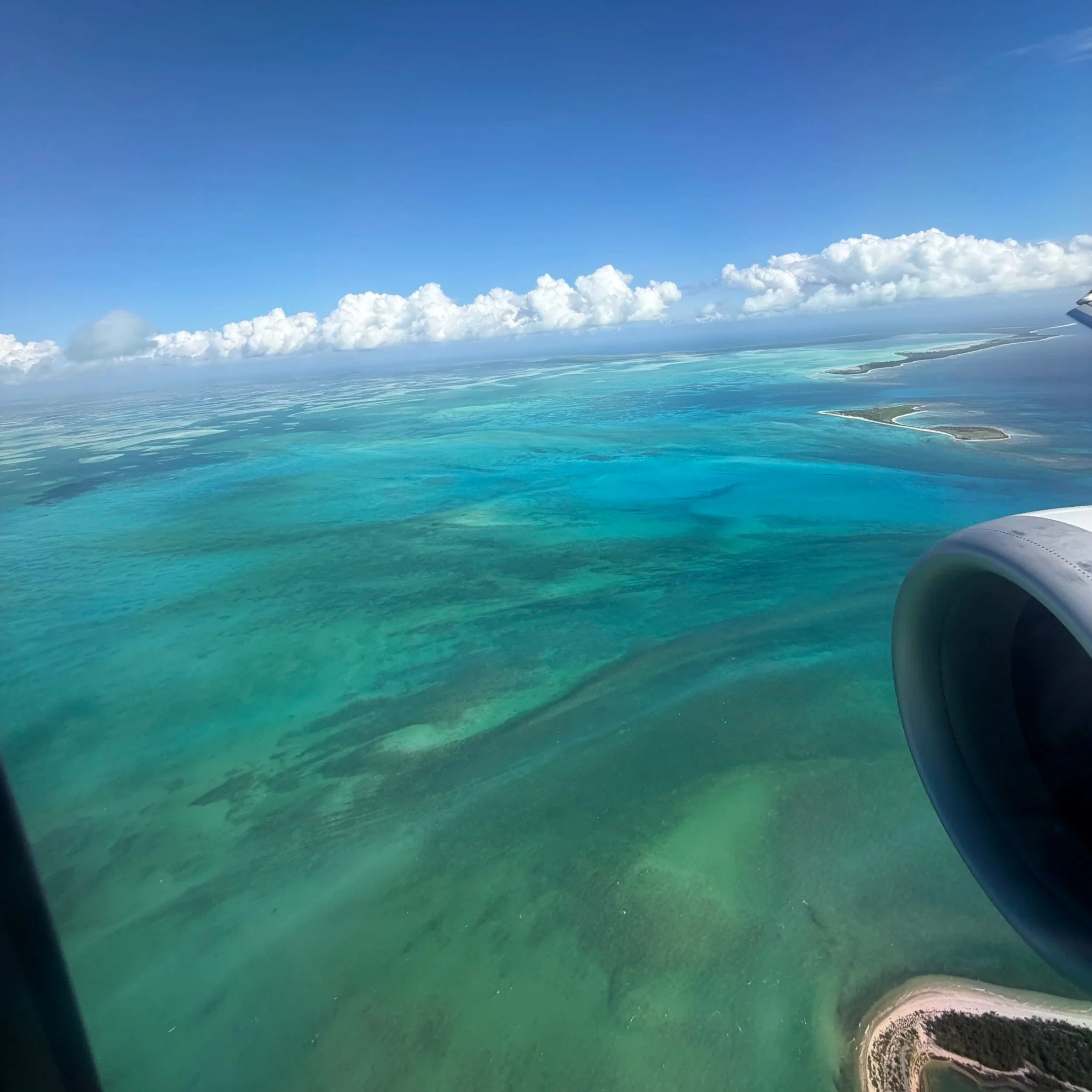
When people think about a dive trip to Fiji, they usually picture Rainbow Reef, vibrant soft corals, crystal-clear water, and world-class diving. While all of that absolutely lives up to the hype, getting there is part of the experience too. Fiji isn't a destination you simply fly into for a long weekend. It takes planning, patience, and a willingness to embrace the journey—and that's exactly what makes arriving feel so rewarding.
Traveling to Taveuni means crossing the Pacific, hopping between islands, navigating the International Date Line, and gradually leaving everyday life behind. Each leg of the trip pulls you a little farther from your normal routine and a little closer to island time. By the time you finally step onto Taveuni, it doesn't feel like you've stumbled into paradise—it feels like you've earned it.
One thing I've learned after leading dive trips around the world is that how you travel can be just as important as where you're going. Long-haul flights, heavy scuba gear, camera equipment, changing time zones, and early morning departures can quickly turn an incredible destination into an exhausting experience if you're constantly rushing from one connection to the next. That's why I intentionally build buffer days into my Seaira Dives itineraries. They aren't wasted vacation days—they're part of creating a smoother, more enjoyable trip.
On this adventure, we traveled from Hawaiʻi to Fiji with two relaxing nights in Nadi before continuing to Taveuni. On the return home, we reversed the journey before spending two nights in Waikīkī at the Laylow, giving everyone a chance to unwind before the final flight home. The slower pace made the entire experience feel less like a marathon and more like the adventure it was meant to be.
Whether you're planning your first trip to Fiji or simply wondering what the journey is really like, here's everything I learned and why I wouldn't do it any other way.
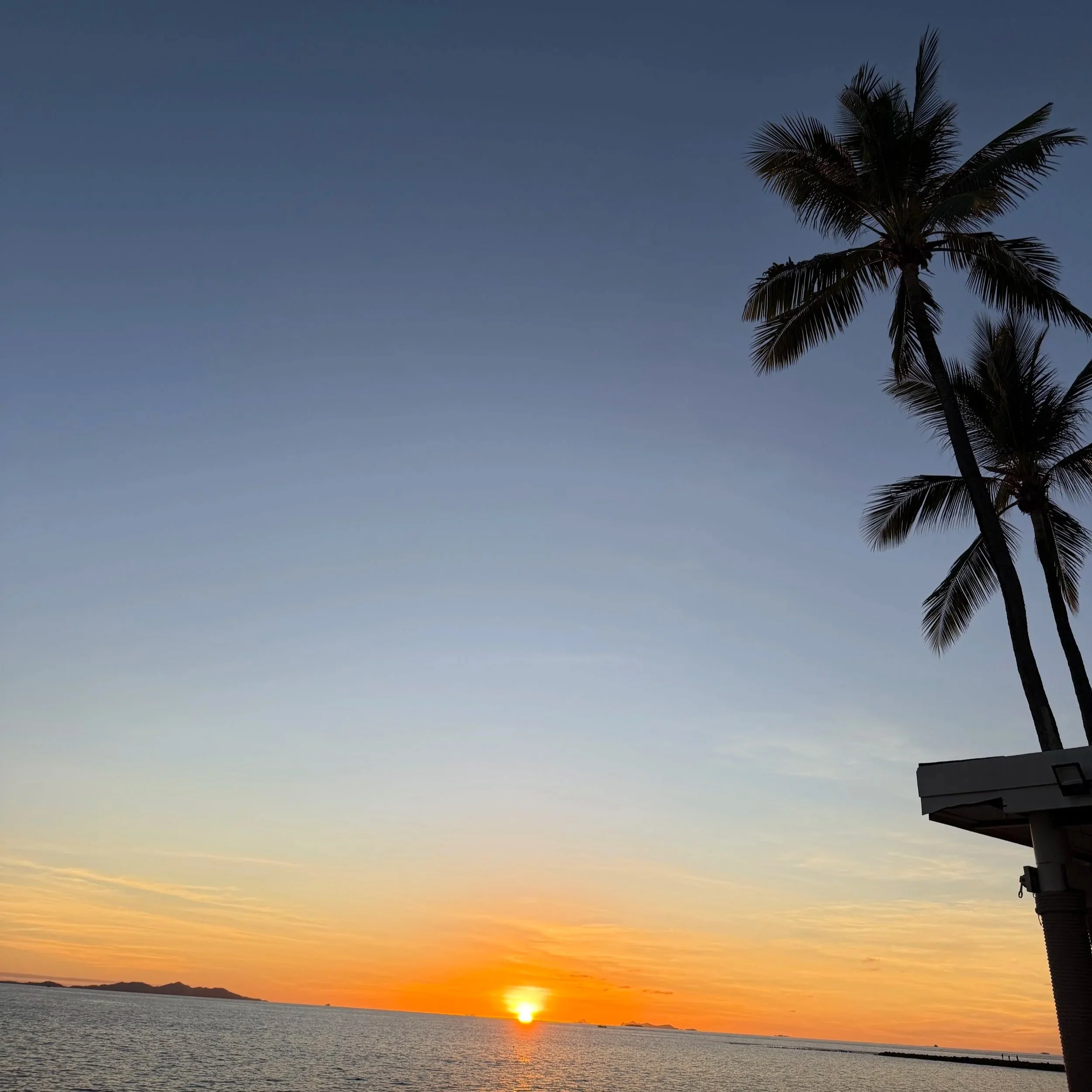
Crossing the International Date Line
One of the most fascinating parts of traveling to Fiji has nothing to do with diving at all, it's crossing the International Date Line.
Flying west across the Pacific means you lose an entire calendar day. You might leave Hawaiʻi on a Monday evening and land in Fiji on Wednesday morning, even though you've only spent about nine hours in the air. It's one of those travel experiences that feels impossible until you experience it yourself.
The journey home is just as strange. Heading east across the Pacific, you gain that day back, often arriving home on what appears to be the very same day you departed Fiji. Your watch, your phone, and your body all seem to disagree for a while, and jet lag becomes part of the adventure.
Understanding the time change is one of the reasons I encourage divers to avoid overly tight itineraries. Between overnight flights, changing time zones, long travel days, and hauling dive gear through multiple airports, it's easy to arrive exhausted before you've even assembled your regulator. Giving yourself a little breathing room makes a tremendous difference. Diving is simply more enjoyable when you're well rested, properly hydrated, and ready to appreciate the experience instead of recovering from the journey.
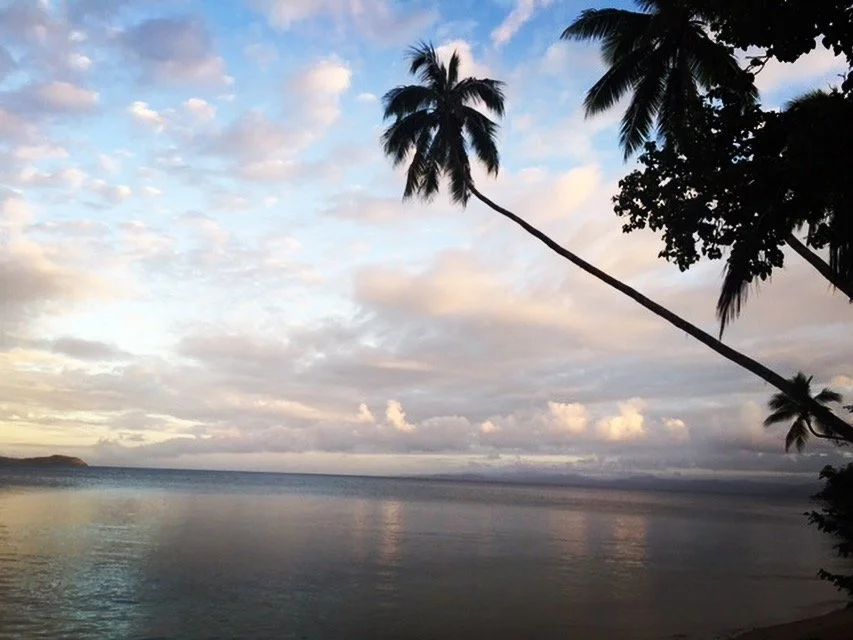
Starting the Journey from Hawaiʻi
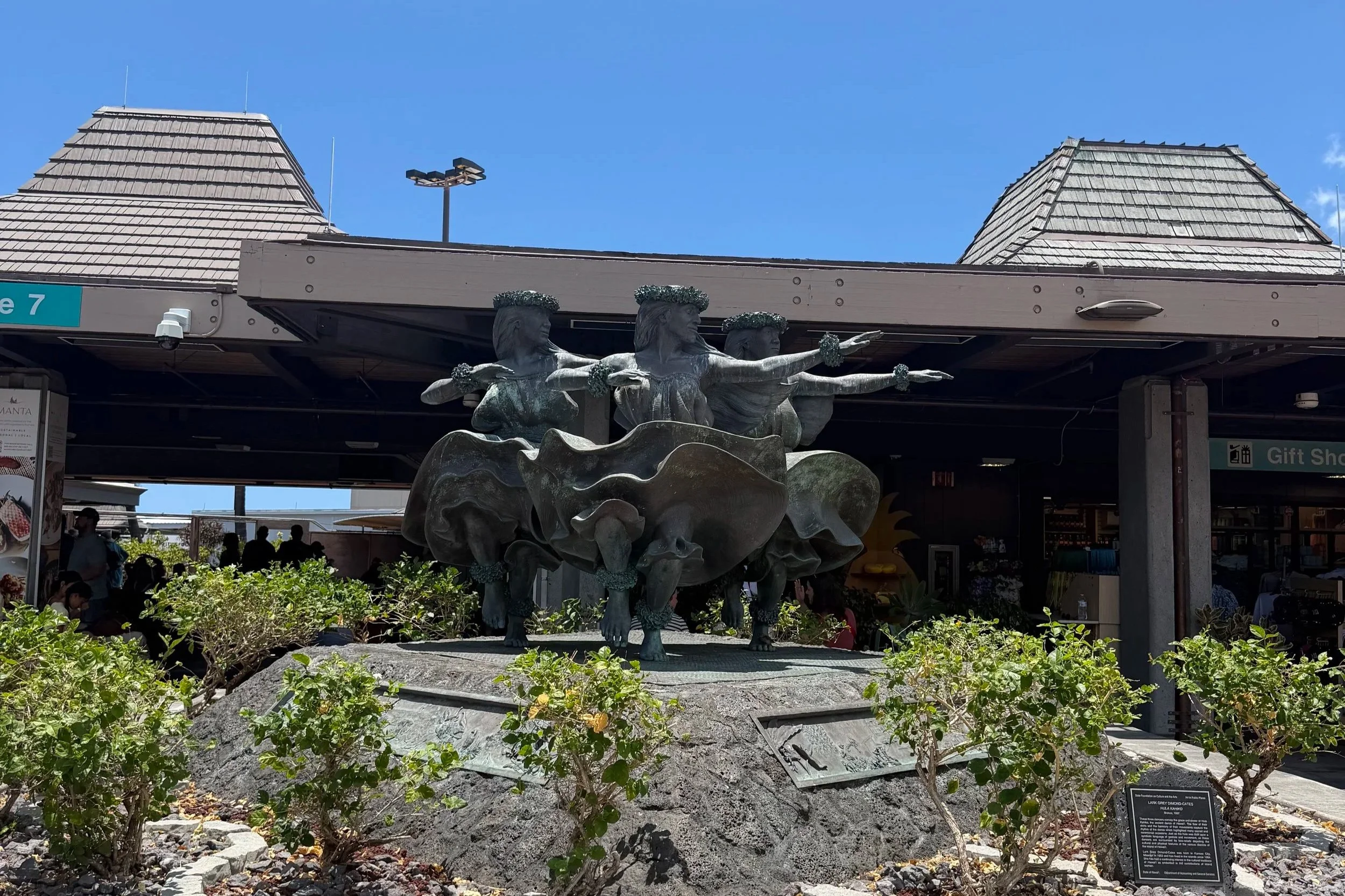
For this trip, our adventure began on the Big Island of Hawaiʻi with a short Hawaiian Airlines flight from Kona to Honolulu. That quick hop almost serves as a transition between everyday life and the international adventure ahead.
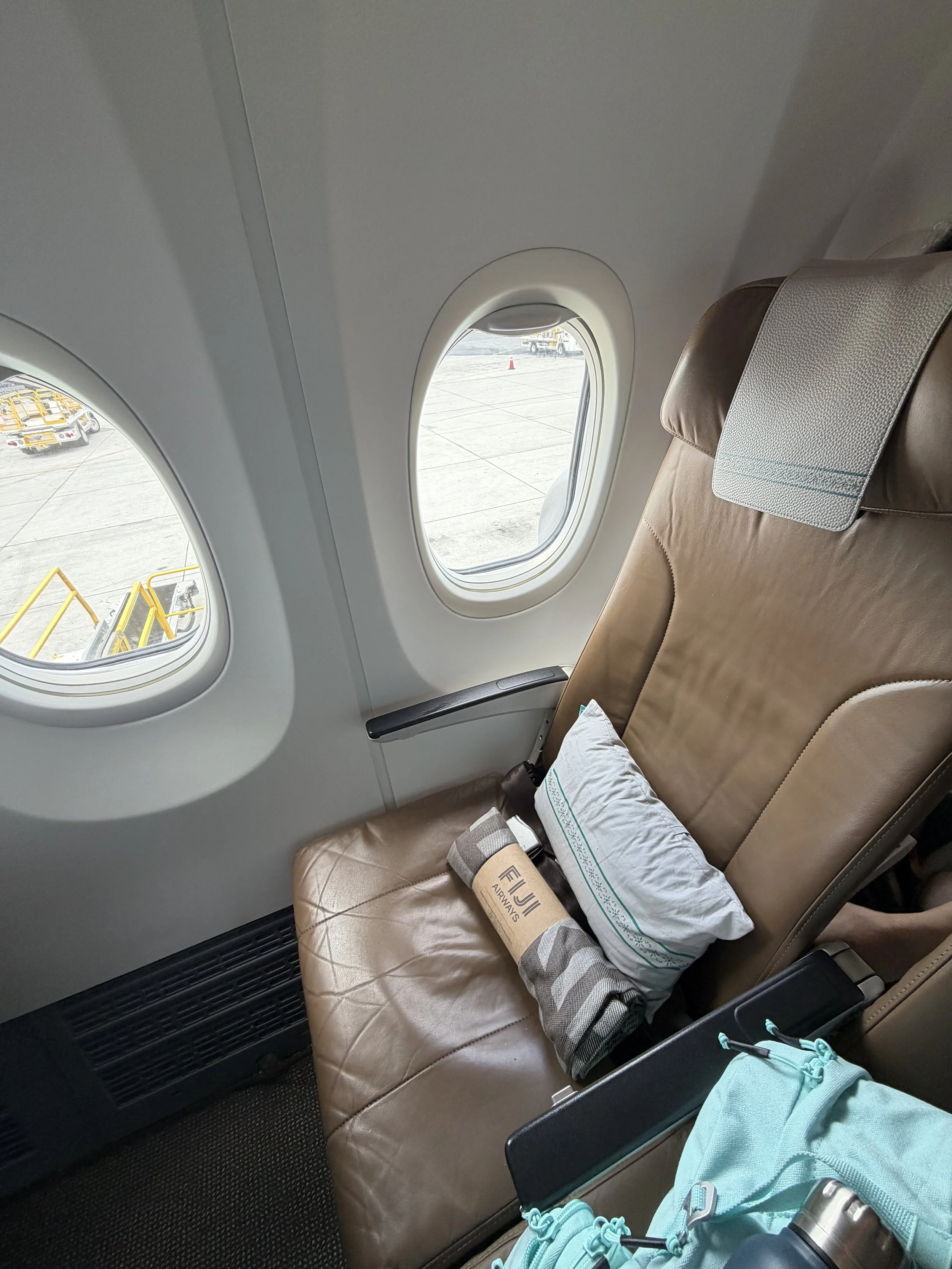
From Honolulu, we boarded Fiji Airways for the overnight flight to Nadi. From the moment you step onboard, the warm "Bula!" greetings and genuine Fijian hospitality begin shifting your mindset into vacation mode. The crew is welcoming, the atmosphere feels relaxed, and before long you're watching the Pacific disappear beneath the wing.
One unique part of this route is the brief stop on Kiritimati (Christmas Island). Passengers remain on the aircraft, but looking out the window at one of the world's most remote inhabited islands is a reminder of just how vast the Pacific Ocean really is. It's a surreal moment that maps and globes simply can't capture.
By the time you continue on toward Fiji, the journey has already started to feel like an adventure rather than just a series of flights.
Arriving in Nadi
Stepping off the aircraft in Nadi, you're immediately greeted by warm tropical air and an unmistakable feeling that you've arrived somewhere special. Palm trees sway outside the terminal, the pace slows considerably, and before long you'll hear your first cheerful "Bula!" welcoming you to Fiji.
Customs and immigration were straightforward, and the warmth of the Fijian people became apparent almost immediately. There's no frantic rush or sense of urgency, everything seems to move at a relaxed island pace that encourages you to slow down as well.
Rather than immediately boarding another flight to Taveuni, our itinerary included two nights in Nadi. After crossing the Pacific, it was exactly the right decision. Those extra days gave us an opportunity to catch up on sleep, rehydrate, stretch their legs, and settle into island time before beginning the diving portion of the trip.
It's tempting to get to your final destination as quickly as possible, but sometimes slowing down actually gets you more out of the experience. By the time we boarded our domestic flight to Taveuni, everyone felt refreshed, excited, and ready to dive.
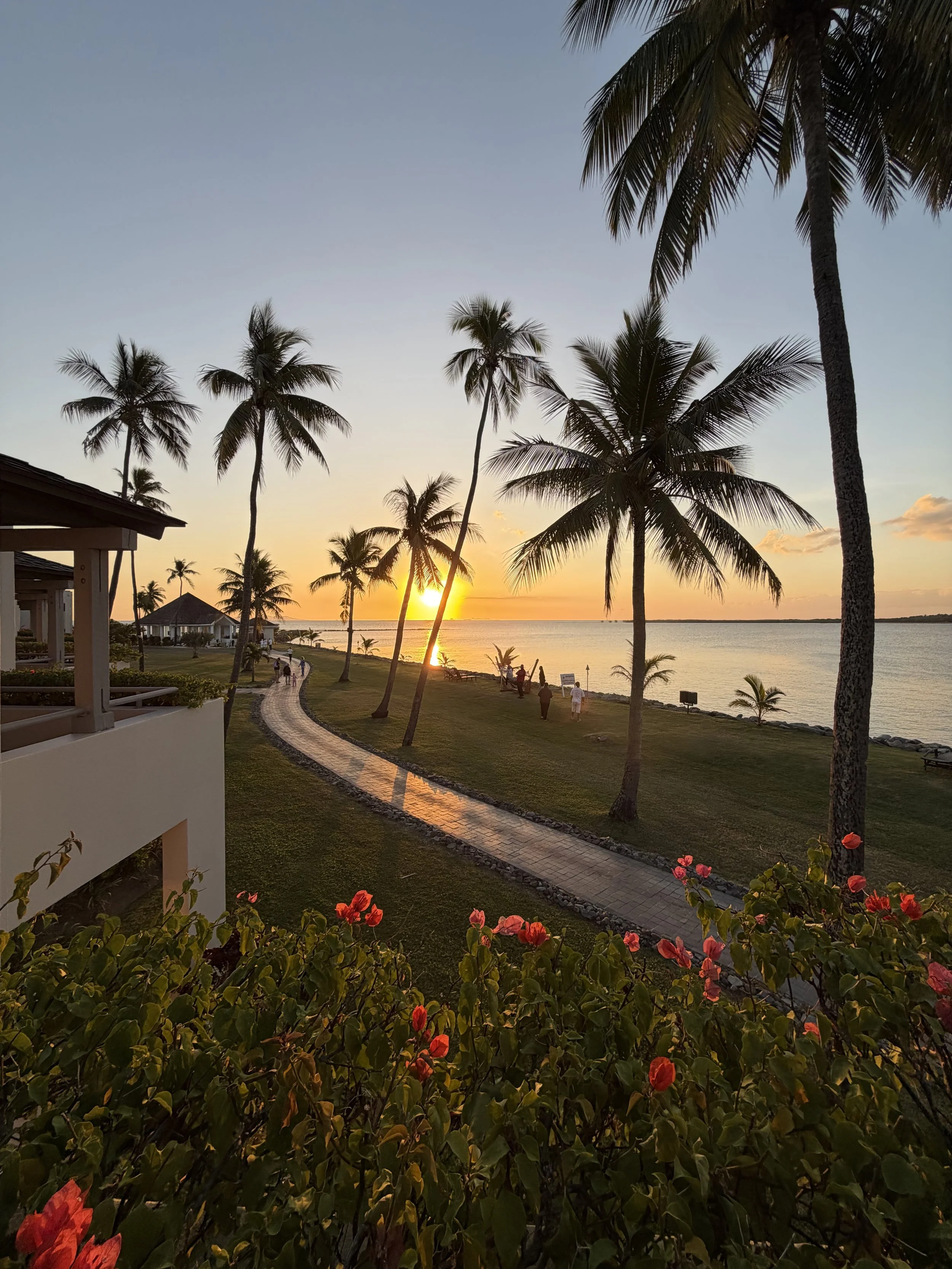
Why Buffer Nights Matter
One of the biggest lessons I've learned from leading international dive trips is that travel days take more out of you than you realize. Between overnight flights, changing time zones, hauling scuba gear through airports, airport food, dehydration, and disrupted sleep, your body has already done a lot of work before you ever step onto a dive boat.
That's why I intentionally build buffer nights into Seaira Dives itineraries whenever possible. They're not "lost" vacation days—they're an investment in enjoying the trip. Arriving rested, hydrated, and mentally present makes every dive better.
For this trip, we spent two nights at the Sheraton Fiji Golf & Beach Resort on Denarau Island before continuing on to Taveuni. It was the perfect place to ease into island life. Instead of racing to another airport, we had time to settle in, enjoy the warm weather, walk along the beach, swim in the pools, and simply let our bodies adjust after crossing the Pacific.
Those slower days also gave everyone a chance to organize dive gear, recharge camera batteries, repack luggage, and shake off the jet lag before the real adventure began. Rather than feeling rushed, everyone arrived in Taveuni refreshed, excited, and ready for an incredible week of diving.
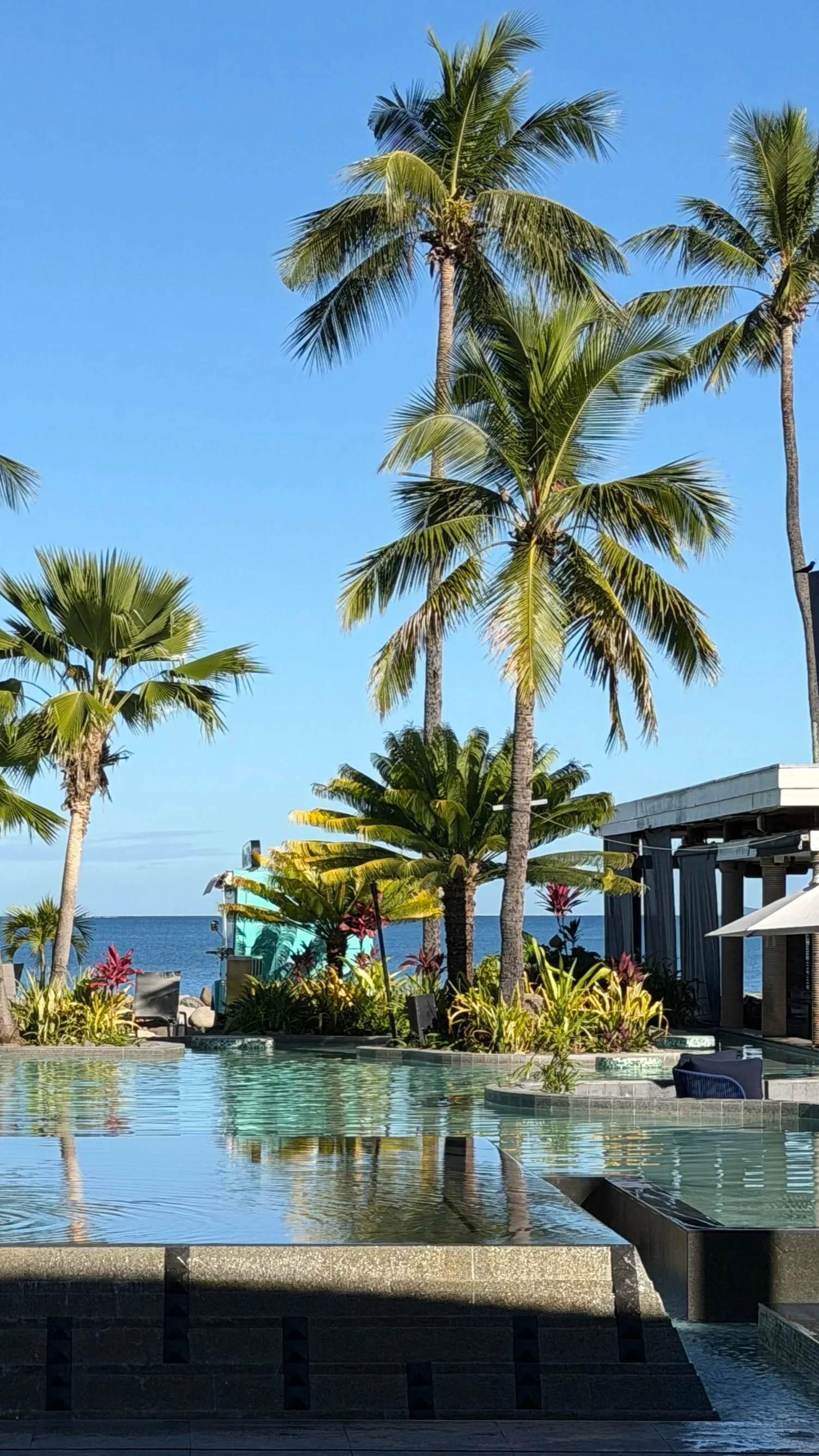
Staying at the Sheraton Fiji Golf & Beach Resort
The Sheraton ended up being one of the smartest parts of our itinerary. Located on Denarau Island, it's only about a 20-minute drive from Nadi International Airport, making it an ideal place to recover after a long journey.
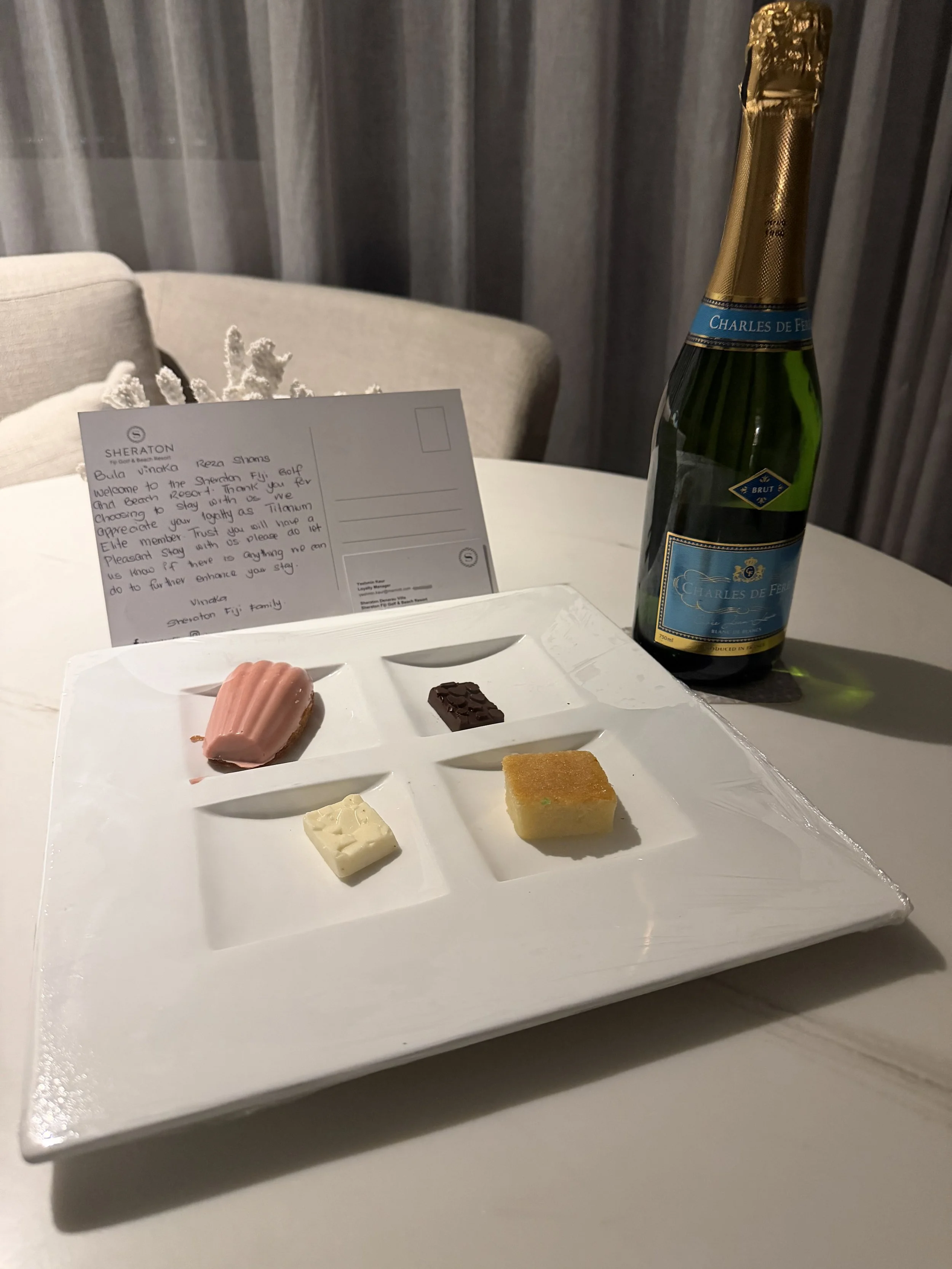
The resort strikes a wonderful balance between tropical island charm and modern comfort. Palm-lined pathways, multiple pools, beach access, and open-air spaces make it easy to slip into vacation mode almost immediately. Morning coffee overlooking the ocean, afternoon swims, and spectacular sunsets became the perfect introduction to Fiji.
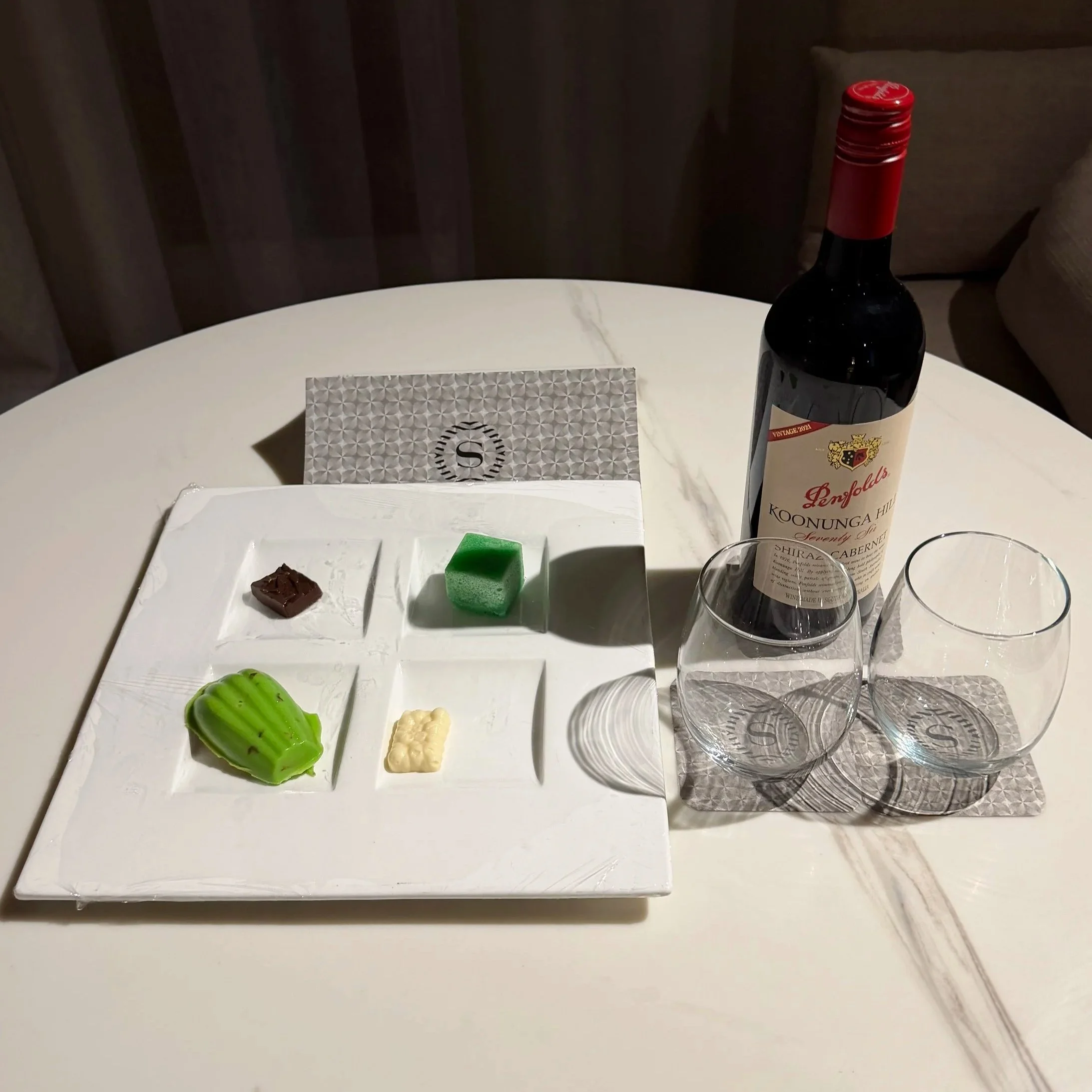
We were fortunate to be upgraded during both of our stays, and each time we were welcomed with thoughtful treats and a bottle of wine waiting in our room. Such a lovely touch after a long day of travel and immediately made us feel at home.
The breakfast buffet was impressively delicious. The selection was incredible, with everything from fresh tropical fruit and pastries to made-to-order eggs and local specialties. The buffet was busy every morning, which isn't surprising given how good it is, so I'd recommend arriving a little earlier if you prefer a quieter experience. We also enjoyed several dinners at the resort, and every meal was outstanding.
Evening Entertainment
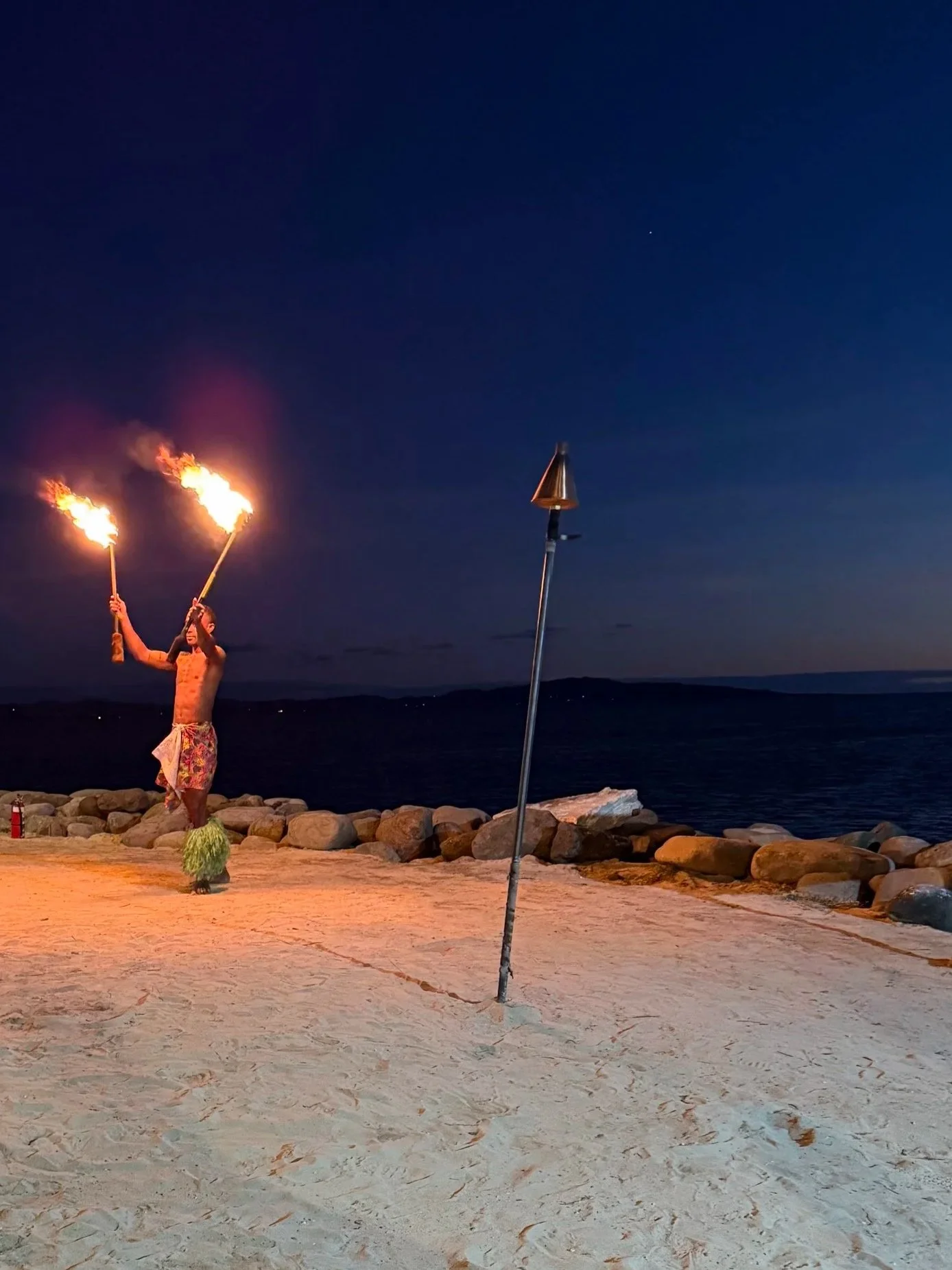
One of the unexpected highlights of our stay at the Sheraton was the nightly cultural entertainment. Each evening, traditional Fijian dancers performed throughout the resort, sharing music, storytelling, and dances that celebrated Fiji's rich culture and history. It was a wonderful way to end the day and offered guests a chance to experience more than just the beautiful beaches and pools.
A favorite was the fire dancing performance. Watching the performers spin and toss flaming staffs against the backdrop of the Pacific after sunset was mesmerizing. The combination of live music, traditional dance, and incredible skill created an unforgettable atmosphere that perfectly captured the warmth and spirit of Fiji.
This experience reminded us a great trip isn't only about the diving. Taking time to appreciate the local culture made the journey even more meaningful, and it was the perfect way to ease into island life before heading to Taveuni.
One thing I especially appreciated was how effortless everything felt. After nearly a full day of travel, nobody wanted to coordinate transportation or search for restaurants. Everything we needed was right there, allowing us to simply relax, recharge, and settle into island time.
The Sheraton also became the perfect bookend to the trip. After returning from Taveuni, we spent another night there before continuing our journey home. Having time to properly rinse and dry dive gear, reorganize luggage, enjoy one final Fijian sunset, and mentally decompress before another long travel day made the transition home feel far less rushed.
Exploring Denarau and Nadi
Although the first few days were intentionally relaxed, there was still plenty to explore.
Port Denarau Marina is well worth visiting. With waterfront restaurants, cafés, boutiques, and boats coming and going throughout the day, it's a fun place to spend an evening while soaking in the laid-back atmosphere. Watching the sunset over the marina with dinner in hand is a pretty great way to begin a Fiji adventure.
We also spent time exploring the local markets in Nadi, where vendors sell fresh tropical fruit, spices, handmade crafts, and souvenirs. It's a wonderful reminder that Fiji is much more than beautiful resorts. Taking time to explore the local community adds another layer to the experience and offers a glimpse into everyday Fijian life.
If you have an extra day before heading to Taveuni, I also highly recommend visiting Cloud 9. I first went back in 2016 and had an absolute blast. This floating platform in the middle of the turquoise waters of the Mamanuca Islands is exactly what most people picture when they imagine Fiji. Fresh pizza comes out of the oven throughout the day, music plays in the background, and guests spend hours swimming, snorkeling, jumping into the crystal-clear water, or simply relaxing in the sunshine.
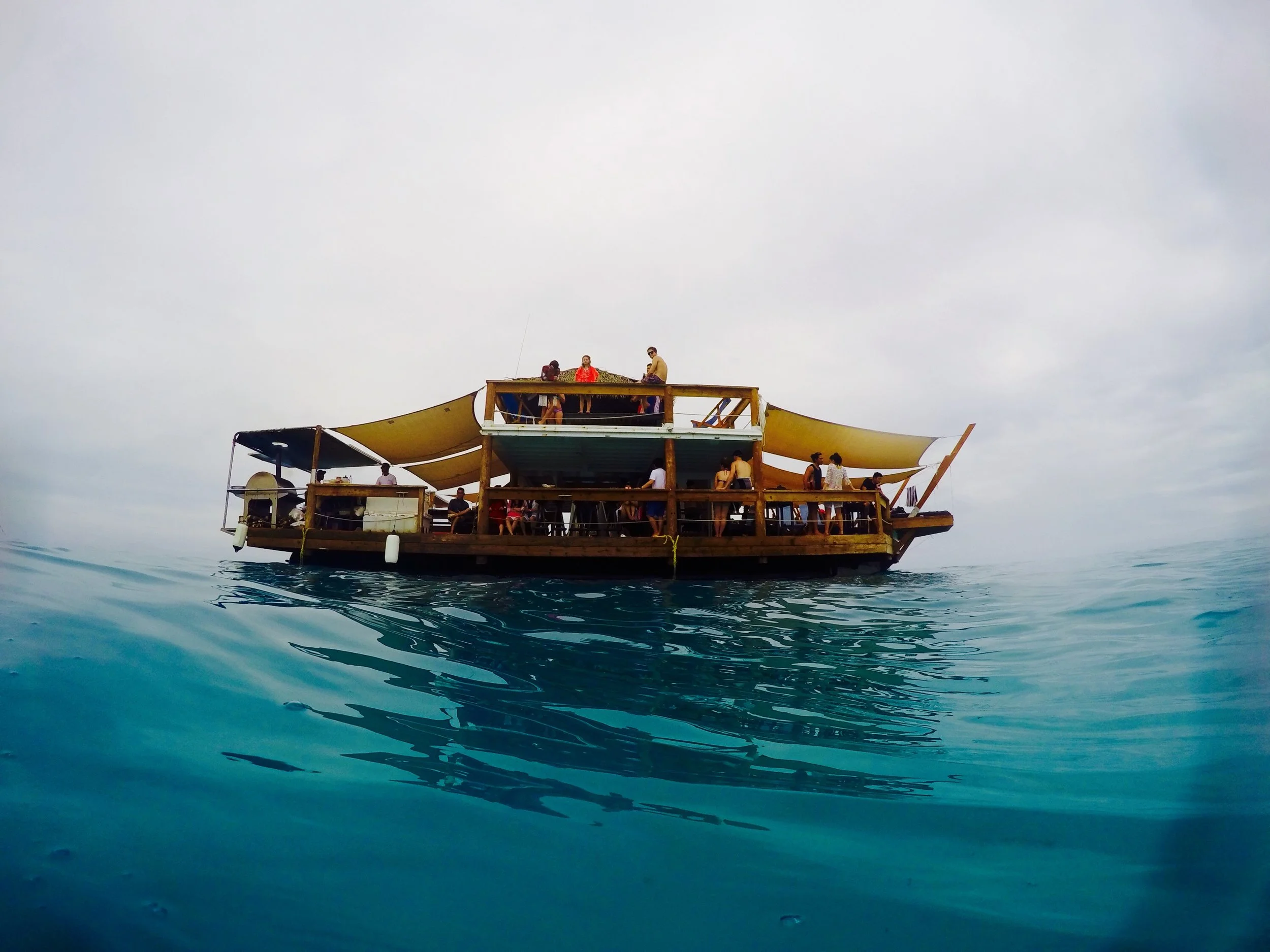
Sometimes the best travel memories aren't about checking another destination off a list. They're about sharing a meal with friends, floating in warm water, watching the sun sparkle across the Pacific, and realizing you don't have anywhere else you need to be.
Fiji Airways Baggage Restrictions and Dive Gear
One thing every diver should plan for before traveling to Fiji is baggage. Scuba gear adds up quickly…BCD, regulators, wetsuit, fins, dive computer, mask, camera equipment, chargers, and everything else that somehow finds its way into your luggage. While Fiji Airways' international baggage allowance is generous, the domestic flights between Nadi and Taveuni operate a little differently and can catch travelers by surprise if they haven't planned ahead.
One of my biggest recommendations is to purchase any additional checked baggage through the Fiji Airways app before your trip if you think you'll need it. Buying extra baggage in advance is significantly less expensive than paying overweight or excess baggage fees at the airport, especially when traveling with scuba gear or large camera systems.
Carry-on weight is another thing worth paying attention to. Fiji Airways tends to enforce carry-on limits more consistently than many U.S. airlines, particularly on the smaller domestic aircraft. If you're traveling with an underwater camera housing, strobes, lenses, or other photography equipment, weigh your bags before leaving for the airport so there are no surprises at check-in.
I always recommend keeping your regulator, dive computer, prescription medications, lithium batteries, camera, and any other irreplaceable or essential items in your carry-on whenever possible. While lost luggage is uncommon, it can happen on any multi-leg international trip. Replacing a T-shirt is easy. Replacing your dive computer or regulator on a remote island isn't.
Flying to Taveuni
The flight from Nadi to Taveuni is one of those moments that reminds you why you love to travel.
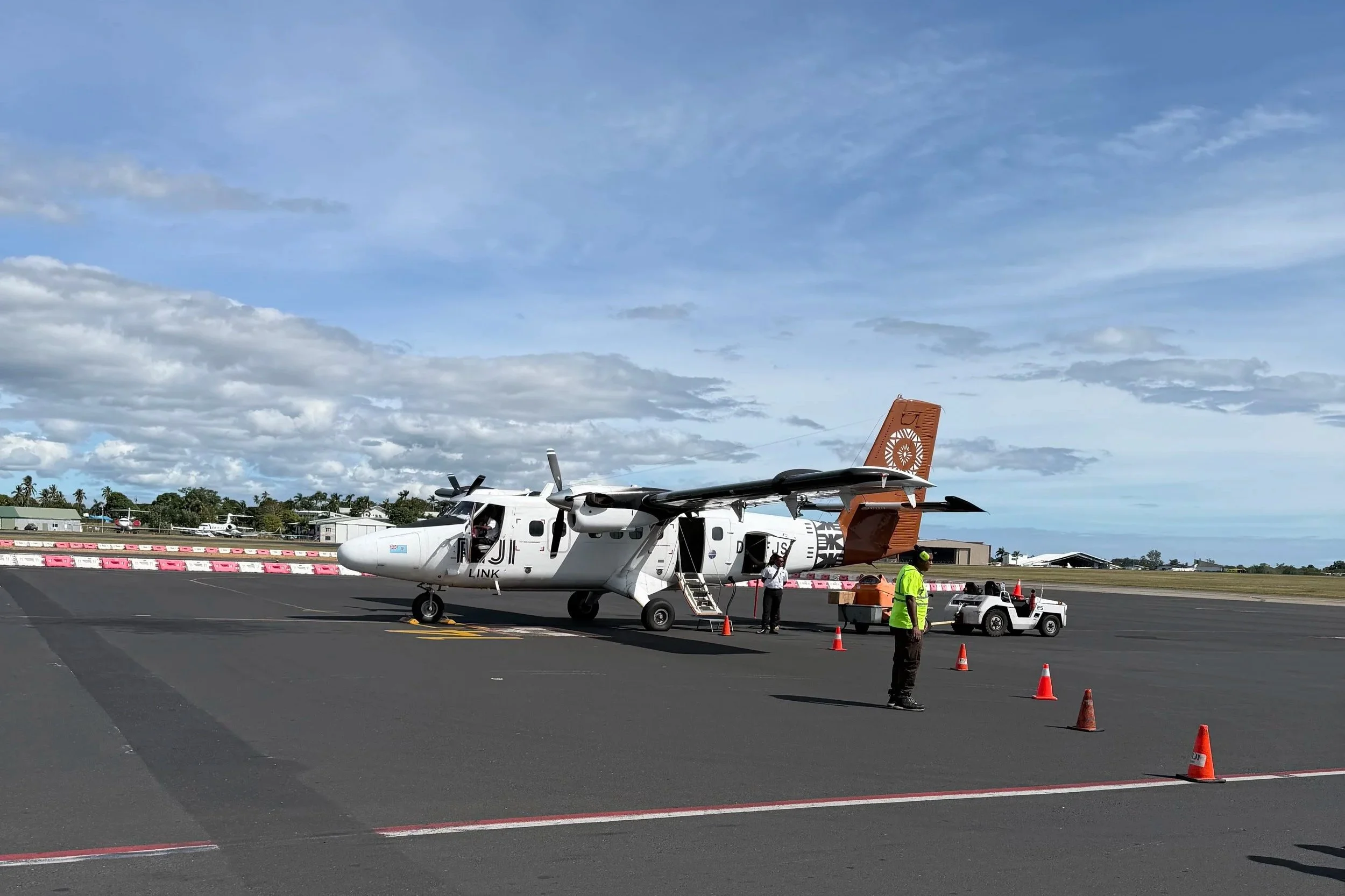
After the bustle of an international airport, boarding a small island-hopper feels like stepping back in time. The pace slows, the aircraft is intimate, and before long you're climbing over one of the most beautiful island chains in the world.
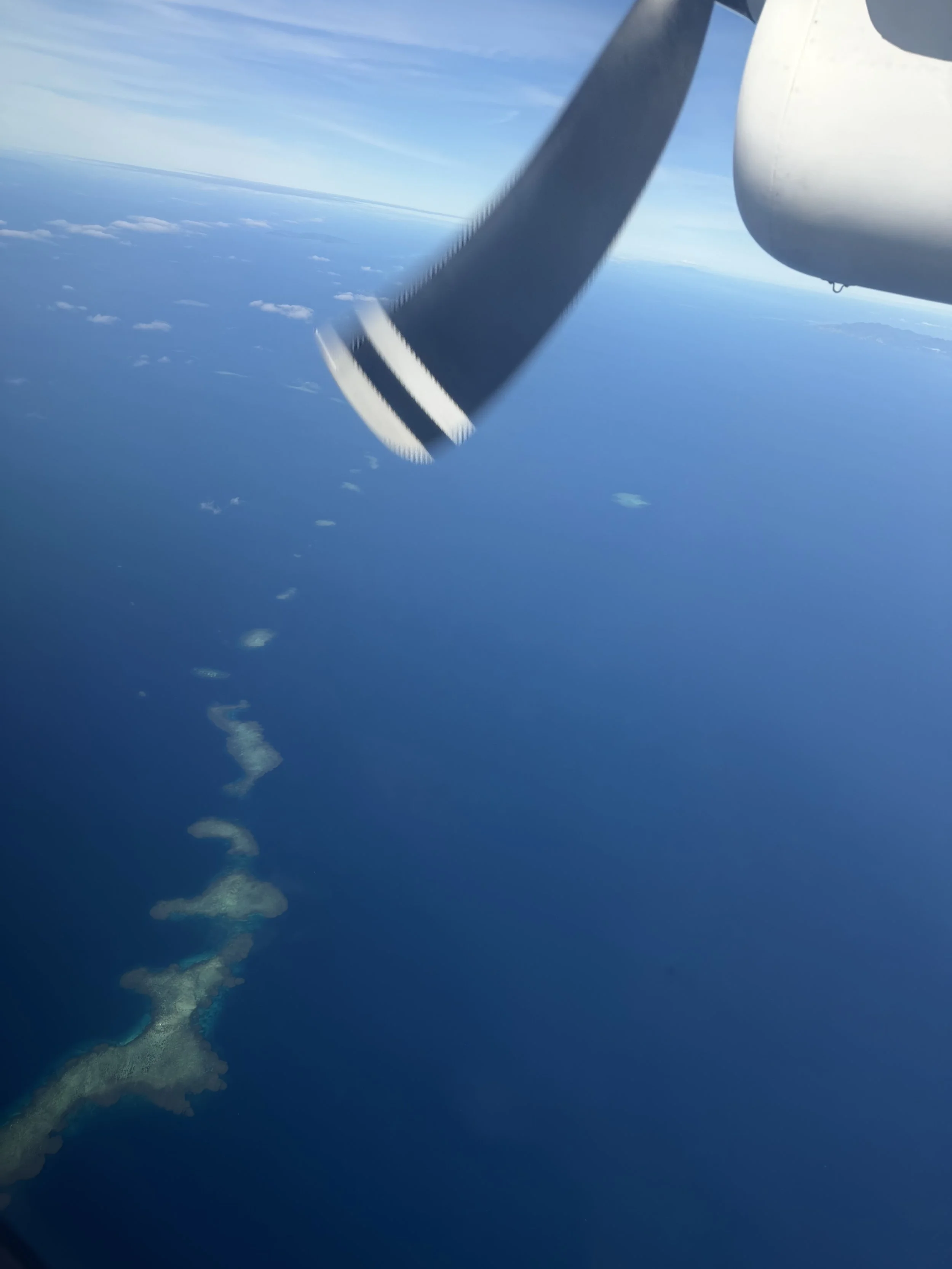
Be sure to grab a window seat if you can. The views are absolutely spectacular. Bright turquoise reefs, lush green mountains, winding rivers, waterfalls, and tiny islands scattered across the Pacific stretch as far as you can see. It's the kind of flight where nobody closes the window shade because everyone is too busy staring outside.
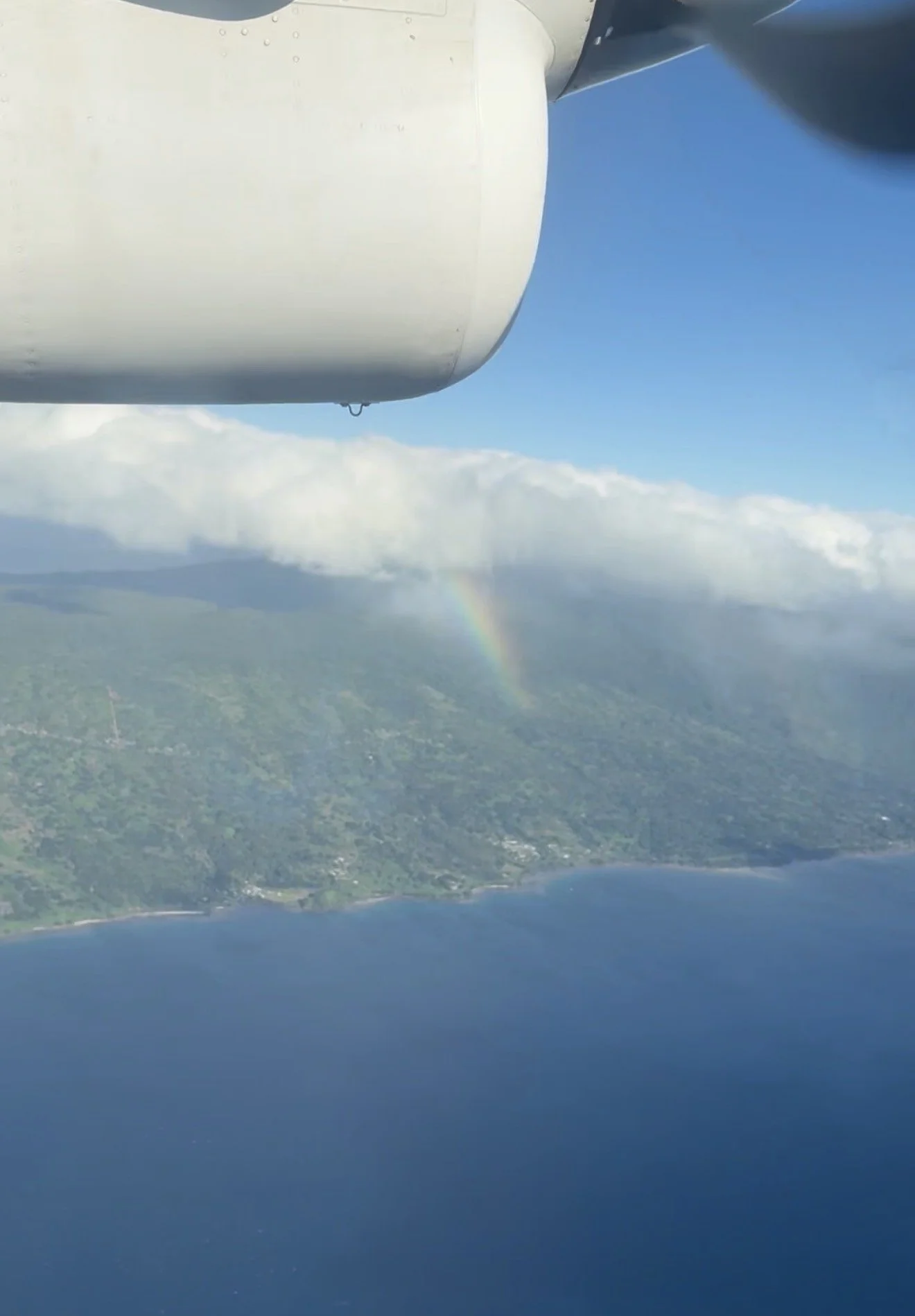
As Taveuni comes into view, you begin to understand why it's known as Fiji's "Garden Island." Dense rainforest blankets the volcanic mountains, while vibrant reefs fringe the coastline below. It's every bit as beautiful from the air as it is underwater.
Arriving on Taveuni
Stepping off the aircraft in Taveuni feels completely different from arriving at a major airport. There are no crowds rushing through terminals, no long walks to baggage claim, and no sense of urgency. Everything immediately slows down.
A short transfer brings you to the resort, where the soundtrack quickly changes from jet engines to birdsong, gentle waves, and rustling palm trees. Before long, dive gear is being assembled, camera batteries are charging, and conversations naturally shift toward currents, marine life, and tomorrow's dive briefing.
This is one of my favorite moments of every dive trip. After months of planning, countless emails, and long travel days, everyone is finally here. The excitement becomes contagious as people start meeting their dive buddies, setting up their equipment, and imagining what they'll see beneath the surface over the coming week.
Taveuni has a way of simplifying life. The routine becomes wonderfully predictable: wake up, dive, eat, laugh, repeat. Days are measured by tides instead of clocks, and before long you forget what day of the week it even is. That's part of the magic.
Why This Route Works So Well
This itinerary wasn't designed to get us from Point A to Point B as quickly as possible. It was designed to help everyone actually enjoy the journey.
By building in buffer nights before and after the dive portion of the trip, we reduced travel stress, gave everyone time to recover from long-haul flights, minimized the risk of missed connections affecting the dive schedule, and created space to truly experience Fiji beyond the resort.
This also made practical sense. There was time to reorganize luggage, dry dive gear, recharge camera equipment, hydrate properly, and simply slow down. Those small details make a surprisingly big difference over the course of an international dive trip.
I've found that the best dive vacations aren't necessarily the ones with the most dives—they're the ones where you never feel rushed. When you're well rested and fully present, every dive becomes more enjoyable, every sunset lasts a little longer, and every memory becomes just a little more vivid.
The Journey Home
After an unforgettable week of diving in Taveuni, the journey home mirrored our trip out. We flew back to Nadi, enjoyed one final evening in Fiji, and then boarded the overnight Fiji Airways flight back across the Pacific to Honolulu.
Since our flight arrived late in the evening, we intentionally spent two nights in Waikīkī before catching Hawaiian Airlines back to Kona. Once again, slowing the pace made all the difference.
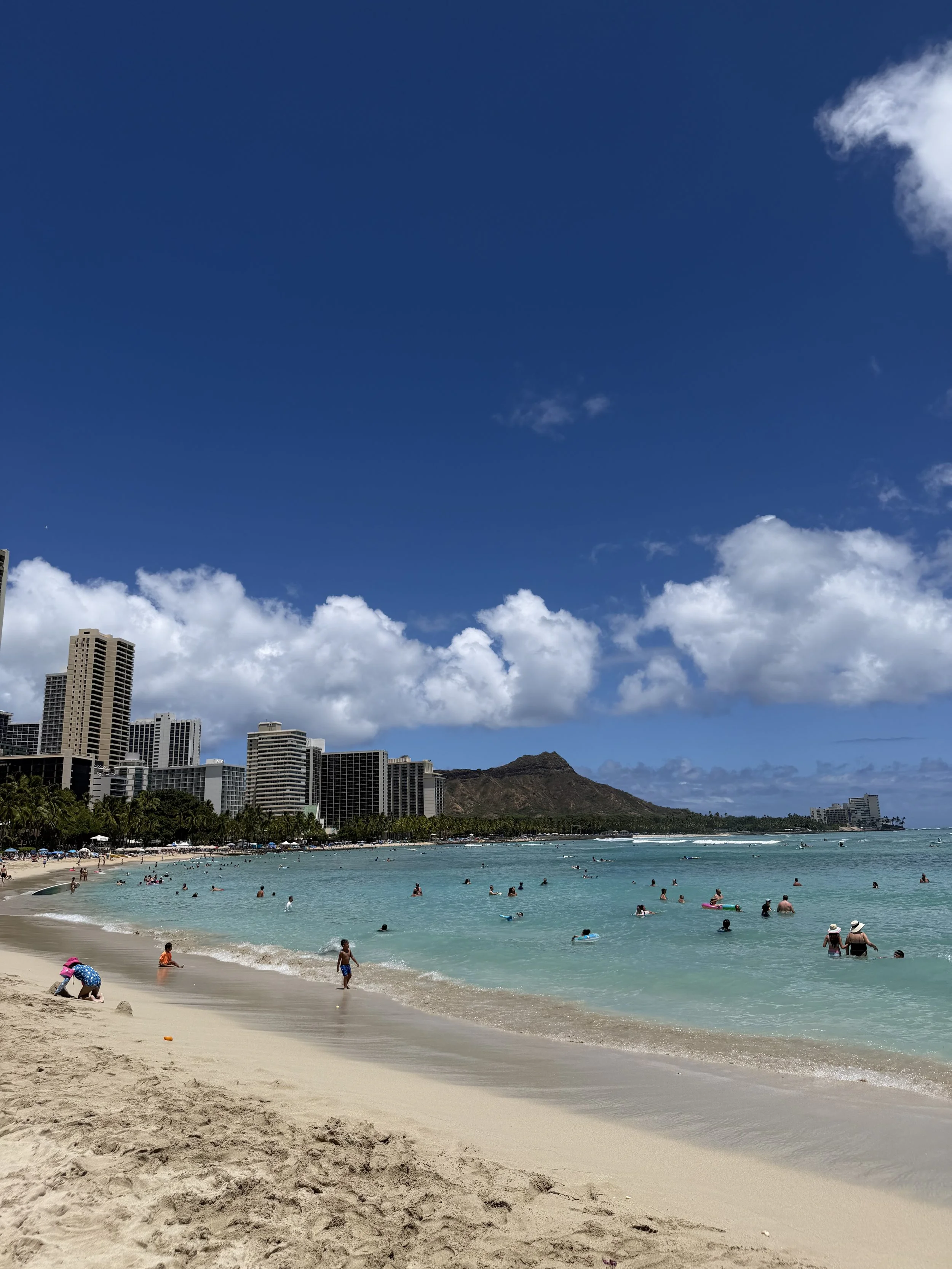
We stayed at the Laylow Waikīkī, a boutique hotel just steps from Waikīkī Beach. After a week on the quiet, lush island of Taveuni, it was fun to experience the energy of Waikīkī again. We wandered the beach, enjoyed great food, explored the shops, and spent a couple of evenings at the Hideout, the Laylow's open-air restaurant and bar. It was the perfect place to unwind with live music, good cocktails, and one last vacation mindset before heading home.
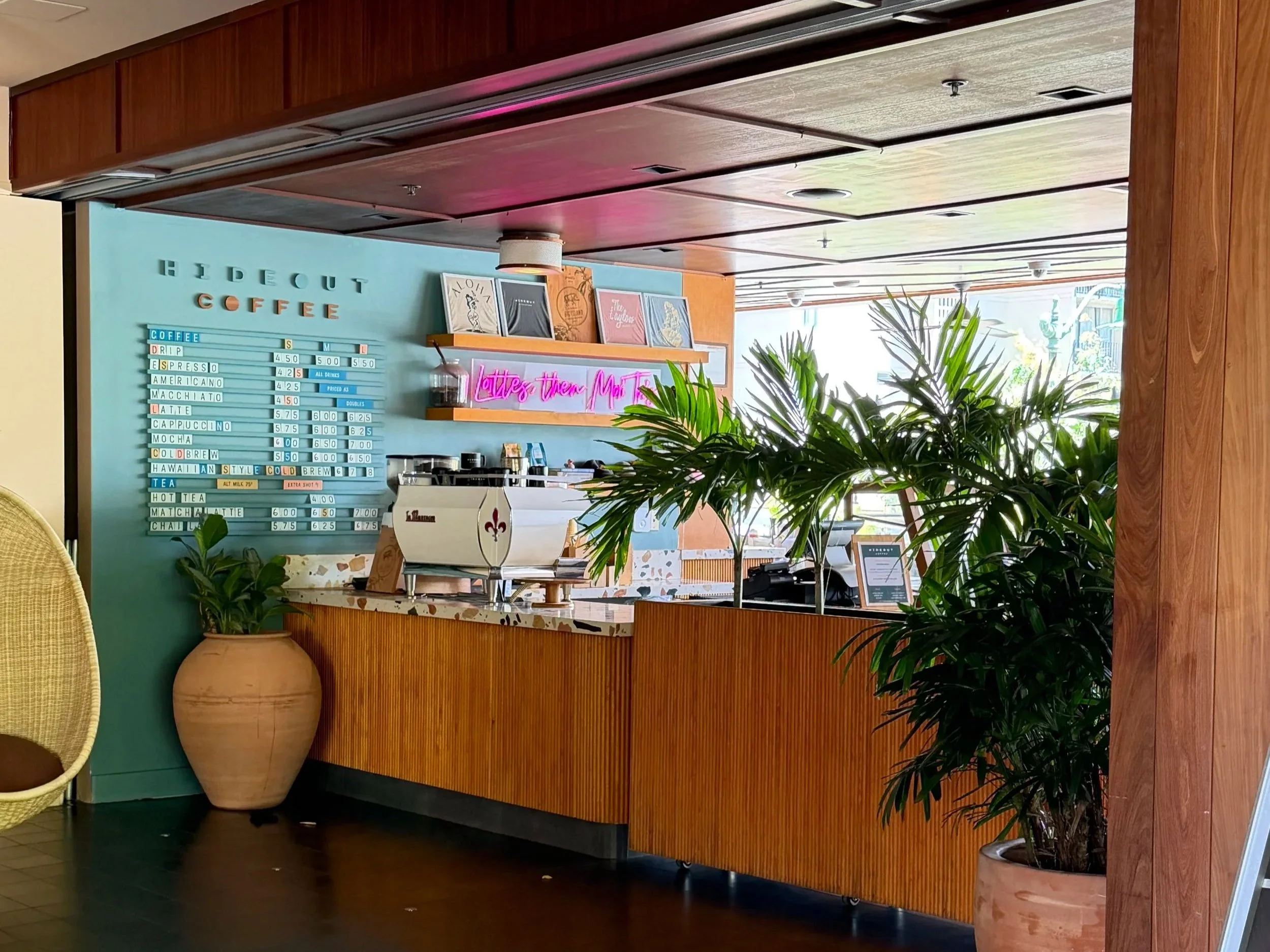
That said, being back in Waikīkī was also a reminder of how much we appreciate the slower pace of life. The crowds, traffic, and constant activity were a stark contrast to the peaceful rhythm we'd just experienced in Fiji. It was exciting for a couple of days, but by the end of our stay, we were more than ready to head back to the Big Island.
Breaking up the journey home like this also made the travel day significantly easier. Instead of stumbling through multiple airports after an overnight international flight, we had time to shower, unpack a little, sleep in a real bed, and enjoy Oʻahu before the final short hop home.
Sometimes the best travel decisions aren't about getting there as fast as possible. They're about making the journey enjoyable from beginning to end.
And With That…
Traveling to Fiji isn't the easiest dive trip you'll ever take, but that's part of what makes it so memorable.
Every flight across the Pacific, every island connection, every buffer night, and every intentionally slow moment gradually pulls you away from the pace of everyday life and into island time. By the time you finally arrive in Taveuni, you've done more than reach your destination. You've mentally arrived, too.
That's exactly why I build Seaira Dives itineraries the way I do. I don't want our trips to feel rushed or exhausting. I want people to arrive rested, excited, and ready to fully appreciate every dive, every sunset, every conversation over dinner, and every unforgettable moment underwater.
Looking back, I wouldn't change a thing. The extra nights in Nadi helped everyone recover from the long journey, Taveuni delivered some of the best diving any of us have experienced, and our time in Waikīkī provided the perfect transition back to reality before returning home.
If you're considering a trip to Fiji, my biggest piece of advice is simple: don't rush it. Give yourself time to enjoy the journey as much as the destination. Because in Fiji, getting there really is part of the adventure.
I hope this guide helps make your own journey a little smoother. And if you'd rather let someone else handle the logistics, I'd love to have you join me on a future Seaira Dives adventure. I'll take care of the planning, you just have to show up ready to dive.
Dive safe, explore passionately, and remember…