
Lembeh, Indonesia 2026
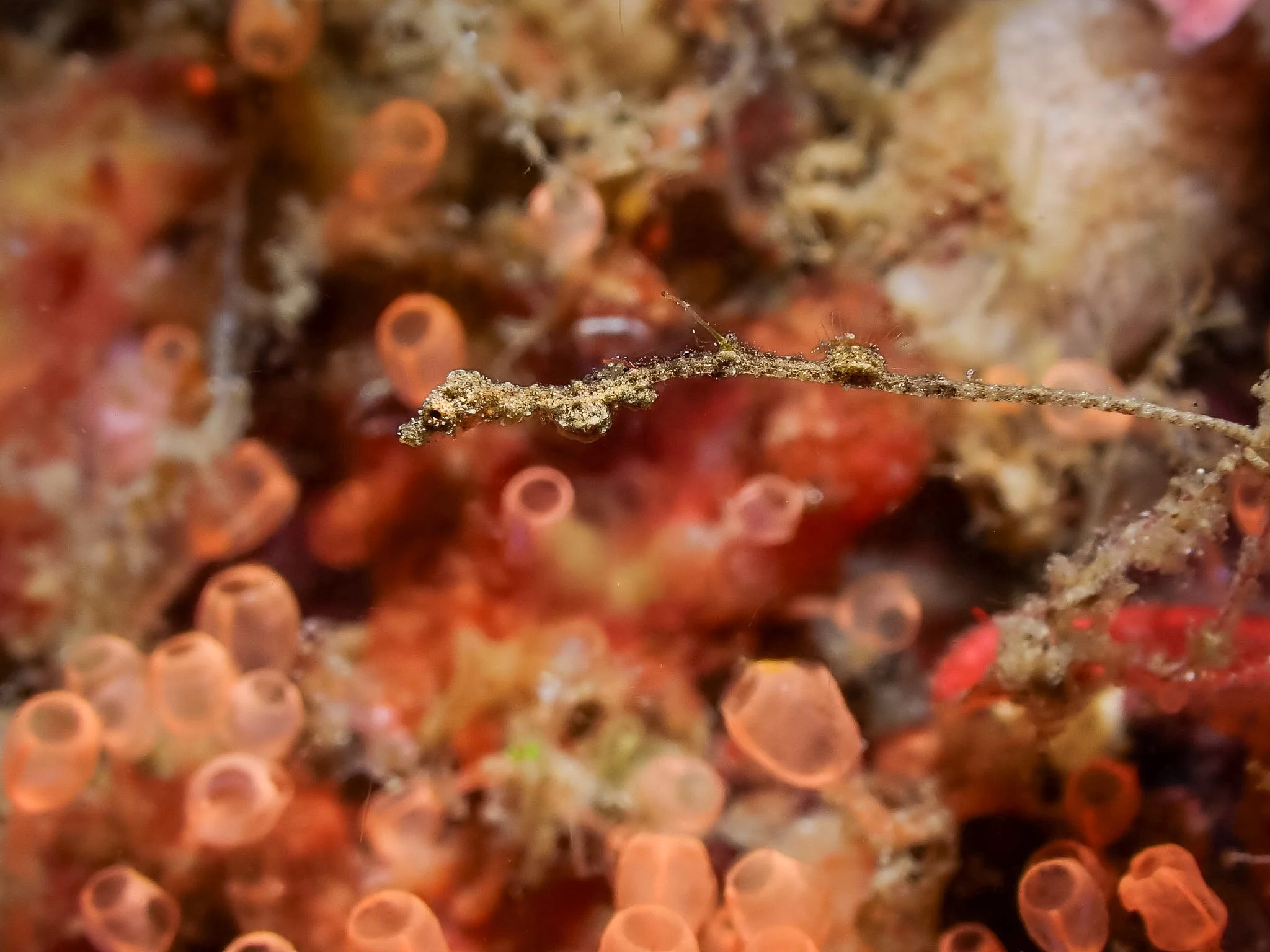
Talk about tiny treasures! The Lembeh sea dragon is one of those creatures that makes you wonder how anyone manages to spot them in the first place. For a little perspective, these miniature relatives of seahorses typically measure just 2 to 3 centimeters long, roughly the length of your fingernail! Their slender bodies and incredible camouflage make them almost impossible to distinguish from the surrounding algae and debris. Photographing something this tiny is a challenge, especially when you're trying to get your camera to focus on a subject that practically disappears into its surroundings. I absolutely love finding these unusual little creatures, and Lembeh is a macro photographer's dream!
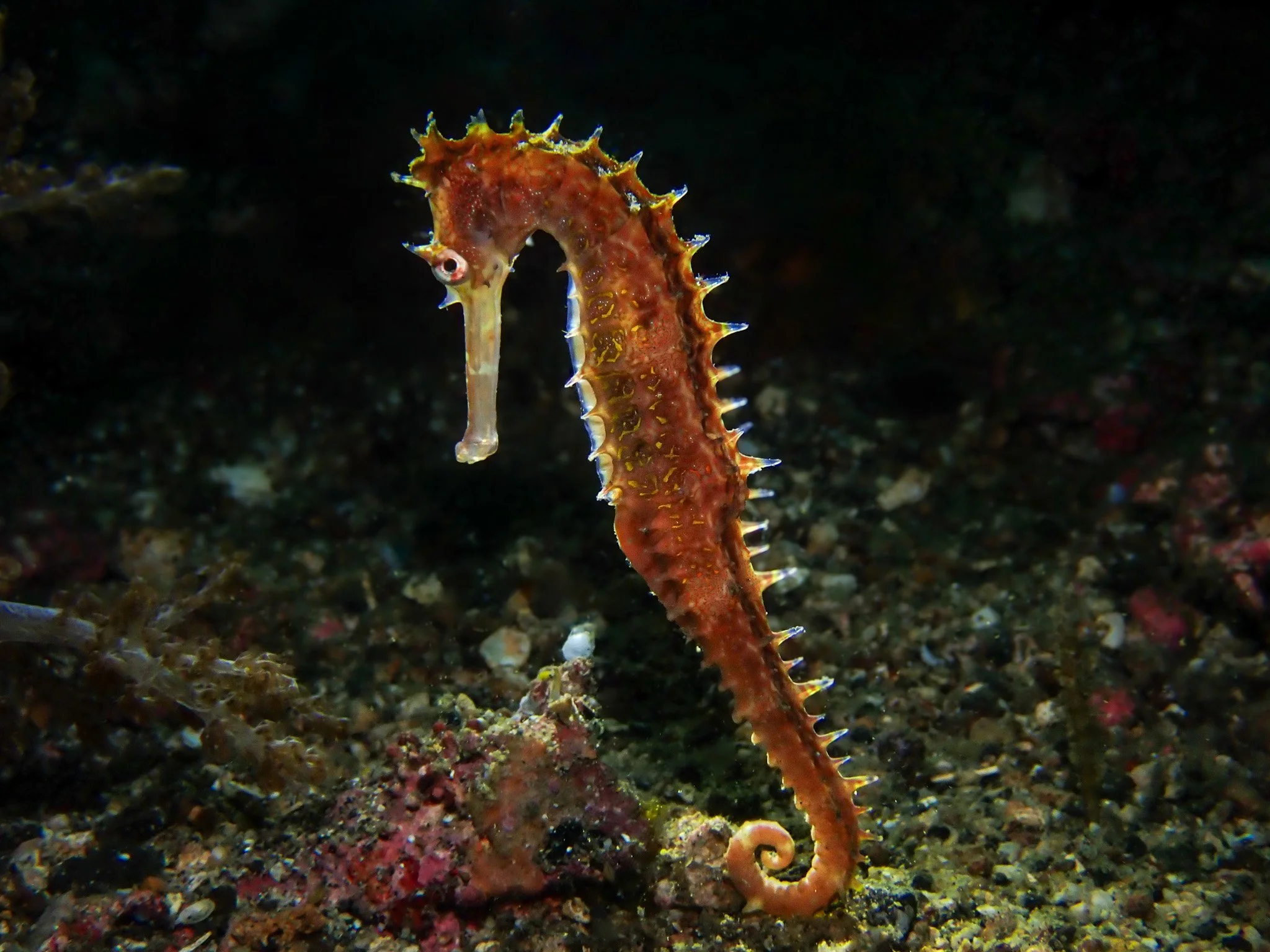
I experimented with backlighting for this seahorse photograph, positioning the light behind my subject to illuminate its spiny silhouette. I love how the light catches the edges of its body, highlighting all those incredible little details against the darker background. Getting the lighting and positioning just right was a challenge, especially underwater, but experimenting with different techniques is one of my favorite parts of photography. This was a fun opportunity to capture a familiar subject in a completely different way.
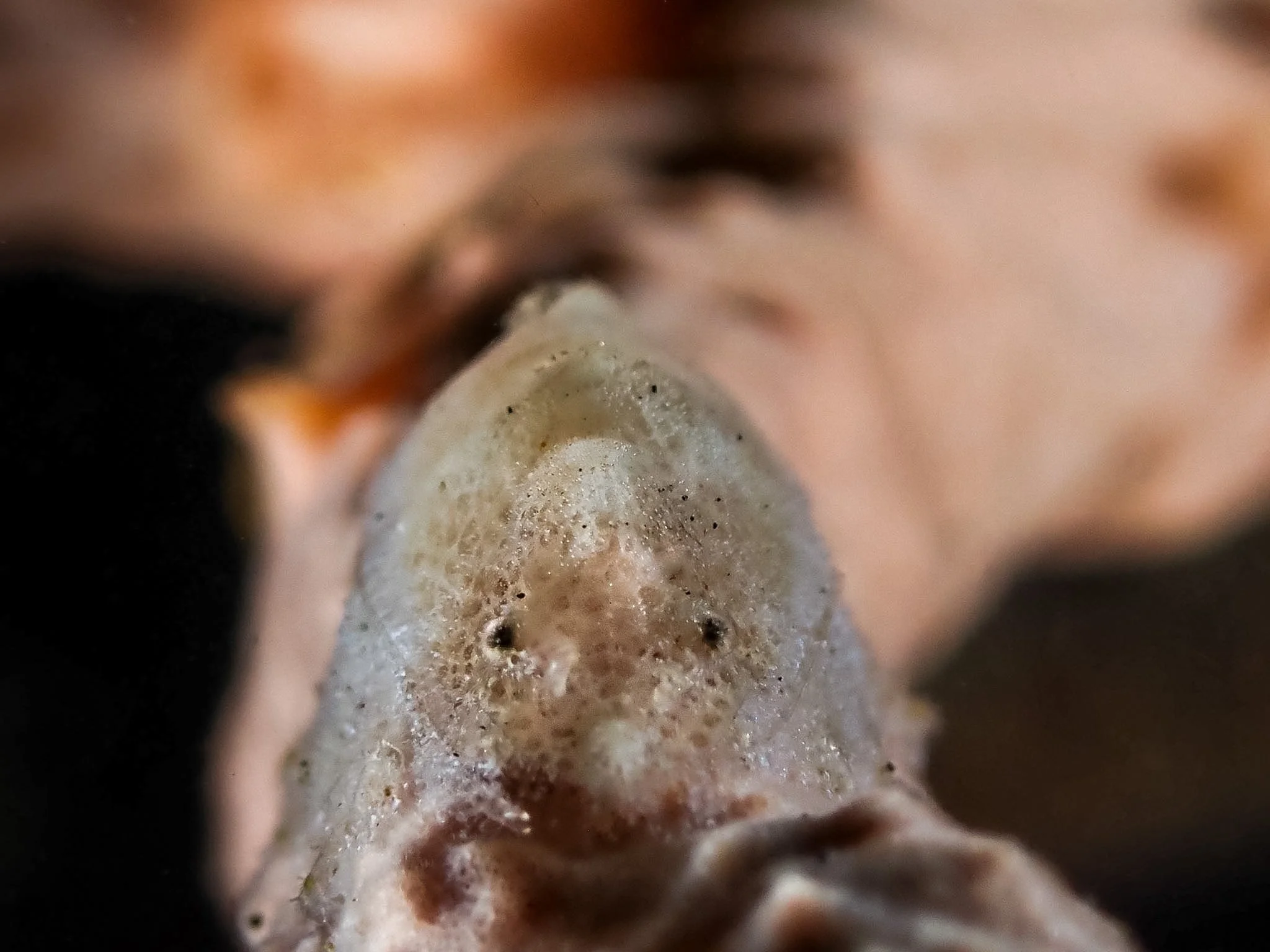
A cryptic sponge shrimp, so perfectly camouflaged that its tiny eyes are almost the only thing giving it away! I love photographing creatures like this because they challenge me to slow down and really pay attention to the smallest details. Getting a clear shot of such a well-hidden subject was tricky, but I especially love how the shallow depth of field draws attention to its little face while the surrounding sponge fades softly into the background. Another wonderful example of why Lembeh is a macro photographer's paradise.
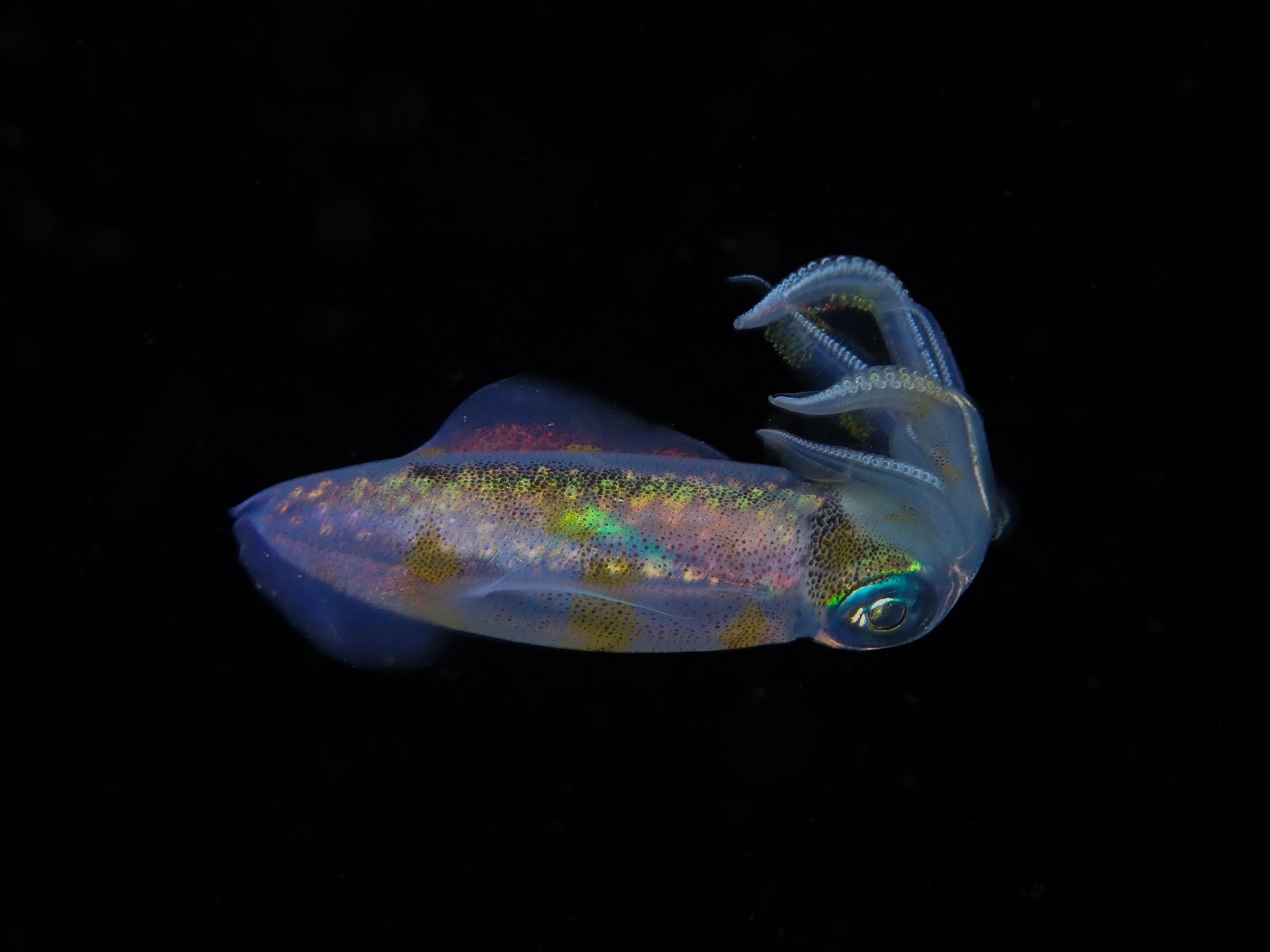
A bigfin reef squid (Sepioteuthis lessoniana) showing off its incredible iridescent colors against the darkness of Lembeh Strait. I've always been fascinated by cephalopods and their ability to change color in an instant. I especially love how the greens, blues, and pinks shimmer across this squid's translucent body. Capturing a moving subject underwater is never easy, particularly when you're trying to get the lighting and focus just right, but moments like this make the challenge worthwhile. One of my favorite things about this photograph is how the black background lets those beautiful colors speak for themselves.
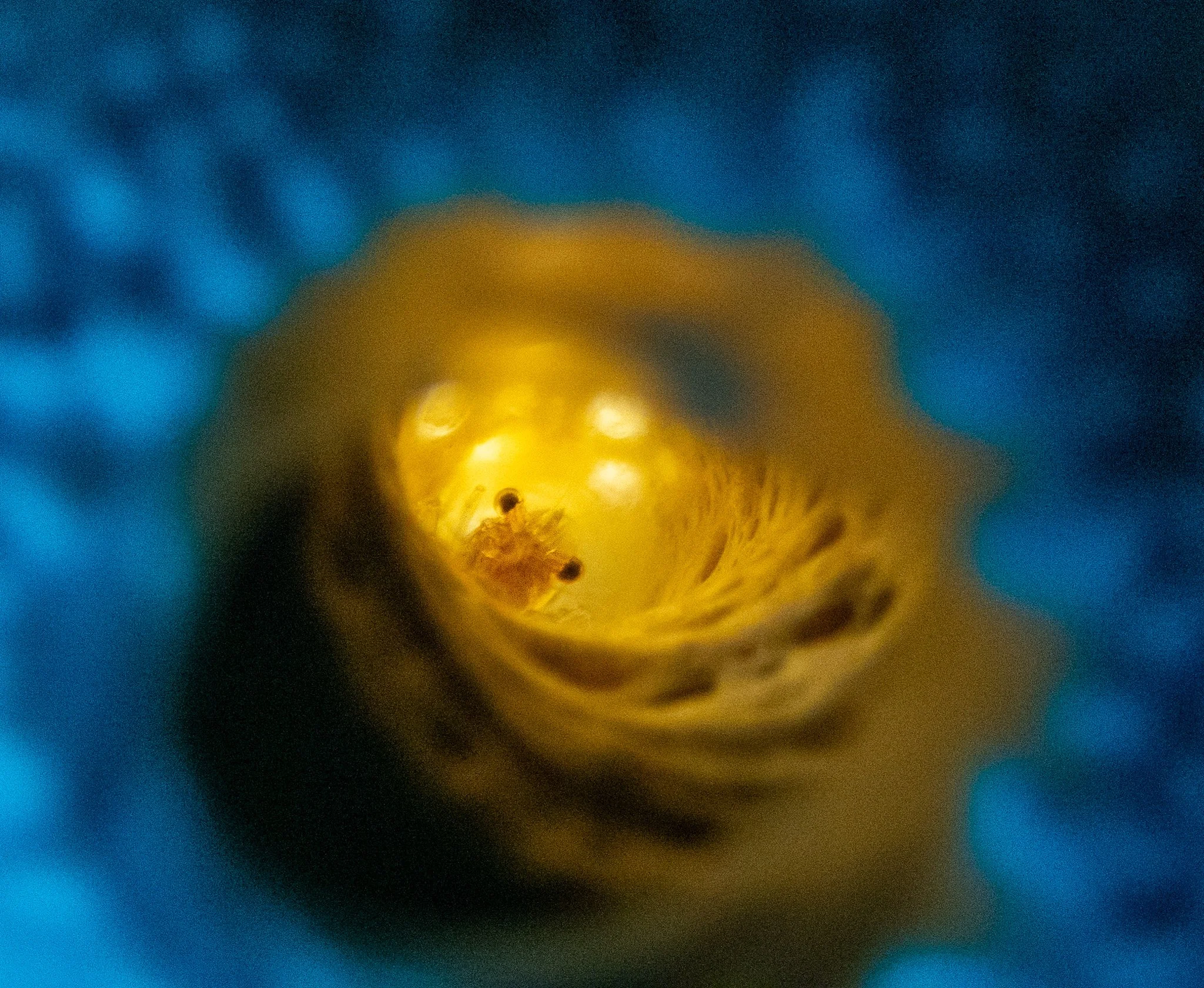
I found this tiny tube coral shrimp tucked deep inside its coral home and wanted to try something different with the lighting. Rather than illuminating the shrimp from the front, I experimented with an external light to illuminate the inside of the tube. Getting the light positioned correctly while trying to focus on such a tiny, constantly moving subject was definitely a challenge! I love how the warm golden glow frames the shrimp and gives us a little glimpse into a world we would normally swim right past. These are the kinds of photographic challenges that make me excited to keep learning and experimenting underwater.
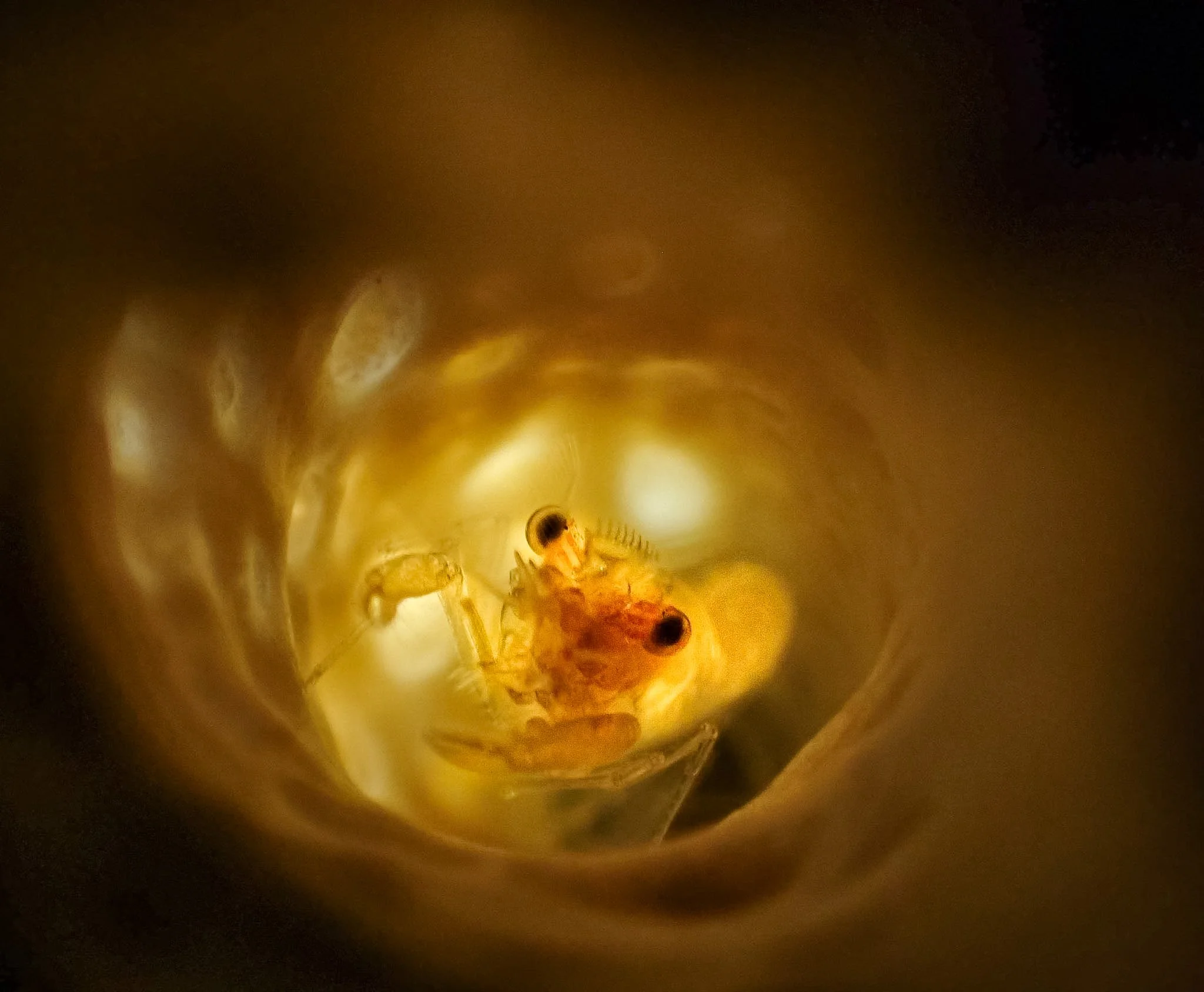
I found this tiny tube coral shrimp tucked deep inside its coral home and wanted to try something different with the lighting. Rather than illuminating the shrimp from the front, I experimented with an external light to illuminate the inside of the tube. Getting the light positioned correctly while trying to focus on such a tiny, constantly moving subject was definitely a challenge! I love how the warm golden glow frames the shrimp and gives us a little glimpse into a world we would normally swim right past. These are the kinds of photographic challenges that make me excited to keep learning and experimenting underwater.
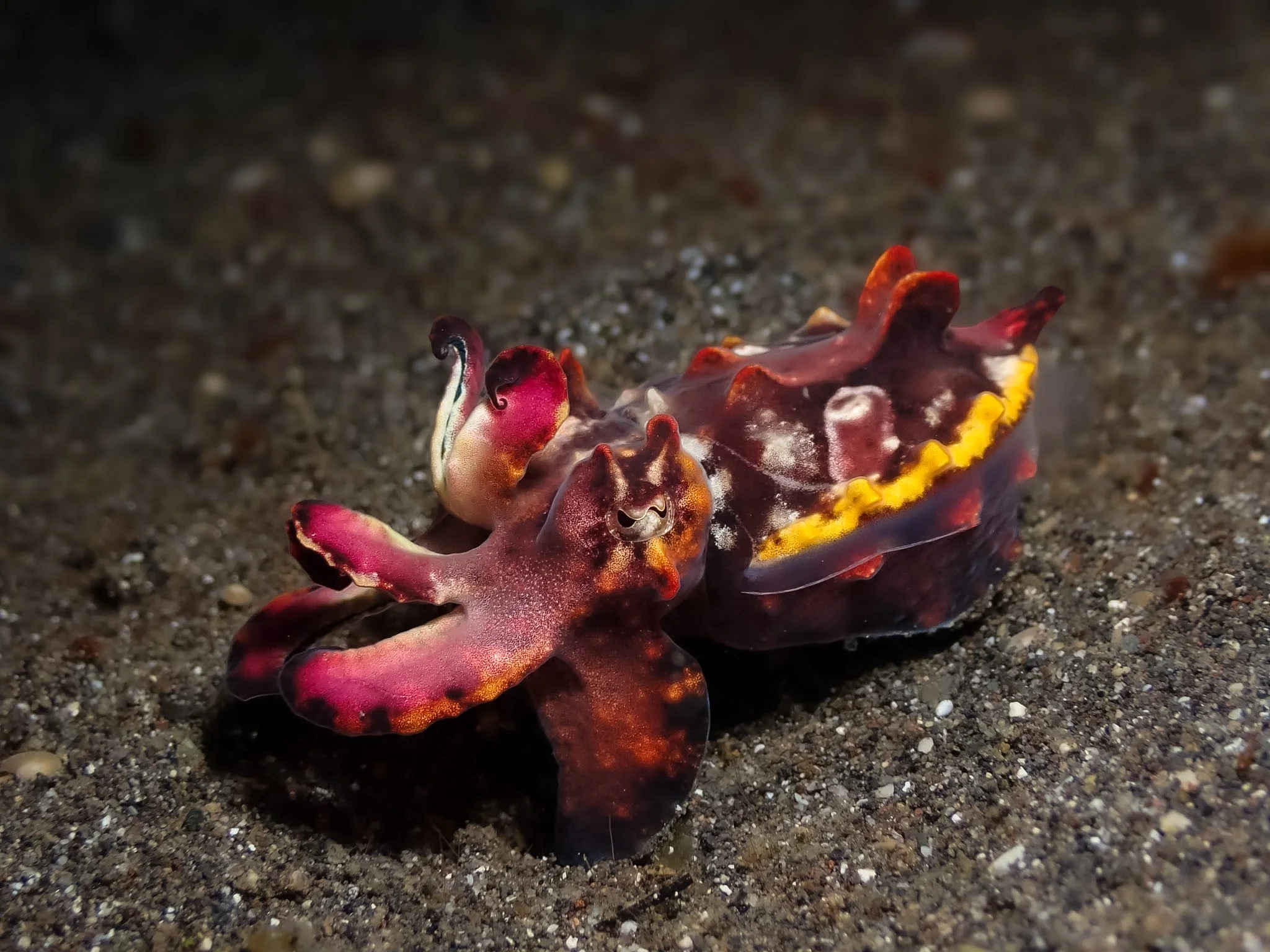
A flamboyant cuttlefish (Metasepia pfefferi) makes its way across the volcanic sand of Lembeh Strait. Famous for their extraordinary colors and mesmerizing displays, these small cephalopods can rapidly change their appearance using specialized pigment cells called chromatophores. Unlike most cuttlefish, flamboyant cuttlefish often move along the seafloor using their arms and fins, making them fascinating subjects for underwater macro photography.
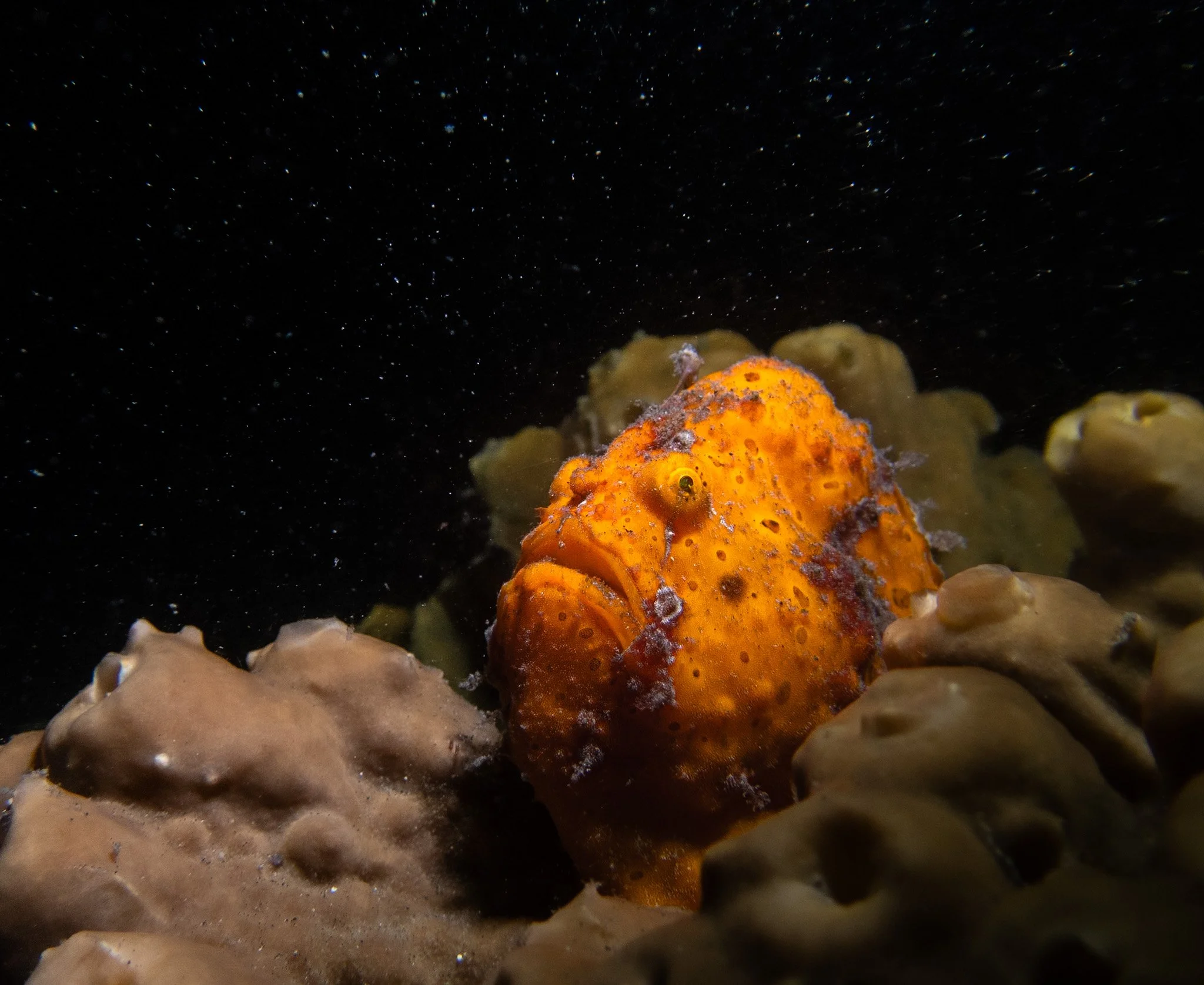
An orange frogfish contemplating the mysteries of the universe, except the universe is actually just backscatter. Underwater photographers typically work hard to avoid backscatter, the tiny particles illuminated by their strobes, but I loved how it added to this photograph. Against the dark background, those little specks almost resemble a field of stars, giving this rather contemplative frogfish its own miniature cosmos. Sometimes the imperfections make the photograph.
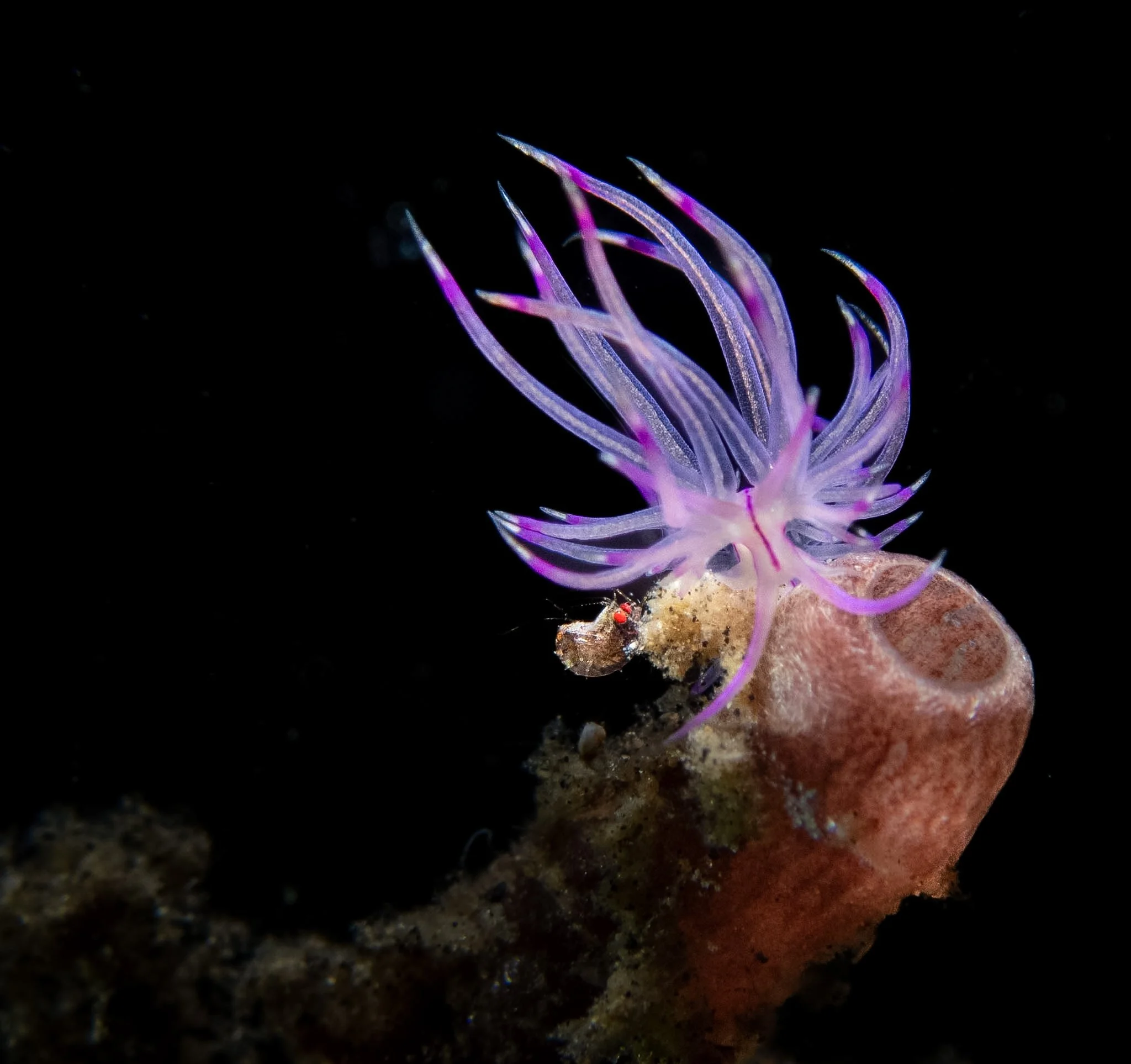
A delicate purple Flabellina nudibranch perched atop a sponge, accompanied by a tiny amphipod with striking red eyes. The nudibranch's translucent cerata and vibrant violet markings stand out against the black background, while the miniature amphipod adds another point of interest to the composition. A beautiful example of the incredible biodiversity hiding in plain sight on Lembeh's reefs.
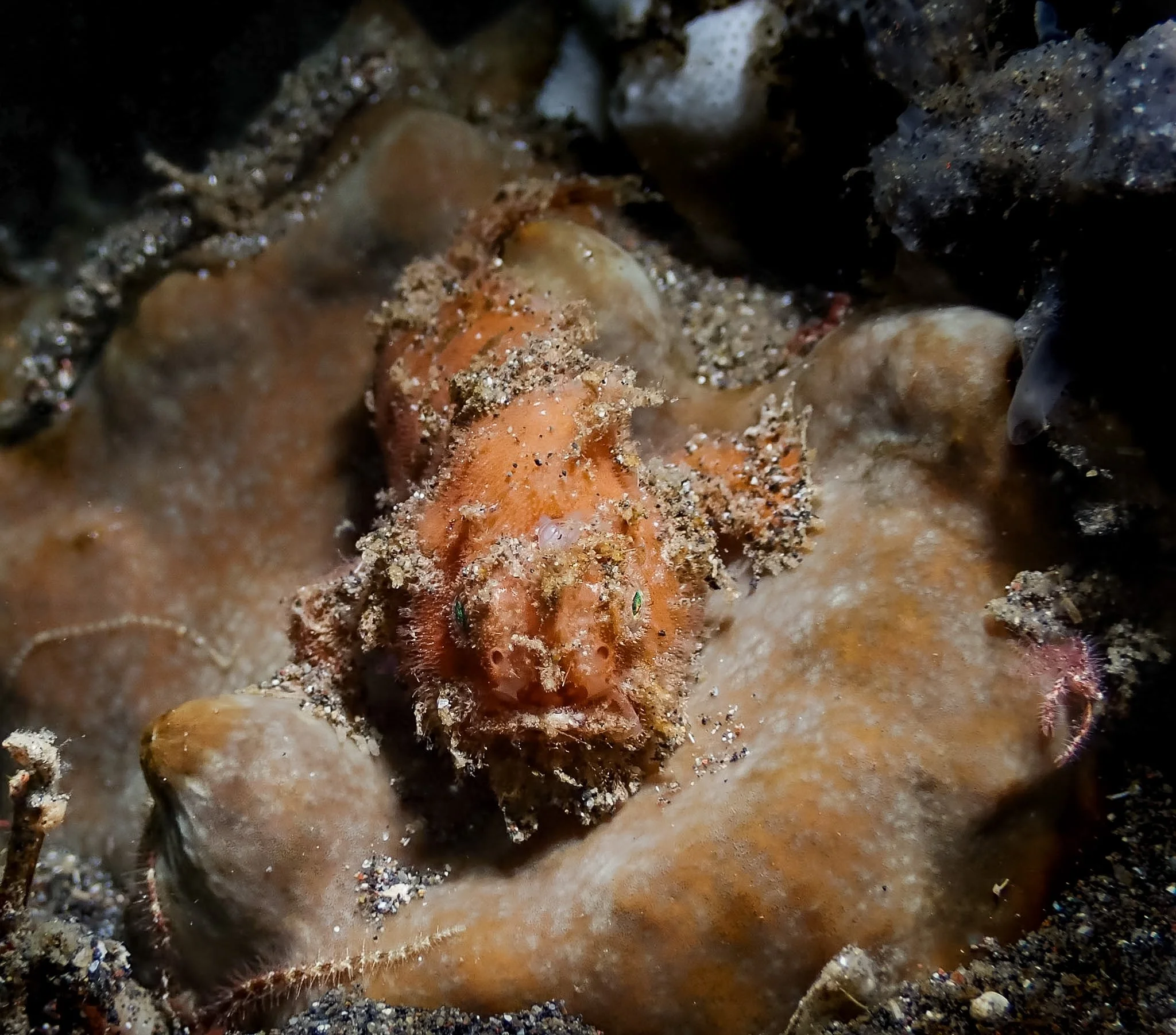
A hairy frogfish (Antennarius striatus) rests among the sponges, perfectly camouflaged with its shaggy appearance and sand-covered body. Look closely at the right side of the photograph and you'll spot another fascinating little creature: a hairy squat lobster tucked into the sponge! Two incredible examples of camouflage sharing the same tiny patch of Lembeh's underwater world. A reminder that sometimes the most interesting part of a photograph is what you notice on the second look.
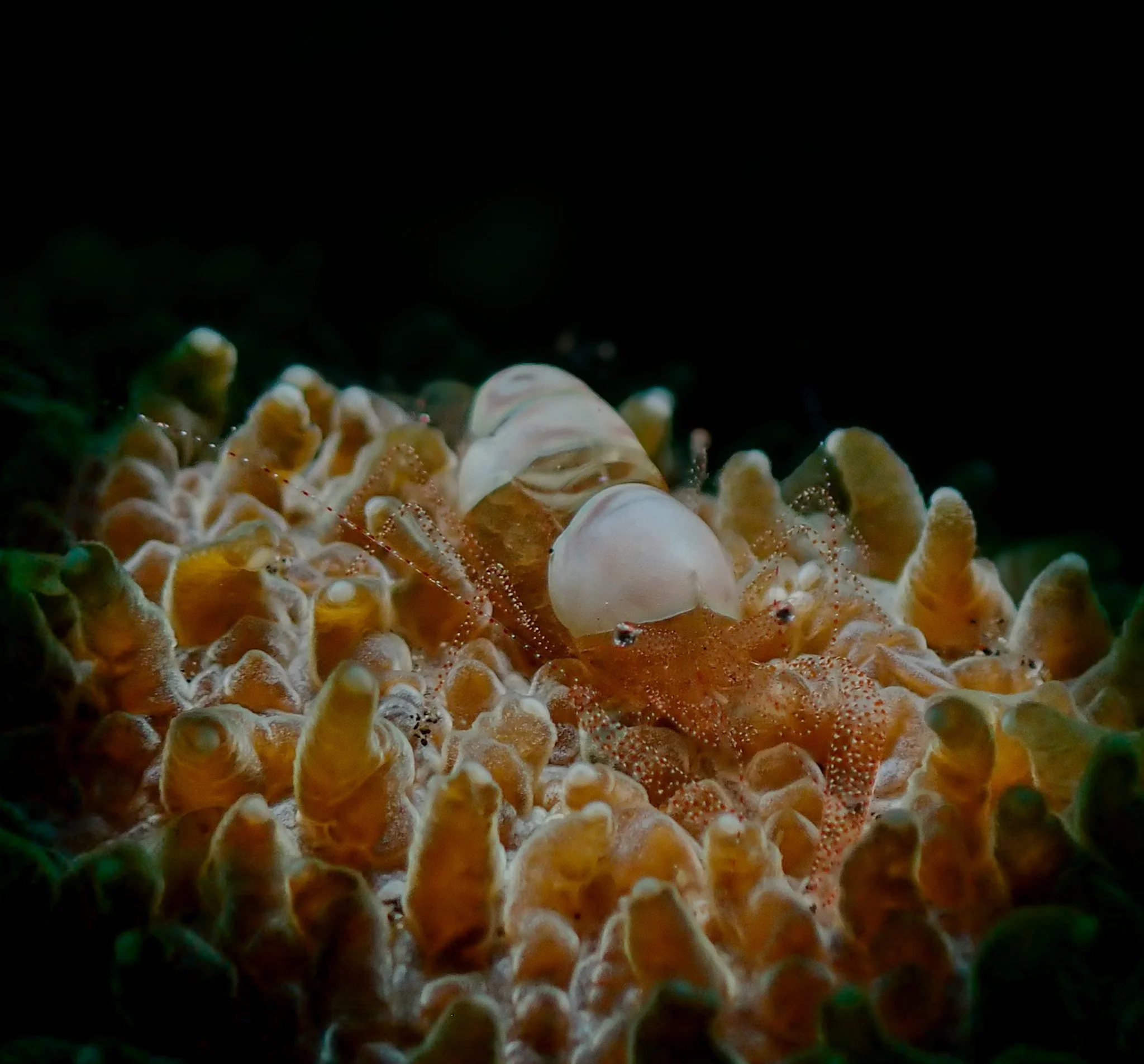
A superb coral shrimp (Hamodactylus superbus) nestled among the branches of its coral host. Its translucent body, intricate markings, and remarkable camouflage make this tiny crustacean easy to overlook. A beautiful example of the hidden details that make macro photography in Lembeh so rewarding.
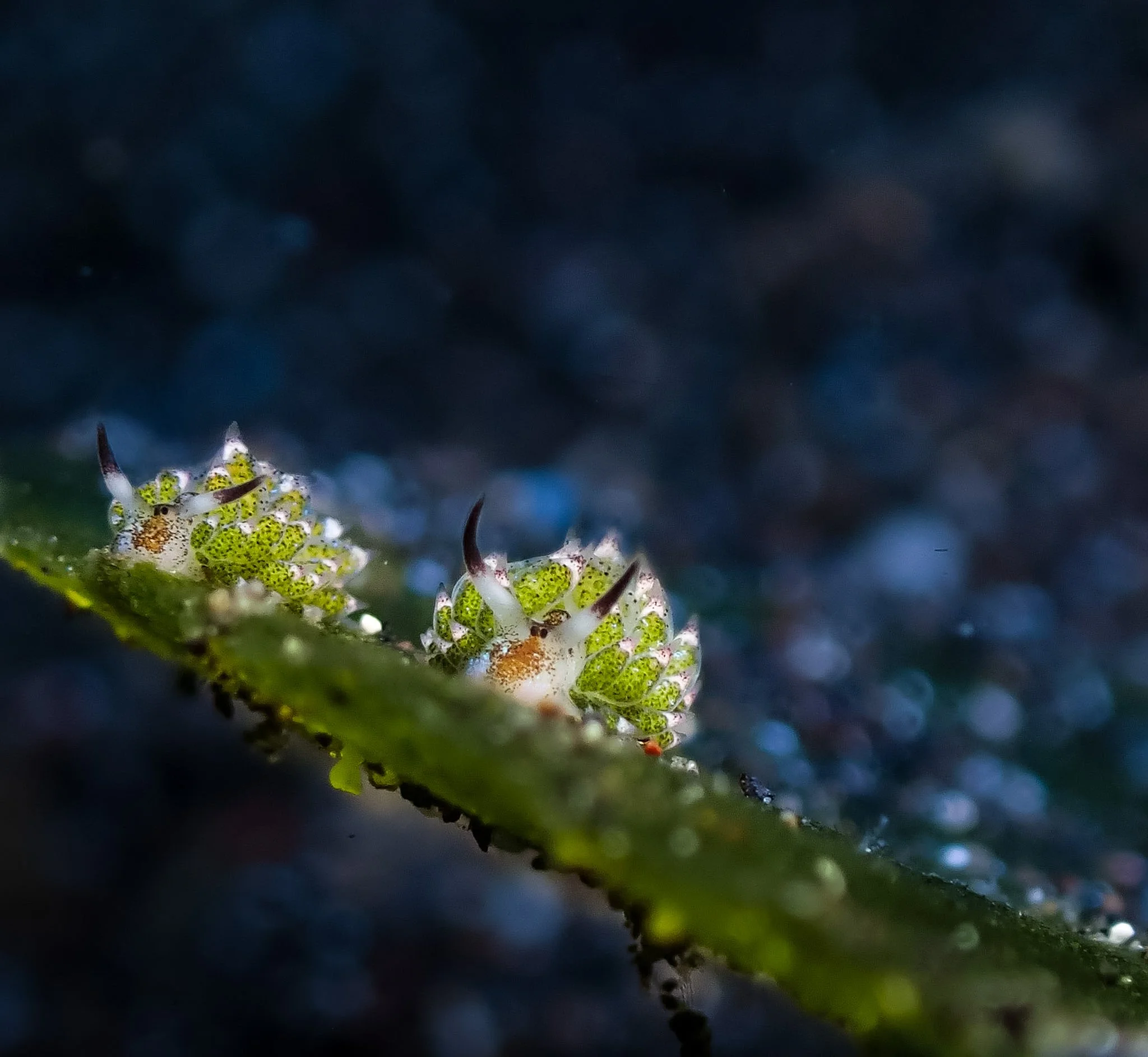
Two Shawn the Sheep sea slugs (Costasiella sp.) perched on a leaf in Lembeh Strait, Indonesia. These tiny, algae-grazing sacoglossan sea slugs are known for their sheep-like appearance and vibrant green coloration. A wonderful example of the extraordinary marine life that makes Lembeh a world-renowned destination for macro photography.
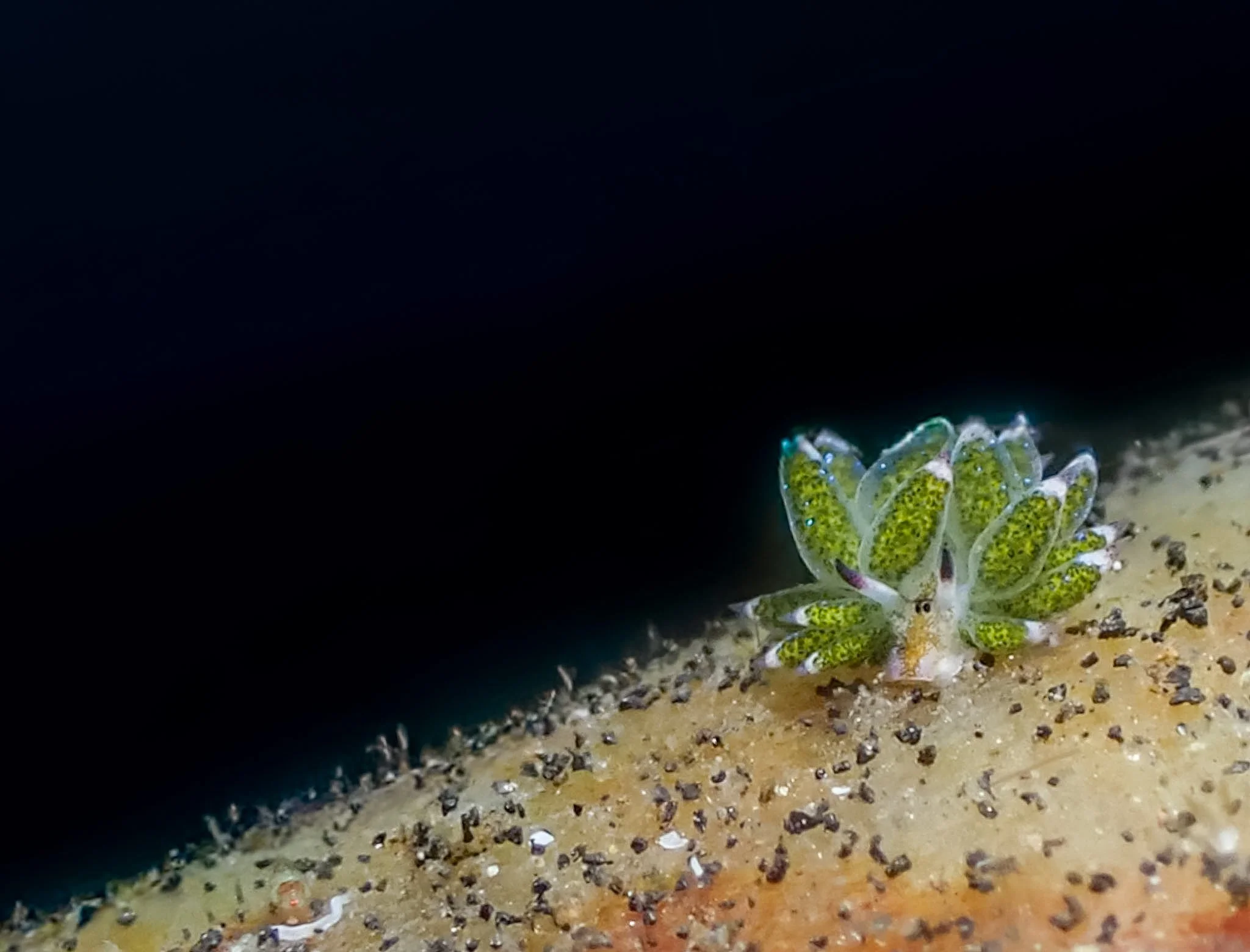
A Shawn the Sheep sea slug (Costasiella sp.) dwarfed by the surrounding grains of sand. Barely larger than a few specks, this tiny creature is a reminder of just how much marine life can go unnoticed. Macro photography reveals an extraordinary world that most divers swim right past.
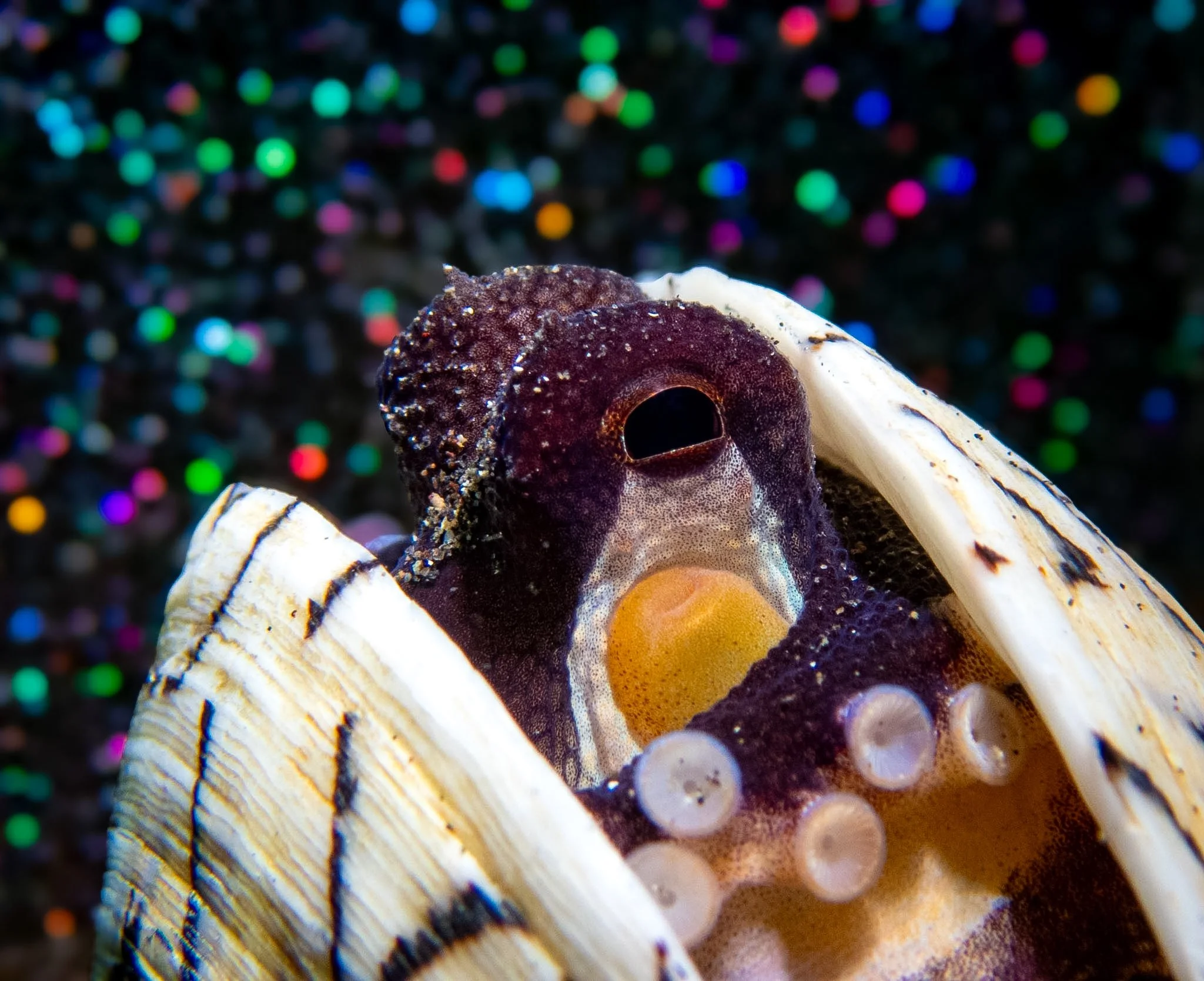
A coconut octopus (Amphioctopus marginatus) peeks out from its shell in Lembeh Strait. For this photograph, I experimented with a new macro photography technique, using an artificial background to create colorful bokeh behind my subject. The result combines the octopus's natural curiosity with a playful burst of color, bringing a different creative perspective to one of my favorite marine animals.
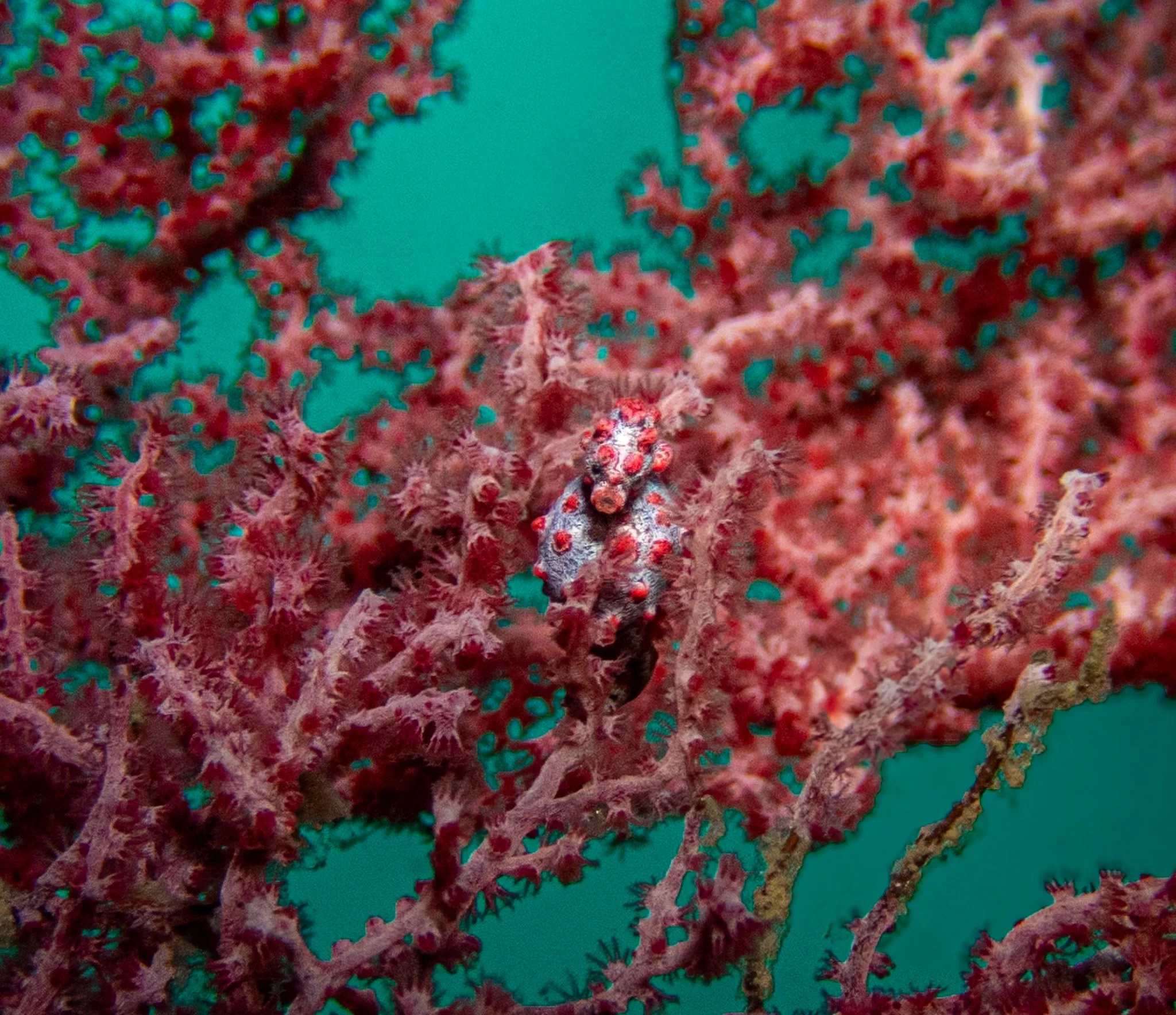
A pregnant male Bargibant's pygmy seahorse (Hippocampus bargibanti) nestled among the branches of a pink gorgonian sea fan. Measuring less than 3 centimeters, these tiny seahorses are masters of camouflage, with colorful tubercles that closely resemble the polyps of their coral hosts. Like all seahorses, males carry the developing embryos in a specialized brood pouch until they are ready to be born. A remarkable glimpse into one of the ocean's most fascinating reproductive adaptations.
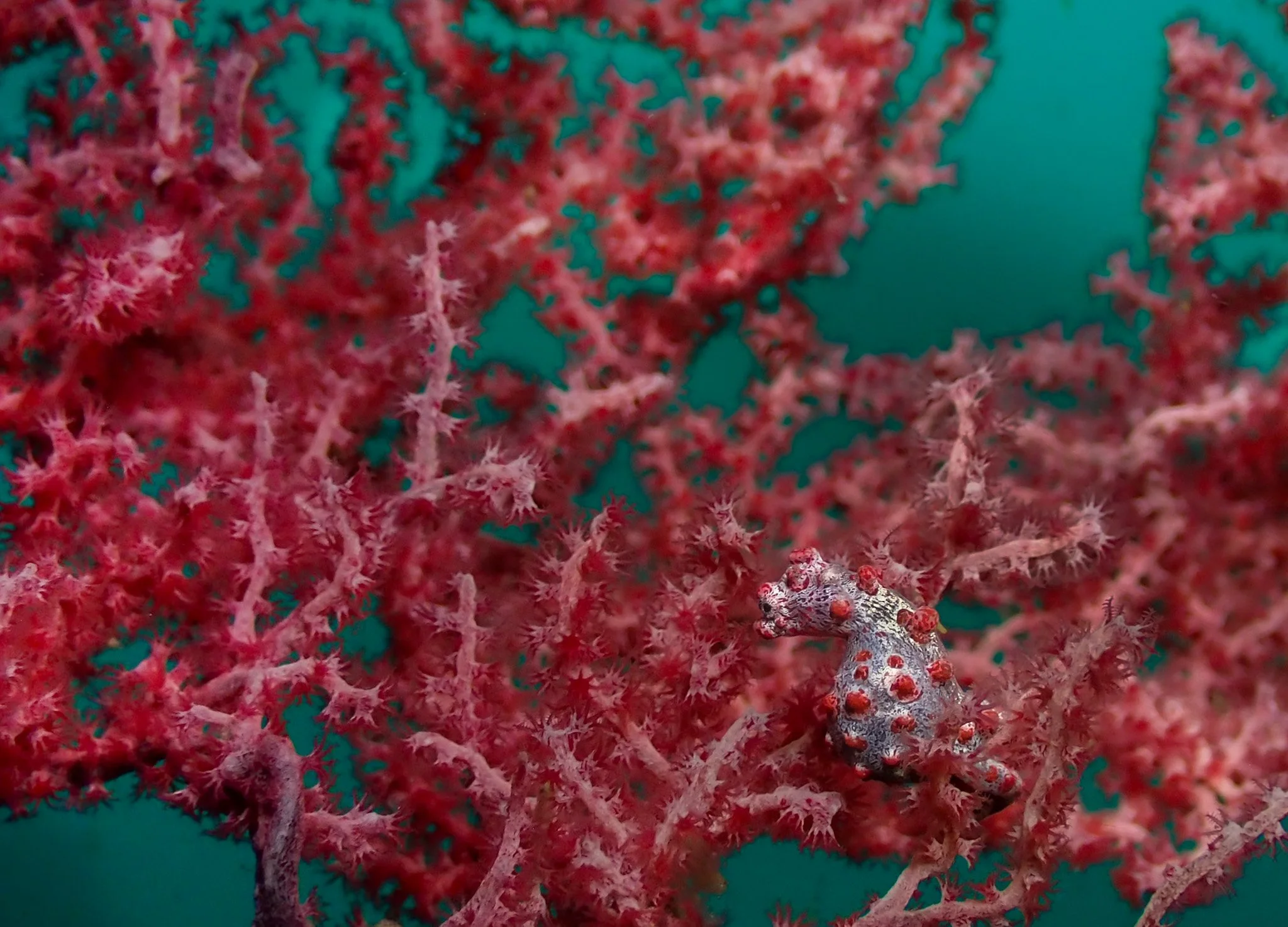
Another pregnant male Bargibant's pygmy seahorse (Hippocampus bargibanti), and one of my favorite compositions from Lembeh! I absolutely love how the open coral polyps surround this tiny expectant father, showing just how perfectly these seahorses blend into their gorgonian hosts. The beautiful teal background adds a wonderful contrast to the pink and red coral, making all those intricate details stand out. Photographing pygmy seahorses requires patience, but capturing one with the coral polyps extended made this encounter especially memorable.
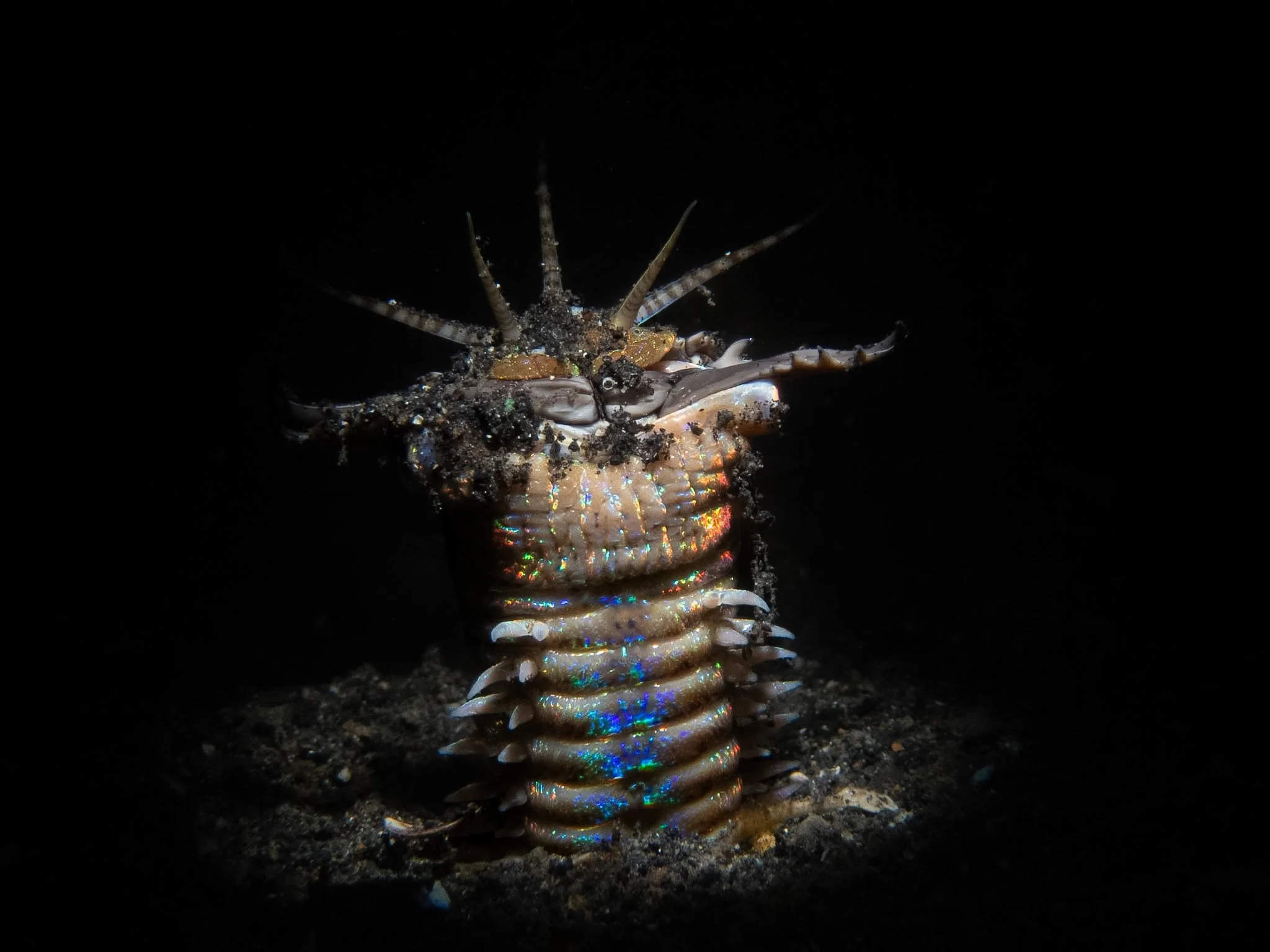
A Bobbit worm (Eunice aphroditois) emerges from the sand during a night dive in Lembeh Strait. These fascinating ambush predators spend much of their lives buried beneath the seafloor, with only their jaws and sensory antennae exposed as they wait for unsuspecting prey. I was especially captivated by the iridescent blues, greens, and golds shimmering across its segmented body. Under the beam of my strobes, this otherwise intimidating predator revealed an unexpected beauty.
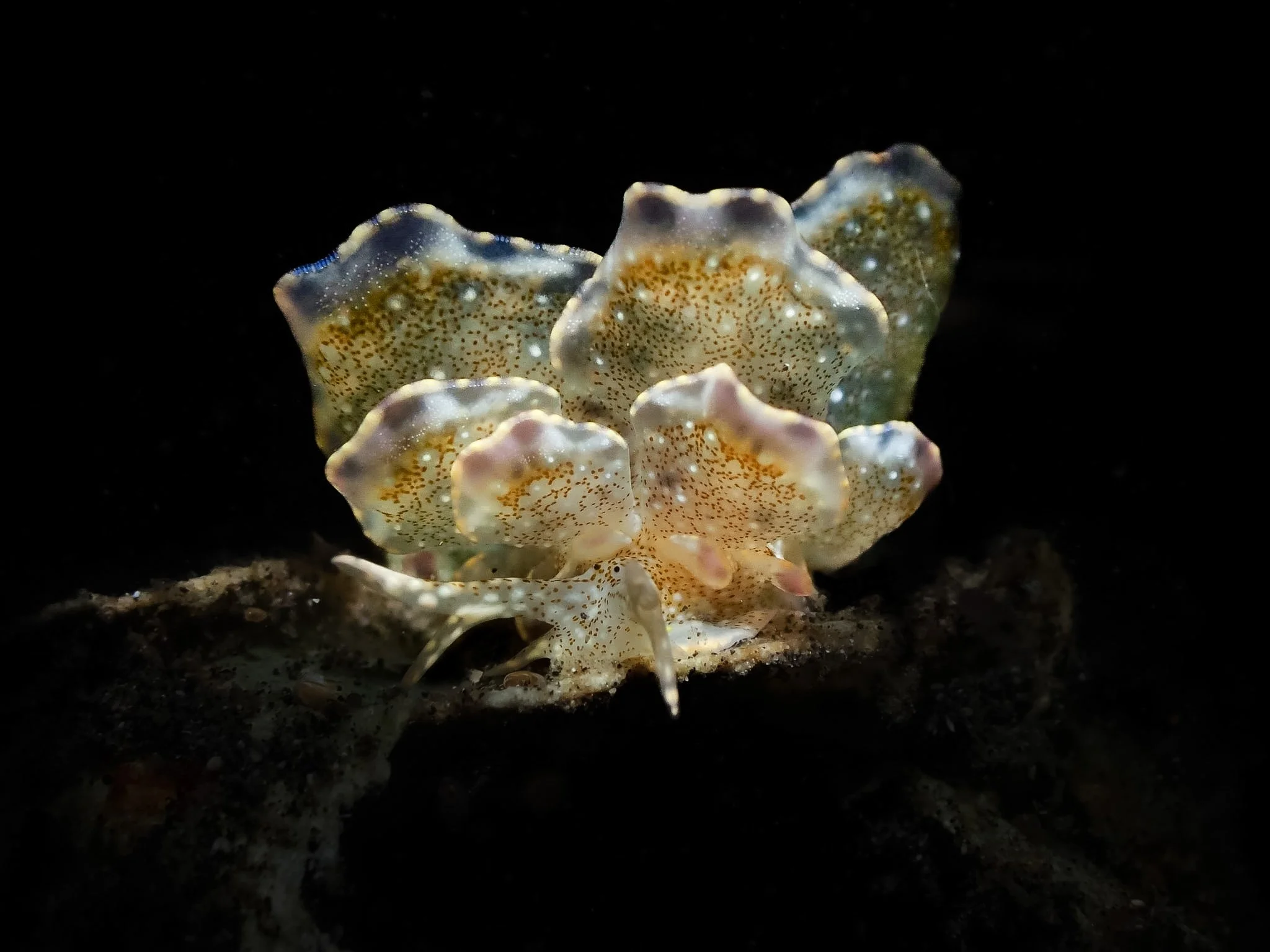
A rare snowed butterfly nudibranch displays its extraordinary, winglike body against the dark volcanic sand of Lembeh Strait. Its delicate, translucent folds, intricate speckling, and softly colored edges give this unusual sea slug an almost otherworldly appearance. Photographing such an uncommon subject was a special moment, and the black background allowed its remarkable textures and delicate details to take center stage.
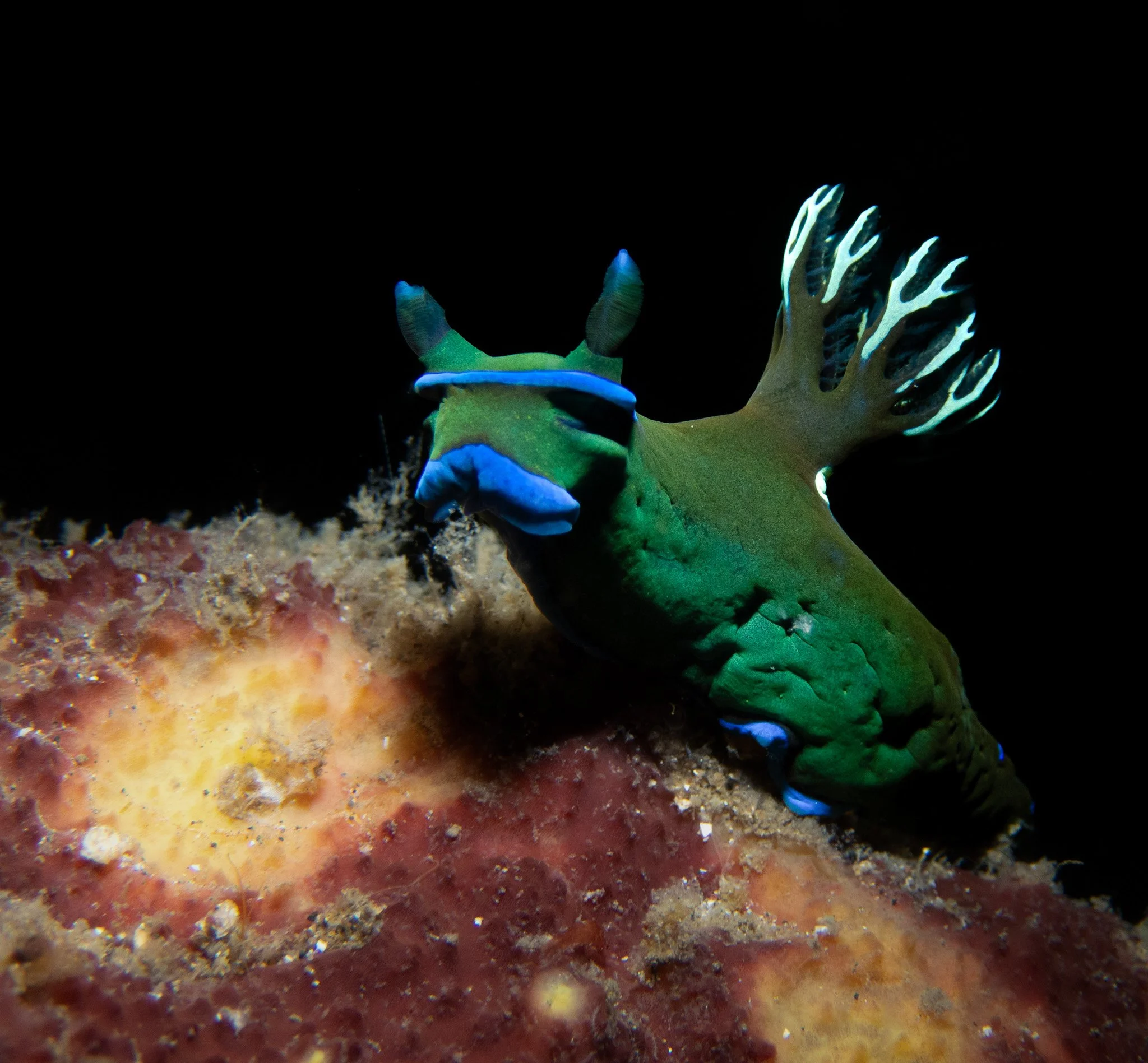
A gloomy nudibranch (Tambja morosa) showing off its gorgeous deep green body, electric blue markings, and feathery gills. Despite its rather depressing name, I think this is one of the most beautiful nudibranchs I've photographed! I especially love the contrast between its vibrant colors and the black background, which really allows those intricate details to stand out. Finding creatures like this is exactly why I could spend hours exploring the smallest corners of Lembeh's underwater world.
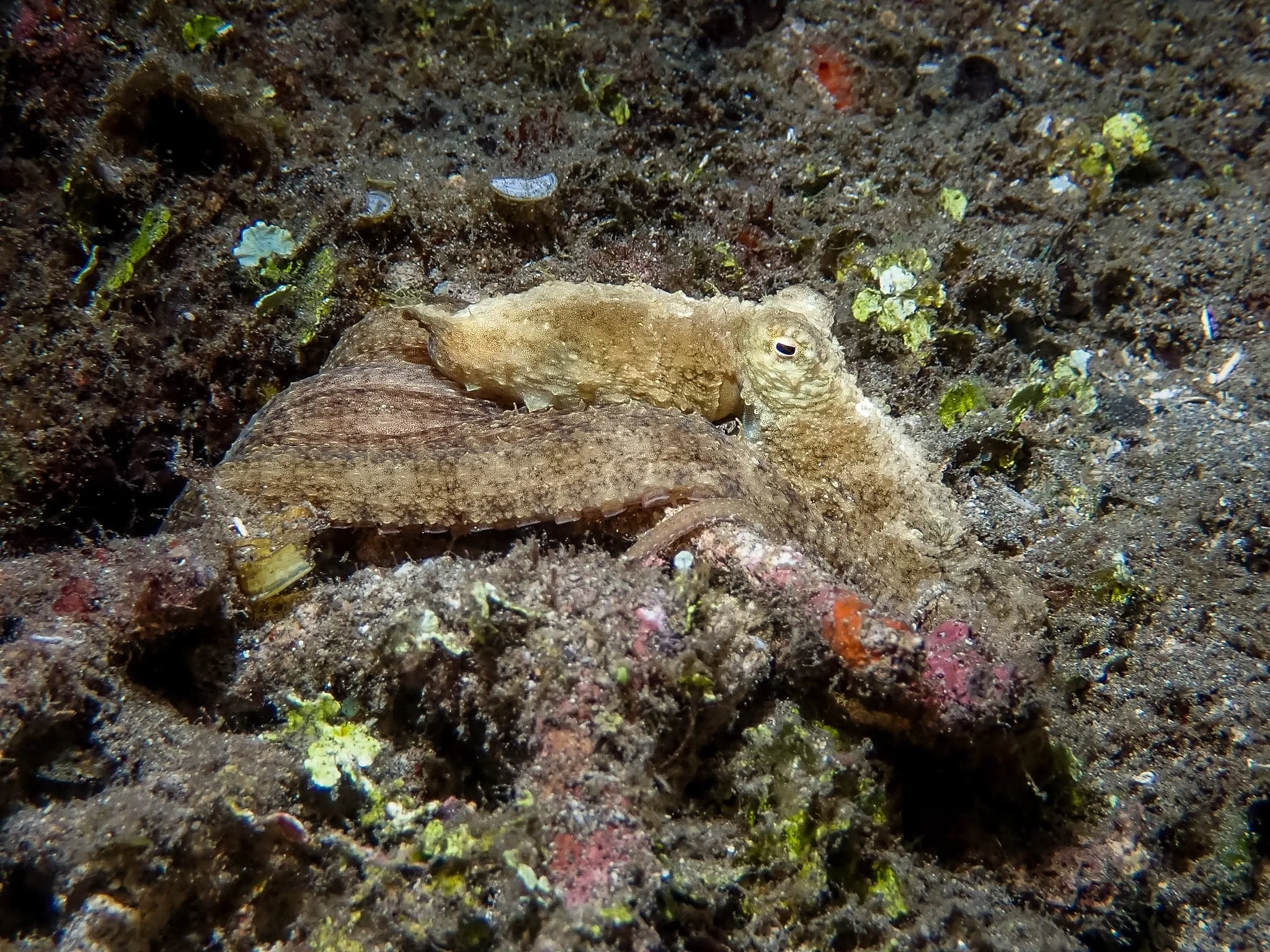
One of my favorite things about photographing octopuses is watching how quickly they can change their appearance. I spotted this algae octopus emerging from its hiding place during a dive in Lembeh, Indonesia. Its pale coloring and textured skin blended beautifully with the surrounding rubble. I love how this first photo captures that moment when it was just beginning to venture out.
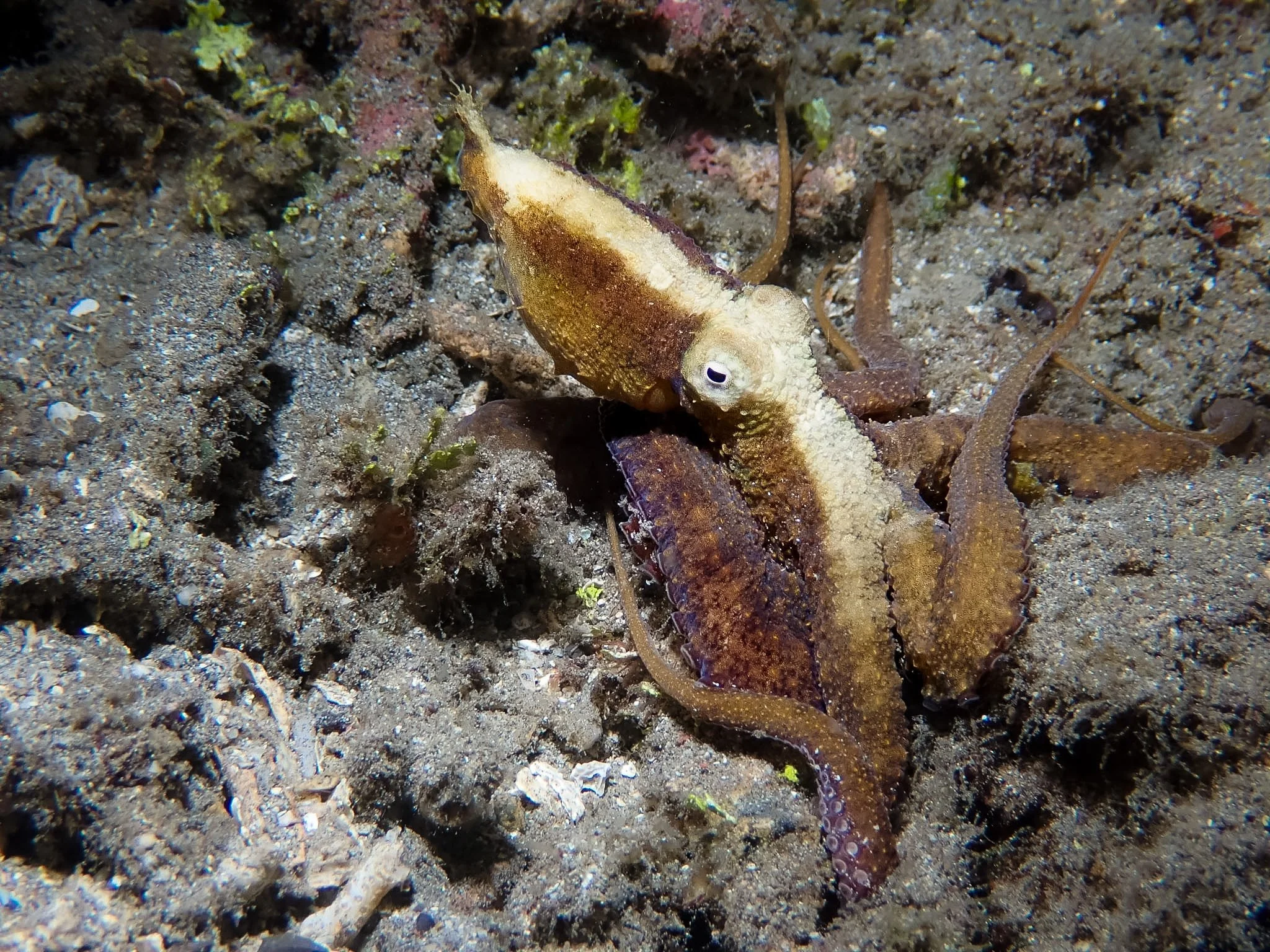
Same octopus, completely different appearance! As this little algae octopus moved across the seafloor, I watched its colors shift from pale beige to rich brown, with darker markings appearing across its body and arms. Getting to photograph the transformation was such a treat! Octopuses never cease to amaze me, and encounters like this are exactly why I love spending time observing their behavior rather than rushing to find the next subject.
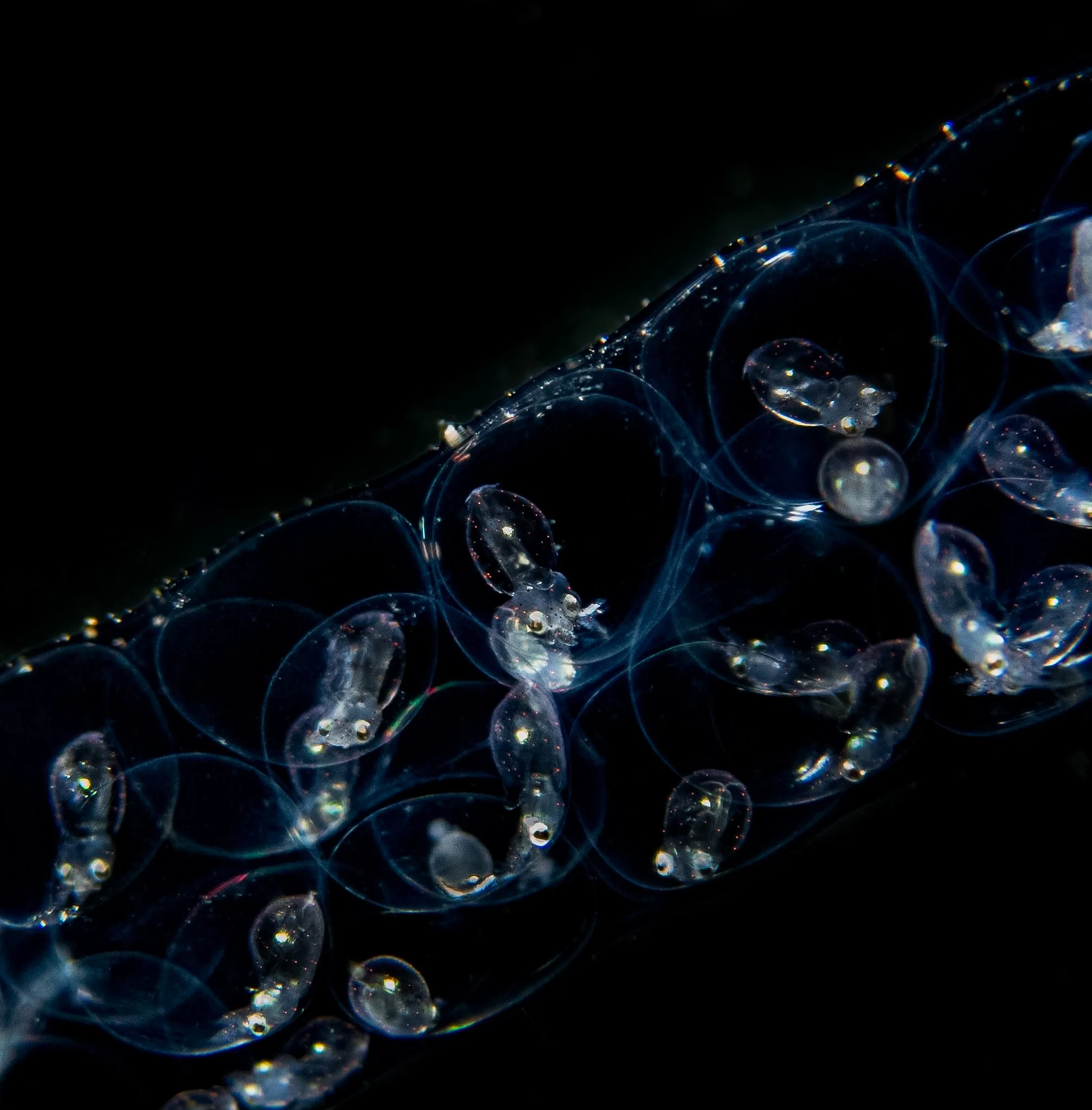
One of the coolest things I photographed in Lembeh was this cluster of squid eggs, with tiny developing squid visible inside their transparent capsules! Look closely and you can actually make out their little eyes and bodies. I love how the lighting reveals all those delicate details against the black background. Seeing marine life at such an early stage of development is fascinating, and getting to capture something this intricate is one of the reasons I've fallen in love with underwater macro photography.