
Wetsuit vs. Dry Suit
What’s the Best Fit for Your Next Adventure?

Hello, fellow underwater enthusiasts! As a scuba instructor, I’ve had the pleasure of diving in a variety of conditions, and one of the most common questions I get is: “Should I dive with a wetsuit or a dry suit?” Whether you're planning to explore tropical reefs or venture into colder waters, the choice between a wetsuit and a dry suit can make a big difference in your comfort and overall dive experience. So, let’s dive into the details and compare these two essential pieces of dive gear!

Two cool divers in wetsuits
The Basics: Wetsuits vs. Dry Suits
When you’re diving underwater, one of the first things you might notice is just how quickly you start to feel the cold. That’s because water is significantly denser than air, and this density has a major impact on heat transfer. In fact, water conducts heat away from your body about 20 times faster than air. This means that any warmth your body generates is rapidly whisked away by the surrounding water, which is why a wetsuit or dry suit is so crucial for maintaining your comfort. Without proper insulation, the constant heat loss can quickly lead to hypothermia, especially in cooler waters, making effective thermal protection essential for every dive.
Wetsuits are designed to keep you warm with the tiny bubbles inside the neoprene which impedes heat transfer. On the other hand, dry suits keep you completely dry by using a waterproof material and sealing all the openings. Dry suits are insulated with layers of thermal underwear worn inside the suit.
Is it Drysuit or Dry Suit?
While both terms are commonly used, the proper term is "dry suit" (two words). This refers to the type of suit that keeps you completely dry while diving by using waterproof materials and seals at the openings. “Drysuit” (one word) is often used informally, but for clarity and consistency, "dry suit" is the preferred spelling. Now why its wetsuit and not wet suit…🤷🏻♀️
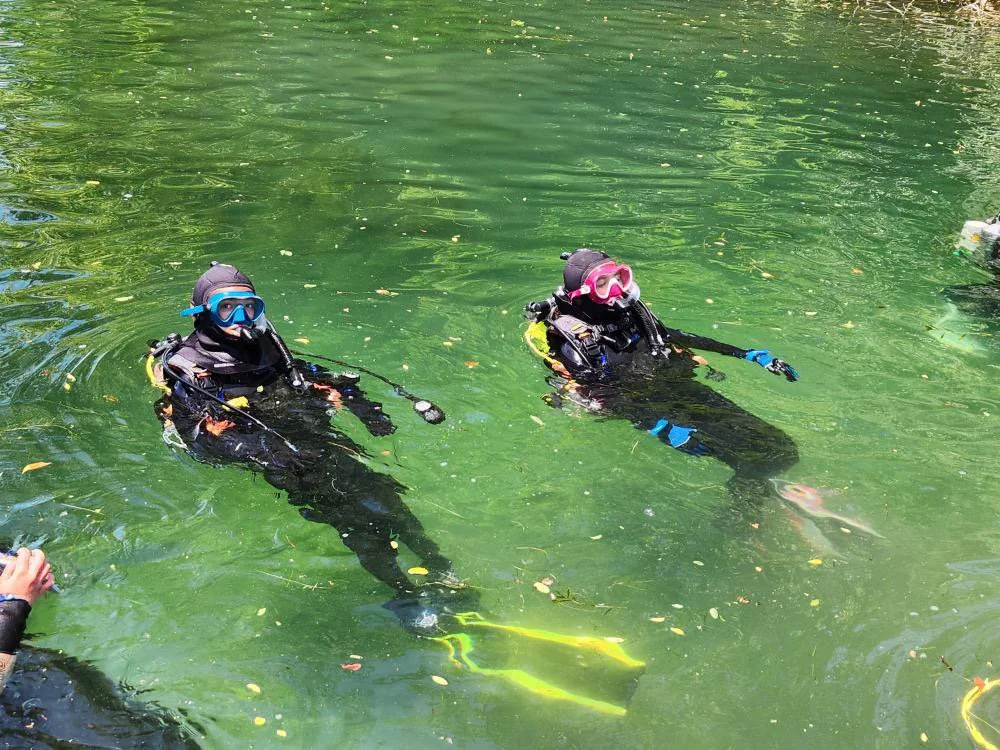
Divers in 7mm wetsuits, hoods, and gloves
Temperature Considerations
Tropical Waters (70°F to 85°F / 21°C to 29°C):
Wetsuits: For warm waters, a wetsuit is usually all you need. A 3mm to 5mm thickness is ideal for most tropical dives. The 3mm suit is great for warmer water, while the 5mm provides a bit more warmth if you’re diving in cooler parts of the tropical zone.
Dry Suits: While generally not necessary for tropical conditions, if you’re diving in extremely variable temperatures or want to ensure maximum comfort, a dry suit can still be used with minimal thermal wear underneath.
Temperate Waters (50°F to 70°F / 10°C to 21°C):
Wetsuits: In temperate waters, you’ll want a thicker wetsuit—typically 5mm to 7mm. A 5mm suit works well for the upper range of these temperatures, while a 7mm wetsuit provides extra insulation for the cooler side. You might also want to consider a hood and gloves!
Dry Suits: A dry suit is often preferred in these conditions for enhanced warmth and comfort. You can layer up with thermal undergarments, allowing for a customizable temperature control. A dry suit is versatile and can be adjusted with different thicknesses of thermal layers depending on the exact temperature.
Cold Waters (Below 50°F / 10°C):
Wetsuits: For very cold waters, wetsuits become less effective. A 7mm wetsuit with a hood, gloves, and boots might provide enough warmth for short dives, but it’s generally less comfortable and practical in extremely cold temperatures.
Dry Suits: Dry suits are the go-to choice for cold water diving. With the right combination of thermal undergarments, a dry suit can keep you warm and dry for extended periods, making it perfect for those chilling deep-sea explorations. They offer superior insulation and comfort for longer dives in frigid conditions.
Comfort and Mobility
Wetsuits:
Pros: Wetsuits are flexible, allowing for a good range of motion. They are usually lighter and less bulky than drysuits, which can make them easier to don and doff. Plus, they’re generally less expensive.
Cons: They can become less comfortable in very cold waters and might limit your dive time due to cold. You’ll also have to deal with the water that gets trapped inside the suit.
Dry Suits:
Pros: Dry suits offer superior insulation and are great for extended dives in cold water. They keep you completely dry and allow for a variety of thermal layers to adjust to different temperatures. This means you can dive comfortably even in icy conditions.
Cons: Dry suits can be more cumbersome and require more training to use properly. They’re also generally more expensive and require more maintenance. Plus, you’ll need to earn your dry suit certification before you can dive in one.
Certification for Dry Suit Diving
Before you can dive with a dry suit, you’ll need to complete a dry suit certification course. This training is essential for understanding how to use a dry suit properly, manage buoyancy, and handle any potential issues. The course includes both theoretical knowledge and practical skills, ensuring that you’re well-prepared to dive safely and comfortably in a dry suit. It’s a small investment in your diving education that pays off with added comfort and flexibility in cold water conditions.

Ciara diving in a dry suit in Iceland
Choosing the Right Suit for You
Wetsuits are fantastic for warm to temperate waters and offer flexibility and comfort for a variety of diving conditions. If you’re diving in tropical locations or moderate temperatures, a wetsuit is likely your best bet.
Dry Suits, on the other hand, are essential for cold-water diving and offer unmatched warmth and protection against the elements. If you’re planning dives in frigid waters or looking for extended dive times, investing in a dry suit might be the way to go. Just remember, you’ll need to complete a certification course before you can start using one.
With That…
The choice between a wetsuit and a dry suit ultimately depends on the water temperature, the length of your dives, and your personal comfort. Both have their unique advantages, and understanding these will help you make the best choice for your diving adventures.
So, whether you’re gearing up for a tropical dive with your favorite wetsuit or prepping for a chilly exploration in a dry suit, embrace the joy of diving and make the most of your underwater journeys!
Happy diving, and may your suit always fit just right!
Dive safe, explore passionately, and remember…