The PADI Open Water Diver Course Unveiled
PADI Open Water Diver: The Certification That Changed My Life
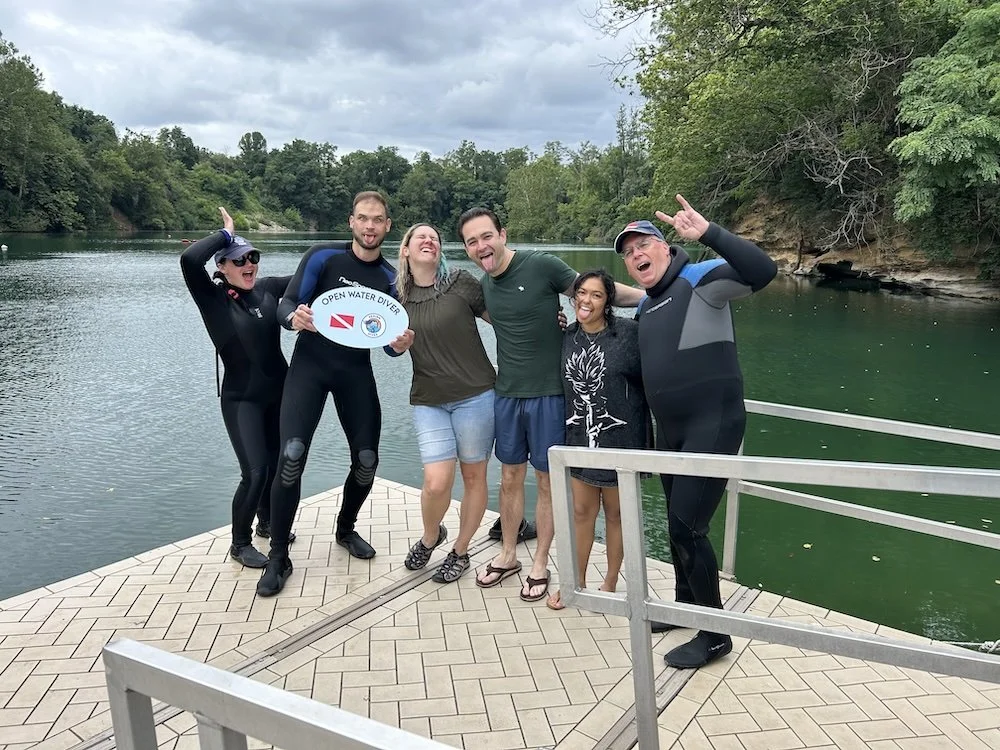
I tried scuba diving for the first time in Croatia when I was 17 years old. Having just graduated from high school, I was enjoying my last real summer before heading off to college. Everything started when I saw a group of divers climbing out of the water. They looked so excited, laughing and talking about everything they had just seen underwater. Curiosity got the best of me, so I walked over to the person I assumed was the instructor and asked about trying scuba diving.
The rest, as they say, is history.
Like most people trying scuba for the first time, I had no idea what to expect. Never in a million years would I have guessed that one spontaneous conversation on a dock in Croatia would completely shape the rest of my life.
Our dive started from the beach, and after getting comfortable underwater, my instructor told me he had a special way of finding octopuses. He did what I can only describe as an "octopus dance," waving his arms around and making me laugh into my regulator. A few moments later, as if the ocean had decided to reward his performance, an octopus emerged from the rocks. Looking back, I'm fairly certain the dance had nothing to do with it, but at 17 years old, I was convinced it had worked.
As memorable as the octopus was, the thing that stayed with me most wasn't the marine life.
It was the quiet.
The moment I descended beneath the surface, the noise of the world disappeared. The constant rush of thoughts slowed down, my breathing settled into a steady rhythm, and for the first time in a long time, everything felt peaceful. There were no phones, no deadlines, no distractions. Just the sound of each breath, sunlight filtering through the water, and a world that had been there all along waiting to be explored. I surfaced from that dive knowing I had experienced something special, even if I couldn't quite put it into words.
Looking back now, it's hard to imagine what my life would look like if I hadn't signed up for that dive.
What started as a fun vacation activity slowly became a hobby, then a passion, and eventually the life I live today. Scuba diving has taken me to more than 60 countries, introduced me to some of my closest friends, inspired me to become a PADI Course Director, and ultimately led me to create Seaira Dives. I've been fortunate enough to travel, teach hundreds of students to scuba dive, and explore incredible places. Every one of those experiences can be traced back to a single decision I made on a beach in Croatia.
That's one of the reasons I love teaching the PADI Open Water Diver course so much.
Every student who signs up is standing exactly where I once stood. Most people enroll because scuba diving looks fun, because they're planning a tropical vacation, or because it's something they've always wanted to try. Very few realize they're opening the door to a lifetime of adventures they can't yet imagine. Every diver's story is different, and that's one of the things I love most about this community.
Maybe scuba diving becomes your favorite vacation activity.
Maybe it inspires you to become an underwater photographer.
Maybe it introduces you to lifelong friends who share your passion for exploring the ocean.
Or maybe, like me, it quietly changes the direction of your life.
If you've been thinking about learning to scuba dive, I hope this guide helps you understand what to expect from the PADI Open Water Diver course. More importantly, I hope it gives you a glimpse into why so many of us fall in love with the underwater world.
You never know where that first breath underwater might take you.
What Is the PADI Open Water Diver Course?
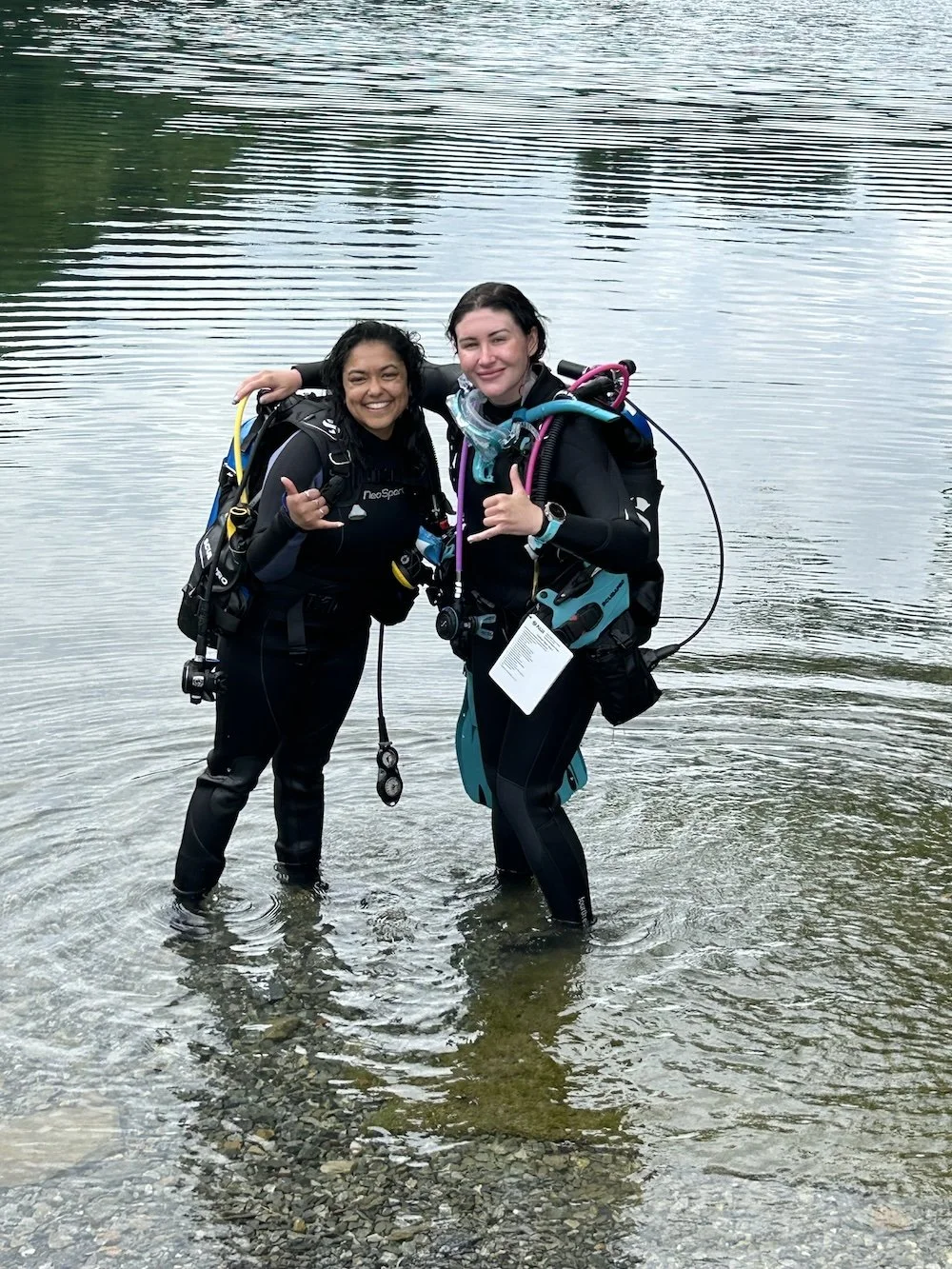
The PADI Open Water Diver course is the world's most recognized scuba certification and the first step toward becoming a safe, confident recreational diver. Once certified, you'll be qualified to dive with another certified diver to a maximum depth of 18 metres (60 feet). Because PADI certifications are recognized around the world, your certification opens the door to incredible dive destinations across the globe.
More importantly, this course teaches you how to become a thinking diver. You'll learn how to prepare for a dive, understand your equipment, communicate underwater, solve common situations calmly, and dive responsibly while protecting the marine environments we all love. My goal isn't simply to help you earn a certification card. It's to help you become the kind of diver that your future dive buddies trust and enjoy diving with.
What to Expect During the Course
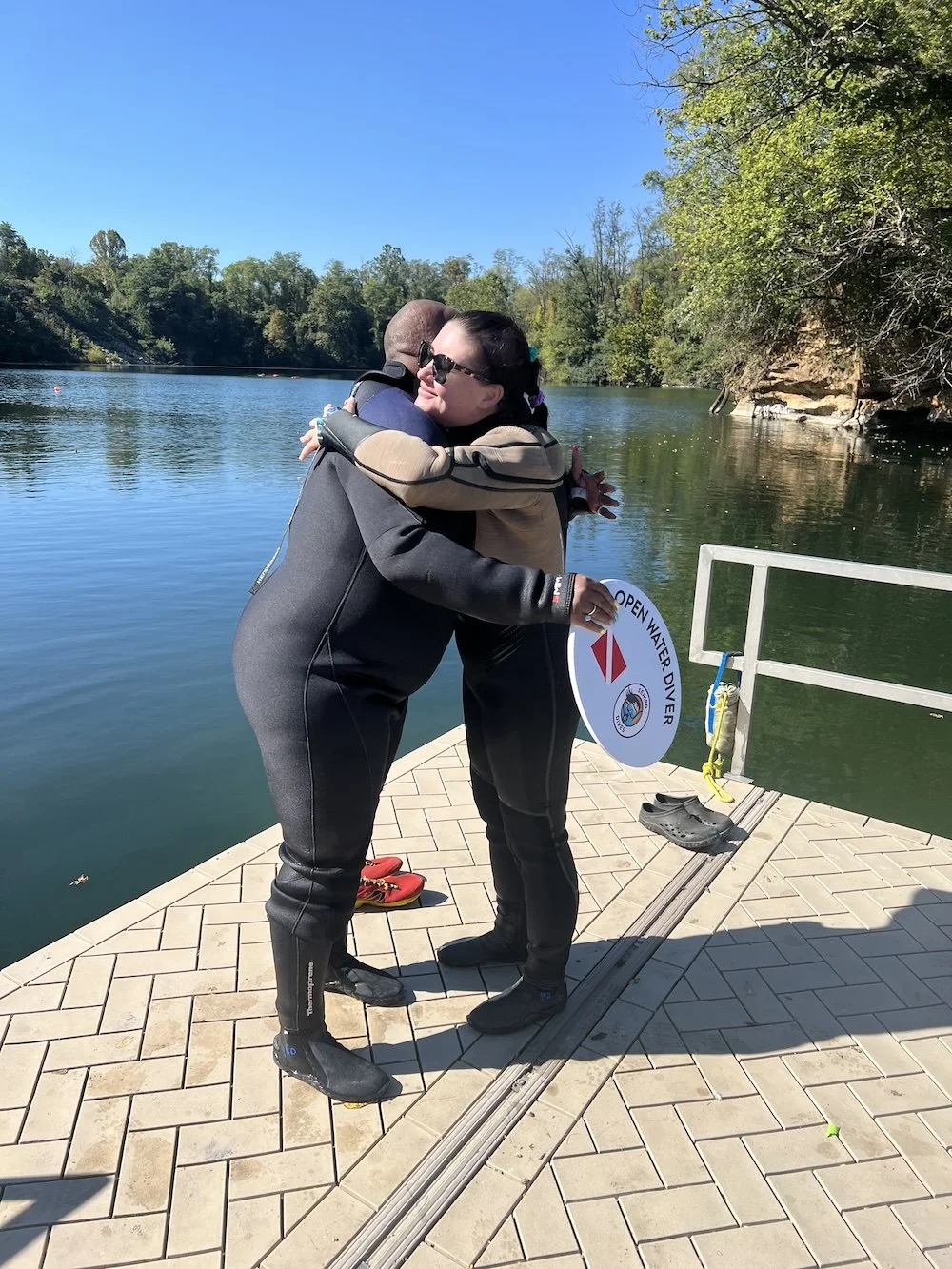
One of the biggest misconceptions about learning to scuba dive is that it's intimidating. In reality, the course is designed to build your confidence one step at a time. Every lesson, every skill, and every dive builds on the one before it, allowing you to become more comfortable underwater at your own pace.
Your journey begins with PADI eLearning, which you can complete whenever it fits your schedule. Through interactive lessons, videos, and knowledge reviews, you'll learn about dive planning, scuba equipment, underwater communication, marine life, and the science that makes scuba diving possible. Completing the academics ahead of time means we can spend less time in a classroom and more time doing what you came to do: getting underwater.
Before certification, you'll also complete a basic water skills assessment consisting of a 200 metre swim, or a 300 metre swim using mask, fins, and snorkel, followed by a 10-minute float or tread. This isn't about speed or athletic ability. It's simply a way to make sure you're comfortable enough in the water to safely enjoy scuba diving.
From there, we move into confined water training, and this is where everything starts to feel real. You'll become familiar with your scuba equipment, learn how it works, and practice the skills that every diver uses throughout their diving career. We'll work on everything from mask clearing and regulator recovery to underwater communication, buoyancy control, and emergency procedures.
Almost every student is a little nervous before taking that first breath underwater.
Almost every student surfaces a few minutes later with the biggest smile on their face.
Watching that transformation never gets old.
One of the things I emphasize throughout the course is buoyancy. Good buoyancy isn't just about looking graceful underwater. It's what allows you to move effortlessly through the water while protecting fragile coral reefs, avoiding accidental contact with marine life, and conserving your air. It's one of the most rewarding skills to develop, and you'll continue improving it every time you dive.
Once you're comfortable with the skills, it's time for the best part of the course: your open water dives.
Over the course of four open water dives, you'll apply everything you've learned in a real diving environment. Instead of focusing only on skills, you'll begin to notice schools of fish swimming around you, spot marine life hiding in the reef, and experience the feeling that made so many of us fall in love with diving in the first place.
Somewhere during those four dives, something changes.
You stop thinking about every little detail.
You stop wondering if you're doing everything correctly.
You simply become present.
It's one of my favorite moments to witness because that's when students stop feeling like they're learning to scuba dive and start feeling like scuba divers.
My Teaching Philosophy
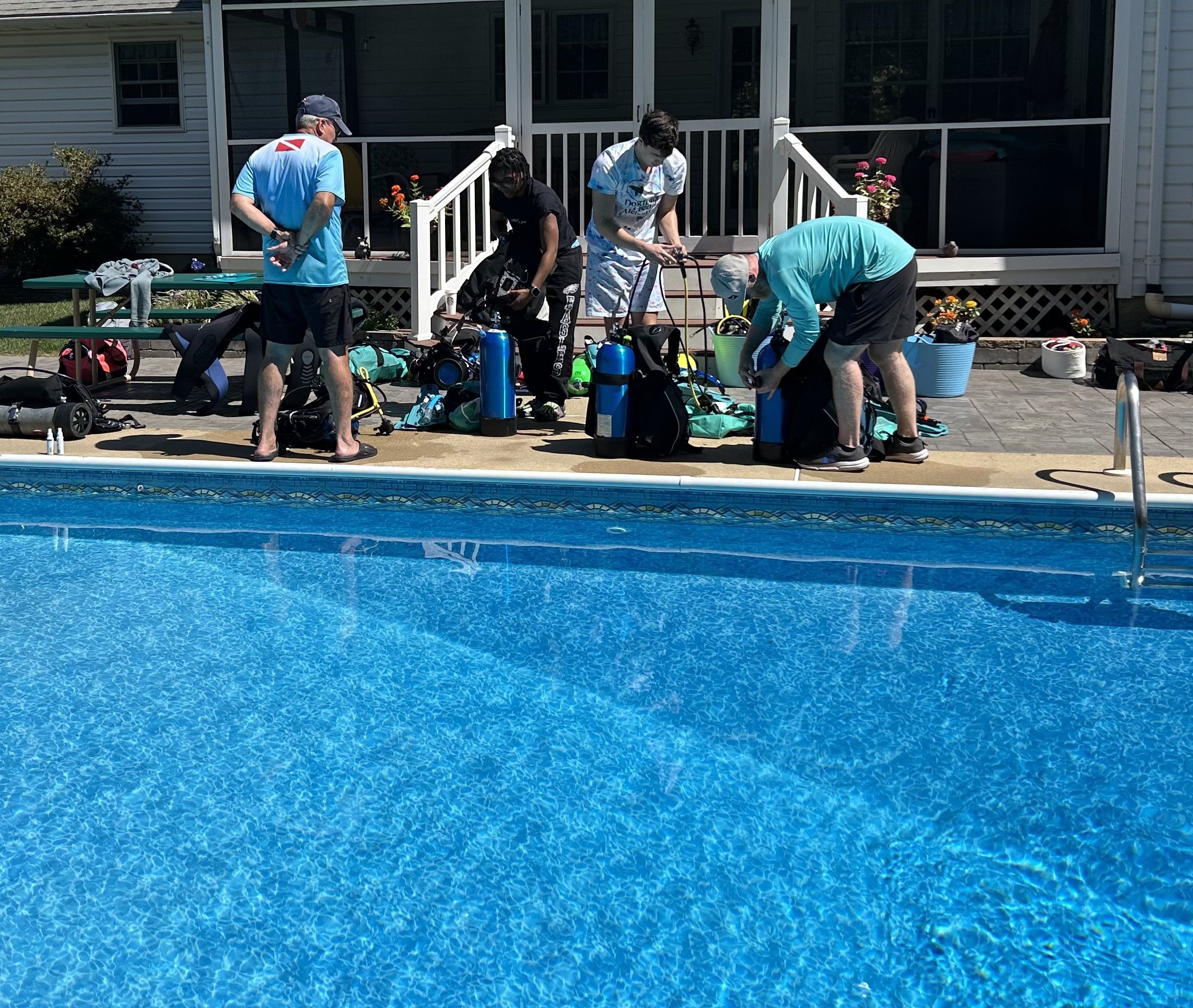
Every instructor develops their own teaching style over time, and mine has always centered around building confidence.
I've been diving for more than 15 years, but one thing the ocean has taught me is that nobody ever stops learning. Every dive presents an opportunity to improve, observe something new, or refine a skill. That's the mindset I hope every student leaves with.
I intentionally keep my class sizes small because everyone learns differently. Some students are immediately comfortable underwater, while others need a little more time and encouragement. Neither approach is right or wrong. My job is to meet you where you are, answer every question you have, and help you become a confident diver at your own pace.
You'll never be rushed through skills just to finish a checklist. We'll take the time to understand why each skill matters, practice until you feel comfortable, and celebrate the small victories along the way.
Safety will always come first.
Right alongside safety is having fun.
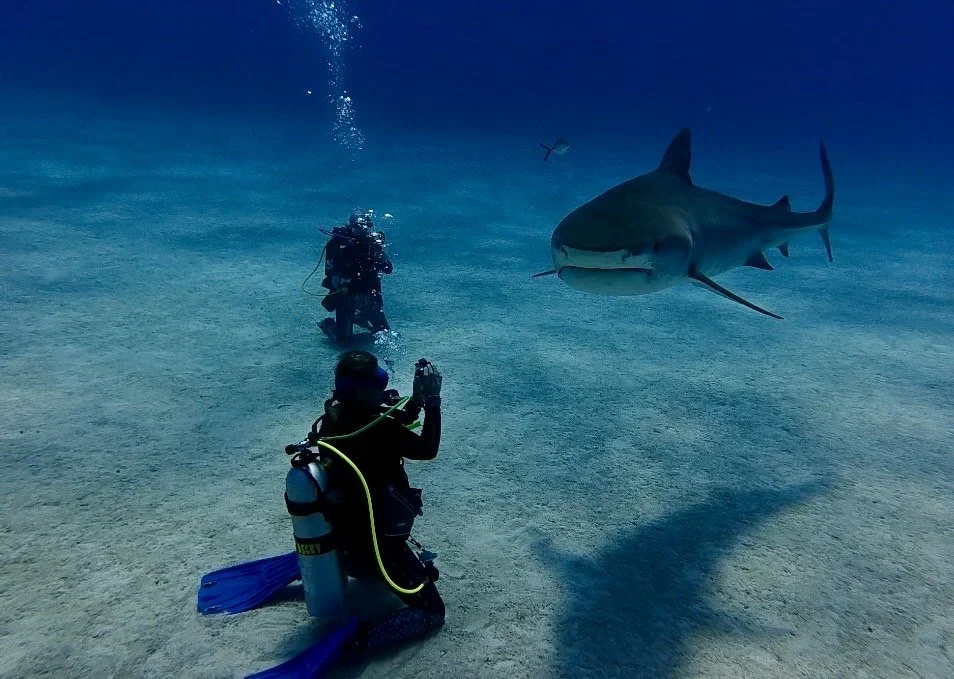
Some of my favorite moments as an instructor aren't when someone perfectly clears their mask or hovers motionless for thirty seconds. They're the moments when a student forgets they're practicing because they're completely mesmerized by a sea turtle swimming past, points excitedly at a tiny nudibranch they spotted on their own, or surfaces from a dive and immediately starts asking where we're diving next.
Those are the moments that remind me why I became an instructor.
Your Certification Is Just the Beginning
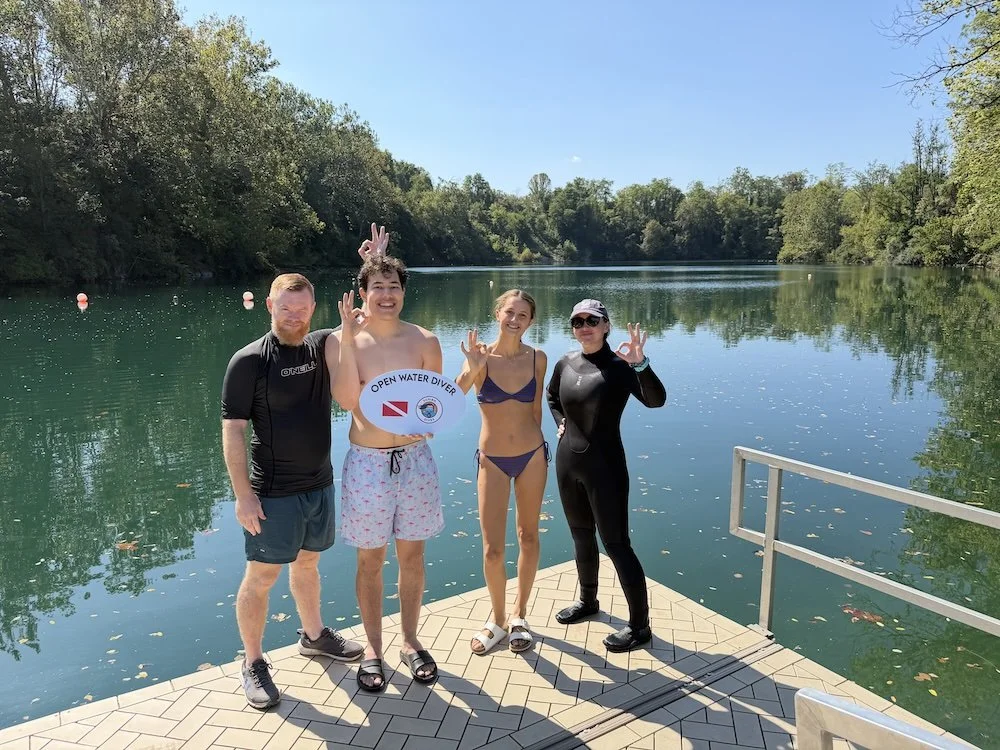
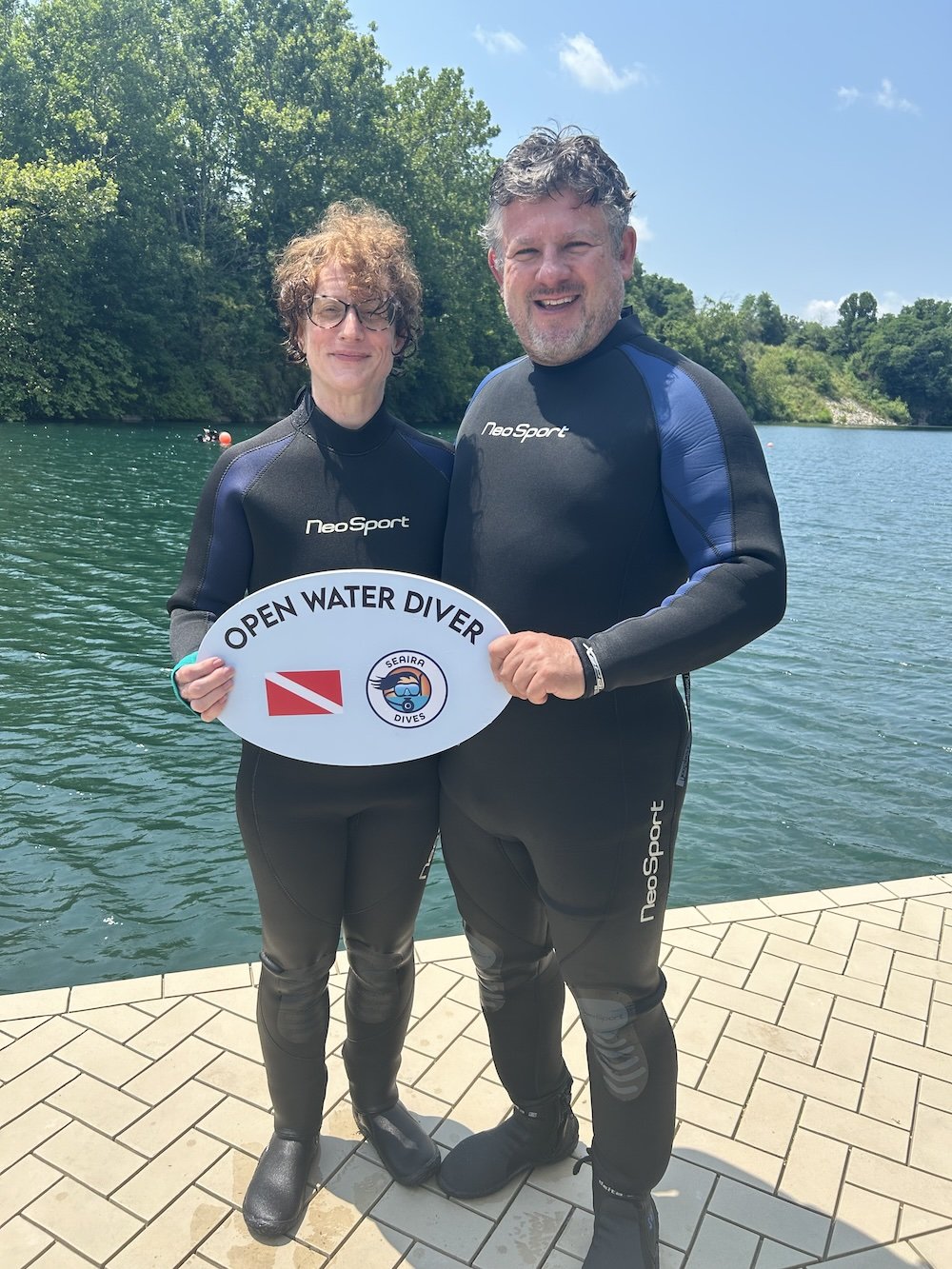
One of the most rewarding parts of my job is watching where my students go after earning their Open Water certification.
Some continue their education by becoming Advanced Open Water Divers and Rescue Divers. Others discover a passion for underwater photography, fish identification, wreck diving, or marine conservation. Many simply spend the rest of their lives planning vacations around the ocean.
I've watched former students celebrate milestone dives, explore destinations they once thought were impossible, become Divemasters and Instructors, and introduce their own friends and family to scuba diving.
No two journeys are ever the same.
That's the beauty of diving.
The ocean is constantly changing, and so are we.
Ready to Begin Your Story?
Learning to scuba dive opens the door to an entirely new world. One weekend can lead to unforgettable vacations, incredible marine life encounters, lifelong friendships, and experiences that simply aren't possible any other way.
Some people earn their Open Water certification so they can dive on a family vacation. Others discover a passion for underwater photography, marine conservation, wreck diving, or travel. Every diver's journey looks a little different, and that's one of the things I love most about this sport.
No matter where your path leads, every certified diver has one thing in common.
They all started with that first course.
If you've been thinking about learning to scuba dive, there's no better time to take the plunge. The ocean has an incredible way of surprising you, challenging you, and rewarding you all at the same time.
You never know where that first breath underwater might lead.
The only way to find out is to take it.
Dive safe, explore passionately, and remember…