Marine Life Etiquette
How to Have Better Wildlife Encounters Underwater
Some of my favorite moments underwater aren't necessarily encounters with the biggest or rarest animals. They're the moments when an animal decides to stick around.
An octopus continues hunting while I watch. A turtle keeps eating instead of swimming away. A manta makes another pass through a cleaning station. A shark continues cruising along the reef instead of changing direction when it sees us. I can also happily spend an unreasonable amount of time staring at a frogfish doing absolutely nothing, which frogfish are exceptionally good at doing.
Marine life is one of the biggest reasons so many of us fall in love with diving. We travel around the world hoping to see sharks, mantas, turtles, octopuses, seahorses, nudibranchs, whale sharks, and whatever wonderfully bizarre little creature happens to be hiding on the reef. Sometimes, though, we get so excited about seeing an animal that we accidentally become the reason it leaves.
Good marine life etiquette isn't simply memorizing a list of things you're not supposed to do underwater. It's learning how to observe wildlife, understand what its behavior is telling you, and recognize when your presence is beginning to change that behavior. The goal isn't to get as close to marine life as possible. It's to become a better observer of the underwater world.
Learn About What You're Looking At
One of the easiest ways to have better marine life encounters is to actually learn about the marine life you're looking at.
Before diving somewhere new, ask your dive guide what you're likely to see. What animals are common here? What should you be looking for? Are there cleaning stations, nesting areas, or particular habitats where certain animals are commonly found? Are there protected species or local wildlife regulations you need to know about?
A great dive guide can teach you so much more than simply pointing at an animal once you're underwater. Ask questions. Why are we looking here? What does this animal eat? Why is it behaving that way? What should I look for if I want to find one myself?
Better yet, take a course that teaches you more about what you're seeing.
One of my favorite things about continuing education is that not every course needs to teach you to go deeper or do a more challenging dive. Some courses simply teach you to see more on the dives you're already doing. PADI Fish Identification and Underwater Naturalist can completely change what you're looking for, while courses focused on sharks and rays, whale sharks, and sea turtles help you understand the animals so many of us travel around the world hoping to encounter.
Once you start learning fish identification, the reef isn't simply full of “fish” anymore. You begin recognizing families and eventually species. You notice differences in body shape, swimming style, coloration, habitat, and behavior. You start recognizing juveniles that look completely different from adults you've seen a hundred times.
Underwater Naturalist takes that curiosity even farther because you start looking at relationships rather than individual animals. Why is that goby sitting beside that hole? Why are those little fish gathered around a turtle? Why does this nudibranch seem to appear on a particular hydroid? What looked like an empty patch of reef suddenly becomes an entire little ecosystem once you know what you're looking for.
Eventually, you stop looking randomly for animals and start looking for habitat. Instead of hoping to stumble across a nudibranch, you start checking what it feeds on. Instead of waiting for your guide to point out a shrimp goby, you start recognizing the kind of sandy burrow where the partnership might live. You're not simply getting better at identifying marine life. You're learning where and how to look for it.
The same thing happens when you learn about sharks, rays, whale sharks, and sea turtles. Understanding their biology, behavior, threats, and role in the ecosystem makes seeing one much more interesting than simply checking an animal off a dive bucket list. It can also make you a more responsible observer because you have a better idea of what the animal may be doing and why your behavior around it matters.
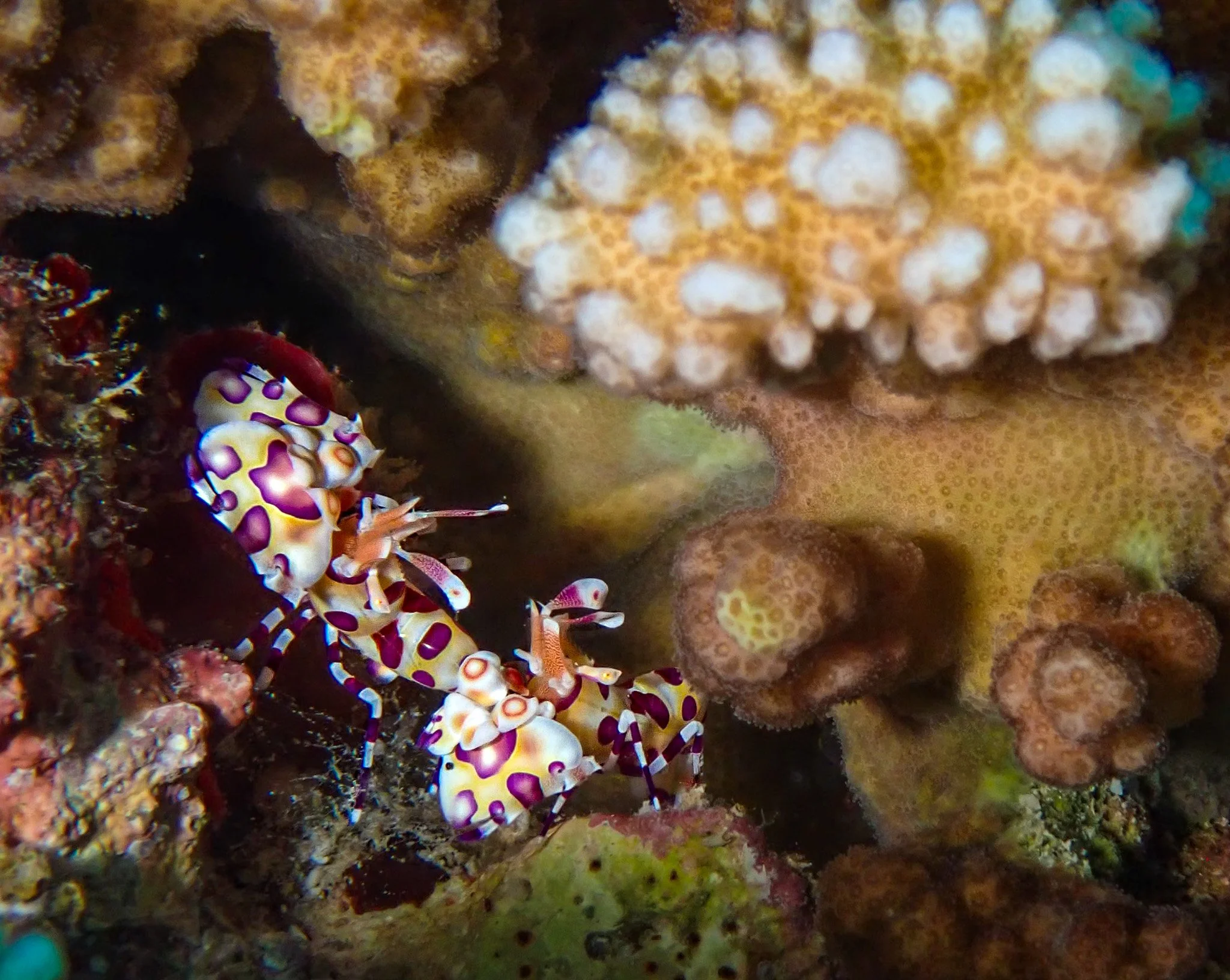
I think this is one of the most underrated ways to become a better diver. Knowledge creates excitement. A dive doesn't need a whale shark to be incredible when you know enough to lose your mind over the juvenile fish hiding in the coral, a cleaner shrimp working with its client, nudibranch eggs you almost swam past, or some weird little behavior happening underneath a rock.
Learn about what you're seeing and suddenly there is something interesting happening everywhere you look.
Approach Slowly and Learn to Read the Animal
Learning how to approach marine life is a skill in itself.
When you notice an animal, resist the immediate urge to swim straight toward it. Slow down or stop your forward movement, establish good buoyancy, and spend a moment looking at what the animal is actually doing.
Is it feeding? Resting? Hunting? Traveling? Cleaning? Guarding eggs? Does it already know you're there? Where does it appear to be going?
Think about its direction of travel and make sure you aren't positioning yourself where it needs to go. If approaching is appropriate, move slowly and predictably rather than charging directly toward it. Stop again and observe before continuing to move closer.
Instead of asking yourself, How close can I get?, ask a better question: Is the animal still comfortable with what I'm doing?
Different species behave differently, and individual animals can respond differently too. There isn't one universal “comfort zone” that applies to every animal. What we can learn to recognize is when our presence begins changing the encounter.
Maybe a turtle that was resting suddenly lifts its head and starts moving away. An octopus pulls farther into its den. A fish stops feeding. A shark repeatedly changes direction as divers approach. A manta stops returning to a cleaning station after people move into its path. Those changes are information.
One question I find particularly useful is: Would this animal still be doing this if I weren't here?
We can't always know the answer, but asking the question changes how we observe wildlife. If an animal repeatedly moves away and you repeatedly follow it, it's probably time to stop following it.
This is also why chasing wildlife rarely produces the encounter people actually want. A turtle can outswim you. A shark can definitely outswim you. An octopus has spent millions of years becoming remarkably good at disappearing.
Sometimes the best thing you can do is stop moving and become boring.
Legal approach distances and official wildlife-viewing recommendations always take priority, of course. Reading an animal's behavior isn't a substitute for knowing and following local regulations.
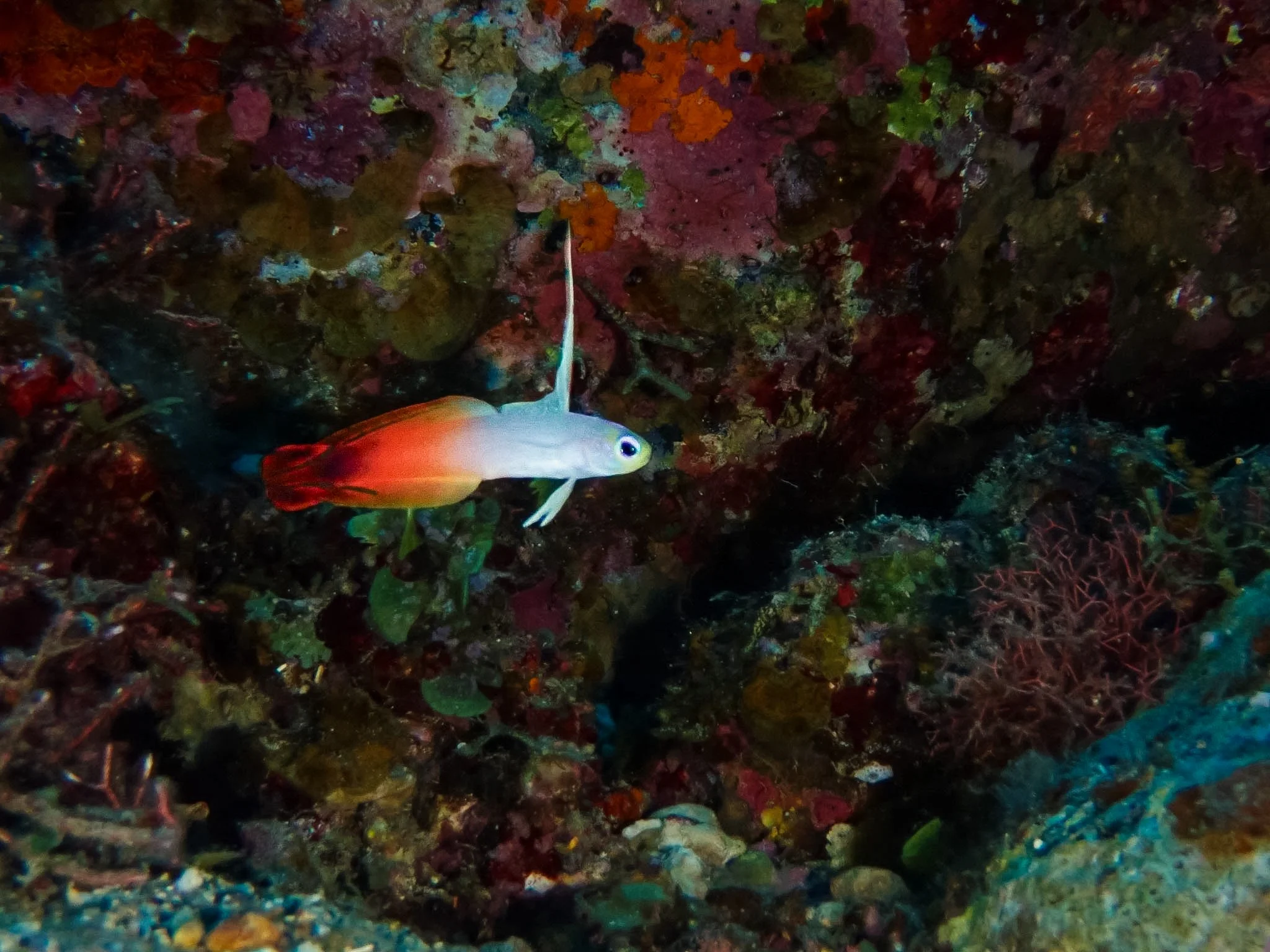
Different Animals Call for Different Encounters
There isn't one perfect way to observe every animal in the ocean.
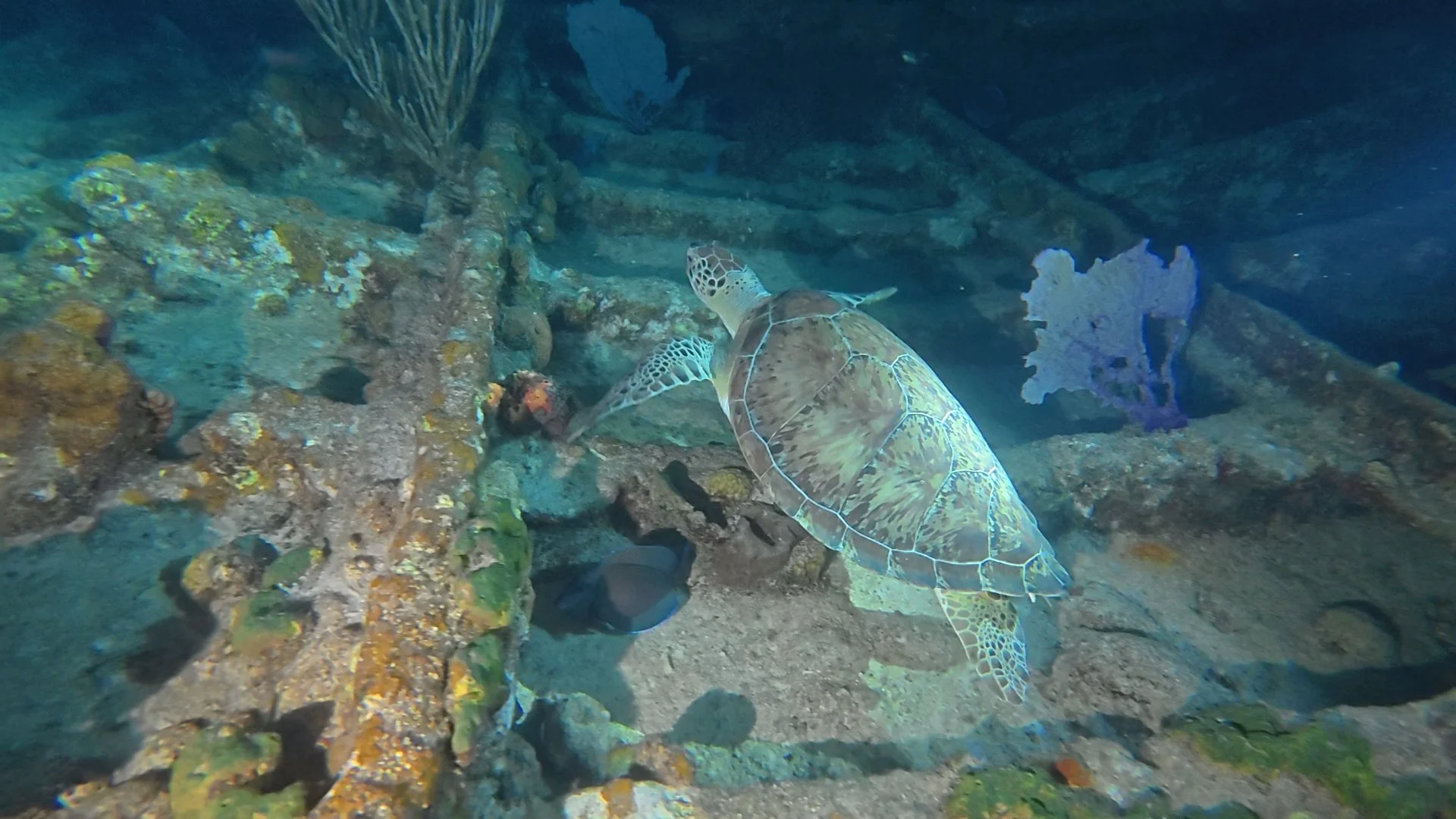
With a turtle, think about where it's going and whether it needs access to the surface. Don't hover directly over it, block its direction of travel, or surround it with other divers. If it's resting, let it rest.
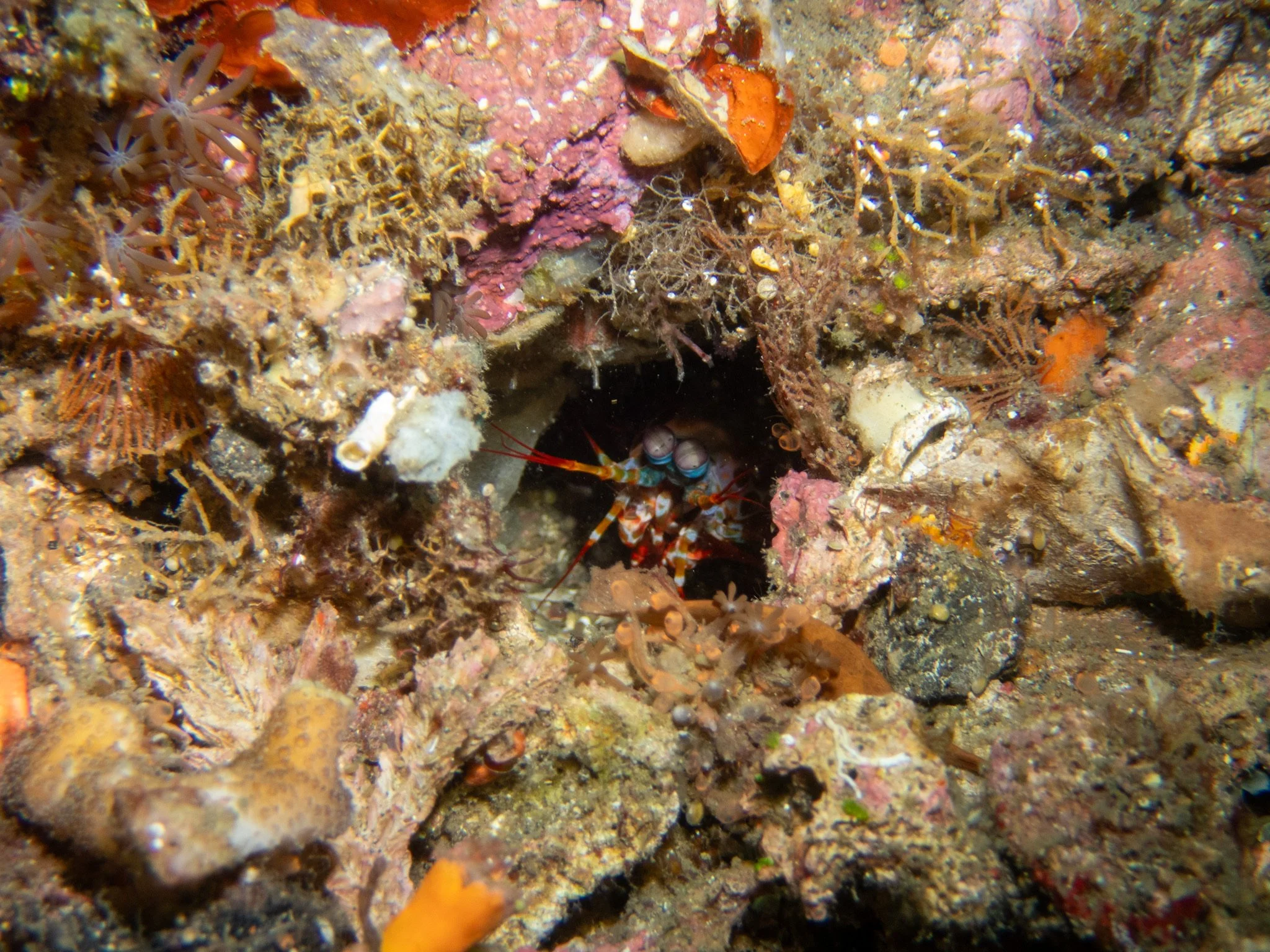
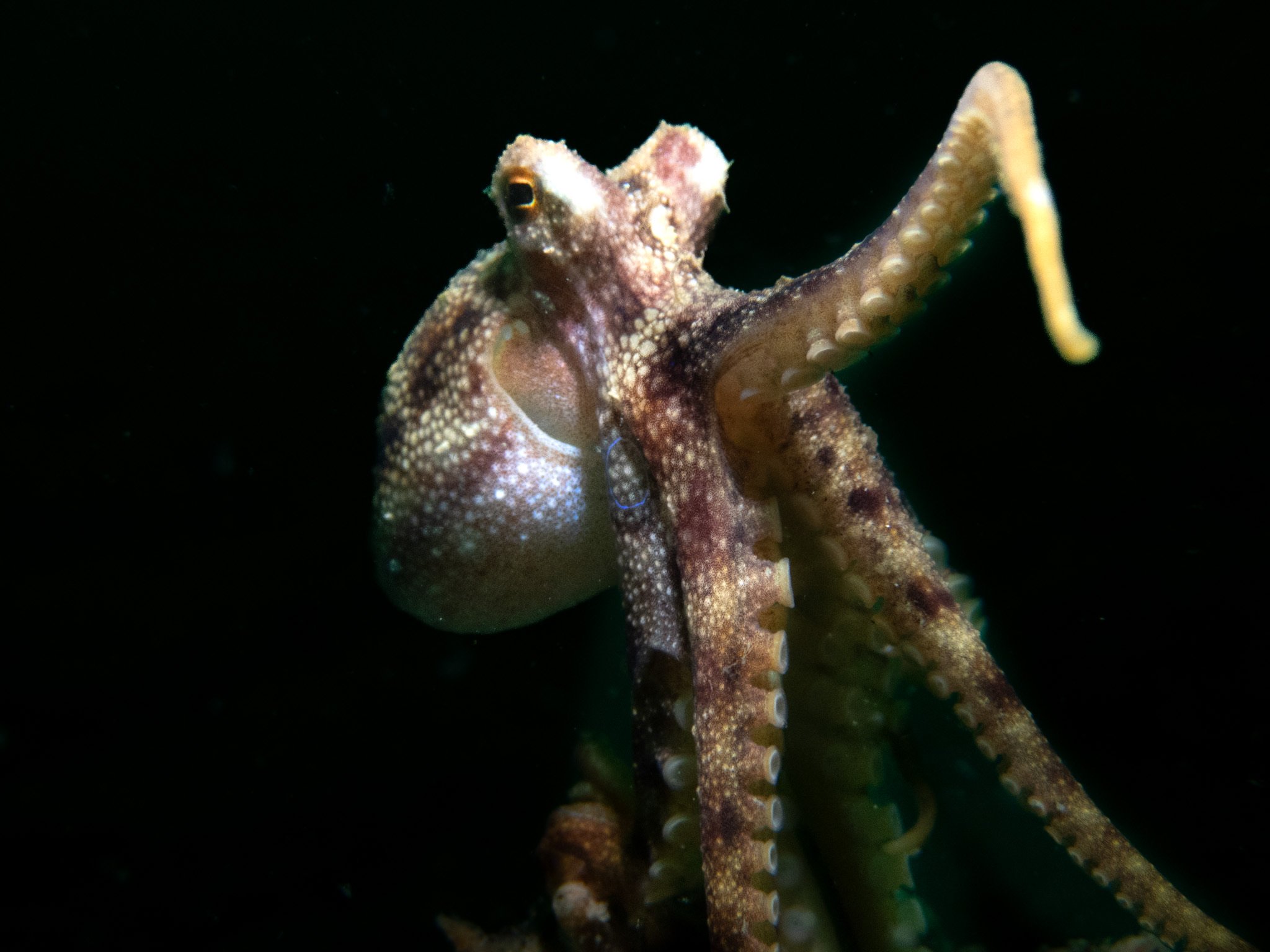
With an octopus, patience is almost always more rewarding than pursuit. If it's tucked into a den, don't poke it until it comes out. If you're lucky enough to find one hunting, give it room to move. Watching an octopus naturally hunt across a reef is infinitely more interesting than watching one disappear into a hole because everyone rushed toward it.
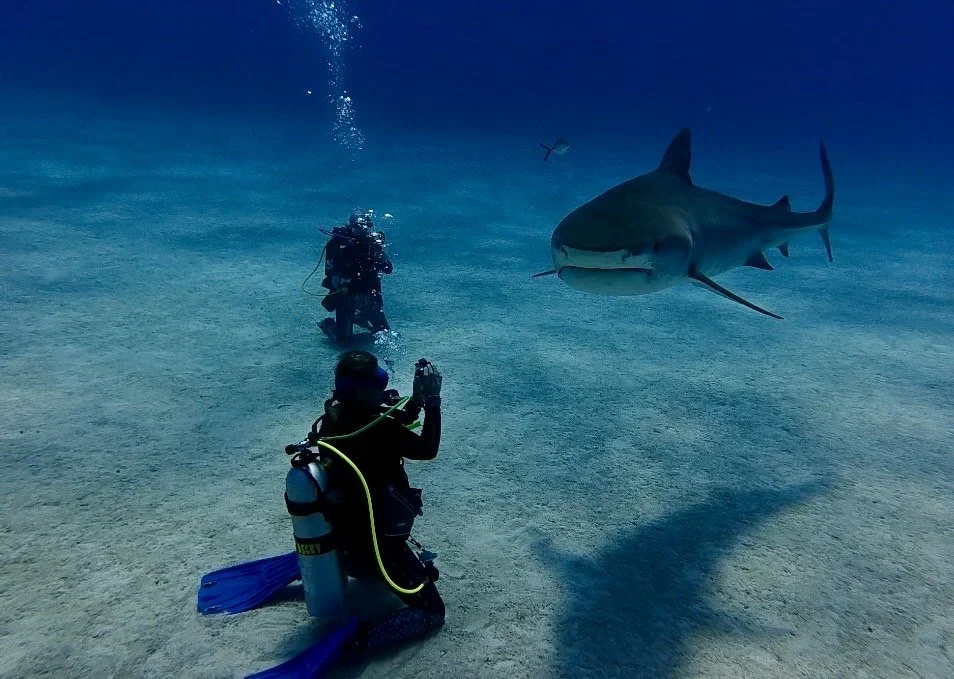
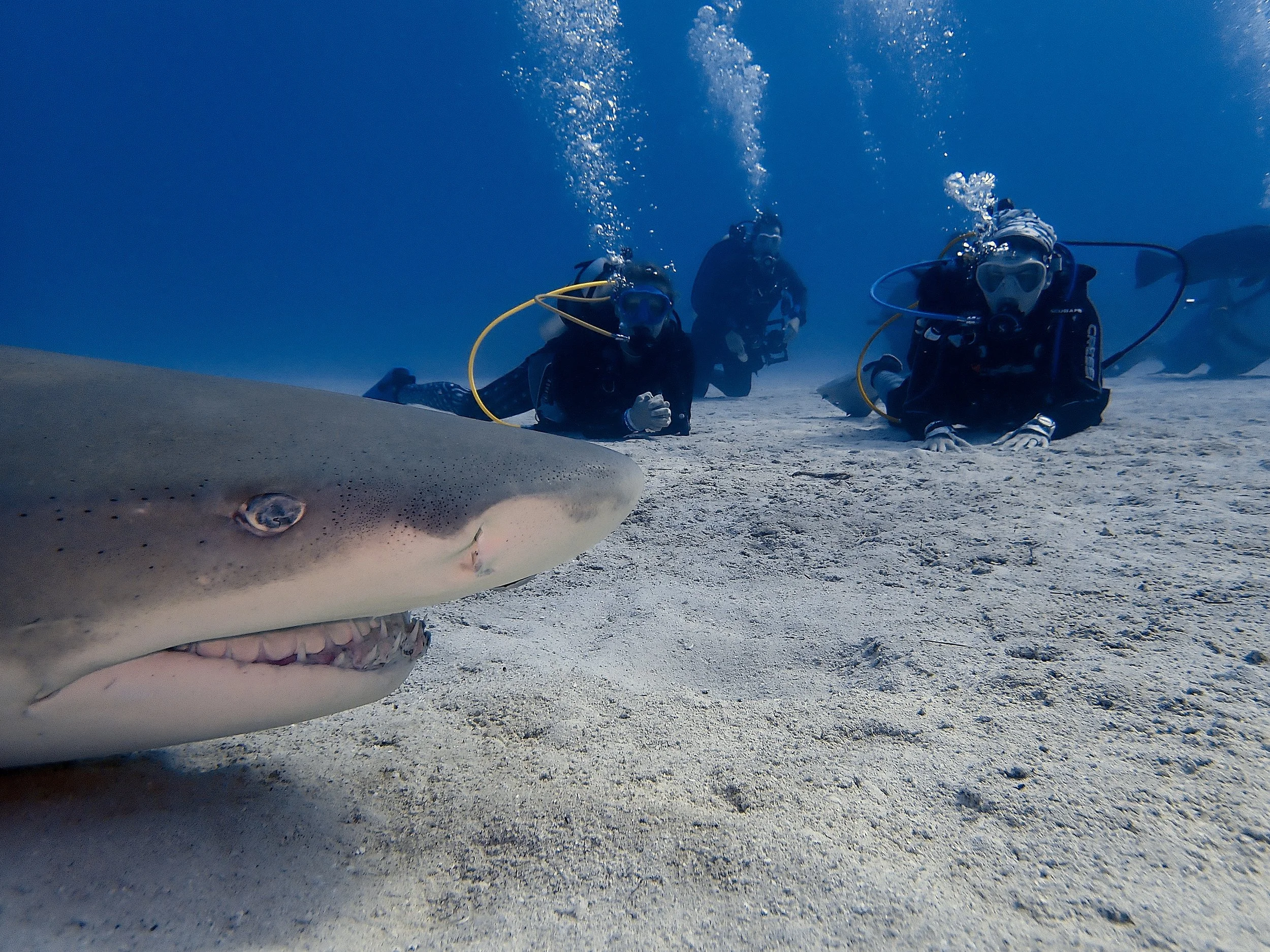
When you see a shark, the immediate instinct can be to start swimming after it because you're afraid the encounter will be over. Instead, pay attention to its direction and give it space. Don't cut it off or continually pursue it trying to close the distance. If the shark chooses to make another pass, fantastic. If it doesn't, you still got to see a shark.
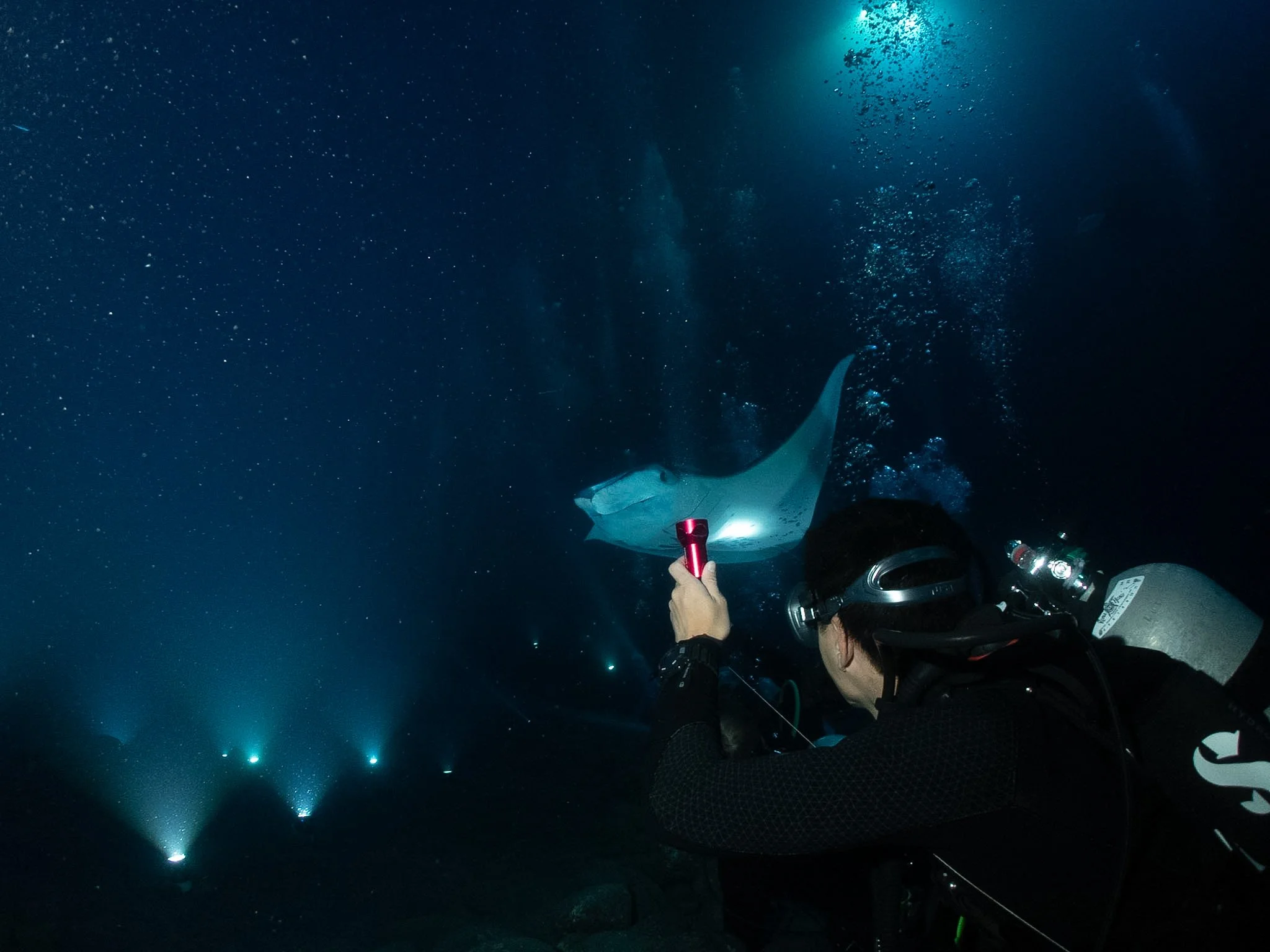
Mantas at cleaning stations require a different kind of awareness. Cleaning stations are places animals intentionally visit where cleaner organisms remove parasites, dead tissue, and other material. Listen carefully to the site briefing, stay in designated viewing areas where they exist, and avoid swimming into the cleaning station or blocking the manta's approach. Moving closer every time a manta moves closer can interfere with the exact behavior you came to see.
Macro life requires us to think about the animal and its habitat. A tiny nudibranch may occupy approximately three pixels of your field of vision, but the reef, hydroid, sponge, rubble, or sand around it still matters. Destroying everything around a four-millimeter animal to get closer to it isn't responsible observation.
The details change, but the principle stays remarkably consistent: understand what the animal is doing and avoid becoming an obstacle to it.
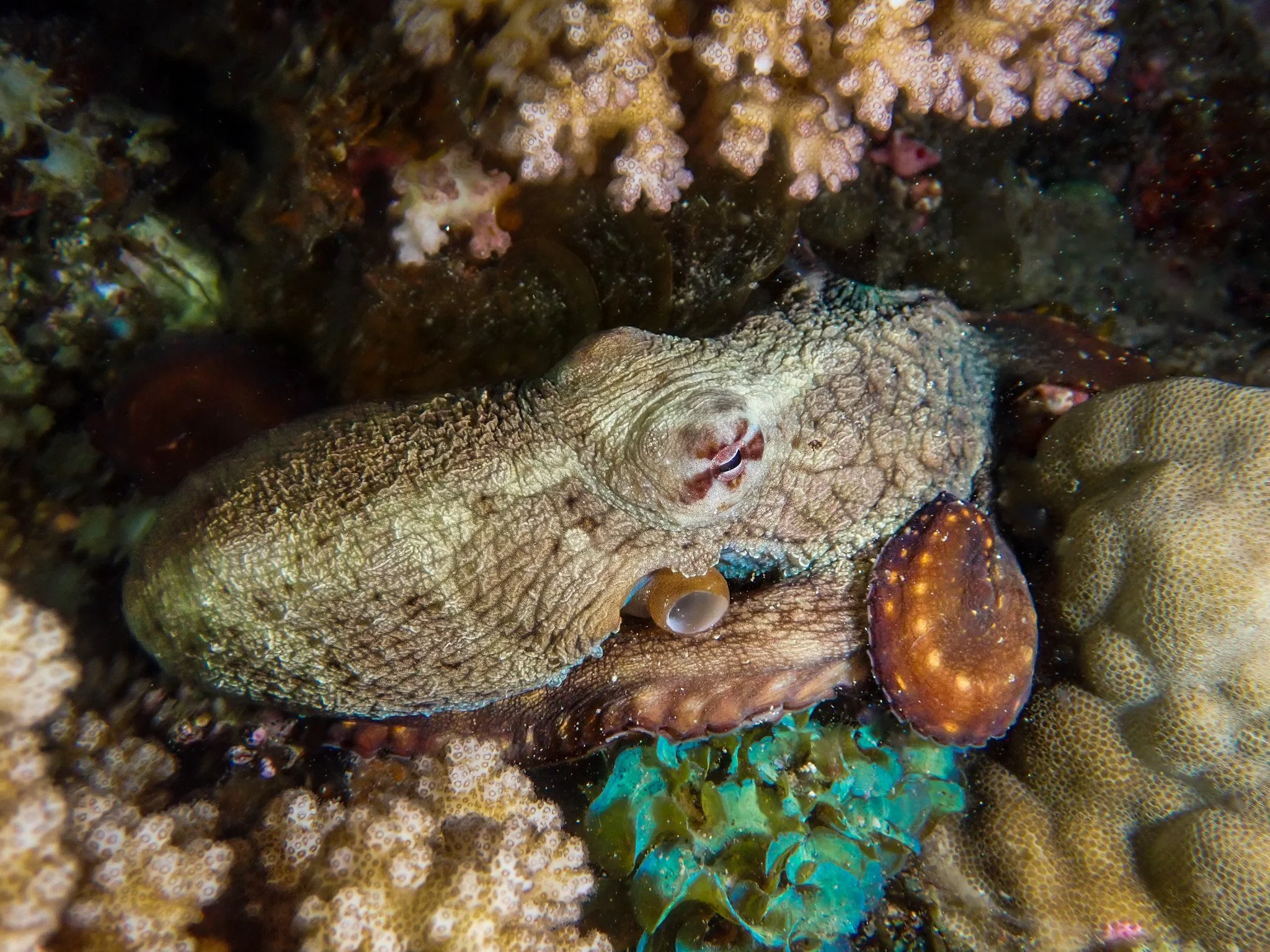
Your Buoyancy Is Part of Marine Life Etiquette
You can have every intention of protecting the reef, but good intentions don't stop your fins from kicking coral. Skill does.
Good buoyancy, trim, and propulsion are conservation skills just as much as they are scuba skills. If you can't control your position underwater, it becomes much harder to observe marine life without kneeling on the bottom, grabbing the reef, kicking coral, stirring up sediment, or accidentally crashing into whatever you're trying to see.
Fin awareness is particularly important. Divers can be beautifully positioned from the waist up while their fins are underneath them bouncing across the reef. This happens especially when something exciting appears and suddenly everyone forgets they have a lower half.
Before moving toward an animal, get yourself under control. Establish neutral buoyancy. Think about your trim and where your fins are. Look at the environment around the animal and decide whether you can actually approach without touching anything.
If you can't, sometimes the answer is that you don't get closer.
Muck diving is a perfect example. What looks like plain sand, rubble, or volcanic substrate can be full of tiny animals and habitat. One enormous fin kick can disturb the bottom and eliminate visibility for everyone behind you. Slow, controlled movement doesn't just protect the environment. It also makes you a much better critter hunter.
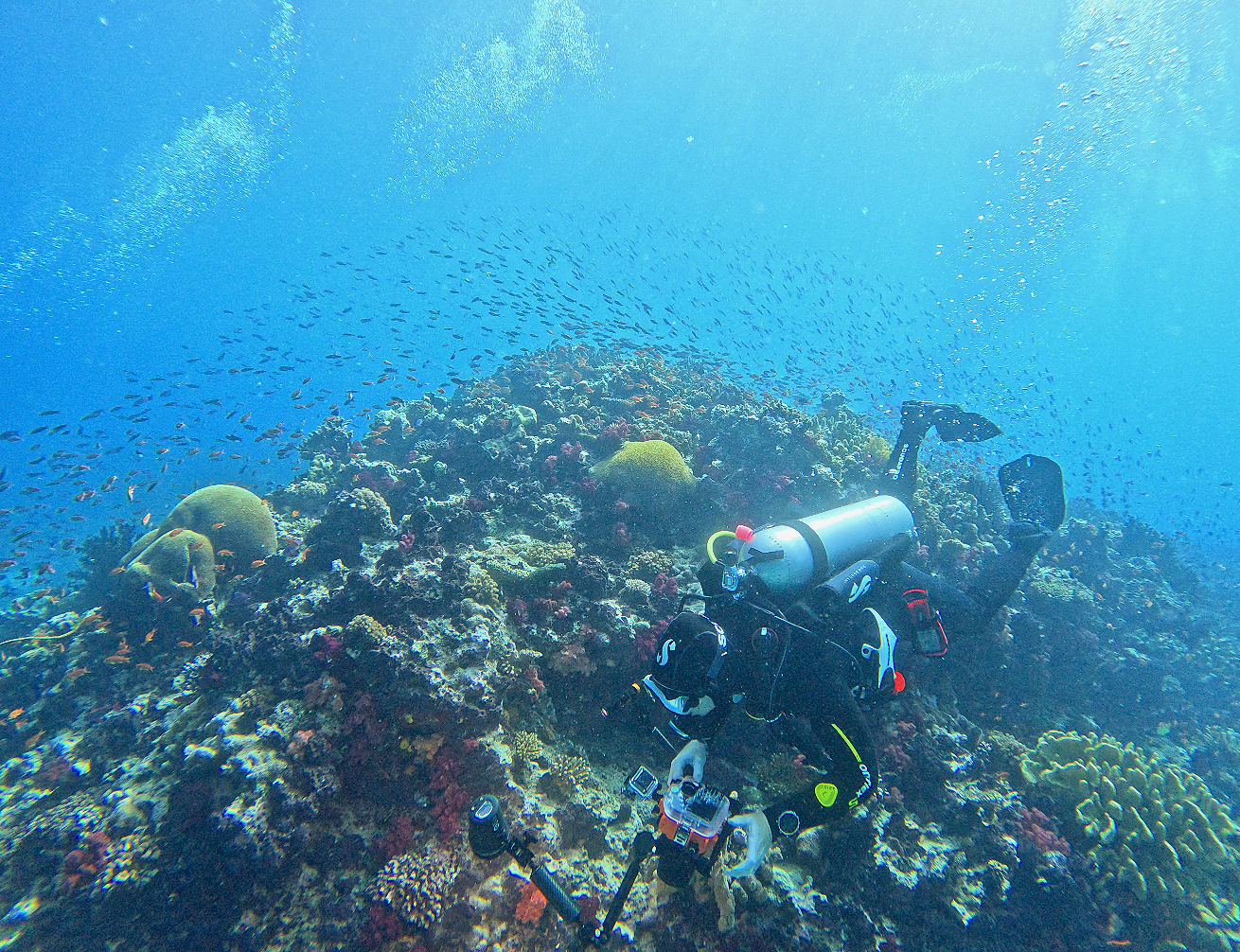
Keep Your Hands to Yourself
Most divers learn very early that we're not supposed to touch marine life, yet wildlife still gets poked, moved, picked up, and repositioned.
Touching can interfere with normal behavior, damage delicate organisms, and create unnecessary risk for both the animal and the diver. Plenty of marine animals can bite, sting, puncture, or envenomate you, which is another excellent reason to keep your hands to yourself.
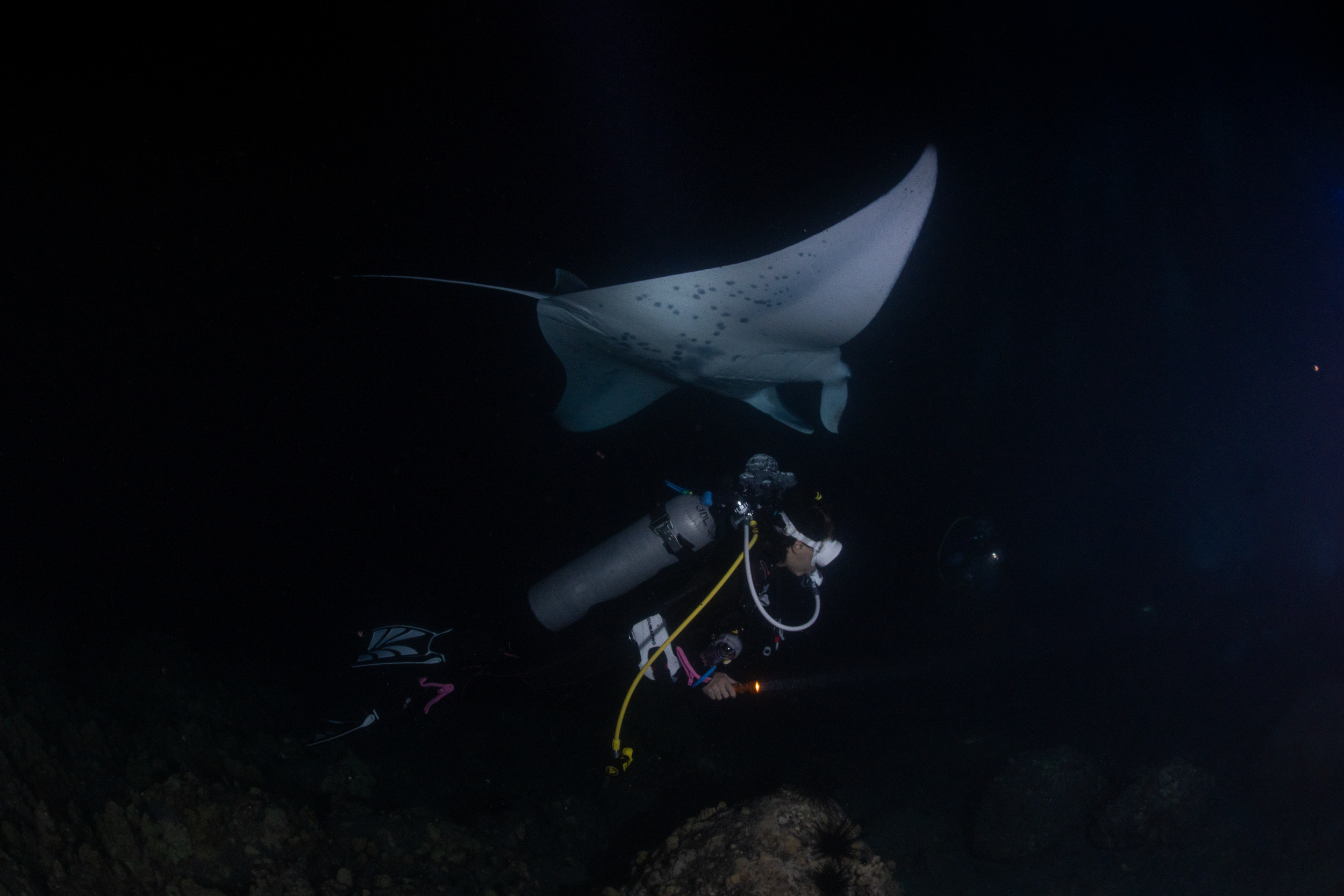
A pointer doesn't change the rule. Don't poke an octopus until it emerges from its den. Don't tap the frogfish because you want it to walk. Don't reposition a nudibranch onto a prettier background. Don't move an animal because its current location isn't aesthetically pleasing enough for your photograph.
The same applies to the habitat around it. Avoid grabbing the reef to stabilize yourself or moving things around simply to see what might be underneath.
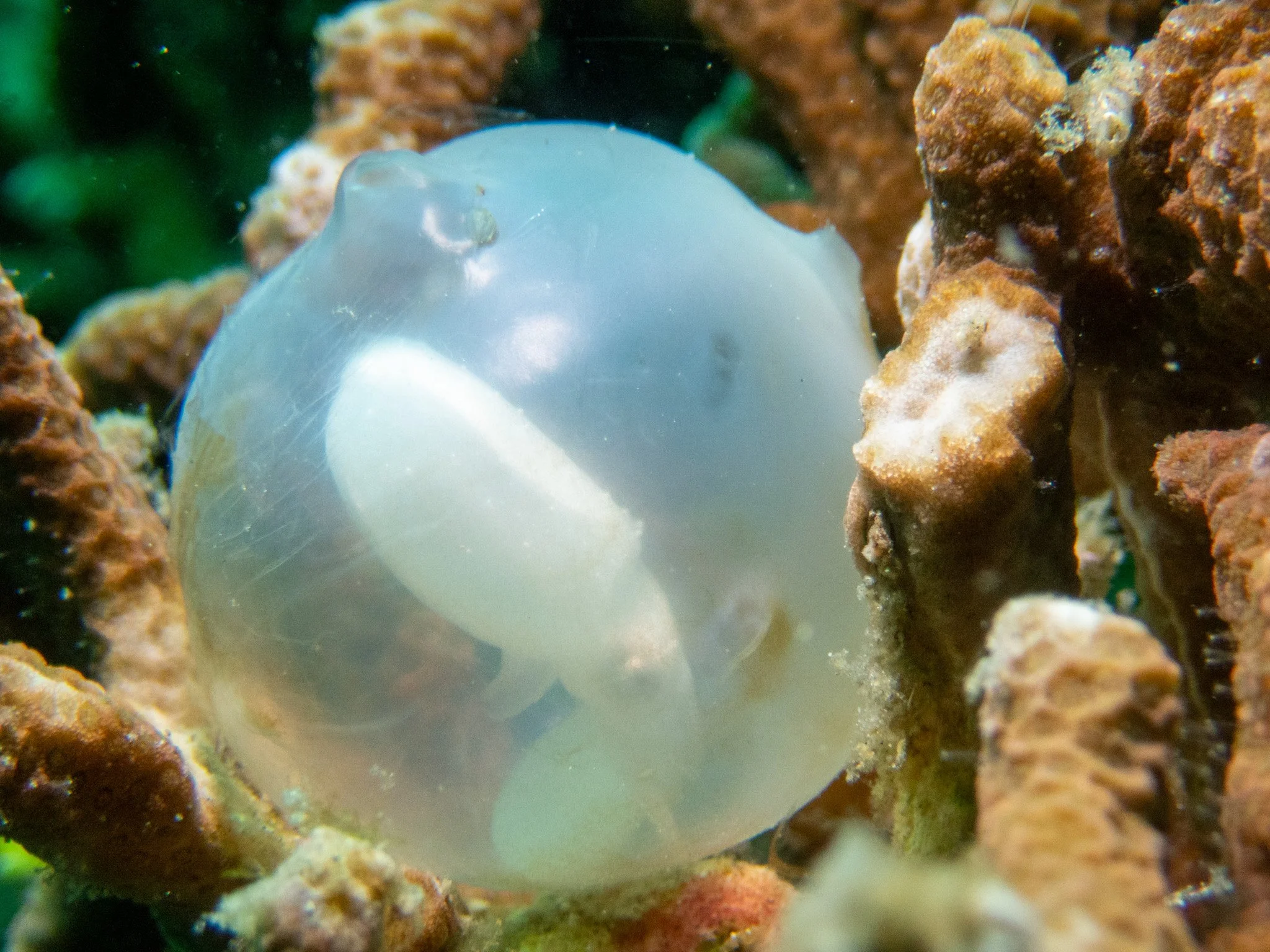
Eggs and nests deserve particular care too. If you find an animal guarding eggs, watch without interfering. Don't move the eggs, touch them, or encourage the parent away because you want a photograph. Watching natural reproductive or parental behavior is far more interesting anyway.
Photographers, We Need to Talk
I love underwater photography, which is exactly why I think photographers need to be particularly aware of how easily a camera can change the way we dive.
Photography creates task loading. Suddenly you're thinking about aperture, shutter speed, strobes, composition, focus, and whether the frogfish has moved approximately four millimeters since your last photograph.
Meanwhile, your buddy still exists.
So do your gas, depth, buoyancy, current, the reef behind you, and all the other divers who would probably also like to see the animal.
Before approaching a subject, get yourself situated. Check your buoyancy and position. Whenever possible, have your camera reasonably prepared before you're hovering over an animal trying to figure out your settings. Look behind and beneath you before backing up or changing position.
Take your photographs and then give other divers an opportunity. Ten divers do not all need to pile onto the same frogfish simultaneously.
The same applies when your guide finds something. A guide pointing out an animal isn't an invitation for everyone to immediately descend on it. Look at where the animal is, where the guide and other divers are positioned, and whether you can approach without damaging the habitat or crowding the animal. Sometimes waiting for everyone else to move away gives you a much better opportunity anyway.
If an animal starts moving away, don't follow it indefinitely because you haven't gotten the shot you wanted. The photograph is never more important than the animal, your buddy, the reef, or the safety of the dive.
Be Thoughtful With Lights and Strobes
Different animals respond differently to artificial light, and responses can depend on species, intensity, duration, conditions, and behavior. Broad statements about how every animal responds to strobes or dive lights aren't particularly helpful.
Instead, pay attention to your subject.
If an animal repeatedly turns away, retreats, stops what it was doing, or otherwise changes its behavior while you're illuminating or photographing it, that's useful information. Reduce the intensity where appropriate, change your positioning, give it a break, or move on.
Night diving deserves particular thought because our lights can become a major part of an animal's immediate environment. We need enough light to safely conduct the dive, communicate, navigate, and observe marine life, but that doesn't mean every animal needs a spotlight held on it indefinitely.
Responsible photography starts with the animal, not the image.
Give Wildlife Room
One animal surrounded by eight divers is an incredibly common situation, and usually nobody intended to create it. Everyone simply wanted a better view and gradually moved closer until the poor turtle was holding an underwater press conference.
Look at where everyone else is before you move in.
Give the animal an obvious route away. Avoid creating a wall between it and open water, trapping it against the reef, or surrounding it from every direction. This becomes especially important with animals that need to surface to breathe.
Taking turns can make a huge difference. If another diver is already observing or photographing an animal, waiting thirty seconds may give you a much better encounter than squeezing in beside them.
It also makes you a much nicer person to dive with.
Resting, Feeding, and Cleaning Are All Worth Watching
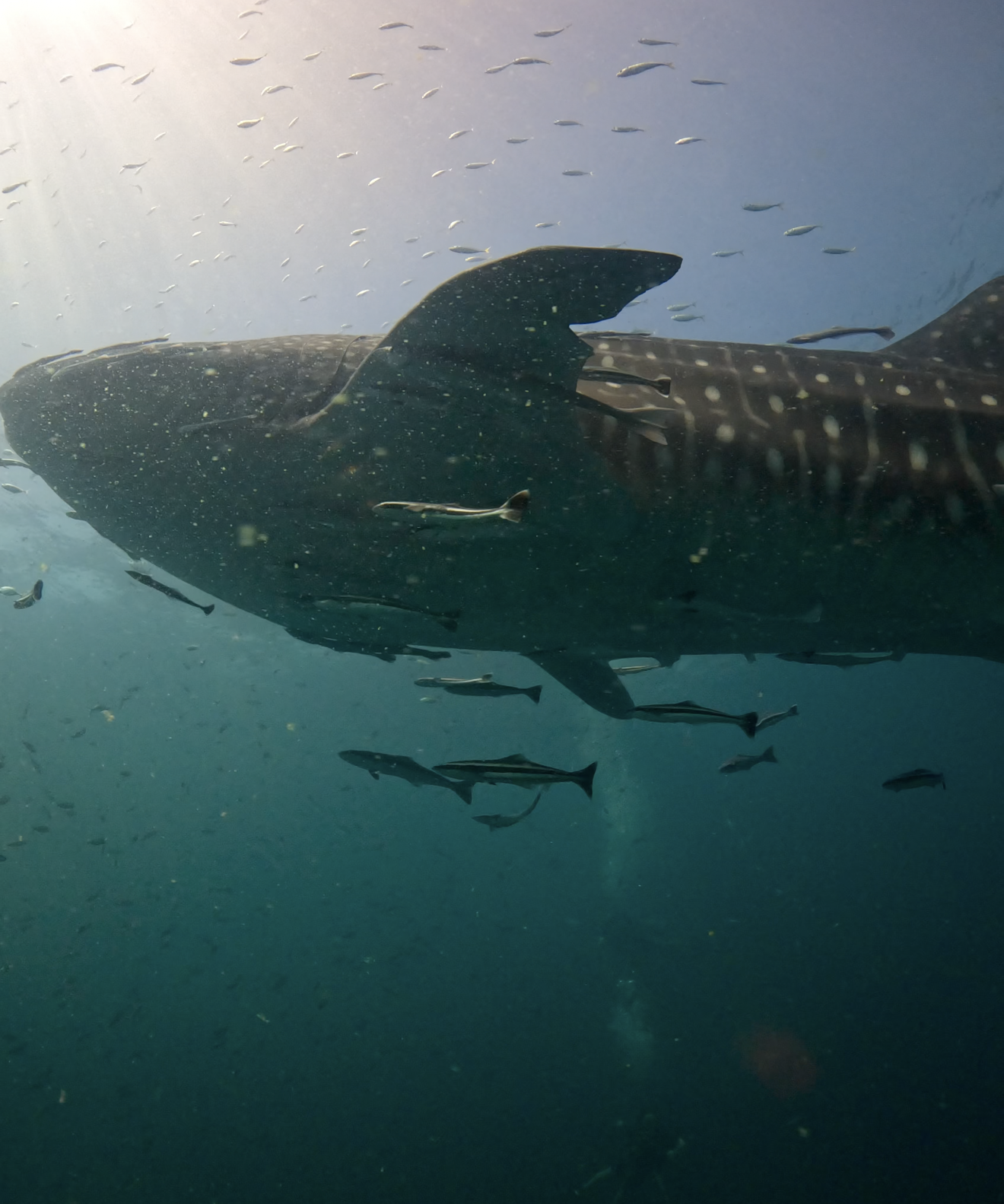
Marine life doesn't need to perform for us to make an encounter interesting. A sleeping turtle is doing something. An octopus tucked into its den is doing something. A fish protecting a nest is doing something. An animal visiting a cleaning station is doing something.
Once you start thinking this way, wildlife observation becomes much more interesting because you're no longer simply collecting species. You're watching behavior.
Don't make an animal move simply because movement would make a better video. Don't encourage something out of a hiding place because everyone wants to see the entire animal. If an animal is guarding eggs, resting, feeding, or participating in a cleaning interaction, the behavior itself is often the interesting part.
The more you understand what you're seeing, the more you start appreciating those little moments.
Don't Feed Wildlife to Create an Encounter
For the average recreational diver, my advice is simple: don't bring food underwater to manufacture wildlife encounters.
Feeding can change the relationship between animals and people, alter natural behavior, and create safety concerns. In U.S. waters, feeding or attempting to feed wild marine mammals is prohibited under the Marine Mammal Protection Act.
Wildlife provisioning does occur in some destinations under established tourism practices or specific local regulations, which is why it's important to understand the rules and conservation practices wherever you're diving rather than assuming every destination operates the same way.
What I wouldn't do is improvise. Please don't fill your BCD pockets with snacks because you want fish surrounding your GoPro.
Natural behavior is more interesting anyway.
Know the Difference Between Etiquette, Guidance, and the Law
Wildlife etiquette isn't entirely about personal judgment. Some species are legally protected, and the rules can change depending on what you're looking at and where you're diving.
Some marine-life viewing distances are recommendations designed to reduce disturbance. Others are legally enforceable approach restrictions. Those aren't the same thing, which is why NOAA recommends learning the regulations and guidelines that apply to the species and area you're visiting.
Hawaiʻi is a great example. NOAA recommends staying at least 10 feet, or 3 meters, from sea turtles and at least 50 feet, or 15 meters, from Hawaiian monk seals. For a mother monk seal with a pup, NOAA recommends at least 150 feet, or about 45 meters.
Those are recommended viewing distances.
Hawaiian spinner dolphins and humpback whales are different. Federal regulations prohibit swimming with, approaching, or remaining within 50 yards of Hawaiian spinner dolphins in specified Hawaiʻi waters, subject to limited exceptions. Approaching humpback whales within 100 yards in Hawaiʻi waters is also prohibited.
That distinction matters. I don't want divers repeating “the law says ten feet from a turtle” when that isn't what NOAA says.
Learn both the regulations and recommended best practices wherever you're diving. The law also shouldn't become a challenge to see exactly how close you can legally get. If you're outside a required or recommended distance and an animal is still clearly reacting to your presence, give it more room.
What If the Animal Approaches You?
Sometimes you're doing everything right and the animal decides to close the distance.
Stay calm, maintain your buoyancy, and resist the sudden urge to reach toward it. An animal choosing to approach you isn't permission to touch it. Give it control over the interaction and leave it an unobstructed route away.
With protected species, follow the applicable local regulations and guidance. An animal voluntarily approaching you doesn't necessarily mean every protection or restriction suddenly disappears.
You don't need to do anything extra to make the encounter exciting. If a wild animal decides to come closer while you're quietly hanging out underwater, that's already pretty freaking cool.
Good Dive Guides Teach You How to See
Some of my favorite dive guides aren't simply incredible at finding animals. They teach you why they're looking where they're looking.
Maybe a particular goby lives with a certain shrimp. Maybe that suspicious little lump on a sponge looks very frogfish-like. Maybe they're searching around rubble for an octopus or checking a particular hydroid for a nudibranch.
That kind of guiding teaches you how the ecosystem works. Eventually, you start recognizing those clues yourself.
A good wildlife guide also understands when to leave an animal alone. They shouldn't need to poke, chase, move, or manipulate something to manufacture an encounter for the group.
I'd much rather have someone teach me how to find an octopus than physically produce one for me.
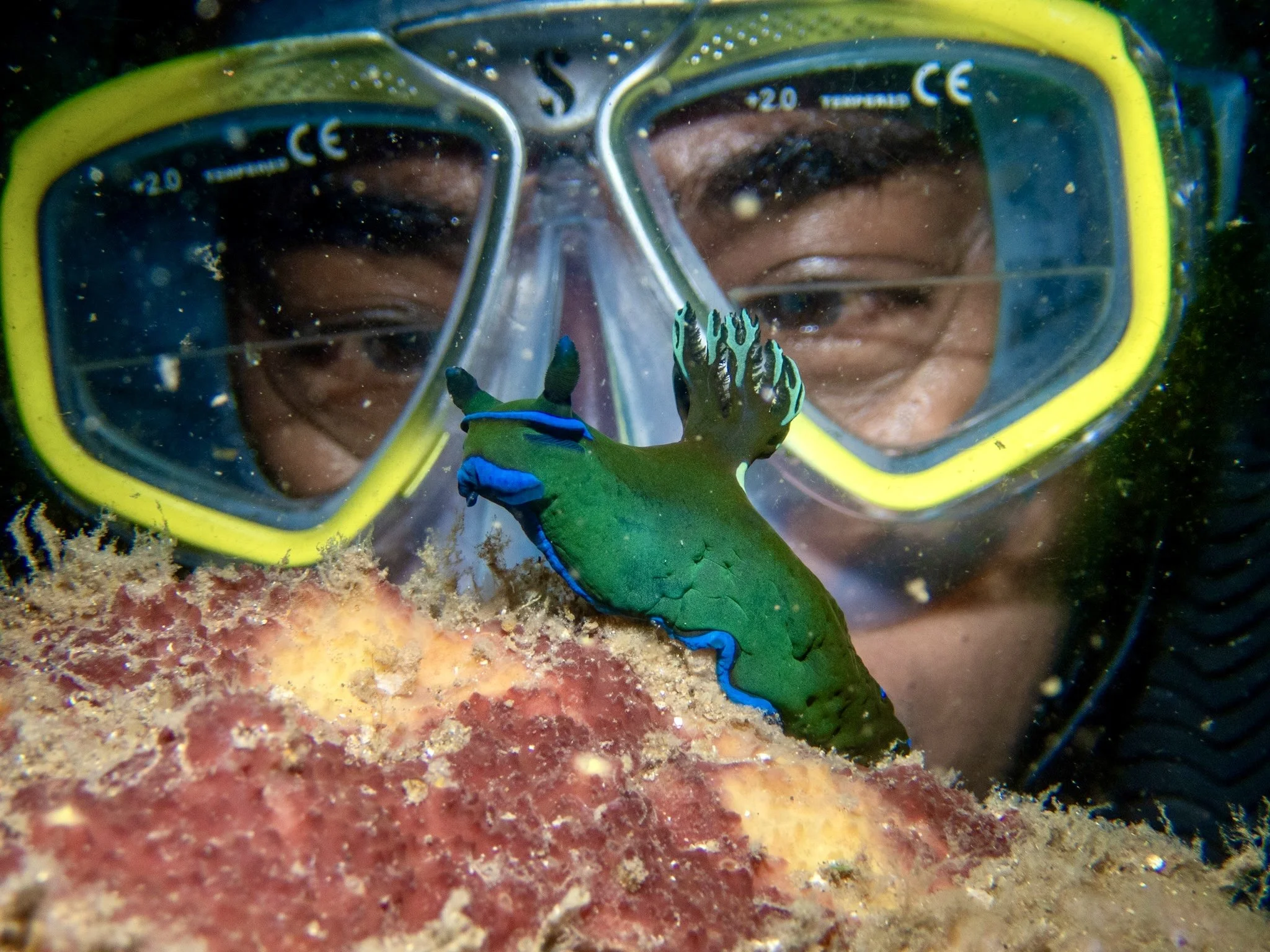
Better Divers Become Better Wildlife Observers
There is a connection between diving skill and wildlife encounters that I think is easy to overlook.
Good buoyancy allows you to observe an animal without landing on its habitat. Good trim keeps your fins away from the reef. Good propulsion lets you move slowly without stirring up the bottom. Good situational awareness lets you watch an octopus without losing your buddy. Good gas awareness prevents you from becoming so distracted by a frogfish that you suddenly realize you've blown through your planned gas.
The better those fundamental diving skills become, the more attention you have available to actually watch what's happening around you.
You start noticing behavior instead of simply identifying animals. You notice the cleaner wrasse working on a turtle. You notice an octopus changing texture as it moves. You notice where a goby disappears and realize there might be a shrimp living underneath it. You start understanding why your guide is staring at a seemingly empty patch of sand.
That's when marine life encounters become really interesting.
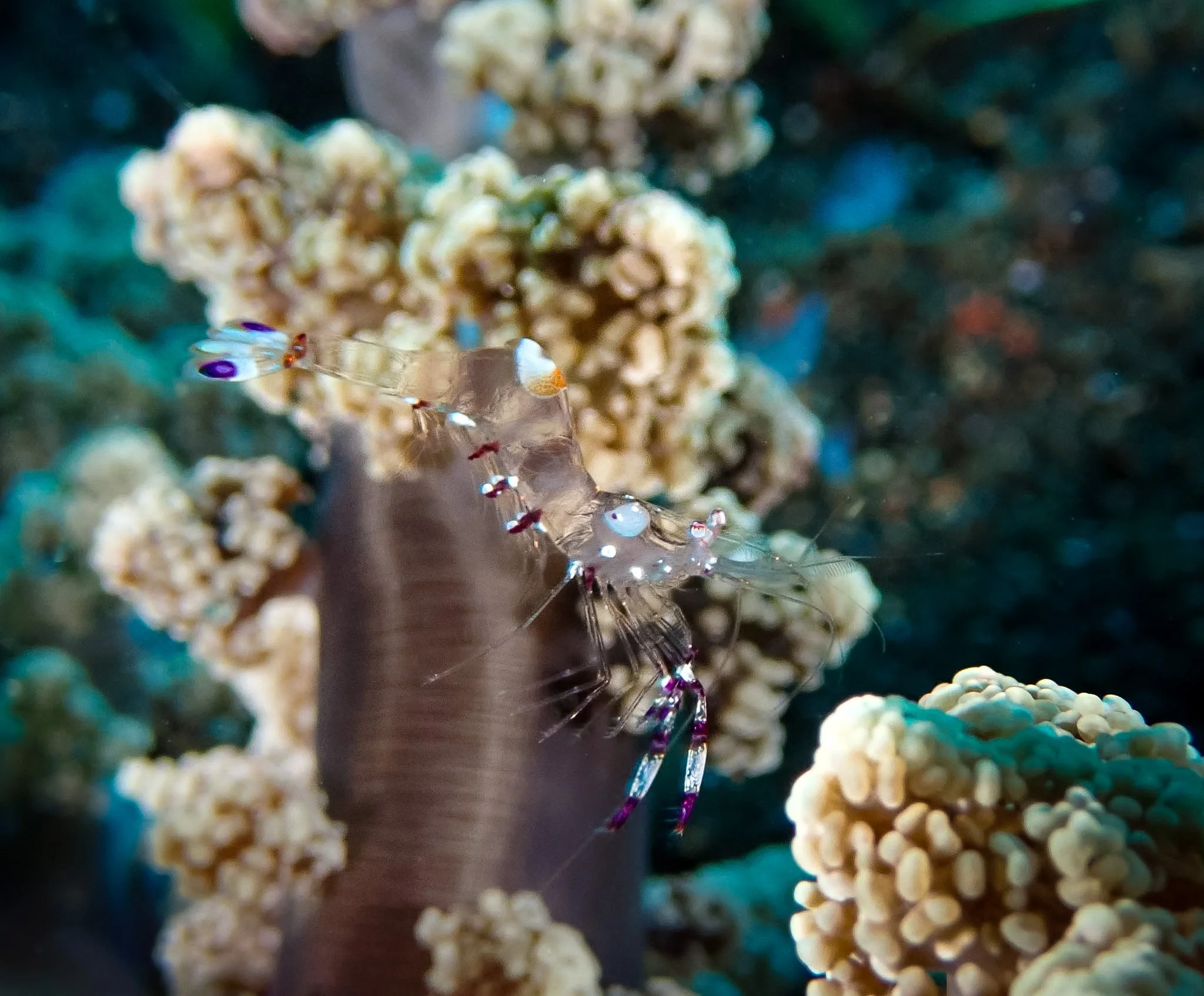
You Don't Need to See Everything
Maybe you traveled halfway around the world hoping to see mantas and the mantas didn't show up. Maybe everyone on the dive saw the octopus except you. Maybe the shark stayed farther away than you wanted. Maybe the whale shark appeared for approximately four seconds and your camera wasn't turned on.
I know. Painful.
Wildlife encounters aren't guaranteed, and I actually think that's part of what makes them so special. We're diving in an ocean, not walking through an aquarium where someone can tell us exactly what will be in the next exhibit.
Sometimes you don't get the photograph. Sometimes the animal leaves. Sometimes the dive where you didn't see the thing you came for introduces you to something you didn't even know you should have been looking for.
The more you learn about marine life, the less a dive becomes about finding one particular animal anyway. Suddenly there are interesting things happening everywhere.

Becoming a Better Wildlife Observer
The more time I spend underwater, the more I appreciate watching animals doing what they would have been doing if I weren't there.
I would rather watch an octopus hunt naturally than chase one into a hole. I'd rather have a shark choose to make another pass than spend the dive swimming after its tail. I'd rather watch a manta move naturally through a cleaning station than swim into its path trying to get closer. I'd rather photograph a frogfish exactly where I found it than move it onto a prettier background.
Most importantly, stop measuring a wildlife encounter by how close you managed to get.
Some of the best wildlife encounters I've ever had happened because I stopped moving, gave the animal space, and simply watched what happened next. Sometimes it swam away. Sometimes absolutely nothing happened. Sometimes the octopus kept hunting, the shark made another pass, or the manta came unbelievably close entirely on its own.
The more I learn about marine life, the more I enjoy those moments for what they are. I notice more, understand more, and find something interesting on almost every dive. That's probably why I can still get just as excited about finding a tiny nudibranch as I can about seeing a manta.
There is always something interesting happening underwater once you learn how to look for it.

Dive safe, explore passionately, and remember…