
How to Spend a 20-Hour Layover in Singapore as a Solo Female Traveler
Some of the best travel experiences happen when you lean into the adventure — even if it’s just during a layover.
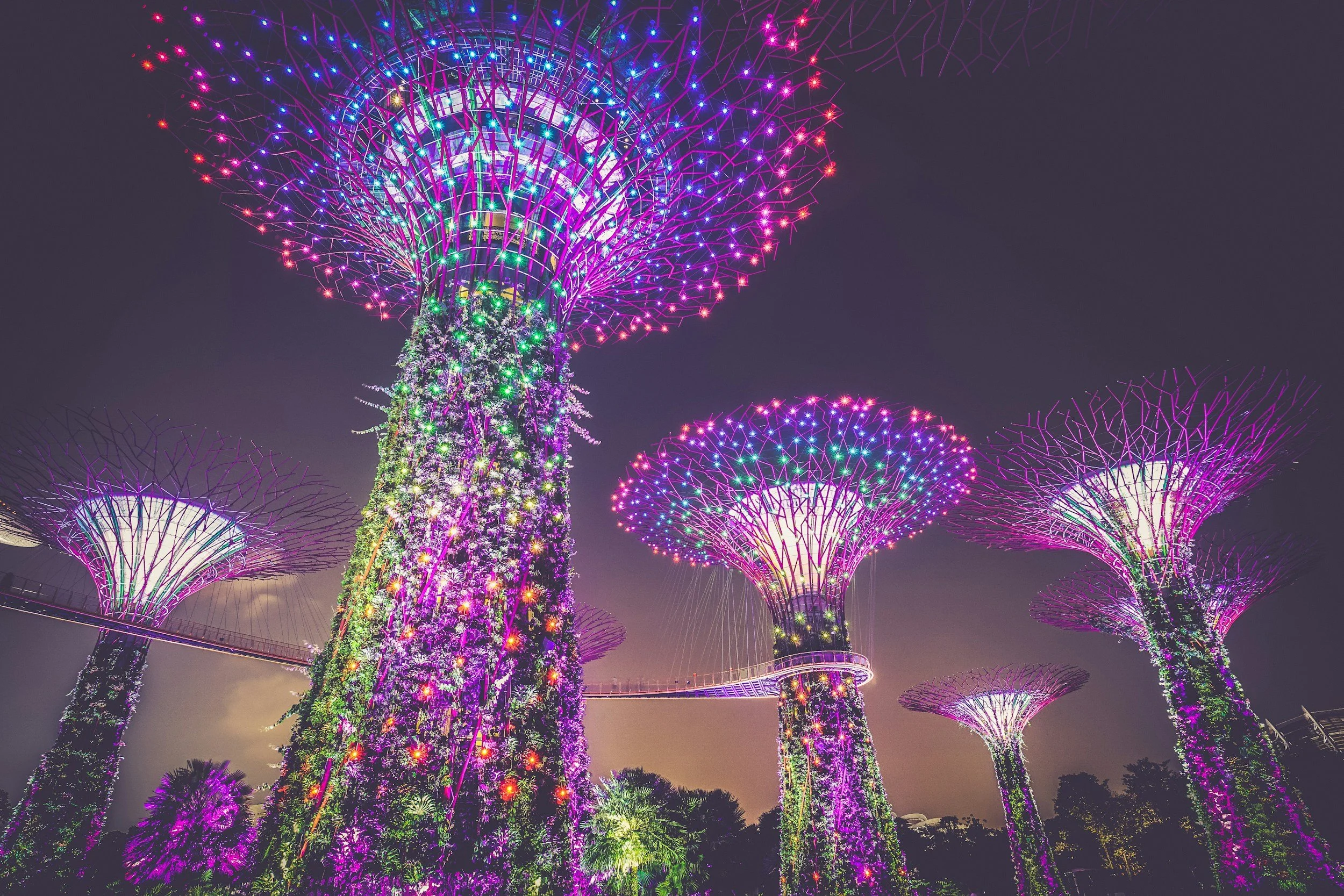
Singapore is one of those rare places where a long connection doesn’t feel like lost time. With an incredibly efficient airport, a vibrant food scene, and a skyline that lights up the entire bay at night, even a short stopover can turn into a memorable mini-trip.
As a solo female traveler, Singapore is one of my favorite places to explore independently. The city is clean, organized, easy to navigate, and welcoming to travelers from around the world. It’s the kind of place where you can confidently step out on your own and immediately feel the excitement of discovering somewhere new.
On this trip, I landed in Singapore at 1430 after flying from Kota Kinabalu, Malaysia, on my way back to the United States. Instead of staying inside the airport, I decided to turn my 20-hour layover into a solo adventure.
And Singapore delivered.
From hawker markets and river cruises to glowing gardens and the world’s most impressive airport waterfall, it ended up being one of the most fun layovers I’ve ever had.
Here’s exactly how to spend 20 hours in Singapore during a layover.
Reset After the Flight: Crowne Plaza Changi Airport
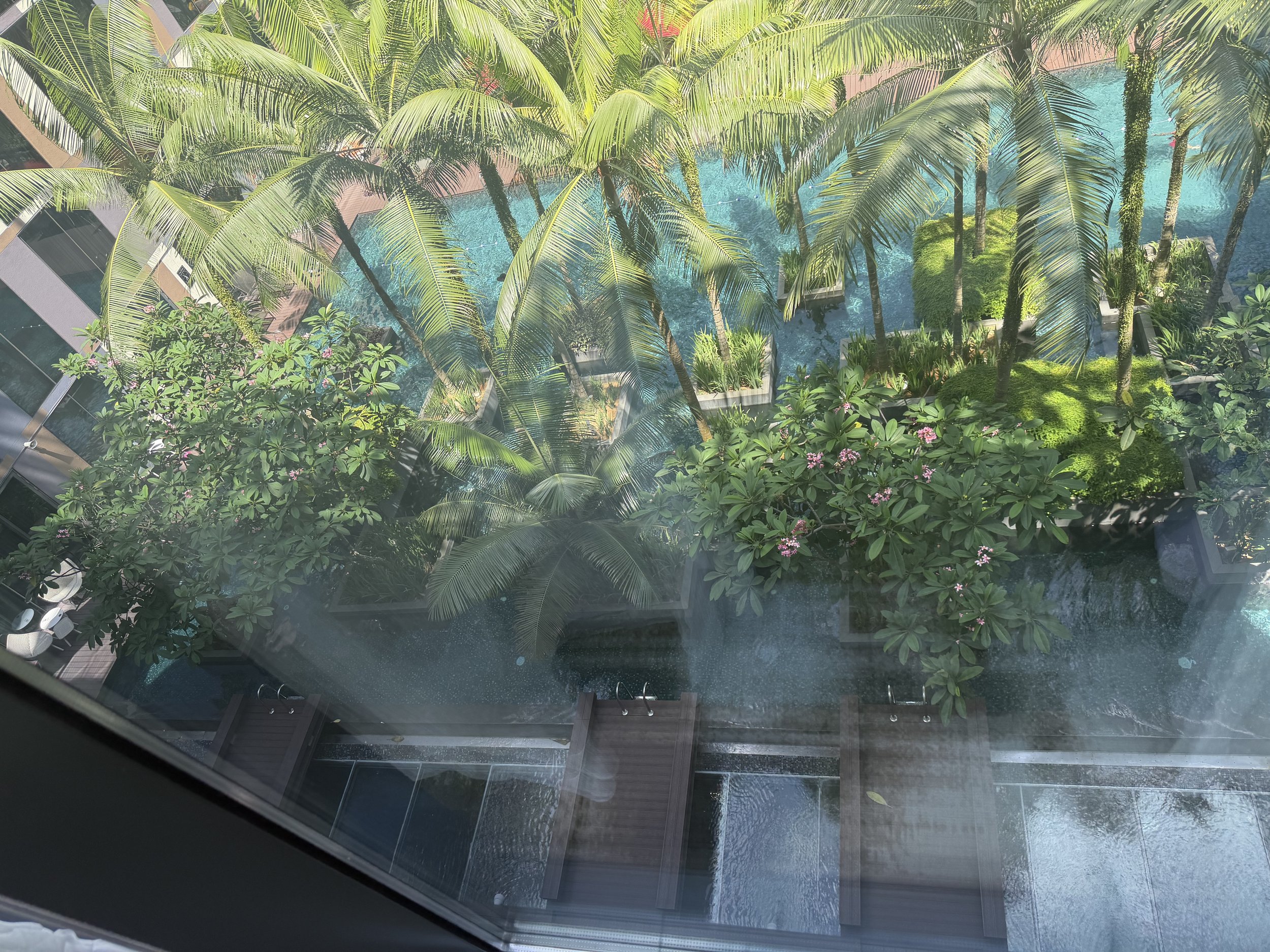
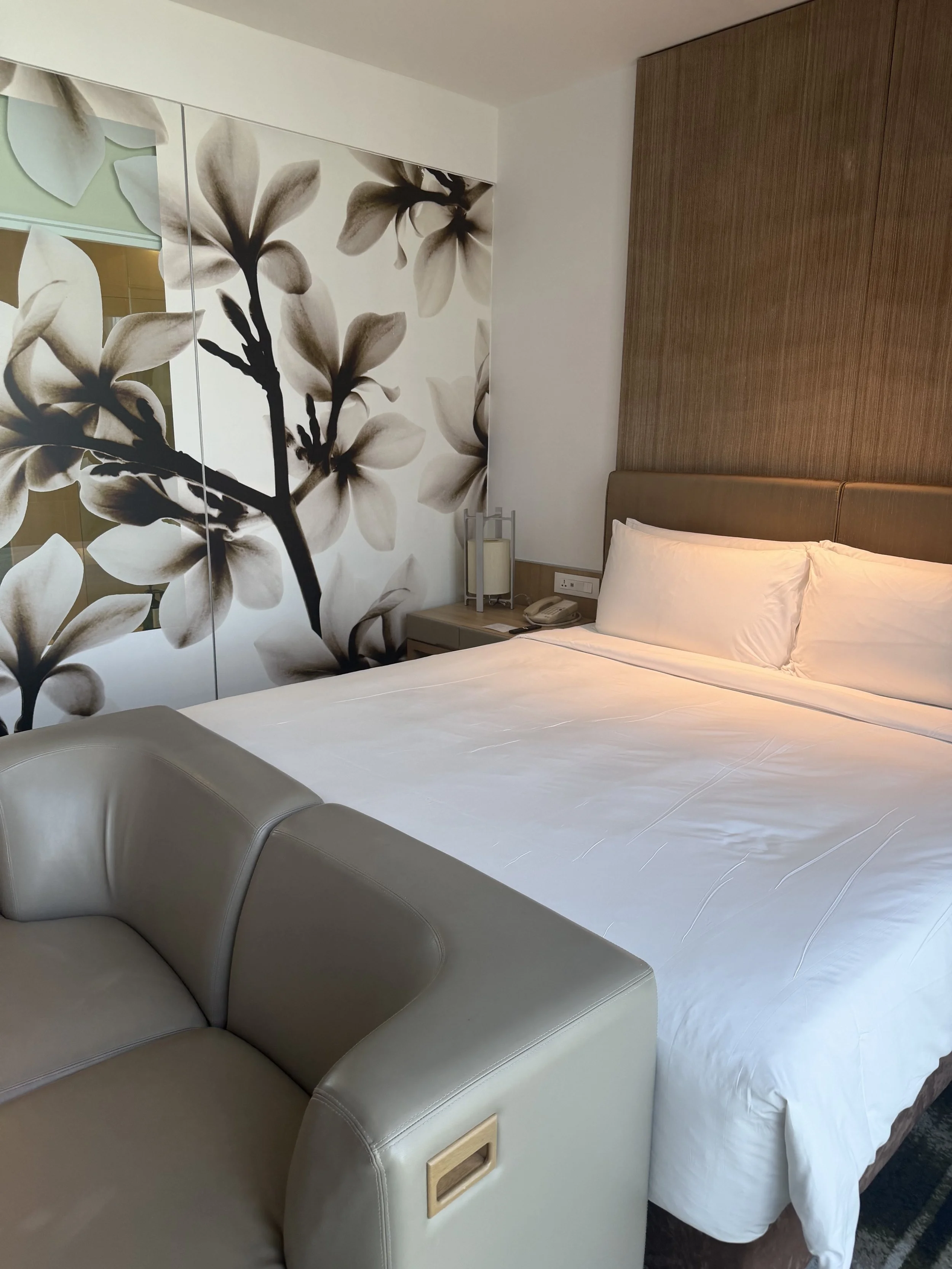
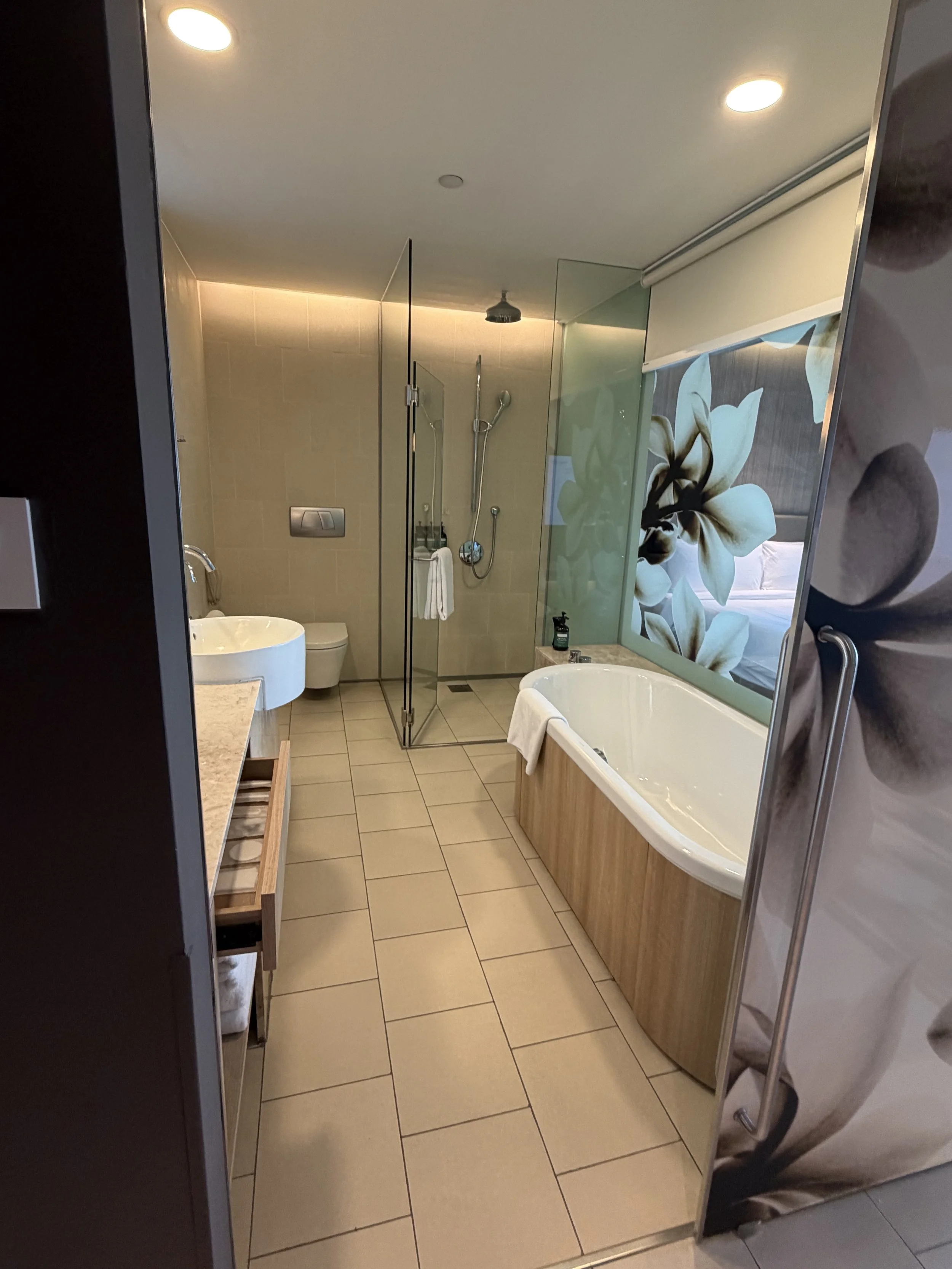
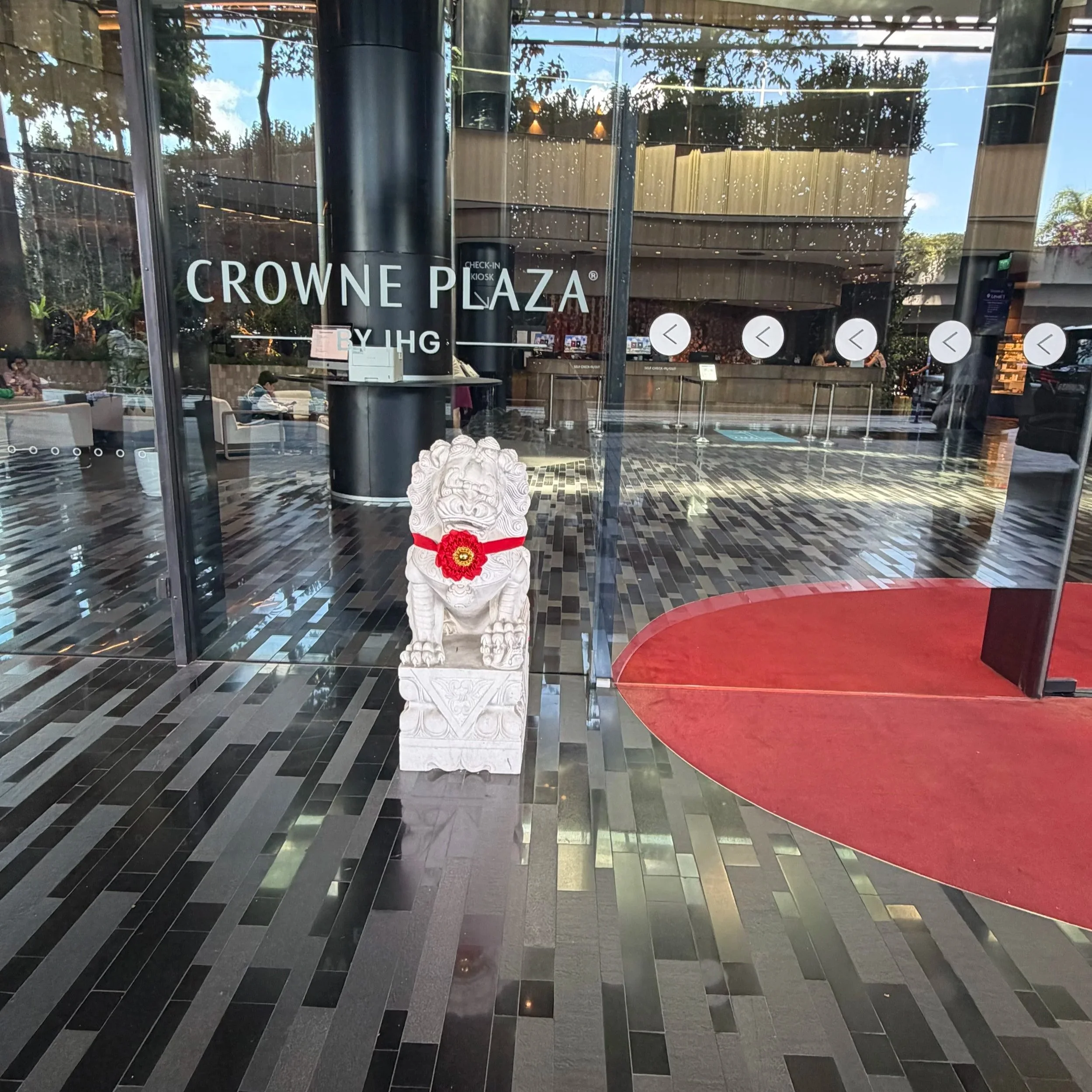
After landing at Singapore Changi Airport, I checked into the Crowne Plaza Changi Airport, one of the most convenient airport hotels anywhere in the world.
The hotel sits right beside Terminal 3, making it an easy walk from arrivals. Within minutes of clearing immigration I was able to drop my bags, take a shower, and decompress after a long travel day.
For travelers on long-haul journeys, that convenience alone makes a huge difference.
Hotel Rating
The Crowne Plaza Changi Airport consistently receives excellent reviews and maintains roughly 4.5 out of 5 stars across thousands of reviews.
It has also won World’s Best Airport Hotel multiple times at the Skytrax World Airport Awards, which says a lot about the quality and comfort.
Travelers often mention:
• quiet rooms despite runway proximity
• spacious modern bathrooms
• very comfortable beds
• seamless access to the terminals
Price
Rooms typically range between:
SGD $300–S$570 per night
(approximately $220–$420 USD depending on season and room type)
For a long international layover, it’s absolutely worth it.
After nearly two days of travel, having a comfortable place to shower and regroup before heading into the city made the entire experience far more enjoyable.
Dinner at Lau Pa Sat Hawker Centre
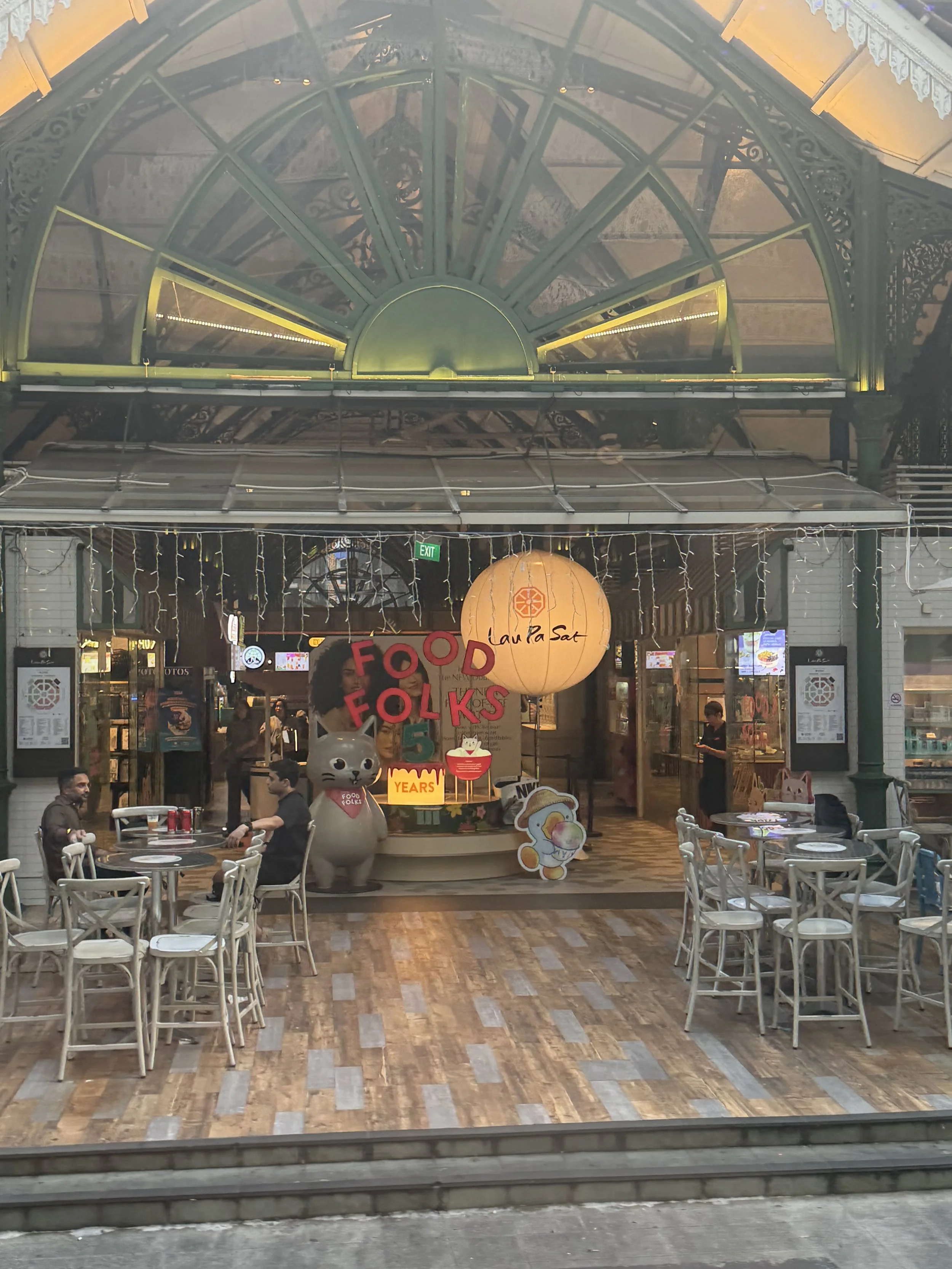
Once refreshed, I grabbed a taxi into the city and headed to Lau Pa Sat, one of Singapore’s most famous hawker centers.
Singapore’s hawker culture is legendary. These open-air food halls bring together dozens of small vendors serving dishes that reflect the country’s diverse cultural influences.
Hawker centers are such an important part of Singapore’s identity that UNESCO has officially recognized Singapore’s hawker culture as Intangible Cultural Heritage.
Lau Pa Sat itself dates back to the late 1800s, when it served as a waterfront fish market during Singapore’s early trading days.
The ornate Victorian iron structure still stands today.
But the real magic happens at night.
When evening arrives, the street beside the market transforms into Satay Street, where grills fire up and vendors cook skewers of marinated meat over charcoal flames.
The air fills with the smell of smoky satay, garlic, chili, and spices.
Plastic tables fill with locals, office workers, and travelers all sharing food late into the evening.
Meals here are surprisingly affordable for Singapore.
Most dishes cost $5–$12 USD, making hawker centers one of the best ways to experience authentic Singaporean cuisine.
Popular dishes include:
• satay skewers with peanut sauce
• Hainanese chicken rice
• laksa coconut curry noodles
• chili crab
• roti prata flatbread
Singapore’s food scene reflects the country’s multicultural population, blending Chinese, Malay, and Indian influencesinto one of the most exciting culinary cultures in the world.
Singapore by Starlight: Exploring the City at Night
With only one evening in Singapore, I wanted to see as much as possible. I booked an evening tour called Singapore by Starlight, which turned out to be the perfect way to explore the city in just a few hours.
Merlion Park
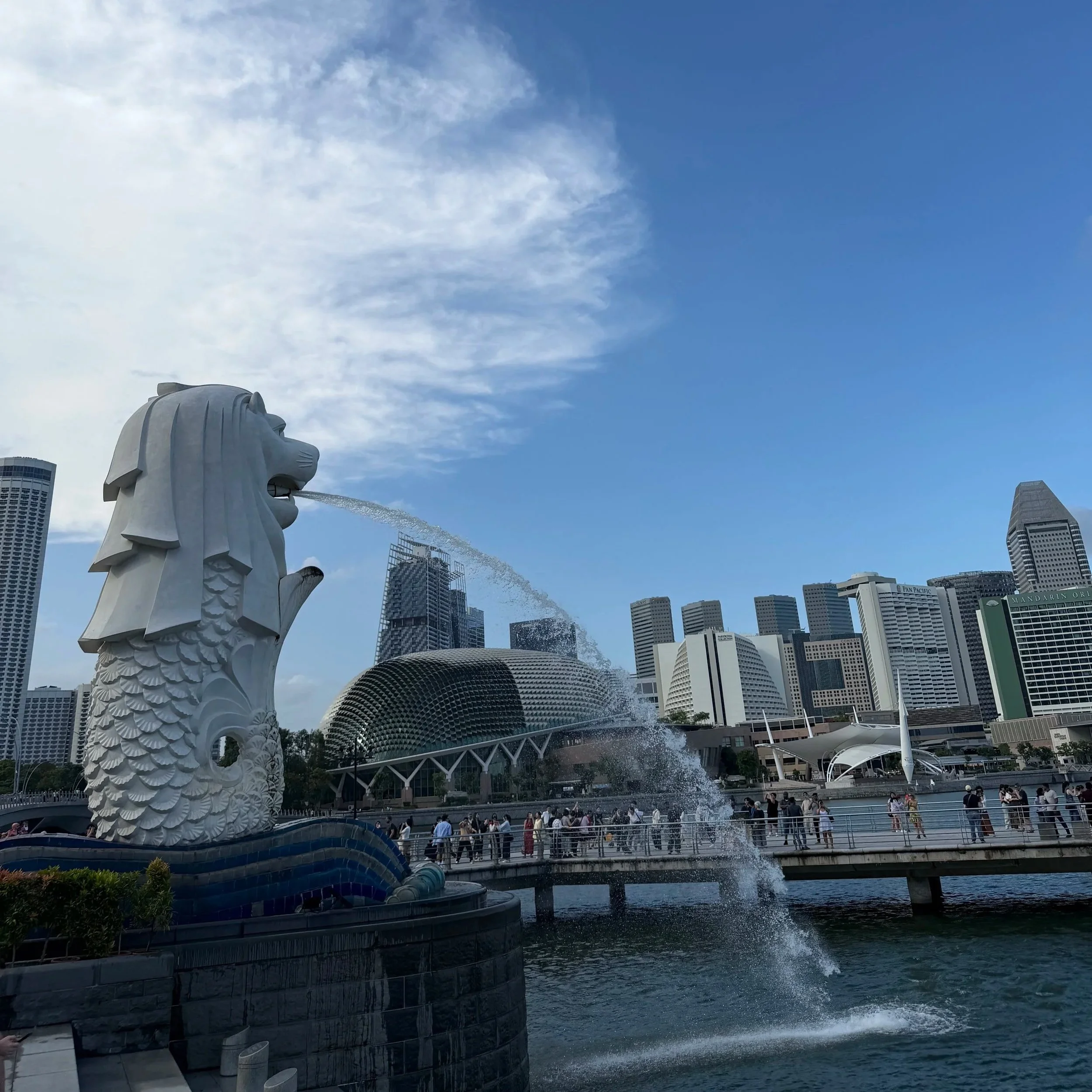
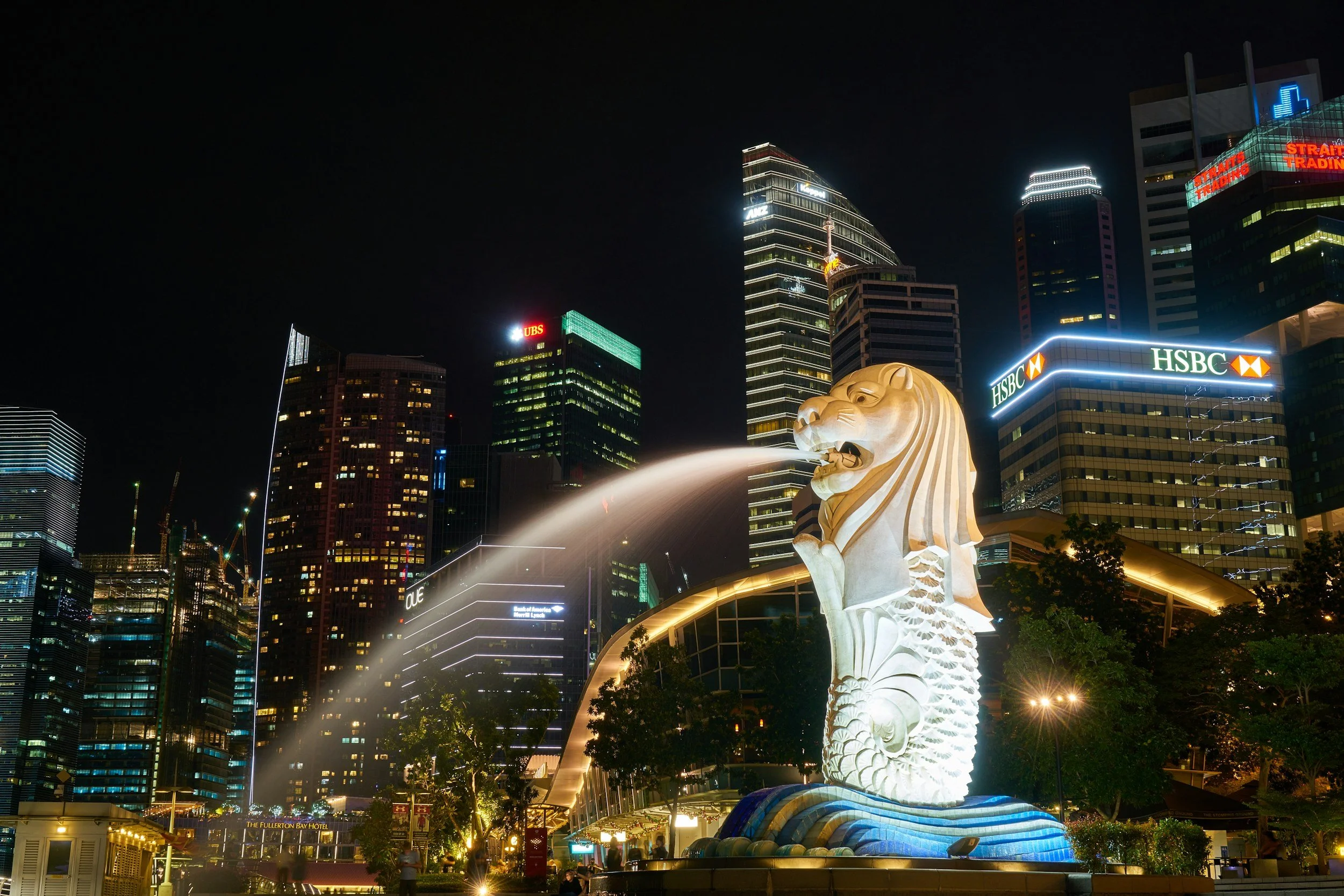
The first stop was Merlion Park, home to Singapore’s famous Merlion statue.
The Merlion — half lion, half fish — represents Singapore’s history. The fish body reflects the country’s origins as a fishing village called Temasek, while the lion head references the name Singapura, meaning “Lion City.”
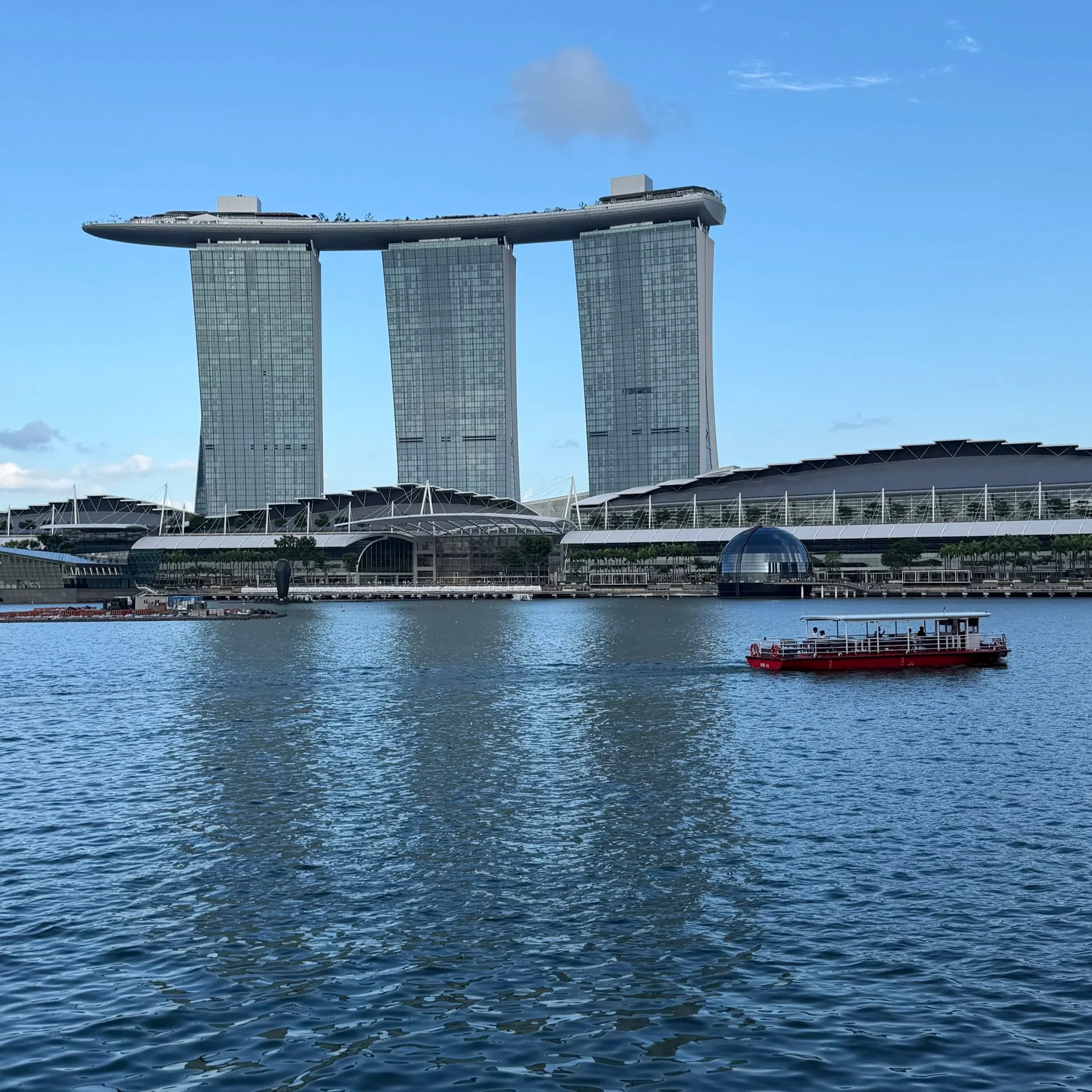
From the waterfront you get spectacular views of the Marina Bay Sands skyline.
Singapore River Cruise
Next we boarded a traditional bumboat cruise along the Singapore River.
Seeing the skyline illuminated at night from the water is unforgettable.
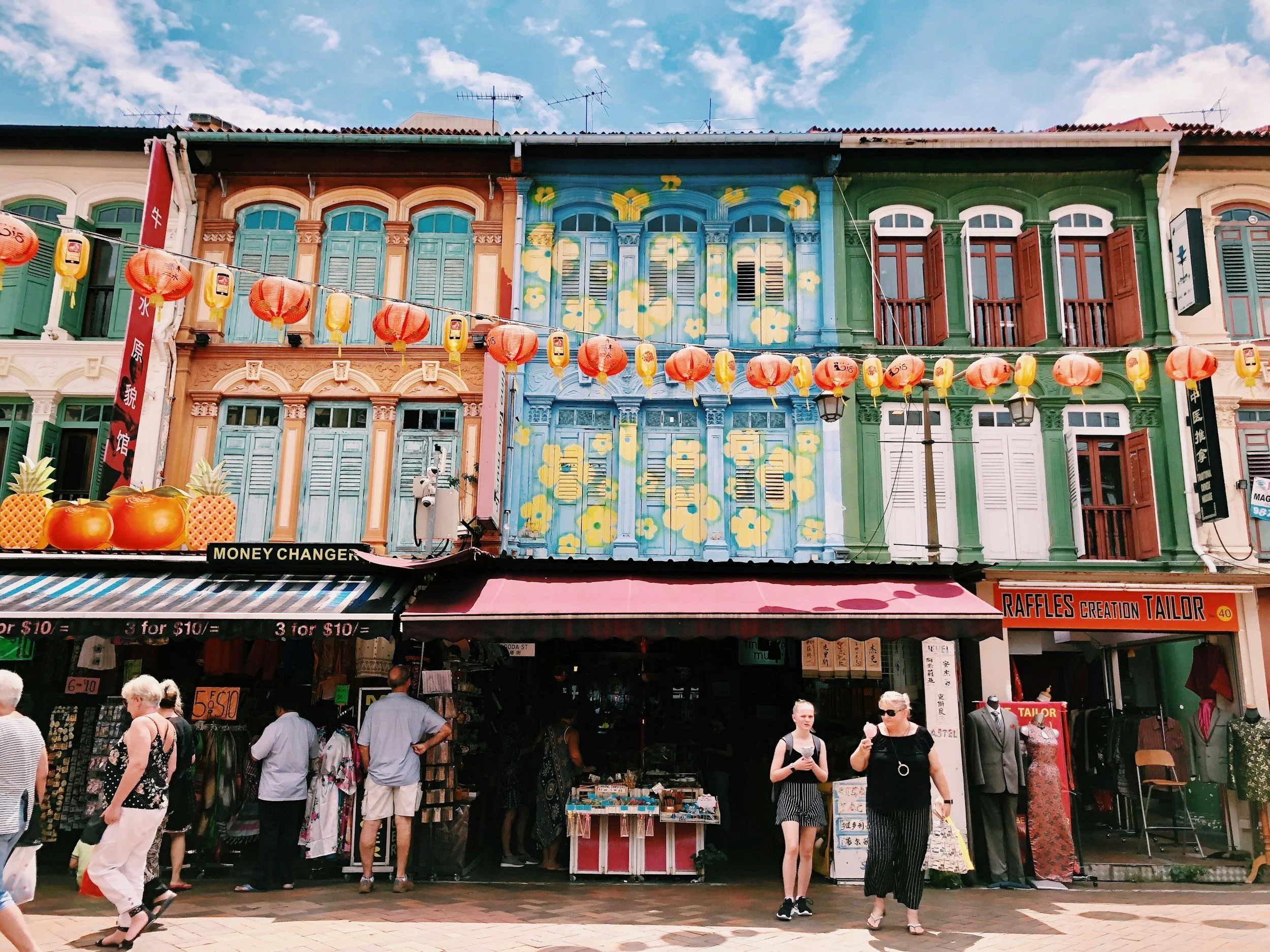
The boat glides past historic bridges, colorful shophouses, colonial buildings, and modern skyscrapers — a perfect visual reminder of how Singapore evolved from a trading port into a global financial hub.
Gardens by the Bay Light Show
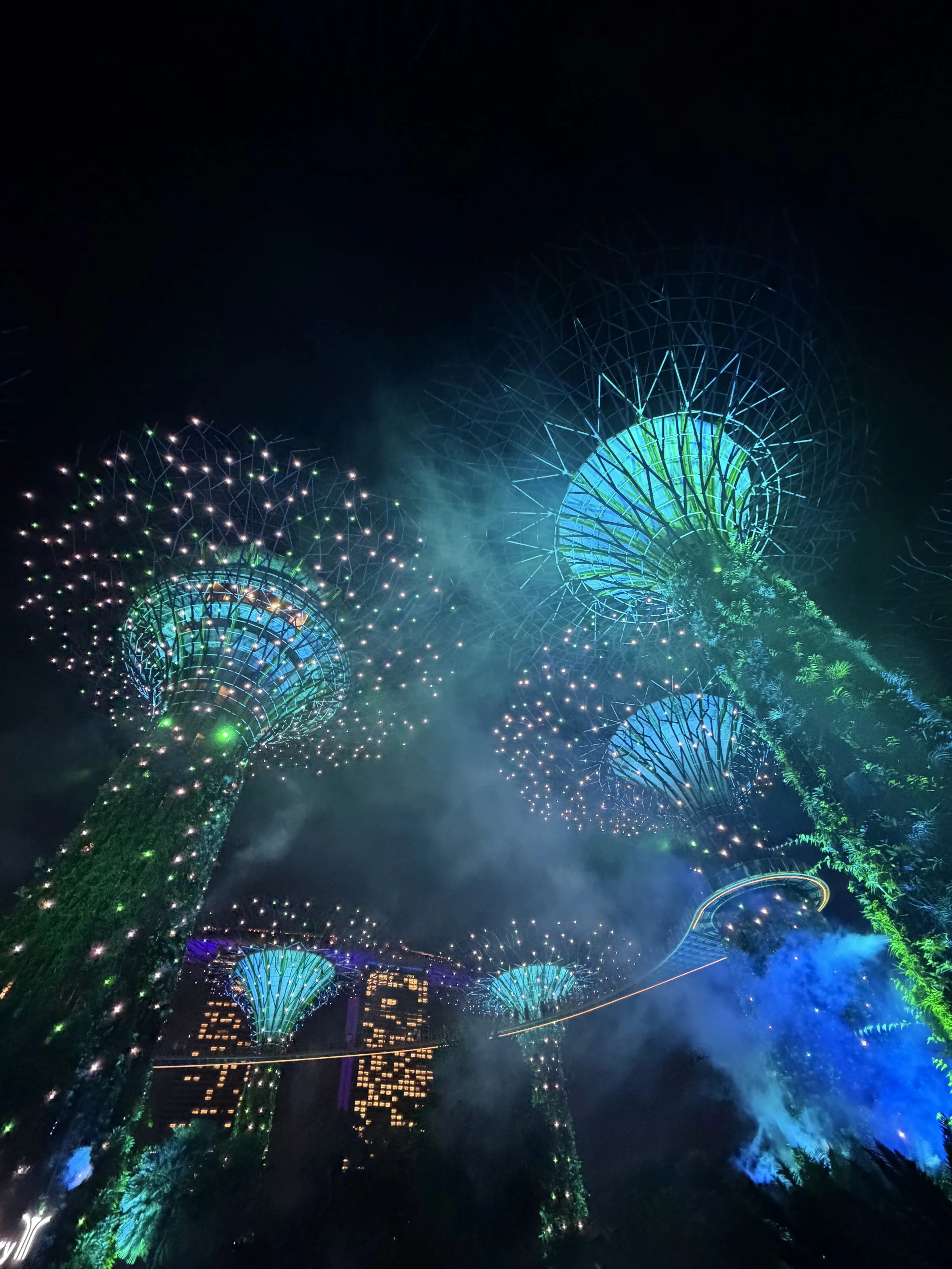
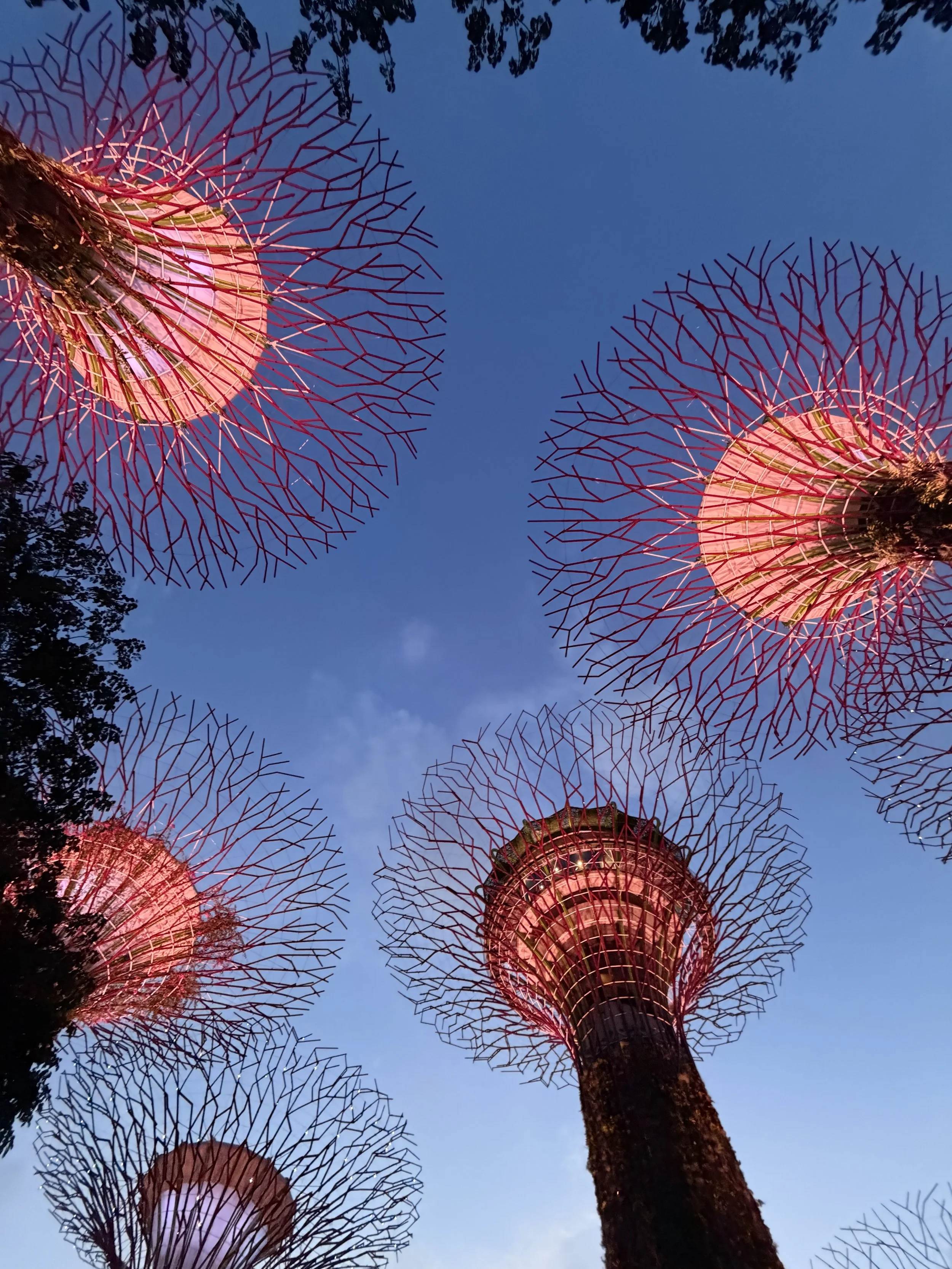
One of Singapore’s most recognizable attractions is Gardens by the Bay, home to the towering Supertrees.
These massive vertical gardens reach heights of up to 160 feet and are covered in thousands of plants and vines.
Each evening the Supertrees come alive during the Garden Rhapsody light show, where music and synchronized lights transform them into glowing towers of color.
Standing beneath them feels almost like stepping into the future.
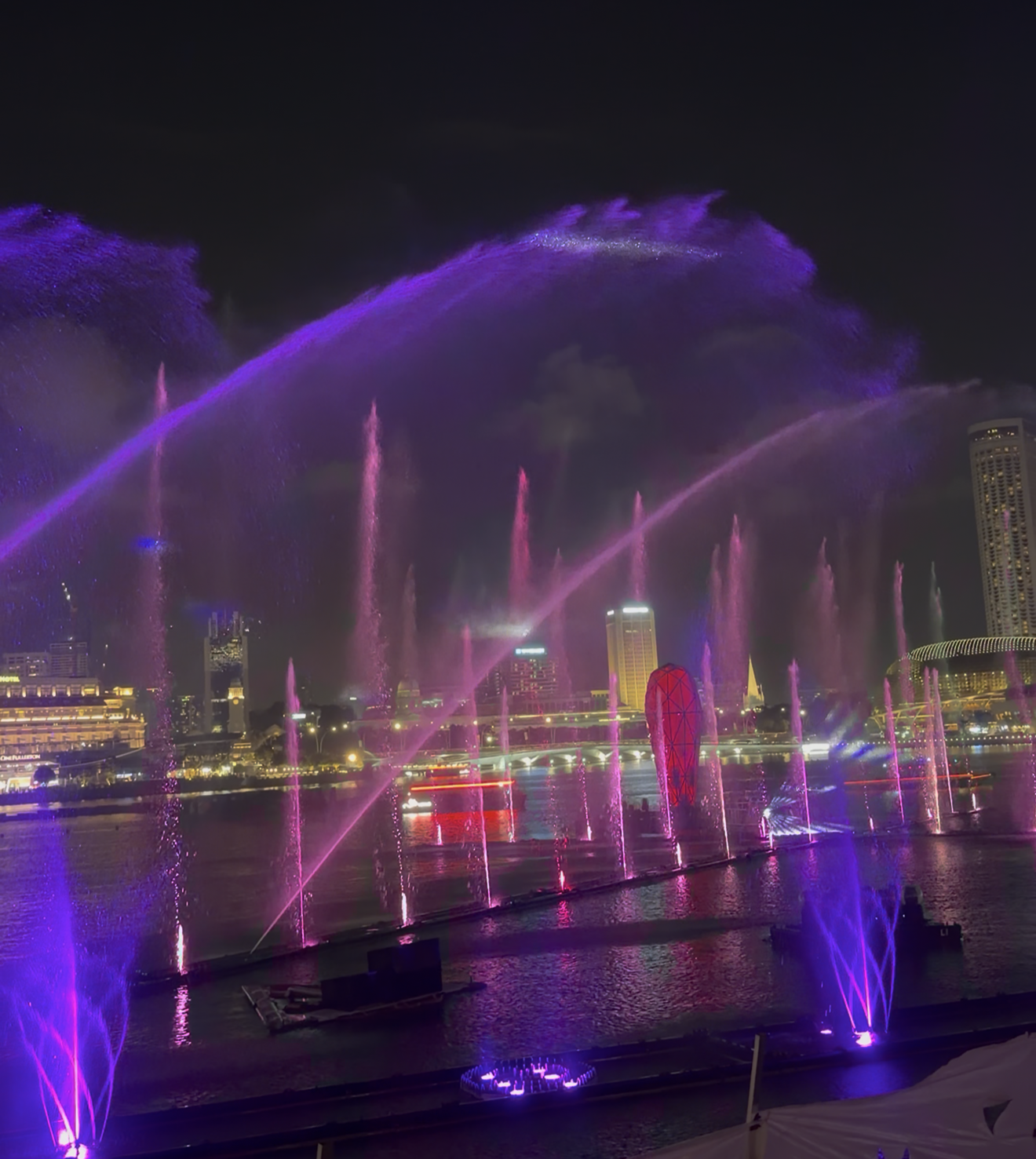
Spectra Light Show at Marina Bay Sands
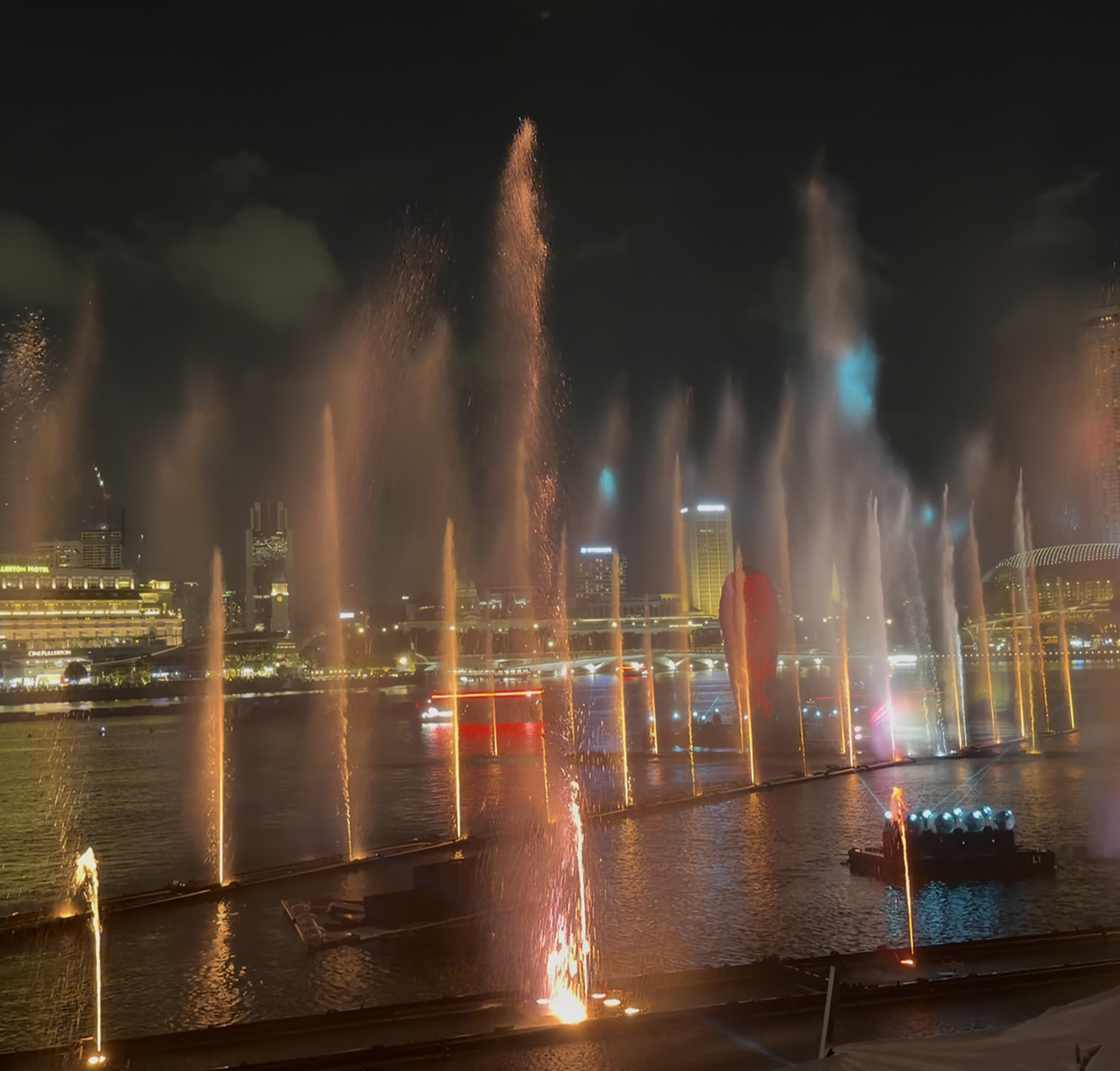
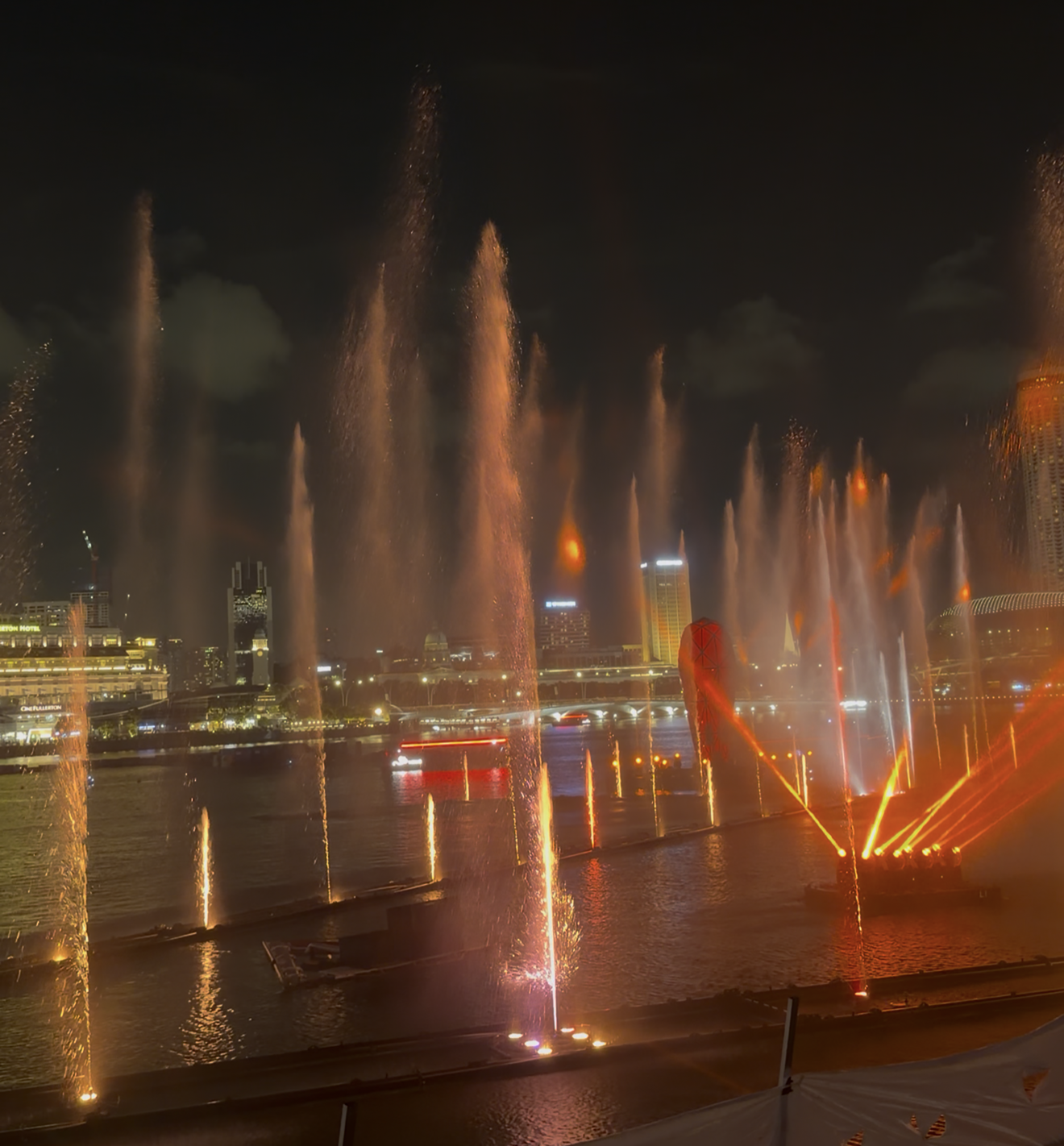
The evening ended at Marina Bay Sands with the Spectra Light and Water Show.
Lasers, fountains, projections, and music dance across Marina Bay while the skyline glows in the background.
It’s an incredible way to end a night exploring Singapore.
The Next Morning: Jewel Changi Airport
The next morning I checked my bags for the long journey back to Maryland.
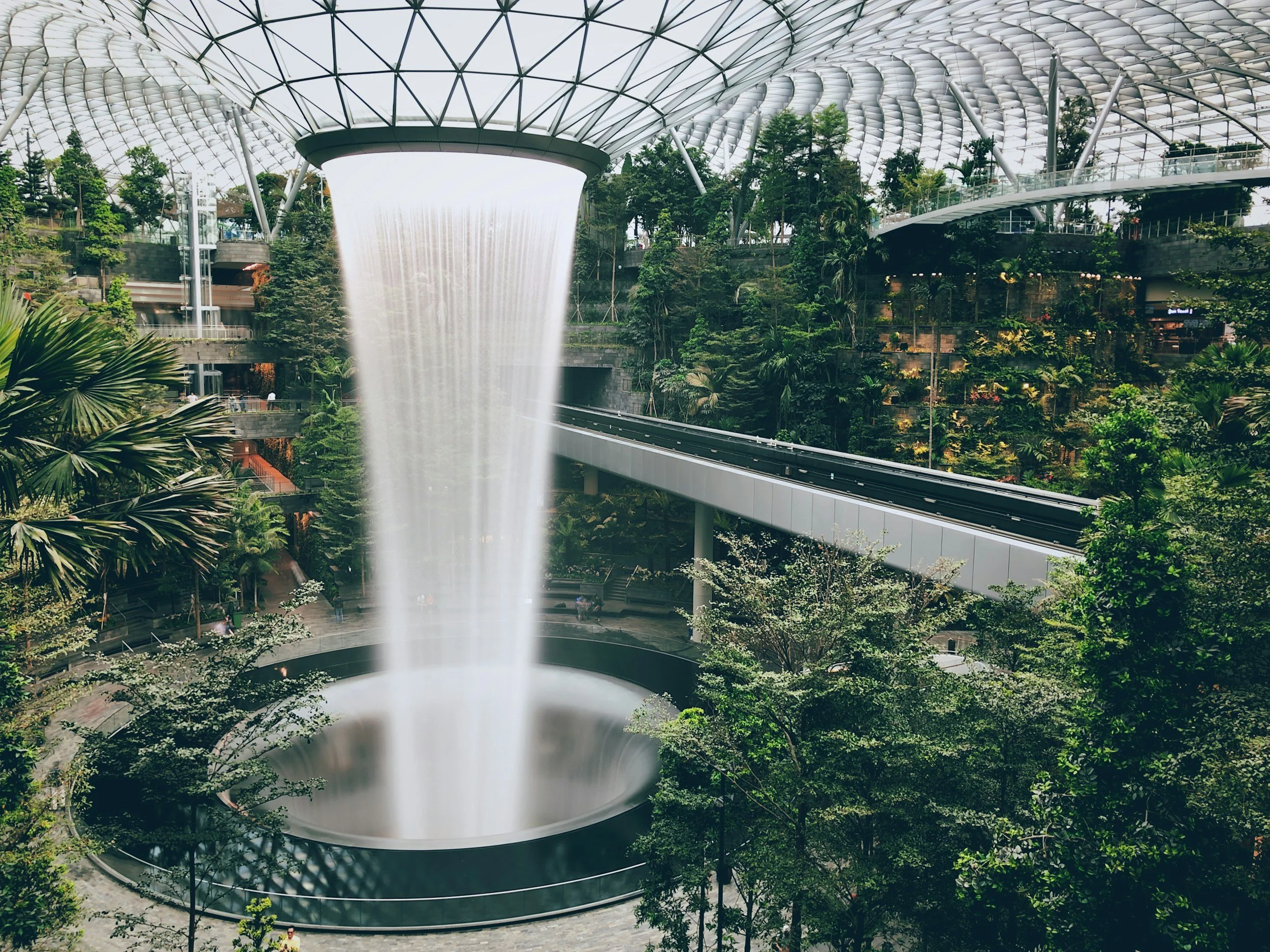
Before heading to the terminal, I stopped at Jewel Changi Airport, one of the most famous airport attractions in the world.
Jewel is a massive glass dome connected to the airport filled with restaurants, shops, walking trails, and indoor gardens.
At the center of the building is the Rain Vortex, the tallest indoor waterfall in the world.
Water cascades seven stories down through the middle of the structure surrounded by lush tropical plants.
Standing there with a coffee in hand watching the waterfall before another long travel day felt like the perfect quiet moment before the flight home.
Weather in Singapore in March
Singapore sits almost directly on the equator, which means the climate stays tropical year-round.
If you visit in mid to late March, expect:
Average daytime temperatures: 30–32°C (86–90°F)
Average nighttime temperatures: 25–26°C (77–79°F)
Humidity levels: 75–85%
Short tropical rain showers are common, but they usually pass quickly.
Often it rains heavily for 20–30 minutes before the sky clears again.
Lightweight breathable clothing is ideal.
Culture in Singapore
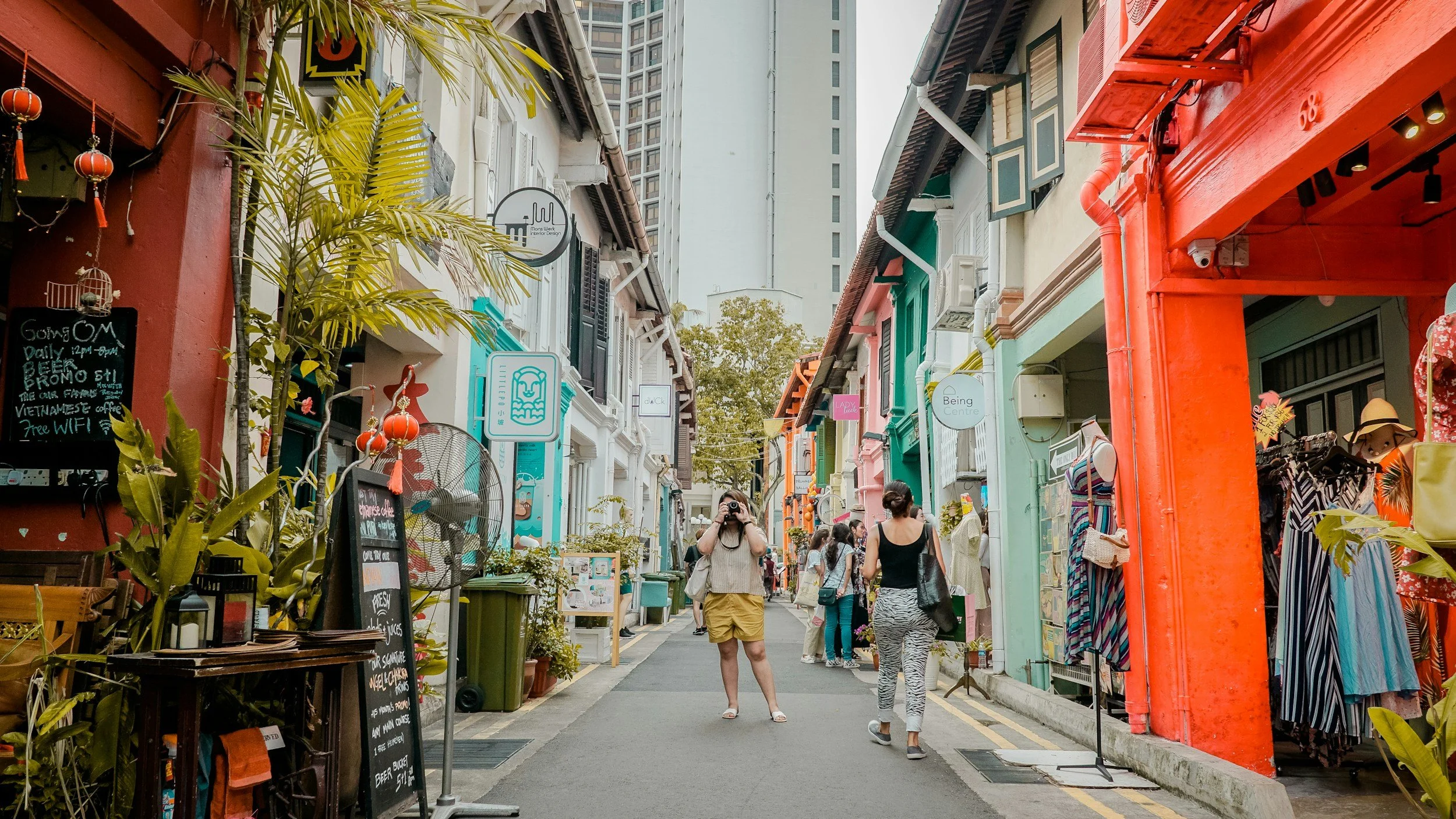
Singapore is one of the most multicultural societies in Asia.
The population is primarily made up of:
• Chinese
• Malay
• Indian
• Eurasian communities
The country recognizes four official languages:
English
Mandarin Chinese
Malay
Tamil
English is widely spoken, making Singapore one of the easiest Asian cities for international travelers to navigate.
Temples, mosques, churches, and Hindu shrines often sit within the same neighborhoods — a reflection of how many cultures coexist in the city.
Travel Tips for Visiting Singapore
Currency
Singapore uses the Singapore Dollar (SGD).
Credit cards are widely accepted, though hawker stalls may prefer cash.
Transportation
The easiest ways to get around Singapore include:
• taxi or Grab
• MRT subway system
• airport transfer services
A taxi from Changi Airport to downtown usually takes 20–30 minutes.
Safety
Singapore is consistently ranked one of the safest cities in the world, which makes it extremely comfortable for solo travelers.
FAQ: Singapore Layover Guide
Is 20 hours enough time to explore Singapore?
Yes. Because Changi Airport is only about 20–30 minutes from downtown, even a short overnight layover allows you to see several major attractions.
Is Singapore safe for solo female travelers?
Yes. Singapore consistently ranks among the safest cities globally, and many women travel there solo comfortably.
Do you need a visa to leave the airport during a layover?
Many nationalities can enter Singapore visa-free for short stays, but travelers should always check current entry requirements.
What area should you visit during a short layover?
The Marina Bay area is ideal because many of Singapore’s major attractions are located close together.
Why Singapore Is One of the Best Layover Cities in the World
Few airports make it as easy to explore during a layover as Singapore does.
In less than 24 hours, you can experience incredible food, a futuristic skyline, beautiful waterfront spaces, and one of the most impressive airports anywhere in the world.
During this short layover I managed to experience:
• Singapore’s famous hawker food scene
• the Marina Bay skyline at night
• a river cruise through the city
• Gardens by the Bay light show
• the Spectra show at Marina Bay Sands
• the Rain Vortex at Jewel Changi Airport
Not bad for a layover.
If you ever find yourself passing through Singapore, don’t just stay in the airport.
Go explore.
Even a single night can turn into an unforgettable adventure.
Dive safe, explore passionately, and remember…