Unlocking New Depths: Why the PADI Advanced Open Water Course is Your Next Big Dive
PADI Advanced Open Water Diver: The Course That Changed the Way I Dive
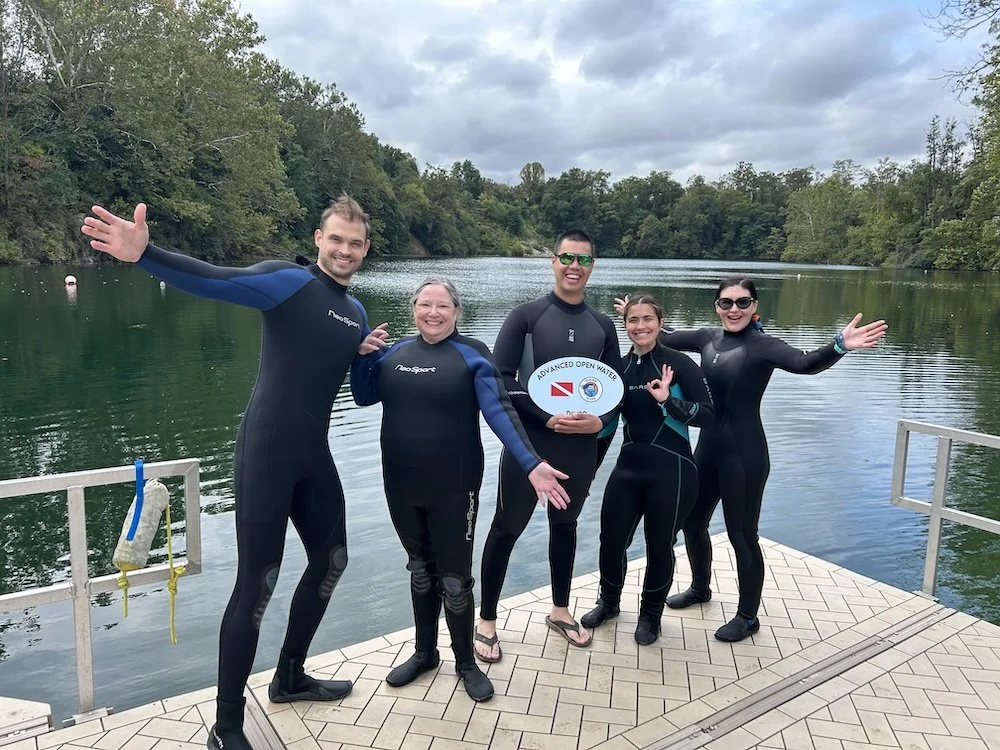
When I completed my PADI Advanced Open Water Diver course, PADI still used books instead of eLearning. I remember sitting down before each Adventure Dive, reading through the chapters, highlighting pages, and trying to absorb as much information as I could before getting in the water. Today, students have the convenience of completing the academics through PADI eLearning, which I honestly think is a fantastic improvement. It allows you to learn at your own pace and arrive ready to spend more time doing what you signed up for in the first place: diving.
Funny enough, I don't remember much about the book.
I remember the dives.
One dive has stayed with me all these years.
My Deep Adventure Dive took place on the Sea Tiger off the coast of Oahu. As we descended, the outline of the wreck slowly emerged from the blue, growing larger with every breath. Up until that point, I had never experienced anything like it. The reef dives I had done during my Open Water course were incredible, but seeing an entire ship resting on the ocean floor opened my eyes to a completely different side of scuba diving.
That dive also introduced me to something I had only read about in my course materials: nitrogen narcosis.
For me, the effects were mild, but it was fascinating to recognize that diving deeper really did feel different. It wasn't scary or overwhelming. Instead, it reinforced something that has stayed with me throughout my diving career: some lessons are best learned through experience. Reading about depth, buoyancy, navigation, or gas management is incredibly important, but there is no substitute for applying those concepts underwater with a qualified instructor beside you.
Looking back, I think that's what the Advanced Open Water course gave me more than anything else.
Experience.
One of the first things I tell every Advanced Open Water student is that I actually think the name of the course is a little misleading.
The Advanced Open Water course doesn't make you an advanced diver.
Experience does.
That's an important distinction because I think the name can intimidate people who are actually the perfect candidates for the course. Many newly certified divers assume they should wait until they have fifty or even one hundred dives before continuing their education.
Personally, I think that's waiting too long.
The PADI Advanced Open Water Diver course isn't designed for expert divers. It's designed for certified Open Water Divers who want to continue building their skills while gaining experience in new underwater environments. Rather than repeating what you learned during Open Water, this course introduces you to different types of diving while helping you become more comfortable, more confident, and more aware underwater.
In many ways, I think of Advanced Open Water as the course where everything starts to click.
When you first earn your Open Water certification, it's completely normal to spend most of your dive thinking about scuba diving itself. You're checking your air regularly, thinking about your buoyancy, remembering the skills you practiced during training, and making sure you're staying close to your buddy. Every certified diver has been there, myself included.
Confidence underwater doesn't happen overnight.
It develops one dive at a time.
Somewhere along the way, those skills stop requiring your full attention. Your buoyancy becomes more natural. You instinctively monitor your depth and gas supply without constantly staring at your gauges. Your awareness expands beyond yourself, and suddenly you start noticing the school of jacks circling overhead, the tiny nudibranch tucked beneath a ledge, or the octopus watching you from its den.
Instead of thinking about how to scuba dive, you begin experiencing the ocean.
That's why I love this course so much.
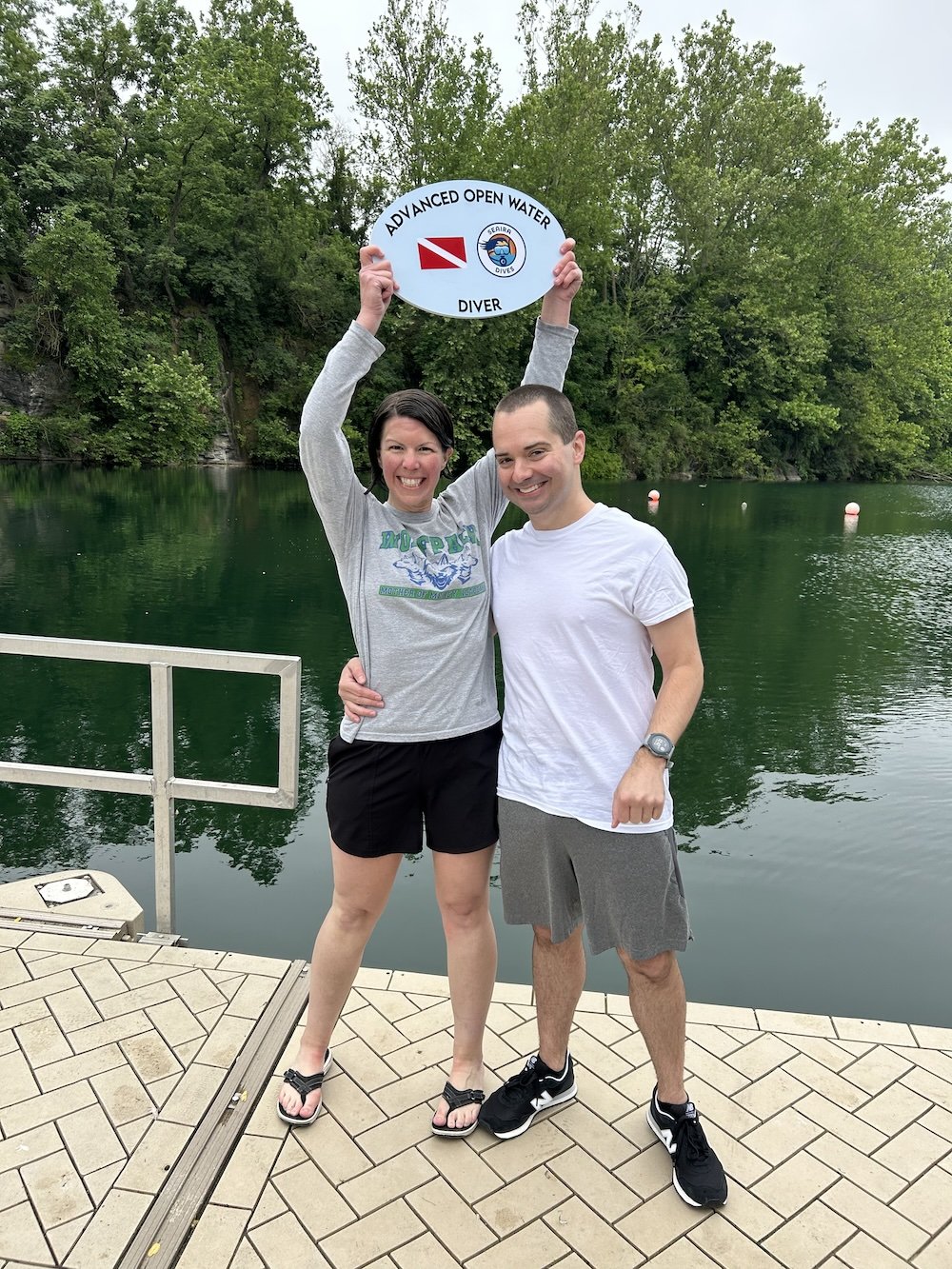
More Experience, Not More Pressure
One of the biggest misconceptions about the Advanced Open Water Diver course is that it's difficult.
In reality, the course is one of the most enjoyable certifications you'll complete because it focuses on diving rather than testing. There isn't a final written exam, and there isn't a confined water session where you're expected to learn an entirely new set of skills. Instead, you'll complete five Adventure Dives while expanding your knowledge and experience under the guidance of your instructor.
Every Advanced Open Water course includes two required Adventure Dives: Deep and Underwater Navigation.
The Deep Adventure Dive allows you to experience diving beyond the 18 meter (60 foot) limit of your Open Water certification, to a maximum depth of 30 meters (100 feet). During the dive, you'll learn how increasing depth affects your body, your equipment, and your dive planning. You'll also discuss topics like gas management, nitrogen narcosis, and how colors change as you descend. For many divers, it's their first opportunity to explore deeper wrecks, walls, or reef systems.
The Underwater Navigation Adventure Dive is equally valuable. You'll build upon the navigation skills introduced during your Open Water course by using a compass alongside natural navigation techniques, learning how to estimate distance underwater, recognize underwater landmarks, and confidently find your way back to your starting point. Strong navigation skills don't just make you a better diver. They make every dive more relaxing because you spend less time wondering where you are and more time enjoying your surroundings.
The remaining three Adventure Dives are electives, and this is where the course becomes uniquely yours. Depending on where you're diving and what interests you most, you might choose Peak Performance Buoyancy, Fish Identification, Night Diving, Wreck Diving, Drift Diving, Boat Diving, Search and Recovery, Underwater Naturalist, or another Adventure Dive offered by your instructor.
No two Advanced Open Water courses are exactly alike, and I think that's one of the best parts.
The course isn't about collecting another certification card.
This course about discovering the kind of diving that makes you excited to plan your next adventure.
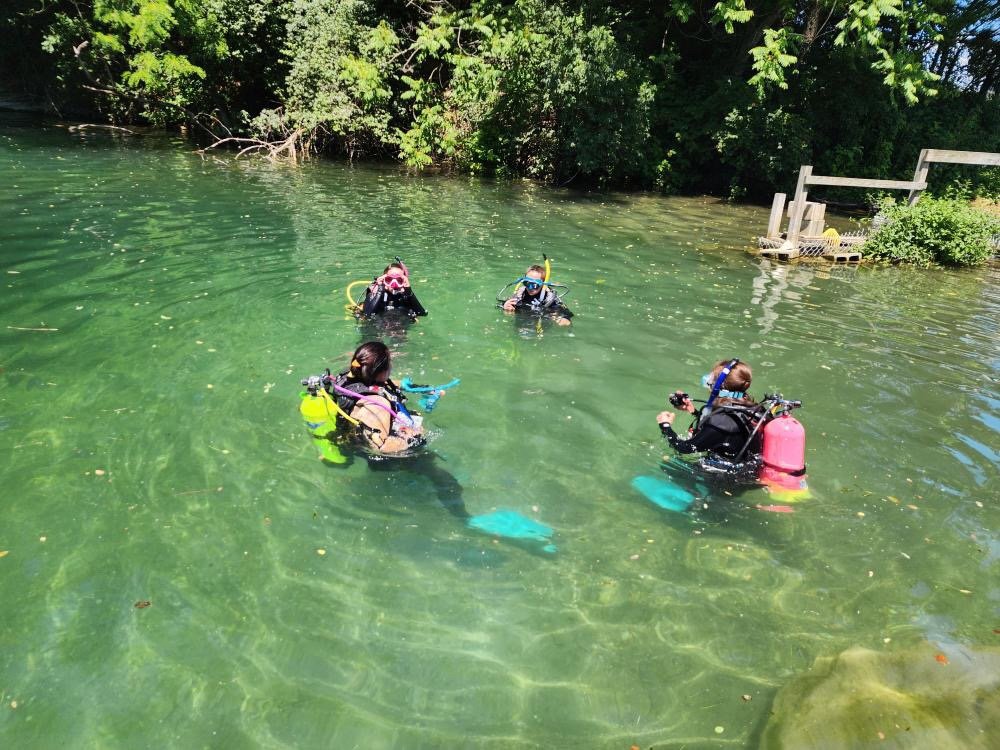
The Adventure Dives
One of my favorite parts about teaching Advanced Open Water is that no two weekends are ever exactly the same.
Every course includes the Deep Adventure Dive and the Underwater Navigation Adventure Dive, but beyond that, we have the opportunity to tailor the course to the environment we're diving in and the interests of the students. That's one of the things that makes this certification so much fun. Rather than following a rigid curriculum, we get to explore different aspects of diving while continuing to build confidence underwater.
If you've taken a class with me before, you probably won't be surprised to hear that I almost always encourage students to choose Peak Performance Buoyancy as one of their Adventure Dives.
I know... you're probably thinking, "Ciara, of course you picked buoyancy."
And you'd be right.
I genuinely believe buoyancy is one of the most valuable skills a diver can develop. It's the difference between constantly adjusting your position in the water and feeling completely weightless. It's the difference between accidentally kicking a coral head and effortlessly gliding above the reef. Better buoyancy improves your air consumption, reduces your impact on the marine environment, and makes every single dive more enjoyable.
Buoyancy is also one of those skills that never stops improving. I've been diving for more than 15 years, and I still think about buoyancy every time I descend. Every dive is another opportunity to refine it. Depending on where we're diving, I also love introducing students to specialties like Fish Identification and Underwater Naturalist. The funny thing is, once you start learning about marine life, it's almost impossible to stop. Suddenly, every dive turns into a treasure hunt. Instead of swimming past a reef, you begin noticing the blennies peeking from tiny holes, the shrimp hiding inside anemones, and the nudibranchs that somehow seemed invisible before.
The ocean hasn't changed.
You've simply learned how to see it.
Night Diving is another Adventure Dive that completely changes the way people think about scuba diving. Rolling into the ocean after sunset can feel a little intimidating at first, but within minutes most divers realize they've entered a completely different world. Octopuses become more active, crustaceans emerge from hiding, hunting behaviors begin, and familiar dive sites suddenly feel brand new. Some of my favorite dives have happened long after the sun disappeared below the horizon.
Then there are dives like Drift Diver, Wreck Diver, Boat Diver, Search and Recovery, or Enriched Air. Every one of them opens another door into the diving world. The beauty of Advanced Open Water is that it gives you the chance to experience these different environments before deciding which direction you'd like to continue exploring.
For some people, it's wrecks.
For others, it's photography.
For me, it became marine life.
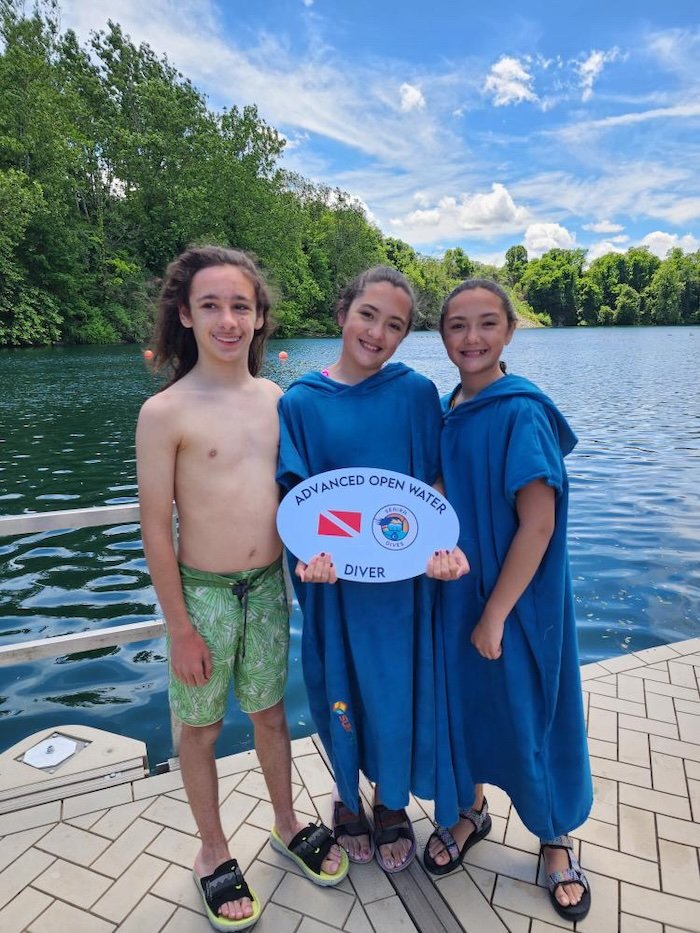
My Teaching Philosophy
One thing my students hear me say all the time is that I'm not trying to help you become someone who can simply pass a course.
I'm trying to help you become a better diver.
There's a big difference.
Certification cards are important because they represent training and experience, but they aren't the goal. The goal is becoming the kind of diver who's relaxed underwater, aware of their surroundings, respectful of marine life, and someone that every buddy enjoys diving with.
That's why I intentionally keep my classes small.
Everyone learns differently. Some students are immediately comfortable underwater, while others need a little more time to build confidence. Neither approach is right or wrong. My job is to meet you where you are, answer your questions, celebrate your progress, and help you leave feeling more capable than when you arrived.
One of my favorite sayings is, "Practice doesn't make perfect. Practice makes permanent."
Scuba diving is a perfect example.
Every dive reinforces habits. The goal is to make sure you're practicing the right ones from the very beginning. Good buoyancy, proper trim, thoughtful dive planning, effective communication, and strong situational awareness don't happen by accident. They become second nature because you've practiced them correctly over and over again.
That's another reason I encourage divers to continue their education early. Rather than spending dozens of dives accidentally reinforcing habits that become difficult to change later, you'll continue learning with an instructor who can help fine-tune your skills while your confidence is growing.
I've been diving for more than 15 years, and I'm still learning every time I get in the water.
That's one of the things I love most about scuba diving.
There is always something new to discover, whether it's a skill to improve, a fish you've never noticed before, or a dive site that completely surprises you.
I hope my students leave every course with that same mindset.
Stay curious.
Keep learning.
Never stop exploring.
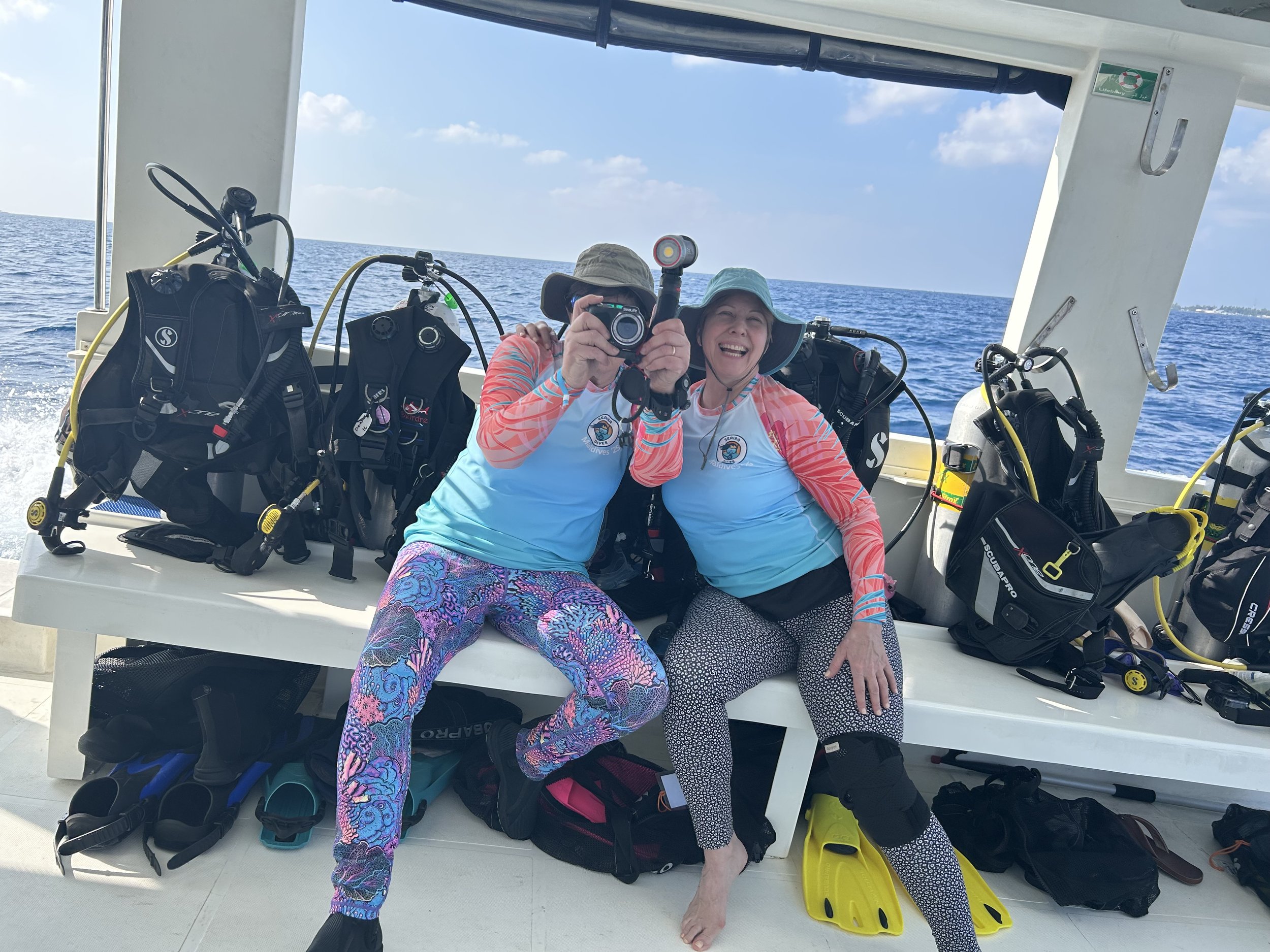
Where Advanced Open Water Can Take You
One of the most rewarding parts of my job is seeing where my students end up a few years after earning their Advanced Open Water certification.
I love scrolling through social media and seeing photos from places like the Galápagos, Raja Ampat, Palau, Fiji, or the Red Sea. I'll get a message saying, "Remember when I was nervous during my Open Water course?" and now they're confidently drifting through channels, exploring wrecks, or photographing tiny nudibranchs halfway around the world.
That's one of the reasons I recommend continuing your education early.
The more comfortable you become underwater, the more opportunities begin to open up.
Many of the world's most iconic dive destinations require or strongly recommend an Advanced Open Water certification because of the diving conditions. Whether it's exploring deeper wrecks, drifting through currents, or simply having the confidence to enjoy more challenging dive sites, this course helps prepare you for adventures that may have once felt out of reach.
More importantly, it prepares you to enjoy those experiences.
I've always believed there's a big difference between surviving a dive and truly experiencing it.
When you're constantly thinking about your buoyancy, wondering where your buddy is, or staring at your gauges every few moments, it's easy to miss the incredible things happening around you.
Confidence changes that.
Instead of worrying about yourself, you start noticing the reef.
Instead of focusing on every breath, you notice the school of barracuda circling overhead.
Instead of wondering if you're doing everything correctly, you're completely immersed in the experience.
That's when scuba diving becomes something truly special.
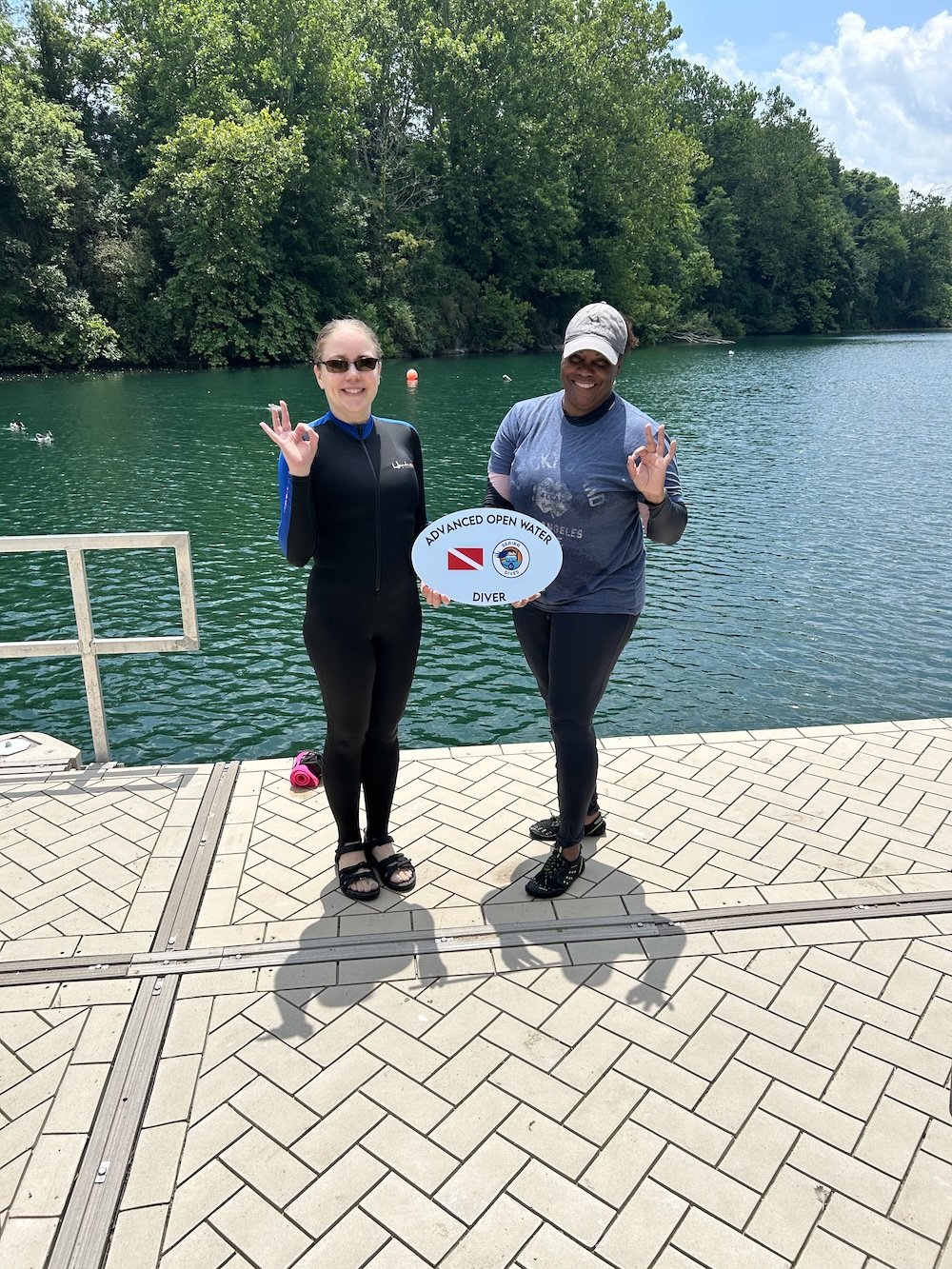
Continuing Your Diving Journey
One of the questions I hear most often after students complete their Advanced Open Water course is, "What's next?" The answer is different for every diver, and that's one of the things I love most about scuba diving. There isn't a single path to follow or a checklist of certifications you have to complete. Your next adventure depends entirely on what sparks your curiosity underwater.
Marine life enthusiasts often find themselves diving deeper into courses like Fish Identification, Underwater Naturalist, Coral Reef Conservation, or AWARE Shark Conservation. Divers who discover a passion for underwater photography quickly learn that carrying a camera changes the way they experience every dive. Suddenly, you slow down, pay attention to the smallest details, and begin noticing critters that you would have swum right past before. Watching my own photography evolve over the years has been one of the most rewarding parts of my diving journey, and even now I'm constantly learning from photographers whose work inspires me.
Other divers fall in love with wrecks, drift diving, or exploring deeper sites, while many continue on to Rescue Diver, a course that I genuinely believe every recreational diver should take. Some eventually decide to become Divemasters or Instructors, sharing their passion for the underwater world with others and helping create the next generation of divers.
That's the beauty of scuba diving. Some people are perfectly happy diving a few times each year on vacation, while others find themselves planning every trip around where they can get underwater next. Neither journey is better than the other. Every diver's path is unique, and every certification simply opens the door to new experiences, new skills, and new adventures waiting beneath the surface.
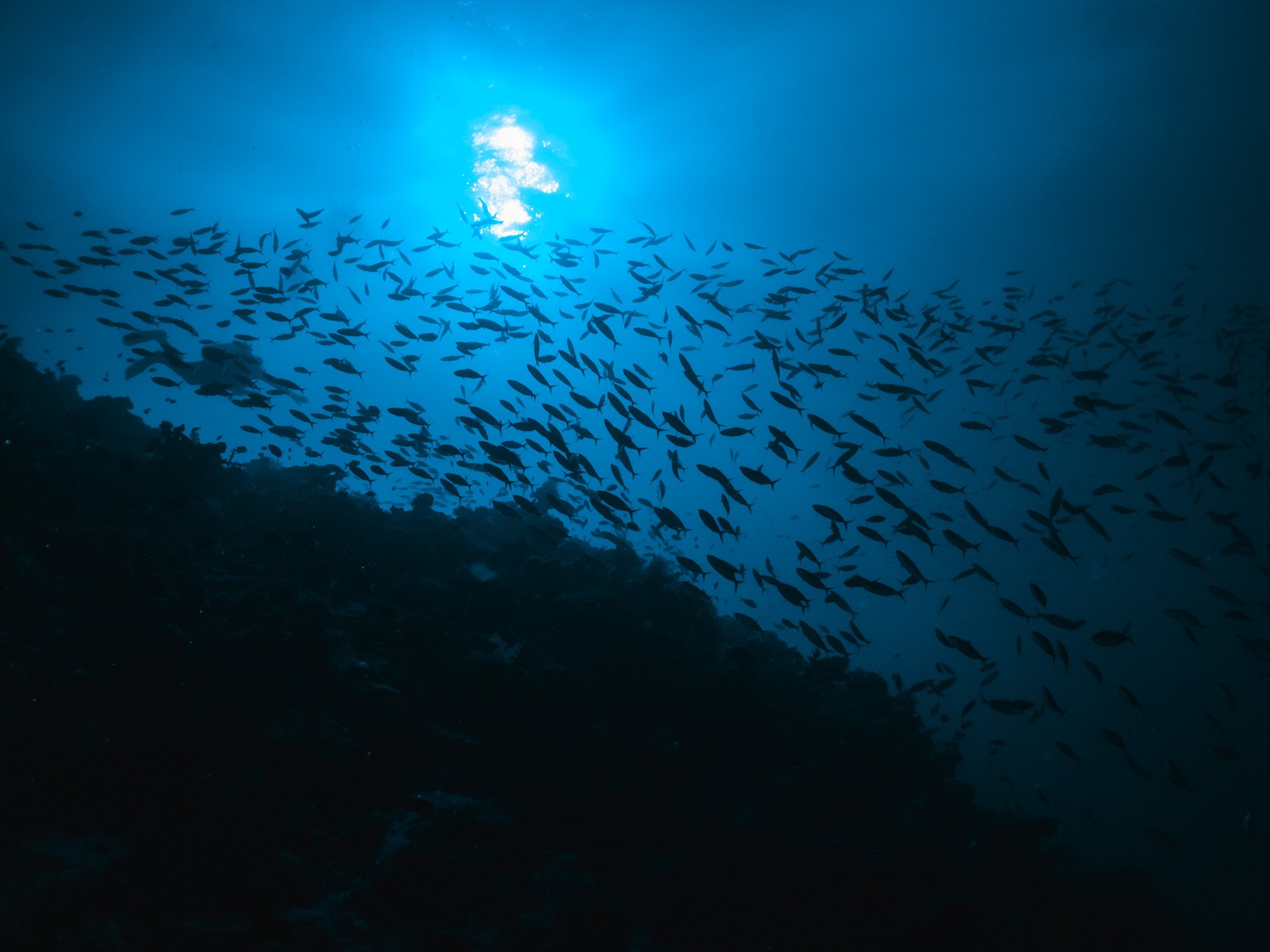
Ready for Your Next Adventure?
Advanced Open Water is one of those certifications that I recommend taking sooner rather than later. Many divers think they need dozens of dives before they're "ready," but that's exactly what this course is designed to help with. Every Adventure Dive builds on the skills you learned during Open Water while introducing you to new environments, new challenges, and new experiences. Rather than waiting until you feel like an experienced diver, Advanced Open Water helps you become one.
Confidence underwater doesn't happen all at once. Every dive teaches you something new, whether it's fine-tuning your buoyancy, becoming more comfortable with navigation, or simply learning to slow down and notice the incredible marine life around you. Those small improvements add up over time, and before long you'll find yourself feeling more relaxed, more aware, and ready to explore dive sites that once felt out of reach.
Whether your goal is to photograph nudibranchs in Indonesia, drift through the channels of Palau, explore historic wrecks, or simply become a more confident diver on your next vacation, Advanced Open Water provides the foundation for those adventures. More importantly, it gives you the opportunity to continue learning with an instructor by your side while building skills that you'll use on every dive for years to come.
Every diver's journey looks a little different, and that's one of the things I love most about scuba diving. Some divers fall in love with macro photography, others become fascinated by sharks or wrecks, and some simply enjoy spending time underwater with family and friends. No matter where your diving takes you, Advanced Open Water is a fantastic next step that will make every dive afterward safer, more comfortable, and even more enjoyable.
If you're wondering whether you're ready for the course, there's a good chance you already are. All that's left to do is keep diving.
Dive safe, explore passionately, and remember…