Training in Palm Beach, Florida 🌴
Even Instructors Can Learn a Thing or Two
Becoming a scuba instructor does not mean you suddenly know everything. Some of the best instructors I have met are the ones who continue seeking out new perspectives, learning from their peers, and finding better ways to support the divers in front of them.
I was fortunate to join two fellow instructors for the PADI Adaptive Techniques Specialty Instructor Course at Pura Vida Divers in Florida. The course focused on practical ways to adapt scuba training for divers with different physical, cognitive, and sensory abilities while preserving independence, dignity, and the joy of learning.
This was a whirlwind trip. I flew into Florida on Friday night and headed home early Monday morning, but every part of the experience was worth it. I was especially grateful for the opportunity to learn from Jillian, the Course Director at Pura Vida Divers, whose knowledge, patience, and passion for inclusive dive education made the course incredibly impactful.
A Very Warm Welcome to Florida
Florida greeted me with sunshine, humidity, and heat.
Coming from much cooler diving in Maryland, the warm weather and water took a little adjusting. I wore a Waterlust sunsuit for our dive at Blue Heron Bridge and could hardly believe how little exposure protection I needed compared with what I was used to wearing at home.
Blue Heron Bridge is known for its incredible variety of marine life, making it a wonderful setting for training and exploration. Even though the focus of the weekend was adaptive instruction, getting to experience such a unique dive site made the trip even more memorable.
Staying with an Instructor Friend
A huge thank you goes to my instructor friend Bonnie, who welcomed me into her home during the course.
Her hospitality made such a quick trip significantly easier and gave us time to catch up outside the classroom. Some of the best parts of professional training happen after the formal sessions are over, when instructors can trade stories, compare teaching experiences, and talk honestly about what has worked for them.
Those conversations were just as valuable as many of the structured lessons.
Classroom Training
We began the course at Pura Vida Divers by reviewing the training materials, discussing adaptive teaching techniques, and delivering presentations on different conditions that may affect how a student learns or participates in scuba training.
For my presentation, I chose to focus on traumatic brain injuries.
This subject is deeply meaningful to me because I worked with several Soldiers who sustained traumatic brain injuries during my military service. TBIs can affect memory, concentration, communication, information processing, balance, and emotional regulation, although every person’s experience is different.
My presentation explored how those effects may influence scuba instruction and how an instructor can adapt without making assumptions about what a diver can or cannot do. Strategies might include breaking information into smaller sections, repeating key concepts, allowing additional time, using clear visual demonstrations, minimizing distractions, or offering more frequent opportunities for rest.
The goal is not to lower standards. The goal is to find a teaching method that allows the student to understand, demonstrate, and master the required skills.
One of my favorite parts of the classroom session was learning from the other instructors. Each person brought different experiences, ideas, and areas of knowledge to the conversation. We discussed a range of physical, cognitive, and sensory disabilities, but we also kept returning to one essential point: no diagnosis tells you everything about a person.
Adaptive teaching begins with communication.
Rather than deciding what someone needs before meeting them, instructors should ask thoughtful questions, listen carefully, and involve the diver in determining which adaptations will be most helpful. That approach protects the student’s independence and ensures that assistance is offered with them rather than simply done for them.
Confined Water Training
After our classroom work, we moved to a local pool for the confined water portion of the course.
This was where the concepts became practical.
We practiced different ways to assist divers with equipment while maintaining clear communication and respecting personal boundaries. Something as routine as putting on a wetsuit can require a different approach depending on a diver’s mobility, balance, strength, or range of motion. The most important lesson was to ask before assisting and never assume that a diver needs or wants help.
The pool’s accessibility chair was another valuable training tool. We practiced using it for controlled water entries and exits while considering positioning, communication, equipment management, and the diver’s comfort throughout the process.
Accessibility equipment can make an enormous difference, but the equipment itself is only one part of the experience. Divers also need knowledgeable professionals who understand how to use it safely and who treat the person in the chair as an active participant in the process.
We also practiced adapting traditional confined water skills based on individual abilities.
A diver may demonstrate buoyancy, regulator recovery, mask skills, propulsion, or equipment removal differently from another student while still meeting the course performance requirements. The instructor’s job is to understand the purpose behind each skill and determine whether another method allows the diver to achieve the same objective safely.
Sometimes a small change in body position, communication style, equipment configuration, or demonstration can completely transform a student’s experience.
Those adjustments are not shortcuts. They are good teaching.
Buddy Support and Teamwork
The course also placed a strong emphasis on developing capable and attentive dive buddies.
Adaptive diving should never be framed as one person being helpless while another person does everything for them. A strong buddy team understands each diver’s abilities, communicates clearly, plans intentionally, and knows when assistance may be helpful.
We practiced ways buddies can support entries, exits, equipment handling, communication, and underwater positioning without taking away the diver’s independence.
That balance matters.
The best support gives someone greater access to the experience while allowing them to remain fully involved in their own dive.

Me experiencing diving without use of my legs.
All photos taken by the incredible Jillian Blakkan-Strauss
Blue Heron Bridge
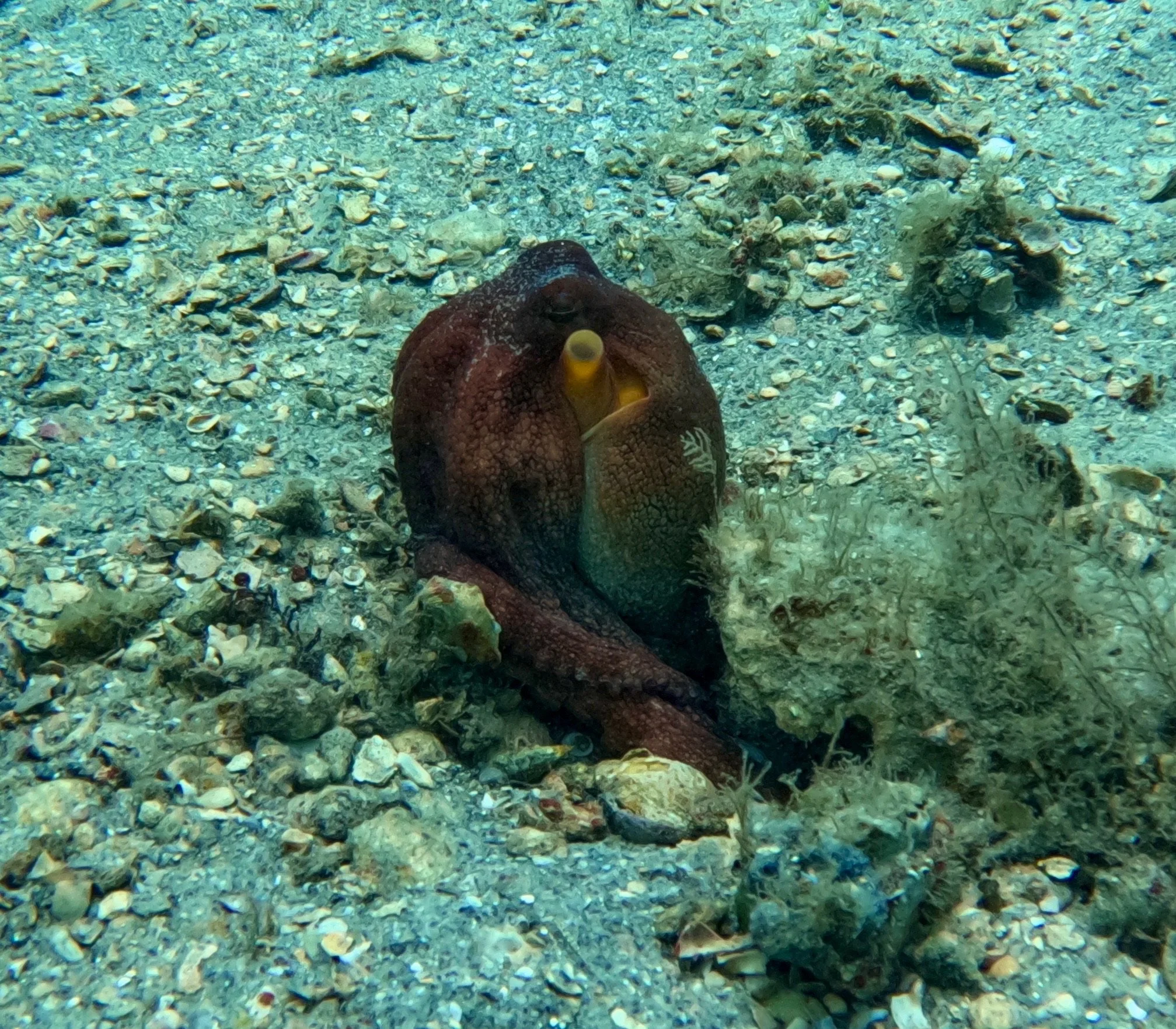
An adorable Octopus at Blue Heron Bridge
Diving Blue Heron Bridge
One of the highlights of the weekend was finally getting to dive Blue Heron Bridge.
I'd heard divers rave about this site for years, and it absolutely lived up to the hype.
Often considered one of the best shore dives in the United States, Blue Heron Bridge is famous for its incredible biodiversity. Although the dive is relatively shallow, the sandy bottom, seagrass beds, bridge pilings, and scattered artificial structures create the perfect habitat for an astonishing variety of marine life. On almost every dive, there's a chance of spotting octopus, seahorses, frogfish, batfish, rays, eels, nudibranchs, and countless species of juvenile tropical fish.
The water was beautifully clear, comfortably warm, and that unmistakable Florida blue that instantly puts a smile on your face.
While our primary focus underwater was completing the open water portion of the Adaptive Techniques Specialty Instructor course, it was impossible not to stop and appreciate everything around us. Even while practicing skills and refining our teaching techniques, there always seemed to be another interesting fish or critter waiting just a few feet away.
Blue Heron Bridge is one of those rare dive sites where training dives never feel like "just training." The environment itself makes every dive enjoyable, and I can completely understand why so many underwater photographers and marine life enthusiasts consider it a bucket-list destination.
Final Thoughts
Looking back, this weekend reminded me why I love being a dive professional.
The certifications and instructor ratings are rewarding, but what matters most is continuing to grow so we can better serve the divers who place their trust in us. Every new course, every conversation with another instructor, and every opportunity to challenge ourselves ultimately makes us better educators.
The Adaptive Techniques Specialty Instructor Course wasn't simply about learning different teaching methods. It was about learning to see each diver as an individual, to approach instruction with curiosity instead of assumptions, and to create opportunities for more people to experience the incredible underwater world.
I returned home with new skills, fresh perspectives, and a renewed appreciation for how powerful scuba diving can be. Whether someone is discovering diving for the very first time or overcoming obstacles they never thought possible, every diver deserves an instructor who is willing to adapt, listen, and continue learning.
After all, even instructors can learn a thing or two—and I hope I never stop.
Adventure is out there!