The Allure of Wreck Diving: History, Mystery, and Exploration
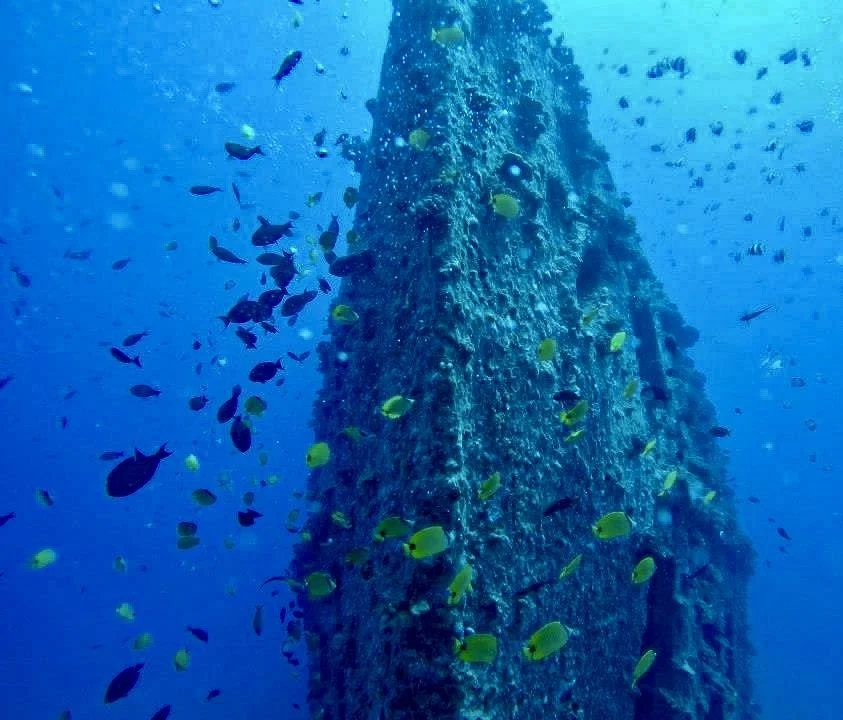
The Yo-257 Wreck, Oahu
There is a moment on every wreck dive where the ocean feels different, and it usually happens before you even reach the structure.
You’re descending through open blue water, the kind that feels endless, where there is nothing to orient yourself against except your depth and your breath. Then, slowly, something begins to take shape below you. At first it looks like a shadow, something slightly darker than the water around it. As you get closer, the lines sharpen, and what you’re looking at becomes unmistakable. Angles, edges, symmetry. Structure that does not belong to the natural world.
Wreck diving on Oʻahu is where that experience really clicked for me. My deep dive during Advanced Open Water was on the Sea Tiger, a former Chinese trading vessel that now rests upright off Waikīkī at around 120 feet. The descent line drops you right onto the wreck, and as it comes into view, you start to pick out the superstructure, cargo holds, and swim throughs. Marine life has fully taken over, with turtles, schools of fish, and the occasional whitetip reef shark moving through the site. That dive shifted everything for me. It was the first time a wreck felt less like an object and more like an environment.
Another awesome wreck on Oʻahu is the YO-257. Originally a Navy yard oiler, it now sits upright in about 100 feet of water, often alongside the San Pedro, creating a two wreck dive that feels expansive and full of character. One second you are suspended in blue, and the next you are looking down at the full outline of a ship resting on the sand. The structure is intact enough to recognize, yet softened just enough to remind you how long it has been there, with coral growth and marine life weaving it back into the ocean.
The first time I dropped onto it, I did not rush to the deck. I hovered above it longer than expected, just taking in the scale and the stillness. The experience did not feel like arriving at a dive site. It felt like approaching something that had a past.
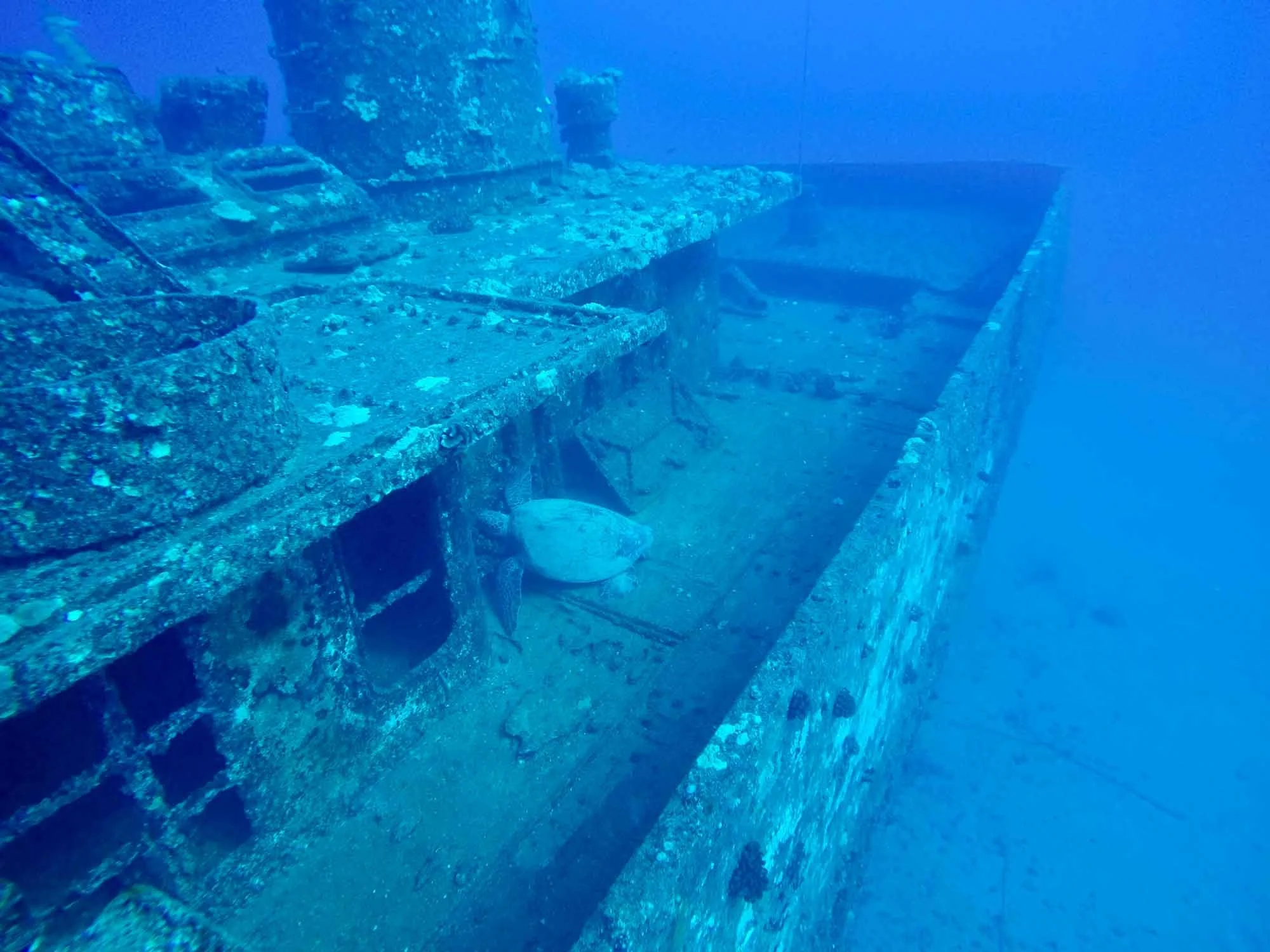
The Sea Tiger Wreck, Oahu
Learning to Read a Wreck Instead of Just Diving It
One of the most interesting aspects of wreck diving is learning to see a dive site differently. Unlike a coral reef, where exploration often follows the natural contours of the environment, a shipwreck presents a complex, three-dimensional structure with its own layout, potential hazards, and opportunities for discovery. Understanding that structure before approaching it closely is an important part of becoming a competent wreck diver.
I remember exploring one of my first wrecks and instinctively wanting to circle the exterior before getting any closer. I was curious about the overall layout, where the openings were located, how the different sections connected, and which areas appeared accessible or potentially hazardous. Looking back, that initial curiosity reflected one of the fundamental principles of wreck diving: taking the time to understand an environment before deciding how to explore it.
During the PADI Wreck Diver Specialty, students learn to approach wrecks with this same deliberate mindset. Surveying the exterior helps divers identify recognizable features, assess the condition of the structure, observe environmental conditions, and establish important reference points for navigation. Openings that appear inviting from a distance may lead into confined spaces, while deteriorating sections, fishing line, sharp metal, and accumulated sediment can present hazards that aren't immediately obvious. Recognizing these features is essential when determining which areas can be explored safely within the limits of your training.
Wrecks also offer a fascinating lesson in spatial awareness. A ship that once had clearly defined decks, corridors, and compartments may now rest on its side, lie partially buried in sediment, or have sections that have collapsed over time. Learning to interpret these unfamiliar orientations requires divers to think beyond the layout they might expect from a vessel at the surface. Navigation becomes an exercise in observation, using structural features, depth, compass headings, and a carefully developed dive plan to maintain awareness of your location.
The real skill is learning to recognize what a wreck is telling you before deciding where to go next. Rather than approaching every opening as an invitation to explore, trained wreck divers learn to evaluate the environment, recognize its limitations, and make informed decisions about their route. That awareness transforms a wreck from an unfamiliar collection of submerged structures into a site you can explore with greater understanding, confidence, and respect.

Sugar Wreck, Bahamas
Understanding the Limits of Recreational Wreck Exploration
An important part of becoming a responsible wreck diver is understanding the difference between exploring a wreck's exterior and entering an overhead environment. The PADI Wreck Diver Specialty introduces divers to limited wreck penetration, but it does not qualify them for unrestricted exploration of enclosed compartments, complex passageways, or environments beyond the natural light zone.
Recreational wreck penetration follows clearly defined limits. Divers must remain within the natural light zone, maintain a continuous guideline to open water during penetration, and ensure that the combined distance from their position inside the wreck, back to an exit, and up to the surface does not exceed 40 metres (130 feet). Appropriate gas management, sufficient clearance for two divers to exit while sharing air, and careful evaluation of structural stability, visibility, and entanglement hazards are equally important.
Depth qualifications are a separate and essential consideration. A PADI Advanced Open Water Diver is trained to dive to a maximum of 30 metres (100 feet), while the PADI Deep Diver Specialty extends that qualification to 40 metres (130 feet). Earning the Wreck Diver Specialty does not increase your maximum certified depth. Divers interested in exploring wrecks below 30 metres should complete the appropriate deep diving training before attempting those dives.
Wreck penetration is also not required to complete the specialty. Divers can develop valuable skills in wreck surveying, navigation, hazard identification, and guideline management without entering an overhead environment. When penetration is appropriate, exploration must remain within the limits of the diver's training, experience, equipment, and environmental conditions.
More advanced wreck exploration, particularly beyond the natural light zone or through restricted passageways, requires additional technical training and specialized equipment. Understanding these boundaries is fundamental to responsible wreck diving and ensures that curiosity never takes priority over safety.
The Subtle Realization That Your Setup Matters
Wreck diving has a way of exposing the little details in your equipment configuration that might otherwise go unnoticed. A dangling pressure gauge, an unsecured accessory, or a hose that extends farther than necessary may seem relatively insignificant during a typical reef dive. Around a wreck, however, those same details can create unnecessary risks, particularly when navigating narrow openings, exposed metal, or areas where entanglement is possible.
One of the most important lessons I took away from wreck diving was the value of a streamlined equipment configuration. Keeping gauges, hoses, and accessories secured close to your body reduces the likelihood of snagging on the structure while improving your ability to maneuver comfortably and maintain proper trim. After some of my early wreck dives, I found myself reevaluating how I configured my equipment, making small adjustments that ultimately improved my diving well beyond wreck environments. Good equipment configuration isn't about appearance or having the most expensive gear. It's about functionality, familiarity, and reducing unnecessary complications underwater.
The PADI Wreck Diver Specialty also introduces divers to equipment and techniques specifically suited to wreck exploration. Reels and guidelines are essential tools for maintaining a continuous reference to open water during permitted penetration dives, particularly if visibility deteriorates. Dive lights help illuminate dark compartments, reveal potential hazards, and support communication between buddies. Each piece of equipment serves a specific purpose, but carrying it is only part of the equation. Divers must also develop the proficiency to deploy, manage, and troubleshoot their equipment without compromising buoyancy, awareness, or buddy communication.
Perhaps the biggest takeaway is that equipment should support your diving, not complicate it. Wreck diving encourages a more thoughtful approach to what you carry, how you configure it, and how confidently you can use it. Those habits extend far beyond wrecks, making you a more efficient, comfortable, and capable diver in almost any underwater environment.

HTMS Suphairin Wreck, Thailand
Moving Inside Without Rushing It
Entering a wreck requires a different mindset than exploring its exterior. The open water gives way to a confined environment where overhead structures, limited visibility, and unfamiliar passageways demand greater awareness and precision. The excitement of exploring what lies beyond an opening is undeniable, but so is the responsibility that comes with entering it.
During the PADI Wreck Diver Specialty, I remember practicing the process of laying a guideline for the first time. Establishing a secure tie-off outside the wreck, managing the reel, maintaining proper buoyancy and trim, and carefully navigating the entry required me to think about every movement. What might appear straightforward from the outside quickly becomes a coordinated exercise in situational awareness, equipment management, and communication with your buddy.
Once inside, even familiar diving skills take on greater importance. A careless fin kick can disturb sediment and dramatically reduce visibility. Poor buoyancy can bring you into contact with fragile or unstable structures. Losing awareness of your guideline or your buddy can turn an otherwise manageable situation into a serious problem. Proper training prepares divers to anticipate these challenges, establish clear limits, and maintain a reliable route back to open water.
Perhaps the most valuable lesson is that successful wreck penetration isn't measured by how far you venture inside, but by how well you manage the dive. Knowing when to proceed, when to turn around, and when conditions exceed your training or comfort level is fundamental to responsible wreck exploration. The objective is never to push deeper simply because a passageway continues. The real accomplishment is exploring within your limits while maintaining the skills, awareness, and discipline to return safely.

Wreck Diving on Oahu
Why This Course Changes the Way You Dive
One of the most valuable aspects of the PADI Wreck Diver Specialty is how the skills you develop extend far beyond wreck exploration. While the course introduces divers to the fascinating world of submerged ships and structures, its greatest benefit may be the way it encourages a more deliberate, disciplined approach to diving.
Wreck diving demands thoughtful preparation. Understanding the layout of a site, identifying potential hazards, evaluating environmental conditions, and establishing clear objectives all become essential parts of the dive plan. Rather than simply following a guide or exploring wherever something catches your attention, you learn to assess your surroundings, anticipate challenges, and make informed decisions before and during the dive. These are valuable habits in any diving environment, whether you're exploring a shipwreck, navigating a complex reef system, or diving in unfamiliar conditions.
The course also places greater emphasis on skills that divers often take for granted. Precise buoyancy control, proper trim, efficient finning techniques, and spatial awareness become particularly important when working around structures where careless movements can disturb sediment, damage fragile environments, or create unnecessary hazards. Through guided practice, divers develop a better understanding of how their movements affect both their surroundings and their ability to maintain control underwater.
Perhaps most importantly, wreck diving reinforces the relationship between confidence, competence, and sound judgment. Learning to identify hazards, manage a guideline, communicate effectively with a buddy, and recognize when conditions warrant changing or ending a dive helps replace uncertainty with preparation. Confidence doesn't come from venturing farther into a wreck or pushing beyond your comfort zone. It develops through understanding your capabilities, respecting the limitations of your training, and consistently making decisions that prioritize safety.
By the end of the PADI Wreck Diver Specialty, you're gaining much more than the ability to explore a new type of dive site. You're developing a stronger foundation in planning, navigation, equipment management, and underwater awareness. These skills make you a more thoughtful and capable diver, regardless of where your next adventure takes you. And perhaps that's what makes wreck diving so rewarding: the opportunity to explore extraordinary pieces of history while continuing to grow as a diver.

Wreck Diving on Oahu
For the Divers Who Want More
Have you ever explored a shipwreck and found yourself wondering what lies beyond its openings? Perhaps you've followed the exterior of a sunken vessel, admired the marine life that now calls it home, or imagined the stories hidden within its corridors and compartments. For divers who find themselves drawn to these underwater environments, the PADI Wreck Diver Specialty offers an opportunity to turn that curiosity into a new set of skills.
Wreck diving combines exploration, history, and technical precision in a way that few other recreational diving experiences can. Every wreck presents a different environment, with its own structural features, potential hazards, and opportunities for discovery. Learning to evaluate those conditions, develop appropriate dive plans, and navigate safely around and, when conditions and training permit, within a wreck opens up an entirely new dimension of underwater exploration.
Throughout the PADI Wreck Diver Specialty, you'll develop practical skills in wreck surveying, hazard identification, navigation, and guideline management. You'll also refine your buoyancy, trim, and finning techniques to move efficiently around delicate or confined structures. The objective isn't simply to venture farther into a wreck, but to develop the knowledge and judgment to recognize which areas can be explored safely and when it's appropriate to remain outside.
Beyond the training, wreck diving offers a remarkable opportunity to connect with maritime history and observe how the ocean transforms human-made structures into thriving marine habitats. Ships that once carried passengers, cargo, or military personnel become artificial reefs, attracting everything from tiny invertebrates to large schools of fish. Exploring these sites responsibly means appreciating both their historical significance and their ecological importance while leaving the structures and marine life undisturbed.
The PADI Wreck Diver Specialty is about becoming a more capable diver while discovering an entirely new side of the underwater world. Whether you're fascinated by maritime history, interested in improving your diving skills, or simply eager to explore beyond familiar reefs, wreck diving offers a rewarding next step in your continuing education. With proper training, thoughtful preparation, and respect for your limits, some of the ocean's most fascinating stories are waiting to be discovered.
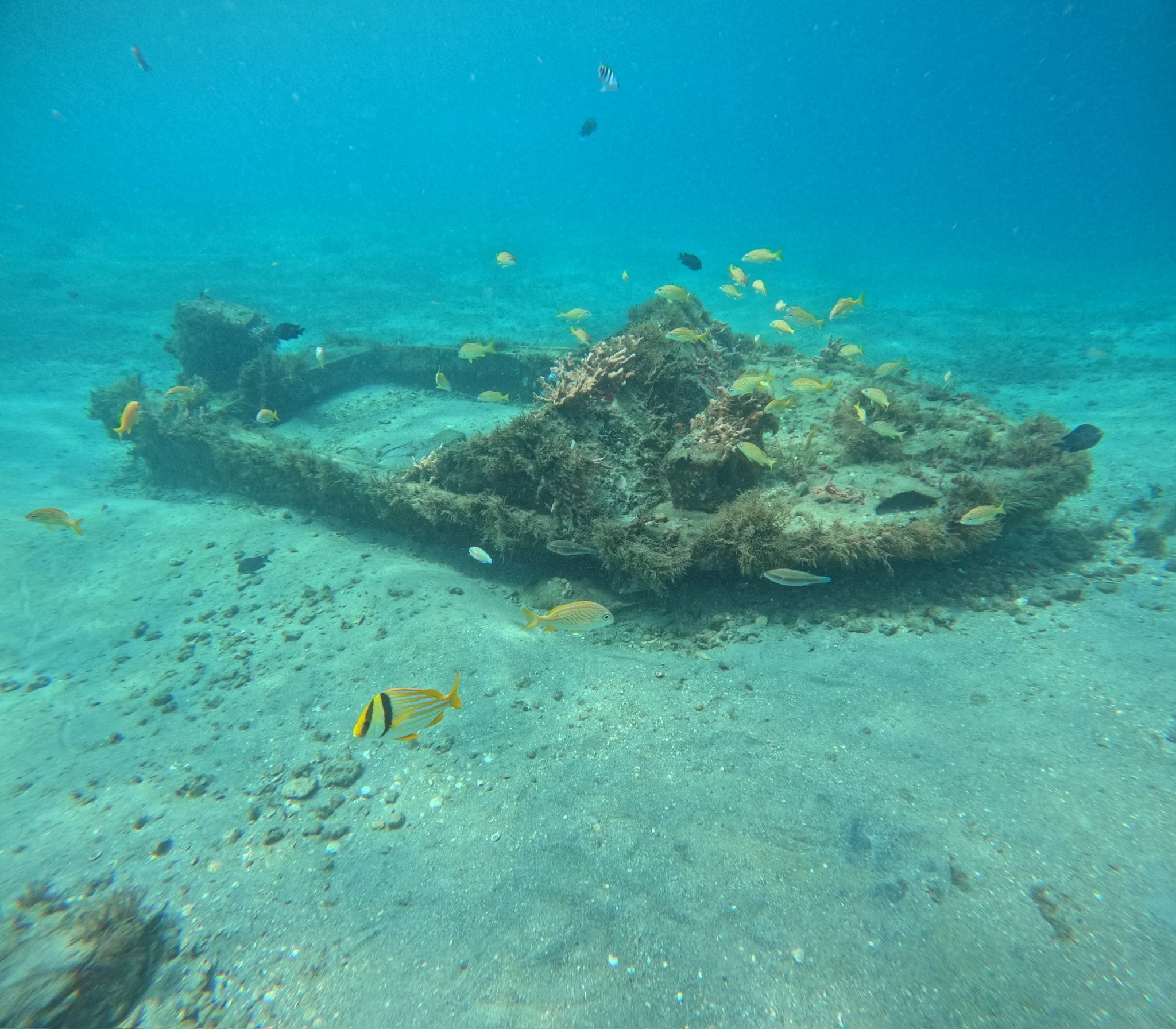
A small wreck at the Blue Heron Bridge, Florida
For Instructors: Expanding How You Teach and Lead
For PADI Instructors looking to expand their professional qualifications, the Wreck Diver Instructor Specialty offers an opportunity to introduce students to one of recreational diving's most fascinating environments while further developing your own instructional skills.
Teaching wreck diving requires a thoughtful approach to dive planning, risk management, and student supervision. Unlike many traditional specialty courses, wreck training introduces students to complex structures, potential entanglement hazards, reduced visibility, and the additional considerations associated with limited overhead environments. As an instructor, your responsibility extends beyond demonstrating techniques. You must help students develop the situational awareness, sound judgment, and practical skills necessary to evaluate wrecks and explore them responsibly within the limits of their training.
The PADI Wreck Diver Instructor Specialty also complements several other continuing education courses, particularly Deep Diver, Enriched Air Diver, and Peak Performance Buoyancy. Together, these specialties provide opportunities to develop more comprehensive training pathways for divers interested in exploring deeper wrecks, improving their underwater control, or preparing for more advanced diving experiences. For instructors and dive centers, incorporating wreck training can also broaden course offerings and create new opportunities to engage divers who are ready to continue their education.
Wreck diving has a unique appeal that makes it particularly rewarding to teach. Every site has a story, whether it's a historic shipwreck, a vessel intentionally sunk as an artificial reef, or a structure gradually reclaimed by marine life. Bringing that history into your briefings adds context to the experience and encourages students to appreciate the significance of what they're exploring. Watching divers develop the skills and confidence to approach these environments with greater understanding is one of the most satisfying aspects of specialty instruction.
For instructors working toward their Master Scuba Diver Trainer (MSDT) rating, the Wreck Diver Instructor Specialty can also count toward the five specialty instructor certifications required for that professional milestone. Beyond the rating itself, expanding your instructional qualifications allows you to offer a wider range of continuing education opportunities and support divers as their interests and abilities evolve.
Becoming a Wreck Diver Specialty Instructor is about more than adding another certification to your professional credentials. It's an opportunity to strengthen your teaching, expand the experiences you can offer, and introduce divers to an extraordinary combination of history, marine ecology, and underwater exploration.
If you're a PADI Instructor interested in earning your Wreck Diver Instructor Specialty, I'd love to help you take that next step through Seaira Dives. Whether you're working toward MSDT or simply looking to broaden your teaching opportunities, we can build a specialty instructor training pathway around your professional goals.
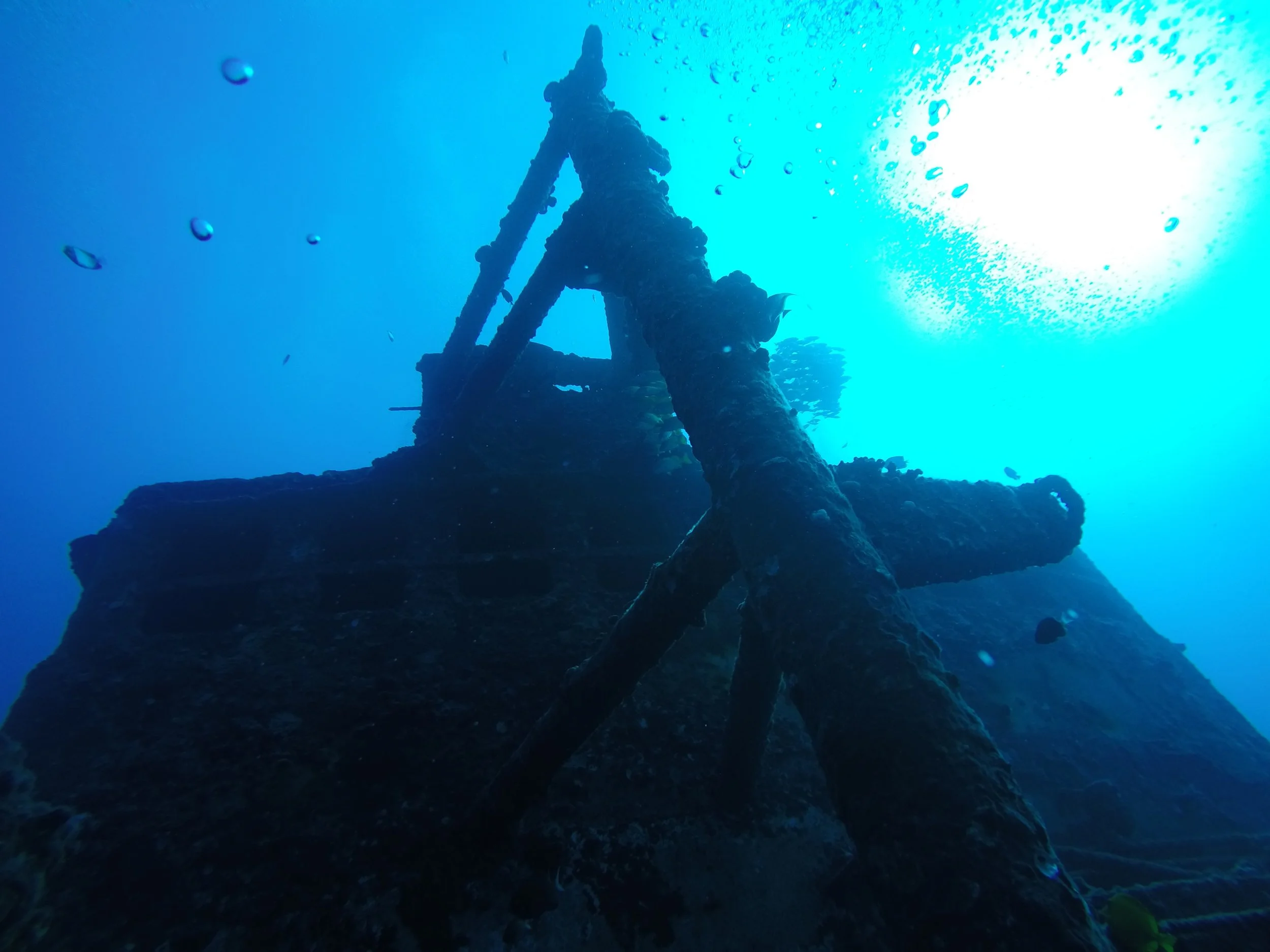
Wreck Diving on Oahu
Where History Meets the Ocean
Every shipwreck has two stories. The first belongs to its life above the surface, to the people who built it, the journeys it made, and the circumstances that eventually brought it to rest beneath the waves. The second begins when the ocean takes over, as coral and marine life gradually transform a once-familiar human structure into an entirely different underwater world.
Wreck diving offers the rare opportunity to explore both stories at once. Few other diving experiences combine history, exploration, marine ecology, and the challenge of developing new skills quite so naturally. Every wreck is different, and even a familiar site can reveal something new when you approach it with curiosity, preparation, and an appreciation for what you're seeing.
The PADI Wreck Diver Specialty gives divers the knowledge and practical skills to explore these remarkable environments with greater confidence and awareness. More importantly, it reinforces something that applies to every dive we make: the best underwater experiences aren't defined by how far we venture or how much we see, but by how thoughtfully we explore.
After all, the ocean is full of extraordinary places to discover. Some just happen to have a history written in steel.
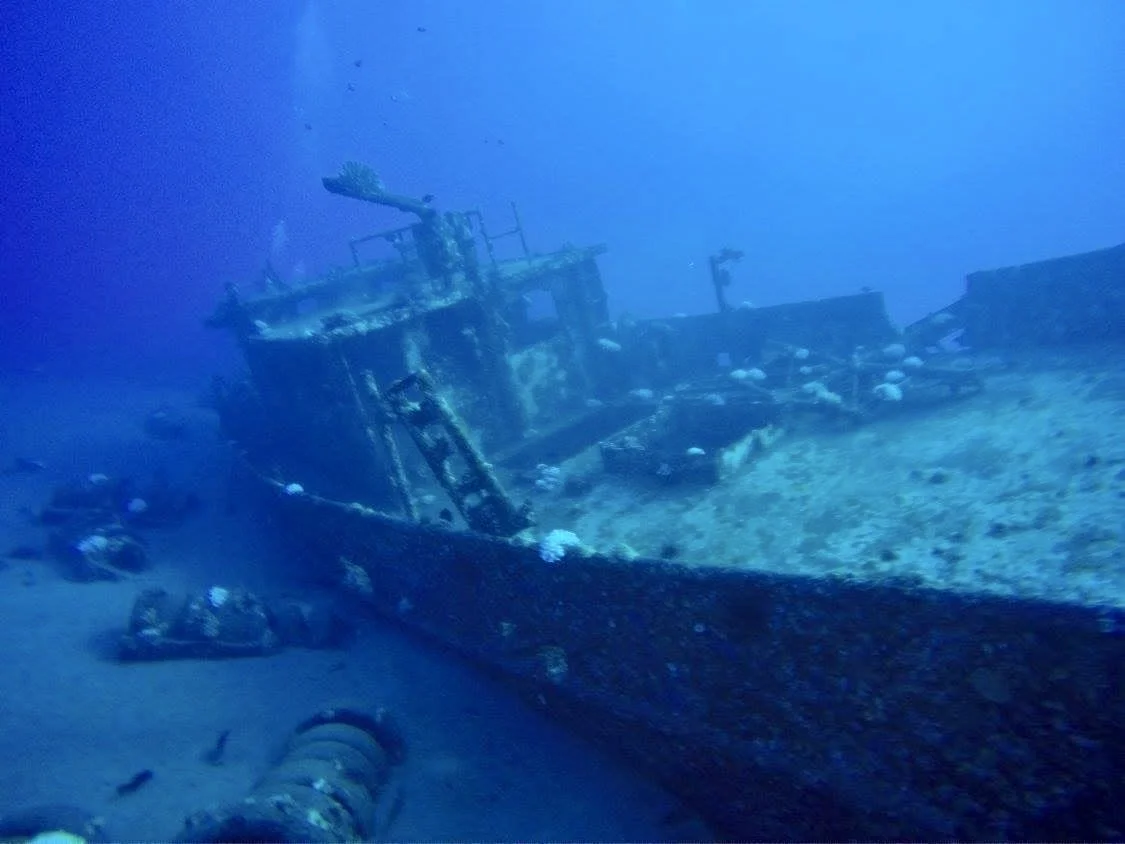
Wreck Diving on Oahu
Dive safe, explore passionately, and remember…