Yoke vs. DIN
A Deep Dive into Scuba Regulator Connections
When it comes to scuba diving gear, the details matter—especially when choosing between yoke and DIN regulator connections. While the basics are often discussed, the real value lies in understanding the practical differences that affect your dive: cost, maintenance, durability, and overall convenience. Whether you’re investing in your first setup or considering an upgrade, this deeper dive will help you make an informed, confident decision tailored to your diving style and environment.
Yoke Connection: The Classic Choice

The classic YOKE
🛠 Yoke Connection: The Classic Choice
Design and Appearance:
The Yoke system features a U-shaped clamp that fits over the tank valve and secures with a hand-tightened screw. It's straightforward, easy to use, and remains the go-to choice for many recreational divers around the world.
Cost Differences:
Regulator Cost: Yoke regulators are generally less expensive than DIN models, largely because they’re widely produced and standard in recreational diving.
Tank Cost: Tanks fitted for yoke valves tend to be slightly cheaper for the same reason—mass production and global adoption.
Gear Maintenance:
Ease of Maintenance: Thanks to their simple design, yoke regulators are easy to maintain. Routine inspections and basic servicing (like replacing O-rings) keep them dive-ready.
Replacement Parts: Yoke systems are extremely common, making replacement parts easy to find and relatively inexpensive.
Compatibility and Adaptation:
Adapters: If needed, a DIN-to-yoke adapter lets you use a yoke regulator with a DIN tank. However, adapters can add bulk and slightly impact connection security.
Best For:
Yoke regulators are ideal for recreational divers, travelers, and beginners looking for ease of use, affordability, and broad compatibility around the world.
🔩 DIN Connection: The Rugged, Secure Option

Design and Appearance:
The DIN system uses a threaded fitting that screws directly into the tank valve, creating a tighter, more secure connection. This reduces the risk of leaks, especially in high-pressure or challenging dive environments.
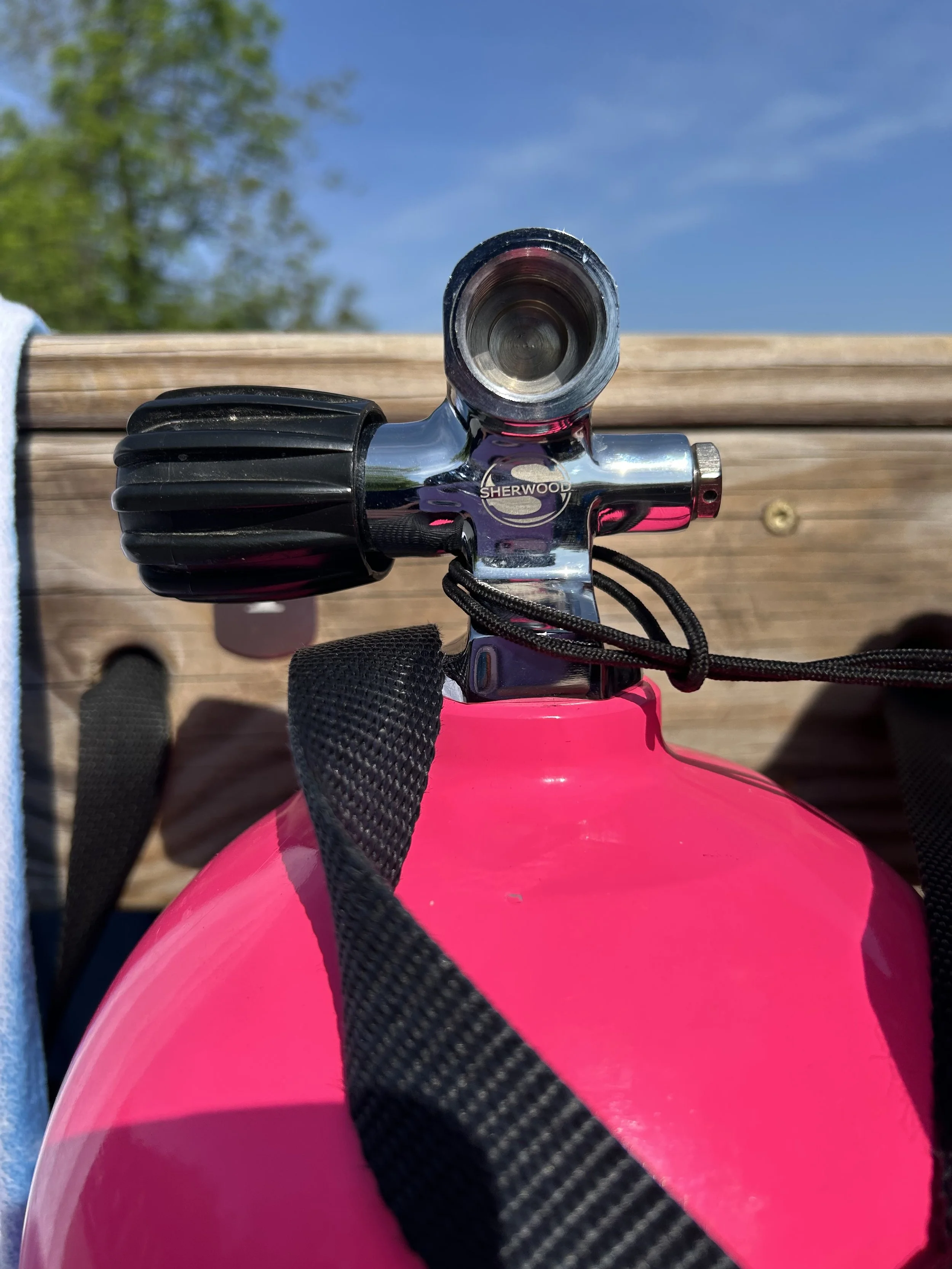
A DIN tank valve
Cost Differences:
Regulator Cost: DIN regulators are generally more expensive, reflecting their precision engineering and durability.
Tank Cost: DIN tanks can also cost more because the threading requires higher manufacturing precision.
Gear Maintenance:
Ease of Maintenance: DIN regulators require slightly more careful maintenance, especially keeping the threads and O-rings clean and inspected regularly to prevent leaks.
Replacement Parts: While parts are widely available, they can be pricier compared to yoke systems due to the advanced design.
Compatibility and Adaptation:
Adapters: You can use a DIN regulator with a yoke tank by adding an adapter. Just note that it can be another expense and adds an extra connection point.
Best For:
DIN regulators are preferred by technical divers, cave divers, cold-water divers, and anyone diving with high-pressure tanks (300 bar/4350 psi).
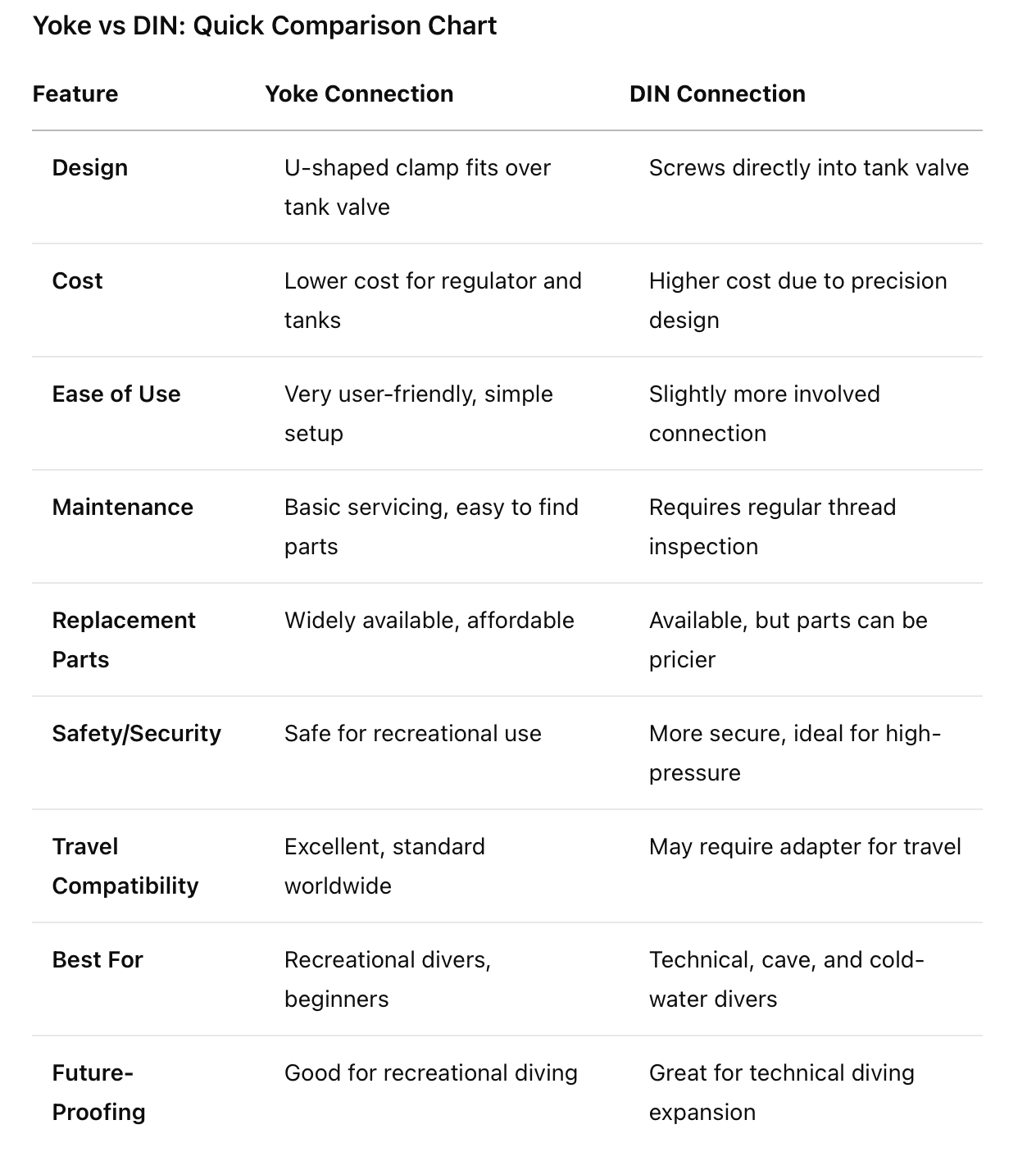
⚖ Additional Considerations
Safety and Reliability:
Yoke: Safe for recreational pressures but less secure under extreme conditions or high pressures.
DIN: Offers a stronger, more secure connection, ideal for technical and demanding dives.
Travel and Versatility:
Yoke: Easier for travel, especially to tropical destinations where yoke is the standard.
DIN: May require bringing an adapter, especially if traveling to areas where yoke tanks are more common.
Future-Proofing:
Yoke: Perfect for recreational diving today but could require upgrading if you move into technical or high-pressure diving later.
DIN: More "future-proof" if you plan to expand your diving into tech, wreck, or cave environments.
🌊 So, Which One is Right for You?
Both Yoke and DIN regulators offer unique advantages.
Choose Yoke if you're a recreational diver seeking simplicity, affordability, and worldwide compatibility.
Choose DIN if you want maximum security, are diving with high-pressure tanks, or are planning to advance into technical diving.
Whatever you choose, understanding your gear ensures you’re ready to dive confidently, safely, and comfortably into your next underwater adventure! 🐠✨
Dive safe, explore passionately, and remember…