
Night Diving: The Ocean Is Even Better After Dark
The Ocean Transforms at Night
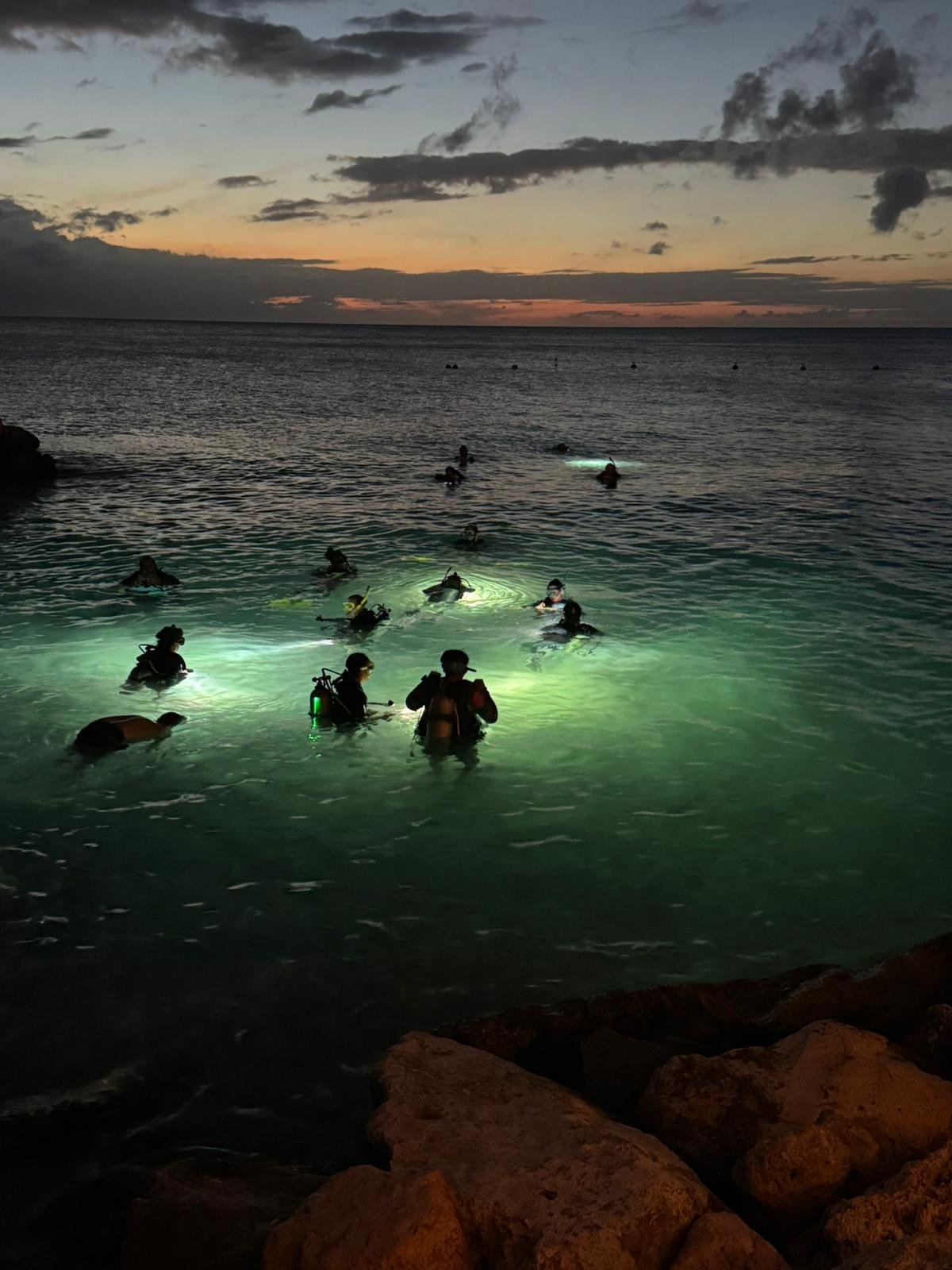
Starting a night dive in Curacao
Night diving is one of my absolute favorite ways to dive. I know that probably sounds a little crazy to anyone who is still firmly in the absolutely not, I have seen what is down there during the day camp. I even wrote an entire article about why night diving isn't nearly as spooky as people imagine it will be. Here's the thing, though: I don't just tolerate diving in the dark. I genuinely love it.
There is something magical about watching a dive site transform after the sun goes down. A reef you explored that afternoon can feel like an entirely different place a few hours later. The daytime crew starts settling in while nocturnal animals emerge. Hunters begin hunting, tiny creatures venture out of hiding, coral polyps extend to feed, and familiar animals start behaving in completely different ways. The reef hasn't gone to sleep; it has simply changed shifts.
Night diving also changes the way I dive. During the day, there is so much competing for my attention. I'm looking across the reef, into the blue, beneath ledges, above me, below me, and pretty much everywhere at once because I don't want to miss anything. At night, my world shrinks to the beam of my dive light, and I love that.

A night dive in the Galapagos
I slow down. A tiny movement catches my attention. A pair of eyes reflects back from a hole. Something I thought was part of the reef suddenly starts walking away. An octopus appears where there absolutely was not an octopus two seconds ago. For someone who gets ridiculously excited about the small, weird, and wonderful creatures most people swim right past, night diving is basically my happy place.
There is also a peacefulness to it that's difficult to explain until you've experienced it. Your field of vision becomes smaller, which makes the dive feel incredibly focused. You're paying attention to your breathing, your buddy, your buoyancy, and whatever little piece of the underwater world happens to be illuminated in front of you. Then something wild swims into your light beam and all that peacefulness briefly becomes LOOK AT THAT.
That's part of the fun.

Night diving in the Galapagos
Night Diving Isn't Just One Kind of Diving
When people hear "night dive," they often picture swimming around a coral reef with a flashlight. That's absolutely night diving, and a classic reef night dive will probably always be one of my favorites, but it barely scratches the surface of what diving after dark can look like.
A reef night dive gives you the opportunity to watch an ecosystem transform. Animals that were tucked away during the day emerge, while others find somewhere to settle in for the night. Crabs and shrimp become more active, octopuses may head out to hunt, and eels that spent the day staring at you from a hole may be out cruising around. One of the coolest things you can do is dive the same site during the day and return after sunset. You already know the general layout, but the experience can feel completely different.
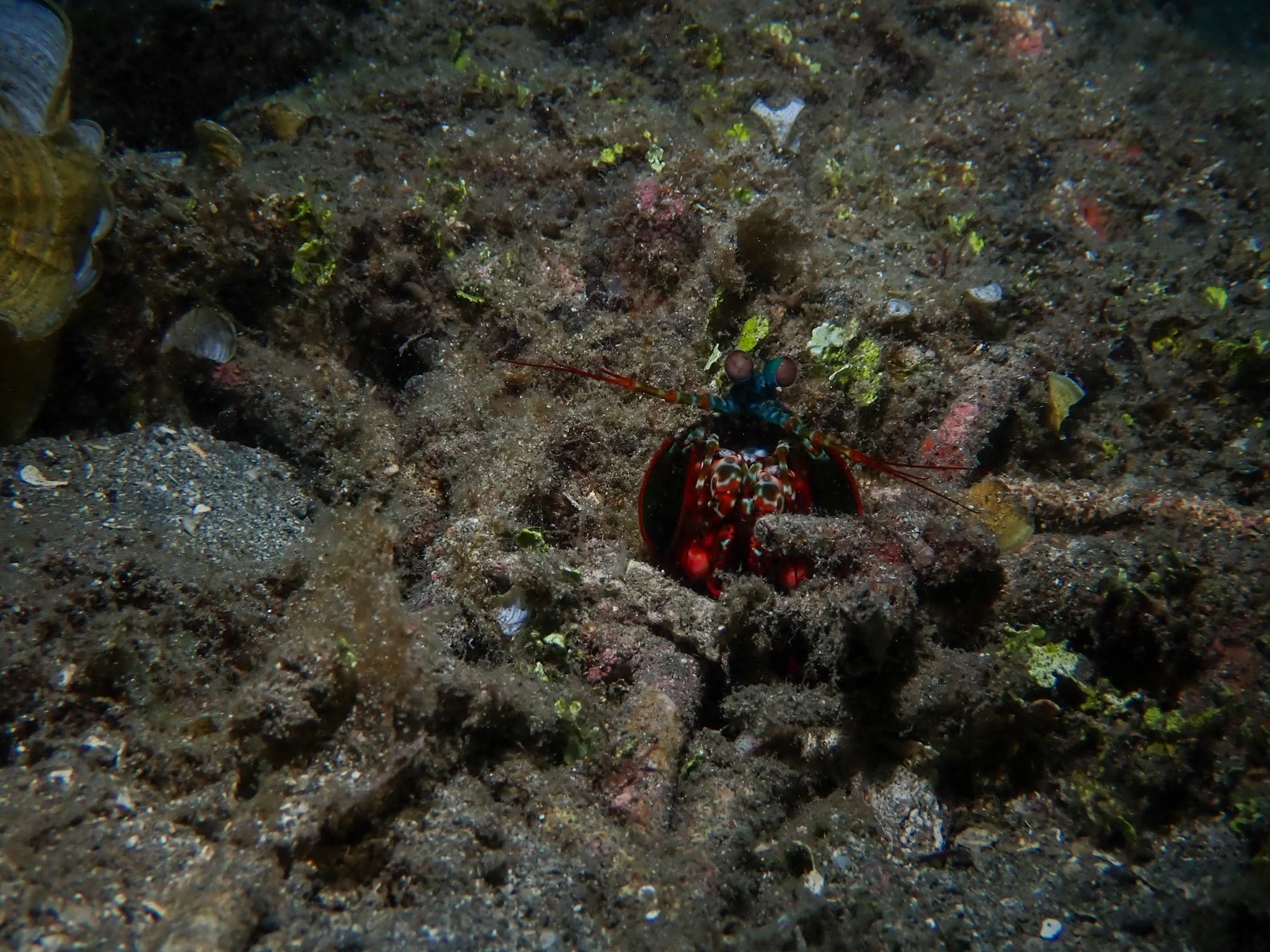
A peacock mantis shrimp at night
Then there is muck diving at night, which is a special kind of wonderful if you love weird critters as much as I do. Muck diving already requires you to slow down and look closely at sand, rubble, seagrass, or volcanic substrate that can initially appear relatively empty. At night, different animals may emerge and every tiny movement becomes worth investigating. This is the kind of diving where you can spend several minutes staring at what appears to be an empty patch of sand because something moved and consider that an excellent use of your dive. I am absolutely one of those people.
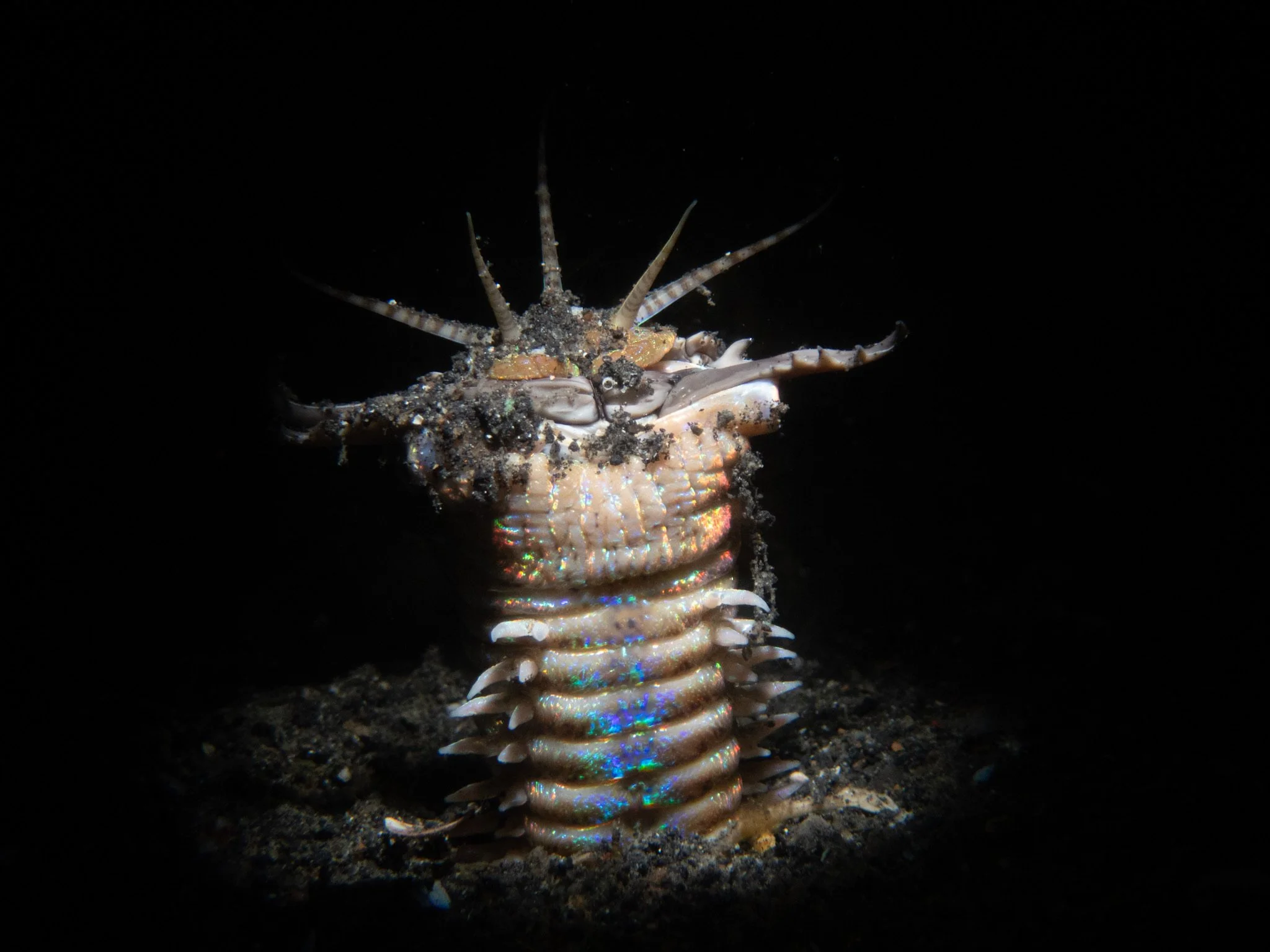
A hobbit work at night
Night drift diving changes the experience again. Now you're moving with the water while your light reveals the reef a little at a time. Current isn't inherently something to fear, and neither is darkness, but combining the two makes good buoyancy, buddy awareness, situational awareness, and comfort with current even more important. Understanding the environment and having the skills to dive it appropriately opens up experiences you simply can't have if you limit yourself to calm, sunny daytime dives.
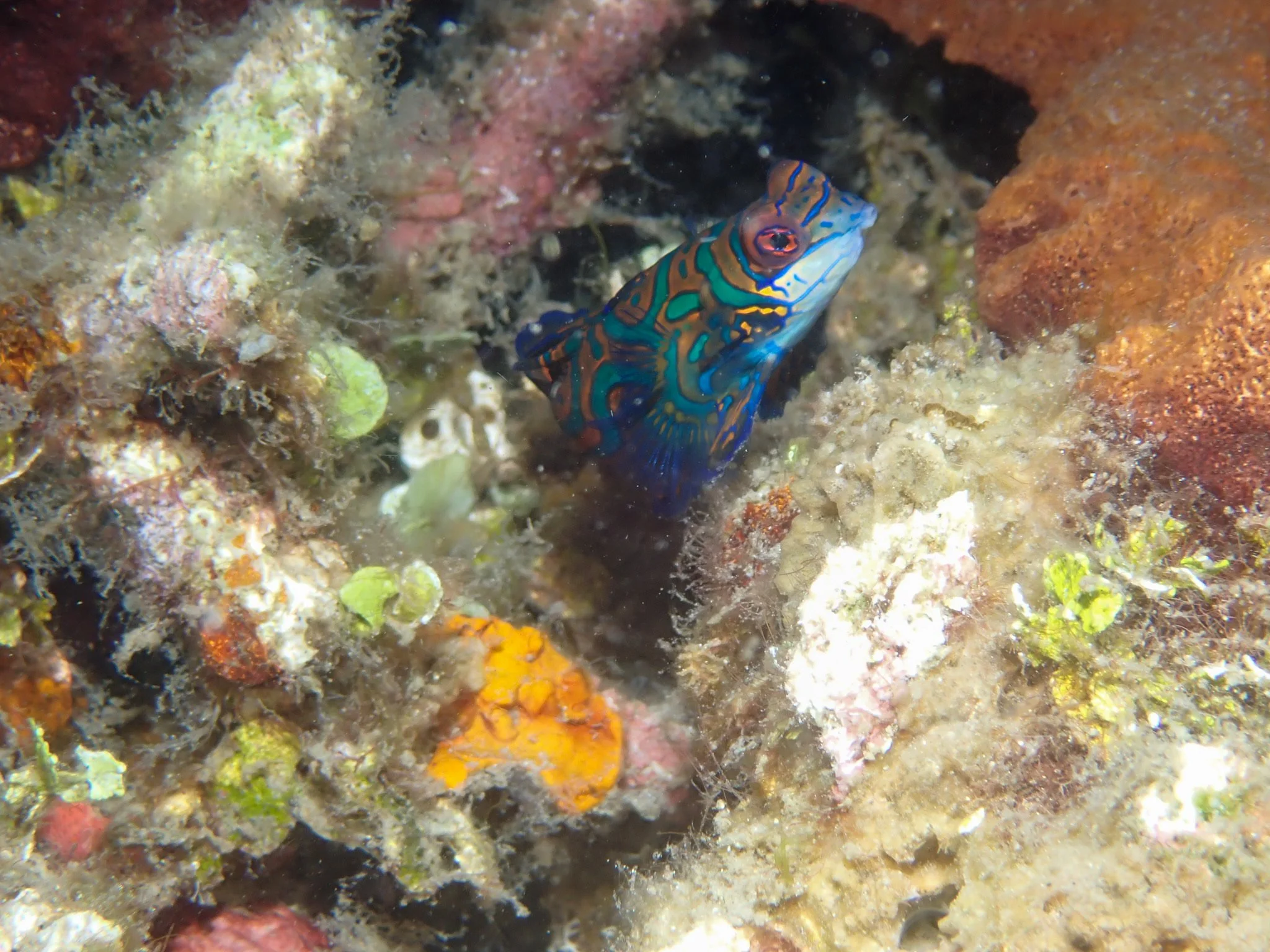
A mandarin fish peeping its head out at dusk
Wrecks can take on an entirely different atmosphere after dark too. Your light reveals portions of the structure rather than the whole thing at once, and the marine life around a wreck may change after sunset. Night diving does not change the rules surrounding overhead environments, though. Being comfortable night diving does not qualify someone to penetrate a wreck. Appropriate wreck training, equipment, and planning are still required for dives involving an overhead environment.
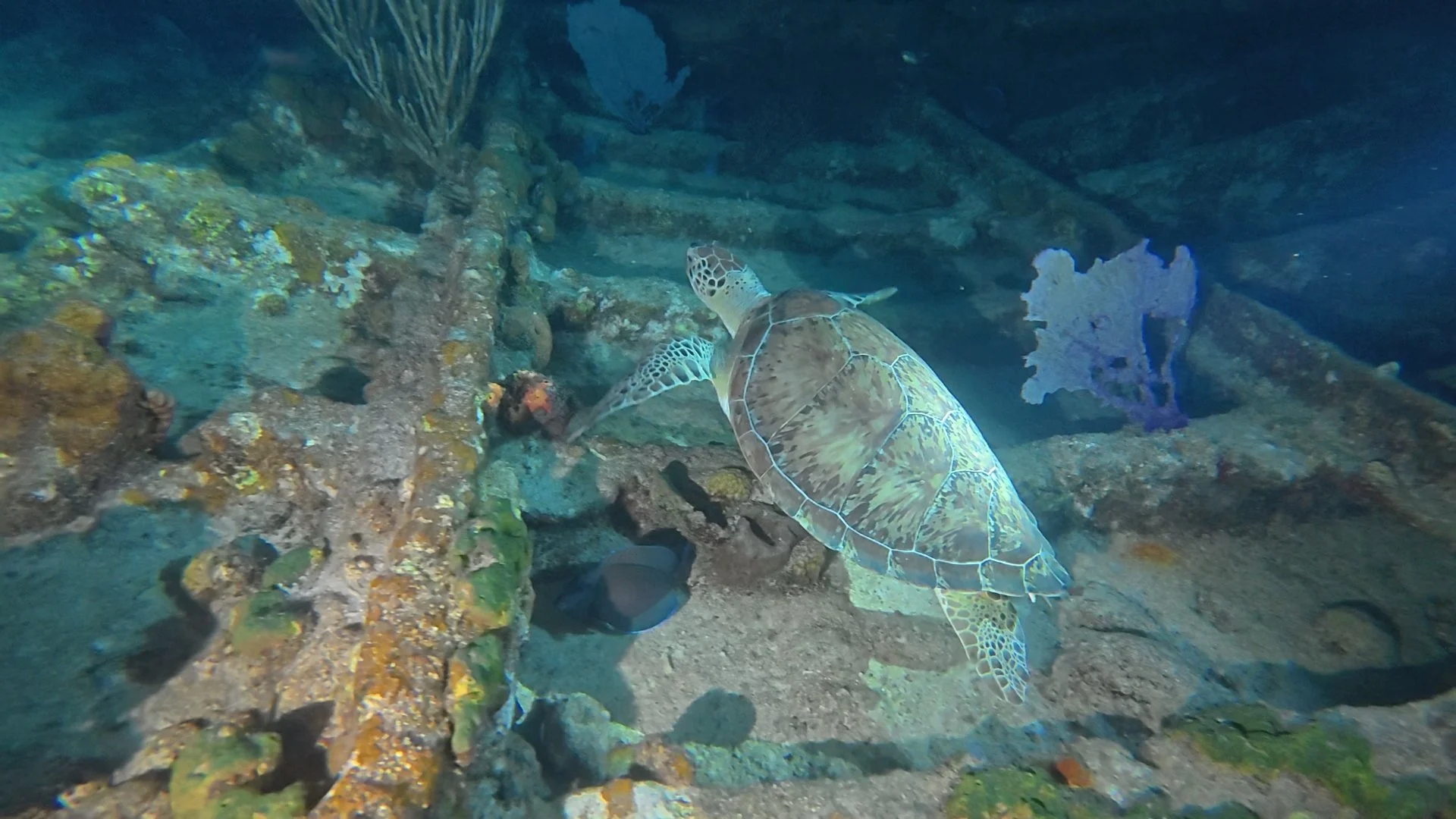
A beautiful green sea turtle on the Sugar Wreck at night
Even shore and boat dives feel different after dark. On a shore dive, the incredibly obvious exit you saw during daylight can become surprisingly difficult to recognize at night. On a boat dive, there is something I love about descending from a lit boat into the darkness and eventually seeing that familiar glow again when the dive is ending. Then everyone climbs aboard and immediately starts comparing what they saw. Somehow, people can follow almost the same route and come back having experienced completely different dives.
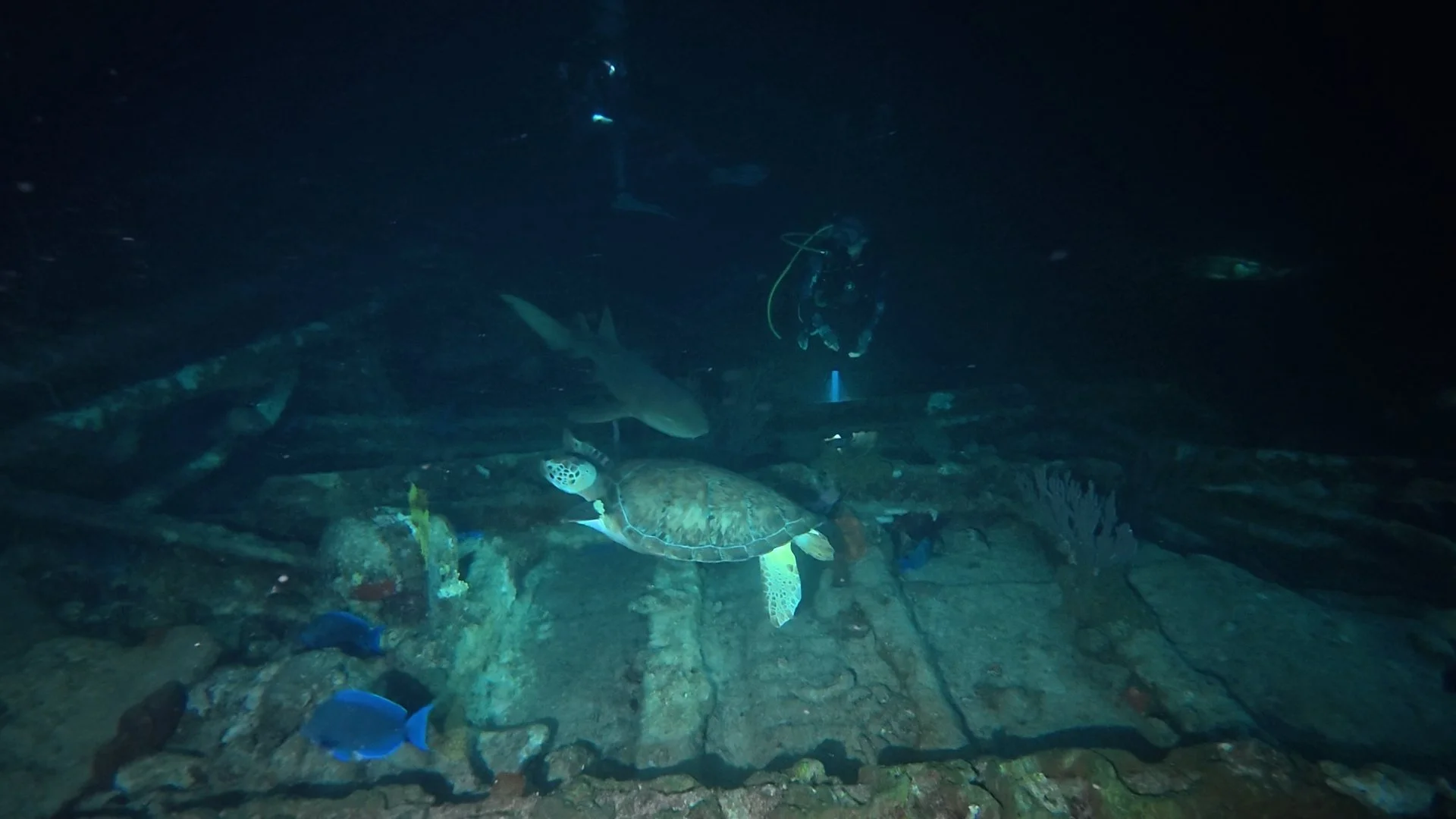
A green sea turtle and nurse shark on the Sugar Wreck at night
Night diving isn't always about tiny critters either. Some destinations offer nighttime encounters centered around particular animals or feeding behaviors. Hawaiʻi's famous manta night dives are a perfect example. Lights concentrate plankton, creating feeding opportunities for mantas and giving divers an extraordinary chance to watch them feed. That's an entirely different experience from searching a reef for shrimp, yet both show how diverse night diving can be.
Fluorescence diving adds another layer. Specialized excitation lights and appropriate filters can reveal fluorescence in certain marine organisms, creating colors and patterns dramatically different from what we see under ordinary white light. Bioluminescence is different because organisms are actually producing light. Under the right conditions, safely turning off your light for a moment and moving your hand through the water can reveal tiny flashes around you. Darkness definitely doesn't mean nothing is happening in the ocean.
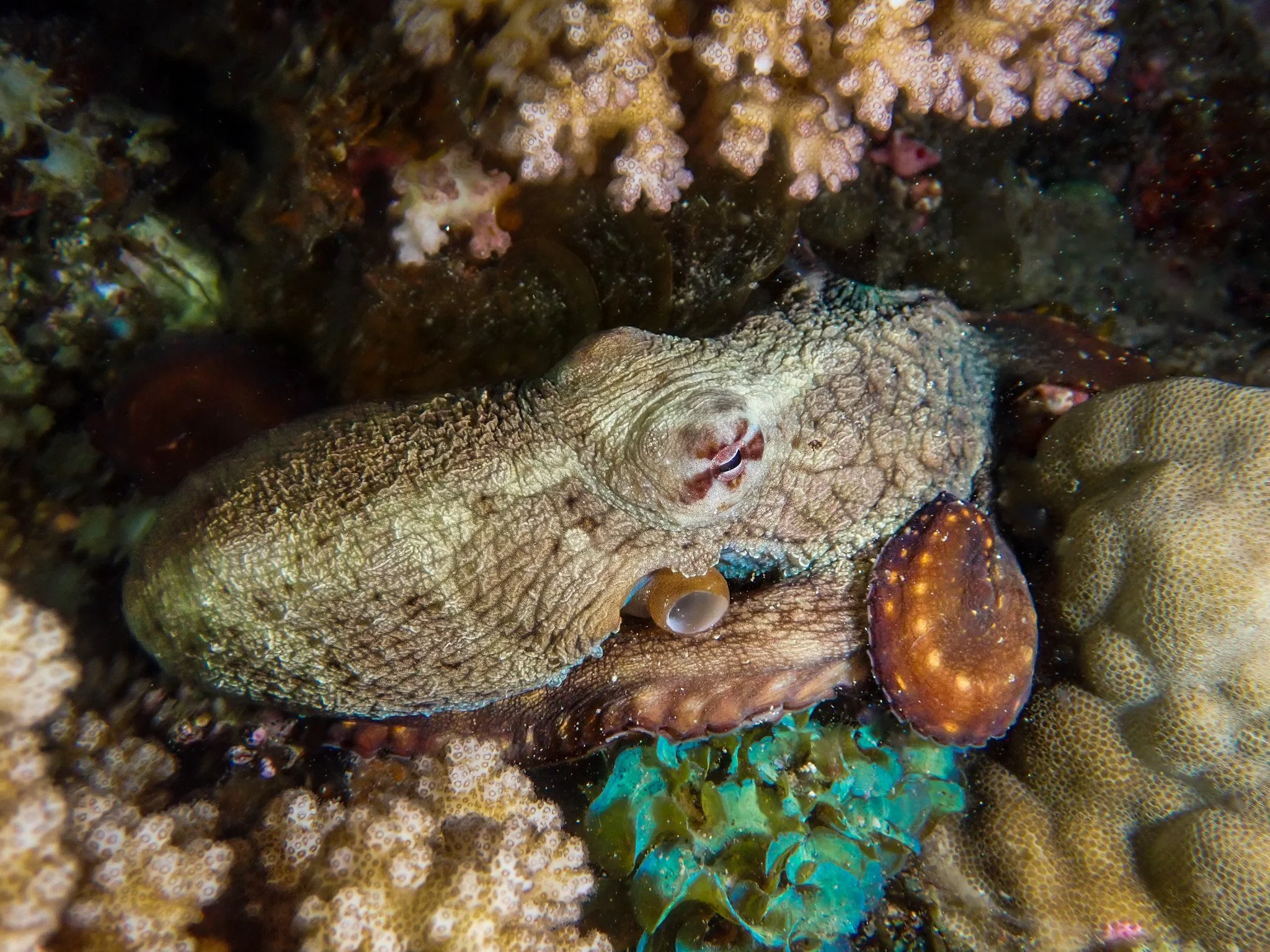
My favorite, a hunting octopus in Fiji at night
And Then There's Blackwater Diving
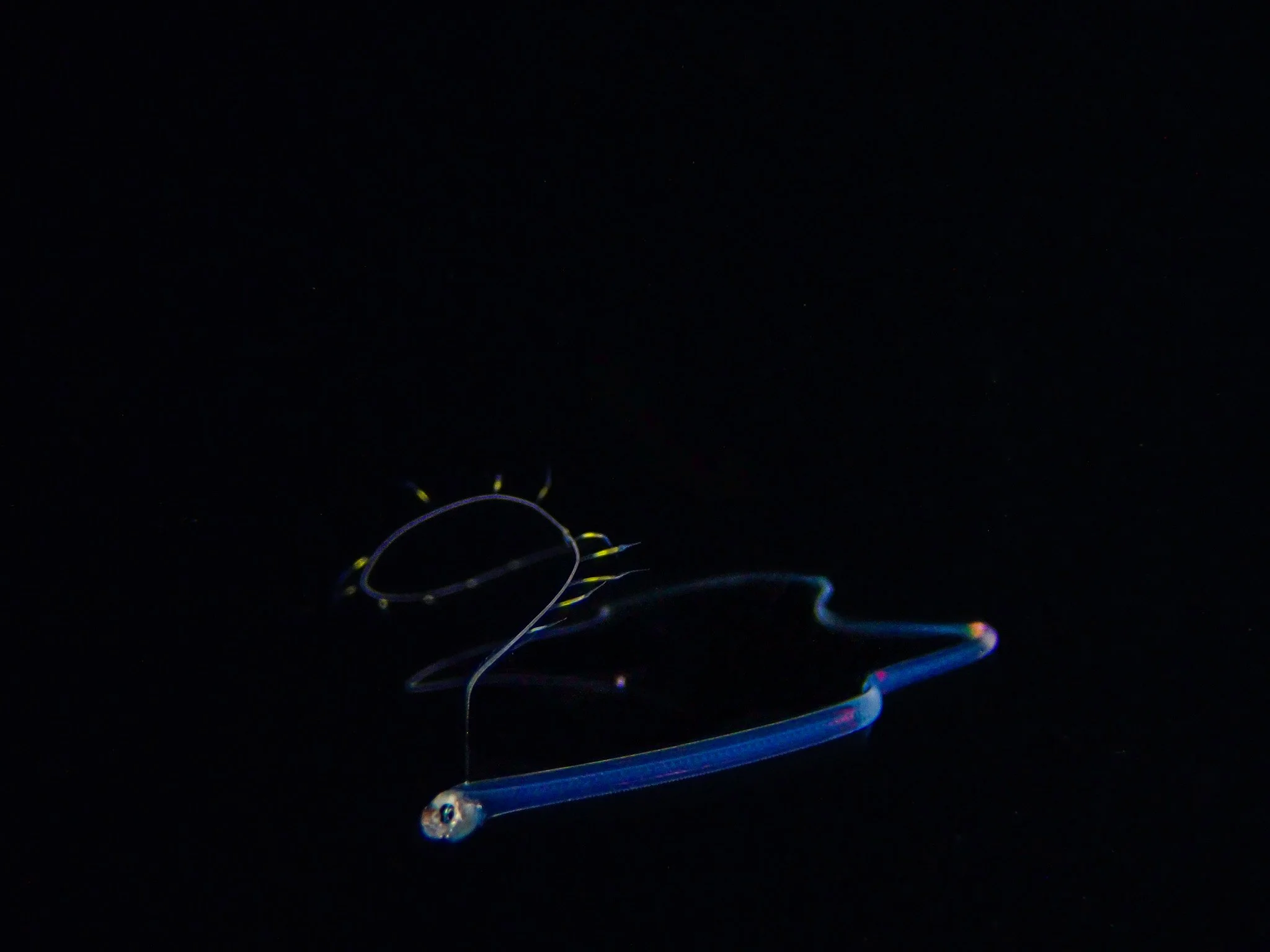
Blackwater diving deserves a category of its own because although it happens at night, it is not simply another night dive. There may be no reef beneath you at all. Instead, blackwater dives generally take place over deep water, with divers suspended in the water column around a purpose-designed downline and lighting system. There may be hundreds or thousands of feet of water below you. The water column itself becomes the dive site.
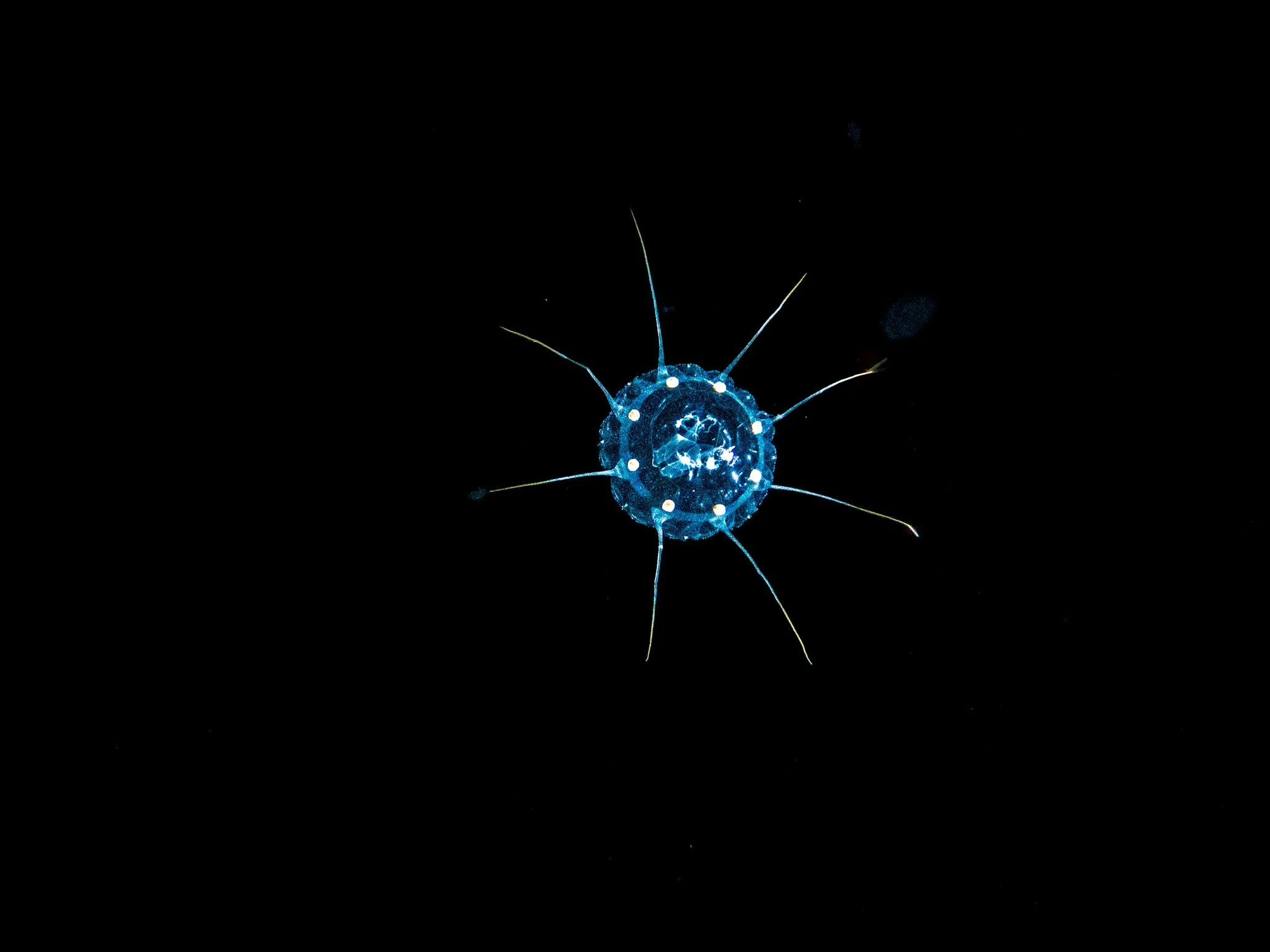
Every night throughout much of the world's ocean, enormous numbers of organisms move upward into shallower water and descend again as daylight returns. This is called diel vertical migration and is considered the largest organized migration of animals on Earth. Blackwater diving gives us a tiny window into this incredible movement.
Larval and juvenile fish can look almost nothing like their adult forms. Tiny cephalopods appear out of the darkness. Transparent animals, jellies, crustaceans, and other planktonic creatures drift or swim past you. Sometimes you know exactly what you're looking at. Other times your entire thought process is basically, What on earth is THAT? For someone who loves the weird side of the ocean, blackwater diving is hard to beat.
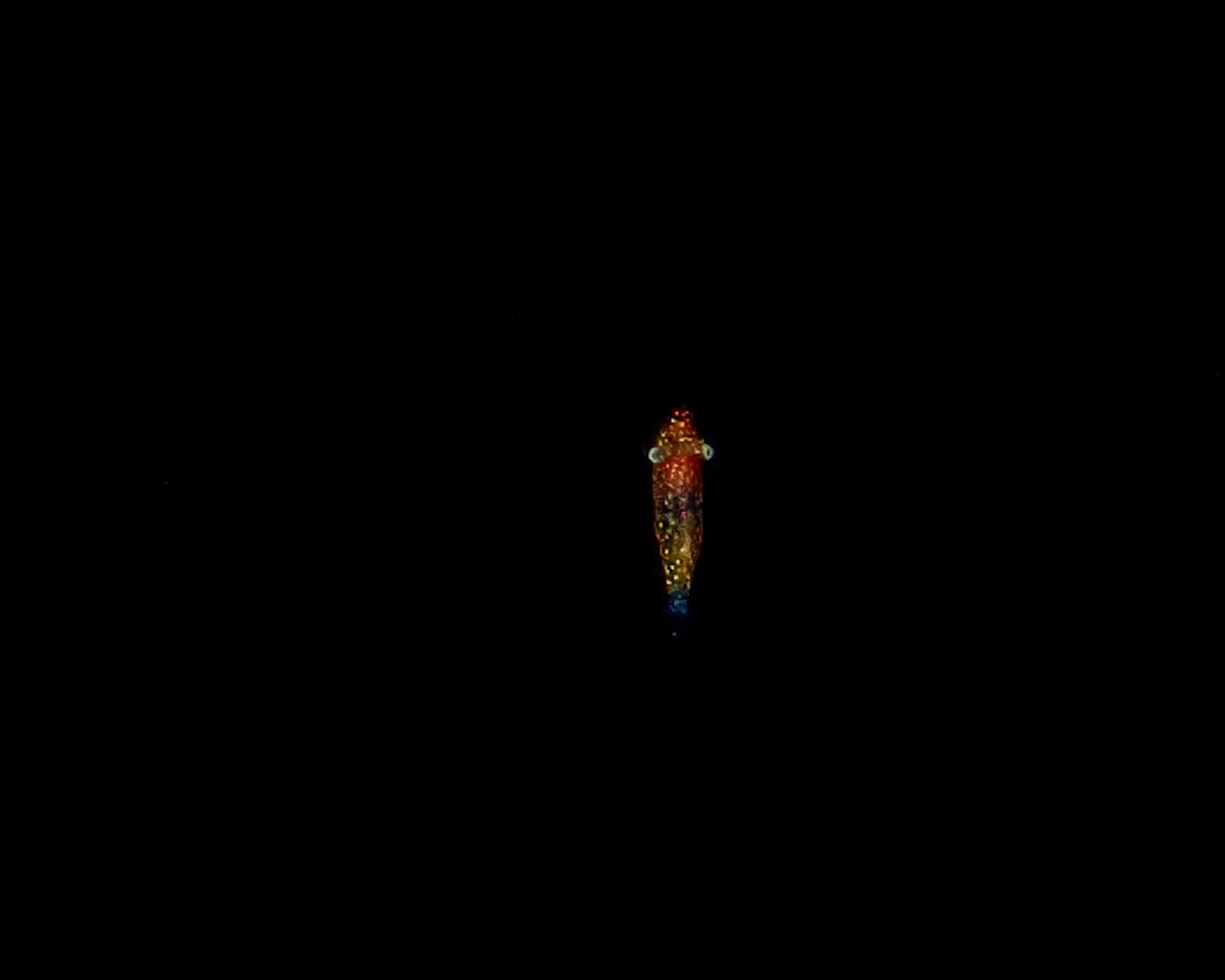
It is also a very different diving experience psychologically. There isn't necessarily a bottom in sight or a wall beside you. Your visual references may primarily be the downline, lights, your buddy, your computer, and whatever creature you're currently watching. Buoyancy and depth awareness become incredibly important because you cannot become so fascinated by an animal that you unconsciously follow it deeper.
Add a camera and things get even more interesting. You're moving, your subject is moving, there is no reef behind it, and the animal may be translucent and approximately the size of your fingernail. Good luck. It can be challenging, humbling, and ridiculously fun.
Blackwater isn't where I would send someone for their first night dive, and completing a recreational Night Diver course does not automatically prepare someone for every specialized blackwater operation. What it does illustrate beautifully is how many different experiences become available once you're comfortable diving after sunset.
Preparing to Dive After Dark
Your first giant stride into completely black water can feel very different from jumping into the exact same ocean at noon. You may stand on the edge of the boat, look down, and think, Well, that's VERY dark. Once you're in the water with your light on and your buddy beside you, however, you realize that you can see. Your world is simply smaller than it was during the day.
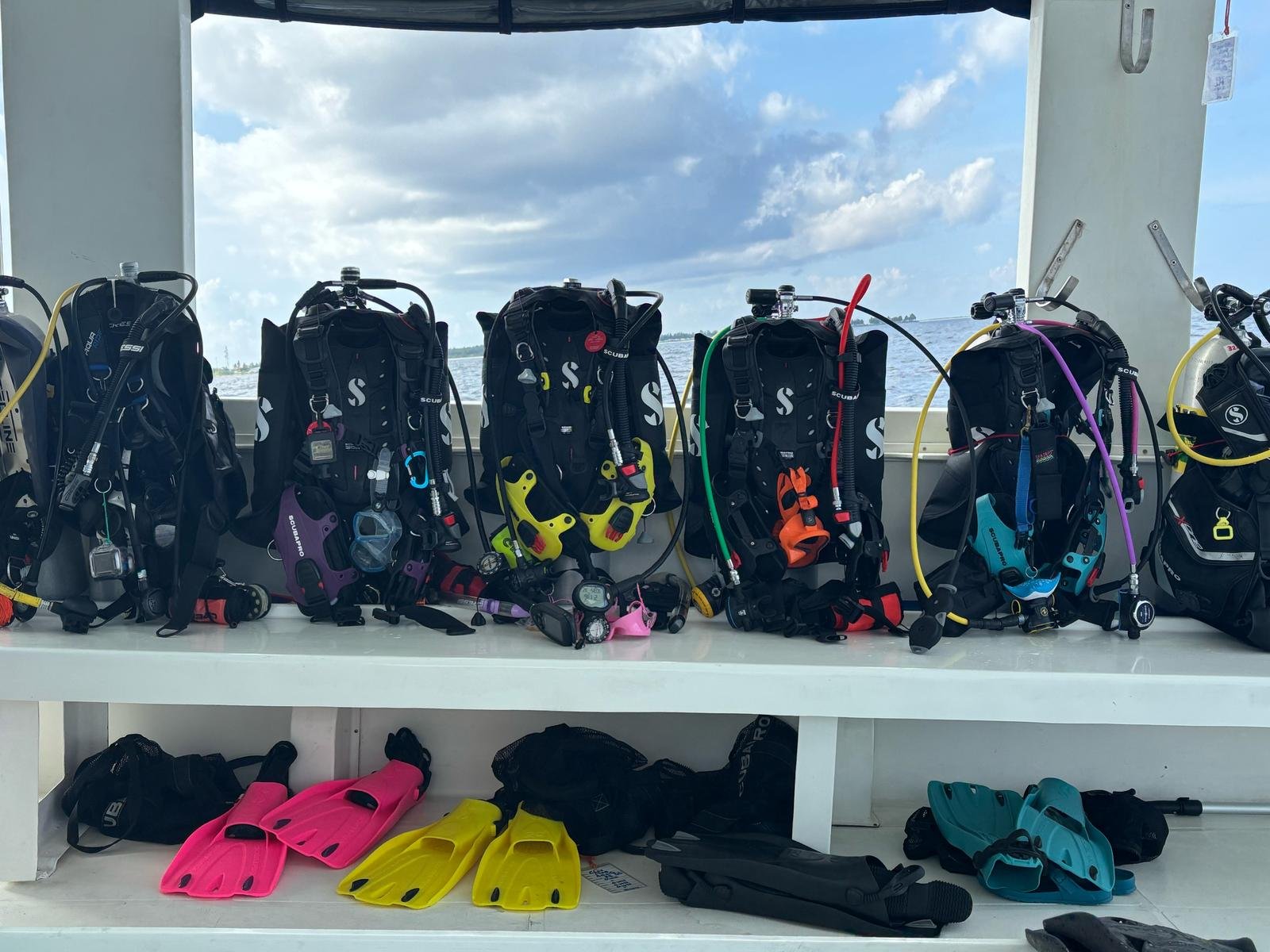
A lot of the apprehension surrounding night diving comes from not knowing what to expect, which is why preparation makes such a difference. My basic scuba setup doesn't dramatically change because the sun went down, but I become much more intentional about it. Darkness has a wonderful way of exposing the little things about your equipment that you don't know quite as well as you thought you did.
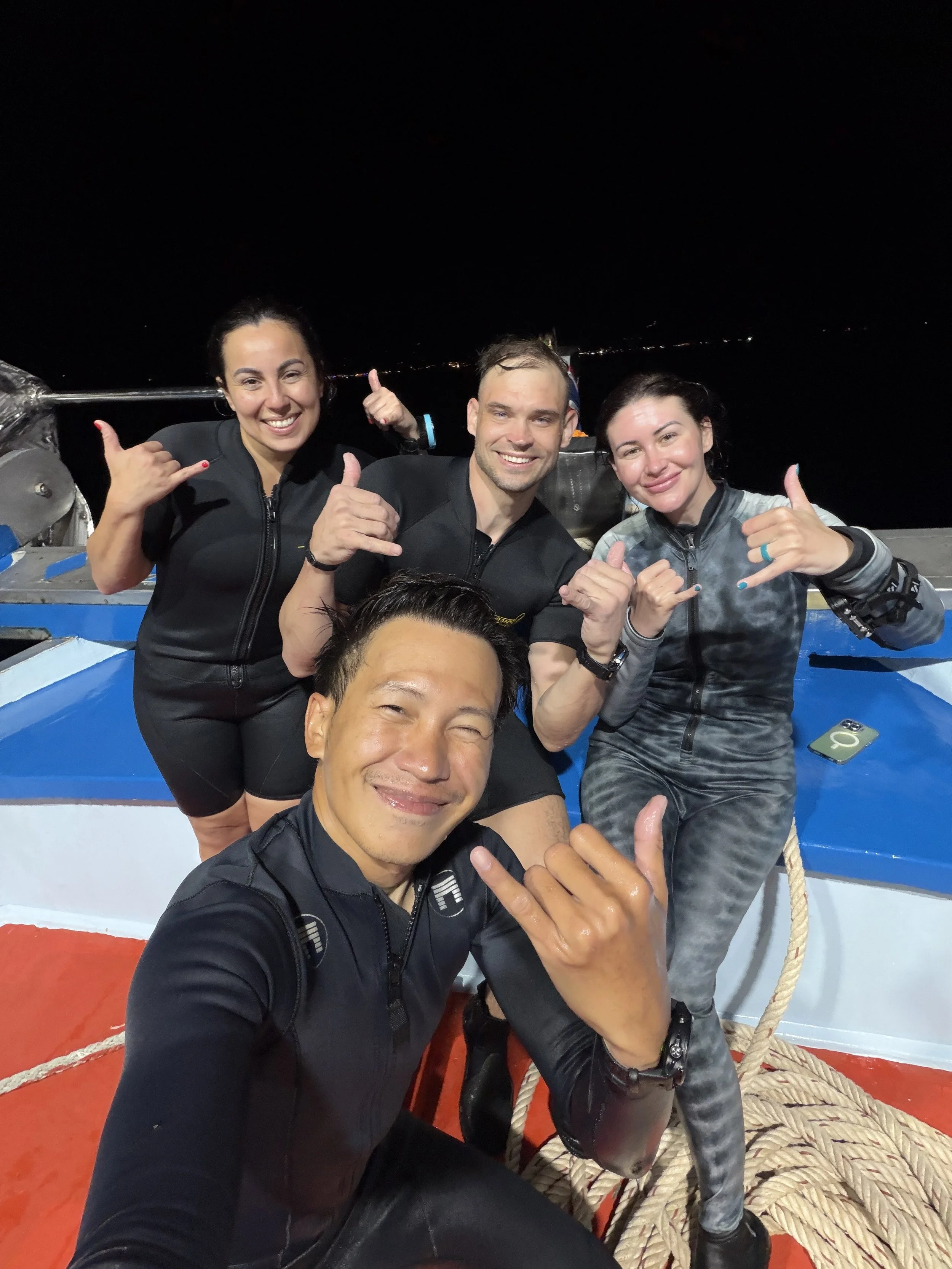
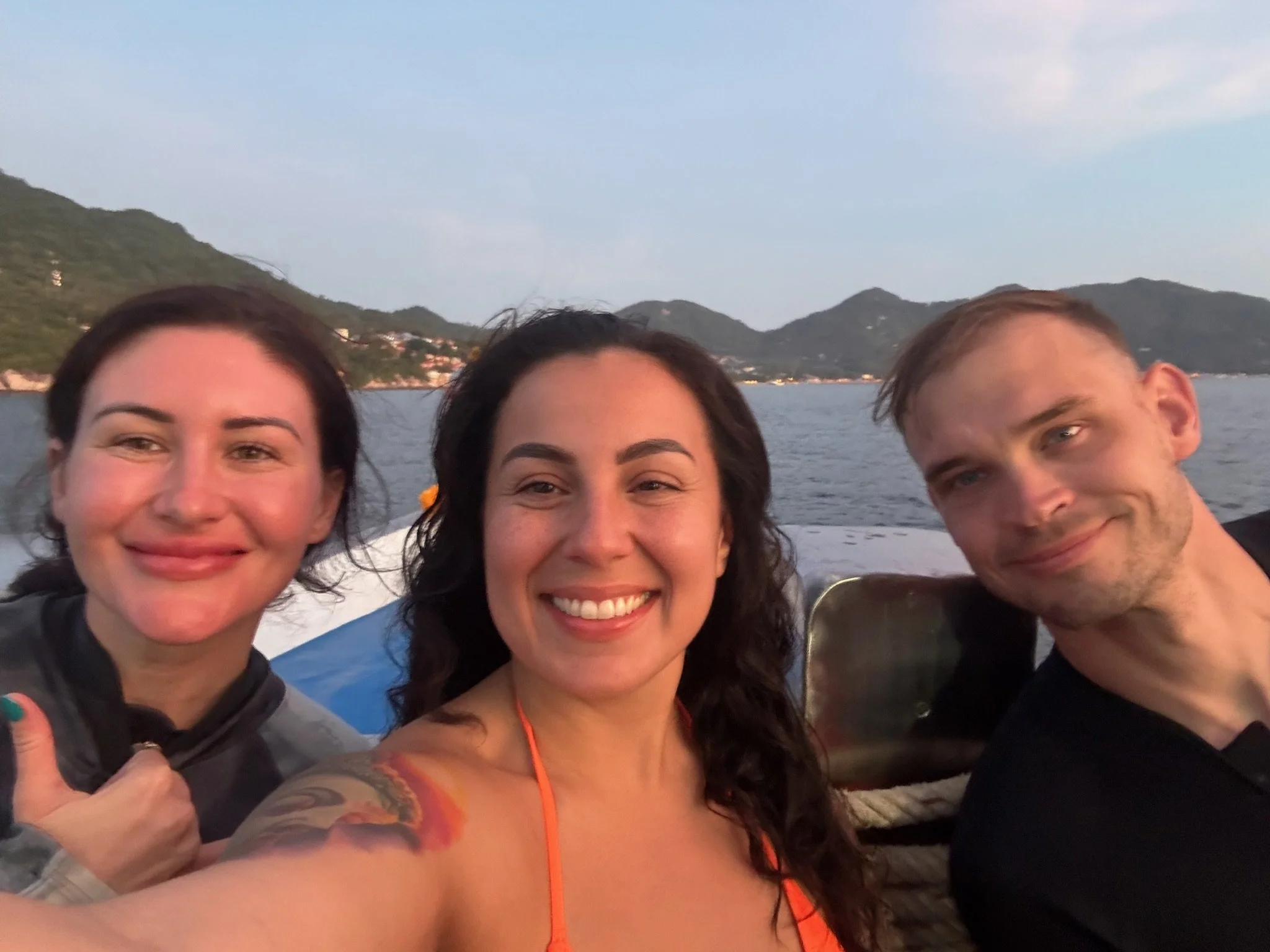
These two dive buddies completed their first night dive in Thailand!
Your primary dive light is obviously one of the biggest additions. I want something reliable, easy to operate with one hand, and with plenty of burn time for the planned dive. Brightness matters, but brighter doesn't automatically mean better. Beam shape, battery life, reliability, and controls matter too. A ridiculously bright light can even make it harder to see in water with lots of suspended particles because you're illuminating everything between you and whatever you're trying to look at.
Know how your light works before you get in. Turn it on. Cycle through the settings. Know how long the battery should last and make sure it is charged. This sounds painfully obvious until you're underwater trying to remember whether you need to press, hold, double-click, or twist something while your buddy watches you have an argument with your flashlight.

I also carry a backup light. Lights fail, batteries die, and equipment occasionally decides it has other plans. Your backup should be reliable and, equally importantly, somewhere you can actually reach it. A backup light buried beneath three clips, your DSMB, and everything else you've shoved into a pocket isn't particularly helpful when your primary light suddenly goes dark.
Think about how your lights are secured too. Depending on your equipment, that might mean a wrist lanyard, bolt snap, Goodman-style handle, or another appropriate attachment. I want to be able to use my light and still free my hand when necessary without watching an expensive piece of equipment disappear. At the same time, I don't want a collection of lights and accessories dangling beneath me, banging into the reef, or creating entanglement hazards. Streamlining still matters after sunset.
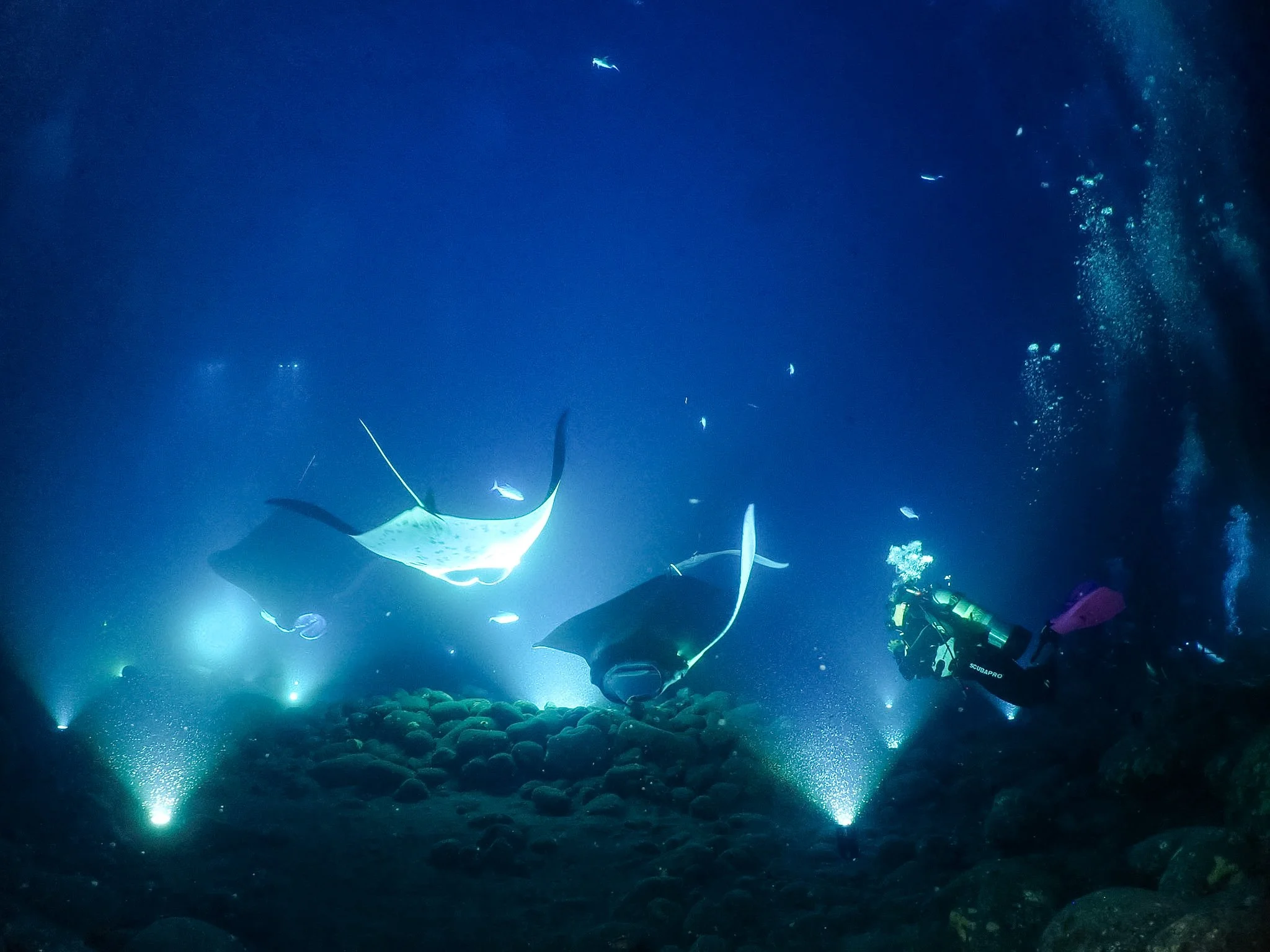
The famous manta night dive in Kona
Don't Forget About the Gear You Already Have
Your computer probably has an illuminated display or backlight, but do you actually know how to activate it? Find out before the dive. This is especially important if you're using a new or rented computer. Sixty feet underwater in the dark is not the ideal time to discover you have absolutely no idea how the display works.
The same goes for your gauges. If you're using an analog SPG, make sure you can easily illuminate and read it with your dive light. Think about where your inflator, dump valves, clips, and other frequently used pieces of equipment are too. You shouldn't need to see your entire BCD to know where everything lives.
I also like to get organized while there is still some ambient light whenever possible. Assemble your equipment, check your lights, know where your backup is, check your computer, and do a proper buddy check. A small headlamp can be incredibly useful while gearing up on shore or on a boat because it leaves both hands free.
Exposure protection deserves some thought too. The water itself may not suddenly become dramatically colder after sunset, but you may be colder. Maybe you've already made two or three dives that day. You've been wet, dried off, gotten wet again, sat in the wind, and spent hours losing heat. What felt perfectly comfortable on the first dive of the morning may not feel quite as comfortable later that evening.
That doesn't necessarily mean you need a completely different wetsuit. Maybe you add a hood or hooded vest. Maybe your normal setup is fine. Think about how you actually feel rather than automatically wearing exactly what you wore that morning. Have something dry and warm waiting after the dive too. A jacket that looked completely unnecessary at noon can become your favorite possession when you're wet on a moving boat after dark.
How Do Divers Communicate at Night?
One of the first things divers wonder about night diving is how we're supposed to communicate when we can't see each other's hands. The good news is that you don't suddenly need to learn an entirely new underwater language. Most of the hand signals you already use still work perfectly well. You simply have to make them visible.
One of the most common ways to do this is to illuminate your own hand with your dive light and make your normal signal inside the beam. If I want to tell my buddy I'm OK, I can point my light at my hand and give the same OK signal I would during the day. Your light is helping your buddy see the communication rather than replacing all the signals you already know.
The light itself can also become part of the conversation. A large, deliberate circle with the beam is commonly used to communicate OK. Repeated side-to-side movement can be used to indicate a problem or get someone's attention depending on the procedures being used. Light signals can vary, though, so review them during the briefing and agree on them with your buddy instead of assuming everyone learned exactly the same system.
This is also why I try to be deliberate with my light even when I'm not technically communicating. If I find something cool, you're probably going to notice my beam before you notice me. I can get my buddy's attention and guide their eyes toward whatever octopus, shrimp, nudibranch, or other creature I'm currently losing my mind over. What I don't want to do is frantically wave my light around every time I get excited. Light movement means something at night, and your buddy may reasonably interpret frantic movement as a problem.
There is also one piece of night-diving etiquette I wish we could tattoo onto every dive light: don't shine your light directly into another diver's eyes. Your buddy does not need to experience the surface of the sun at 40 feet. Illuminate your hand, use an agreed light signal, or point your beam where you need someone to look.
After a few night dives, communicating this way starts to feel incredibly natural. Your hands are still your primary language; your light simply makes that language visible.
Buddy Awareness, Navigation, and Buoyancy
Buddy awareness changes after sunset too. During the day, I can often see my buddy in my peripheral vision without consciously looking for them. At night, I may notice their light before I actually see the diver. Don't fall into the trap of assuming every light you see belongs to your buddy, especially at popular sites with multiple teams in the water. Stay appropriately close and make checking in with each other deliberate.
This is another reason to discuss the dive before getting in. Know who is leading navigation, what formation you're using, how you'll communicate, and what you'll do if you become separated. Depending on the dive operation and environment, personal marker lights or other identification methods may also be used.
Navigation becomes much more deliberate after dark because many of the large visual references you unconsciously use during the day disappear beyond the range of your light. Whenever possible, diving a site during daylight before returning at night can be incredibly helpful. Pay attention during that daytime dive. Which direction does the reef run? Where does the bottom slope? Are there distinctive features? Where is the boat or shore? What's the current doing?
Then remember that compass you've been faithfully carrying around and actually use it. Your compass matters, but so does natural navigation. Depth changes, bottom contours, current direction, and distinctive features can all help you build a mental picture of where you are.
Plan your exit before the dive too, especially from shore. That obvious beach, staircase, or rocky entry can look very different after dark. Identify the entry and exit before sunset if possible, understand the surf, current, tide, and site-specific hazards, and know whether and how the exit will be marked. On a boat, understand how the boat or ascent area will be identified and what the crew wants you to do if you surface away from it.
Good buoyancy always matters, but reduced visual references can make changes in depth less obvious at night, particularly in open water or over a sloping bottom. Pay attention to your computer, use available visual references, and stay aware of where you are in the water column.
This becomes especially important when you find something exciting. You spot an animal, it swims away, and naturally you want to follow it. Then it moves a little farther, so you follow again. Before you know it, you've changed depth, moved away from your buddy, or wandered farther from your planned route than you realized. Enjoy the encounter, but don't let an animal dictate your dive.
Slow Down and Actually Look
This may be my biggest night-diving tip: stop trying to cover so much ground.
You don't need to see the entire reef. Night diving rewards curiosity. Look beneath ledges. Look into cracks without disturbing anything. Watch the sand. Look closely at coral. Notice tiny movements. Spend time watching what animals are actually doing rather than immediately swimming toward the next thing.
Some of my favorite night dives have covered an embarrassingly small amount of distance, and I am completely fine with that. Seeing more isn't always about swimming farther. Sometimes seeing more means slowing down enough to notice what was right in front of you all along.
Remember to look behind you occasionally too. Your light naturally creates tunnel vision, and it's easy to become completely focused on whatever is inside your beam. Maintain awareness of your buddy and surroundings. There is still an entire ocean around you, and you might be surprised by what's passing behind you.
When conditions, procedures, and your dive team make it safe and appropriate, there is also something incredible about stopping, settling into neutral buoyancy, and turning off your lights for a moment. Give your eyes a little time to adjust. Depending on where you're diving, gently moving your hand through the water may trigger flashes of bioluminescence. Maybe you'll see an incredible display and maybe you won't. Either way, take a second and appreciate where you are. You're floating underwater in the ocean at night, and that's pretty freaking cool.
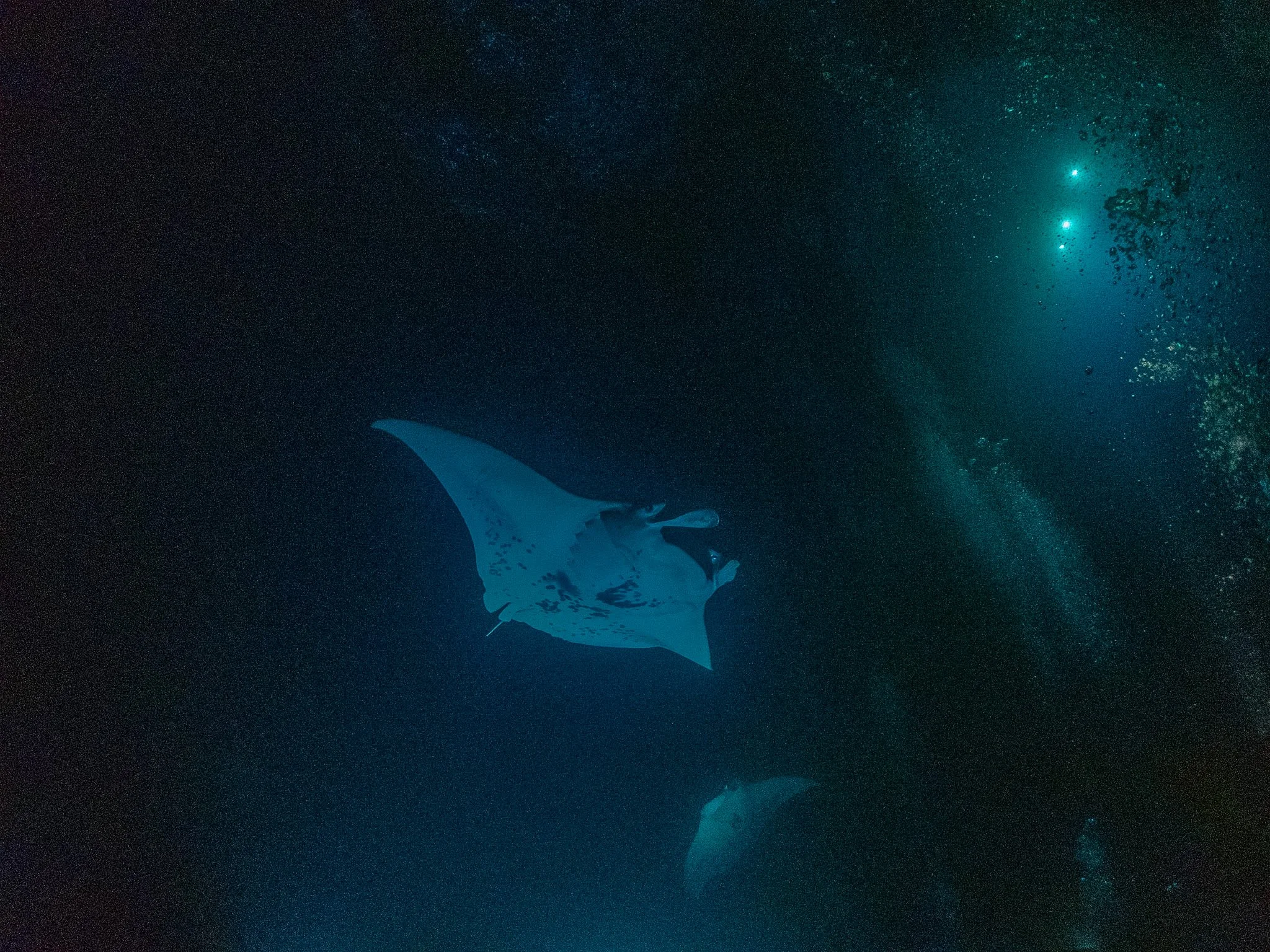
Mantas at night
What About Taking a Camera?
I love photographing marine life at night, particularly macro. Night diving naturally encourages you to slow down and concentrate on smaller areas, different animals may be active, and behaviors change. Sometimes the thing you've been hoping to photograph all day finally decides to come out after sunset.
A camera also adds a lot of task loading. Now you're managing your primary light, camera, strobes or video lights, buoyancy, depth, buddy, navigation, gas, and whatever tiny creature you're desperately trying to photograph. If you're still working hard just to manage your buoyancy, light, and buddy awareness on a night dive, leave the camera behind for now. The octopus will forgive you.
Build the diving skills first and add the camera when everything else starts feeling natural. You'll enjoy photography much more when you're not using half your brain to figure out where your buddy went or whether you've floated ten feet shallower while trying to frame a nudibranch. Be thoughtful with focus lights, video lights, and strobes around marine life too. Getting the photograph is never more important than respecting the animal or maintaining control of your dive.
Don't Make Your First Night Dive Harder Than It Needs to Be
If you're considering your first night dive, this may be the most practical advice I can give you: don't pile every possible challenge onto one dive.
You don't need current, complicated navigation, unfamiliar rental equipment, a brand-new camera, and an advanced site all at once. Reduce the task loading. Choose an appropriate site, use equipment you're familiar with, dive with someone experienced, learn how to use your lights, get comfortable communicating, and pay attention to your buoyancy.
There will be plenty of time for night drift dives, wrecks, photography, muck diving, manta encounters, and maybe eventually blackwater. Your first goal is much simpler: become comfortable diving after dark. Once that happens, an enormous part of the underwater world opens up to you.
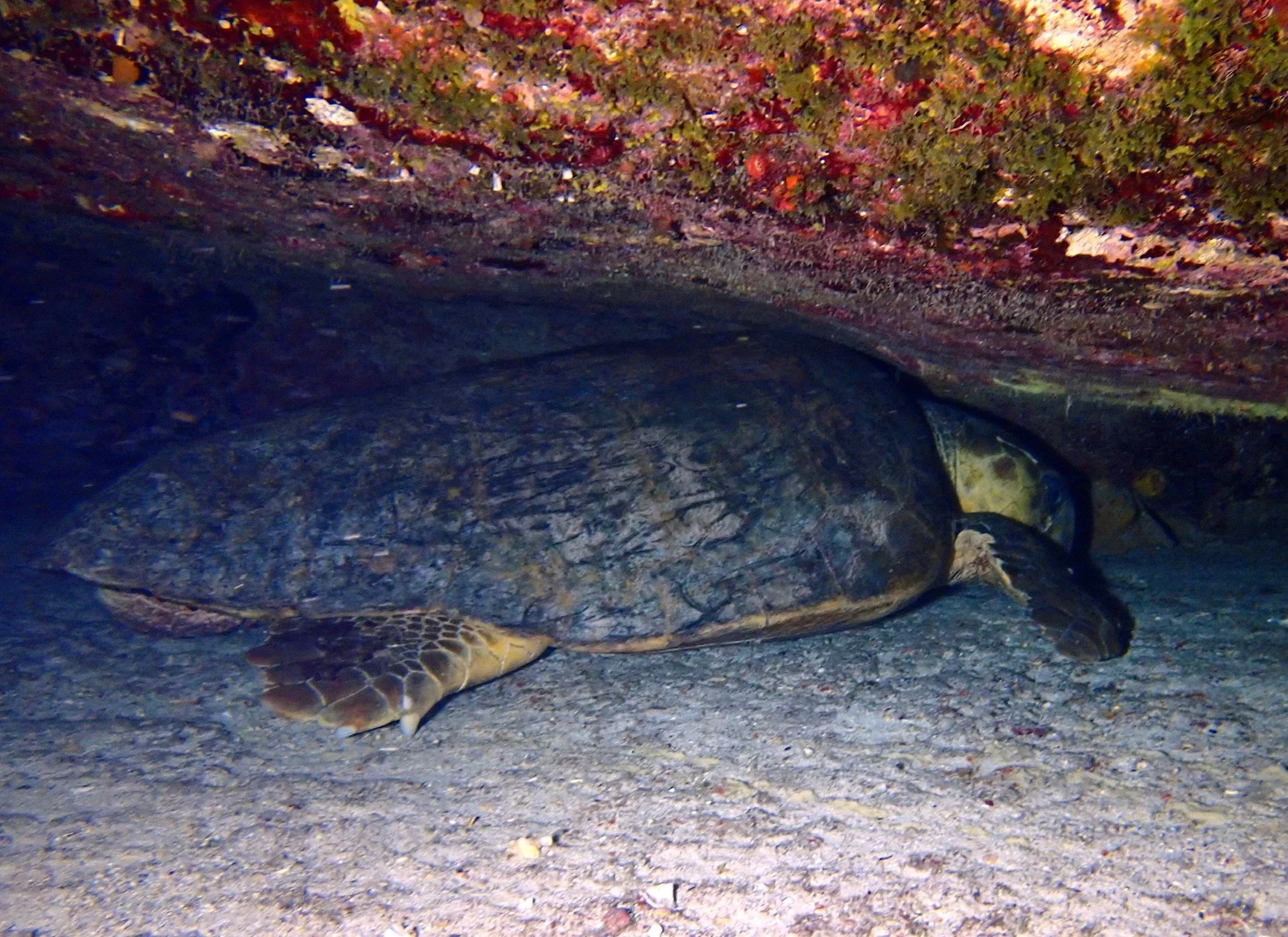
A sleepy loggerhead turtle in the Bahamas
The PADI Night Diver Specialty
You can learn plenty about night diving from an article like this, and I genuinely hope you walk away from this one knowing more than you did when you started. Knowing about night diving and actually developing the skills to do it confidently, however, are two different things. That's where the PADI Night Diver Specialty comes in.
The PADI Night Diver Specialty includes three training dives, which is something I really like about the course. You aren't expected to jump into the ocean after dark once, figure everything out immediately, and suddenly become completely comfortable. You have multiple dives to work on the skills and allow the things that initially feel unfamiliar to start becoming normal.
The course covers the planning and techniques that make night diving different, including using dive lights, communicating after dark, maintaining buddy awareness, navigation, and considerations for nighttime descents and ascents. You'll have an opportunity to practice using your light as both a tool and part of your communication system while becoming more deliberate about navigation when many of the visual references you normally rely on aren't available.
Those three dives also give you time to become more comfortable. Your first night dive may involve a lot of mental chatter. Where's my buddy? Where's my computer? Where's the boat? What was that? Why did that light just move? There is a lot of new information to process.
By the next dives, your light starts feeling like another piece of your normal equipment. Communication becomes more natural. You're thinking less about the fact that it's dark and have more attention available for everything happening around you. That's when night diving starts getting really good.
The course also gives you the opportunity to think more intentionally about what you're seeing after sunset. Depending on where you're diving, you may encounter nocturnal animals emerging to feed, daytime animals settling in for the night, different hunting behaviors, feeding coral, crustaceans moving around the reef, and creatures you might never notice during daylight.
I especially like Night Diver for people who are intrigued by night diving but still a little nervous about it. You don't need to wait until the idea no longer makes you nervous before learning. Training gives you an instructor who can introduce the environment gradually, help you practice the skills, and give you the tools to become comfortable rather than simply telling you not to be afraid.
For me, the value of the Night Diver Specialty isn't another certification card. The value is becoming a more capable diver who now has another way to experience the ocean. Hopefully somewhere during those dives, you stop thinking so much about the darkness. You start looking beneath the ledges, noticing tiny eyes reflecting back at you, watching an octopus hunt across the reef, and realizing you're having an absolutely incredible dive.
That's what I want from a Night Diver course.
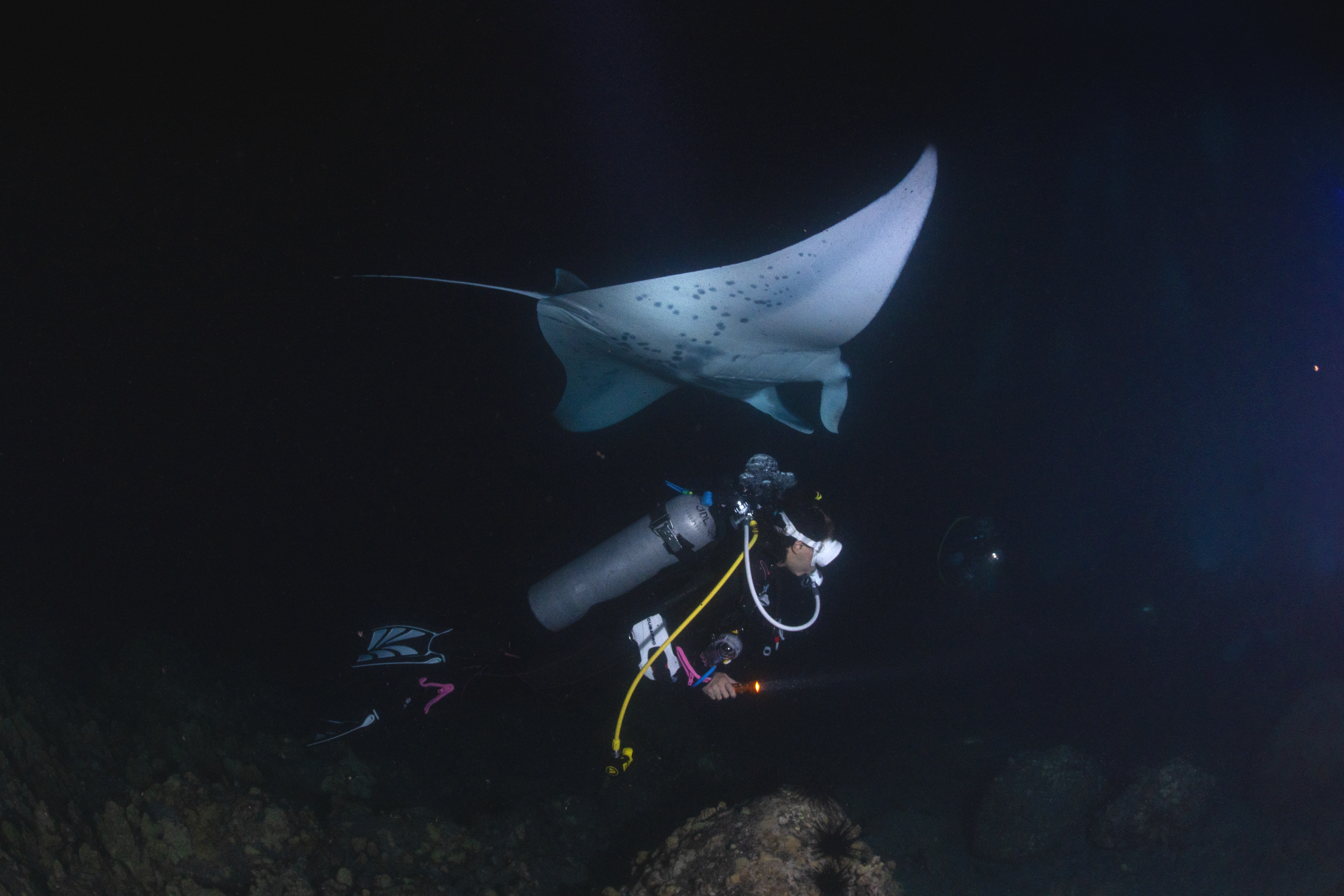
A sneaky Manta on the famous Manta night dive in Kona
Instructors, This One Is Worth Teaching
Now I'm going to talk to my fellow dive professionals for a minute. If you're a PADI Instructor and you love diving after dark, becoming a PADI Night Diver Specialty Instructor is absolutely worth considering.
Specialty training gives us an opportunity to take divers beyond their initial certification and help them discover how much bigger scuba can become. Night diving is particularly good for that because we're not simply taking someone underwater after sunset. We're helping them become more deliberate about navigation, communication, buddy awareness, buoyancy, equipment, and situational awareness while introducing them to marine life and behaviors they may never have experienced before.
Getting someone certified should be the beginning of their diving journey, not the end. I want to create divers who are curious, who continue developing their skills, who understand the underwater world a little better every time they get in, and who genuinely can't wait for their next dive. Teaching Night Diver gives us another opportunity to do exactly that.
There is also something incredibly rewarding about introducing someone to an experience you genuinely love. Teaching something you're excited about changes the energy of a course, and students feel that. When I'm excitedly pointing my light at some tiny bizarre creature because I desperately need my student to see it too, I'm not thinking about another certification card. I'm showing someone another reason I love the ocean.
Those are the experiences people remember. They'll remember the octopus hunting across the reef, the animal they had never noticed during the day, the first flashes of bioluminescence, or the moment they realized they were no longer thinking about being in the dark. They may remember standing on the edge before that first dive thinking there was absolutely no way jumping into black water was a good idea, then surfacing afterward and immediately wanting to do it again.
That's the kind of diver I want to help create.
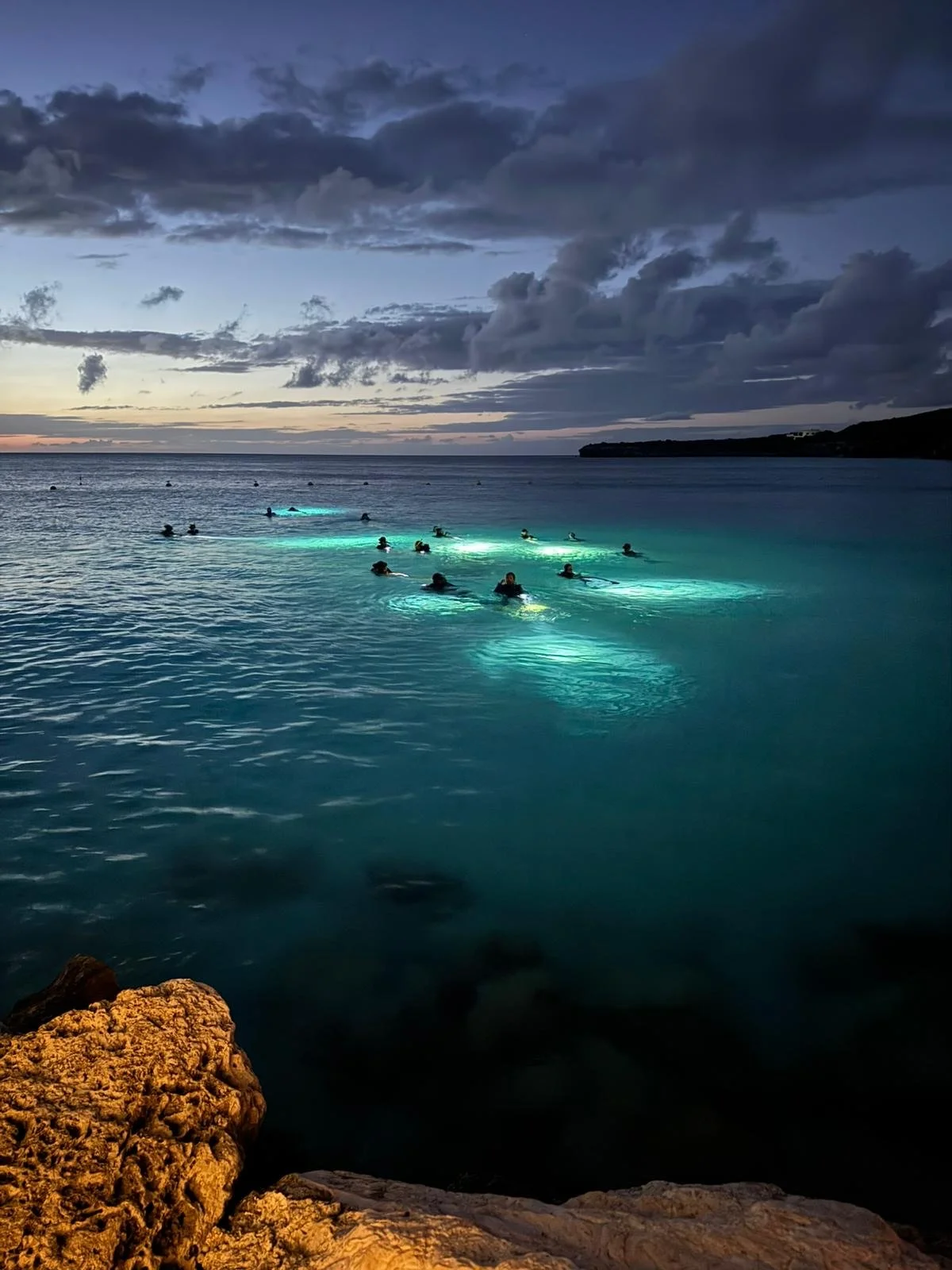
The Ocean Doesn't Close at Sunset
Night diving has become one of my favorite ways to experience the underwater world because it constantly reminds me how much we're missing. We spend so much of our diving looking across reefs, along walls, over sand, and into blue water during daylight that it's easy to forget an entirely different world is carrying on after we get out.
Then the sun sets. Different animals emerge, familiar animals behave differently, the reef changes, and even the water column itself can become the dive site. We start looking differently too. We slow down. We pay closer attention. We notice the tiny things. We become more deliberate about our buddy, our navigation, our buoyancy, and our surroundings.
That's why I don't think of night diving as simply daytime diving with a flashlight. It is its own way of experiencing the ocean, and after all these years, it remains one of my absolute favorites.
If you've never tried it, don't let darkness be the reason you miss this entire side of diving. Take the training, learn the skills, and give yourself the opportunity to experience it with someone who knows how to introduce you to it properly.
If you're already an instructor who loves diving after dark, consider becoming a PADI Night Diver Specialty Instructor and sharing that experience with your students. You might just introduce someone to their new favorite way to dive too.

Dive safe, explore passionately, and remember…