Four flights, nearly 8,000 miles, five extra nights on Santa Cruz, and a remarkable amount of wildlife before I even got back in the water.
Getting to the Galápagos Islands from Hawaiʻi requires some commitment. My journey involved four flights, three airlines, a ten-hour layover in Atlanta, an overnight connection in Quito, and nearly 8,000 miles of travel before I could even think about getting into the water. Add two checked bags, a substantial underwater photography system, and enough goodies for sixteen Seaira Dives travelers, and the logistics became an adventure of their own. I have long since accepted that traveling light and organizing international scuba expeditions are not particularly compatible.
Our November 2026 Seaira Dives expedition included seven nights aboard the Galápagos Aggressor III, exploring some of the most remarkable dive sites in the world. With so much time and effort involved in reaching the islands, I wanted to experience more than the liveaboard itinerary. I added two nights in Puerto Ayora before the charter and three afterward, giving myself time to explore Santa Cruz, visit conservation sites, enjoy the local culture, and squeeze in a few more dives.
Part 1 of this series covers our liveaboard expedition, the marine ecosystems of Galápagos, and the people who made the adventure special. Part 2 takes a closer look at everything surrounding that experience, from the journey across the Pacific to the wildlife-filled harbor of Puerto Ayora, the conservation work taking place on Santa Cruz, and the diving adventures that extended beyond our week at sea.
The Road to Galápagos Has a Few Runways
Four Flights, Three Airlines, and a Very Long Journey
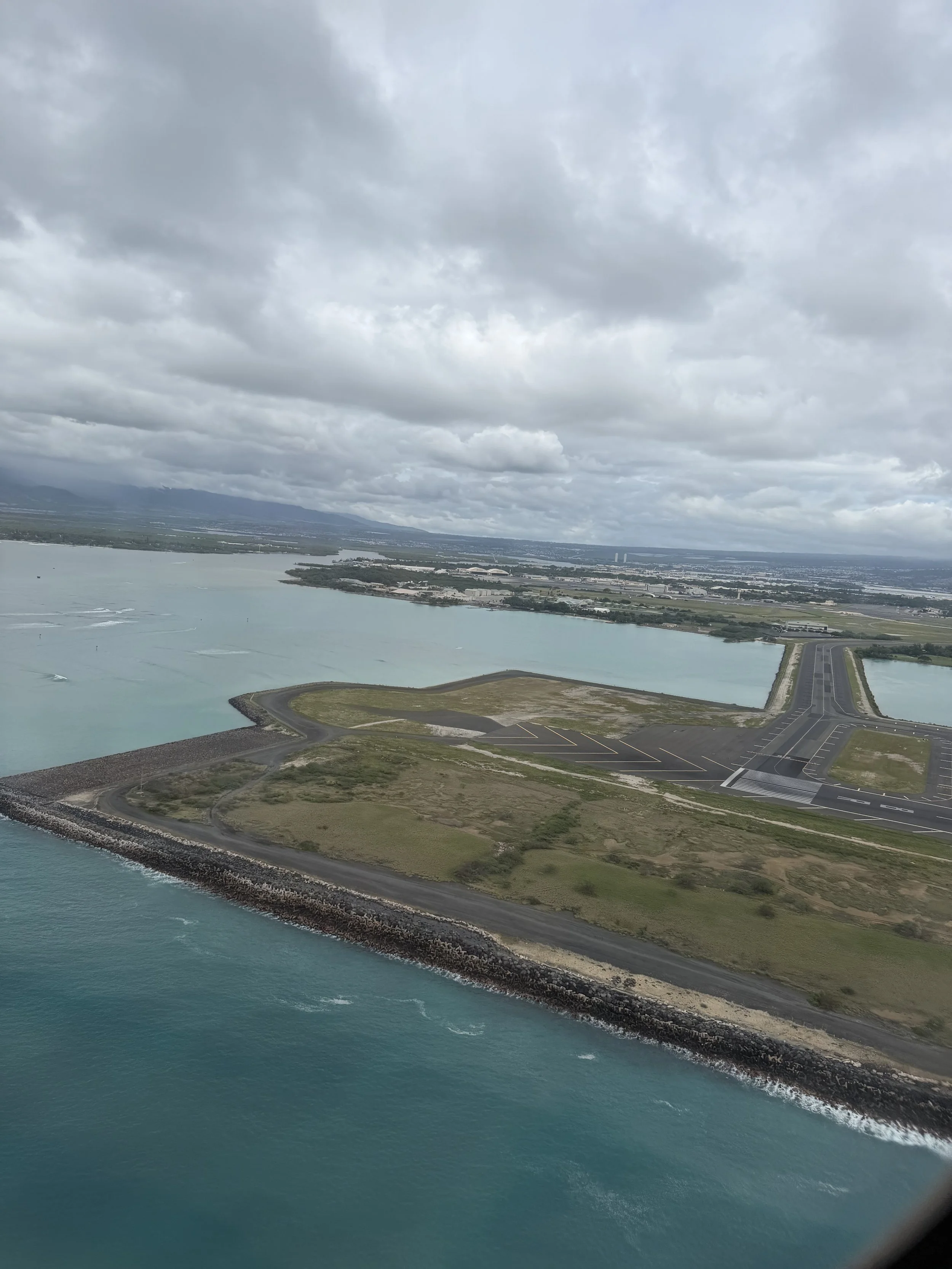
My journey began in Kona with a Hawaiian Airlines flight to Honolulu, followed by Delta flights to Atlanta and Quito. From mainland Ecuador, LATAM operated the final leg to Baltra, the airport serving Santa Cruz Island.
The route covered approximately 7,850 miles between airports, with the longest stretch being the flight from Honolulu to Atlanta. Add a ten-hour connection in Atlanta and an overnight layover in Quito, and the journey required considerably more patience than my usual drive to the dive harbor.
I've traveled internationally enough to appreciate the value of a well-planned layover. Airport lounges are particularly useful when traveling with expensive camera equipment, electronics, and a carry-on bag that weighs more than I'd care to admit. Having somewhere comfortable to sit, charge everything, enjoy a proper meal, and take a shower makes an enormous difference on a journey this long.
Ten Hours in Atlanta: Thank Goodness for Delta Sky Clubs

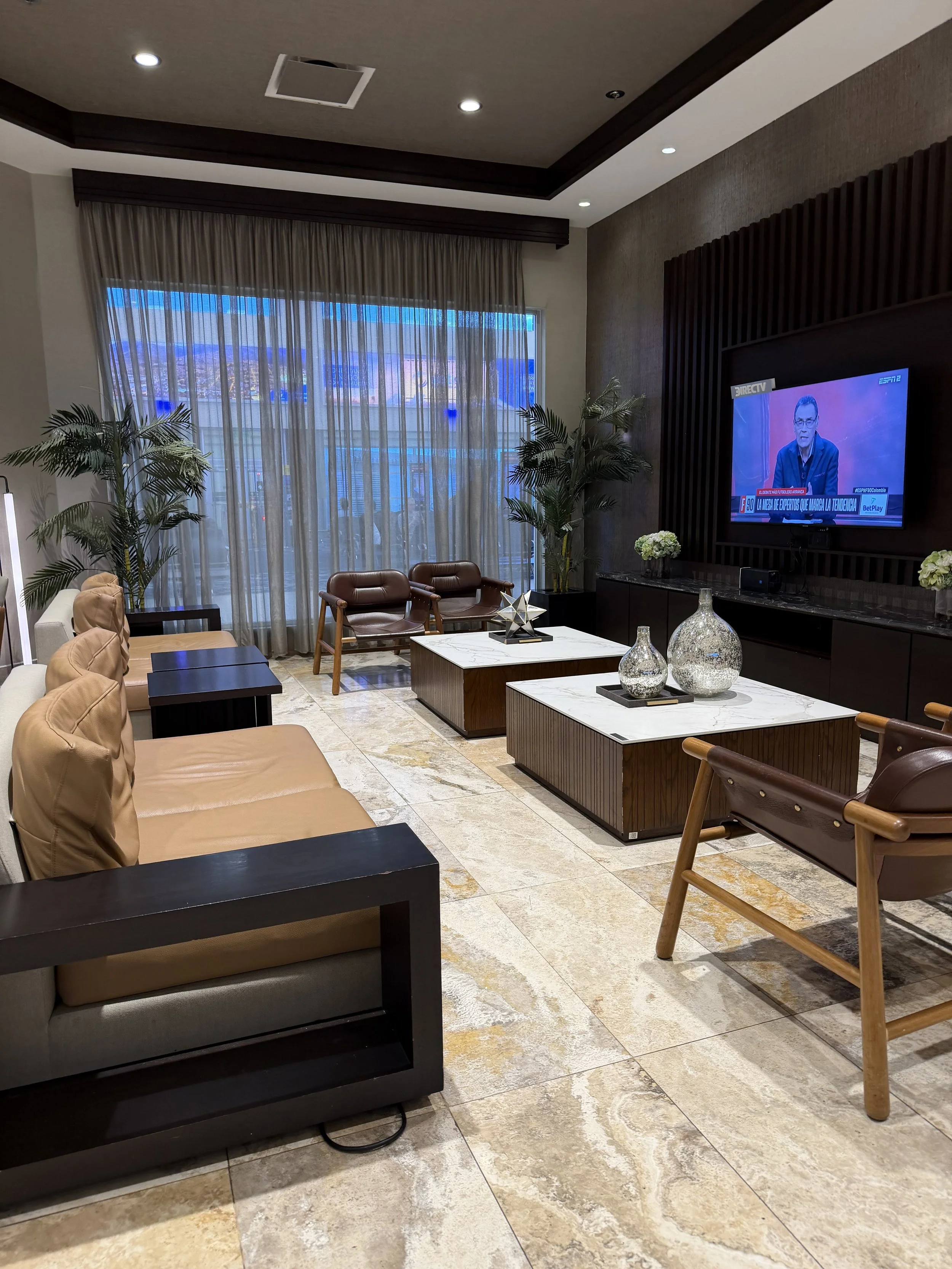
A ten-hour layover at Hartsfield-Jackson Atlanta International Airport might sound miserable, but Delta's Sky Clubs made the connection considerably more enjoyable. Atlanta has several Sky Club locations throughout the airport, and they're genuinely some of my favorite places to spend time between flights. Comfortable seating, excellent food, complimentary drinks, reliable Wi-Fi, and plenty of space to recharge electronics make a huge difference when you're traveling halfway around the world.
One of the things I particularly appreciate about Delta's lounges is the quality and variety of the food. After a long flight from Honolulu, having access to a proper meal rather than relying on whatever I can find near my departure gate is wonderful. The lounges also offer comfortable places to relax, catch up on work, and reorganize my carry-on, which inevitably becomes a disaster somewhere between the first and second flight. Depending on the location, shower facilities are another welcome amenity, especially when you still have an overnight flight ahead of you.
Atlanta is also home to the American Express Centurion Lounge in Concourse E, near Gate E11. The lounge features dining areas, workspaces, outdoor terraces, and shower facilities, providing another excellent option for eligible travelers.
Between the Delta Sky Clubs and the Centurion Lounge, I had plenty of ways to make the most of my connection. Ten hours is still a long time to spend in an airport, but good food, comfortable seating, and a chance to freshen up before the next flight made the experience far more pleasant. I've become quite fond of a long layover when I have somewhere nice to spend it.
Quito After Dark: A Little Priority Pass Luxury
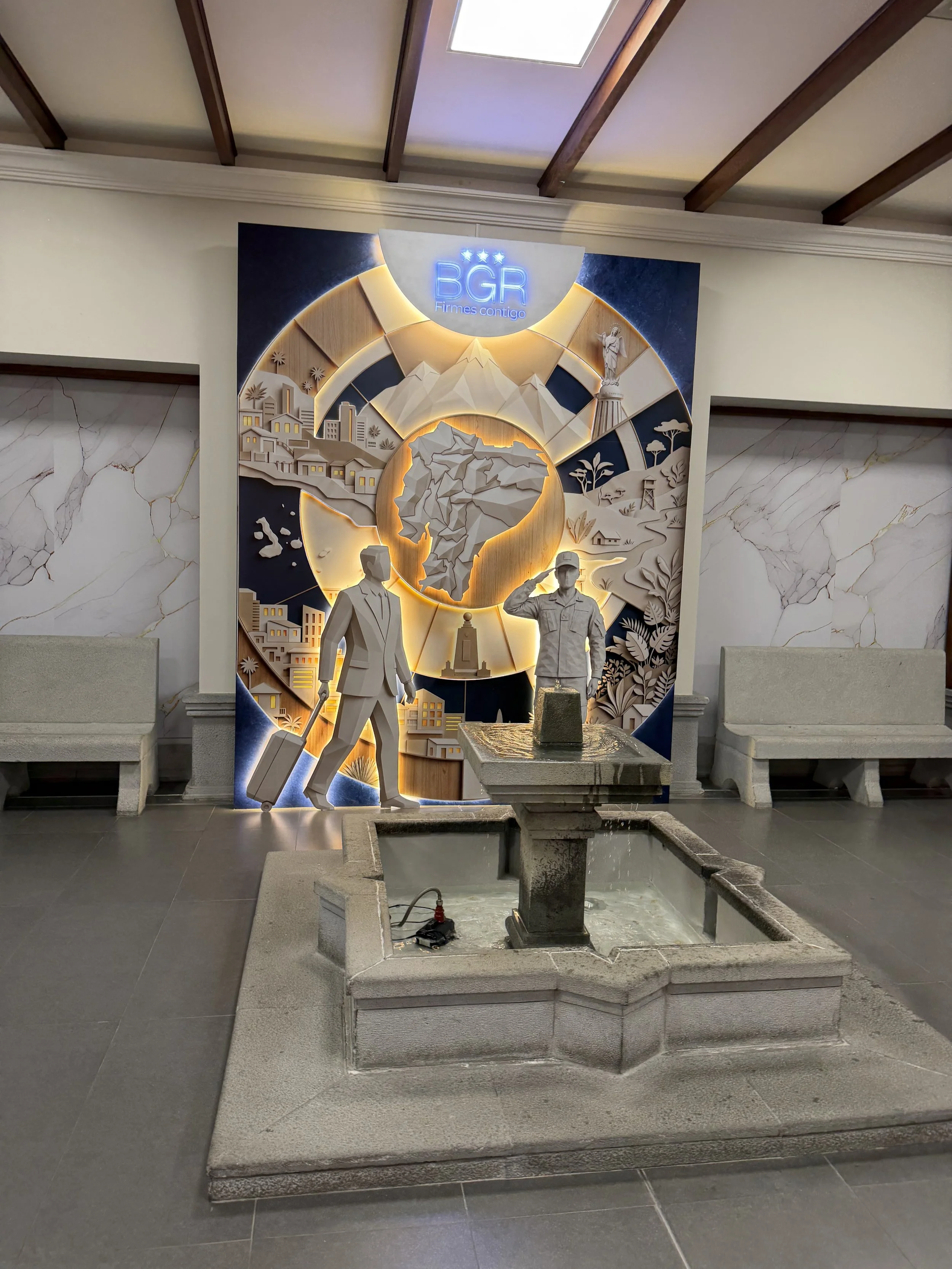
My overnight connection at Quito's Mariscal Sucre International Airport was another opportunity to appreciate just how valuable lounge access can be. Quito has some excellent Priority Pass options, and I was especially impressed by the facilities available for travelers facing long connections or overnight stays.
During a previous visit, I discovered what I believe was Layover Stay, located in Quito Airport Center just across from the main terminal. The facility had a separate area filled with reclining chairs, and I managed to get a genuinely good night's sleep. Finding somewhere comfortable to stretch out after hours of flying was a wonderful surprise, particularly when I had another early flight ahead of me.
Quito also has the Sala VIP Internacional and Sala VIP Doméstica, which offer comfortable seating, food and refreshments, Wi-Fi, and other amenities depending on the location. The airport is smaller than Atlanta, but its lounge facilities are impressive and make connecting through Ecuador much easier than travelers might expect.
One important thing to know is that a lounge operating 24 hours doesn't necessarily mean guests can stay all night. Priority Pass may limit the length of each visit, and access policies can change, so it's worth checking the current rules before planning an overnight stay.
I travel frequently enough that lounge access has become one of my favorite travel benefits. When you're carrying scuba gear, camera equipment, and enough electronics to outfit a small production studio, having a comfortable place to sit, eat, and recharge is a luxury I truly appreciate. Quito's Priority Pass lounges were a particularly welcome part of the journey, and I'd happily recommend researching them to anyone connecting through the airport on their way to Galápagos.
Welcome to Galápagos. First, the Paperwork.
Transit Cards, Biosecurity, and Protecting a Remarkable Ecosystem
Flying from mainland Ecuador to the Galápagos involves a few additional steps, and I highly recommend getting familiar with the requirements before arriving at the airport. Between immigration and customs paperwork, the Transit Control Card, biosecurity inspections, and entrance fees, there's a bit more to consider than your typical domestic flight.
Before traveling, check Ecuador's online customs declaration requirements and complete any applicable forms within the required timeframe. You should also complete the Galápagos biosecurity declaration before your flight to the islands. Save screenshots, photos, or printed copies of every confirmation and QR code. I cannot stress this enough! Airport Wi-Fi isn't always reliable, and having everything accessible offline can save you a tremendous amount of frustration.
Next is the Galápagos Transit Control Card (TCT), administered by the Galápagos Governing Council. The fee was $20 per person during our trip, and online preregistration can help you avoid the notoriously long airport line. However, we found the website to be incredibly buggy, so I recommend completing it ahead of time and keeping copies of your confirmation. Even with preregistration, you may still need to visit the airport counter to finalize the process.
Before checking your luggage for the flight to the Galápagos, you'll also need to pass through a mandatory biosecurity checkpoint at the mainland airport. Your bags are inspected for prohibited biological materials, including certain plants, seeds, fruits, and other items that could introduce invasive species to the islands. Once cleared, your luggage is tagged or sealed before airline check-in. This inspection is an important part of protecting the Galápagos' extraordinary ecosystems, so make sure you allow time for it.
Upon arrival in the Galápagos, international adult visitors generally pay a $200 National Park entrance fee. Bring $200 USD in cash per person, as you shouldn't rely on credit cards being accepted. I also recommend carrying smaller bills for additional expenses.
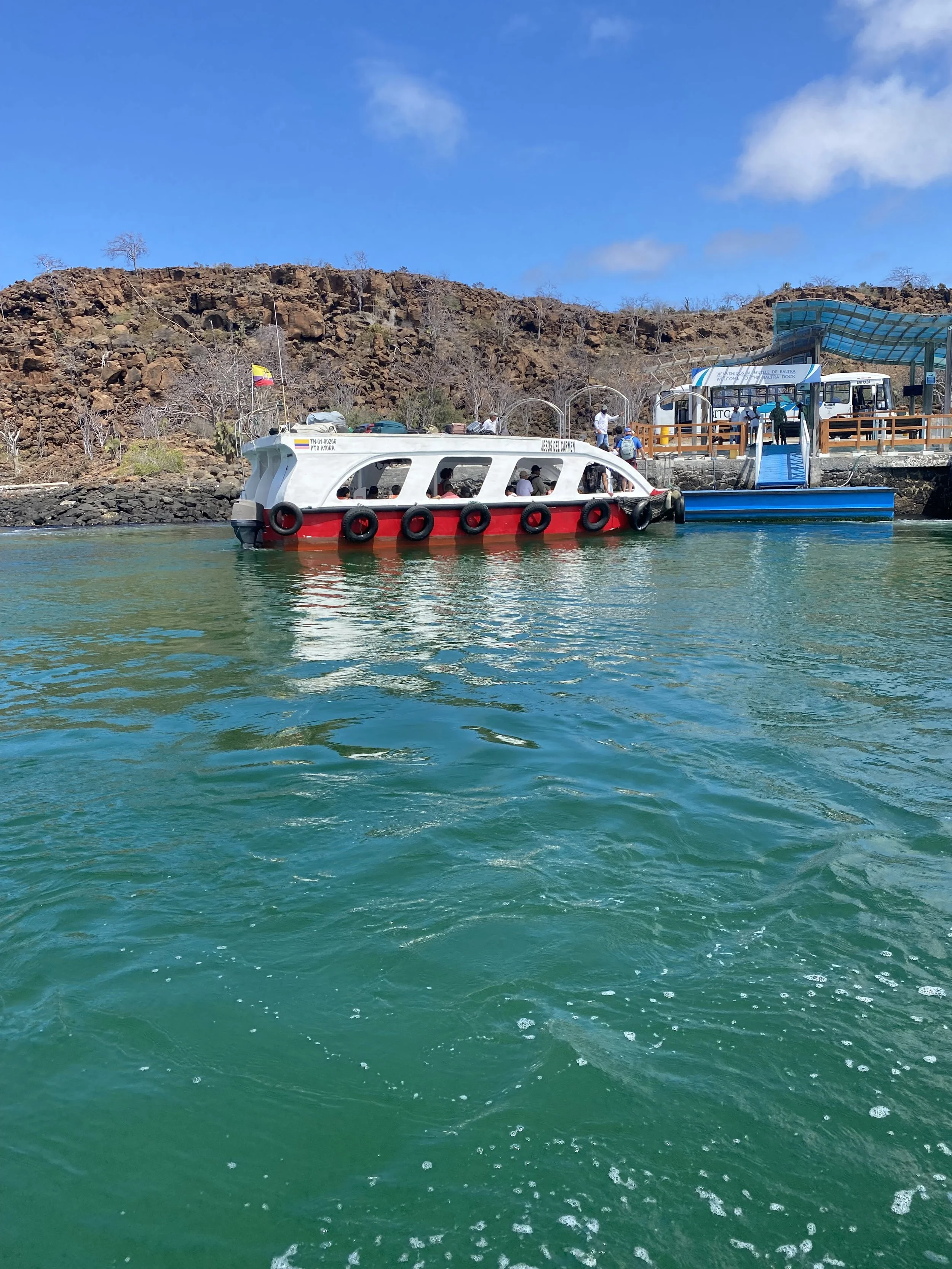
If you're arriving at Baltra Airport and continuing to Santa Cruz Island, the airport bus costs $5 per person, followed by a $1.30 ferry ride across the Itabaca Channel. These costs are separate from the National Park entrance fee, although transportation arrangements may differ for travelers joining a liveaboard.
Between the TCT, biosecurity inspection, airline check-in, and security, I recommend arriving at the mainland airport at least three hours before departure. The process is manageable, but the extra steps can take longer than expected, particularly when several Galápagos flights are departing around the same time.
My biggest piece of advice is to keep copies of absolutely everything. Screenshots, photos, downloaded confirmations, printed documents, receipts, and QR codes. Have them accessible without an internet connection, and don't throw anything away until you've completed your journey. A little preparation can make a significant difference when navigating the additional requirements for visiting the Galápagos.
Baltra or San Cristóbal? An Important Distinction
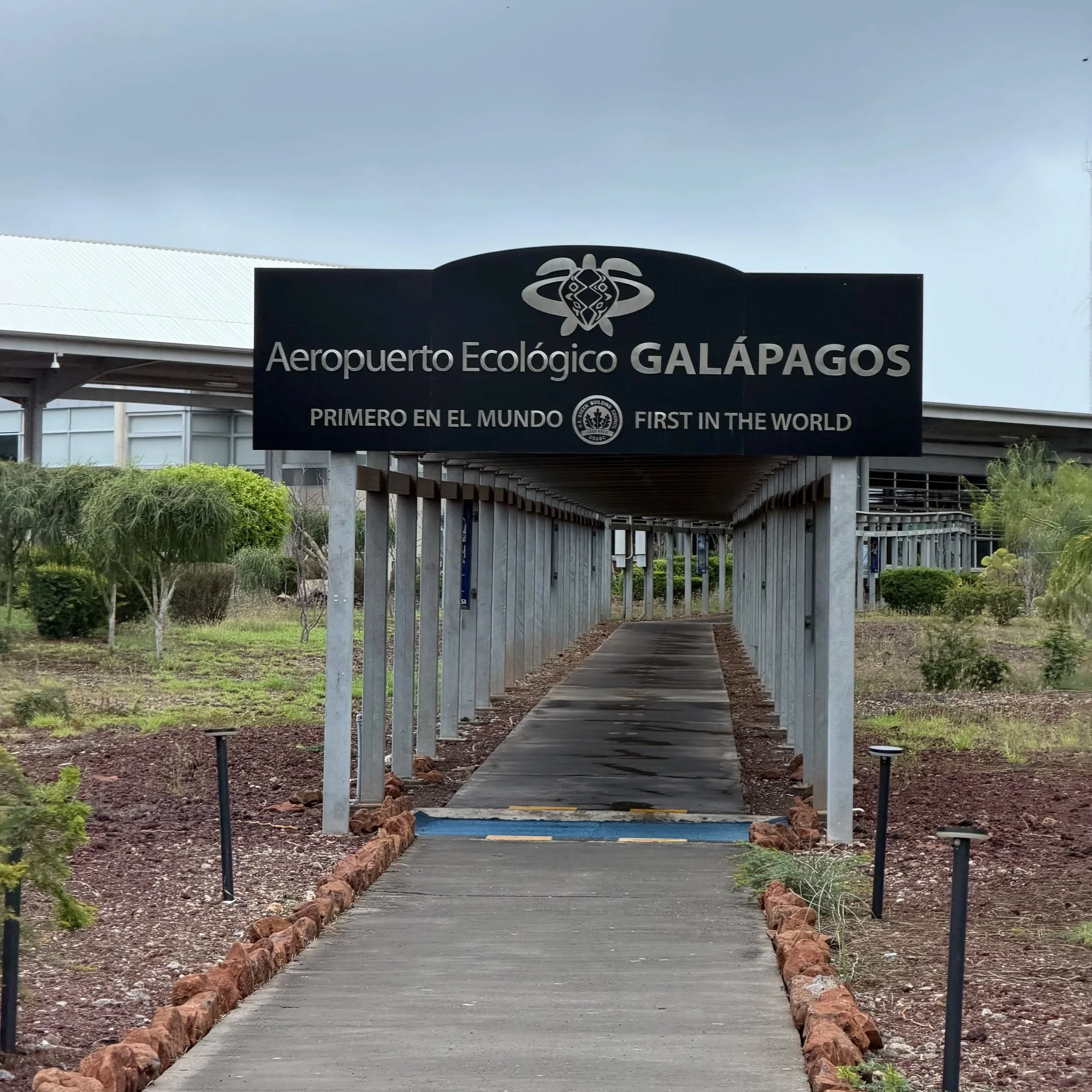
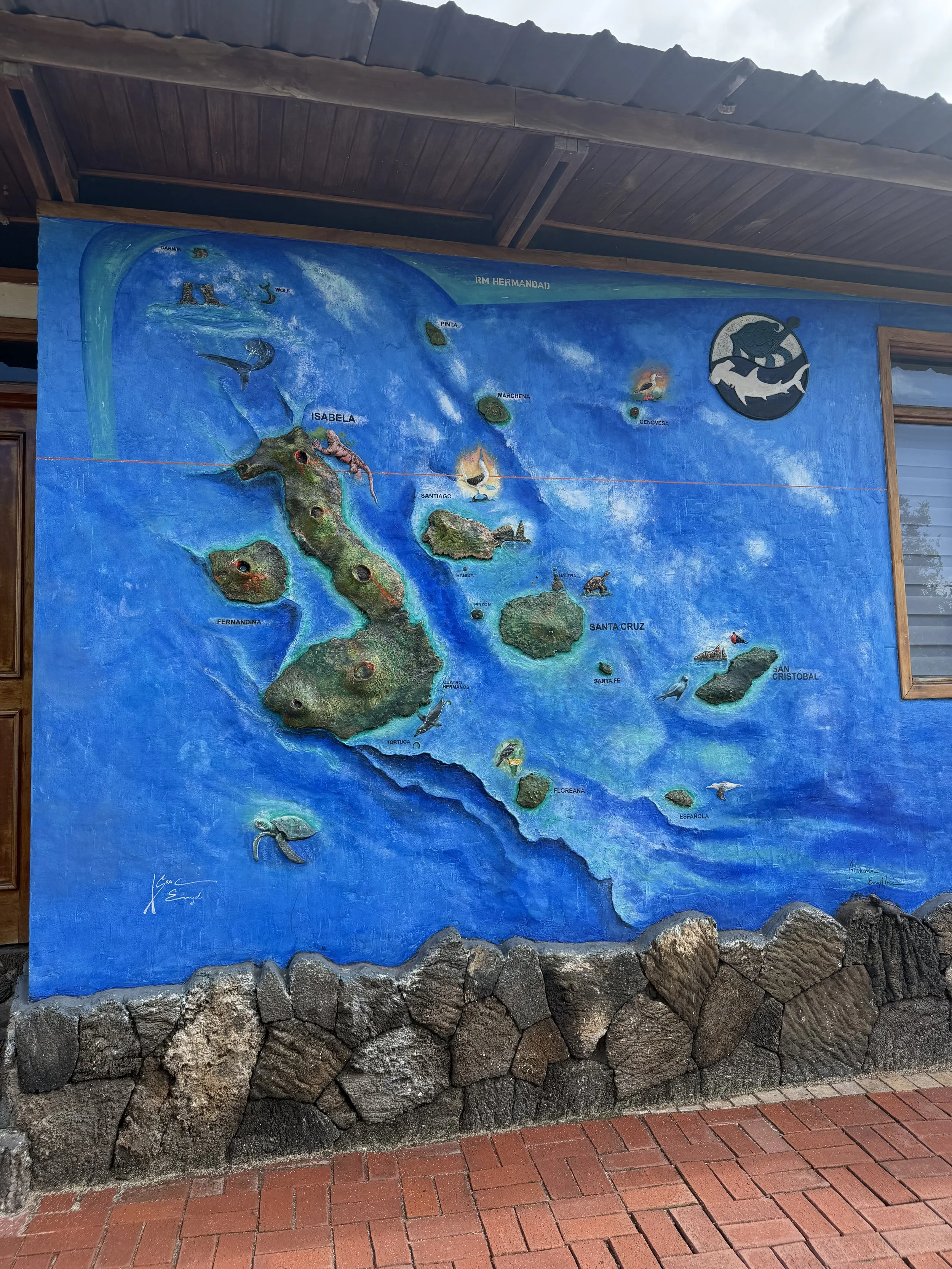
Galápagos has two primary commercial airports: Baltra (GPS), serving Santa Cruz, and San Cristóbal (SCY). Both provide access to the archipelago, but they aren't interchangeable when you're joining a liveaboard with a designated departure point.
Our Galápagos Aggressor III charter departed from Baltra, making GPS the airport our travelers needed. The operator arranged to meet arriving guests at Baltra Airport, where we began the process of boarding the vessel.
For anyone booking a liveaboard in Galápagos, confirming the correct airport and the operator's arrival instructions before purchasing flights is essential. A flight to the wrong island would be an unfortunate way to start a much-anticipated expedition.
Packing for the Pacific's Wild Side
Two Checked Bags, a Photography Studio, and Sixteen Sailor Hats

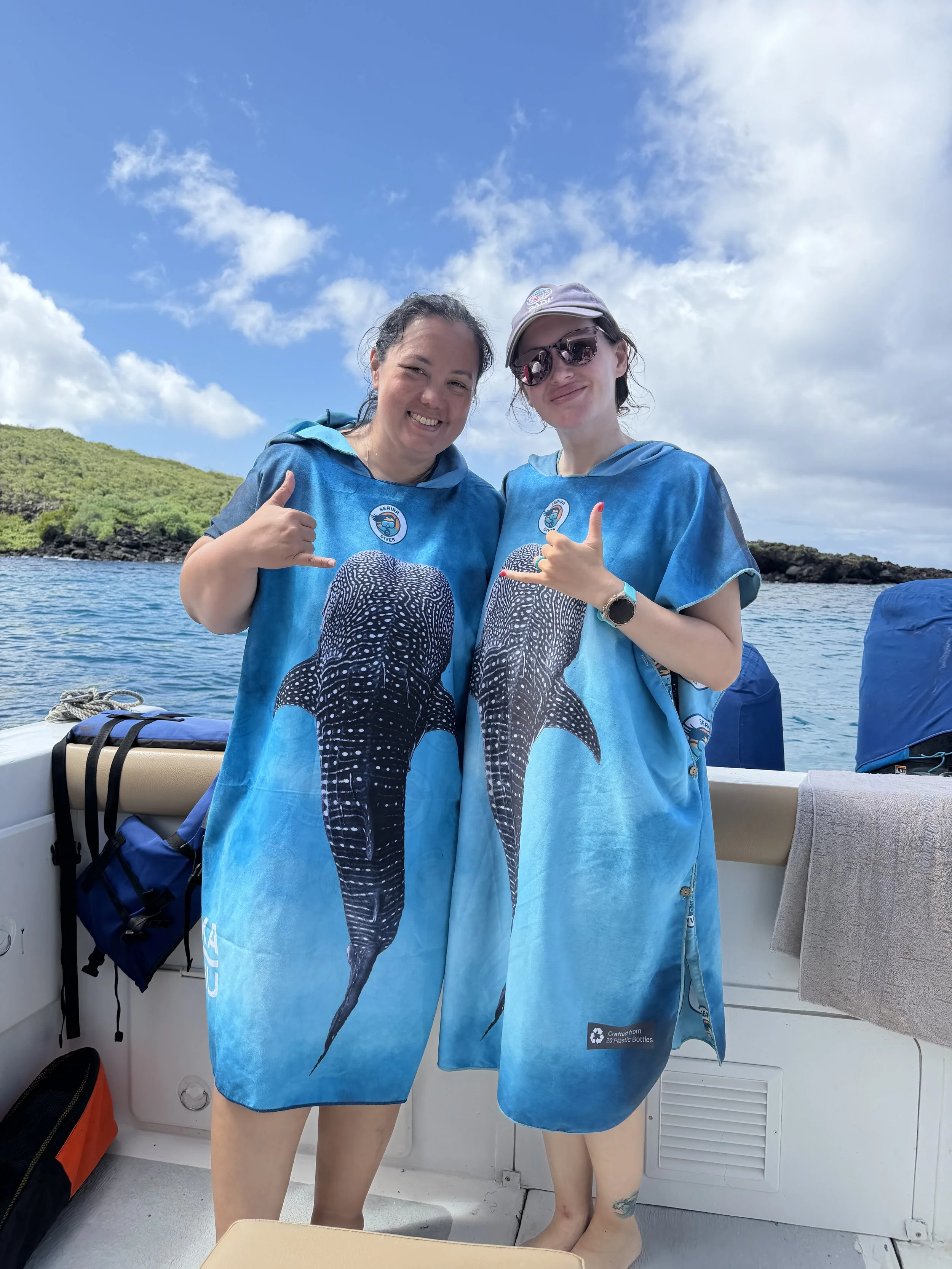
Packing for Galápagos was an adventure before I even left Hawaiʻi. I had one checked bag packed with scuba equipment and clothes, plus a second checked bag dedicated entirely to goodies for our Seaira Dives travelers. Sailor hats, custom KAHU whale shark ponchos, and all sorts of other surprises were making the journey with me. I love adding those personal touches to our group trips, but getting everything to Galápagos required some creative packing. At least the sailor hats were considerably lighter than my dive equipment!
Then there was my photography gear, which deserved an entire packing list of its own. I brought my Sony 100mm macro lens with its port, Sony 20mm f/1.8, Sony 24–50mm paired with the Nauticam WACP-1, and Nikon 13mm with its port. A friend generously lent me his Sony 100–400mm lens for photographing wildlife on land, giving me even more options for capturing the islands' incredible animals. For macro photography, I packed my MFO-1, Kraken +6, and MFO-3. Add my Nauticam housing, Kraken KR-S160 strobes, tripod, arms, clamps, batteries, chargers, and cables, and my carry-on situation was getting rather serious.
Galápagos presented an interesting photography challenge because of the enormous variety of subjects. I wanted to be prepared for everything from tiny marine life to schooling hammerheads and whale sharks underwater, while also having the reach to photograph frigatebirds, giant tortoises, marine iguanas, and other wildlife on land. Deciding which lenses to bring was difficult, so I solved that problem by bringing nearly all of them.
Between two checked bags, my camera equipment, and four flights across three airlines, I spent a considerable amount of time weighing luggage and figuring out how to protect everything in transit. Traveling with an underwater camera system is complicated enough without adding an entire collection of trip gifts, but those little surprises are part of what I enjoy about organizing Seaira Dives adventures. I may have been pushing my baggage allowance, but I was determined to get the sailor hats and whale shark ponchos to Galápagos!
From Baltra to the Heart of Santa Cruz
One Ferry, a Scenic Drive, and a Change of Scenery
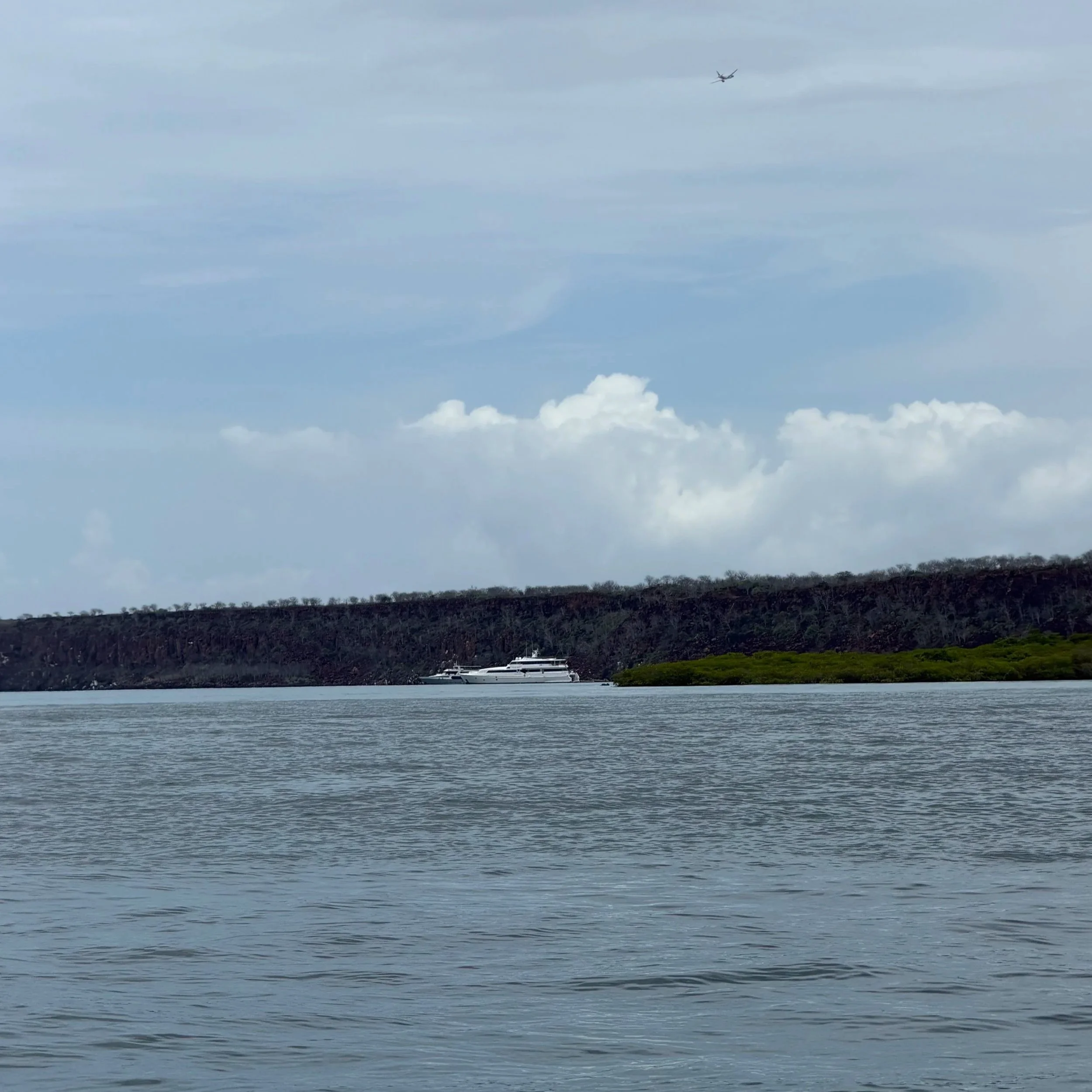
Landing at Baltra Airport doesn't mean you've reached Puerto Ayora. The airport is located on Baltra Island, separated from Santa Cruz by the narrow Itabaca Channel.
Traveling independently to Puerto Ayora generally involves a shuttle from the airport ($5), a short ferry crossing ($1.30), and a bus or taxi ($30) journey south across Santa Cruz. The drive from the channel to town typically takes around 45 to 60 minutes, depending on transportation and conditions.
The journey offers an introduction to the island's surprisingly varied landscapes. Baltra and the northern coastal areas are relatively dry and volcanic, while the higher elevations of Santa Cruz are greener and more humid. As the road crosses the island, the vegetation changes noticeably, reflecting the different environmental conditions found at various elevations.
Puerto Ayora sits along Academy Bay on the southern coast of Santa Cruz. As the archipelago's largest town, it serves as an important center for tourism, conservation, restaurants, dive operators, and inter-island transportation. I wanted to spend enough time here to appreciate the town rather than simply passing through on my way to the boat.
Puerto Ayora: Where the Wildlife Has Right of Way
Sea Lions, Frigatebirds, and Life Along the Waterfront
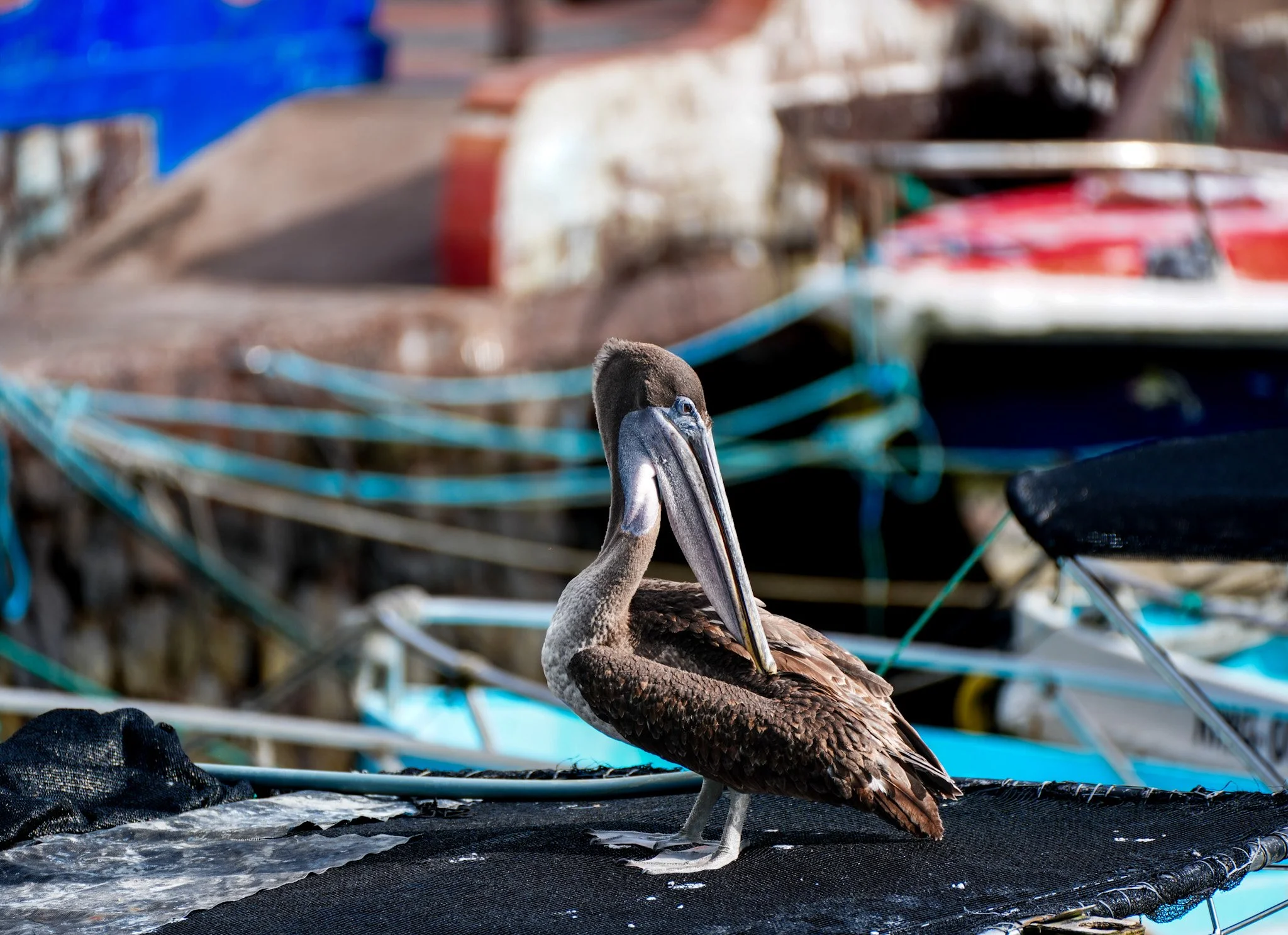
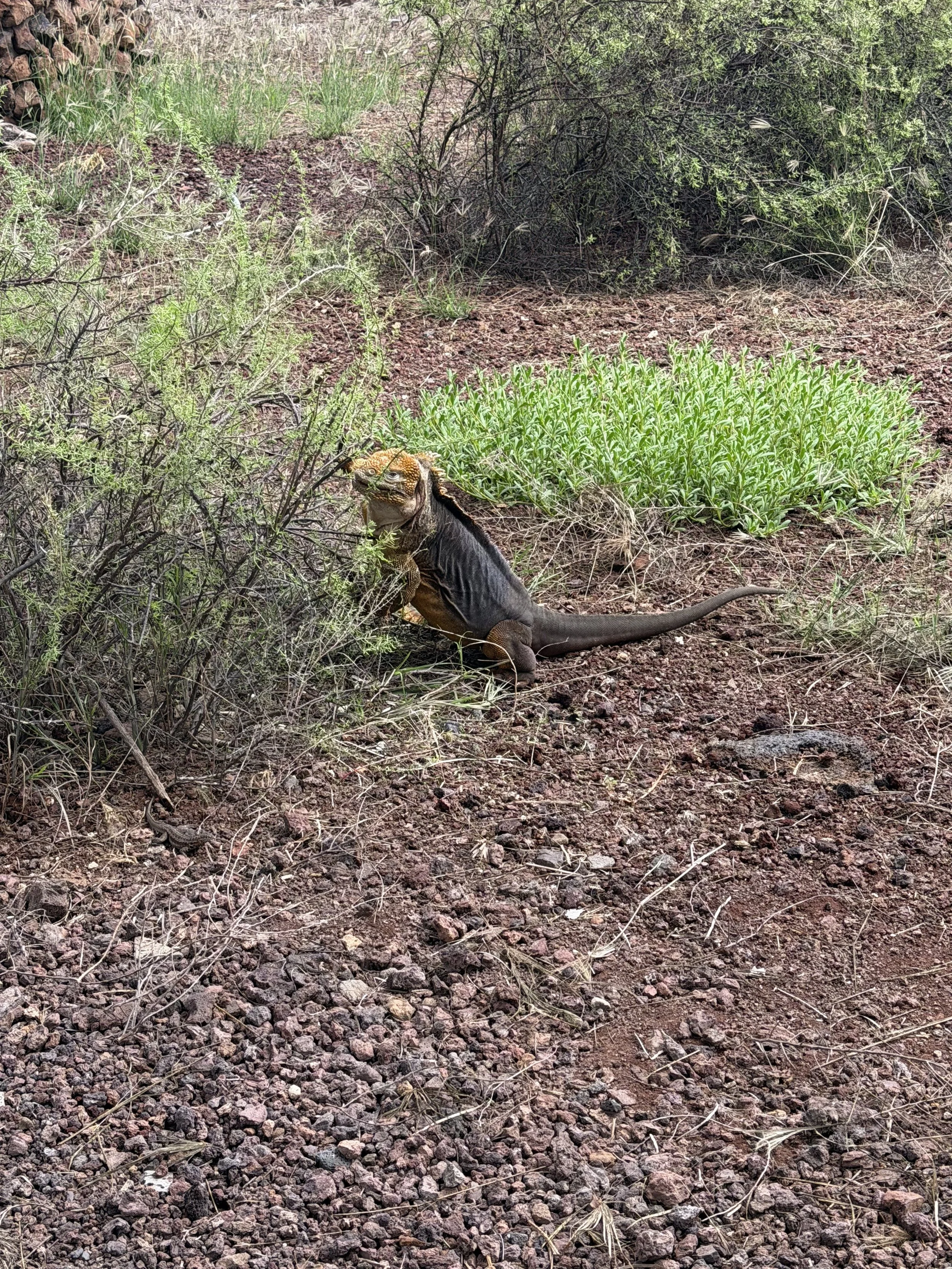
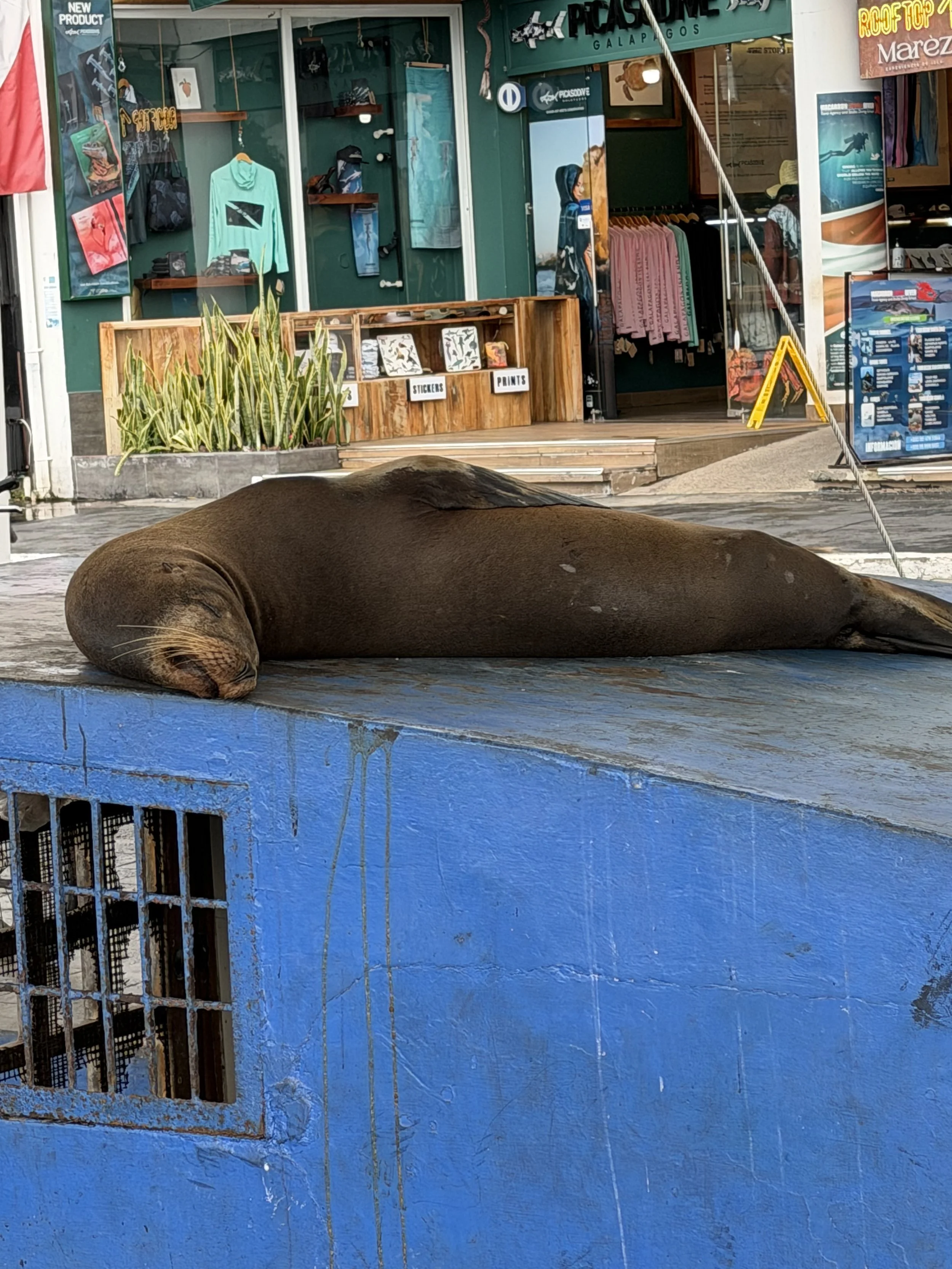
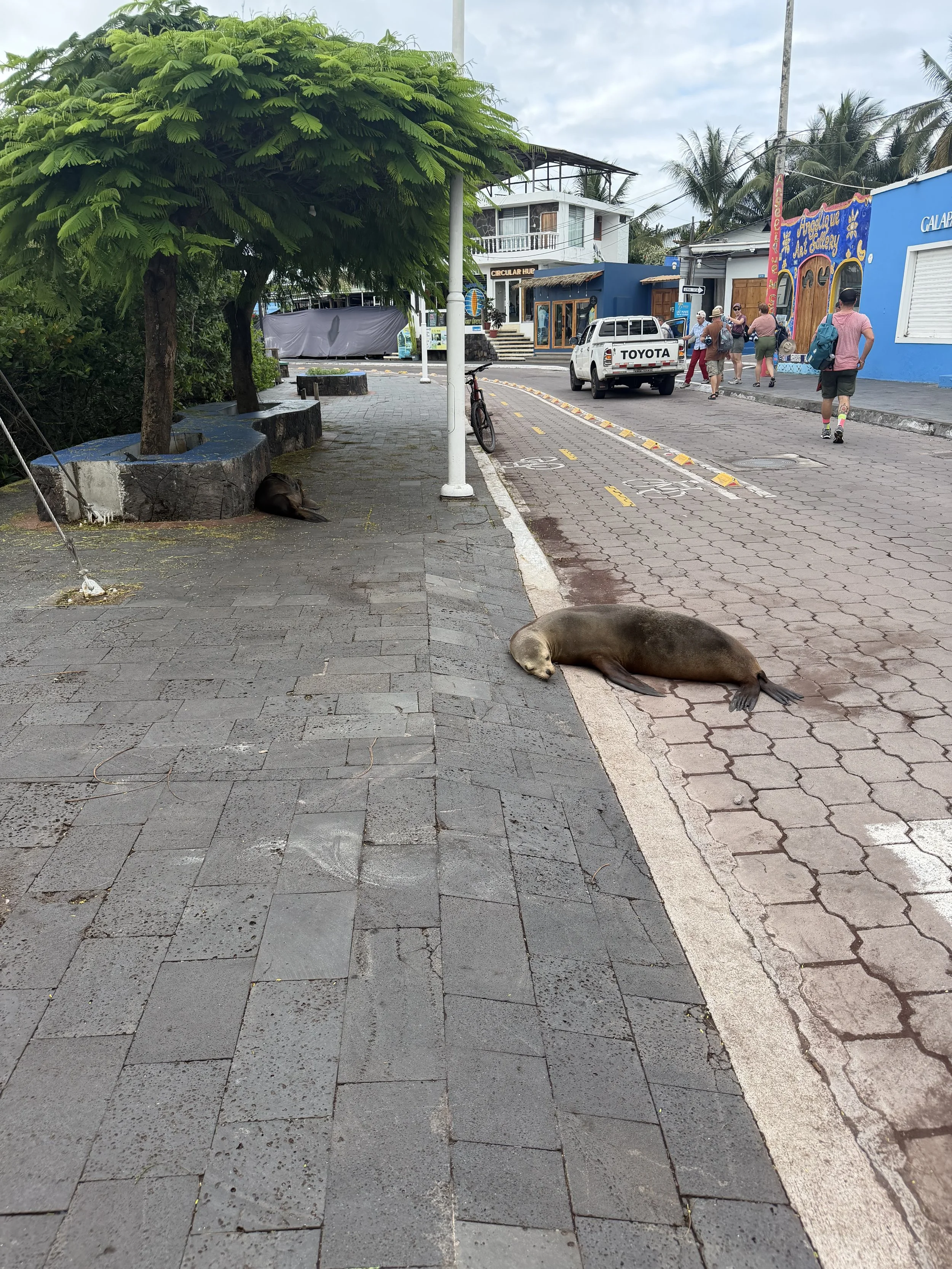
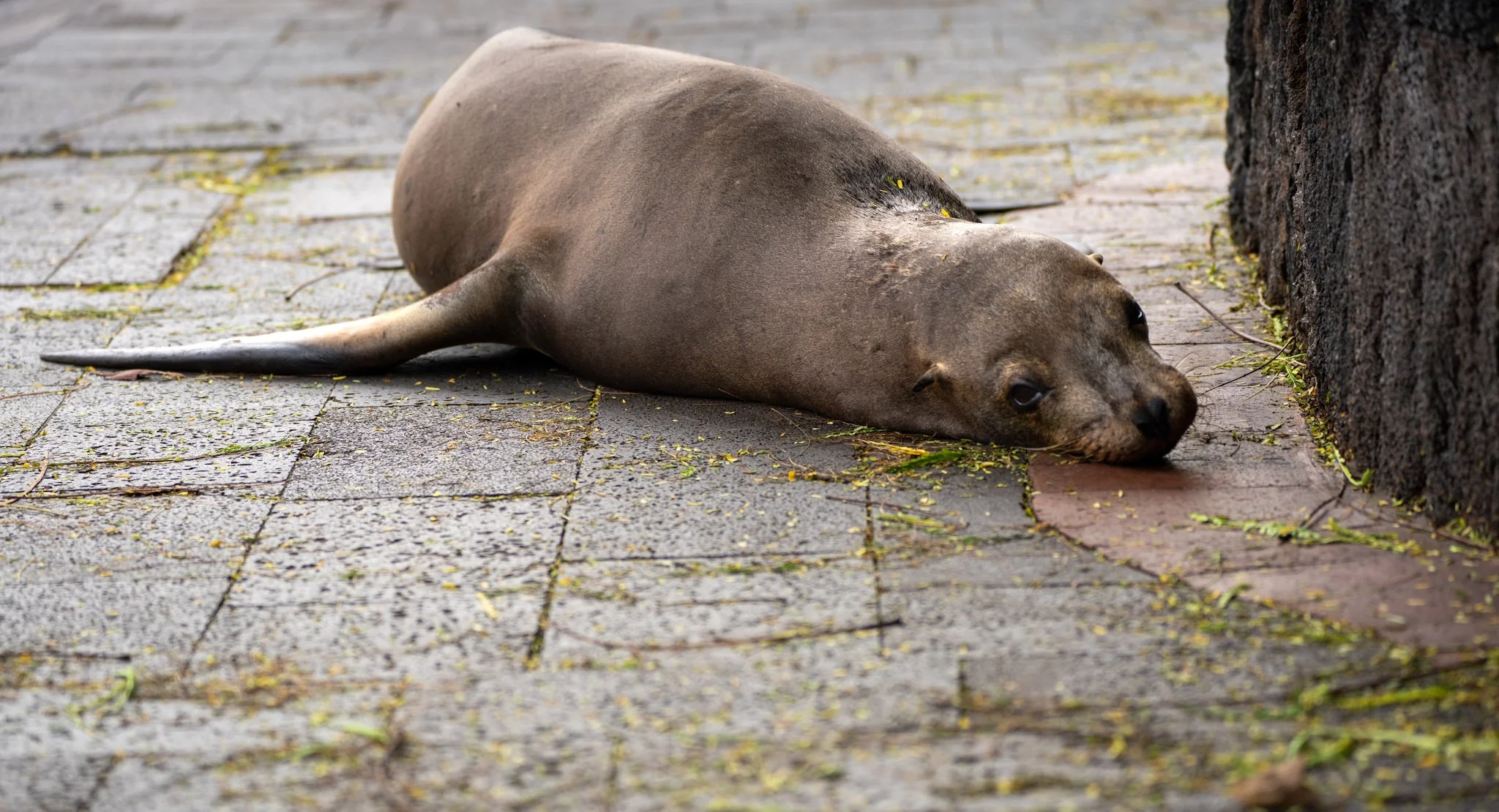
Puerto Ayora is such a fun little town, and one of my favorite things about it is how much wildlife you can see without ever leaving the harbor. Sea lions lounge around the docks as though they own the place, marine iguanas bask on the rocks, and magnificent frigatebirds soar overhead with their enormous wingspans. There's so much activity along the waterfront that a simple walk through town can easily turn into an afternoon of wildlife watching. I found myself constantly stopping to see what was swimming, flying, or crawling around me.
The harbor itself is full of surprises. Sea turtles cruise through the water, baby sharks patrol the shallows, and bright red Sally Lightfoot crabs scramble across the black volcanic rocks. Sea lions are everywhere, whether they're swimming through the harbor, resting along the waterfront, or occupying a perfectly good spot where someone might have wanted to sit. I particularly loved watching the contrast between the animals going about their business and the everyday activity of the town. Fishing boats, water taxis, and tour vessels come and go while the wildlife carries on around them.
The frigatebirds deserve special mention, too. With wingspans that can exceed seven feet, they're impressive birds to watch soaring above the harbor. The males are famous for their bright red throat pouches, which they inflate during courtship displays. Between the frigatebirds overhead, the marine iguanas along the shoreline, and everything swimming beneath the docks, Puerto Ayora offers a remarkable introduction to the biodiversity of Galápagos.
What makes the town so enjoyable is that you don't have to plan an elaborate excursion to see something interesting. Grab a coffee, wander along Avenida Charles Darwin, explore the waterfront, or find a spot overlooking Academy Bay and watch the activity unfold. After spending a week aboard a liveaboard exploring some of the world's most celebrated dive sites, I loved being able to slow down and appreciate the marine life right in the middle of town. Puerto Ayora has plenty of restaurants, shops, and places to explore, but the animals are easily some of its most entertaining residents.
The Charles Darwin Research Station: Science Behind the Species
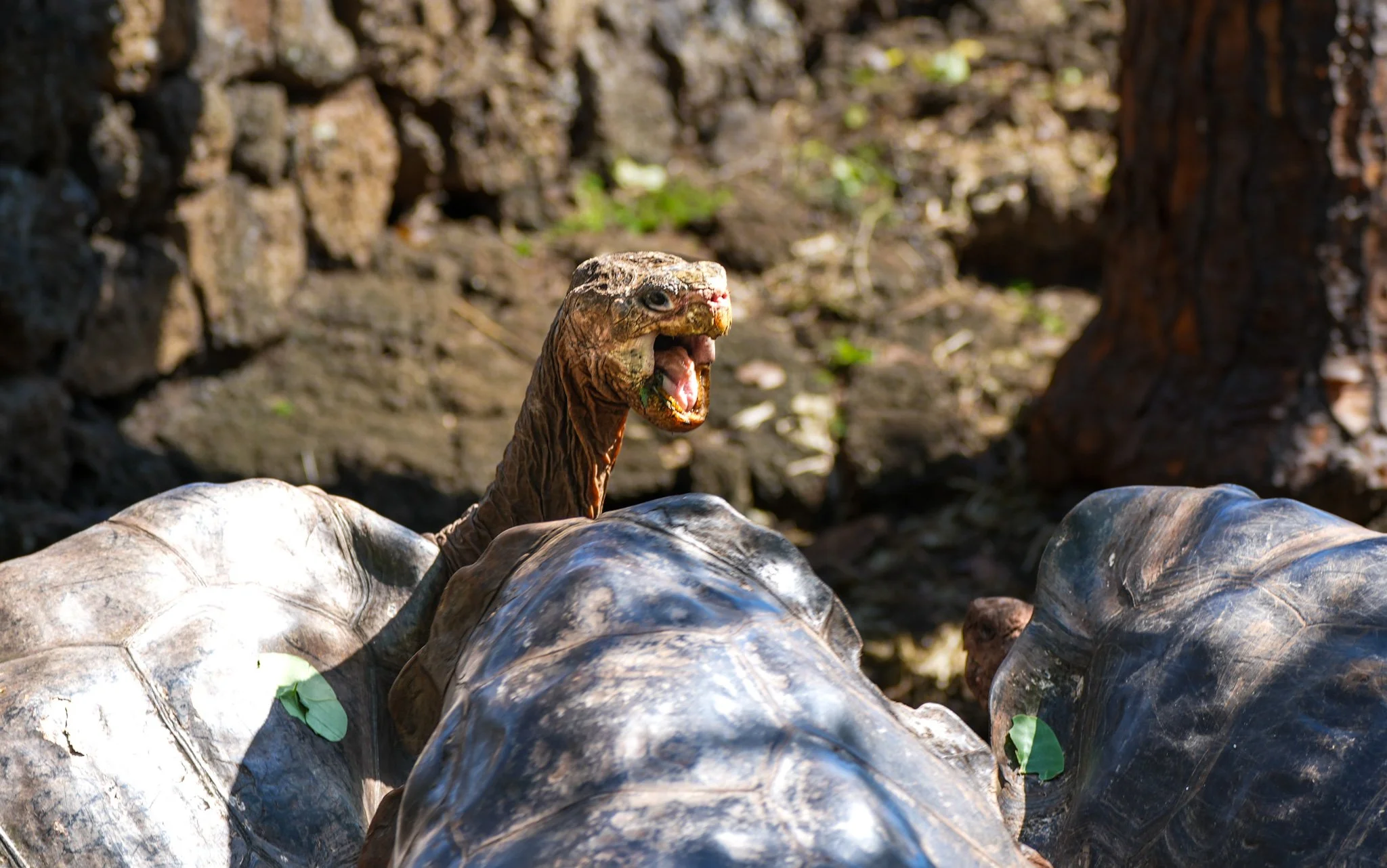
No visit to Santa Cruz would feel complete without a stop at the Charles Darwin Research Station in Puerto Ayora. Established in 1964, the station has played an important role in scientific research and conservation throughout the Galápagos Islands. For someone who loves marine biology and learning about the ecosystems I'm fortunate enough to explore, this was high on my list of places to visit. You will need a guide to visit, the cost is around $10.
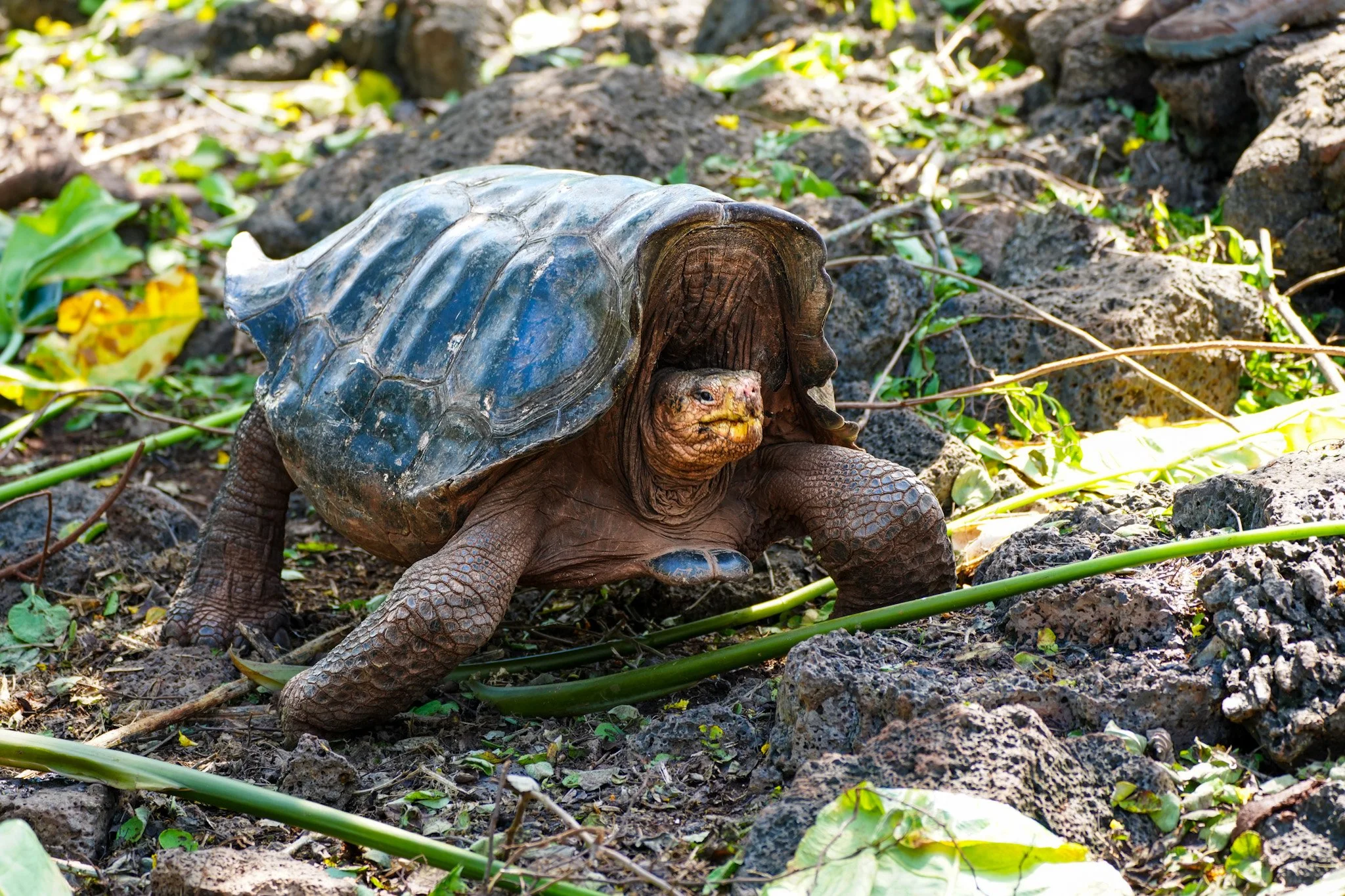
One of the most interesting aspects of the research station is its connection to the conservation of Galápagos giant tortoises. At the nearby Fausto Llerena Breeding Center, visitors can learn about efforts to protect and restore tortoise populations that were devastated by hunting, introduced species, and habitat destruction. These enormous reptiles can live for well over a century, and different island populations have developed distinctive shell shapes and adaptations. Their evolutionary history is a fascinating example of how geography and isolation influence the development of species.
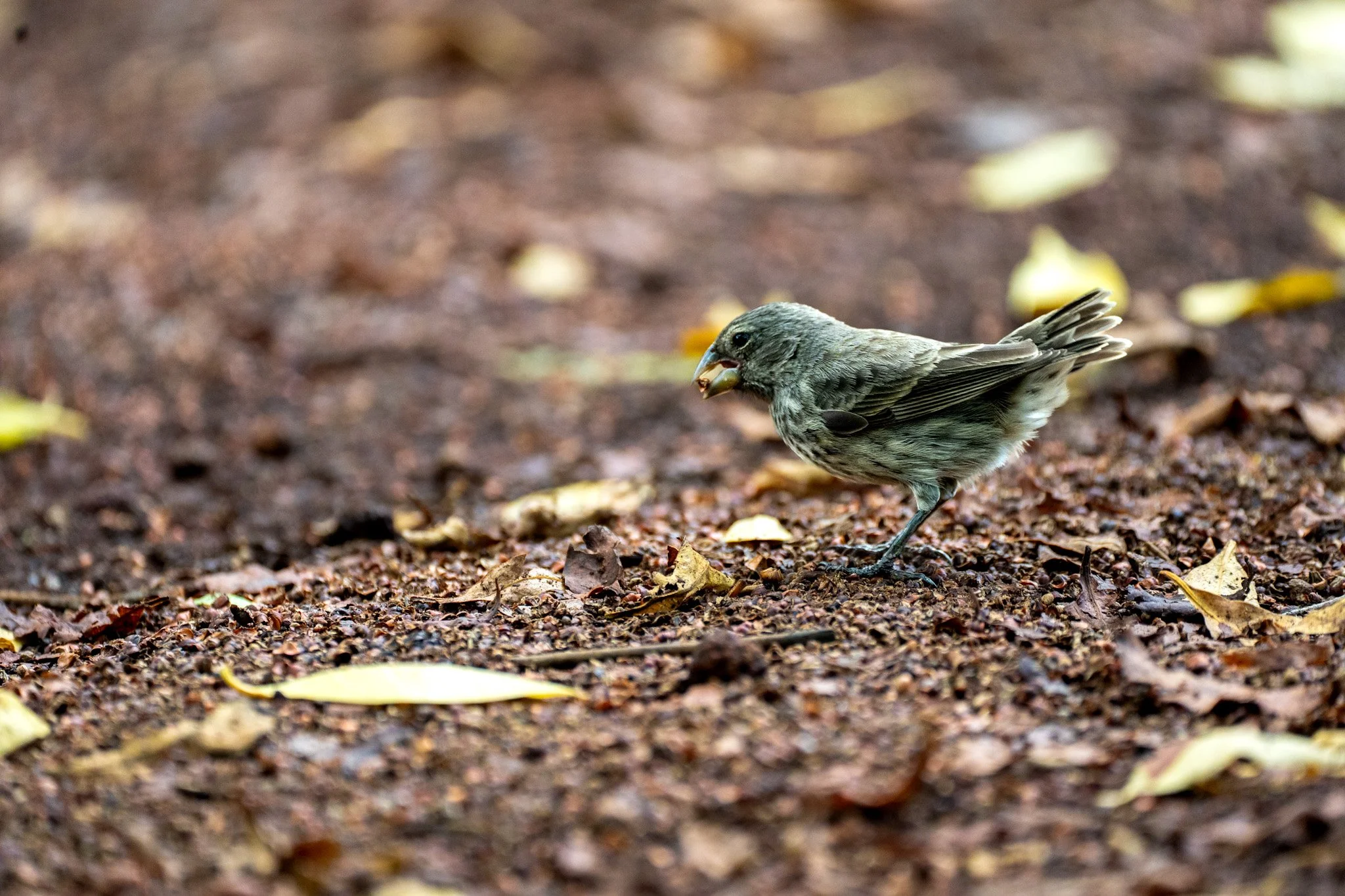
The center is also associated with the story of Lonesome George, the last known Pinta Island tortoise, who died in 2012. His preserved remains serve as a reminder of the consequences of extinction and the importance of protecting vulnerable species before they disappear. While the giant tortoises are certainly a highlight, I was equally interested in learning about the ongoing scientific work supporting the conservation of the islands' terrestrial and marine ecosystems.
Having spent so much of this trip exploring Galápagos underwater, visiting the research station offered an opportunity to better understand the conservation efforts taking place on land. The wildlife that makes these islands extraordinary is also incredibly vulnerable, and the work being done to protect it deserves just as much attention as the animals themselves.
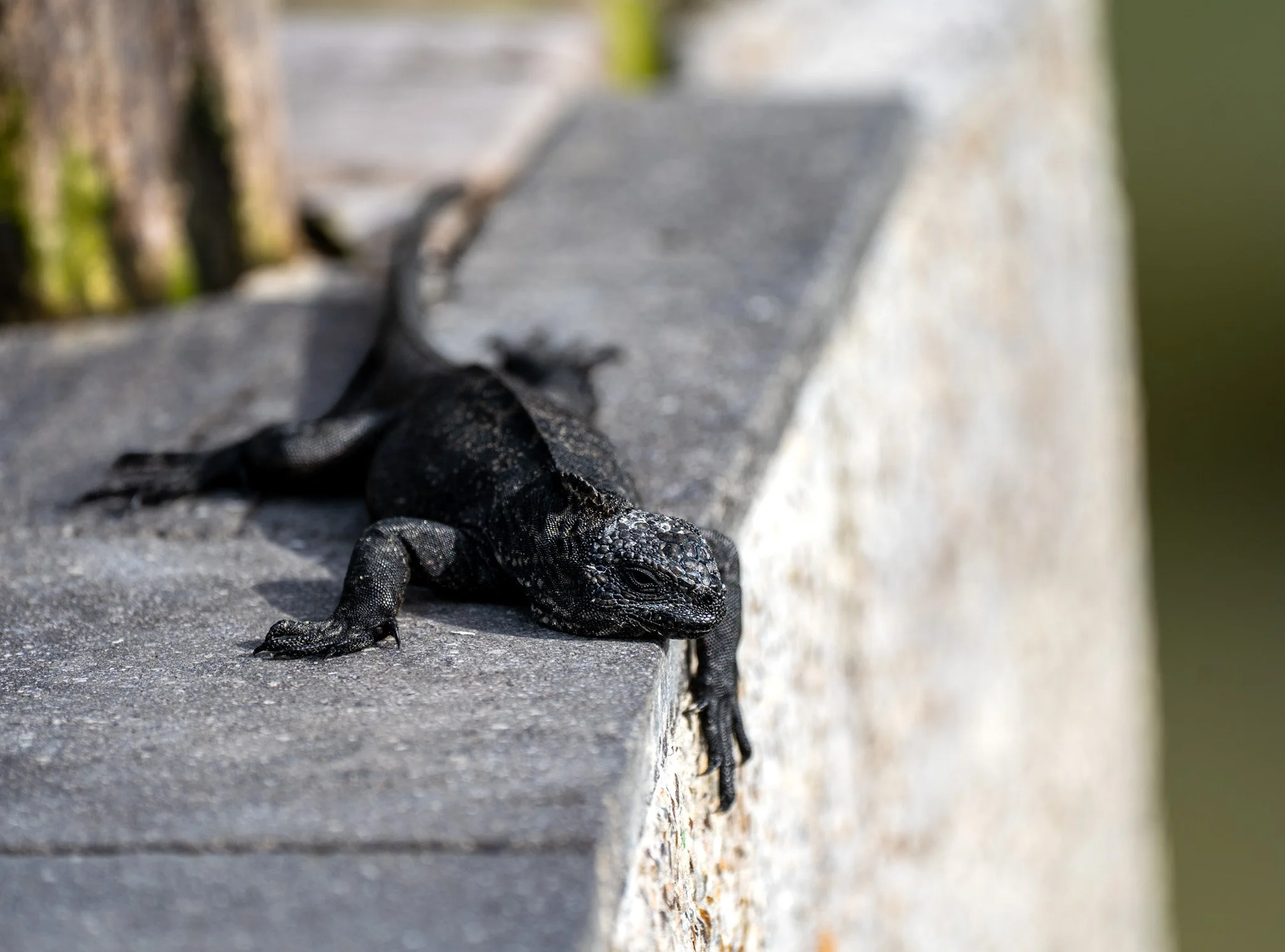
Tortuga Bay: White Sand and Marine Iguanas
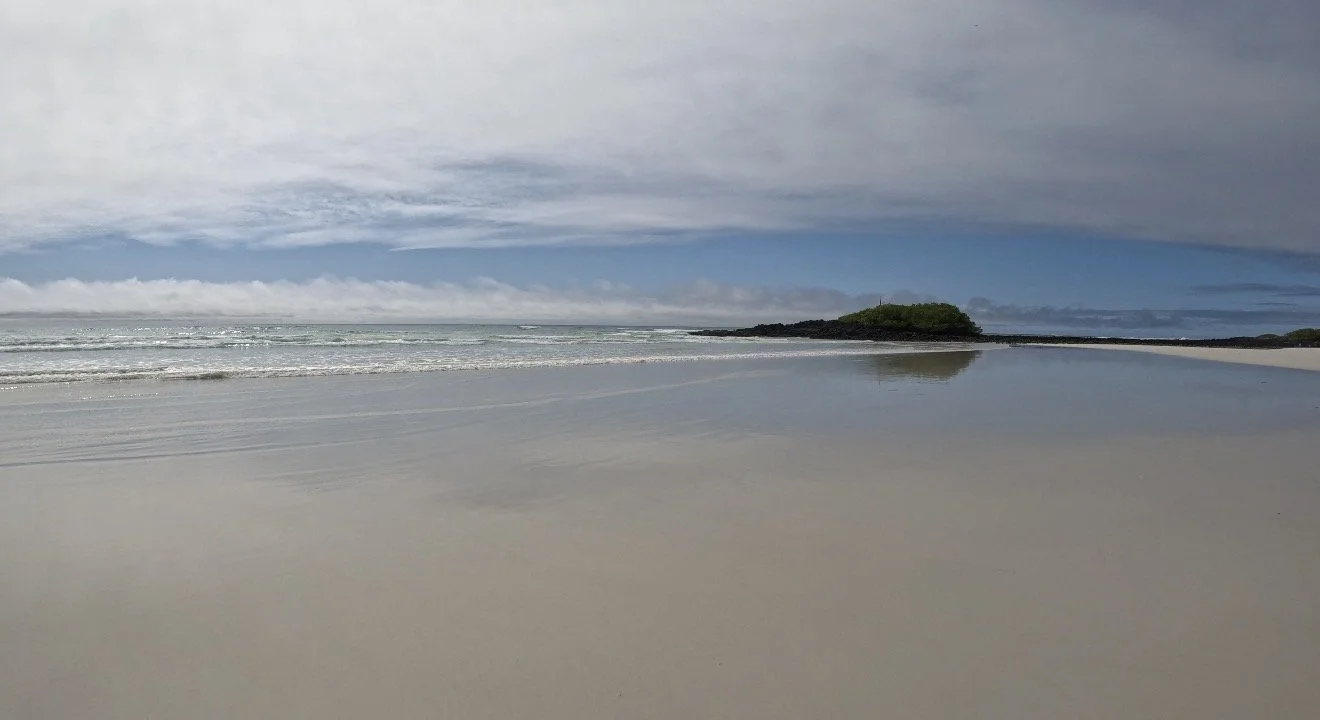
Tortuga Bay is one of Santa Cruz's best-known natural attractions, with a long stretch of white sand, turquoise water, and opportunities to observe marine iguanas and coastal birds.
Reaching the beach involves walking approximately 2.5 kilometers along a maintained trail from Puerto Ayora. The first beach, Playa Brava, can experience powerful surf and dangerous currents, making swimming inappropriate or prohibited depending on conditions. Farther along, Playa Mansa offers a more sheltered environment where swimming or kayaking may be possible when permitted.
The walk itself is part of the experience, although carrying water and sun protection is important. Galápagos sits directly along the Equator, and the intensity of the sun deserves respect even when the air temperature feels comfortable.
Tortuga Bay is an excellent option for visitors who enjoy exploring independently and want to experience the island's coastal habitats without joining a full-day excursion.
Las Grietas: Swimming Through Volcanic History
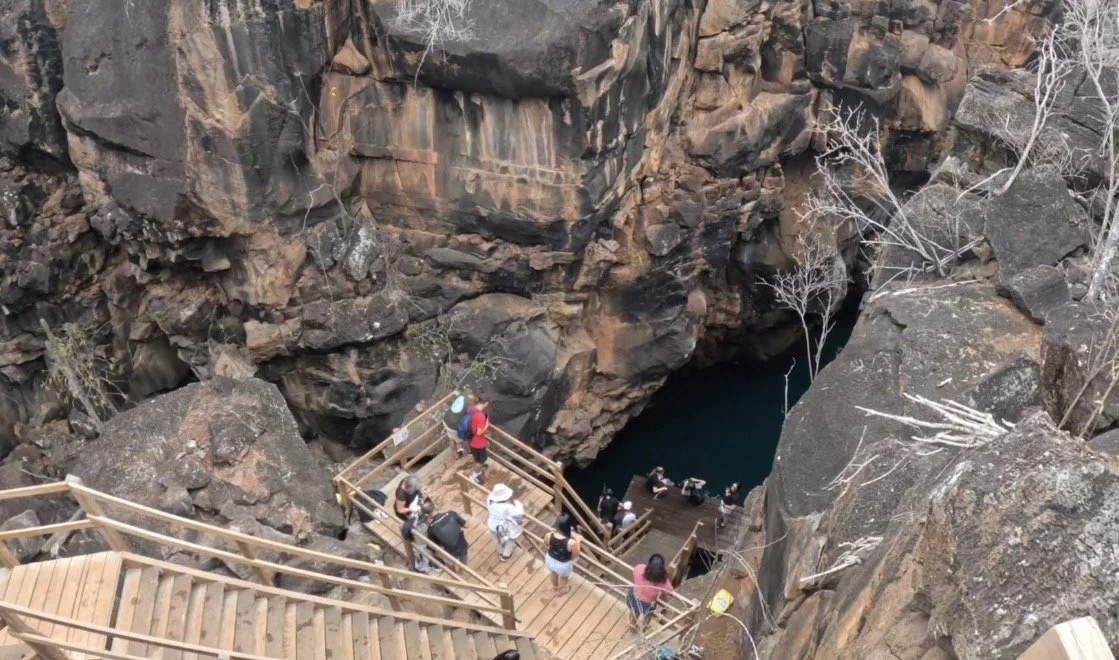
Las Grietas is another unusual attraction near Puerto Ayora. This narrow, water-filled fissure is surrounded by towering volcanic walls, creating a dramatic swimming environment quite different from the island's open beaches.
Reaching the site involves taking a short water taxi across Academy Bay, then walking past Playa de los Alemanes and through the surrounding coastal landscape. Access is regulated, and visitors may need a guide and entrance ticket depending on current requirements.
As someone who loves geology almost as much as marine life, I find the idea of swimming between volcanic rock walls particularly appealing. Galápagos is famous for its animals, but the geological processes that created these islands are equally fascinating.
Laguna de las Ninfas: A Walk Through the Mangroves
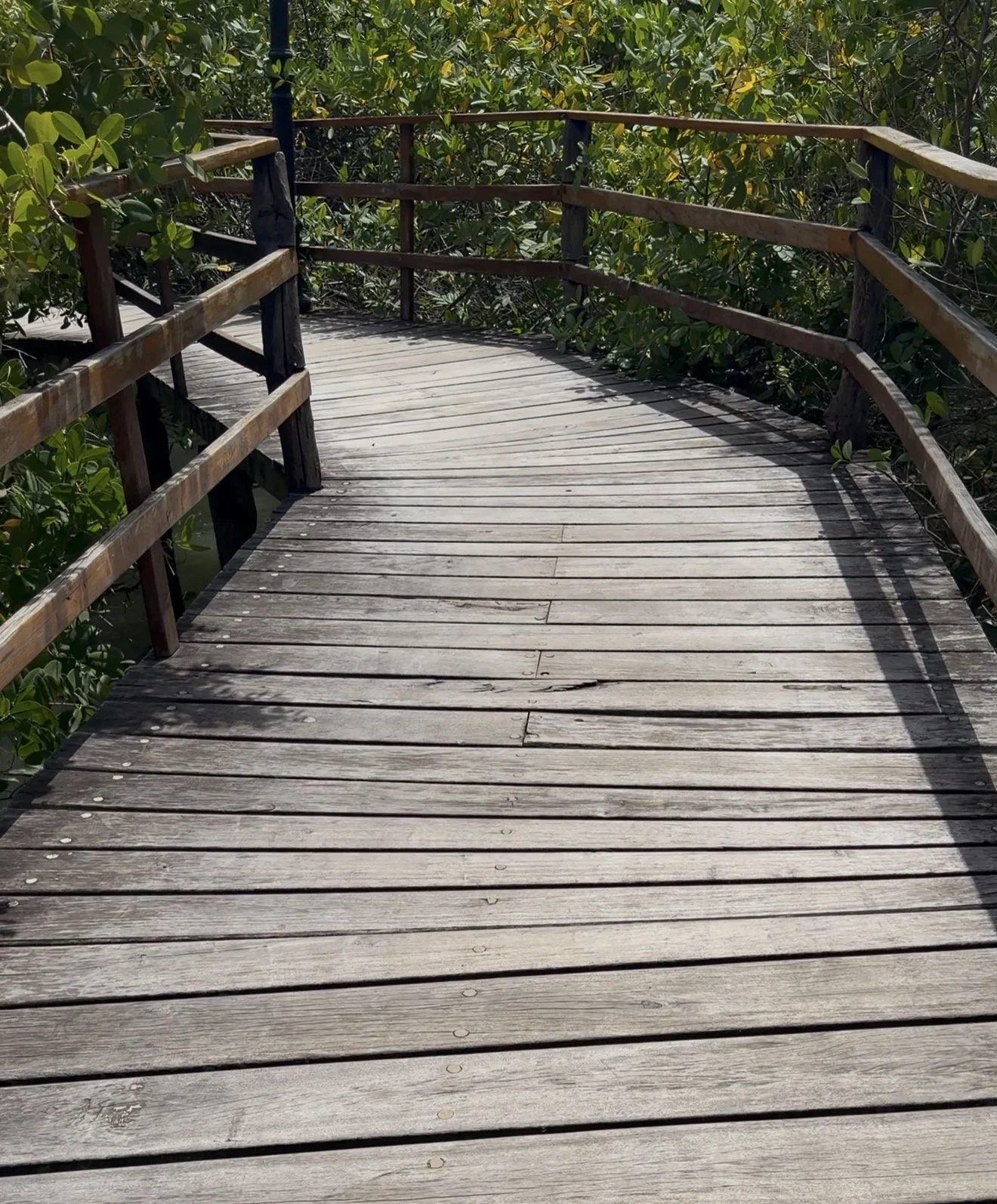
Laguna de las Ninfas offers a quieter experience near the western side of Puerto Ayora. A boardwalk winds through mangrove habitat, providing opportunities to observe birds, fish, and the coastal ecosystem.
Mangroves are particularly important because they provide nursery habitat for many marine organisms, help stabilize coastlines, and support biodiversity. Exploring a mangrove lagoon offers a different perspective on the marine environment from the offshore reefs and shark-diving sites.
The Puerto Ayora fish market provides a much livelier wildlife-viewing opportunity. Pelicans and sea lions are known to gather around the fishing activity, making the market one of the town's most recognizable attractions. I love that some of the most interesting wildlife encounters in Galápagos can happen during an ordinary walk around town.
The Other Side of Santa Cruz
Giant Tortoises, Lava Tunnels, and a Very Different Landscape
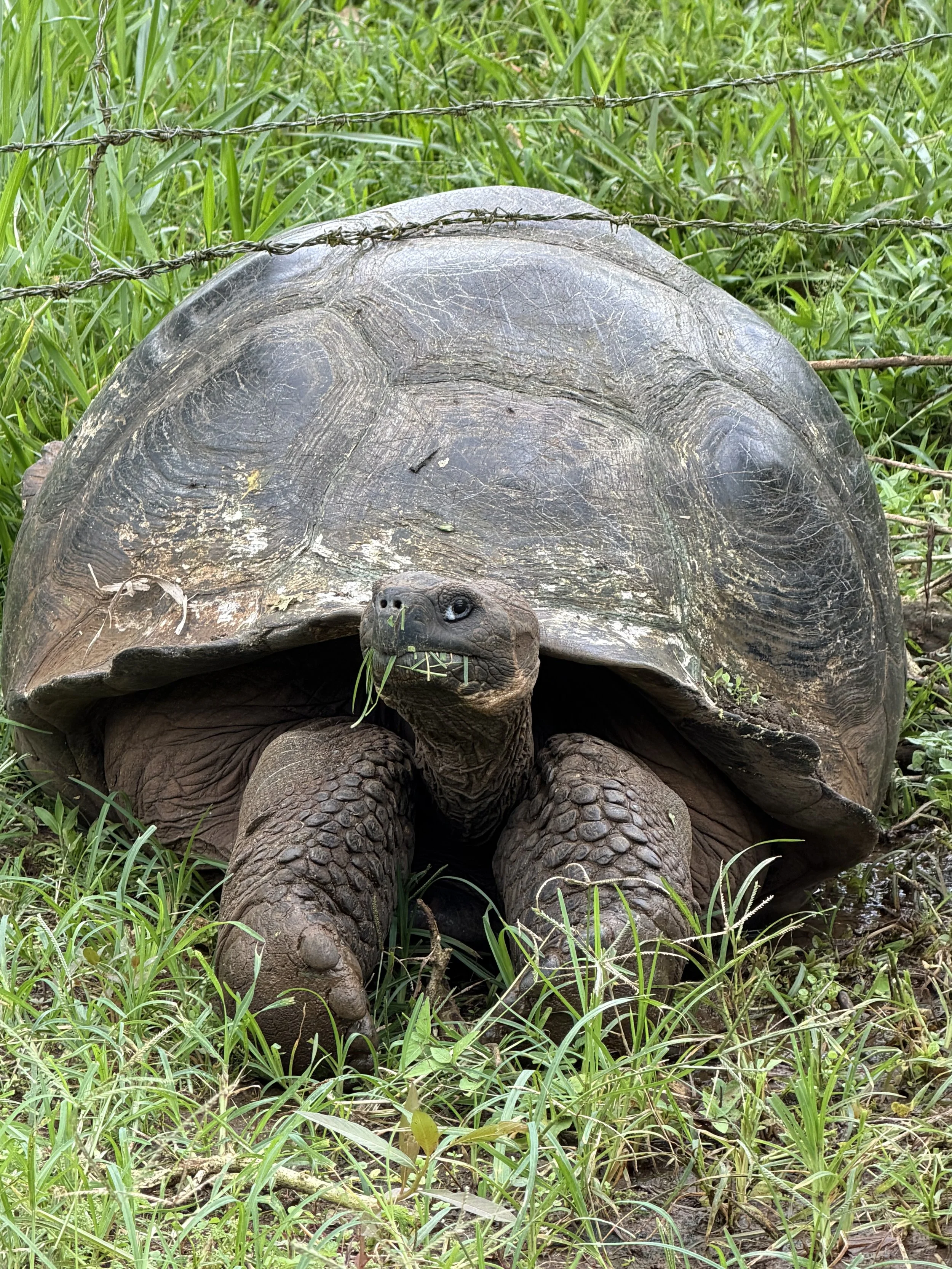
Santa Cruz's highlands offer a striking contrast to the dry volcanic coastline. As the road climbs away from Puerto Ayora, the vegetation becomes greener and more humid, creating habitats that feel very different from the waterfront.
The El Chato area is particularly well known for opportunities to observe giant tortoises moving through their natural habitat. These animals can live for well over a century, and seeing them roaming through the highlands provides an entirely different experience from visiting a conservation facility.
The highlands are also home to lava tunnels formed during the island's volcanic history. These tunnels developed when the outer surface of flowing lava cooled and hardened while molten rock continued moving beneath it. Once the lava drained away, hollow passages remained.
Exploring the tunnels offers a fascinating look at the geological processes responsible for creating the archipelago. Combined with the tortoise habitat and highland scenery, the area makes an excellent half-day excursion from Puerto Ayora.
A Little Home Base in Puerto Ayora
Plaza Luna Suites: My First Two Nights on the Island
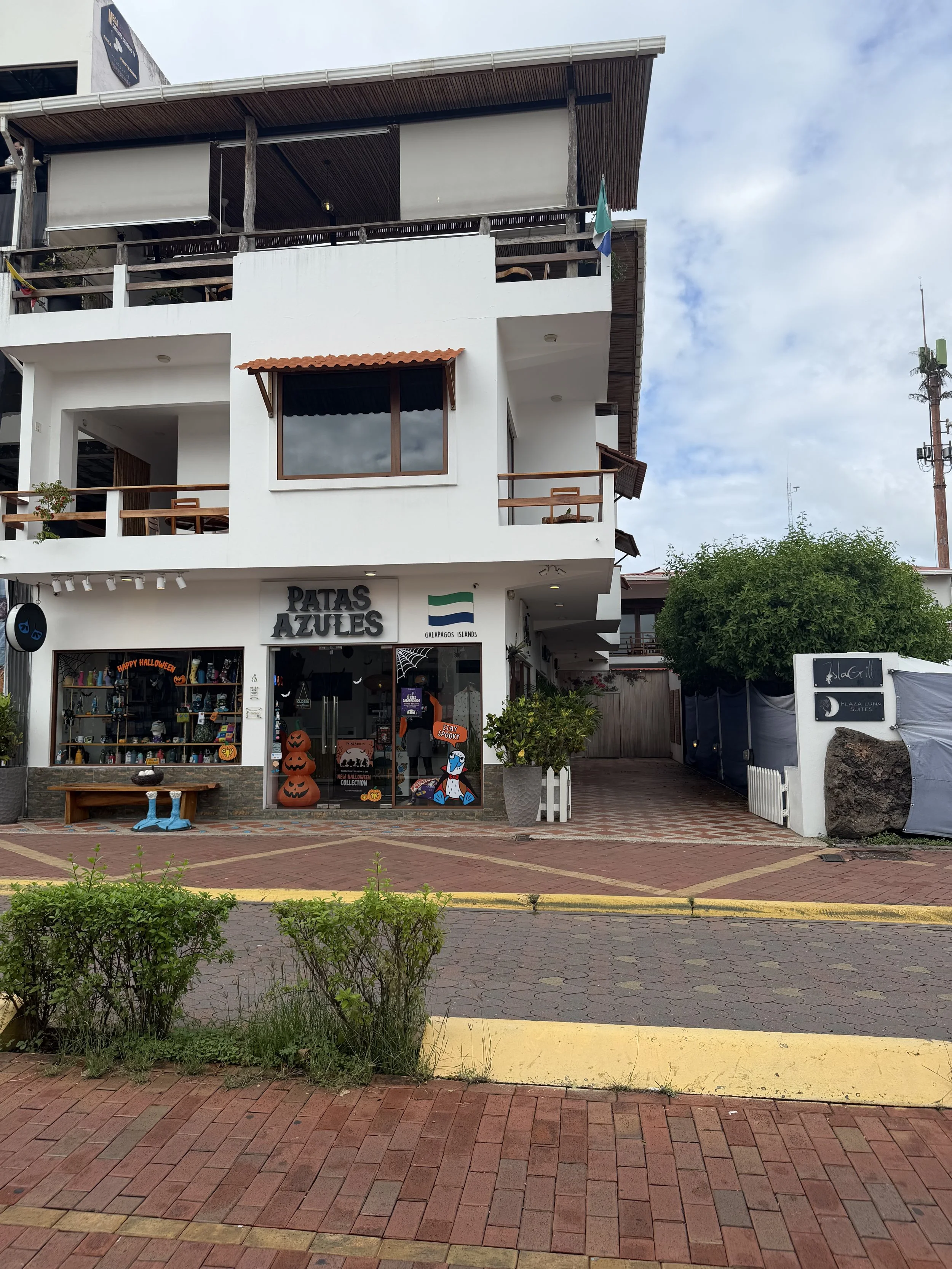
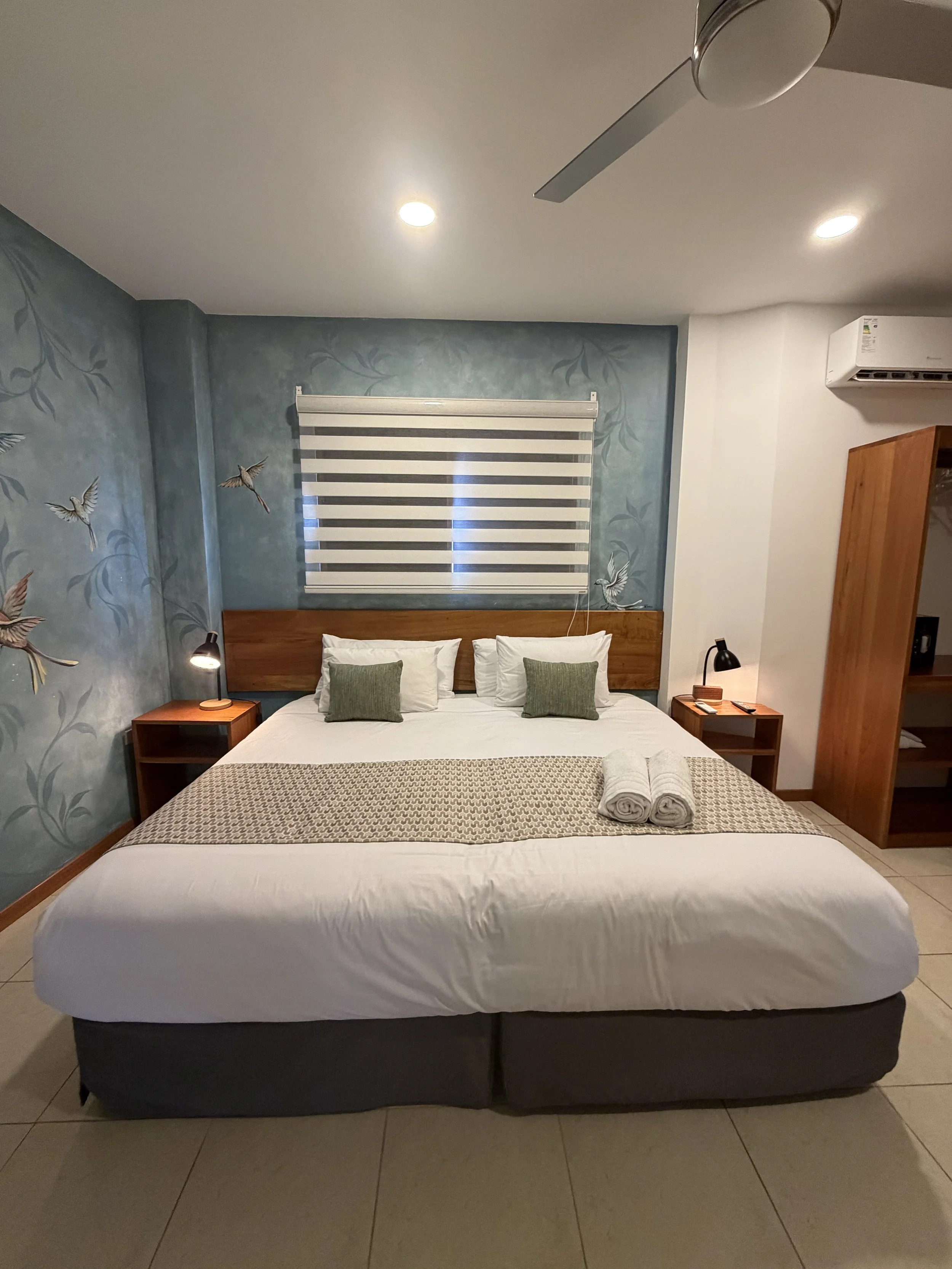
For the two nights before our liveaboard, November 3 through 5, I booked Plaza Luna Suites, a family-run boutique hotel located on Avenida Charles Darwin near the intersection with Charles Binford in central Puerto Ayora. The location appealed to me immediately because it's right along the town's main waterfront thoroughfare, within walking distance of restaurants, shops, the harbor, and many of the places I wanted to explore.
The property offers air-conditioned rooms, Wi-Fi, a rooftop breakfast area, and a peaceful interior despite its central location. I particularly liked the idea of staying somewhere locally operated, with a smaller, more personal atmosphere than a large resort. After nearly 8,000 miles of travel, having a comfortable room and the freedom to explore town on foot was exactly what I wanted.
Arriving two days before the charter also gave me some breathing room. When you're traveling internationally with scuba equipment and an underwater camera system, delayed luggage is a much bigger concern than forgetting a favorite pair of sandals. Having extra time to settle in, organize equipment, and enjoy Santa Cruz before boarding the Aggressor was an important part of my travel planning.
Hotel Cucuve: Three More Nights to Explore
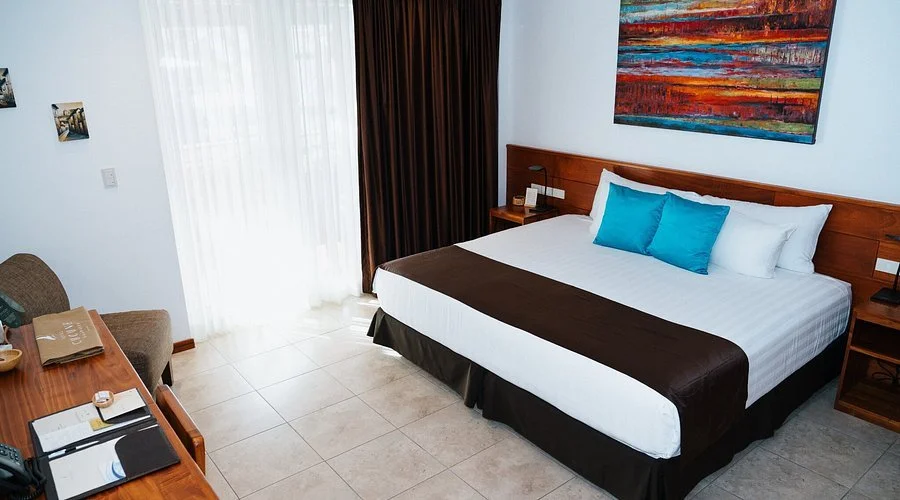
Following the liveaboard, I booked Hotel Cucuve from November 12 through 15. The hotel is located at Charles Binford 083, near Avenida Charles Darwin, right in the heart of Puerto Ayora. The location was fantastic, with restaurants, shops, the waterfront, and local tour operators all within easy walking distance.
Hotel Cucuve is a small boutique hotel, and I genuinely loved my stay here! The entire property was spotlessly clean, the rooms were comfortable, and the service was absolutely fantastic. The staff were incredibly welcoming and attentive, making the experience feel much more personal than staying at a larger hotel. The breakfast was another highlight, with a delicious selection that made for a great start to each morning before heading out to explore. I was particularly impressed by how much care went into everything, from the cleanliness of the rooms to the overall guest experience.
The hotel also offers air conditioning, filtered drinking water, Wi-Fi, and complimentary coffee and tea. Another lovely feature is its private waterfront terrace, located a short walk from the main building, where guests can relax while overlooking Academy Bay.
I appreciated that both Plaza Luna Suites and Hotel Cucuve offered convenient locations while providing different experiences. Plaza Luna Suites was my base before the liveaboard, while Hotel Cucuve was a wonderful place to return to after a full day of diving or exploring. I especially appreciated having such a comfortable, quiet, and impeccably maintained room after spending a week aboard a dive boat!
Staying in central Puerto Ayora also meant I could enjoy the town's restaurants, waterfront, and local businesses without needing transportation every time I wanted to go somewhere. I would absolutely stay at Hotel Cucuve again and wouldn't hesitate to recommend it to anyone visiting Santa Cruz.
Where to Eat in Puerto Ayora
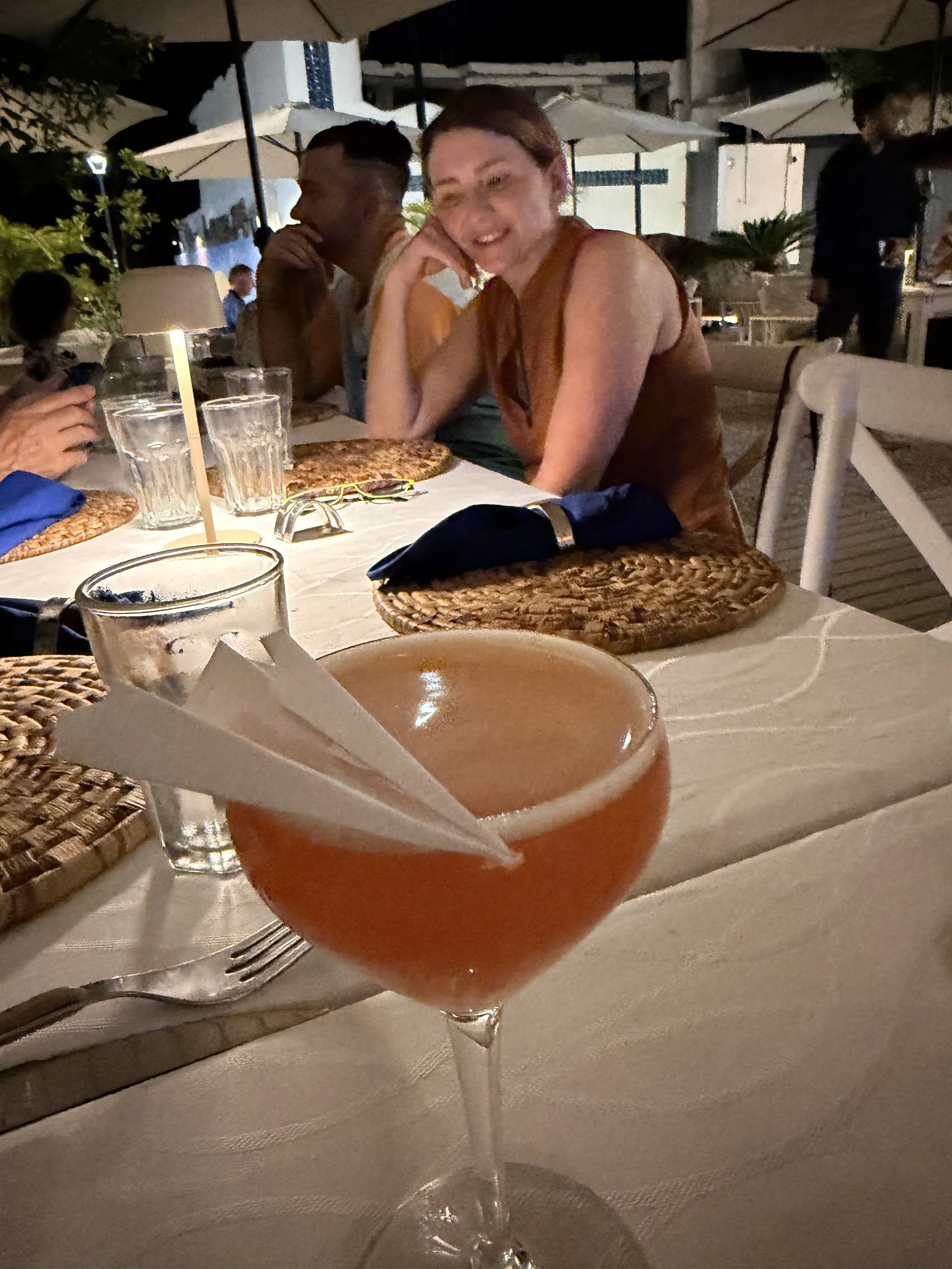
We certainly ate well during our time in Puerto Ayora! There are plenty of restaurants to choose from, whether you're looking for fresh seafood, sushi, local Ecuadorian cuisine, or a fun cocktail after a day of diving. Here are a few places we tried and what we thought!
Nazca: A group favorite! Everyone loved the food, but the seafood pasta was the clear winner.
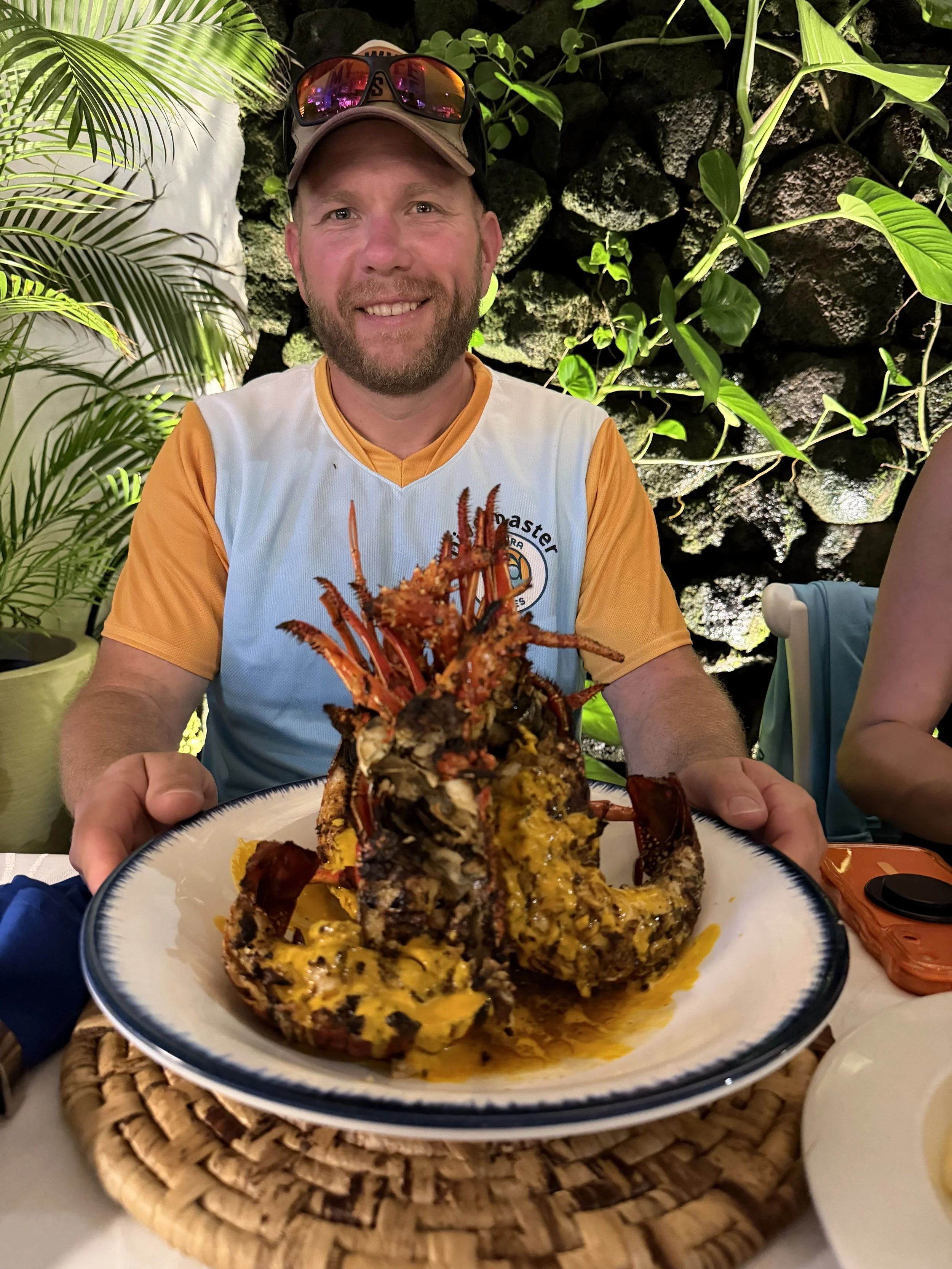
Isla Grill: Amazing food and cocktails. Kyle ordered the lobster, and the presentation was quite the production. Dinner and a show!
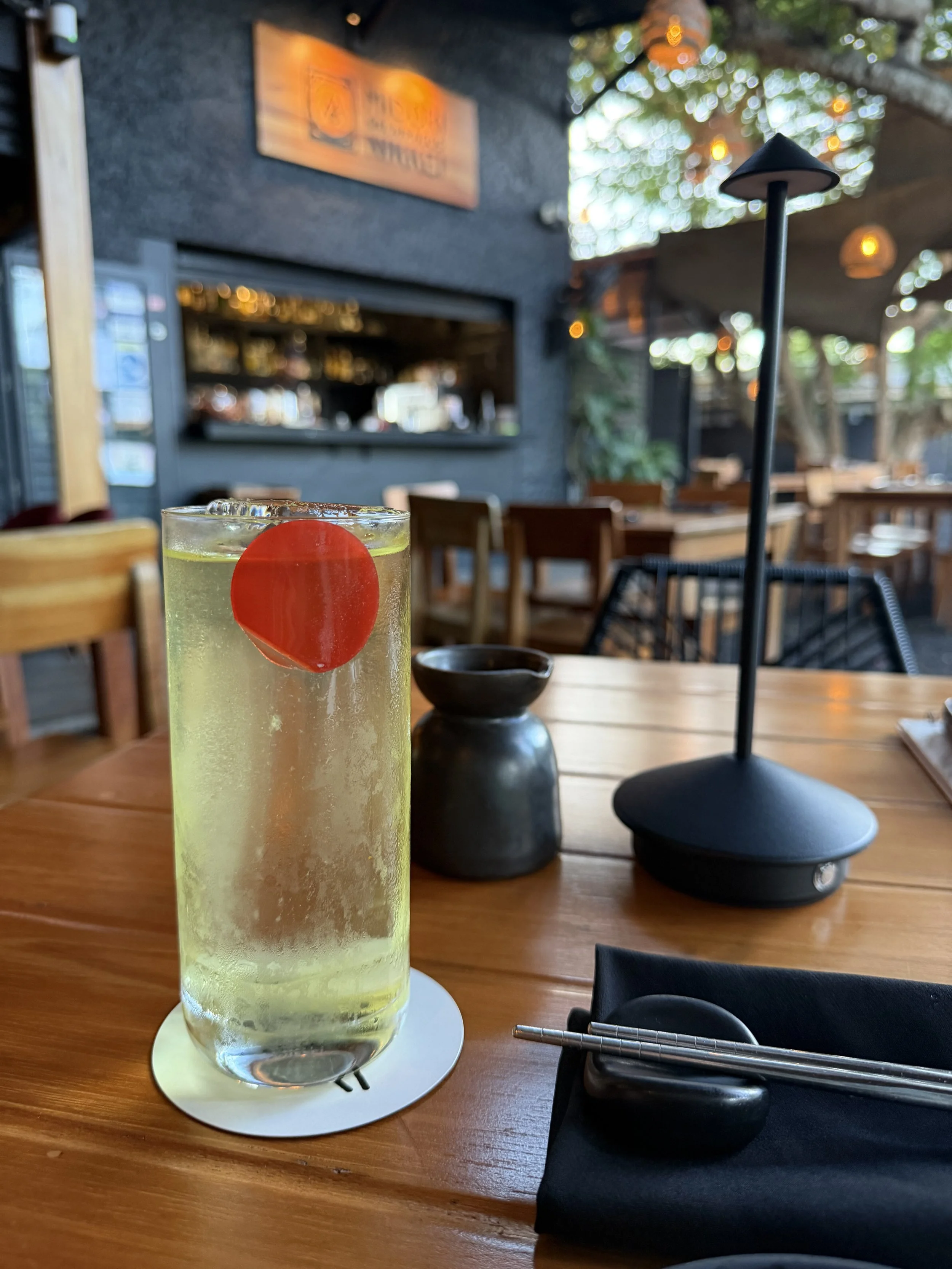
Midori: One of our favorite sushi spots, with delicious sushi, fun cocktails, and a great atmosphere.
Bahía Mar: A fantastic spot for local cuisine and ceviche, especially if you want to enjoy a meal overlooking the waterfront.
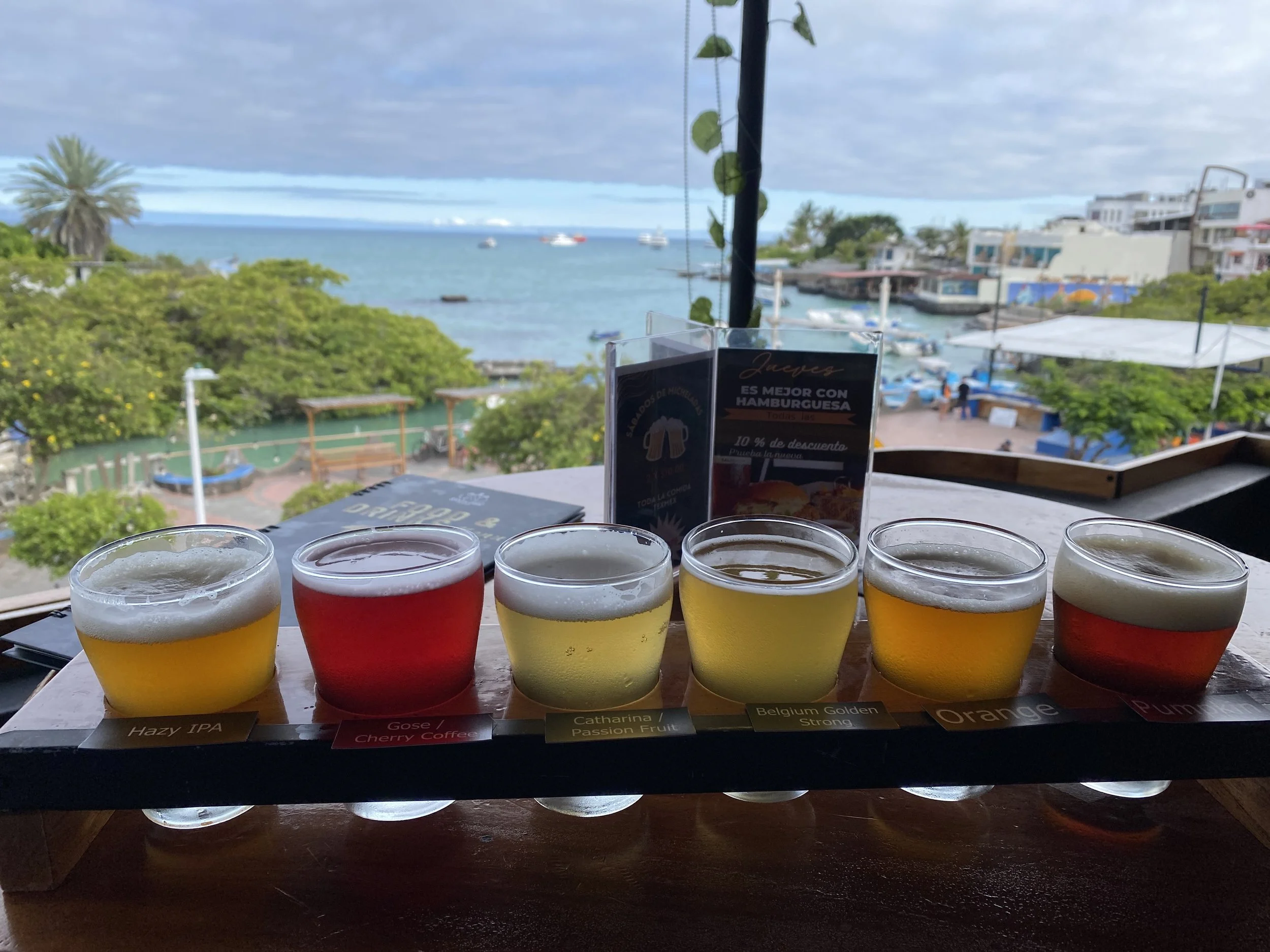
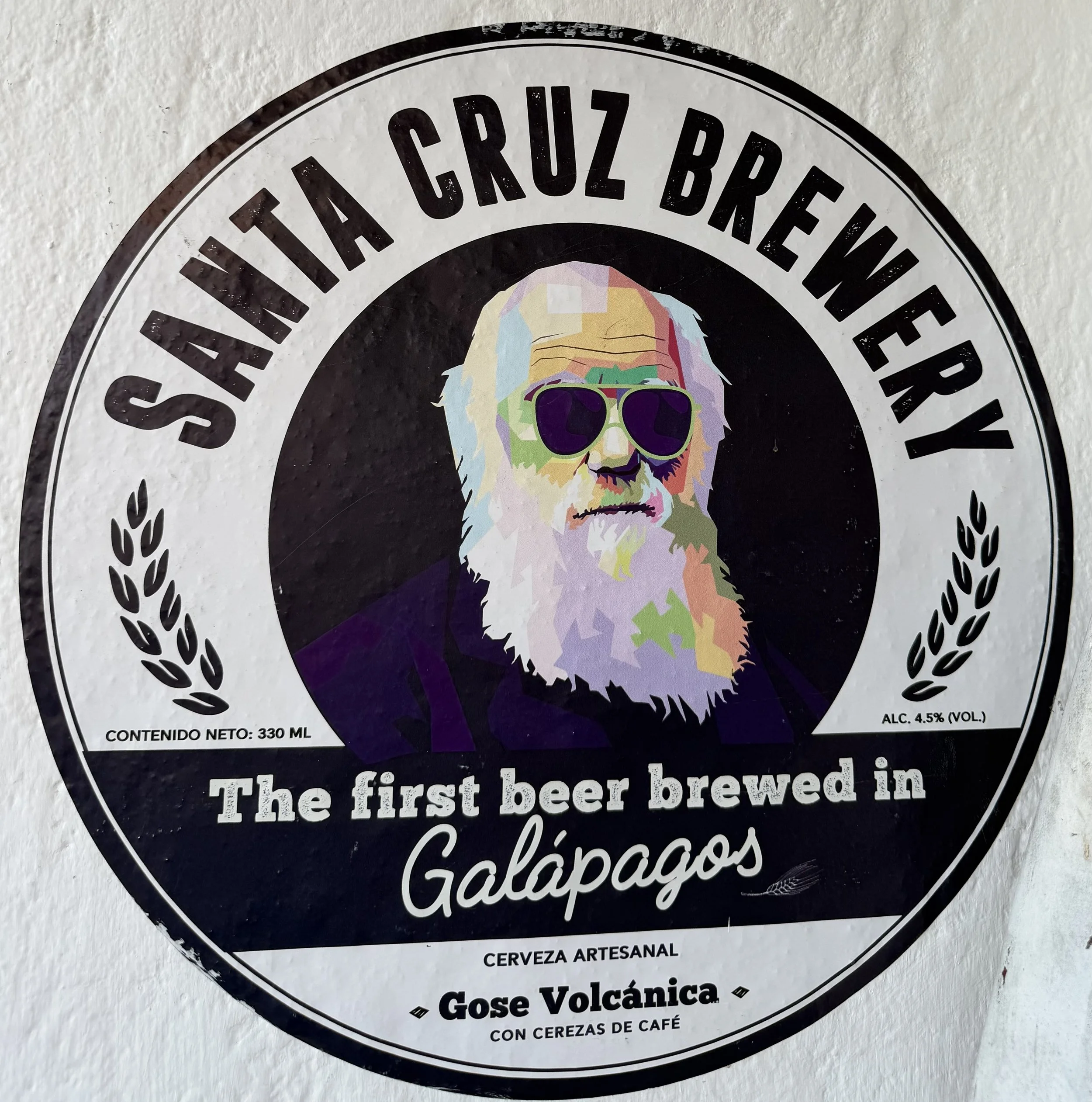
Santa Cruz Brewery: A bit of a Puerto Ayora institution and worth visiting for a beer. I wouldn't particularly recommend the food, though, and the service was definitely on island time!
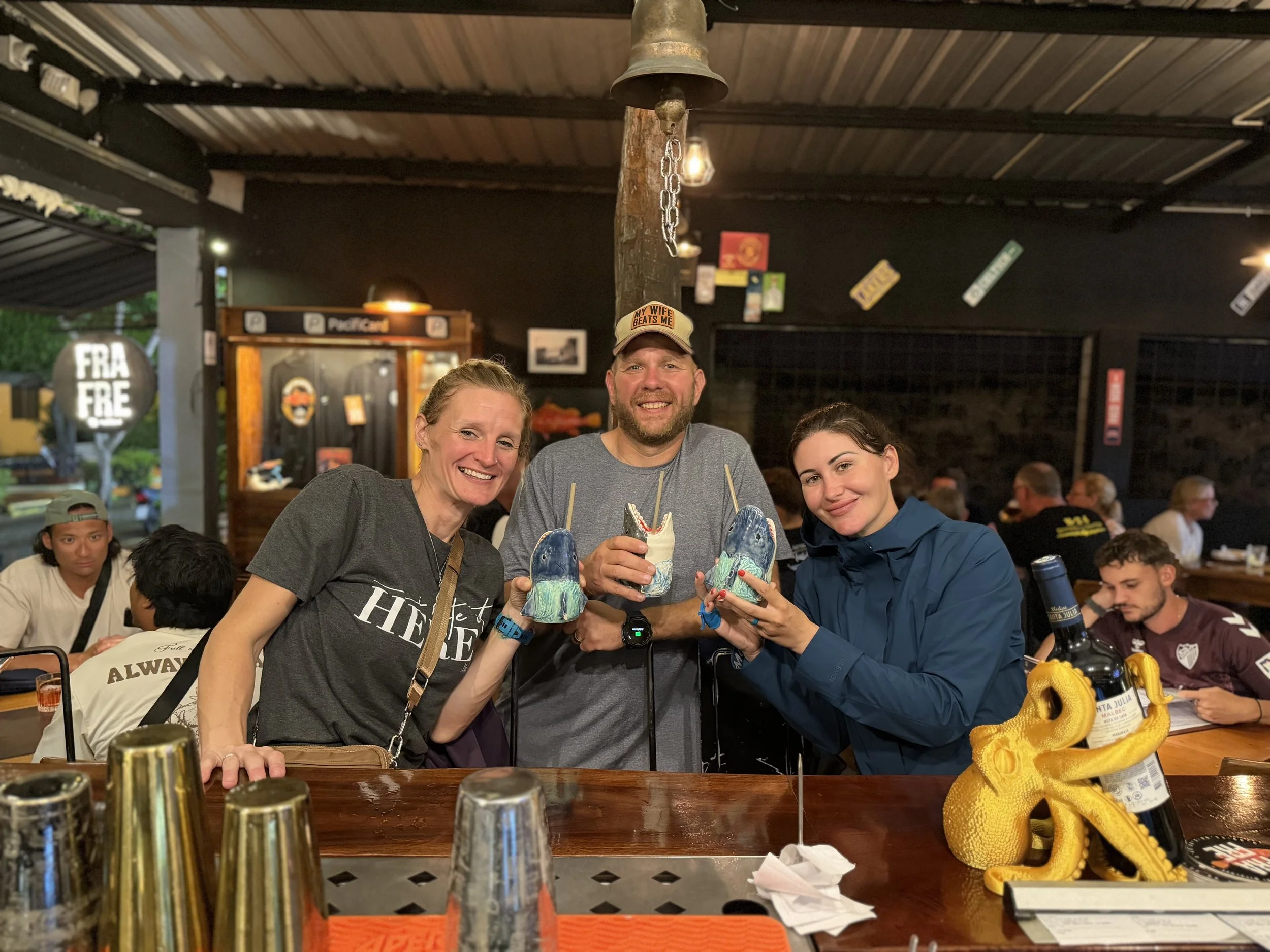
FraFre: A little pricey, but the food was good and the cocktails were especially fun. The shark piña colada was easily my favorite!
Honorable Mentions
Galápagos Deli: A popular casual spot for pizza, sandwiches, homemade ice cream, and a quick lunch between excursions.
The Rock Galápagos: A well-known pub and restaurant on Avenida Charles Darwin, with seafood, international dishes, beer, and cocktails.
1835 Restaurant & Coffee: A great option to consider for specialty Galápagos coffee, breakfast, or a relaxed meal.
El Jardín: A lively restaurant with outdoor seating, a varied menu, and cocktails.
The Point by Midori: An upscale waterfront restaurant worth considering for a special dinner, particularly if you love seafood.
Los Kioskos: Not a single restaurant, but a popular street-food area where you can find grilled seafood and local Ecuadorian dishes. Definitely worth exploring if you want something a little more casual.
Puerto Ayora has a surprisingly good restaurant scene for a small island town, and most of these places are within easy reach of the waterfront. I loved having so many options after a full day of diving or exploring!
Finding My Way Around the Ecuadorian Menu
Plantains, Local Favorites, and Vegetarian Finds
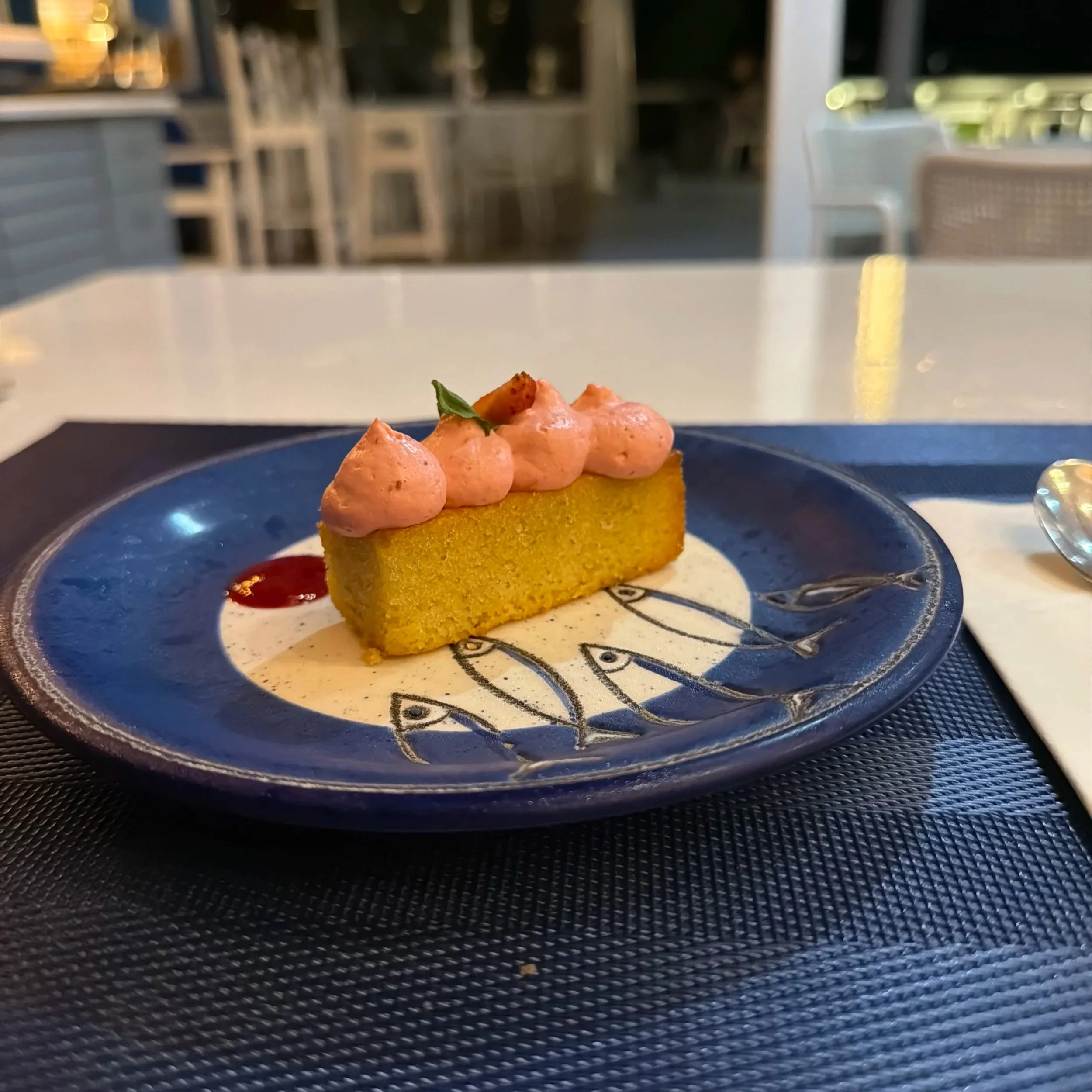
Puerto Ayora has a varied dining scene, with everything from casual cafés and bakeries to waterfront restaurants and outdoor dining areas. Ecuadorian cuisine features ingredients such as plantains, potatoes, corn, beans, rice, and tropical fruits, alongside plenty of seafood and meat-based dishes.
As a vegetarian, I was particularly interested in finding local dishes and restaurants that offered meat-free options. Traditional preparations can contain meat or seafood broths even when the main ingredients are vegetables, so asking about sauces, stocks, and other ingredients is worthwhile.
One of Puerto Ayora's best-known dining areas is Los Kioskos, where restaurants set up tables along the street in the evenings. The outdoor atmosphere and busy kitchens make it a popular place to experience the town's dining culture.
Food is always part of the adventure when I travel. I enjoy exploring local ingredients, trying regional dishes, and finding places that offer something different from what I can get at home. With several extra nights in Puerto Ayora, I had more time to enjoy that side of the islands rather than relying entirely on meals aboard the liveaboard.
More to Explore: Things to Do from Puerto Ayora
After seven nights aboard the Galápagos Aggressor III, I wasn't quite ready to leave the islands. I had planned a few extra days in Puerto Ayora on Santa Cruz, which gave me the opportunity to explore more of the Galápagos without the liveaboard schedule. Puerto Ayora is a great base for day trips, with plenty of options for diving, snorkeling, hiking, and wildlife watching. Whether you're visiting the Galápagos specifically to dive or traveling with non-divers, I highly recommend allowing some extra time to explore.
One More Dive at Gordon Rocks
Naturally, I couldn't spend a few days in Puerto Ayora without booking another dive! I arranged a day of diving at Gordon Rocks with Shark Bay Diving, a local operator based in town. Gordon Rocks is one of the most famous dive sites in the central Galápagos, particularly for its scalloped hammerhead sharks. The site is the remains of a volcanic tuff cone, with steep underwater rock formations and currents that can make for some challenging diving.
After our incredible hammerhead encounters at Wolf Island, I was hoping we'd have another opportunity to see them. Unfortunately, not a single hammerhead showed up! The diving was still decent, and I enjoyed exploring another part of the marine reserve, but I would be lying if I said I wasn't a little disappointed. Between the missing whale sharks at Darwin, the red-lipped batfish at Fernandina, and now the hammerheads at Gordon Rocks, I'm developing quite the list of reasons to return to the Galápagos. I suppose a third visit is in order!
Snorkeling at La Fe Bay and Pinzón Island
On another day, we booked a guided snorkeling excursion to La Fe Bay and Pinzón Island. I love that the Galápagos offers so many opportunities to encounter marine life without scuba equipment, and these excursions are a fantastic option for divers and non-divers alike.
La Fe Bay was a highlight! We encountered some absolutely gigantic green sea turtles, and I was thrilled to finally see marine iguanas swimming. We'd hoped to watch them feeding underwater around Fernandina, but the conditions hadn't been in our favor. Seeing them swimming around La Fe Bay was a wonderful consolation, especially considering how unusual these animals are. Marine iguanas are the only lizards in the world that forage in the ocean, and watching them propel themselves through the water with their powerful tails was fascinating.
We also snorkeled around Pinzón Island, where we encountered whitetip reef sharks, plenty of fish, and, of course, more sea lions. At this point, I'd spent a considerable amount of time with Galápagos sea lions, and I still wasn't tired of them. I don't think I'll ever get tired of them! Between the enormous turtles, swimming iguanas, sharks, and sea lions, our snorkeling excursion was well worth adding to the itinerary.
Exploring Santa Cruz on Land
There's also plenty to do around Puerto Ayora when you're ready for a break from the water. One of the most worthwhile stops is the Charles Darwin Research Station and nearby Fausto Llerena Tortoise Center, where visitors can learn about the conservation work being done to protect the Galápagos' giant tortoises. I find the history of these animals fascinating, particularly how different populations evolved across the islands and the tremendous efforts that have gone into bringing several species back from the brink of extinction.
The Santa Cruz highlands are another excellent place to visit, particularly if you want to see giant tortoises roaming freely in their natural habitat. The landscape is completely different from the coastal areas, with lush vegetation, volcanic formations, and lava tunnels to explore. I highly recommend making time to see the tortoises outside of a breeding center if you have the opportunity.
For something a little more relaxed, Tortuga Bay is one of the most beautiful beaches on Santa Cruz, with white sand, marine iguanas, and gorgeous coastal scenery. Las Grietas is another popular stop, featuring a narrow, water-filled volcanic crevice where visitors can swim. Both are great options if you want to spend some time exploring without committing to a full-day excursion.
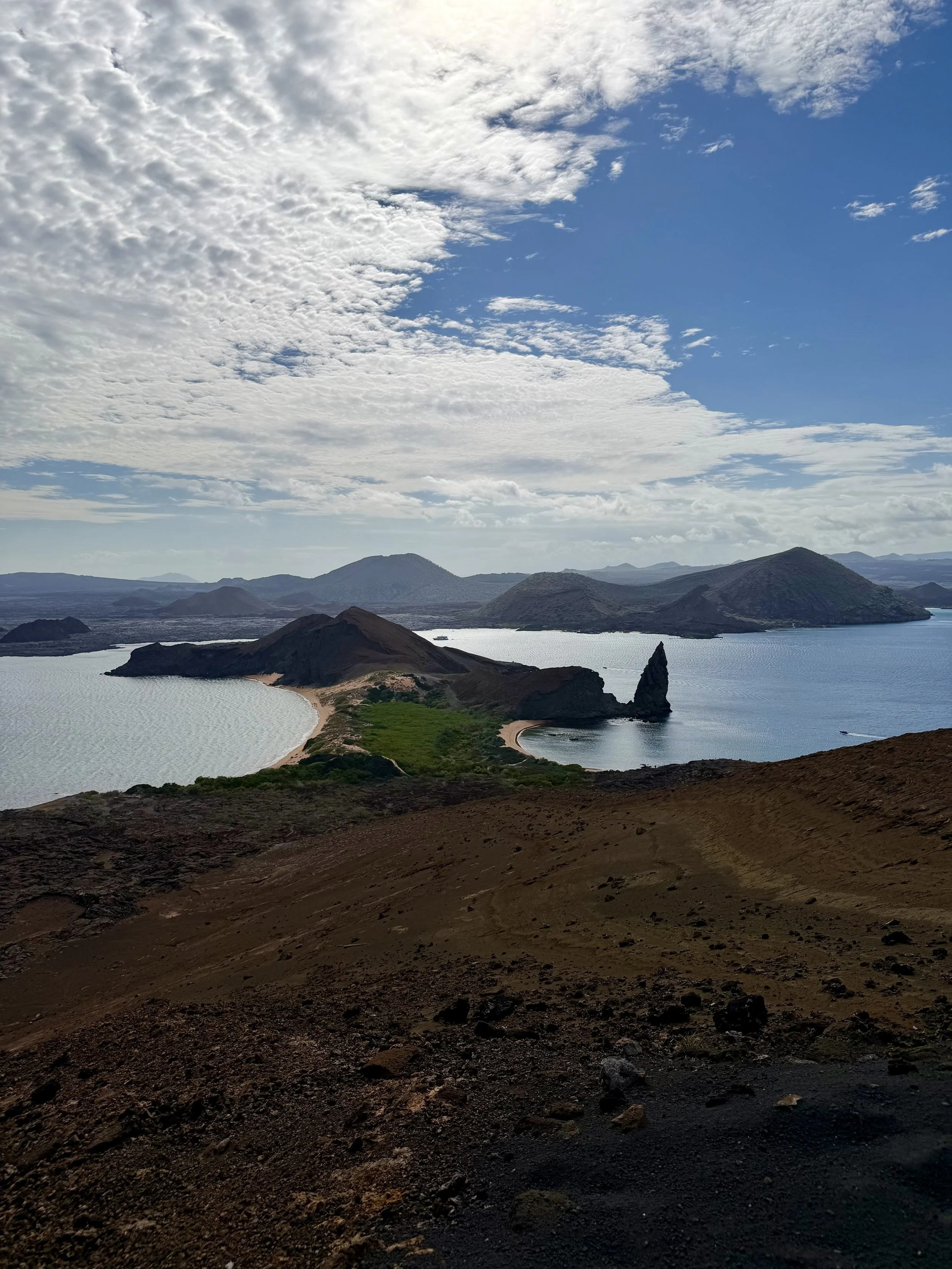
Puerto Ayora also serves as a departure point for guided trips to nearby islands, including North Seymour and Bartolomé. North Seymour is particularly well known for its blue-footed boobies and frigatebirds, while Bartolomé offers some of the most recognizable volcanic landscapes in the archipelago. If you're interested in wildlife photography, both are worth considering.
Before You Pack Your Fins
Money, Drinking Water, Connectivity, and Dive Safety
Galápagos requires a little more preparation than many popular dive destinations, particularly when traveling independently before or after a liveaboard.
Ecuador uses the U.S. dollar, and carrying smaller bills is useful for taxis, tips, small purchases, and certain fees. Credit cards are accepted in many establishments, but cash remains convenient, especially outside the busiest tourist areas.
Safe drinking water is another important consideration. I recommend bringing a refillable bottle and using filtered or otherwise safe drinking water rather than assuming tap water is potable. Many accommodations provide filtered water, which also helps reduce the need for single-use plastic bottles.
Internet access is available in Puerto Ayora, although speeds and reliability can vary. Remote liveaboard routes may have limited connectivity, making offline copies of travel documents, reservations, maps, and emergency contacts particularly useful.
Sun protection is essential, even when the weather feels relatively cool. The islands' location near the Equator means ultraviolet exposure can be intense, so protective clothing, sunglasses, hats, and appropriate sunscreen are important for land excursions.
Travel insurance and dive accident coverage are also worth reviewing carefully. Medical evacuation from remote islands can be extremely expensive, and ordinary travel insurance policies don't necessarily include the coverage divers need.
For anyone adding extra dives after a liveaboard, the no-fly interval must be calculated from the final dive of the entire trip, not from the day the liveaboard returns to port. That distinction matters when planning onward flights.
Finally, Galápagos wildlife is protected, and visitors are expected to follow National Park regulations. Animals should never be touched, fed, chased, or disturbed. Respecting their space helps preserve the extraordinary encounters that make these islands so special.
Galápagos Deserves More Than Seven Nights
When I first began planning our Galápagos expedition in March 2025, the focus was naturally on the diving. Darwin, Wolf, hammerheads, whale sharks, marine iguanas, and the unusual wildlife of the western islands were the experiences that made the destination so appealing.
As I researched the logistics, however, I realized how much more there was to explore beyond the liveaboard. Santa Cruz offered giant tortoises, volcanic landscapes, mangrove lagoons, beautiful beaches, conservation sites, restaurants, and additional diving. After traveling nearly 8,000 miles from Hawaiʻi, spending a few extra days discovering those places made perfect sense to me.
I was particularly excited about the opportunity to experience Galápagos from two perspectives. The liveaboard allowed us to explore remote marine environments with our Seaira Dives group, while my additional time in Puerto Ayora gave me the freedom to explore the islands at a different pace.
The logistics certainly required some effort. Four flights, long connections, extra airport procedures, multiple hotels, and a considerable amount of dive equipment made this one of my more involved travel itineraries. But exploring somewhere as geographically isolated and ecologically extraordinary as Galápagos was precisely why I wanted to make the journey.
After twenty months of planning our Seaira Dives expedition, I was grateful to have the opportunity to spend a little more time getting to know the islands beyond the dive boat. There was far too much to see, learn, and explore to rush straight back to the airport.
Dive safe, explore passionately, and remember…